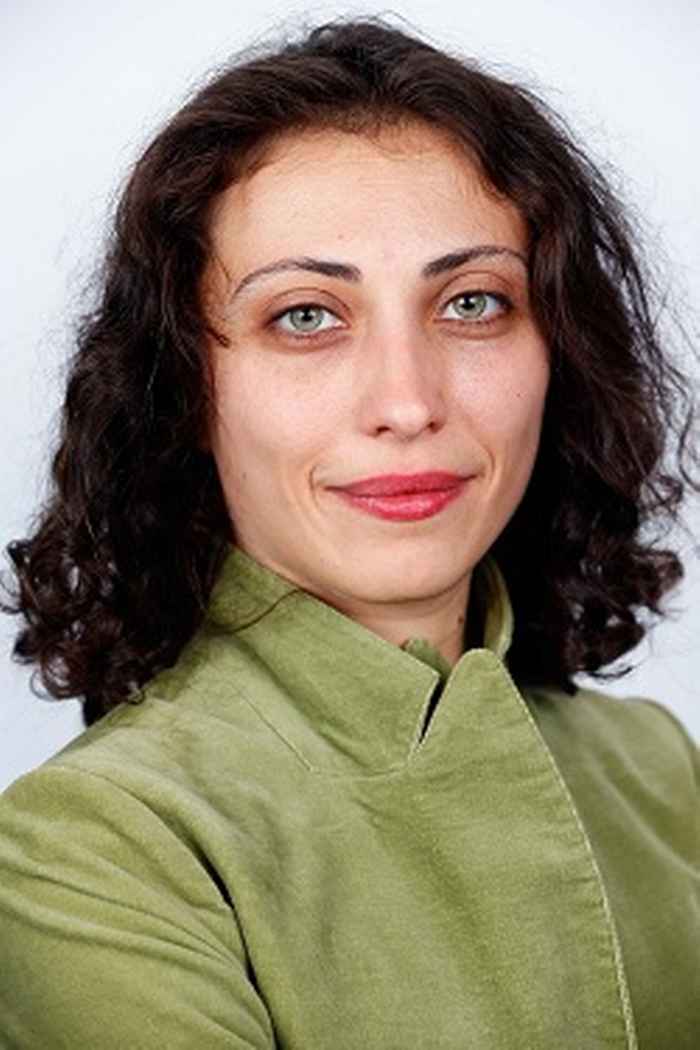
Lela Mosemghvdlishvili serves as a Lecturer and Tutor at PPLE, focusing on interdisciplinary research methods and academic writing. She teaches courses such as Integrative Seminar IV: Societal Challenges, where students address social issues through creative projects like board games or performances. Her teaching philosophy emphasizes holistic student development, integrating mindfulness practices (e.g., 3-minute silent meditation) to foster focused learning environments. In her dual role, she bridges theoretical foundations from lectures with hands-on tutorial sessions. She supports students in thesis preparation through methodological guidance and encourages resilience, creativity, and empathy. PPLE’s vibrant student community and emphasis on initiatives align with her passion for nurturing critical thinkers and doers. While no formal academic awards or grants are mentioned, her pedagogical approach highlights innovation in blending traditional scholarship with experiential learning.
Dr. Jim Marquardson is an Assistant Professor in the Information Assurance & Cyber Defense department at Northern Michigan University's College of Business . With a Ph.D. in Management Information Systems from the University of Arizona, his research focuses on lie detection with technology, human-computer interaction, persuasive technology, information security, data analytics, and educational methodologies. Ph.D. in Management Information Systems (University of Arizona) Teaching credentials in cybersecurity, network simulation, and virtual labs Industry experience at Zions Bank and Exxon Mobil Research Interests revolve around integrating hands-on learning into cybersecurity education, including Amazon Web Services Academy implementations, GitHub-based tutorials , and Security Operations Center (SOC) frameworks . His work bridges academic theory with practical applications in information assurance and network design. Publications highlight trends in cybersecurity pedagogy , cloud computing education , risk management , and persistent skill gaps in entry-level cybersecurity roles. Articles from 2017-2025 demonstrate sustained focus on improving educational outcomes through simulation , AI integration , and collaborative learning techniques . Teaching Philosophy emphasizes practical experience , with students actively building computer networks , creating virtual machines , and developing security software . His background in corporate IT informs real-world applications of theoretical concepts. Mountain Biking Baking College Football Ethical Hacking Programming Music
Dr. Monika Szuba serves as a Tutor at the Department of Research on English Literature within the Institute of English and American Studies, Faculty of Philology at the University of Gdańsk. Her academic profile centers on contemporary English-language literary studies, with specialized expertise in Scottish literature and critical theory, where she facilitates in-depth textual analysis and theoretical engagement through tutorial-based pedagogy. Her research program critically examines the intersection of literature and environmental thought, with primary focus on contemporary British poetry and prose. She pioneers interdisciplinary approaches bridging literary scholarship with ecological philosophy, actively contributing to the reevaluation of nature-culture binaries through frameworks including ecocriticism, blue humanities (marine-focused ecological studies), geopoetics, animal studies, and new materialism. This work interrogates how contemporary literature reconceptualizes human relationships with non-human worlds, emphasizing sensory engagement and material ecologies. Analysis of her 15 most recent publications (2022-2025) reveals a concentrated scholarly trajectory centered on Scottish literary ecology, with recurring examinations of poets Kathleen Jamie, John Burnside, and Thomas A Clark. Her work consistently explores geological time, tidal rhythms, landscape representation, and environmental emergency through close readings that integrate natural history with literary theory. Key methodological threads include sensory poetics, chorographic mapping, and the material dimensions of ecological crisis, demonstrating how Scottish literature offers innovative frameworks for understanding planetary change. Scientific Awards: No scientific awards were documented in the provided source material. Advising and Grants: The available documentation contains no references to graduate students supervised, research grants administered, or external funding secured by Dr. Szuba. Her academic contributions appear primarily channeled through independent scholarship, tutorial instruction, and publication. Labs and Teams: No affiliations with research laboratories, interdisciplinary teams, or collaborative research centers were identified in the source materials. Her scholarly activities appear centered within the Department of Research on English Literature's academic framework.
Yelin Zhao is a Lecturer at Boston University, specializing in second language acquisition and writing center pedagogy. Her research focuses on multilingual student support, particularly examining the roles of native and non-native speaker tutors in university writing centers. She explores how tutoring interactions influence academic writing development for international students using a usage-based linguistic approach. Her work bridges sociolinguistics and educational practices, addressing cross-cultural communication challenges in academic settings. Key areas include analyzing tutor-student dynamics, optimizing writing center methodologies for multilingual learners, and advancing TESOL practices through empirical studies. Publications from 2016–2020 consistently emphasize writing center effectiveness, international student academic integration, and the application of usage-based theories in second language education. No specific grants or awards are noted in the provided materials.
Dr. Ruth Bacchus is an Adjunct Lecturer at Charles Sturt University's School of Social Work and Arts, with expertise spanning literature, cultural studies, and pedagogy. Her academic journey includes a PhD and first-class Honours degree from CSU, alongside roles as a research assistant and tutor in the Aboriginal Tutorial Assistance Scheme. Teaching: Literature, Children’s Literature, Creative Writing, Politics and Cultural Studies Research: Colonial/post-colonial literature, feminist theory, cultural competence, Indigenous knowledge systems Research Trends: Recent work focuses on student-centered assessment (2024), Indigenous cultural safety (2020), and queer family law challenges (2018). Collaborations with scholars like Jenny Wallace and Bob Hill appear in journals such as Creative Education and Australian Journal of Social Issues . Key contributions include co-editing Teaching Aboriginal Cultural Competence (2020) and analyzing Sati practices through feminist lenses (2013). Her 2020 chapter on identity challenges in classrooms and 2016 conference paper on rubric co-construction demonstrate interdisciplinary engagement.
Jacob S. Blumner serves as Professor of English and Director of the Marian E. Wright Writing Center at the University of Michigan-Flint within the Department of Language and Communication, College of Arts, Sciences and Education. His academic career spans over 25 years with progressive appointments from Assistant Professor (1996) to current Professor (2017-present), reflecting deep institutional commitment. His educational foundation includes a Ph.D. in English from the University of Nevada (1996). Blumner's research centers on writing center theory and writing across the curriculum (WAC), examining institutional partnerships between writing centers and academic departments. His scholarship investigates faculty development, curriculum integration, and assessment methodologies in WAC programs. Complementing this, he maintains an active creative practice in haiku poetry, publishing in specialized journals like Failed Haiku and Frogpond , demonstrating the intersection of scholarly and artistic writing. Recent publications reveal evolving interests from foundational WAC theory toward community-engaged pedagogy, including gamified learning environments (D&D-themed writing camps) and place-based education initiatives. His work increasingly addresses K-12/college partnerships and technological implications for writing instruction. As principal investigator, Blumner has secured substantial grant funding including EPA-supported place-based education projects ($152,119), Charles Stewart Mott Foundation entrepreneurship programs (totaling $184,136), and recent community writing initiatives: the "Rough Draft Cafe" ($6,000 from Pro Literacy Worldwide), "No Rules" Writing Group ($5,000 from Nora Roberts Foundation), and Flint-based writing access programs ($11,661 from Community Foundation of Greater Flint). He directs the Marian E. Wright Writing Center while leading community writing collectives that extend university resources into Flint through the "No Rules Writing Group" and partnerships with Boys & Girls Clubs, focusing on natural resources professions and youth engagement.
Dr. April Richardson Hatcher serves as Assistant Dean for Foundational Sciences at the University of Kentucky College of Medicine, where she is a Special Title faculty member specializing in embryology, histology, and gross anatomy education for medical, dental, physician assistant, physical therapy, and graduate students. She directs the Graduate Certificate in Anatomical Sciences Instruction and chairs the Women in Medicine and Science (WIMS) program while maintaining active roles in HAPS, AAA, and IAMSE. B.A. in Biology and A.A. in Mathematics from Lindsey Wilson College Ph.D. in Anatomy & Neurobiology from the University of Kentucky Her research pioneers innovative teaching methodologies in anatomical sciences, with core emphases on integrating humanities into anatomy curricula, developing 3D visualization tools for complex structures, and advancing transparency in higher education. Current projects explore engagement techniques for virtual classrooms and ethical dimensions of educational technology, building on her foundational work with Second Life™ virtual environments for team-based learning. This scholarship bridges pedagogical theory with practical applications across health professions education. Analysis of her publications reveals an evolutionary trajectory from virtual-world applications toward multimodal educational strategies, with increasing focus on metacognition, student-centered creativity, and interdisciplinary connections between anatomy and humanities. Her work consistently addresses scalability of innovative methods across diverse classroom settings while emphasizing assessment of long-term educational impact. Dr. Hatcher's scholarly recognition includes: Poster award at the 2015 Lilly Conference on College Teaching and Learning As Director of the Graduate Certificate in Anatomical Sciences Instruction, she has mentored cohorts whose graduates consistently secure academic teaching positions. Her leadership extends to national workshops on educational transparency and creativity, though specific grant funding details remain unreported in the source material. She actively develops open-access teaching resources through her hatcherteachingtools platform and shapes institutional policy through WIMS initiatives.
Ilka Luyt is an Instructor at Queen’s University, the Royal Military College (RMC), the State University of New York (SUNY), the University of Maryland, and Professors Without Borders. She serves as a tutor in RMC’s Writing Centre and teaches live and online writing courses. She holds a PhD in Education (2016) and an MEd (1999) from Queen’s University, focusing on English Composition, Rhetoric, Online Learning, and Critical/Feminist Social Theory. Her research interests include gender studies, composition, rhetoric, and distance education, with a focus on bridging academic and non-academic writing practices. She emphasizes dialogue-based learning, helping students navigate academic writing’s complexities through personalized strategies. Her publications address online education, military vs. civilian institutional diversity, and parenting in academia. She received the SUNY Chancellor’s Award for Excellence in Adjunct Teaching (202). While no grants or labs are explicitly mentioned, her work with multiple institutions highlights collaborative efforts in education.
Matthew Ross Smith is an Assistant Teaching Professor in the Department of English and Philosophy at Drexel University. He holds a Master of Creative Writing from the University of Auckland (2006) and a Bachelor of Arts with Honors from Lycoming College (2004). His research focuses on novel writing, middle grade literature, and creative pedagogy. His notable works include the 2021 novel The Million Dollar Race (Simon & Schuster), a Washington Post Book Club Selection and finalist for major young reader awards, and the 2019 novel Lizzy Legend . He also produces educational content through his animated web series Writing 101 with Professor Matt . Smith's awards include recognition for his young adult novels, reflecting his expertise in narrative-driven storytelling. His academic contributions blend creative writing instruction with innovative educational media.
Robert Bruce is a Lecturer in the Department of Engineering at Sonoma State University, part of the College of Science, Technology and Business. He has taught undergraduate and graduate courses in Computer Science, Computer Engineering, and Information Science at multiple institutions including San Jose State University, Santa Clara University, and Dominican University. With over 15 years of academic experience, he has supervised 63 student capstone/thesis projects. His professional background includes Visual Effects industry work as a systems programmer and digital artist with four feature film credits, as well as co-founding multiple tech startups with seed funding. His research focuses on Augmented/Virtual Reality, Distributed Computing, Information Retrieval, Robotics, and IoT. Education background includes a B.S. in Computer Science (with Mathematics minor) from Sonoma State University and an MLIS from San Jose State University. No explicit scientific awards are listed, though his work spans interdisciplinary collaborations in education technology and space exploration. Active in presenting at conferences since 2006, his publications address topics ranging from VR in space to library terminology education.
Susanne E. Hall is a Teaching Professor of Writing and Director of the Hixon Writing Center at the California Institute of Technology (Caltech). She has been affiliated with Caltech since 2012, contributing to the Division of Humanities and Social Sciences. Dr. Hall holds a B.A. from Wake Forest University (2001), an M.A. (2003), and a Ph.D. (2008) from the University of California, Irvine. Her research and teaching focus on academic writing pedagogy, particularly supporting undergraduate students in transitioning to college-level writing. She oversees curricula like Introduction to Academic Writing (Wr 2) and Principles and Practices of Academic Writing (Wr 4) , which emphasize critical reading, writing, and library research across disciplines. Additional courses include Tutorial in Writing (Wr 50) and interdisciplinary offerings like Personal Narrative and STEM Research (En/Wr 83) and Communicating Science to Non-Experts (En/Wr 84) . Dr. Hall’s work integrates STEM communication, rhetoric, and writing education, reflecting her commitment to bridging disciplinary divides in academic practice. She leads the Hixon Writing Center, fostering student writing development through collaborative support and curricular innovation.
Dr. Anne Marie Piper is an Associate Professor in the Department of Informatics at the University of California, Irvine (UCI). Her research focuses on human-computer interaction and accessible computing, aiming to create equitable digital experiences for diverse populations. She holds affiliations with the UCI Accessibility Research Collective and serves as Associate Director of the Steckler Center for Responsible, Ethical, and Accessible Technology (CREATE). Piper's work bridges technology design with social justice, particularly for people with disabilities, older adults, and neurodivergent individuals. Education: PhD in Cognitive Science, UC San Diego MA in Education, Stanford University BS in Computer Science, Georgia Institute of Technology Research Interests: Access to digital work environments (e.g., tools for blind professionals) Ageism in technology design Participatory design with marginalized groups Accessibility in collaborative technologies Technology for dementia care Awards & Recognition: NSF CAREER Award (2020) $3.2M in NSF grants (Future of Work & Medium Awards) Best Paper Awards at ACM CHI, CSCW, and ASSETS Advising & Labs: Directs UCI's Master's in Human-Computer Interaction and Design (MHCID) program Current advisees include Kapil Garg (Postdoc), Kana Huang (PhD), Xinru Tang (PhD), and others Lab alumni hold roles at Apple, Meta, Northeastern University, and academic institutions Key Projects: GenAI accessibility studies for blind users ($2M NSF-funded) Accessible audio production tools for visually impaired creators Age-integrated communication platforms
Alice Reedy serves as a Senior Lecturer in the Department of Education within the School of Childhood and Social Care at the University of East London (UEL). As a core member of the Primary Initial Teacher Training team, she delivers curriculum for both the Primary BA with QTS and Primary PGCE programs, holding module leadership responsibilities for ED5073, ED4071, PR7001, PR7000, and PR6001. Her role focuses on preparing future educators for East London schools through evidence-based pedagogical training. Her academic credentials include a BA in English Literature and Creative Writing, a Primary PGCE with SEND: Inclusion, and an MA in Education, all completed at UEL where she remains deeply connected as both alumna and faculty. This foundation informs her practical approach to teacher education. Reedy specializes in Primary English pedagogy with particular emphasis on reading for pleasure and culturally representative literature. Her research examines children's intrinsic motivations for independent reading, barriers to engagement, and text selection factors to develop strategies that increase academic success through choice-driven literacy. Concurrently, she investigates higher education assessment methodologies, specifically rubric effectiveness and student feedback interpretation. Her 2024 publications reveal dual research trajectories: one analyzing sociocultural influences on children's book choices through qualitative perspectives, the other dissecting assessment literacy in undergraduate contexts. Both strands demonstrate her commitment to evidence-based educational improvement across school and university settings. Recognized as a Fellow of the Higher Education Academy (FHEA), she maintains active external engagement as an External Examiner at the University of Greenwich. Her professional affiliations include the United Kingdom Literacy Association, where she contributes to national literacy discourse. Through module leadership and tutorial supervision, Reedy mentors trainee teachers in inclusive literacy practices while advancing research that bridges classroom realities with academic theory. Her work consistently targets practical applications that empower educators to foster lifelong reading habits and effective assessment cultures.
Jakob Iversen serves as Professor of Information Systems and Associate Dean for the College of Business at the University of Wisconsin Oshkosh, where he has held academic and administrative roles since 2000. With a Ph.D. from Aalborg University focused on Software Process Improvement, he brings over two decades of experience in higher education teaching, research, and program development across undergraduate and graduate Information Systems programs. His educational credentials include: Ph.D. in Software Process Improvement, Aalborg University (2000) MS, Aalborg University (1996) Iversen's research spans software process improvement, mobile application development, programming pedagogy, and collaborative technology design, with recent emphasis on artificial intelligence in education and K-12 computer science pipeline development. His work consistently bridges theoretical frameworks with practical business applications, particularly in technology adoption and workforce development contexts. Analysis of his 15 most recent publications reveals a clear trajectory from foundational software engineering topics toward contemporary challenges in AI integration, educational technology, and collaborative solutions for IT talent shortages. His scholarship maintains strong connections between technical development practices and organizational behavior, with increasing focus on educational ecosystems and diversity in technology fields. His academic leadership has been recognized through: Faculty Advisor Excellence Award from WACADA (2018) UW Oshkosh Faculty/IAS Advisor Award (2017) As an administrator, Iversen spearheaded development of the Interactive Web Development Management major and Information Systems minor while directing College of Business technology infrastructure. His advising impact extends through industry partnerships addressing regional IT talent gaps and initiatives promoting women in technology. He maintains active editorial roles for the Journal of Midwest AIS and Journal of Cases on Information Technology while serving on multiple university committees including Academic Planning and Navigate Leadership teams. Iversen directs the College of Business Information Technology Services and leads the UWO MIS Team, focusing on technology strategy and support for academic programs while fostering regional collaborations through the NEW Digital Alliance and NEW IT Alliance.
Katarina Karić is an Assistant Professor at the Department of Information Technologies, Faculty of Technical Sciences Čačak, University of Kragujevac. She holds a Master of Science in Information Technology and is currently pursuing her PhD in Information Technologies. Her academic roles include teaching Databases Database Practicum Database Programming Introduction to Programming courses. Her research focuses on data mining , machine learning , information systems , and educational technology , with applications in healthcare, tourism, and academic performance prediction. She has published extensively in international conference proceedings and served on organizing committees for events like TIE2022 and TIE2024. Key scientific contributions include Automated kidney stone detection via YOLO algorithm Entrepreneurial education analysis in Serbia ML models for hotel reservation cancellation prediction Comparative standards analysis for IoT and AI Database pedagogy tools like CATAPEX She was awarded the Vuk Karadžić Diploma for academic excellence and holds certifications in Oracle technologies, European Horizon Project writing, and EDIT summer school. Her work spans collaborations with institutions in Bulgaria, Montenegro, and Serbia.