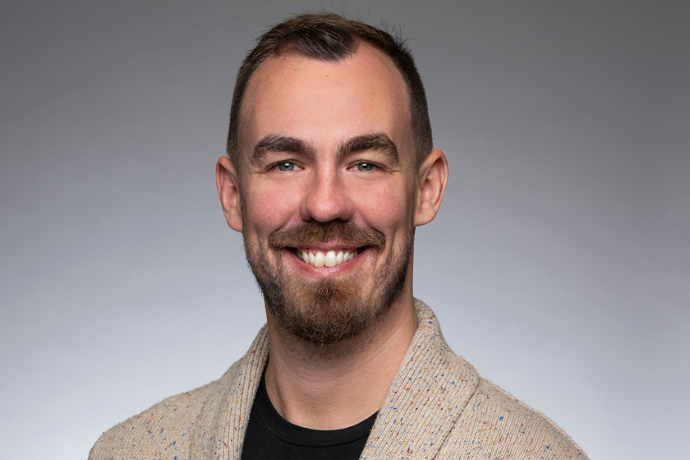
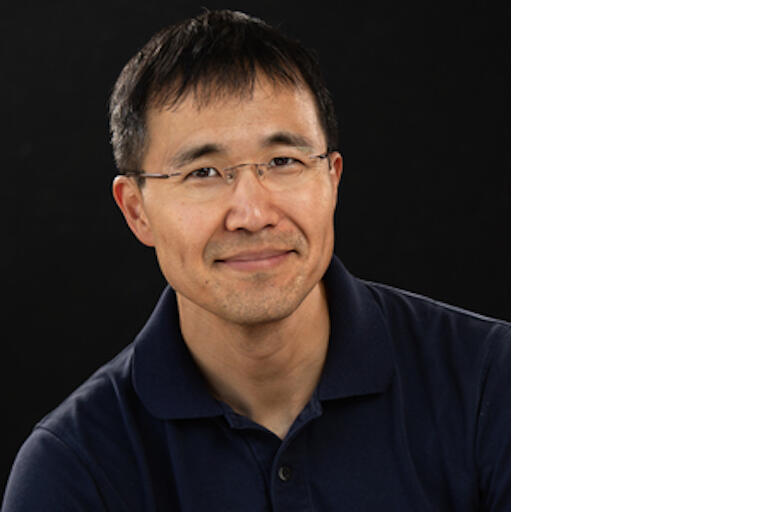
Dr. Razak Khan is a Research Fellow in the History Research Group at CeMIS (Center for Modern Indian Studies). His academic journey includes a DPhil from Freie Universität Berlin (2014) and postdoctoral fellowships at the Max Planck Institute for Human Development and Friedrich–Alexander University Erlangen–Nürnberg. Research Focus: Early modern/colonial India, South Asian Islam, Urdu public cultures, history of emotions, Indo-German comparative histories, and global intellectual history. Key Projects: His Habilitation project explores 'Minor Cosmopolitanism' through Syed Abid Husain's writings, while his book Minority Pasts (OUP, 2022) examines locality and belonging in Rampur. Publications: 15 recent works span transnational Indo-German intellectual histories, emotional geographies, Urdu archives, and Indo-Islamic cultural studies. Collaborations: Co-edited The Incomparable Festival (Penguin, 2021) and contributed to interdisciplinary volumes on emotions and migration.
Professor Leigh K. Jenco holds the position of Professor of Political Theory at the Department of Government, London School of Economics and Political Science (on sabbatical during 2024/25). Her expertise spans Chinese Thought, Taiwan Studies, Political Philosophy, and Global Intellectual History. She previously taught at the National University of Singapore and has held visiting roles at Taiwan's Academia Sinica, National Taiwan University, and the University of Heidelberg. Education: B.A. from Bard College M.A. and Ph.D. from University of Chicago Her research explores late Ming neo-Confucian concepts of equality through literary theory and the 20th-century rediscovery of Chinese folksong compendia. She leads the £1.5M British Academy-funded 'Chinese Global Orders' project and was the principal investigator for the EU's 'East Asian Uses of the European Past' initiative. She served as associate editor of the American Political Science Review (2016–2020). Her publications include groundbreaking monographs like Changing Referents (Oxford UP, 2015) and Making the Political (Cambridge UP, 2010), which bridge political theory with Chinese intellectual history. Current projects focus on Ming dynasty poetics and cross-cultural knowledge transfer. Grants & Projects: Lead investigator for 'Chinese Global Orders' (£1.5M, British Academy) EU H2020 'East Asian Uses of the European Past' (€1.2M) She is fluent in Classical Chinese, Mandarin, and English, and her work emphasizes global comparative frameworks to challenge Eurocentric narratives. Her research often intersects historical texts with contemporary political debates, particularly around cultural borrowing and identity formation.
Prof. Paul V. Braun is the Grainger Distinguished Chair in Engineering and Professor of Materials Science and Engineering, Chemistry, Mechanical Sciences and Engineering, Chemical and Biomolecular Engineering at the University of Illinois Urbana-Champaign. He is also a part-time faculty member at the Beckman Institute. His research focuses on synthesizing materials with unique optical, electrochemical, thermal, and mechanical properties through nano/mesoscale architectures. Education: B.S. (Cornell University), Ph.D. (Materials Science and Engineering, University of Illinois). Postdoctoral work at Bell Labs (1999–present at UIUC). Research Interests : Electrochemical energy storage (batteries) Polymers and self-assembly Photonics and advanced optics Self-healing materials Control of heat and matter transport Recent articles explore battery recycling, hydrogel thermal conductivity, additive manufacturing for heat transfer, and silicon anode analysis. His work spans materials synthesis, characterization, and applications in energy and photonics. Awards : AAAS Fellow (2020) NAI Fellow (2022) Grainger Award for Translational Research (2023-24) MRS Fellow (2018) Advising & Grants : Braun has co-authored ~350 publications, holds multiple patents, and co-founded four companies. His labs include the Materials Research Laboratory and Beckman Institute.
Edward R. Morrison is the Charles Evans Gerber Professor of Law at Columbia University's Columbia Law School, where he has been a full-time faculty member since 2003. His academic rank is Professor, specializing in corporate finance, bankruptcy law, and law and economics. He holds a Ph.D. in economics (University of Chicago, 2003), J.D. (University of Chicago Law School, 2000), M.A. in economics (University of Chicago, 1997), and B.S. (University of Utah, 1994). Morrison’s research focuses on corporate reorganization, consumer bankruptcy, and systemic market risk regulation. Notable work includes studies on racial disparities in Chapter 13 filings, valuation disputes in bankruptcies, and the link between financial distress and mortality. He co-edits the Journal of Legal Studies and directs Columbia’s Executive LL.M. Program. His teaching portfolio includes Contracts, Bankruptcy Law, and Corporate Finance. He co-directs the Richard Paul Richman Center for Business, Law, and Public Policy. Awards include the Willis L.M. Reese Prize (2018) for teaching excellence and the John Wesley Steen Law Review Writing Prize (2012). Morrison’s work is supported by the National Science Foundation and Pew Charitable Trusts. He previously served as Paul H. and Theo Leffmann Professor of Commercial Law at the University of Chicago (2013–2014) and has held roles on the Supreme Court’s Advisory Committee on Bankruptcy Rules and as associate editor of the American Law & Economics Review .
James S. Kim is a Professor of Education at Harvard University's Graduate School of Education, where he conducts policy-relevant research focused on improving literacy outcomes for low-income students and struggling readers. With an Ed.D. from Harvard University (2002), he leads the READS Lab (Research Enhances Adaptations Designed for Scale in Literacy), a research team that partners with school districts to solve literacy challenges through evidence-based interventions. Dr. Kim's research centers on understanding how building students' domain knowledge and reading engagement can foster long-term improvements in reading comprehension. His work emphasizes experimental design and evidence-based interventions, with a particular focus on addressing educational inequality. His research interests include early education, education policy, evidence-based intervention, human development, inequality and education gaps, informal and out-of-school learning, language and literacy development, and teachers and teaching. Kim's most significant contribution is the Model of Reading Engagement (MORE), a spiraled and sustained content literacy intervention co-developed with schoolteachers that has been shown to improve first to third-grade students' reading comprehension in science, English language arts, and math. Notably, research on MORE meets WWC (What Works Clearinghouse) standards without reservation, and long-term follow-up suggests the intervention's impact persists through fourth grade. His publications reveal a consistent focus on content literacy, domain knowledge development, and transfer effects in reading comprehension. Research on MORE meets WWC standards without reservation Long-term effects of MORE persist through fourth grade Commitment to Open Science principles (open data, open materials, preregistration) As a servant leader, Kim builds long-term partnerships with school districts to implement literacy interventions at scale. His READS Lab promotes open science practices while developing practical solutions to literacy challenges. His research on summer reading interventions, parental text messaging, and classroom-based content literacy approaches demonstrates his commitment to translating research into practice. Kim's current work includes scaling the MORE intervention to improve reading comprehension for high-needs students in moderate to high poverty schools through a Department of Education-funded project (2024-2028).
Dr. Caoimhe Nic Lochlainn holds the rank of Professor at Dublin City University's Fiontar & Scoil na Gaeilge, the university's School of Irish and Celtic Studies. She earned her BA Joint Honours in Irish and French, MA in Irish, and PhD in Irish at Queen's University Belfast. Her research focuses on translation methodologies, children's literature, and cultural history with a particular emphasis on Irish-language texts. Her academic contributions include co-editing major volumes such as Laethanta Gréine & Oícheanta Sí (2013) and Thar an Tairseach (2014), as well as publishing extensively on children's literary culture and folklore adaptation. She has also authored children's books like Scéalta le hInsint don Ghealach (2018). Recent publications explore representation in Irish-language YA fiction (2025), Scottish cultural depictions in Irish prose (2023), and Gaelic translation challenges (2022). Awards include the 2025 Research Ally designation and 2019 IBBY Honour List recognition. Current supervision includes three PhD candidates: Dara De Poire, Eilis Neary, and Mohamed Yazjeen. She actively participates in academic committees such as the Irish Association for the Study of Children's Literature (EASCL) and serves on Rádio na Life's board.
Nicholas Ng-A-Fook is a Full Professor in the Faculty of Education at the University of Ottawa, where he has served as former Associate Dean of Graduate Studies and Director of Teacher Education and Indigenous Teacher Education Programs. His work is deeply engaged with the Truth and Reconciliation Commission's 94 Calls to Action, working in partnership with Indigenous communities and school boards to disrupt colonialism, systemic racisms, and inequalities in educational curricula. Dr. Ng-A-Fook's educational background includes a Ph.D. in Curriculum and Instruction from Louisiana State University (2006), an M.A. in Education (Multicultural Education) from York University (2001), a Graduate Diploma in Education (Secondary Science and History) from the University of Western Sydney (1998), and a B.A. in Classical Studies from the University of Ottawa (1996). His research interests span Curriculum Studies, History of Education (particularly oral history), Life-writing research (autobiography and narrative inquiry), Critical Youth Studies (focusing on first-generation immigrant and Indigenous youth), Community-based research, and Contemporary perspectives in philosophy, science and technology including AI, genomic education, and anti-racist science education. Dr. Ng-A-Fook approaches his work as a curriculum theorist who draws on life writing research methodologies to co-create culturally responsive, relevant, and relational curriculum with educators. Dr. Ng-A-Fook's publications reveal a strong focus on reconciliation education, decolonizing curriculum, and addressing systemic racism in educational contexts. His work increasingly engages with digital technologies and artificial intelligence from a critical, decolonial perspective, examining how these technologies intersect with historical and ongoing colonial structures. His research shows a clear evolution toward more interdisciplinary work connecting curriculum studies with Indigenous knowledge systems, technology studies, and social justice movements. Among his notable honors are the 2024 Coutts Prize, the Ted T. Aoki Distinguished Service Award (2018), and the R.W.B. Jackson Award for an outstanding article in the Canadian Journal of Education. He also serves as Director of the EdCan Network and was Past-President of the Canadian Society for the Study of Education. As a supervisor, Dr. Ng-A-Fook currently mentors several graduate students including Melissa Daoust, Lisa Ambaye, Bahareh Samsamiardekani, and Madelaine McCracken. He created the FooknConversation podcast to address educational challenges with colleagues, community activists, artists, education leaders, teachers, and politicians, and maintains the Canadian Curriculum Theory Project website as a resource for his research.
Joël Thibeault is a Professor at the Faculty of Education, University of Ottawa and Adjunct Professor at the Faculty of Education, University of Regina . His research focuses on the teaching and learning of French grammar in Francophone minority contexts, the integrated instruction of French and English, and the use of children’s literature in linguistic education. He has secured major funding from the Social Sciences and Humanities Research Council of Canada for studies on bilingual grammar pedagogy. Research Themes: Francophone minority education, plurilingual approaches, drama-based pedagogy, and curriculum innovation. Awards: Received the Prix du nouveau chercheur (2024) from the University of Ottawa’s Faculty of Education. Recent Publications emphasize inductive grammar strategies, plurilingual vocabulary instruction, and drama/literature integration in minority language classrooms. His work bridges policy, practice, and technology in Canadian French-language education. Scientific Awards: SSHRC Grant (2024) Prix du nouveau chercheur (2024)
ChanMin Kim is a Professor in the Learning and Performance Systems department at Penn State College of Education. With over 80 publications and 2553 citations, their work focuses on integrating artificial intelligence , robotics , and educational technology into science and computer science education. Research interests: Science writing, AI-human partnerships, robotics in education, equity-focused technology design Key methodologies: Natural Language Processing, learning analytics, scaffolding strategies Recent work explores large language models in education, debugging processes in pre-service teacher training, and automated assessment systems for science explanations. While the provided data doesn't show specific scientific awards or student advisees, their publications in venues like British Journal of Educational Technology and Journal of Science Education and Technology demonstrate significant contributions to learning sciences. Kim collaborates extensively with researchers in AI, educational technology, and equity-focused domains.
Carl-Benedikt Frey is the Dieter Schwarz Associate Professor of AI & Work at the Oxford Internet Institute (University of Oxford) and a Fellow of Mansfield College. He directs the Future of Work Programme at the Oxford Martin School and holds fellowships at Nuffield College, the Institute for New Economic Thinking, and the Royal Society of Arts. His research focuses on AI's economic impact, technological history, innovation policy, and urbanization. Frey co-authored the seminal 2013 study on job automation, cited over 12,000 times, and authored The Technology Trap (2019), recognized as a Financial Times Best Book and winner of Princeton’s Richard A. Lester Prize. He advises global institutions like the G20, OECD, and UN, and writes for outlets like the Financial Times and Wall Street Journal . Education: PhD (2011) from the Max Planck Institute for Innovation and Competition, after studies in economics, history, and management at Lund University. Formerly taught at Lund University’s Department of Economic History (2012–2014). Research interests include AI’s political economy, remote work’s societal effects, and technological change’s democratic implications. He leads the Research Programme on AI & Work and contributed to GPAI (2020–2022). Awards include the 2019 Financial Times and Princeton honors. Media presence spans The Economist , New York Times , and BBC.
Renée Desjardins is an Associate Professor at the Translation School of the University of Saint-Boniface. Her work bridges Translation Studies , Digital Humanities , and Food Studies , with a focus on multilingual communication in digital spaces. She teaches courses in general and specialized translation, translation theories, and academic/professional writing. Her research explores the role of translation in: social media and the creator economy Canadian cultural identity and linguistic policy food studies and culinary discourse pandemic communication strategies Desjardins has secured significant grants from SSHRC and CRSH for projects like Translation in the Creator Economy and Translation as a Framework for Analyzing Social Media . Her work has been recognized with the 2022 University of Saint-Boniface Research Excellence Award . Key trends in her recent publications include: the intersection of translation and social justice analysis of digital geographies in translation methodologies for translating pandemic-related content theoretical frameworks for social media and inter-semiotic practices Awards: 2022 - Research Excellence Award, University of Saint-Boniface Her outreach includes keynote presentations at international conferences on topics like Translation and Social Media , Crisis Translation , and Linguistic Inclusion , reflecting her commitment to public engagement and interdisciplinary collaboration.
Steven Lee is an Associate Professor at the University of California, Berkeley, affiliated with the Department of Slavic Languages and Literatures. He is a leading scholar in comparative ethnic studies, Soviet/post-Soviet studies, and 20th-21st century American literature, with a focus on transnational intellectual networks and revolutionary cultural movements. His work bridges Asian American, African American, and Slavic literary traditions while exploring intersections between global communism and cultural production. Lee’s research interests include the far left and far right ideologies in Northeast Asia during WWII, their influence on Asian American literature, and the role of manifestos as lived experiences. His current book project examines ideological imprints on Asian Anglophone writing. He is also affiliated with the Asian American Research Center, the Center for Korean Studies, and the Center for Race and Gender at Berkeley. His seminal work, The Ethnic Avant-Garde: Minority Cultures and World Revolution (2015), won the MLA’s Scaglione Prize, and he co-edited the award-winning Comintern Aesthetics (2020). Recent publications explore topics like Viktor Tsoi’s cultural impact, the Popular Front in Asian American writing, and transnational revolutionary manifestos. Lee’s research integrates methodologies from postcolonial theory, comparative literature, and political history. His sabbatical in AY 2024-25 focuses on finalizing his current manuscript while continuing to advise students through scheduled appointments.
Catherine Rovera is a Lecturer in English language and literature at Paris-Dauphine University, where she has held a faculty position since 2001. She serves as head of the Joyce and Anglophone Modernism research team (since 2015) and is a member of the PSL Academic Senate. Her academic background includes studies at the École Normale Supérieure de Fontenay-Saint-Cloud, a teaching degree in English, and a doctorate from the University of Paris III-Sorbonne Nouvelle. Dr. Rovera specializes in modernist manuscript studies and genetic criticism, with particular expertise on Jean Rhys, Virginia Woolf, and James Joyce. Her research examines the creative processes behind literary works, tracing textual evolution from initial drafts to final publications. She has made significant contributions to understanding the relationship between Rhys's Wide Sargasso Sea and Brontë's Jane Eyre , the influence of music hall culture on modernist writing, and the genesis of Caribbean literary cycles through the Schwarz-Bart collection. Her publications demonstrate a consistent focus on textual genesis across modernist and postcolonial contexts, with her 2020 edited volume exploring creative processes in British and Irish literature and her 2015 monograph establishing groundbreaking connections between Creole identity and literary madness. Dr. Rovera has secured research funding including a Hubert Curien Partnership (2007-2009) for codicological studies of modern manuscripts and Labex TransferS support for her monograph. She co-organized an international conference on genetic criticism in 2013 and currently coordinates the Woolf seminar. She actively collaborates with multiple research teams including the Joyce and Anglophone Modernism Team, Francophone Manuscripts Team, and Schwarz-Bart Group, currently preparing a genetic edition of Virginia Woolf's preparatory notebooks for Phases of Fiction .
Freda Shi is an Assistant Professor at the David R. Cheriton School of Computer Science, University of Waterloo, and a Faculty Member at the Vector Institute. She holds a Canada CIFAR AI Chair. Her research focuses on computational linguistics, natural language processing (NLP), and grounded language learning, with emphasis on multilingualism and spatial reasoning in vision-language systems. She earned her Ph.D. in Computer Science from the Toyota Technological Institute at Chicago (2024), advised by Karen Livescu and Kevin Gimpel, supported by a Google Ph.D. Fellowship. Her undergraduate degree is from Peking University (2018), with a minor in Sociology. Her academic career includes affiliations with the CompLING Lab at Waterloo and contributions to major conferences like ACL and NAACL. She has organized tutorials on NLP grounding and is actively involved in research on model robustness and cognitive insights. Awards include the Google Ph.D. Fellowship and Best Paper Nominations at ACL 2024 and EMNLP 2021, alongside her Thesis of Distinction. She teaches courses such as CS 784 (Computational Linguistics) and CS 486/686 (Artificial Intelligence), emphasizing both theoretical and applied aspects of NLP. Research trends in her articles highlight advancements in vision-language spatial reasoning, multilingualism, and model interpretability. Her work bridges cognitive science and computational methods, exploring how human language mechanisms inform the design of more trustworthy AI systems. Scientific Awards: Google Ph.D. Fellowship Best Paper Nominee (ACL 2024) Best Paper Nominee (EMNLP 2021) Thesis of Distinction (2024) Advising and Grants: As an advisor, she encourages prospective students to review her guidelines. Her grants include support from the Canada CIFAR AI Chair program and the Vector Institute. She collaborates in labs such as CompLING at Waterloo and co-organizes events at NAACL and ICLR. Labs/Teams: She leads the CompLING Lab at the University of Waterloo, affiliated with the Vector Institute. Her work integrates interdisciplinary teams focusing on grounded learning and multilingual NLP challenges.
Matthew Stephenson is a Lecturer at Flinders University's College of Science and Engineering, specializing in Artificial Intelligence applications for games. He leads the Data for Decisions initiative within the Factory of the Future Transdisciplinary Hub, focusing on AI-powered scenario generation for smart digital twins. Additionally, he is a member of IRL CROSSING, an international lab studying human-autonomous agent teaming dynamics. PhD in Computer Science (Australian National University, 2019) B.Sc.(Hons) in Computer Science (University of Canterbury, 2015) His research applies AI, Machine Learning, and Data Science to game domains, including intelligent agent development for physics-based environments, procedural content generation, and game analytics. He also investigates deceptive behaviors in multi-agent systems and leverages games as testbeds for real-world AI solutions. Recent publications focus on large language models for game benchmarking, physical reasoning challenges, and evolutionary game generation. Scientific awards include an honourable mention at Foundations of Digital Games (FDG'18). He supervises students in procedural generation, game AI, and physics-based task creation, with teaching roles in computational intelligence and neural networks courses.