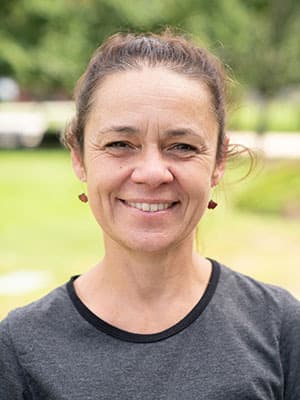
Dominik Bień is an Adjunct Professor at the Institute of Political Sciences within the Faculty of Social Sciences at the University of Gdańsk . He can be contacted via email at dominik.bien@ug.edu.pl or by phone at +48 58 523 41 69 in room D507. Academic Role : Adjunct Professor Research Focus : Political theory, historical analysis of academic institutions, social movements, and AI applications in humanities His work spans the history of the University of Gdańsk, political ideologies (e.g., KOR, Wolnych Związków Zawodowych Wybrzeża), and methodological innovations like AI in political and historical research. Recent publications examine institutional memory, labor movements, and computational tools for analyzing political discourse. As Deputy Dean for Student Affairs at the Faculty of Social Sciences, he contributes to academic administration. His interviews and archival studies highlight critical transitions in Polish higher education and political thought during the 20th century.
David Sears is an Associate Professor of Interdisciplinary Arts at Texas Tech University , affiliated with the J.T. & Margaret Talkington College of Visual & Performing Arts . He co-directs the Performing Arts Research Laboratory (PeARL) and coordinates the Bachelor of Arts in Interdisciplinary Arts Studies. Prior to TTU, he earned a PhD in Music Theory from the Schulich School of Music at McGill University (2016) and completed a postdoc at Johannes Kepler University (2017). Dr. Sears' research focuses on the structural parallels between music and language , particularly in tonal harmony, using behavioral and computational methods. His work also spans popular music analysis (e.g., 80s pop synthesizers, Billboard Hot 100 trends), music and emotion , DIY communities on platforms like Pinterest, and film/video game music (e.g., jump scares, autism spectrum emotion recognition). His publications appear in venues like Music Perception , Psychology of Music , and Quarterly Journal of Experimental Psychology . PeARL, where he is a director, employs methods from psychophysics , cognitive psychology, and music informatics to study music, theatre, dance, and visual arts. Current projects include modeling musical expectation , analyzing horror film soundtracks , and exploring DIY online communities . As a pedagogue, Dr. Sears teaches graduate seminars in the Fine Arts Doctoral Program and undergraduate/graduate music theory courses. His lab's recent graduates include Hannah Percival (2024) and Sylvia Weintraub (2024), with ongoing advising of PhD candidates like Elizabeth Acosta and Devin Guerrero.
Timothy Kuhn is a Professor of Communication at the University of Colorado Boulder in the College of Media, Communication and Information. He has been actively teaching courses including Communication Theory, Organizational Communication, and Political Communication. Outside the university, he serves as an Associate Editor at the interdisciplinary journal Human Relations , co-coordinator of the "Organization as Communication" Standing Working Group at the European Group of Organizational Studies (EGOS), and vice-chair of the organizational communication division of the International Communication Association. His educational background includes: Ph.D. from Arizona State University (2000) M.A. from University of Minnesota Twin Cities (1996) B.S. from University of Minnesota Twin Cities (1991) Professor Kuhn's research focuses on how communication constitutes organizational life, examining how knowledge, authority, identities, and conceptions of value emerge in sociomaterial and power-laden communication practices. His work centers on four specific research themes: (1) individual and organizational processes of "knowing" and learning; (2) identity negotiation and meaningfulness in work; (3) ethical and unethical action in organizational settings; and (4) collaborative decision-making among diverse stakeholders. His theoretical approach emphasizes communicative forms of explanation where symbolic and material elements intertwine in constructing and disrupting meanings. His recent publications demonstrate a strong focus on the communicative constitution of organizations, with increasing attention to posthumanist perspectives, materiality, and the role of communication in shaping organizational authority and knowledge processes. His work bridges communication studies, organization theory, and critical management studies, often challenging traditional understandings of organizations as fixed entities. Professor Kuhn has received numerous prestigious awards including: ICA Fellow (2020) from the International Communication Association Organizational Communication Division/Edited Book Award (2019) from the National Communication Association Organizational Communication Division/Article Award (2013) from the National Communication Association Group Communication Division/Dennis Gouran Research Award (2006) from the National Communication Association Organizational Communication Division/Article Award (2004) from the National Communication Association Group Communication Division/Dennis Gouran Research Award (2001) from the National Communication Association Professor Kuhn has made significant contributions to organizational communication through his editorial work, serving as Associate Editor for Human Relations and contributing to various book projects. His research has been widely cited and has influenced both academic and practical approaches to understanding organizational communication. He maintains active international collaborations, with research connections across North America, Europe, Australia, and Asia. His current work continues to explore the intersection of communication, materiality, and organization, with recent publications addressing ventriloquial authority in management education, organizational memory, and the communicative constitution of organizationality. He is particularly interested in how communication practices shape knowledge, authority, and ethical frameworks within contemporary capitalist organizations.
Assoc. Prof. Dr. Emre ATILGAN is an Associate Professor at the Department of Health Management, Trakya University, Edirne, Turkey. He holds a PhD in Economics from Hacettepe University (2012) and has been affiliated with institutions including Pamukkale University and Trakya University since 2004. His research focuses on health economics, hospital efficiency, and health policy analysis with a particular interest in econometric modeling and sustainable healthcare systems. Education: Bachelor’s Degree (2003) Master’s Degree (2005) Doctoral Degree in Economics (2012) Research Interests: Health Economics, Health Policy Analysis, Hospital Efficiency, Econometrics, Sustainability in Healthcare . His work explores topics such as the health-led growth hypothesis, technical efficiency in public hospitals, and the role of Fintech in renewable energy financing. Recent studies include analysis of OECD countries’ health financing systems and equity in maternal healthcare utilization in developing nations. Professional Contributions: Advised master’s thesis on Health Expenditures in Developing European Countries. Coordinated EU-funded projects like CrossBorder BLUE GROWTH (2023) and Edirne Active Aging Center (2015). Recipient of multiple awards including Best Paper in Health Economics (2017) and Runner-Up in Best Review Award (2015). Labs/Projects: Involved in initiatives like Advanced Statistical Analysis for Healthcare and the Prevention of Risks for Sustainable Development in the region.
Atom Egoyan is a renowned Armenian-Canadian filmmaker and academic, currently serving as Professor of Film at The European Graduate School (EGS). He has held teaching roles at the University of Toronto and is a Distinguished Scholar in Residence at Ryerson University. His work interrogates themes like technology's distortion of human communication, Armenian cultural memory, and existential anxiety. Egoyan's films often blend psychological complexity with formal innovation, earning him international acclaim. Educated in International Relations at Trinity College, University of Toronto, Egoyan's artistic journey began with his 1979 short film Howard in Particular . Notable films include The Sweet Hereafter (Academy Award-nominated), Ararat (first major film addressing the Armenian Genocide), and Chloe . He has published extensively, including screenplays, essays, and interviews that explore film theory and cultural narrative. Egoyan's awards include Canada's highest civilian honor (Officer of the Order of Canada, 1999) and the Dan David Prize (2008). His articles and interviews discuss directing techniques, artistic philosophy, and the interplay between personal and cultural history. Though primarily a filmmaker, his academic contributions span film education and critical discourse.
Professor Sin-Wang Chong is a leading academic in education and applied linguistics, currently serving as Director of Impact and Innovation and Director of Research at the International Education and Lifelong Learning Institute (IELLI), University of St Andrews. He is also the Inaugural Director of the Centre for International, Language, and Teacher Education Research (CILTER) and holds Visiting Professorships at King’s College London and the Education University of Hong Kong. His work focuses on evidence synthesis methodologies, research-practice integration, and language education, with over 70 publications and research projects valued over £3 million. Chong’s editorial roles include Founding Editor-in-Chief of Research Synthesis in Applied Linguistics and St Andrews Journal of International and Language Education , and Editor of Review of Education . He actively contributes to academic leadership, serving on councils of the British Educational Research Association (BERA), British Association for Applied Linguistics (BAAL), and International Association of Applied Linguistics (AILA). He co-founded initiatives such as TESOLgraphics and Scholarly Peers, platforms supporting teachers and early career researchers. His research emphasizes high-impact evidence syntheses, particularly in teacher education, and he leads a £2 million contract with the UK Department for Education. Awards include Senior Fellow of the Higher Education Academy (SFHEA), Fellow of the Royal Society of Arts (FRSA), and being named a Top 2% Scientist in Education (2023-2024, Elsevier-Stanford List). Professional contributions include grant assessment for major funding bodies and ethical guidelines development for BERA. He coordinates the Thesis by Publication resource platform and actively promotes open scholarship and peer-review literacy through podcasts and workshops.
Brian Harward is a Professor and Chair of the Department of Political Science at Allegheny College, a private liberal arts institution in Meadville, Pennsylvania. He plays a central leadership role in one of the largest political science departments among similar colleges, overseeing curriculum, faculty, and academic programming. The Department of Political Science emphasizes critical analysis, writing, and independent research across subfields including American politics, international relations, political philosophy, and global regional studies. As department chair, Harward contributes to shaping educational outcomes focused on democratic values, justice, and global citizenship. Academic Focus Areas: Culture and Politics, Globalization and Transnational Politics, Institutions and Processes, Policy Studies, Problems in Democracy Departmental Values: Democratic engagement, critical discourse, ethical public policy, methodological diversity While no specific research publications or advising records are listed for Brian Harward in the provided text, the department supports senior capstone projects, internships, and student research, suggesting his involvement in undergraduate mentorship and academic development. Brian Harward is also associated with interdisciplinary programs such as International Studies and the Law & Policy Center at Allegheny College, reinforcing his engagement with policy-relevant scholarship and civic education. There is no indication of awards, grants, or specific research projects directly tied to him in the available content. However, the department promotes experiential learning, travel seminars, and engagement with real-world political institutions, likely reflecting his broader educational philosophy.
Ewa Chrusciel is a Professor at Colby-Sawyer College’s School of Arts & Sciences, joining the faculty in 2006. Holding the M. Roy London Endowed Chair, she specializes in world poetry, translation, and cognitive poetics, blending interdisciplinary and international approaches. Ph.D. in Literary Studies and Contemporary Poetry from Illinois State University M.A. in English Philology from Jagiellonian University, Poland Her research spans pre-modern, modern, and postmodern world poetry , comparative literature , and neurological theories of aesthetic experience . She teaches creative writing, world literature, and poetry, emphasizing bilingualism and translation. Recent academic work includes presentations on translating Polish poetry , religious references in verse , and cognitive embodiment in literary forms . Her poetry has been translated into Vietnamese, Hungarian, and Italian. 2016: Nomination for Best of Net Anthology 2014: Pushcart Prize nomination 2013: Second place in 'Nakręć wiersz' Poetry Competition 2011: Finalist in Sow’s Ear Poetry Contest 2009: Winner of Emergency Press Contest
Ying Xie is an Associate Professor in the Department of Educational Technology, Research and Assessment at Northern Illinois University, College of Education. Her work bridges technology and pedagogy, with a focus on enhancing reflective learning, knowledge integration, and group cognition through innovative digital tools. Educational Background: Ph.D. in Instructional Systems, The Pennsylvania State University, with a minor in Educational Psychology B.S. in Computer Science and B.A. in Foreign Languages, University of Science and Technology of China Her research spans emerging technologies in education , including robotics in K–12 STEM learning, technology-assisted language acquisition, and mathematical problem posing. She explores how tools like word clouds, blogs, and mobile VR can scaffold reflective thinking and collaborative knowledge building. Her work is grounded in both cognitive and social learning theories. Analysis of her recent publications reveals a consistent focus on technology-enhanced learning environments , particularly using visual and interactive tools (e.g., tag clouds, blogs, VR) to support metacognition and collaboration. Her studies often employ mixed methods and design-based research, targeting diverse populations from K–12 to higher education. A growing interest in emergency remote learning and teacher self-efficacy is evident in her 2021 publications. Scientific Awards: No awards explicitly mentioned in the provided text. Dr. Xie actively advises graduate and doctoral students, as seen through her teaching of ETT 799 (Doctoral Research and Dissertation). She has contributed to curriculum development in instructional technology and research methodology. Her service includes participation in academic seminars and research guidance. She leads or contributes to research projects examining digital learning tools and their impact on cognition and engagement. Her lab or research team likely focuses on user experience in educational technology, possibly linked to the UX Lab mentioned in the departmental resources.
Henrik Palmer Olsen is a Professor of Jurisprudence at the Faculty of Law, University of Copenhagen (UCPH), where he has been a central figure since earning his Cand.jur. in 1993. He is a co-founder and member of the Centre of Excellence for International Courts and Governance (iCourts), a leading research center in global legal studies. His academic leadership includes serving as Associate Dean for Research and Head of the PhD School at UCPH. Education: Dr.jur. (2005), Faculty of Law, University of Copenhagen PhD (1997), Faculty of Law, University of Copenhagen MA in Socio-Legal Studies (1994), University of Sheffield Cand.jur. (1993), Faculty of Law, University of Copenhagen Henrik Palmer Olsen's research lies at the intersection of legal philosophy, human rights, and international courts, with a growing emphasis on data science applied to legal analysis. His work explores the theoretical foundations of law, judicial legitimacy, and the methodological evolution of legal scholarship. He has pioneered the integration of quantitative methods—such as citation network analysis and corpus linguistics—into doctrinal legal studies, bridging traditional and computational approaches. His recent publications reflect a consistent trajectory in analyzing international courts, legal diplomacy, and legal methodology. Works like 'Can quantitative methods complement doctrinal legal studies?' and 'Providing Legal Pincite Recommendations using Language Representations' illustrate his innovative approach, combining jurisprudence with AI and data-driven legal research. This positions him at the forefront of the digital transformation in legal science. Scientific Engagement: Speaker, Regulating “AI” in the EU: The “Artificial Intelligence Act” (2021) Speaker, EURECO Distinguished Lecture Series (2010) Lecturer, Bristol Law School Annual Jurisprudence Lecture (2010) Olsen has held major research management roles, including co-founding the Center for Studies in Legal Culture and leading the PhD school at UCPH. He has secured recognition through extensive research output and collaborations across Europe. His work is referenced in academic databases, Mendeley, and multiple Wikipedia pages, indicating broad scholarly impact. He is actively involved in shaping legal education, particularly through his textbook on legal methodology. He is associated with research environments such as the Nordic Asylum Law & Data Lab and maintains strong international networks, especially in EU legal studies and global mobility law. His multilingual abilities (Danish, English, French) support his transnational academic engagement.
Bruno Nobre is an Assistant Professor and Vice Dean at the Faculty of Philosophy and Social Sciences (FFCS) of the Catholic University of Portugal (UCP). He is actively involved in the Center for Philosophical and Humanistic Studies (CEFH), where he coordinates the research topic on 'Causal processes, complex systems and emergence.' Since 2020, he has served as Editor of the Revista Portuguesa de Filosofia , a Scopus-indexed journal in the Q3 category. His interdisciplinary profile bridges science, philosophy, and theology. PhD in Physics, Instituto Superior Técnico, University of Lisbon (2005) Licentiate in Engineering Physics, Instituto Superior Técnico (2000) Licentiate in Philosophy, Faculty of Philosophy and Social Sciences, UCP (2010) Master of Divinity, Boston College School of Theology and Ministry (2015) Sacred Theology Licentiate, Boston College (2016) PostDoc in Philosophy of Science, Universidade Estadual do Rio de Janeiro (Brazil) Bruno Nobre's research centers on the philosophy of science, philosophy of physics, philosophy of religion, and ethics. His work explores the metaphysical foundations of scientific knowledge, the nature of causality and emergence, and the intersection of religion and rationality. He is particularly interested in humanistic perspectives on happiness, the role of aesthetic criteria in scientific theory selection, and the philosophical implications of complex systems. His approach integrates analytical rigor with interdisciplinary insights from physics, neuroscience, and theology. His recent publications reveal a strong focus on metaphysics, philosophy of religion, and happiness studies. Articles such as 'Explorations in contemporary analytic metaphysics' and 'Psychometric properties of post-critical belief scale' indicate a dual engagement with theoretical philosophy and empirical validation of religious constructs. His editorial work on Humanistic Perspectives in Happiness Research underscores a commitment to integrating philosophical depth with psychological and social dimensions of well-being. The recurring themes across his work include grounding, modality, personal identity, and the scientific study of religiosity. Scientific Awards: No specific awards mentioned in the provided text. Bruno Nobre has supervised numerous students within the Supervised Work at UCP program and has been involved in significant research grants, including the CEFH project (2020–2025) and a 2021–2023 study on neuroanatomical correlates of well-being in mindfulness and religious practices. He has organized key academic events such as the International Congress on the Philosophy of Nature and the International Colloquium on Time and Emergence, demonstrating leadership in scholarly community-building. He is a core member of the Center for Philosophical and Humanistic Studies (CEFH), a vibrant research hub at UCP that fosters interdisciplinary dialogue across philosophy, theology, psychology, and the sciences. His role as coordinator of a research topic on causal processes and emergence highlights his leadership in advancing conceptual innovation within complex systems theory.
Nora Hoffmann is the Head of the Writing Center at Goethe University Frankfurt and a prominent researcher in academic writing didactics. With a background in Modern German Literature and higher education didactics, she has held key roles at Johannes Gutenberg University Mainz and Eberhard Karls University Tübingen. Current: Head of Writing Center, Goethe University Frankfurt Past: Research Assistant at Mainz Center for Quality Assurance (2012–2018) Her research focuses on the didactics of scientific reading and writing, writing center evaluation, and AI integration in academic writing. She has pioneered frameworks like TeKoER for text quality assessment and explored chatbot applications in educational contexts. Recent work examines generative AI's impact on student creativity and writing processes, based on nationwide surveys (2023–2024). She co-developed position papers on writing competence institutionalization and maintains leadership roles in the Society for Writing Didactics (gefsus) and European Writing Centers Association (EWCA). Key contributions include: Coordinating writing workshops across disciplines Developing faculty training programs for writing instruction Advancing quality management frameworks for academic texts Leading Germany-wide writing center surveys
Guillaume Cabanac is a Full Professor of Computer Science at Université de Toulouse, affiliated with IRIT UMR 5505 CNRS (IRIS team) and the Institut Universitaire de France. His work spans Scientometrics , Research Integrity , and Information Retrieval , with a focus on detecting scientific misconduct through computational methods. Key projects: Problematic Paper Screener , Decontamination of Scientific Literature Chair Service: Editorial Board Member at JASIST (2017–present) and Scientometrics (2013–present); Program Chair for multiple BIR workshops at ECIR Awards: Nature's 10 Scientist (2021), Young Researcher Prize at INFORSID'08 His research combines meta-studies of scientific literature , Crowdsourced fact-checking , and analysis of academic networks , addressing challenges in publication ethics and digital library systems.
Danielle Knafo is a Professor of Psychology at Long Island University (LIU) Post, within the College of Liberal Arts and Sciences, Department of Psychology. She is a licensed clinical psychologist and psychoanalyst with extensive academic and clinical experience. She also holds faculty and supervisory positions at NYU’s Postdoctoral Program for Psychotherapy and Psychoanalysis and Adelphi’s Postgraduate Programs in Psychoanalysis and Psychotherapy. B.A. and M.A. in Clinical Psychology – Tel Aviv University, Israel Ph.D. – The Graduate Center, City University of New York (CUNY) Certificate in Psychoanalysis – New York University (NYU) Dr. Knafo's research and clinical expertise span a wide range of areas, with a strong focus on psychoanalysis, trauma, gender and sexuality, psychosis, perversion, technology, and the psychology of art and creativity . Her work often explores the intersections between culture, identity, and mental health, particularly in multicultural and immigrant populations. She has made significant contributions to understanding the role of creativity in psychological transformation and the impact of technology on human relationships and desire. Her recent publications reflect a consistent engagement with themes of loneliness, identity, technology, and the unconscious. Articles such as 'Alone in a Crowded Mind' and 'Guys and Dolls' explore modern relational challenges, while her work on psychosis and castration theory demonstrates deep clinical insight. Her research integrates psychoanalytic theory with contemporary cultural phenomena, resulting in a rich, interdisciplinary body of work. Scientific Awards and Honors: American Board and Academy of Psychoanalysis Book Prize (2018) Albert Nelson Marquis Lifetime Achievement Award (2017) Krasnoff Lifetime Achievement Award (2016) Barbro Sandin Award, ISPS (2015) CORST Essay Prize, American Psychoanalytic Association (2014) Multiple research grants from LIU and NYU Dr. Knafo has authored nine books and numerous journal articles, book chapters, and exhibition essays. She is actively involved in professional organizations including the American Psychological Association, the International Psychoanalytic Association, and the Institute for Psychoanalytic Training and Research. She has directed the Serious Mental Illness (SMI) concentration at LIU Post and continues to mentor clinicians and trainees. While no formal list of students is provided, her role as a professor, supervisor, and author of training-focused books like Becoming a Clinical Psychologist indicates significant advising and educational impact. She maintains a private practice in Manhattan and Great Neck, NY, and serves as a writing consultant and speaker. Dr. Knafo is affiliated with several academic and clinical institutions, including: Long Island University (LIU) Post – Professor of Psychology NYU Postdoctoral Program for Psychotherapy and Psychoanalysis – Faculty and Supervisor Adelphi University Postgraduate Programs – Faculty and Supervisor
Virginie ROCHE-TIENGO is a Lecturer in English Studies at Artois University, Faculty of Foreign Languages and Civilizations, where she has taught since 2022. Prior to this, she served at University of Paris 13 (Sorbonne Paris Nord) from 2004 to 2022, holding significant administrative positions including Vice-Dean for International and Institutional Relations (2018-2022) and Head of Master's programs. Her academic career spans over two decades with specialized expertise in Irish theater studies, particularly focusing on Brian Friel's works and Irish cultural representation. Her educational background features: 2003: Doctorate in Anglophone Studies from the University of Paris 4 Sorbonne. Dissertation: "The Lost Unity: Poetics of Myth in the Work of Irish Playwright Brian Friel." Supervised by Professor Élisabeth Angel-Perez. Awarded first class honors. Dr. ROCHE-TIENGO's research encompasses Irish theater from the 17th to the 21st century, with particular interest in myths and borders, writing and language, law and theater, enforced disappearances and diaspora, Irish theater and intercultural transfers, the Anglo-Irish conflict in visual and performing arts, dichotomies, hermeticism and transcendence in theater, and syncretism of Irish theater with other arts. Her scholarship demonstrates deep engagement with Irish cultural identity, political dimensions of theater, and the intersection of literature with legal and social frameworks across centuries of Irish dramatic production. Her publication record reveals a consistent scholarly trajectory focused on Irish theater, particularly the works of Brian Friel, while expanding into broader themes of cultural representation, diaspora, and intercultural exchange. Her research shows progression from close textual analysis of specific playwrights toward more expansive investigations of Irish cultural production in global contexts, including examinations of food representation, monetary symbolism, and the legacy of historical figures like Molière in Irish theater. The interdisciplinary nature of her work bridges literary studies, theater studies, cultural studies, and legal studies. Dr. ROCHE-TIENGO maintains active involvement in the academic community through service on scientific committees for international conferences, including the Spanish Association for Irish Studies (AEDEI) and the Nordic Irish Studies Network. Since 2023, she has served on the reading committee of the biannual scientific journal "Les Cahiers de la Nouvelle / Journal of the Short Story in English." Her international scholarly presence is evidenced by presentations at conferences across Europe, Japan, Mexico, Argentina, and the United States, reflecting the global significance of her research on Irish theater and culture.