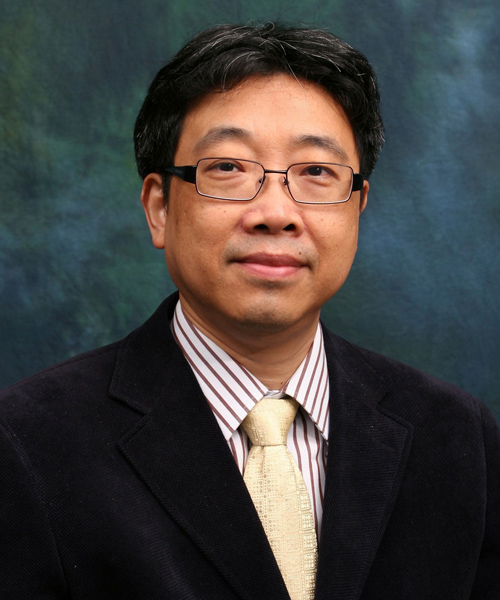
Jiannong Cao is a Chair Professor and Director of the University Research Facility in Big Data Analytics at the Department of Computing, Hong Kong Polytechnic University. He has held various academic roles since 1990, including Assistant Professor at City University of Hong Kong and Lecturer at Australian universities. PhD in Computer Science, Washington State University (1990) MSc in Computer Science, Washington State University (1986) BSc in Computer Science, Nanjing University (1982) His research focuses on cloud and edge computing , parallel and distributed computing , and mobile computing , with significant contributions to wireless sensor networks (WSN) for structural health monitoring (SHM) and software-defined networking (SDN) for vehicular communications. Recent work includes WiFi-based non-invasive health monitoring systems and multi-user computation partitioning in mobile cloud environments. Dr. Cao’s publications demonstrate trends in WSN optimization , SDN architectures , and cognitive modeling for network embedding , with applications in smart healthcare , transportation systems , and industrial IoT . Ministry of Education Natural Science Award (2018) ACM Distinguished Member (2017) IEEE Fellow (2014) Best Paper Awards at IEEE DSAA, SMARTCOMP, WCNC He has mentored numerous researchers, including Linchuan Xu , Xuefeng Liu , and Weigang Wu , who have authored key publications in top venues like ACM WSDM and IEEE INFOCOM . His professional roles include chairing IEEE committees and serving on grant panels for the Hong Kong Research Grant Council.
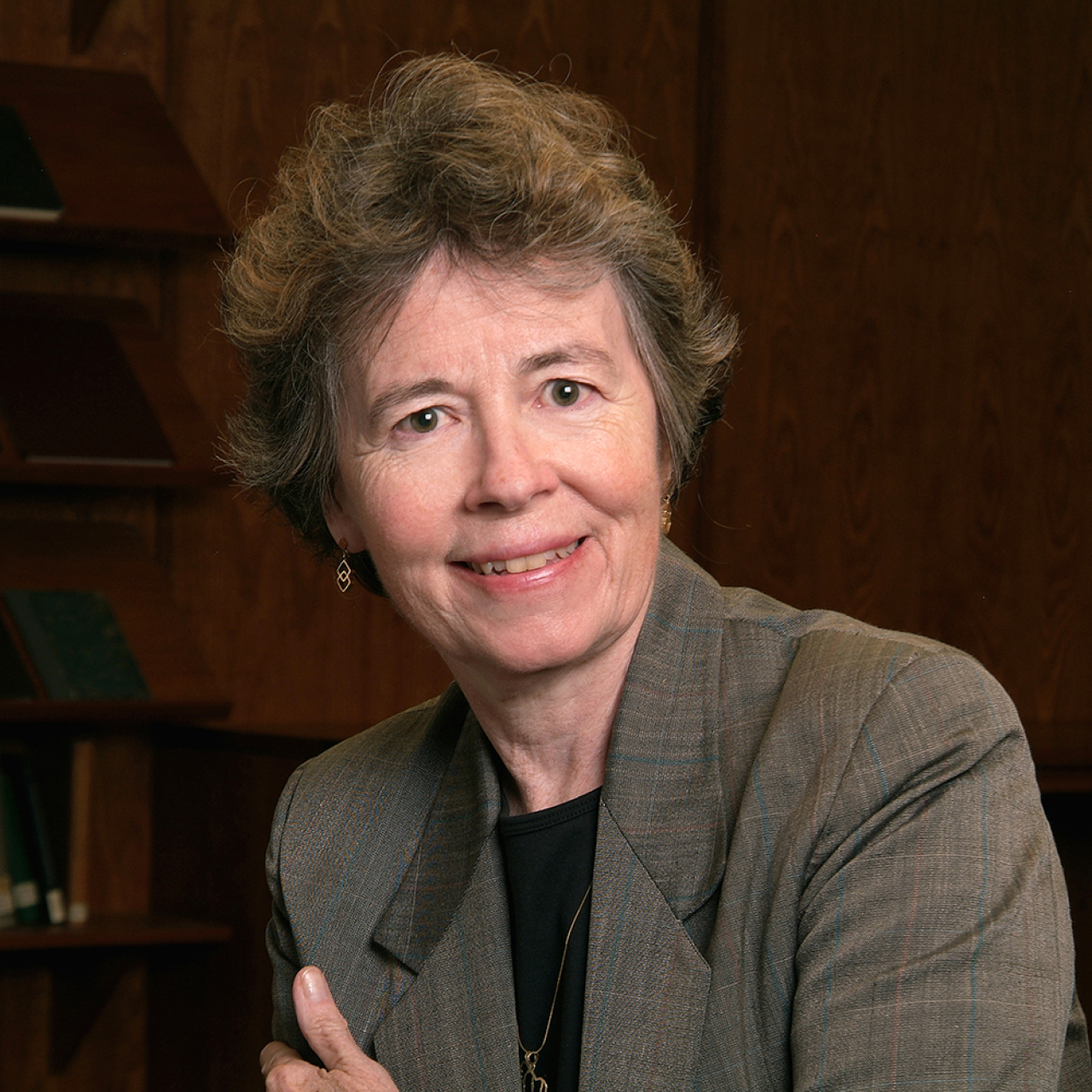
Catherine Z. Elgin is a Professor of the Philosophy of Education at Harvard University's Graduate School of Education since 1996. She holds a Ph.D. from Brandeis University (1975) and has taught at MIT, Princeton, Wellesley, Dartmouth, UNC Chapel Hill, Michigan State, Simmons, and Vassar prior to her Harvard appointment. Literary executor for Nelson Goodman and Jonathan Adler Research focuses on epistemology , philosophy of art , and philosophy of science Argues that understanding (not knowledge) should be epistemology's central concern Research Trends across her publications reveal: Epistemic value of fiction and imagination Interdisciplinary connections between art, science, and philosophy Critique of analytic/synthetic distinctions Perspectival approaches to scientific representation Conceptual analysis of exemplification and metaphor Epistemic normativity in educational contexts Scientific Awards & Editorial Involvement : Elected to American Academy of Arts & Sciences (2023) Advisory Board, American Philosophical Association Committee on the Philosophy of Education Editorial Board, American Philosophical Quarterly Editorial Board, International Journal for the Philosophy of Science Academic Leadership : Teaches courses in philosophy of education Maintains active research program through Harvard's DASH repository Collaborates with educators across Harvard's schools including the Center for Ethics and the Professions
Richard Walsh is Professor in the Department of English and Related Literature at the University of York, where he leads the Interdisciplinary Centre for Narrative Studies and founded the British and Irish Association for Narrative Studies. His research bridges literary theory, cognitive science, and complex systems, examining narrative as a fundamental mode of human cognition. His research focuses on three interconnected domains: The rhetorical theory of fictionality and its cultural manifestations Interdisciplinary approaches to narrative cognition and sensemaking Complexity science applications to narrative structures across media This work extends to innovative fiction, digital narratives, and cross-cultural storytelling. Analysis of Walsh's recent publications reveals strong emphasis on narrative cognition, interdisciplinary methodologies, and emerging topics in AI storytelling. Thematic clusters include: Foundational studies in fictionality and rhetorical frameworks Complexity theory applications to narrative dynamics Interdisciplinary intersections with cognitive science and digital media His scholarly recognition includes the distinguished Institute of Advanced Study Research Fellowship at Durham University (2016) Walsh directs multiple research groups including the Narrative and Complex Systems Group (NarCS) and supervises doctoral projects on narrative theory. He leads collaborative initiatives like the RIDERS project on emergent narrative and the Threshold Worlds project on dream cognition.
Prof. Dr. Fabian Gieseke is a Professor and Chair of Machine Learning and Data Engineering at the University of Münster. He holds a PhD in Computer Science from Carl von Ossietzky University of Oldenburg and a dual degree in Mathematics and Computer Science from the University of Münster. His research focuses on Machine Learning, High-Performance Computing, and their applications in Geosciences, Smart Cities, and Astrophysics. Education: PhD in Computer Science (2012), Carl von Ossietzky University of Oldenburg University studies in Mathematics and Computer Science (2006–2011), University of Münster Research Interests: Data Mining and Machine Learning High-Performance Computing & Distributed Systems Deep Learning Applications in Environmental Science and Astrophysics Geospatial Data Analysis using Satellite Imagery Publications Trends: His recent work emphasizes large-scale environmental monitoring via deep learning, including canopy height estimation, forest biomass prediction, and national-scale tree counting. He also explores interactive systems for geospatial data retrieval and optimization of machine learning models for resource-constrained environments. Advising & Grants: Supervised over 30 theses on topics like satellite image analysis, deep learning on microcontrollers, and data marketplaces for smart grids. Active in securing grants for interdisciplinary projects combining AI with Earth observation. Labs/Teams: Leads the Machine Learning and Data Engineering group at the University of Münster, focusing on scalable AI solutions for real-world challenges in science and industry.
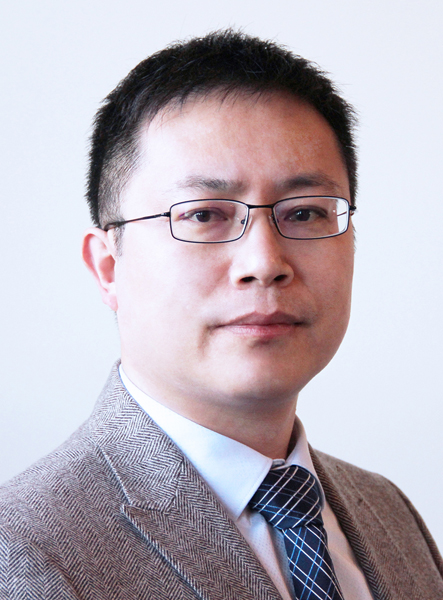
Prof. Wang Cheng-Xiang is a Professor of Wireless Communications at the Institute for Signal and System Processing (ISSS), School of Engineering and Physical Sciences (EPS), Heriot-Watt University, Edinburgh, UK since 2011. His academic journey includes roles as Deputy Head of ISSS (2014-2018), Programme Director for BEng Telecom Engineering (2015-2018), and Director for China Development Group (2006-2018). He holds a PhD from Aalborg University (2004) and prior research experience at Siemens AG and Universities in Germany, Norway, and the UK. His research focuses on applying artificial intelligence to wireless networks, 6G systems, and wireless channel modeling. He has published over 390 papers with an h-index of 57 and 13,460+ citations. Notable recognitions include IEEE/Clarivate Analytics' Highly Cited Researcher (2017-2019) and 11 Best Paper Awards. Prof. Wang serves as Executive Editorial Committee (EEC) Member for IEEE Transactions on Wireless Communications, and has held editorial roles in 10 journals. He actively organizes conferences, serving as chair for events like the IEEE World Congress on Computational Intelligence (2008) and 25th International Conference on Neural Information Processing (2018).
Valérie Berthé is a Research Director at CNRS, based at the Institut de Recherche en Informatique Fondamentale (IRIF), Université Paris Cité. Her research lies at the crossroads of theoretical computer science and mathematics, with a focus on symbolic dynamics, combinatorics on words, discrete geometry, and numeration systems. She is a Principal Investigator of the prestigious ERC Synergy project DynAMICs, which unites experts from mathematics and computer science to tackle fundamental problems in dynamical systems and model checking. Research Interests: Her primary research areas include symbolic dynamics, combinatorics on words, discrete geometry, tilings, aperiodic order, continued fractions, and their connections to number theory and automata. She is particularly interested in the algorithmic and arithmetic aspects of dynamical systems, aiming to develop automated verification methods and resolve open conjectures such as the Skolem problem on reachability. Scientific Leadership: She leads a major collaborative research program and is involved in significant national and international projects. Grants & Projects: ERC Synergy Grant: DynAMICs (Model checking seen from a dynamic and arithmetic point of view) ANR PRCI: SymDynAr (2024–2027) ANR Blanc: CODYS (2018) Academic Service: Member, CNRS National Committee, Section 6 Member, Steering Committee of INSMI (Institut national des sciences mathématiques et de leurs interactions) Member, Scientific Council of the Société Mathématique de France (SMF) Advising and Editorial Work: Valérie Berthé has supervised numerous PhD students who have gone on to successful academic careers. She is a co-editor of several influential volumes in her field, including works published by Cambridge University Press and Birkhäuser, covering topics in sequences, automata, number theory, and symbolic dynamics. She is also involved in organizing scientific events and seminars, such as the One World Numeration Seminar, fostering international collaboration in her research community.
Petter N. Kolm serves as a Clinical Professor of Mathematics and Program Director at New York University, with his office located in Warren Weaver Hall (520). He can be contacted at petter.kolm@nyu.edu or 212-998-4855, and holds an editorial board position at the Journal of Portfolio Management. His academic qualifications include: Doctorate in Mathematics from Yale University M.Phil. in Applied Mathematics from the Royal Institute of Technology in Stockholm M.S. in Mathematics from ETH Zurich Dr. Kolm's research centers on quantitative finance, with primary focus areas including quantitative trading strategies, delegated portfolio management, financial econometrics, risk management, and optimal portfolio strategies. His work integrates advanced mathematical modeling with practical investment applications, bridging theoretical frameworks and real-world market dynamics through rigorous empirical analysis. Analysis of his 15 most recent publications reveals consistent emphasis on portfolio optimization techniques—particularly Bayesian methods and the Black-Litterman model—alongside significant contributions to algorithmic trading systems, factor-based equity portfolio construction, and machine learning applications for financial sentiment analysis. His scholarly output demonstrates evolution from foundational portfolio theory toward contemporary computational finance challenges. As Program Director, Dr. Kolm oversees academic programming and likely mentors graduate students in quantitative finance, though specific advisee details are not documented. His prior industry role at Goldman Sachs Asset Management provided direct experience in developing hedge fund strategies, informing his applied research approach. Dr. Kolm's professional trajectory includes significant industry engagement through his tenure in Goldman Sachs' Quantitative Strategies Group, where he developed quantitative investment systems. His current academic leadership position leverages this practical experience to shape quantitative finance education and research at NYU.
Joachim Weickert is a Professor of Mathematics and Computer Science at Saarland University where he heads the Mathematical Image Analysis Group since 2001. He received his diploma and Ph.D. in mathematics from the University of Kaiserslautern (1991, 1996), and a habilitation degree in computer science from the University of Mannheim (2001). Prior to his current position, he worked as a research assistant at the University of Kaiserslautern, as a post-doctoral researcher at the universities of Utrecht and Copenhagen, and as an assistant professor at the University of Mannheim. His research focuses on image processing, computer vision, and scientific computing, with special emphasis on techniques based on partial differential equations, variational principles, wavelets, morphological and nonlocal methods, as well as neuroexplicit approaches. He has developed mathematical models and efficient numerical algorithms for image restoration, enhancement, segmentation, compression, optic flow computation, stereo reconstruction, shape from shading, and signal processing methods for tensor fields. These ideas have been successfully applied in industry, biomedical image analysis, and other fields. Analysis of his recent publications reveals a strong trend toward combining traditional PDE-based methods with modern deep learning approaches, particularly in the areas of image inpainting and compression. His work increasingly explores the connections between numerical algorithms for partial differential equations and neural network architectures, demonstrating how mathematical foundations can inform cutting-edge AI techniques while maintaining strong theoretical guarantees. Gottfried Wilhelm Leibniz Prize (2010), considered the most important research award in Germany ERC Advanced Grant (2017) for "Inpainting-based Compression of Visual Data" Elected member of Academia Europaea - The Academy of Europe Jan Koenderink Prize for Fundamental Contributions in Computer Vision (2014) Multiple DAGM Prizes and Best Paper Awards throughout his career AAIA Fellow (2021) and Highly Ranked Scholar (2024) distinctions Professor Weickert has supervised over 250 bachelor's and master's theses and initiated the Master Programme in Visual Computing at Saarland University, the first of its kind in Germany taught in English. He has established numerous interdisciplinary collaborations with colleagues from medicine, bioinformatics, pharmacy, physics, mechatronics, and mechanical engineering. As Principal Investigator for Visual Computing within the Multimodal Computing and Interaction Cluster of Excellence, and former dean of the Faculty of Mathematics and Computer Science (2008-2010), he has played a significant leadership role in advancing visual computing research and education. He heads the Mathematical Image Analysis Group, which has been at the forefront of developing mathematical methods for image analysis. The group maintains strong connections with both theoretical mathematics and practical applications, bridging the gap between fundamental research and real-world implementation across various domains including medical imaging, industrial inspection, and multimedia processing.
Carlos Fernandez-Granda is an Associate Professor of Mathematics and Data Science at New York University, holding joint appointments at the Courant Institute of Mathematical Science and the Center for Data Science. He currently serves as the Interim Director of the Center for Data Science. His academic career spans over a decade at NYU, where he has taught probability and statistics to data-science students. Dr. Fernandez-Granda's research focuses on designing and analyzing data-science methodology, with current emphasis on machine learning applications in medicine, climate science, and scientific imaging. His work bridges theoretical foundations with practical applications across multiple domains. His notable contributions include: Development of the COBRA (COnfidence-Based chaRacterization of Anomalies) score for automatic assessment of impairment and disease severity Applications of machine learning to improve climate projections through the M2LInES project Research on magnetic resonance fingerprinting for quantitative tissue parameter estimation Development of AI systems for medical diagnostics including Alzheimer's detection and breast cancer diagnosis Dr. Fernandez-Granda is the author of the book "Probability and Statistics for Data Science," published by Cambridge University Press. The book serves as a comprehensive guide to the two pillars of data science, featuring real-world datasets and addressing fundamental challenges like overfitting, the curse of dimensionality, and causal inference. His research has been supported by grants from the National Science Foundation (Division of Mathematical Sciences, grants 1616340 and 2009752) and the Alzheimer's Association (grant AARG-NTF-21-848627). Dr. Fernandez-Granda is actively involved in several collaborative projects: M2LInES project: An international collaboration focused on improving climate projections using machine learning to capture unaccounted physical processes at the air-sea-ice interface Math and Data group: Exploring the intersection of mathematical theory and data science applications
Saras D. Sarasvathy is the Paul M. Hammaker Professor at the Darden Graduate School of Business, University of Virginia, where she is a member of the Strategy, Entrepreneurship and Ethics area. A leading researcher in entrepreneurship, she advises entrepreneurship programs globally across Europe, Asia, and Africa, while serving on boards of companies including Lending Tree (Nasdaq: TREE) and Upekkha, a SaaS accelerator in Bangalore, India. Her research focuses on the cognitive basis of high-performance entrepreneurship, particularly her groundbreaking work on effectuation theory. Sarasvathy's scholarship examines how expert entrepreneurs think and act under uncertainty, challenging traditional predictive approaches to business strategy. She has developed frameworks showing how entrepreneurs create markets and opportunities through action-oriented, non-predictive methods that leverage available means rather than predetermined goals. Sarasvathy's award-winning research has generated significant scholarly attention and practical applications worldwide. Her work has spawned over a hundred scholars involved in the effectuation research program, with publications available through www.effectuation.org. Her influential book Effectuation: Elements of Entrepreneurial Expertise and co-authored textbook Effectual Entrepreneurship (winner of the 2012 Axiom Business Book Awards Gold Medal) have shaped entrepreneurship education globally. Among her numerous accolades are the 2022 Global Award for Entrepreneurship Research (the highest recognition in the field), the Academy of Management's 2019 Foundational Work Award, and recognition as one of Fortune Small Business Magazine's top 18 entrepreneurship professors. She has received honorary doctorates from multiple universities in Europe and Asia and has been named a Visiting Professor at institutions worldwide. Before academia, Sarasvathy founded and ran five successful businesses across three countries. Her doctoral research at Carnegie Mellon University was supervised by Herbert Simon, the 1978 Nobel Laureate in Economics, with whom she collaborated to discover the essential elements of entrepreneurial know-how. She holds a B.Com. from the University of Bombay, India, and an MSIA and Ph.D. from Carnegie Mellon University.
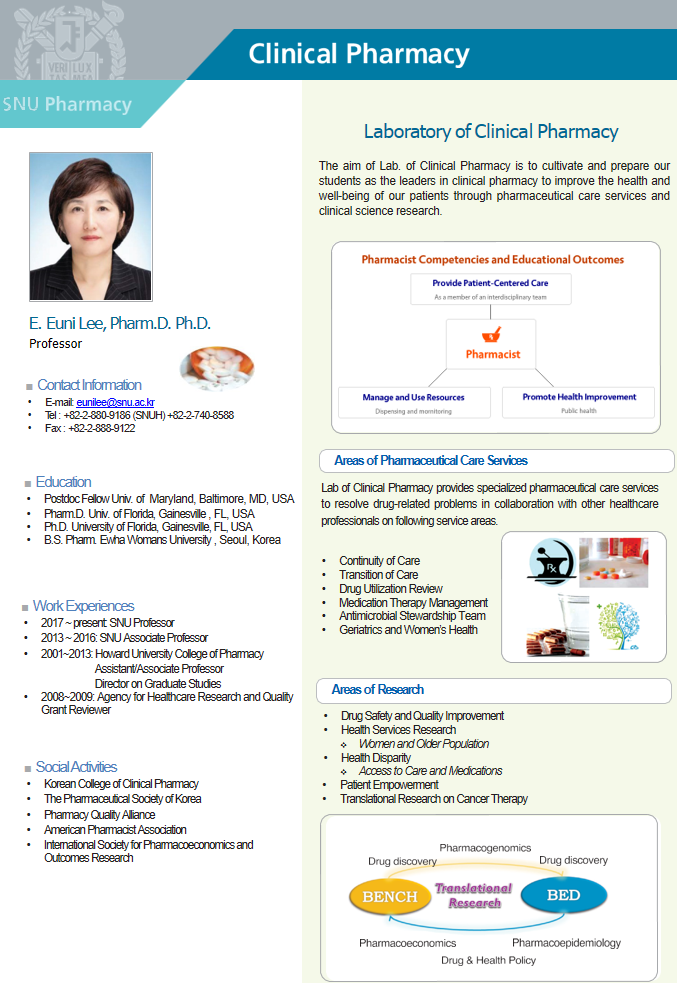
Professor Kim Eun-kyung is a full-time Professor at the College of Pharmacy , Seoul National University , South Korea. She directs patient-oriented research at the intersection of pharmacy, public health and clinical epidemiology, leading projects that range from nationwide pharmaco-epidemiologic cohort analyses to qualitative investigations of pharmacist-led care models. Education Ph.D. & Pharm.D., University of Florida, USA Research Interests Professor Kim’s research program is built on five mutually reinforcing pillars: Population-based patient care research – leveraging large national databases to understand medication utilization and outcomes in real-world settings. Drug safety and patient empowerment – identifying adverse drug reactions and developing interventions that enable consumers and clinicians to report and prevent harm. Access to care and medications in underserved and special populations – examining barriers faced by the elderly, rural residents, patients with rare diseases, and those undergoing high-cost procedures such as hematopoietic stem-cell transplantation. Disease prevention and appropriateness of therapy – evaluating preventive pharmacotherapy (e.g., anti-osteoporosis drugs, vitamin D) and ensuring evidence-based prescribing. Quality improvement in health-care delivery – designing multidisciplinary models that integrate pharmacists into care teams to optimize medication therapy and reduce drug-related problems. Publication Trends Across 2017–2020, Professor Kim has published extensively in International Journal of Environmental Research and Public Health , Clinical Nutrition , Medicina , BMC Public Health , Blood Research , Neuroepidemiology and other peer-reviewed journals. Her work characteristically combines rigorous secondary-data analyses of Korean or US national health surveys with systematic reviews/meta-analyses focusing on drug safety endpoints. Themes include neurological adverse events (trimetazidine-induced parkinsonism), hematologic toxicities (linezolid-induced thrombocytopenia), nutritional and metabolic complications in critical care, and access/utilization of medications in vulnerable populations. Scientific Awards & Honors (None listed in the provided texts) Grants & Research Support While specific grant identifiers are not detailed in the supplied pages, the breadth of large-scale database studies and multi-institutional collaborative projects implies sustained funding from national agencies such as the Korea Health Industry Development Institute (KHIDI) or the Ministry of Health & Welfare. Laboratory & Team Professor Kim leads an active research group located in Yeongeon Campus 17-201. The team integrates graduate students, post-doctoral researchers, pharmacists and biostatisticians working together on pharmacoepidemiology, patient-reported outcomes and health-services research.
Prof. Dr. Harald Wehnes serves as a Professor at the University of Würzburg within the Faculty of Mathematics and Computer Science, specifically affiliated with the Institute of Computer Science's Chair of Computer Science III (Communication Networks). His office is located in room A206 at the Hubland campus, with contact email wehnes@informatik.uni-wuerzburg.de. His research centers on project management methodologies, with particular emphasis on the Project Excellence Model and its practical applications. Prof. Wehnes has developed significant expertise in applying project management frameworks to complex IT infrastructure initiatives and healthcare systems. His work demonstrates how theoretical project management concepts translate into real-world implementation, especially in cross-organizational contexts. Analysis of his publication history reveals a consistent focus on practical project management applications, particularly the NIMBUS project case study which documented the consolidation of 12 data centers into a single state data center. His publications demonstrate evolving expertise from foundational programming work (evidenced by his 1981 book "Strukturierte Programmierung mit FORTRAN 77" which went through seven editions) to sophisticated project management frameworks. Prof. Wehnes has maintained active engagement with the German Project Management Association (GPM), presenting at numerous forums and events. His international reach is evident through presentations at institutions including the University of the United Arab Emirates and the University of Canterbury in New Zealand. From 2013-2020, he taught specialized courses on professional project management (Spezialvorlesung aus der Praxis: Professionelles Projektmanagement) at the University of Würzburg, sharing his extensive practical experience with students. His work environment within the Chair of Computer Science III connects his project management expertise with research areas including 5G & 6G network technologies, network and service management, and green communication networks.
Yize Zhao is an Associate Professor in the Department of Biostatistics at Yale School of Public Health and an Associate Professor in the Department of Biomedical Informatics & Data Science at Yale University. She holds affiliations with multiple Yale research centers including the Yale Center for Analytical Sciences, Yale Alzheimer's Disease Research Center, Yale Wu Tsai Institute, Yale Center for Brain and Mind Health, and Yale Computational Biology and Bioinformatics. Dr. Zhao's research focuses on developing statistical and AI methods to analyze large-scale complex biomedical data including medical imaging, genomics, and electronic health records. Her methodological expertise spans Bayesian statistics, feature selection, predictive modeling, data integration, missing data analysis, and network analysis. Her research interests span multiple biomedical domains with a strong focus on mental health, psychiatry, neurodegenerative diseases, and aging. Her recent work includes brain-to-behavior modeling, multi-layer biomedical networks, imaging genetics and genomics, and the integration of multi-modal biomedical data with real-world data. Dr. Zhao's work has resulted in numerous high-impact publications, with recent research focusing on Alzheimer's disease, brain network analysis, and advanced statistical methods for neuroimaging. Her publications show a strong trend toward integrating multi-modal data sources and developing sophisticated statistical approaches to address complex biomedical questions. Thelma and Marvin Zelen Emerging Women Leaders in Data Science Award from the Institute of Mathematical Statistics (IMS) COPSS Emerging Leader Award from the Committee of Presidents of Statistical Societies (COPSS) YSPH Investigator Research Award Yale Alzheimer's Disease Research Center Research Scholar Award Elected member of the International Statistical Institute Dr. Zhao serves as an Associate Editor for Biometrics and is a standing member of the NIH Biodata Management and Analysis (BDMA) study section. Her research is supported by multiple NIH grants, highlighting the significance and impact of her work in biostatistics and biomedical data science.
Mohsen Lesani is an Associate Professor in the Computer Science and Engineering Department at the University of California, Santa Cruz's Baskin School of Engineering. His research focuses on reliability and security of software systems, particularly concurrent and distributed systems, with recent emphasis on secure replicated systems and distributed machine learning. Dr. Lesani received his PhD from UCLA, MS in artificial intelligence from Sharif University of Technology, and BS in software engineering from University of Tehran. He was previously a postdoc at MIT. His educational background provides a strong foundation for his interdisciplinary research spanning programming languages, distributed systems, and security. His research interests center on creating reliable and secure distributed systems. Current projects include resilient and secure distributed systems, heterogeneous and reconfigurable secure distributed systems, automatic analysis and synthesis of replicated objects, verification of distributed systems, data analytics, secure exchange across blockchains, machine learning for performance models, domain-specific languages and type systems, and automatic fence insertion for concurrent systems. His work bridges theoretical foundations with practical implementations to address real-world challenges in distributed computing. Lesani's research has been recognized with several prestigious awards including the NSF CAREER award in 2020 and DARPA YFA award in 2022. His work has also received the SIGPLAN Research Highlight in 2019, a distinguished paper award at OOPSLA 2018, and a best paper award at ISSRE 2015. These accolades reflect the impact and quality of his contributions to the field. He actively mentors PhD students in the Safe and Secure Software (S3) lab, including Xiao Li, Eric Chan, Javad Saber-Latibari, and Tejas Mane. His research has been supported by multiple NSF grants, demonstrating sustained funding for his innovative work. Lesani serves on program committees for major conferences including POPL, PLDI, OOPSLA, and DISC, contributing to the academic community. Lesani leads the Safe and Secure Software (S3) lab at UC Santa Cruz, where his team works on cutting-edge research in distributed systems, programming languages, and security. The lab fosters a collaborative environment where theoretical insights are translated into practical systems that address real-world challenges in reliability and security of distributed applications.
Jelena Kravarusic, MD, PhD serves as Assistant Professor in the Department of Medicine at Northwestern University's Feinberg School of Medicine, specializing within the Division of Endocrinology, Metabolism and Molecular Medicine. She maintains active clinical practice at Northwestern Memorial Hospital with board certification in Endocrinology, Diabetes & Metabolism. Her educational foundation includes: MD from University of Novi Sad (1997) PhD from University of Illinois, Chicago (2004) Internal Medicine Residency and Chief Medical Residency at Mercy Hospital, Chicago (2008) Endocrinology Fellowship at Northwestern University, McGaw Medical Center (2010) Dr. Kravarusic's research pioneers diabetes technology integration into clinical practice, with emphasis on automated insulin delivery systems and continuous glucose monitoring . Her work bridges engineering innovations with patient-centered care models, particularly investigating real-world implementation challenges for type 1 and type 2 diabetes management. Current projects focus on optimizing human-technology interaction through user-centered design principles. Publication analysis reveals a clear trajectory toward technology-driven diabetes therapeutics , with recent high-impact clinical trials (including NEJM 2025 publication) demonstrating significant contributions to evidence-based guidelines. Her collaborative approach spans multi-center studies addressing critical gaps in automated insulin delivery efficacy and discontinuation protocols. Teaching excellence defines her academic contributions: 2024 Teaching Pin from Augusta Webster Office of Medical Education 2021 Division Faculty Teaching Award from Department of Medicine 2021 Teaching Pin from Augusta Webster Office of Medical Education As clinician-educator, she actively mentors medical trainees while maintaining robust industry partnerships with AbbVie, Bayer, MannKind, and Tandem Technologies related to diabetes technology innovation. Her clinical practice at 645 N Michigan Avenue integrates research findings into patient care. Professional engagement includes active membership in the Endocrine Society (2023-present) and leadership within Northwestern's diabetes research consortium focused on next-generation therapeutic delivery systems.