Theresa Ulicki is an Assistant Professor in the Department of International Development Studies at Dalhousie University's Faculty of Arts and Social Sciences. Her work focuses on gender and development, with regional expertise in Southern Africa. Education: BA (McGill University), MA (St. Mary's University), DPhil (University of Sussex) Her research explores: Gender equity in organizational contexts Gender-based violence in institutional settings Labor migration patterns in Southern Africa Intersection of poverty, gender, and migrancy Recent publications address gender dynamics in the South African Police Service and cross-border migration from Lesotho. She has contributed to journals like Policing and Society and Development Southern Africa , with a thematic focus on gender and migration intersections.
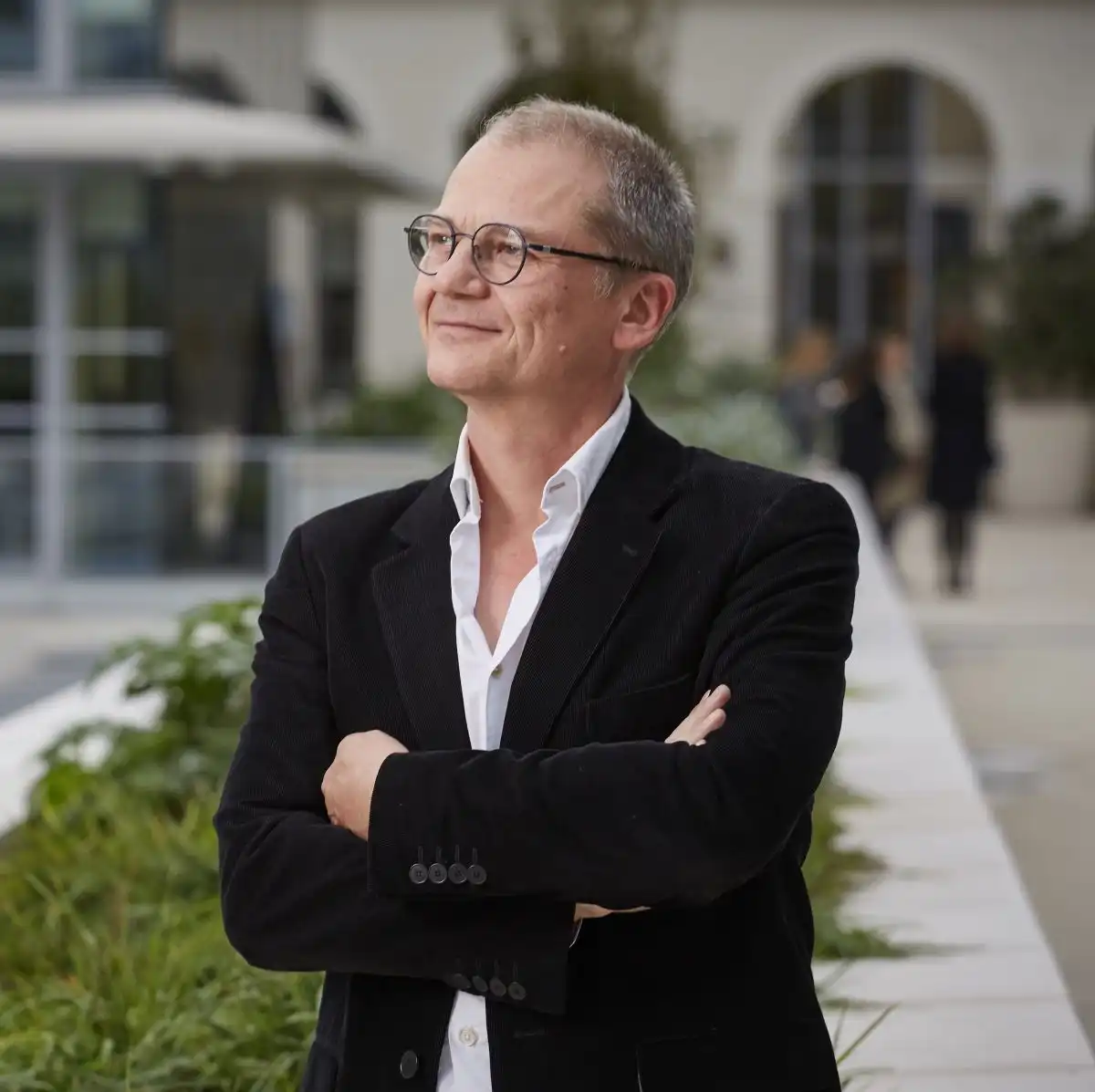
Bruno Palier is a CNRS Research Director at Sciences Po, affiliated with the Centre d'études européennes et de politique comparée (CEE) and a key member of the Laboratoire interdisciplinaire d’évaluation des politiques publiques (LIEPP). He is a leading scholar in comparative politics and public policy, focusing on the reform of social protection and pension systems in France and Europe. University: Sciences Po School: Centre d'études européennes et de politique comparée Academic Rank: Researcher (CNRS) His research interests lie at the intersection of political science, sociology, and public policy. He is a foremost expert on the political economy of welfare state reform, social investment strategies, and the dynamics of pension reforms. His work examines how political institutions, economic pressures, and social actors shape the evolution of social policies across advanced democracies. Palier's recent projects center on the contemporary crisis of work in France. He coordinated the 2023 collective work What Do We Know About Work? , which brought together 60 social scientists to document the realities of working conditions, management practices, digitalization, and inequalities. This project has sparked a major public and academic debate, leading to a follow-up initiative, Working Better , which aims to translate research findings into concrete policy proposals for improving the quality of work. Major Works: What do we know about work? (2023) Working Better (2025, forthcoming) The World Politics of Social Investment (2022, 2 vols.) Refonder le système de protection sociale (2014) Réformer les retraites (2021) Throughout his career, Palier has led major research initiatives, including serving as the director of LIEPP (2014-2020) and coordinating the European Network of Excellence RECWOWE. He has also held visiting professorships at Harvard, Tokyo, and Stockholm universities, demonstrating his international academic standing. His work is highly influential in both academic circles and public policy debates, particularly in France. He has a strong record of scientific mediation, actively engaging with the media and policymakers to bridge the gap between academic research and public discourse. His current work on the future of work and social investment represents a significant contribution to understanding and addressing some of the most pressing social challenges of our time.
Gabrielle Hodge is a Senior Lecturer in Sign Language Linguistics at the University of Edinburgh's School of Philosophy, Psychology and Language Sciences. A deaf researcher, she specializes in sociolinguistics related to deaf communities, sign languages, and multimodal communication. Her work incorporates corpus linguistics, applied linguistics, and semiotics methodologies. Education: PhD in Linguistics (Macquarie University, 2014), BA (Hons) in Linguistics (La Trobe University, 2008). Teaching includes undergraduate and postgraduate courses in sign language linguistics and sociolinguistics. She chairs the University BSL Plan Implementation Group (2024-2030) and actively supervises PhD and MSc students in deaf community research. Research focuses on accessibility, sign language corpus methods, and inclusive language theory. Notable projects include the Accessibility & Inclusion Toolkit for deaf Australians and Signing to Know & Survive , exploring deaf communication resilience. She develops training for educators and interpreters, emphasizing direct access without relay systems. Key contributions include advancing corpus-driven sign language research, analyzing deaf professionals' trust in interpreters, and creating climate change resilience resources in Auslan. Her work challenges traditional linguistic frameworks to better incorporate deaf perspectives and embodied communication practices.
Martin Seeleib-Kaiser is a Professor at the Institute of Political Science, Faculty of Economics and Social Sciences, Eberhard Karls University of Tübingen. He holds a venia legendi (habilitation) from Bremen University (2000) and has held academic positions at Oxford, Duke, and Bremen Universities. His research focuses on the politics of social policy, comparative social policy analysis, and the interplay between public-private social protection policies. His publications span topics such as globalization and welfare systems , EU citizenship and social rights , and dualization in welfare states . Recent works address pandemic-era welfare responses, stratified social rights, and occupational welfare trends in Europe. His team includes researchers like Cecilia Bruzelius, Jakub Sowula, and Mikko Kuisma, with affiliations to projects like the Journal of European Social Policy.
Marcel Lubbers is a Professor of Interdisciplinary Social Science: Relations between groups and cultures at Utrecht University's Faculty of Social and Behavioural Sciences. He leads the European Research Centre on Migration and Ethnic Relations (ERCOMER) and serves as a board member of the Interuniversity Center for Social Science Theory and Methodology (ICS). As associate editor of the European Sociological Review (ESR), he significantly influences academic discourse in migration and political sociology. His work represents Utrecht University in the focus area Migration and Societal Change, connecting research with broader societal implications. Professor Lubbers' research program centers on migration's societal impacts, particularly examining how immigration influences nationalism, Euroscepticism, and voting behavior. His work adopts both macro-level perspectives on societal cohesion and micro-level analyses of immigrant integration processes. Recent publications reveal his focus on political extremism, interethnic relations, and the psychological mechanisms behind public attitudes toward migration. His methodology combines large-scale survey analysis, comparative European studies, and longitudinal approaches to track attitude changes over time. Lubbers' scholarly output shows consistent engagement with contemporary political challenges, including analyses of radical right voting patterns, the workplace as a setting for interethnic contact, and the impact of national nostalgia on political attitudes. His research demonstrates methodological sophistication through meta-analyses, mixed-methods approaches, and innovative survey designs like the Dutch Parliamentary Election Study and Dutch Ethnic Minority Election Study. Through web publications on platforms like Stukroodvlees.nl and contributions to the Migration Advisory Council, Lubbers actively bridges academic research and public policy debates. His work provides evidence-based insights on migration policy, electoral behavior, and societal integration that inform both scholarly and policy discussions in the Netherlands and beyond.
Daniel Schneider is the Malcolm Wiener Professor of Social Policy at the Harvard Kennedy School (HKS) and a Professor of Sociology at Harvard University’s Faculty of Arts and Sciences (FAS). He holds a B.A. in Public Policy from Brown University (2003) and a Ph.D. in Sociology and Social Policy from Princeton University (2012). Prior to his current roles, he was an Assistant Professor of Sociology at UC Berkeley (2012–2020) and a Robert Wood Johnson Foundation Postdoctoral Scholar in Health Policy Research at Berkeley/UCSF. His research focuses on social demography, inequality, and the intersection of work and family life. Key themes include precarious employment, workplace scheduling instability, gender and racial inequities in labor markets, and the effects of policy interventions on worker well-being. As Co-Director of the Shift Project, Schneider leads research on unpredictable work schedules and their impacts on household economic security and health. Recent articles highlight his work on paid sick leave policies, job quality mobility during the “Great Resignation,” and the gender wage gap in the service sector. His research has been supported by grants from NIH/NIA, the Urban Institute, and the Annie E. Casey Foundation, among others. He currently serves as a W.T. Grant Foundation Faculty Research Scholar. Notable contributions include studies on the health consequences of employment shocks during the pandemic, the role of labor market conditions in job mobility, and the relationship between workplace technology and job retention for older workers. Schneider’s work bridges academic research with policy advocacy, emphasizing evidence-based solutions to reduce economic and social inequalities.
Rania Salem is an Associate Professor in the Department of Sociology at the University of Toronto Scarborough (UTSC). Her research focuses on the sociology of family, gender, and economic sociology of households and labor markets in the Middle East and North Africa (MENA) region. Research Interests Dr. Salem explores themes such as women’s agency, marriage practices, and the intersection of economic factors with social stratification. Her work often employs empirical methodologies to analyze household dynamics, gender roles, and cultural norms in Egypt, Jordan, and Tunisia. Publication Trends Her recent publications (2015–2022) emphasize gendered labor market effects on marriage timing, matrimonial expenditures, kin marriage rationales, and women’s empowerment in rural MENA contexts. These studies integrate qualitative and quantitative approaches to address social inequalities.
Professor Kjetil Grimastad Lundberg serves at the Institute for Welfare and Participation, Western Norway University of Applied Sciences (HVL), appointed Professor of Welfare Sociology in 2020 after joining HVL in 2018. A University of Bergen PhD graduate (2012), he previously worked as Researcher II at Uni Research Rokkansenteret (2011-2018). His academic credentials include: PhD in Sociology, University of Bergen, 2012 Master's in Sociology, University of Bergen, 2007 Lundberg's research critically examines intersections of welfare systems, poverty, and marginalization through institutional ethnography. He investigates street-level bureaucracy in NAV (Norwegian Labour and Welfare Administration), digitalization impacts, and child/family perspectives in low-income contexts, emphasizing stigma, power dynamics, and activation policies. His work bridges theoretical sociology with practical welfare challenges. His 15 most recent publications (2017-2024) reveal consistent focus on welfare-state dynamics, with recurring themes of work inclusion mechanisms, user experiences in complex interventions, and poverty's structural dimensions. Methodologically, he employs qualitative institutional ethnography across European Societies, European Journal of Social Work, and Social Policy and Society, demonstrating longitudinal analysis of policy evolution. Lundberg supervises multiple PhD candidates on work inclusion and poverty interventions while leading the NAV-funded project 'Barneperspektiv i Nav' (2023-2027) and participating in three additional studies addressing long-term poverty effects and cross-sectoral coordination. His grant portfolio spans NAV-FOU, Sparebankstiftelsen, and NFR funding. He contributes to HVL's 'Rights, Democracy and Welfare' research group, advancing critical welfare sociology through teaching in social science, sociology, and social work programs while examining urban poverty, bureaucratic practices, and marginalized family experiences.
Karen Panetta is a Professor at Tufts University School of Engineering with appointments in Electrical and Computer Engineering, Computer Science, Mechanical Engineering, and Academic Services. She currently serves as Dean of Graduate Education for the School of Engineering and holds the title of Distinguished Professor. Ph.D. in Electrical Engineering, Northeastern University M.S. in Electrical Engineering, Northeastern University B.S. in Computer Engineering, Boston University Dr. Panetta's research focuses on developing efficient algorithms for simulation, modeling, and signal and image processing for security and biomedical applications. Her work brings together artificial intelligence, machine learning, and visual sensing systems to create solutions for robot vision and biomedical imaging. She develops algorithms inspired by the human visual system to enable machines to 'see' like humans, with applications in homeland security, biomedicine, facial recognition, and search and rescue operations. Her research has significant humanitarian applications, addressing global challenges facing women and children. Dr. Panetta has received numerous prestigious awards including induction into the National Academy of Engineering (2023), the Presidential Award for Science and Engineering Education and Mentoring (2011), and the IEEE Award for Distinguished Ethical Practices (2013). She is a fellow of multiple prestigious academies including the National Academy of Inventors, European Academy of Sciences and the Arts, and IEEE. Member, National Academy of Engineering (2023) Presidential Award for Science and Engineering Education and Mentoring (2011) IEEE Award for Distinguished Ethical Practices (2013) Fellow, National Academy of Inventors Fellow, European Academy of Sciences and the Arts Fellow, Asia-Pacific Artificial Intelligence Association As an educator and mentor, Dr. Panetta founded the nationally acclaimed Nerd Girls program to promote engineering to young students, particularly women. She previously served as worldwide director for IEEE Women in Engineering and editor-in-chief of the IEEE Women in Engineering magazine. Her approach to graduate education emphasizes the importance of building strong collaborative relationships between faculty and students, with a focus on proactive communication and documentation of research progress. Dr. Panetta's humanitarian research applies engineering solutions to global challenges, including developing technology to help doctors find cancerous tumors, security screeners find concealed weapons, and law enforcement agencies find criminals and missing children. Her work demonstrates a commitment to 'Doing The Right Thing' by addressing issues affecting populations with limited resources or 'voice' in society.
Anthony Forsyth is a Distinguished Professor in the School of Law at RMIT University's Graduate School of Business and Law. He specializes in labour and employment law, focusing on collective bargaining, trade unions, union education, labour hire, and the gig economy. His leadership roles include Director of Juris Doctor Programs (2012-2015) and Head of the Law Department (2019-2022), during which he developed RMIT's Bachelor of Laws and combined law/business degrees. He chairs the RMIT Law Advisory Board and the Higinbotham Lecture Series. His research explores the intersection of Australian and global workplace regulation, emphasizing equitable outcomes through evidence-based legal interventions. Key projects include the Victorian Government Inquiry into Labour Hire Industry and Insecure Work (2015-16), resulting in his book *The Future of Unions and Worker Representation: The Digital Picket Line* (2022). He collaborates with unions like the United Workers Union and Australian Council of Trade Unions. Anthony holds leadership positions such as President of the Australian Labour Law Association (since 2021) and advisory roles at the Centre for Future Work. His awards include multiple RMIT Media Stars Awards (2018-2021) and a Research Impact Award (2018). His work bridges academia and industry, addressing digital-age challenges for worker representation. **Education**: Extensive legal career before academia (pre-2000), including roles at Ashurst, Norton Rose, and Maurice Blackburn. **Grants & Projects**: Victorian Government Inquiry, industry collaborations with unions. He runs the *Labour Law Down Under Blog* and oversees RMIT's Centre for People, Organisation & Work. His recent articles analyze gig economy regulation, multi-employer bargaining reforms, and digital tools for worker mobilization.
Martha Stiegman is an Associate Professor at the Faculty of Environmental and Urban Change, York University. Her research integrates Indigenous knowledge, food sovereignty, and arts-based methodologies to address issues of social, environmental, and disability justice. She is actively engaged in community-based research and public scholarship in Toronto and Mi’kma’ki (Nova Scotia). Her educational background includes a PhD from Concordia University’s Special Individualized Program and a BA in English Literature & Political Science from McGill University. This interdisciplinary foundation supports her work at the intersection of activism, research, and art. Stiegman’s research focuses on three interconnected domains: Indigenous/settler treaty relations, food sovereignty and justice movements, and participatory video and arts-based research. She emphasizes decolonizing methodologies and community-led knowledge production. Her work explores how arts-based approaches can deepen dialogues across communities and strengthen collective action for justice. Her recent publications and multimedia projects demonstrate a strong trend toward interdisciplinary, community-engaged scholarship that bridges Indigenous epistemologies, environmental justice, and disability justice. She frequently uses film, digital storytelling, and public art to mobilize knowledge and challenge colonial narratives. Co-creator of A Treaty Guide for Torontonians (2022) Lead on the Polishing the Chain project exploring Toronto’s treaty relationships Editor of the forthcoming Anti Colonial Food Systems (Routledge) Active collaborator with Indigenous scholars and artists including Dr. Sherry Pictou, Ange Loft, and Elder Kerry Prosper Stiegman has been involved in significant research grants such as the Atlantic Aboriginal Health Research Program. While specific advisees are not listed, her collaborative projects suggest active mentorship and supervision. She does not appear to lead a formal lab but works within research collectives and community partnerships.
Rachel Best is an Associate Professor and Director of Graduate Studies in the Department of Sociology at the University of Michigan. Her research focuses on the intersections of politics, culture, inequality, and health, with a particular emphasis on disease advocacy, disability discrimination, and the sociological implications of medical policy. She directs the Sociology graduate program and leads computational studies on disease stigma, advocacy strategies, and ADA litigation outcomes. Her work bridges medical sociology, legal studies, and public health, addressing how societal structures shape health outcomes and policy responses. Her research interests include analyzing how disease campaigns influence health policy, the political consequences of overestimating individual health control, and the role of stigma in disability rights litigation. Notable projects use computational methods to trace policy advocacy impacts and explore visibility dynamics in disability cases. Recent publications (2022–2025) highlight her focus on disease stigma’s societal effects, legal interpretations of invisible disabilities, and the evolving nature of advocacy in health policy. Her earlier works, such as Common Enemies: Disease Campaigns in America , critique single-disease advocacy frameworks and their unintended policy consequences. Rachel Best advises on graduate studies and collaborates with interdisciplinary teams. Her research has been supported by grants focusing on sociological methods in health policy analysis. She is affiliated with the University of Michigan’s Sociology Department and the LSA College, contributing to discussions on inequality and institutional sociology.
Professor Heejung Chung is Professor of Work and Employment at King’s College London and Director of the King's Global Institute for Women's Leadership. She is based in the HRM & Employment Relations department within King’s Business School. Her research focuses on flexible working, gender and racial inequalities, work-life balance, and comparative labour market policies. Institution: King’s College London School: King’s Business School Department: HRM & Employment Relations Role: Professor and Director Her research interests include human resource management, gender inequalities at work, remote and hybrid working, work-family conflict, division of domestic labour, and advanced quantitative and qualitative methods. She employs large-scale longitudinal datasets and digital diaries to examine how flexible working affects marginalized groups and shapes social policy. The most recent articles reflect a strong trend toward investigating the social implications of remote and hybrid work, particularly focusing on gender and racial equity, flexibility stigma, and policy impacts. Her work increasingly emphasizes intersectionality, national policy contexts, and organizational change. Short-listed for the Rosabeth Moss Kanter Awards for Excellence in Work-Family Research Long-listed for the Cambridge University Press Excellence in Social Policy Research Named in Onalytica’s Top Voices in Future of Work 2023 Named in HR Magazine's 'Most Influential' list Professor Chung has secured over £10 million in research funding as PI or Co-I from ESRC, ERC, Nuffield, NORFACE, and others. She actively supervises PhD students and contributes to editorial boards of journals such as Gender & Society and Work, Employment & Society. She is a member of the executive boards of the European Social Policy Analysis Network and the Work and Family Researchers Network. She leads the King's Global Institute for Women's Leadership, where she promotes research and policy initiatives on gender equality, including the Gender Equality Index UK. Her work has directly influenced the European Commission’s Work-Life Balance Directive and ongoing discussions about the 'Right to Disconnect'.
Mykola Oleksiyovych Zhuravel serves as a Senior Lecturer at Zaporizhia Polytechnic National University within the Department of Occupational Safety and Environmental Protection, part of the Faculty of Construction, Architecture and Design. With over 37 years of service since 1987, he has established himself as a dedicated educator and researcher in occupational safety, civil defense, and environmental protection fields. His research interests span occupational safety, civil defense, environmental safety, life safety, industrial safety, ergonomics, and risk management. Zhuravel's scholarly work consistently addresses practical safety concerns in Ukrainian industrial and educational settings, with a particular focus on regional environmental challenges in Zaporizhzhia. His publications demonstrate a progression from foundational safety principles to contemporary concerns like ecological energy security and digital workplace safety. Analysis of his 15 most recent publications reveals a strong emphasis on practical applications of safety science, with recurring themes in environmental protection, workplace hazard mitigation, and emergency preparedness. His work bridges theoretical safety frameworks with practical implementation strategies, particularly relevant to Ukrainian industrial contexts. Zhuravel maintains active professional development, with numerous certifications through 2024 in occupational safety, civil defense, and academic integrity. He is an associated member of the European Community for Occupational Safety and Health (EUOP register number 13823000211, registered June 12, 2023). As an educator, he teaches multiple safety-related disciplines including Safety of Life of a Specialist with Basics of Labor Protection, Protection of Human Living Environment and Occupational Safety, and Civil Protection and Occupational Safety in Industry. His teaching approach integrates theoretical knowledge with practical safety applications relevant to Ukrainian industrial contexts.
Professor Lars E. Eriksson is a Registered Nurse with a PhD in Nursing and an MSc in Chemistry, currently serving as a part-time Professor in Nursing at the School of Health and Medical Sciences, City St George's, University of London, and as a full Professor in Nursing at Karolinska Institutet, Stockholm, Sweden, where he leads the Lars E. Eriksson Research Group. His academic journey began with a UC in Nursing in 1985, followed by over a decade of clinical work in hematology, immunology, and HIV care in Stockholm, before transitioning into research and academia. His research is centered on biobehavioral and translational nursing, particularly focusing on health and quality of life among individuals with chronic conditions such as HIV, cancer, and long-term infections. Key areas include disease-related stigma, symptom research, patient-reported outcomes, and biomarker development. He is Principal Investigator for a lung cancer biomarker project funded by the Swedish Research Council and the Swedish PI for the H2020 Magnet4Europe project on mental health in healthcare workplaces. His recent publications show a strong trend in using mixed methods to explore end-of-life communication, death literacy, sexual and reproductive health after cancer, and stigma in chronic illness. He frequently employs patient-reported outcomes, online focus groups, and web-based interventions, often in collaboration with international partners. His work bridges clinical practice, nursing science, and public health. Scientific Awards and Memberships: British HIV Association (BHIVA) National HIV Nurses Association (NHIVNA) Swedish Society of Nursing Swedish Society of Medicine Swedish Society of Medical Microbiology Lars Eriksson has advised numerous PhD and Master’s students, primarily on topics related to quality of life, stigma, and chronic illness. He teaches postgraduate modules including MSc Dissertation, Advanced Practice Dissertation, and Sexual and Reproductive Health. He is affiliated with the Centre for Health Services Research and the Centre for Public Health Research at City St George's.