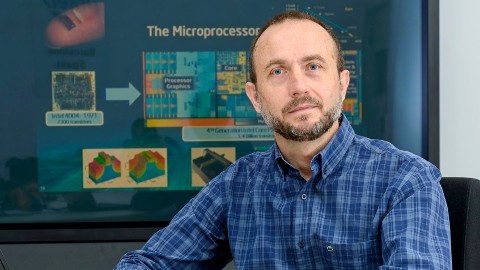
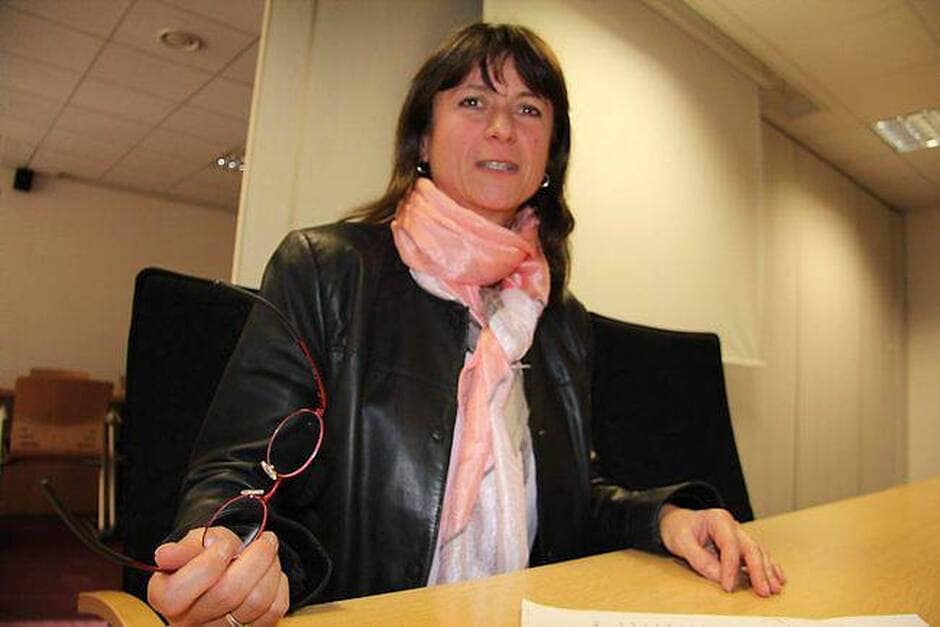
Antonio González is a full Professor at the Barcelona School of Informatics (FIB), Universitat Politècnica de Catalunya (UPC), where he is affiliated with the Department of Computer Architecture. He leads the Microarchitecture and Compilers (ARCO) research group, focusing on robust and energy-efficient computing systems, including general-purpose processors, GPUs, and cognitive computing architectures. His research spans computer architecture, microarchitecture, compilers, GPU design, and deep learning acceleration, with a strong emphasis on energy efficiency and memory optimization. His work integrates hardware and compiler techniques to enhance performance in modern computing systems. The recent publications highlight a strong trend in energy-efficient DNN acceleration, GPU microarchitecture, memory systems, and near-data processing. His team explores novel quantization methods, adaptive caching, and architectural extensions for vision and AI workloads, published in top-tier venues such as MICRO, ISCA, and IEEE/ACM journals. ACM Fellow (2020) ICREA Academia Award (2014, 2019, 2024) UPC Duran Farell Award (2008) HiPEAC 2024 Paper Award (twice) González has supervised several PhD students and leads competitive R&D+i projects, including those funded by ICREA and the European Research Council. His research group collaborates extensively within UPC and with international institutions. He is actively involved in advancing computer architecture through innovation in simulation, hardware design, and AI acceleration. He is a member of IEEE and ACM, and his work continues to influence both academic and industrial developments in high-performance and energy-efficient computing.
Alison J. Mackey is Professor and Chair of the Department of Linguistics at Georgetown University, College of Arts and Sciences. She is a leading scholar in second language acquisition (SLA), with a focus on interaction, feedback, research methodology, and language learning across the lifespan. Her research interests include second language acquisition , task-based language teaching , research methodology , interaction and corrective feedback , and language learning in children and adults . She has published extensively in top-tier journals and book series, shaping methodological standards in the field. Her recent publications reflect a strong trend in methodological rigor , interactionist approaches , and practical applications of SLA research. Themes include data elicitation , stimulated recall , task design , and pragmatic development , spanning both theoretical and classroom-based inquiry. Mildenberg Prize (2012) for The Handbook of Second Language Acquisition American Association for Applied Linguistics Distinguished Scholarship and Service Award International Association of Task-based Language Learning and Teaching Distinguished Achievement Award CHOICE Outstanding Academic Title (2012) Alison Mackey has advised numerous scholars through co-authorship and editorial leadership. She is Editor-in-Chief of Cambridge University Press Annual Review of Applied Linguistics and Editor of the Routledge Second Language Research series, guiding the publication of cutting-edge research. While specific grants are not listed, her editorial work and high citation count (>35,000) reflect significant research impact and funding support. She leads and contributes to major research initiatives such as the IRIS Repository , promoting open-access research instruments in SLA. Her work fosters collaboration across institutions and supports methodological transparency and replication in the field.
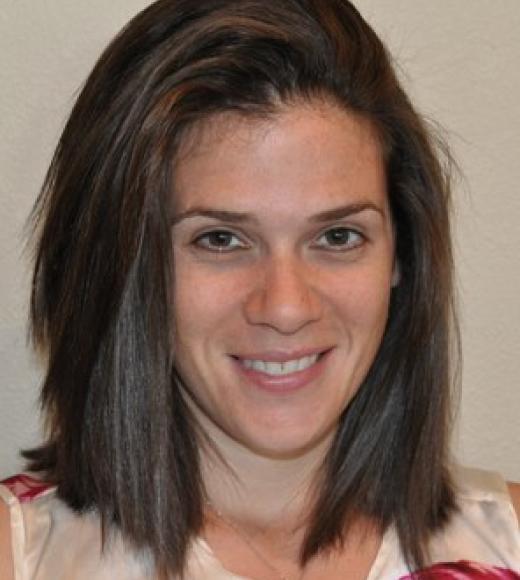
Georgia Zellou is an Associate Professor in the Department of Linguistics at the University of California, Davis, where she co-directs the Phonetics Lab and conducts award-winning research at the intersection of phonetics, speech perception, and human-AI interaction. Her work investigates how phonetic detail is cognitively represented through variations in speech production, with significant contributions to understanding speech alignment with voice assistants, face-masked speech intelligibility, and cross-linguistic perception of synthetic voices. Her academic credentials include a Ph.D. in Linguistics from the University of Colorado at Boulder (2012), an M.A. in Linguistics from Stony Brook University (2007), and a B.A. in Linguistics & Anthropology from the University of Florida (2005, Cum Laude, Phi Beta Kappa). Ph.D., Linguistics, University of Colorado at Boulder (2012) M.A., Linguistics, Stony Brook University (2007) B.A., Linguistics & Anthropology, University of Florida (2005) Professor Zellou's research program centers on laboratory phonology approaches to real-world communication challenges, examining how acoustic-phonetic details influence speech perception across contexts. Her studies span speech alignment with voice-AI systems (e.g., Amazon Alexa), sociophonetic variation in bilingual speech, and the cognitive mechanisms underlying perceptual compensation for coarticulation. She employs experimental methods including eye-tracking, acoustic analysis, and perceptual testing to uncover how phonetic variation functions pragmatically in human communication and human-machine interaction. Analysis of her 15 most recent publications (2023-2025) reveals three dominant research trajectories: (1) human-AI voice interaction dynamics, including prosodic alignment and social evaluation of TTS voices; (2) intelligibility optimization in challenging contexts (face masks, clear speech for diverse listeners); and (3) cross-linguistic phonetic variation in vowelless words and consonant clusters. These works consistently bridge theoretical phonology with applied speech technology, demonstrating how fine-grained phonetic detail influences communication effectiveness in both human-human and human-machine contexts. Her scientific recognition includes: Fulbright Scholar (2022) for research in France Chancellor’s Award for Excellence in Undergraduate Mentoring (2019) Fellow of the Linguistic Society of America (2020) Amazon Faculty Research Award (2019) for Alexa-related speech studies Dean’s Fellow designation at UC Davis (2020-2023) Professor Zellou maintains an active mentoring practice recognized with the Chancellor’s Award, supervising undergraduate researchers in the Phonetics Lab while teaching core linguistics courses from introductory to advanced graduate levels. Her research program is supported by competitive grants including NSF funding, Amazon Research Awards, and UC Davis internal grants (Hellman Foundation, ISS Junior Faculty Grant), reflecting the translational value of her work for speech technology development. She has co-directed major initiatives including the 2019 LSA Linguistic Institute. The Phonetics Lab she co-leads serves as a hub for experimental phonetics research, focusing on speech production-perception relationships through projects investigating vocal accommodation to voice assistants, nasal coarticulation dynamics, and cross-linguistic prosody. Current collaborations with industry partners aim to implement human speech adaptation principles into voice assistant design to enhance naturalness and engagement.
Niclas Abrahamsson is a Professor of Swedish as a Second Language at Stockholm University, where he also serves as the Director of the Centre for Research on Bilingualism . His research focuses on second language acquisition (SLA) , bilingualism , and phonological/phonetic development , particularly through the lens of age of acquisition and critical periods . He leads the MOB (Meta-research on Bilingualism) group, analyzing trends in bilingualism research and Swedish as a Second Language. PhD in Bilingualism (2001, Stockholm University) BA in Linguistics, Phonetics, and Psychology (1993) His research explores how age of onset and language aptitude influence nativelike attainment in L2 speakers, with a focus on voice onset time (VOT) analysis, neural constraints , and lexical deficits in bilinguals. His recent studies challenge the notion that bilingualism inherently causes linguistic costs, attributing observed deficits instead to second language acquisition processes. Abrahamsson has secured major grants from the Swedish Research Council (VR) , Bank of Sweden Tercentenary Foundation (RJ) , and Byggmästare Olle Engqvists Stiftelse . He supervises PhD students working on topics like Swedish compounding acquisition , language-dependent memory , and foreign accented speech perception . He teaches SLA, bilingual development, and psycholinguistics at all academic levels. Key Awards : VR Grant 2016-01630, RJ Sabbatical Grant SAB16-0051:1, Byggmästare Olle Engqvists Stiftelse Grant 200-0676 Abrahamsson's work frequently employs ERP studies and meta-analyses , emphasizing methodological rigor. He collaborates with institutions like the Multilingualism Lab and has contributed to foundational theories in critical period hypothesis and language aptitude research.
Professor Tony McEnery is a Distinguished Professor of English Language and Linguistics at Lancaster University, where he has held various senior roles, including Dean of the Faculty of Arts and Social Sciences (2008–2014) and Head of the Department of Linguistics and English Language (2000–2005). His research focuses on corpus linguistics, applied linguistics, and sociolinguistics, with notable contributions to corpus-based analyses of historical medical discourse, media representation of Islam, and swearing in English. He has led major research projects, including the ESRC Centre for Corpus Approaches to Social Science (CASS) and the Trinity Lancaster Corpus. McEnery has secured over £10 million in research funding and holds visiting professorships at institutions worldwide, including Zhejiang University of Media and Communications and Shanghai International Studies University. He is a Fellow of the Academy of Social Sciences, Trinity College London, and the Royal Society for the Arts. Education: No explicit details provided, but his career trajectory implies advanced degrees in linguistics. Research Interests: Corpus linguistics applications in theoretical and applied linguistics, historical language analysis, and language as a socially situated phenomenon. McEnery’s work extends to interdisciplinary collaborations, including projects with the Environment Agency and the Home Office. His teaching includes summer schools in corpus linguistics and a Futurelearn MOOC, reaching tens of thousands globally. He advises on research funding for international bodies like the Irish Research Council and the Qatar National Research Foundation. Grants and Awards: Queen’s Anniversary Prize (2015), Changjiang Chair (2021), and multiple fellowships. Current grants include the Lancaster-Northern Arizona corpus and the Trinity Lancaster Corpus projects. Advising and Labs: Supervises postgraduate students in linguistics and collaborates with teams like the ESRC CASS Centre and UCREL (University Centre for Computer Corpus Research on Language).
Laura Collins is an Associate Professor in the Department of Education at Concordia University, specializing in applied linguistics. Her research focuses on input processing in second language acquisition, pedagogical grammar, and cross-linguistic influence among bilingual speakers. She has extensive international teaching experience across diverse age groups and serves as the 2nd VP of the American Association for Applied Linguistics and Chair of the IRIS digital repository advisory board. PhD in Humanities, Concordia University MEd in Second Language Teaching, University of Ottawa BEd in Second Language Teaching, University of Toronto BA in History, York University Collins' current projects examine the use of speech technologies to extend second language classrooms and document longitudinal grammatical development in school programs. Funded by SSHRC Insight Grants, her work bridges cognitive approaches with practical pedagogical applications. Recent publications highlight trends in classroom input optimization, frequency-based phonological learning, and intensive language program efficacy, with subfields spanning morpheme perception, vocabulary distribution, and task-based interaction dynamics. Her academic leadership includes editorial roles in The Modern Language Journal and contributions to major handbooks. She teaches courses ranging from classroom-based SLA research to pedagogical grammar, emphasizing practical applications of theoretical insights.
Haiyang Ai is an Associate Professor in the Literacy and Second Language Studies program at the University of Cincinnati's School of Education. His research applies corpus linguistics and natural language processing to investigate second language acquisition, writing complexity, and bilingual language processing. His educational background includes a Ph.D. in Applied Linguistics from The Pennsylvania State University (2015), an M.A. in Linguistics & Applied Linguistics from the University of Chinese Academy of Sciences (2006), and a B.A. in English from Shaanxi Normal University (2003). Dr. Ai's research spans corpus linguistics, natural language processing, second language acquisition, and computer-assisted language learning. He specializes in compiling and analyzing native and learner corpora to develop intelligent language learning systems and investigate lexical/syntactic complexity in L2 writing. His methodological approach integrates computational tools with theoretical linguistics to address practical language teaching challenges. His recent publications (2019-2023) demonstrate consistent focus on lexical bundles in professional communication, automating complexity measurement in Chinese, speech perception mechanisms in bilinguals, and grammatical puzzles in English learning. These works bridge corpus-based analysis with psycholinguistic experimentation across diverse subfields including morphosyntax, pragmatic competence, and cognitive processing in L2 acquisition. Dr. Ai has secured multiple University of Cincinnati grants including three CECH Faculty Development Grants ($2500 in 2017-2018 for verb-noun collocation research, $2000 in 2016-2017 for corrective feedback tools) and the NCFDD Faculty Success Program ($3250 in 2017), all supporting his development of computational language learning resources.
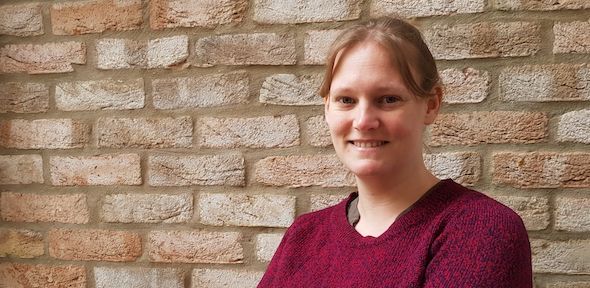
Dr. Margreet Vogelzang is a Lecturer in Psychology at Newcastle University and an affiliated researcher at Theoretical and Applied Linguistics within the Faculty of Modern and Medieval Languages and Linguistics at the University of Cambridge. Based at the English Faculty Building, 9 West Road, Cambridge, CB3 9DP, and affiliated with Trinity College at Cambridge, she maintains a dual institutional presence that reflects the interdisciplinary nature of her work. Her research program combines neuroscientific, psychological, linguistic, and statistical methodologies to investigate language and cognitive processing across the lifespan. She specializes in multilingual syntactic and semantic processing, employing both written and spoken language paradigms with offline (comprehension, judgments) and online (eye-tracking, EEG, fMRI) measures. Her work examines how hearing loss, socio-linguistic variables, and developmental conditions like autism spectrum disorder influence language processing mechanisms. Analysis of her recent publication record reveals three dominant research trajectories: (1) bilingualism effects on cognitive flexibility in autistic children, (2) neural and cognitive mechanisms of sentence processing in individuals with hearing loss, and (3) computational modeling of pronoun interpretation across diverse populations. These strands demonstrate her consistent focus on bridging theoretical linguistics with cognitive neuroscience to address practical questions about language processing variability. Dr. Vogelzang actively supervises several graduate students including Alexander Cairncross, Andromachi Tsoukala, and Chara Triantafyllidou, and serves as course contact for Li16: Psychology of language processing and learning at Cambridge. Her teaching portfolio includes psycholinguistics, neurolinguistics, cognitive science, and research methods, reflecting her methodological expertise across experimental and computational approaches.
Seung Kyung Kim serves as an Assistant Professor (Lecturer) in the Department of Linguistics at the University of Utah, a position held continuously since July 2022. She actively teaches undergraduate courses including Language & Culture, Language Myths, Introduction to Phonetics and Phonology, and Introduction to Sociolinguistics across multiple semesters from 2023-2024, demonstrating consistent engagement in the university's academic mission within the linguistics discipline. Her research centers on psycholinguistics with specialized expertise in speech production and comprehension mechanisms, extending into second language acquisition, sociolinguistics, and phonetics. Kim investigates how social factors—particularly accent variation, emotional prosody, and ideological frameworks—impact real-time language processing through methodologies like eye-tracking and auditory-visual priming. Her work reveals critical insights into incremental processing in native and non-native speakers, especially regarding Korean case marking systems and cross-linguistic transfer effects. Analysis of Kim's publication trajectory from 2013-2024 shows evolving focus from foundational studies on emotional prosody in word recognition toward contemporary investigations of linguistic bias in veracity judgments and sociolinguistic variation. Her research consistently bridges cognitive processing with social representation, exemplified by the dual-route speech perception model integrating linguistic and social information. Recent work demonstrates methodological rigor through preregistered replication studies examining Polish-accented English comprehension. No scientific awards or major grants are documented in available records, though her scholarship appears in high-impact journals including Studies in Second Language Acquisition and The Journal of the Acoustical Society of America. While teaching records confirm active curriculum delivery across eight distinct courses with multiple sections annually, information regarding student advising, research laboratories, or collaborative teams remains unspecified in current materials.
Holly Branigan is a Professor of Psychology of Language and Cognition at the University of Edinburgh, affiliated with the School of Philosophy, Psychology and Language Sciences. Her research focuses on language production, dialogue, child language development, and bilingualism. She holds a Personal Chair and has led numerous grants including projects on conversational alignment in children with autism, language experience effects on development, and syntactic priming in dialogue. Her teaching includes undergraduate courses on Psychology of Language and postgraduate modules on Dialogue. She supervises PhD students in topics like syntactic processing, bilingualism, and interactional linguistics. Branigan has secured over £10M in research funding from bodies like the ESRC and EU, leading projects such as 'How does language experience support language development?' (2018–2023) and 'AThEME: Advancing European Multilingual Experience' (2014–2019). Her work explores how speakers adapt language based on social context, interlocutor traits, and cognitive factors. Key achievements include a 7-year ESRC fellowship (1999–2006), and recognition for contributions to understanding syntactic processing mechanisms. She currently leads research on child language imitation in social contexts and bilingual syntactic representation.
Marie-Christine Michaud is a Professor of American Studies at the University of South Brittany (Université de Bretagne Sud), affiliated with the Heritage and Creation in Text and Image research laboratory (HCTI-EA 4249). She specializes in Italian American studies, ethnicity, and immigration dynamics in the United States, with a focus on transnational identity formation and cultural recognition. Academic Background: Doctorate (1997, Paris-Sorbonne IV) Accreditation to Supervise Research (2010, University of Valenciennes and Hainaut-Cambresis) Her research explores the evolving identity of Italian Americans through literary analysis, urban studies, and historical frameworks, examining themes such as ethnic festivals, culinary adaptation, intergroup relations, and transnational connections. Michaud’s work frequently analyzes how Italian Americans navigate cultural assimilation while maintaining ethnic distinctiveness, particularly in New York City contexts like Little Italy’s transformation and the Verrazzano Bridge symbolism. She has published extensively on Italian American representation in literature and film, including studies of The Courtyard of Dreams , Nuovomondo , and The Wine Cellar , connecting artistic works to broader sociopolitical narratives of migration and identity. Her recent scholarship addresses contemporary issues like ethnicization in U.S. society and the struggle for recognition through cultural festivals such as Marco Polo Day. Leadership: Co-director of HCTI research laboratory (2012–present) Former administrative head for L2 year at UBS (2010–2012) Coordinator of the 'Amériques' research group within HCTI (2009–2012) Michaud teaches North American civilization (L1–M2) and American literature (L3–Master), mentoring students through research projects on ethnicity and transnationalism. Her scholarly activities include organizing international conferences on American studies and participating in collaborative projects like the John Calandra Italian-American Institute’s 'Diaspore italiane' initiative.
Janet van Hell is Professor of Psychology and Linguistics at Pennsylvania State University , where she also serves as Co-Director of the Social, Life, and Engineering Sciences Imaging Center (SLEIC) and Co-Director of the Center for Language Science . She leads the Bilingualism and Language Development (BiLD) Lab , investigating neurocognitive aspects of bilingual language use. Education: Ph.D., University of Amsterdam, 1998 Research Interests: Her work centers on bilingualism , second language acquisition , and the neurocognitive mechanisms underlying language development. Using EEG/ERP , behavioral, and linguistic techniques, her lab explores cross-language interaction, code-switching, and foreign-accented speech comprehension. The ‘brain bus’ , a mobile EEG lab, extends her research into schools and public outreach. Publications Overview: Her recent publications span bilingual phonetics , syntax processing , memory consolidation , and executive control , with a focus on EEG/ERP methodologies and experimental behavioral paradigms . Studies often involve heritage speakers , child bilinguals , and late L2 learners . Advising & Collaborations: Advises numerous PhD students and postdocs, many co-authoring papers (marked with *). Collaborates across Psychology, Linguistics, and Neuroscience departments. Leads outreach via the ‘brain bus’ for public engagement in science. Labs & Centers: BiLD Lab – Bilingualism and Language Development Lab SLEIC – Co-Director, Social, Life, and Engineering Sciences Imaging Center Center for Language Science – Co-Director
Naomi Yanagida is a Professor at the Graduate School of Japanese Applied Linguistics , Waseda University (since 2023). She holds a PhD in Linguistics and a Master's degree in Area Studies from the University of Tsukuba. Her career spans institutions like Hitotsubashi University, Kwansei Gakuin University, and Yokohama National University. Current affiliation: Waseda University (2023–Now) Previous roles: Hitotsubashi University (2015–2023), Kwansei Gakuin University (2010–2012) Research Interests : Symbiotic Language, Easy Japanese (Yasashii Nihongo), Discourse Analysis, Japanese Language Education Methodology, and Multicultural Communication. She focuses on how native Japanese speakers adapt their communication strategies when interacting with non-native speakers, particularly in discussion and explanatory contexts. Her scientific awards include the 2020 Japanese Language Education Association Encouragement Award and the 2020 'Japanese Language Education' Paper Award, both recognizing her work on native speaker explanatory strategies. She also received the 6th Hayashi Dai Memorial Paper Award in 2011 for early career research on contact situations. Research Trends : Yanagida's publications emphasize practical applications of Japanese language education, including syllabus design, intercultural discussion frameworks, and tools for improving communication between native and non-native speakers. Her work often intersects with policy development for multicultural societies and empirical studies on discourse behavior.
Professor Kara Morgan-Short holds a joint appointment at the University of Illinois at Chicago in the Department of Hispanic and Italian Studies and the Department of Psychology. She directs the Cognition of Second Language Acquisition Laboratory and is affiliated with the Laboratory of Integrative Neuroscience. Her research focuses on the cognitive and neural mechanisms underlying second language acquisition, integrating linguistics, cognitive psychology, and neuroscience. She has held editorial roles for Language Learning and contributed to advancing open science practices in applied linguistics. Education: PhD in Spanish Linguistics (Georgetown University, 2007), MATL in Spanish (University of Southern Mississippi, 1998), BA in Humanities (UT Austin, 1991). Research interests include the role of declarative/procedural memory, attention, and context in SLA. She employs behavioral and electrophysiological methods (e.g., ERP) to study linguistic and cognitive processes. Key grants include NSF funding for doctoral research (2018–2022) and Language Learning grants (2014–2016). Awards include the 2018 Excellence in Teaching Award and the 2009 Harold N. Glassman Dissertation Award. Her work emphasizes interdisciplinary approaches to understanding bilingualism and SLA at both behavioral and neurocognitive levels.
Colin Wilson is a Professor in the Department of Cognitive Science at Johns Hopkins University . He is on leave during Fall 2025. His research spans theoretical and experimental phonology, phonetics, cross-language perception/production, and computational modeling. Specialties : Theoretical phonology, phonotactics, constraint learning Techniques : Artificial grammar, probabilistic models, acoustic analysis Research Trends Recent publications focus on interpretable neural networks for morphological learning, phonetic covariation in American English stops, and cross-language speech processing. Key areas include constraint-based grammar, Bayesian inference, and phonotactic probability. Teaching History Colin has taught courses at JHU (2008-2017) and UCLA (2001-2007) including Phonology I/II, Bayesian Inference, and language processing seminars. He co-taught with Donca Steriade, Bruce Hayes, and others.