Prof Michael Rustin is a Professor at the University of East London (UEL), affiliated with the Childhood & Social Care research institute. His work spans psychoanalysis, political theory, and social sciences, with a focus on child psychotherapy, infant observation, and critiques of neoliberalism. He has co-edited works such as Building a Radical University: A History of the University of East London (2020) and contributed to journals like Infant Observation and Psychoanalysis, Culture & Society . Research interests include psychoanalytic observation, political analysis, and the intersection of psychoanalysis with social and educational theory. Recent works address infant observation methodologies, identity theory, and the implications of neoliberalism on clinical practice. Publications span over three decades, reflecting contributions to psychoanalytic research, political critique, and cultural studies. His articles often bridge clinical practice with broader social and political contexts, emphasizing interdisciplinary approaches to understanding human behavior and societal structures.
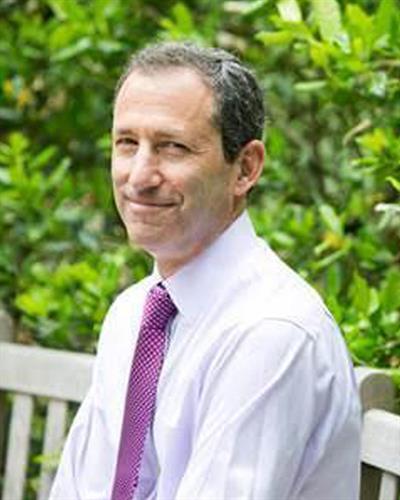
James M. Glaser is a Professor of Political Science at Tufts University and currently serves as Dean Emeritus of the School of Arts and Sciences. He previously held leadership roles including Dean of the School of Arts and Sciences (2014–2024), Dean of Academic Affairs (2010–2014), and Dean of Undergraduate Education (2003–2010). His academic career spans over three decades, beginning as an Assistant Professor at Tufts in 1991. Glaser specializes in American Politics and Political Behavior, focusing on electoral politics, racial issues, political compromise, and partisan dynamics. Education: PhD in Political Science, University of California, Berkeley (1991) MA in Political Science, University of California, Berkeley (1985) BA in Political Science, Stanford University (1983) Research Interests: Glaser’s work examines how political strategies shape public attitudes on racial issues, compromise in polarized environments, and the historical and regional influences on Southern politics. His seminal books include Changing Minds, if Not Hearts (2013), The Hand of the Past in Contemporary Southern Politics (2005), and Race, Campaign Politics, and the Realignment in the South (1998), which received the V.O. Key Prize. He collaborates with colleagues on projects comparing liberal and conservative political attitudes. Publications & Recognition: Glaser has authored over 30 peer-reviewed articles and books. Notable awards include the Lerman-Neubauer Prize for Teaching (2000), Mellon Bridge Professorships (2014–2025), and multiple recognitions for outstanding academic contributions. His recent work explores ideological divides, conservative resistance to compromise, and federalism dynamics. Teaching & Service: He teaches courses on American politics, race and class, and leadership. Glaser has advised numerous students and contributed to curricular development. His leadership roles reflect a commitment to academic governance and undergraduate education.
Vasyl Yurchyshyn is a Research Professor at NJIT's Center for Solar Research, specializing in high-resolution solar observations and magnetic field dynamics. His research investigates solar flare mechanisms, magnetic reconnection, coronal mass ejections, and solar atmospheric phenomena using advanced imaging techniques. Research employs adaptive optics, high-cadence spectroscopy (FISS/GST, IRIS), and space-based observatories (SDO, SOHO) to study fine-scale solar structures. Key focus areas include: magnetic reconnection in chromospheric jets; evolution of flare ribbons; prominence formation; and magnetic field configurations preceding eruptions. Recent work develops machine learning methods for space weather prediction of coronal mass ejections and solar cycles. Publications demonstrate innovations in solar image processing, deep learning for magnetogram enhancement, and transformer models for CME forecasting. Research themes consistently integrate high-resolution observations with magnetohydrodynamic interpretations of solar activity. Long-term investigations track temporal evolution of network jets, active region magnetic fields, and flare-associated plasma sheets using multi-instrument datasets from major solar observatories.
Jonathan D. Sarna is University Professor and the Joseph H. & Belle R. Braun Professor of American Jewish History at Brandeis University. He serves as Chief Historian of the Weitzman National Museum of American Jewish History and past president of the Association for Jewish Studies. An award-winning author of over thirty books on American Jewish history, his research focuses on the intersection of Jewish identity, American culture, and historical evolution. He holds fellowships in both the American Academy of Arts and Sciences and the American Academy of Jewish Research. Education: Ph.D., Yale University M.A., Yale University M.A., Brandeis University B.A., Brandeis University B.H.L., Hebrew College His research explores the formation of American Jewish identity, the dynamics of religious adaptation in immigrant communities, and the historical relationships between American Jews and Israel. Recent work examines liturgical transformations in Jewish texts and comparative diaspora studies. Publication trends reveal consistent focus on historical analysis of Jewish-American experiences, with recent emphasis on diaspora identity formation, textual interpretation, and demographic shifts within Jewish communities. His articles employ interdisciplinary methodologies combining historical, sociological, and cultural lenses. Awards & Honors: Everett Jewish Book of the Year Award Fellow, American Academy of Arts and Sciences Fellow, American Academy of Jewish Research Charles Andrews Fellowship, Yale University As Chief Historian at the National Museum of American Jewish History, Sarna oversees scholarly initiatives documenting American Jewish heritage and develops educational programming on Jewish contributions to American society.
Meghan J. Pifer is a Professor and Chair of the Department of Educational Policy Studies & Evaluation at the University of Kentucky. Prior roles include Chair of the Department of Counseling and Human Development at the University of Louisville, Co-Principal Investigator for the U.S. Army’s Master Educator Course, and instructor at Penn State’s Smeal College of Business. She holds a PhD in Higher Education from Penn State, an EdM from Boston University, and a bachelor’s degree from the University of Pittsburgh. Her research focuses on two core areas: (1) faculty professional development, including doctoral education, academic department dynamics, and institutional support systems; and (2) military-connected populations, addressing education transitions, teaching strategies, and institutional policies for veterans and military-affiliated students. She also explores organizational structures and identity formation in higher education. Her recent scholarship examines ROTC programs, mid-career faculty development, and equity-minded leadership. Notable projects include analyzing military-to-civilian transitions, women’s leadership in academia, and systemic barriers faced by working-class academics. Pifer has co-authored/co-edited books such as *Success After Tenure: Supporting Mid-Career Faculty* and *Mentoring Undergraduate Students*. She has directed Army-funded initiatives like the 2020 MEC Fellowship Program and currently leads UK’s Department of Educational Policy Studies & Evaluation.
Nate Plageman is an Associate Professor in the Department of History at Wake Forest University, specializing in urban history of colonial and post-colonial Africa with a focus on Ghana. He employs social historical approaches and examines popular music alongside written and oral sources to analyze Ghanaian urban life. His research has been supported by Fulbright and the National Endowment for the Humanities. Education: B.A. Saint Olaf College (2000) M.A. Indiana University-Bloomington (2003) Ph.D. Indiana University-Bloomington (2008) Research Interests: Urban history focuses on colonial infrastructure development and social transformation; African studies emphasize cultural expressions through music and community formation; historical methodology combines archival research with ethnomusicology to reconstruct lived experiences in African urban spaces during periods of colonial and post-colonial transition. Publications: His scholarly articles consistently explore themes of urbanization, cultural identity, and colonial legacies in West Africa. Recent work analyzes music as political expression and urban planning as contested territory between colonial ambitions and local agency, with particular attention to Ghana's socio-cultural evolution. Awards & Grants: Fulbright Fellowship National Endowment for the Humanities grant Academic Service: Coordinates Wake Forest University's African Studies Minor since 2016, fostering interdisciplinary engagement with African histories and cultures across campus.
Dejun Yang is an Associate Professor in the Department of Computer Science at Colorado School of Mines. He directs the NEMOS (Networking and Mobile Sensing) Lab, focusing on advancing networking, mobile sensing, and edge computing through interdisciplinary approaches involving game theory, optimization, machine learning, and algorithm design. His work addresses challenges in resource allocation, security, and privacy across domains like IoT, quantum internet, and blockchain-based systems. Education: B.S. in Computer Science, Peking University (2007) Ph.D. in Computer Science, Arizona State University (2013) Research Interests: Networking and satellite communications Edge computing security and SLA enforcement Incentive mechanisms for crowdsourcing and blockchain Quantum internet resource distribution Privacy-preserving mobile sensing Recent Article Trends: His 2023-2025 work emphasizes blockchain payment networks (e.g., fee-aware routing, crypto capital incentives) and edge computing SLA markets. Earlier studies focused on crowdsourcing mechanisms and spectrum auctions. Scientific Awards: Recipient of Best Paper Awards at GLOBECOM’15, ICC’12, ICC’11, MASS’11, and a Best Paper Runner-Up at ICNP’10 (2010-2015). Lab & Collaboration: Leads the NEMOS Lab, which develops innovative solutions for mobile sensing, edge computing, and secure distributed systems. Active in interdisciplinary collaborations involving industry partners and academic institutions.
Matt Kincaid serves as a Lecturer in the Marketing and Business Law academic area at the University of Kansas School of Business. He maintains a dual professional role as both an academic educator and a practicing attorney, bringing real-world legal experience to his teaching. His position at the university is based in Capitol Federal Hall, Room 2168, in Lawrence, Kansas. His educational background includes: J.D. from the University of Kansas School of Law with a Business and Commercial Law certificate MBA from the University of Kansas B.A. in Economics and Psychology (double major) from the University of Kansas Matt Kincaid's research and professional interests focus on practical business law applications. His expertise spans business law, contract law, trademark law, real estate law, and negotiation strategies. He has developed specialized knowledge in Kansas-specific legal frameworks while maintaining a broader perspective on national legal standards. His work bridges academic theory with practical legal application, particularly in areas affecting small businesses and entrepreneurs. His recent scholarly output demonstrates a consistent focus on practical legal guidance for business professionals. The articles show a progression from foundational legal concepts to more specialized applications, with increasing attention to Kansas-specific legal frameworks. His work consistently addresses real-world legal challenges faced by businesses and entrepreneurs, with particular emphasis on contract formation, intellectual property protection, and real estate transactions. Professional recognition includes: Selected to Rising Stars: 2017 - 2025 As an educator, Kincaid brings his extensive practical experience to the classroom, teaching courses in negotiation and dispute resolution, business organizations, contract law, trademark law, and real estate law. His professional practice at Kincaid Law KC, LLC provides him with current, hands-on experience that directly informs his teaching approach and materials. He has presented on employment law topics to university entrepreneurship classes, demonstrating his engagement with the academic community beyond his regular teaching responsibilities. Through his law firm, Kincaid Law KC, LLC, he advises small businesses, entrepreneurs, homeowners, investors, landlords, and commercial tenants across Kansas and Missouri. His practice covers business law, intellectual property, and real estate law, with particular expertise in LLC formation, contract drafting, trademark applications, and real estate transactions.
Jason Sumich is a Senior Lecturer in Sociology and Criminology at the University of Essex, specializing in class formation, state development, and urban politics in southern Africa. He holds a PhD from the London School of Economics and has conducted extensive fieldwork in Mozambique since 2002. His research examines how privileged groups interact with state institutions during periods of political transformation. Research interests include class formation in post-colonial contexts, urban enclaving in African cities, political economy of southern Africa, nationalism and state formation, and the anthropology of elites. His work connects political anthropology with urban studies and economic sociology. Publications examine middle-class formation in Mozambique, urban inequality in Maputo, and the political economy of post-socialist transitions. Recent work analyzes spatial segregation in African cities and the political ontology of development. Research employs ethnographic methods to understand social stratification and urban transformation. Currently directs the Norwegian Research Council-funded project 'Enclaving: Patterns of Global Futures in Three African Cities'. Supervises PhD candidates researching supply chain politics, human rights, and criminology. Previously taught at University of Fort Hare, University of Pretoria, and NTNU Norway.
Danielle Dickens is an Associate Professor of Psychology at Spelman College, specializing in Black feminist social psychology. Her research examines identity development among Black women in academic and professional environments. Education: Ph.D. in Applied Social Psychology from Colorado State University B.A. in Psychology from Spelman College Research investigates how intersecting identities (race, gender, class) influence experiences of discrimination, identity shifting strategies, and health outcomes among Black women. Current NSF-funded projects focus on retention of Black women in STEM fields. Her work integrates quantitative and qualitative methods to explore systemic barriers in education and workplaces. Honors include multiple teaching awards and major grants from NSF and American Psychological Foundation. Recent publications address pay inequity, identity shifting scales, and mental health impacts of microaggressions.
Dr. Susan Flynn is Head of the Department of Arts and Senior Lecturer at South East Technological University (SETU), Waterford. She holds a PhD in Equality Studies and is a Fellow of the Higher Education Academy UK. Her research focuses on Equality, Diversity, and Inclusion (EDI), social justice, urban planning, and smart cities. She chairs the Analysing Social Change Research Group and represents SETU in EU initiatives like Conexus Social, Cultural & Human Sciences Institute (SCHSI). Dr. Flynn has led projects such as 'Omos Aite: Visualising a Sense of Belonging in Gaeltacht na nDeise' (2024–2028) and 'Factors influencing the uptake of the Early Childhood Care and Education Scheme among Traveller families' (2023–2027). Her work intersects academia with community engagement, including roles as Director of the Gallery of Modern Art and Board Member of the Irish Humanities Alliance. Her research explores topics like smart city discourses, transnational family dynamics, and emergency remote teaching during the pandemic. Key publications include Equality in the city: Imaginaries of the smart future (2022) and articles on urban social justice and digital pedagogy. Dr. Flynn has received awards including the Higher Education Academy Fellowship and serves as a Research Associate at UCD’s Equality Studies Centre. Her teaching includes PhD modules on transformative research methodologies.
Dr. Tara T. Green is the CLASS Distinguished Professor and Chair of African American Studies at the University of Houston's College of Liberal Arts and Social Sciences, with a joint appointment in the English Department. An award-winning author and editor of six books, she co-curated the Triad Black Lives Matter Collection at the University of North Carolina at Greensboro. Her research integrates Black feminism and Southern storytelling traditions, focusing on: African American fiction and autobiography Black leadership/activism and Harlem Renaissance studies African literature and Black Southern cultural analysis Her publications consistently explore themes of Black identity, resistance, and intersectionality, with recent works examining Richard Wright's legacy, Alice Dunbar-Nelson's activism, and the politics of Black pleasure. She maintains a strong public engagement profile through book tours and literary festivals.
Micaela Baranello is an Assistant Professor in Music Studies at Temple University's Boyer College of Music and Dance. Her research focuses on 19th-to-21st-century opera and musical theater staging, particularly intersections with social justice and identity. She holds a PhD from Princeton University, supported by a Mellon/ACLS fellowship and Fulbright grant. Her book The Operetta Empire: Music Theater in Early Twentieth-Century Vienna (UC Press, 2021) explores Austro-Hungarian operetta's role in national identity formation and was honored as a CHOICE Outstanding Academic Title in 2022. Baranello's academic journey includes prior faculty positions at the University of Arkansas and Swarthmore College. She has produced operas through Opera Fayetteville, including Arkansas premieres of Dark Sisters and Glory Denied . Her teaching spans Western art music, opera history, and musical theater, with advising focus on topics like Mahler's translation studies and gender diversity in clarinet repertoire. Education: PhD/MA (Princeton University, Musicology), BA (Swarthmore College, Music) Professional Roles: Reviews Editor for Opera Quarterly , Council Member of the American Musicological Society Research Interests: Weimar Berlin culture, Richard Strauss's operas, emigré composers in America Her scholarly work appears in Journal of the American Musicological Society , Cambridge Opera Journal , and Financial Times , alongside popular writings in New York Times covering major festivals like Bayreuth and Aix-en-Provence. She actively engages in cultural critique addressing contemporary opera's ethical and social dimensions.
Michael Clay Carey is an Associate Professor in the Department of Communication and Media at Samford University’s Howard College of Arts and Sciences. He joined the faculty in 2014 and teaches courses in print and online journalism, including advanced writing, visual storytelling, and practicum classes producing The Local , an award-winning student magazine. His research focuses on cultural studies of media, particularly media’s role in shaping identity and representing poverty in Appalachia. He has authored the award-winning book The News Untold: Community Journalism and the Failure to Confront Poverty in Appalachia and published extensively in journals like Journalism Practice and Newspaper Research Journal . Before academia, Carey worked as a reporter and editor at Tennessee newspapers, covering diverse topics from government to sports. He holds BS, MS, and PhD degrees from Middle Tennessee State University and Ohio University. His professional memberships include the Society for Professional Journalists and Alabama Media Professionals, where he serves as Vice President of Programs. Carey advises Samford’s student chapter of the Society of Professional Journalists and has received the National Federation of Press Women’s Best Advisor award twice. His research highlights media’s societal impact, with studies on Amish press dynamics, digital advertising challenges in community newspapers, and self-censorship among student journalists. His work often bridges theoretical cultural analysis with practical journalism ethics, emphasizing inclusive reporting and community resilience in underserved regions like Appalachia.
Dr. Adrian Knapp is a part-time lecturer in the English Department at Mount Saint Vincent University and Saint Mary’s University, specializing in 18th-century British literature , early black writing in Britain , and slavery/slave resistance in literary contexts . He holds a Ph.D. in Philosophy from the University of Leeds and an M.A. in Philosophy from the University of Innsbruck, with office location at Seton 567. His research spans themes of colonial power structures , post-slavery identity , and British popular culture . Recent publications focus on Zeluco ’s moral critiques, Life in London ’s class dynamics, and analyses of Ignatius Sancho’s satirical letters. Conference talks from 2016–2023 examine topics like Andrea Levy’s The Long Song and Philip Quaque’s missionary challenges . Teaching interests include courses in English literature , Irish studies , and Atlantic Canada Studies , alongside graduate/undergraduate writing center tutoring at Saint Mary’s University. Current work engages with forthcoming entries in The Cambridge Guide to the Eighteenth-Century Novel (2025), analyzing texts like The West-Indian and Zoflora; or, The Generous Negro Girl .