Yuri Bobbert is a Professor of Information System Science at Antwerp Management School (AMS), part of the University of Antwerp. He holds dual PhDs from Radboud University and the University of Antwerp, focusing on IT performance measurement. His career includes roles as Global Group CSO of NN Group and UWV (Government), leading cybersecurity integrations during mergers like NN Group and Delta Lloyds. As CEO of B-ABLE (IT consultancy), he developed cybersecurity frameworks. Currently, he advises on NIS2 compliance and Zero Trust strategies. His research spans cybersecurity ROI, regulatory frameworks (e.g., NIS2), and leadership in digital security. Education PhD in Information Systems (Radboud University) PhD in Cybersecurity (University of Antwerp) Research Interests Cybersecurity governance and compliance ROSI (Return on Security Investment) CISO leadership and board communication Zero Trust architecture Risk quantification in digital ecosystems Publications & Books Authored books: Strategic Approaches to Digital Platform Security Assurance , Cybersecurity in 60 Minutes , and Digital Security Leadership Over 100 peer-reviewed publications on cybersecurity performance and governance Grants & Awards Recipient of NIS2 implementation research grants Contributor to EU cybersecurity policy discussions Labs & Teams Leads AMS cybersecurity education programs and collaborates with ON2IT on global cybersecurity strategies.
Azizjon ALIMOV is a Full Professor at IÉSEG School of Management (University of Lille, France), specializing in Corporate Finance, Mergers and Acquisitions, and Law and Finance. He holds a Ph.D. in Finance from the University of Oregon (2007) and an MBA from Central Michigan University (2001). His HDR (Habilitation) in Management Sciences was awarded by the University of Lille in 2023. His research focuses on corporate governance, cross-border M&A dynamics, and the interplay between legal frameworks and financial decision-making. Key themes include intellectual property rights' impact on corporate debt costs, product market competition effects on corporate cash holdings, and government borrowing influences on acquisition strategies. His work frequently examines global contexts, with studies spanning North America, Asia, and Europe. Notable publications include analyses of IPO staging mechanisms (2024), managerial discipline through trade liberalization (2023), and the role of labor protection laws in loan contracting (2015). His recent work emphasizes reproducibility in management science methodology (2023) and cross-border regulatory challenges in M&A. No scientific awards are explicitly listed; however, his extensive publication record reflects sustained academic contributions. He has advised students across institutions including City University of Hong Kong and the Sauder School of Business, though specific advisee names are not documented here. His professional experience includes roles at the University of Arizona (2008–2010), California State University (2007–2008), and as an HSBC Visiting Assistant Professor at the University of British Columbia (2016–2018). He currently leads the Finance Track at IÉSEG, contributing to programs like the Grande École Master’s in Finance and MSc Corporate Finance courses.
Raul Vicente Zafra is a Professor of Data Science at the University of Tartu, Faculty of Science and Technology, Institute of Computer Science, where he has been working since 2013. His research spans computational neuroscience, artificial intelligence, and data science, with a particular focus on bridging biological and artificial models of intelligence. Education: PhD in Physics (2001-2006), University of the Balearic Islands BSc in Physics (1997-2001) Professor Zafra's research interests center on computational neuroscience and artificial intelligence, with specific expertise in brain-computer interfaces, reinforcement learning, neural modeling, and explainable AI. His work bridges the gap between biological and artificial intelligence systems, exploring how neural principles can inform machine learning algorithms and vice versa. He has made significant contributions to understanding neural coherence, time interval learning in neural systems, and the application of information theory to brain-computer interfaces. His research often involves interdisciplinary collaboration between computer science, neuroscience, and medicine. Analysis of Zafra's recent publications reveals a strong focus on the intersection of artificial intelligence and neuroscience. His work spans explainable AI methods, brain-computer interfaces, reinforcement learning models that mimic cognitive processes, and neurophysiological studies of brain activity. A notable trend is his exploration of how biological principles of neural computation can inform and improve artificial intelligence systems, particularly in areas like time-based learning, consciousness modeling, and neural coherence. Scientific Awards: 2012: Attendee at the 62nd Lindau Nobel Laureate Meeting 2007: Quantum Electronics and Optics Division Prize of the European Physical Society for the best PhD Thesis in Applied Optics in Europe 2006: PhD Extraordinary Award of the Physics Department of the University of the Balearic Islands 2001: Physics Degree Extraordinary Award (First Class Honors, best GPA) 1997: Bronze Medal in the "8th Spanish Physics Olympiad" Professor Zafra has been principal investigator on numerous significant research projects including the Estonian Centre of Excellence in Artificial Intelligence, Cardiovascular Stress Impacts On Neuronal Function, and Bridging biological and artificial models of vision. His grant portfolio demonstrates strong funding support from the Estonian Research Council, European Commission, and other major funding bodies. He has supervised multiple PhD students and mentored early-career researchers in computational neuroscience and AI. His laboratory work focuses on developing computational models of neural systems and applying these insights to artificial intelligence. Current research directions include explainable AI methods, brain-computer interfaces, modeling of consciousness and cognitive processes, and the application of AI to healthcare challenges.
Anna S. Mattila is the Marriott Professor of Lodging Management and serves as Professor-in-Charge of the Graduate Program at the School of Hospitality Management, Pennsylvania State University. Her research spans social media, service recovery, servicescape, prosocial behaviors, cross-cultural studies, and wellness in hospitality contexts. Education : B.S. and Ph.D. from Cornell University, M.B.A. from University of Hartford Mattila's work examines how emotions, cultural norms, and technological innovations like AI influence consumer decisions in hospitality. Her studies cover topics from robotic service interactions to sustainable food marketing and moral psychology in tourism. She has published extensively in journals such as International Journal of Hospitality Management and Journal of Consumer Marketing . Her recent articles focus on AI integration in hospitality, consumer trust in virtual influencers, upcycled food adoption, and the psychological effects of servicescape design. Key themes include ethical consumption, digital transformation, and cross-cultural consumer behavior. Advising : Supervised Anqi Luo's dissertation on service recovery in 2022 Mattila's office is located in 224 Mateer Building, University Park, PA. She contributes to advancing hospitality research through methodological consulting and the Penn State Biomarker Core Laboratory.
Marlon Dumas is a Professor of Information Systems at the University of Tartu's Faculty of Science and Technology, with a 20-year academic career spanning Estonia and Australia. He holds a PhD in Computer Science from the University of Grenoble 1, France, and has served as Head of Chair and Programme Director in Software Engineering programs. Specializes in Business Process Management (BPM) and Process Mining Current research focuses on prescriptive process monitoring, simulation modeling, and data privacy Recipient of 25+ scientific awards, including multiple Test of Time Awards and the Estonian National Research Award in Technical Sciences Editorial leadership: Area Editor for Information Systems (Elsevier) and ERC Starting Grant Panel Chair His work bridges theoretical advancements in BPM with practical applications in financial services and anti-money laundering. He has developed tools like SIMOD, Kronos, and Kairos for process optimization and analysis. His research integrates AI/ML techniques (reinforcement learning, causal inference) with traditional process modeling. Key trends in his recent publications include: Prescriptive monitoring systems combining causal inference and machine learning Privacy-preserving process mining techniques (differential privacy, anonymization) Resource availability modeling and multi-objective process optimization LLM applications for process analysis and intervention policies Scientific honors include: 2024 BPM Best Paper & Prototype Awards 2023 ICPM Best Prototype Award 2019 ERC Advanced Grantee 2017 Estonian National Research Award in Technical Sciences 2019 MODELS Test of Time Award 2017 BPM Best Prototype Award He has mentored PhD candidates as thesis examiner and contributed to 30+ conference program committees, including General Co-Chair roles at ESEC-FSE 2019 and CAiSE 2018. His work has been supported by European Research Council grants and Estonian Science Foundation projects.
Diane E. Austin is a Professor and Director of the School of Anthropology at the University of Arizona. She also serves as a Research Anthropologist at the Bureau of Applied Research in Anthropology (BARA). Her work focuses on environmental anthropology, particularly community dynamics in industrial and environmental contexts, with a strong emphasis on social justice and collaborative research. She has over 25 years of experience leading interdisciplinary projects in the U.S., Mexico, and Gulf Coast regions. Austin's research spans diverse areas including Native American communities, U.S.-Mexico border sustainability, Gulf Coast oil industry impacts, and urban food systems in arid regions. She has pioneered long-term partnerships with tribal organizations, federal agencies, and community groups, earning recognition such as the University Distinguished Outreach Professor (2008) and Distinguished Director (2023). Her recent work highlights longitudinal studies on the Deepwater Horizon oil spill's social effects, binational environmental initiatives in Nogales, and community-based approaches to disaster resilience. She coordinates BARA's internship and post-baccalaureate programs, supporting hundreds of students in applied anthropological research. Awards: Partners in Conservation Award (2010), Border Research Partnership Award Finalist (2012) Leadership Roles: Chair of the Good Neighbor Environmental Board, Member of the Gulf Research Program Advisory Board Key Projects: Southern Paiute cultural preservation, Gulf Coast oil industry studies, Nogales reforestation initiatives Austin’s teaching includes courses on ethnographic methods, data analysis, and mixed-methods research. She actively engages in policy advocacy, contributing expert testimony in legal proceedings related to environmental disasters and labor rights.
Min Yen Kan is an Associate Professor and Vice Dean of Undergraduate Studies at the National University of Singapore's School of Computing, Department of Computer Science. With a PhD from Columbia University (2002), he leads the Web Information Retrieval / Natural Language Processing Group (WING.NUS) and serves as ACL Ethics Committee co-chair. His research spans Natural Language Processing , Large Language Models , Digital Libraries , and Information Retrieval , with specific focus on scientific discourse analysis, fact verification, and multimodal systems. Current projects include Scholarly Document Information Extraction (TRL 6), Task-Oriented Dialogue Systems (TRL 4), and Recommendation Systems (TRL 5). Recent publications reveal strong trends in LLM limitations (bias, hallucination, evaluation), conversational recommendation systems , and misinformation detection . His work consistently bridges theoretical NLP with real-world applications in digital libraries and scientific communication. Award highlights include: CIKM 2019 Best Paper Award ACL Distinguished Service Awards Vannevar Bush Best Paper Award (JCDL 2012) ACM Distinguished Speaker designation Kan mentors PhD students with placements at Google and USTC, and serves as associate editor for Information Retrieval and survey editor for Journal of AI Research . His lab WING.NUS develops practical tools like SciWING for scientific document processing and FANG for fake news detection. Media engagements include commentary on AI regulations in Southeast Asia and workforce implications in the AI era.
Franz Heukamp is the Director General of IESE Business School at the University of Navarra and Professor in the Department of Decision Analysis. He holds the Antonio Valero Chair of Business Administration since 2016 and previously served as Vice Dean of the MBA program and Secretary General of IESE. His academic background includes a Ph.D. in Engineering from the Massachusetts Institute of Technology, an Ingénieur Civil des Ponts et Chaussées from Ecole Nationale des Ponts et Chaussées in Paris, and a Diplom-Ingenieur from Technische Universität München. Professor Heukamp's research focuses on behavioral decision-making with a special interest in neuroeconomics, examining how people make decisions under uncertainty, particularly regarding time-probability trade-offs. His work bridges business decision theory with neuroscience, as evidenced by his publications in journals like Management Science , European Neuropsychopharmacology , and British Journal of Pharmacology . In recent years, he has expanded his research interests to include artificial intelligence applications in management and sustainability. His recent scholarly output shows a progression from fundamental decision theory research to practical applications of AI in business leadership and management education. He has published extensively on risk preferences, intuition in decision making, and the neurological basis of economic choices, with increasing focus on how digital transformation and AI are reshaping management practices. As Director General, Heukamp has championed several strategic initiatives including internationalization efforts across North America, Latin America, and Central Europe, development of new degree programs like the Master in Management and Munich Executive MBA, and integration of digital learning technologies while maintaining the school's commitment to in-person educational excellence. Professor Heukamp is an active member of both the Institute for Operations Research and the Management Sciences and the Neuroeconomics Society, reflecting his interdisciplinary approach to business education and research. His leadership prioritizes supporting faculty research, advancing lifelong learning solutions for executives, and maintaining IESE's mission of service to society through academic innovation.
Dr. Sezgin Ayabakan is an Associate Professor in the Department of Management Information Systems at the Fox School of Business and Management, Temple University . He holds a PhD in Management Science from the University of Texas at Dallas, with a focus on Management Information Systems (MIS), an MS in Industrial and Systems Engineering from the University of Florida, and a BS in Industrial Engineering from Bilkent University in Turkey. His research focuses on healthcare analytics , particularly exploring how health information technology (HIT) impacts healthcare costs, quality, and utilization. Key research interests include data analytics applications in healthcare and social media, the business value of information systems, and open-source production strategies. He has examined topics such as telehealth efficacy, electronic health record (EHR) adoption challenges, hospital readmission reduction programs, and the interplay between healthcare IT and clinician well-being. Dr. Ayabakan teaches undergraduate and graduate courses in information systems, including MIS 2101: Digital Systems and SBM 3586: Diamond Peer Teachers - Internship II . His work has been published in top-tier journals like MIS Quarterly and Health Services Research and Management Epidemiology , with recent studies addressing telehealth utilization, EHR strategy impacts, and the role of organizational routines in clinician satisfaction. While no formal awards are listed, his contributions to healthcare IT research demonstrate significant academic impact. His advisory and grant activities are not detailed in the provided text, but his research often intersects with practical healthcare system challenges, suggesting potential collaborations with healthcare institutions and policy organizations.
Dr Martin Elliott is a Senior Research Fellow at the Children's Social Care Research and Development Centre (CASCADE), Cardiff University, and holds roles as Research Development Adviser for Health and Care Research Wales and academic lead for the all-Wales ExChange programme. His work focuses on child welfare inequalities, poverty, secure accommodation, and services for disabled children. With 17 years in statutory children’s services, he transitioned to academia via a PhD analyzing looked-after children in Wales. He has secured £3.4M+ in research funding, including a major CASCADE partnership grant. Educated with a DipSW (1997), BA(Hons) Community Studies (1998), MSc Social Science Research Methods (2013), and PhD (2018), his expertise spans mixed-methods research. Awards include the ESWRA doctoral thesis award (2020) and BASW’s British Journal of Social Work prize (2021). His research explores socio-economic dimensions in social work practice, policy impacts, and system equity. Key grants include studies on child welfare interventions, kinship care, and secure accommodation outcomes. He leads projects analyzing Wales’ Flying Start program, workforce regulation impacts, and crisis mental health services. CASCADE collaborates internationally on child welfare systems, reflecting his strategic focus on translating research into policy. His work bridges academic inquiry with frontline practice, addressing systemic challenges in child protection and welfare delivery.
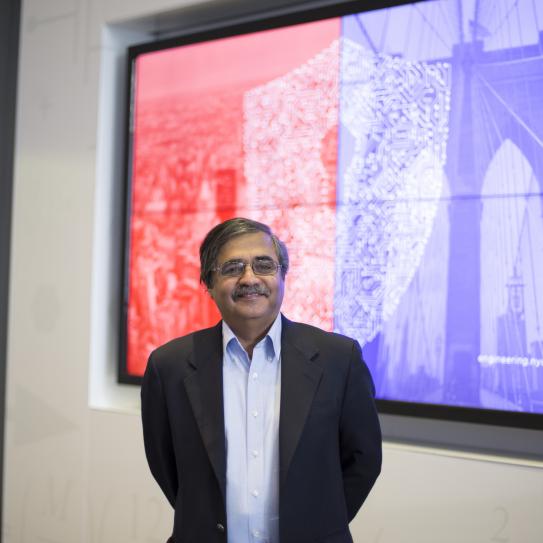
Nasir Memon is a Professor of Computer Science and Engineering at the New York University Tandon School of Engineering and concurrently serves as the Dean of Engineering at NYU Shanghai. He has been a faculty member at NYU Tandon since September 1998. Memon is a co-founder of NYU's Center for Cyber Security (CCS) and NYU Abu Dhabi, and the founder of key initiatives such as the OSIRIS Lab, CyberSecurity Awareness Week (CSAW), the NYU Tandon Bridge program, and the Cyber Fellows program. His work focuses on advancing cybersecurity education and addressing systemic biases in AI-driven systems. Education: Ph.D., Computer Science, University of Nebraska Master of Science, Mathematics, Birla Institute of Technology and Science (BITS), Pilani Bachelor of Engineering, Chemical Engineering, BITS, Pilani Research Interests: Media Forensics and Authentication Biometric Security and Privacy Data Compression and Privacy-Preserving Techniques Network Security and Incident Response AI Ethics and Fairness in Machine Learning Cybersecurity Education and Workforce Development Awards and Honors: IEEE Fellow (2010) SPIE Fellow (2014) Jacobs Excellence in Education Award (2002) NSF CAREER Award (1997) Advising and Grants: Advises Ph.D. students like Anubhav Jain and Govind Mittal, and mentors Master’s students such as Rishit Dholakia. Recipient of NSF grants and funding from NYU Abu Dhabi and Indiana University Bloomington for projects like computational tools for fact-checking and AI-driven bias mitigation. Labs and Teams: Directs the OSIRIS Lab, a leading research group in cybersecurity and AI. Leads initiatives at the NYU Center for Cybersecurity (CCS) and collaborates with NYU Abu Dhabi’s Center for Cyber Security.
Lili Wang is an Associate Professor of Nonprofit Leadership and Management at Arizona State University (ASU), based in the Watts College of Public Service & Community Solutions and the School of Community Resources and Development. She is affiliated with the Lodestar Center for Philanthropy & Nonprofit Innovation and the Center for Organization Research and Design (CORD). Her work focuses on individual and institutional philanthropy, collaborative governance, and international NGOs. She holds a Ph.D. in Public Administration from the University of Southern California. Education: Ph.D. in Public Administration from the University of Southern California, with research on social capital and community philanthropy. Research Interests: Dr. Wang studies charitable giving, volunteering dynamics, nonprofit organizational strategies, and the role of NGOs in global contexts. Her work emphasizes how social networks and policies influence philanthropic behavior and institutional development. Publications: Over 10 peer-reviewed articles in journals like Nonprofit and Voluntary Sector Quarterly and Voluntas, focusing on topics such as volunteering in Canada, nonprofit development in China, and digital media's impact on charitable giving. Awards: Recipient of the ARNOVA Emerging Scholar Award for research excellence. Research supported by grants from the Social Science Research Council, Bureau of Land Management, and St. Luke’s Health Initiatives. Advising & Leadership: Serves as the faculty honors advisor for Barrett Honors College and directs graduate programs in nonprofit leadership. Advised students across disciplines including Public Affairs, Social Justice, and Community Development. Actively involved in doctoral committees and undergraduate research mentorship. Labs/Teams: Engaged in collaborative projects with interdisciplinary teams at ASU, focusing on nonprofit innovation and policy analysis.
Subodha Kumar is the Paul R. Anderson Distinguished Chair Professor of Statistics, Operations, and Data Science at Temple University’s Fox School of Business. He serves as the Founding Director of the Center for Business Analytics and Disruptive Technologies and has a secondary appointment in Information Systems. His roles include Ph.D. Program Concentration Director for Operations and Supply Chain Management. With over 240 publications, he ranks #1 globally in Information Systems Research publishing and holds a robotics patent. His research focuses on AI, blockchain, healthcare analytics, and cybersecurity, with notable contributions to digital transformation and operations management. Awards include the INFORMS ISS Distinguished Fellow and POMS Fellow. He advises major journals like Production and Operations Management and organizes conferences like POMS 2018. Media mentions span NYT, WSJ, and CBS. Education: University of Washington faculty Texas A&M University faculty Research Interests: Dr. Kumar explores AI applications, blockchain in fintech, healthcare system optimization, and supply chain analytics. He investigates cybersecurity’s operational impacts and data mining strategies. His work bridges theory and practice, addressing challenges in digital transformation and platform economies. Publications Trends: Recent work emphasizes digital platforms (e.g., blockchain adoption, telemedicine impact), organizational behavior (real-time feedback systems), and healthcare operations (personalized treatment algorithms). He frequently collaborates internationally, with studies appearing in Management Science, Information Systems Research, and Decision Sciences. Awards & Recognition: Changjiang Scholars Chair (China) ISB Visiting Professorship POMS Executive Editor Grants & Labs: Secured NIH grants for health analytics projects. Leads Temple’s analytics center fostering industry partnerships. Active in editorial roles (e.g., Production and Operations Management Journal Deputy Editor). Teaching: Offers courses in data science, optimization methods, and innovation entrepreneurship at graduate/undergraduate levels.
Emilio A. Parrado is the Dorothy Swaine Thomas Professor of Sociology at the University of Pennsylvania's School of Arts & Sciences and Director of the Population Studies Center. His research focuses on migration dynamics, particularly Hispanic populations in the U.S., international migration patterns, and social/demographic changes in Latin America. He combines quantitative and qualitative methods, including original survey and ethnographic data. Education: Ph.D. (Sociology, University of Chicago, 1997), M.A. (Sociology, University of Chicago, 1994), B.A. (Sociology, University of Buenos Aires, 1988). Key research areas include: Migrant health risks and transnational mobility (e.g., HIV/STI patterns at the U.S.-Mexico border) Gendered impacts of migration on labor markets and family structures Demographic transitions and social inequality in Latin America, including post-pandemic labor market shifts in Argentina Recent work emphasizes deportation effects on mental health, regional migration trends to Buenos Aires, and the intersection of immigration policy with fertility and urban development. His Migrante Project focuses on Mexico-U.S. border health observatories. Awards: None explicitly listed. Active in grants related to migrant health and labor studies. Labs/Teams: Leads the Population Studies Center and collaborates with the Latin American and Latino Studies Program at UPenn.
Dr. Louise Alexander is an Associate Professor in Mental Health Nursing at Deakin University's School of Nursing & Midwifery (Faculty of Health). She holds prior academic roles including Senior Lecturer (ACU, 2018–2023) and Lecturer positions (ACU and Holmesglen Institute). Her research focuses on mental health nursing workforce sustainability, stigma reduction, simulation-based education, and curriculum development. Key interests include nurse resilience, pandemic impacts on healthcare workers, and improving student attitudes towards mental illness. Education: PhD from Deakin University; GCHE qualification Certifications: University of Melbourne's Emerging Leaders & Management Program (2021–2022) Teaching: Leads courses in forensic mental health, therapeutic communication, and health promotion Research Highlights: Recent work examines pandemic trauma among nurses, alcohol consumption trends post-COVID, and leadership's role in workforce retention. Her studies emphasize qualitative methods and integrative reviews to address systemic challenges in mental health nursing education and practice. Awards/Grants: No explicit awards listed; research supported by institutional collaborations. Active in developing transition-to-practice programs and evaluating simulation-based training efficacy. Labs/Teams: Collaborates with interdisciplinary teams on mental health workforce resilience and stigma reduction initiatives. Engages in national and international nursing education networks.