Laila Niedrite is a Professor at the University of Latvia 's Faculty of Computing, actively contributing to data warehousing, adaptive e-learning systems, and big data management since 2001. She leads collaborative research with key partners Darja Solodovnikova, Aivars Niedritis, and Guntis Arnicans. Specializes in performance measurement frameworks and evolution management of heterogeneous data sources Develops personalized adaptive e-learning architectures with implemented learning path recommendations Advances cross-domain data integration including social media analytics and institutional research evaluation Research Trends: Recent work focuses on indoor environmental quality monitoring during pandemics (2022), institutional research analytics (2017), and big data requirements (2018). She bridges academic performance analysis with technical implementations of scalable data systems. Collaborative Network: Maintains long-term collaborations with researchers at the University of Latvia, particularly with Darja Solodovnikova (16 co-publications) and Natalija Kozmina (12 co-publications), contributing to both theoretical frameworks and practical implementations.
Marek Szelagowski is an academic researcher specializing in Business Process Management (BPM), with a particular focus on healthcare applications, digital transformation, and process modeling. His research spans both theoretical frameworks and practical implementations, with numerous publications in top-tier journals and conferences in the BPM domain. His research interests primarily focus on Business Process Management, Digital Transformation, Healthcare Information Systems, and Knowledge Management. Szelagowski has made significant contributions to understanding business process nature assessment, BPM maturity models, and the integration of BPM with knowledge management systems. His work often bridges the gap between theoretical frameworks and practical implementations, particularly in healthcare settings. His recent publications demonstrate a strong trend toward healthcare applications of BPM, with several case studies on telemedicine, cardiac rehabilitation, and chronic disease management. His research also explores the evolving relationship between Business Process Management Systems (BPMS) and Enterprise Resource Planning (ERP) systems in the digital age. The keywords across his publications consistently highlight themes of process assessment, digital transformation, healthcare process optimization, and business process modeling. Szelagowski has received recognition for his systematic literature reviews and bibliometric analyses in the BPM field, which have helped map research trends and identify scholarly gaps. His work on the Business Process Nature Assessment Matrix represents a novel contribution to process classification methodologies. He has been actively involved in numerous collaborative research projects with colleagues from various institutions, particularly with Justyna Berniak-Wozny with whom he has co-authored 16 publications. His work demonstrates strong interdisciplinary connections between information systems, management science, and healthcare.
Audrone Lupeikiene is a prominent Professor at Vilnius University's Faculty of Mathematics and Informatics, Department of Informatics. With over two decades of academic contributions, she has established herself as a leading researcher in business process management, enterprise information systems, and database technologies. Her work bridges theoretical research with practical applications in healthcare, telemedicine, and decision support systems. Dr. Lupeikiene's research focuses on Business Process Management Systems , Enterprise Information Systems , and Big Data Visualization . Her work explores the evolution of BPMS and ERP systems, requirements engineering for service-oriented architectures, and innovative approaches to multidimensional data visualization. She has made significant contributions to understanding how business processes can be optimized through technological solutions, particularly in healthcare applications like cardiac rehabilitation programs. Her extensive publication record shows a clear evolution from foundational work in enterprise information systems architecture in the early 2000s toward more specialized research in business process management and healthcare applications in recent years. The research demonstrates increasing interdisciplinary collaboration, particularly with medical professionals in telemedicine applications, while maintaining strong connections to core information systems principles. Dr. Lupeikiene has been instrumental in organizing the International Baltic Conference on Digital Business and Intelligent Systems (Baltic DB&IS), serving as editor for multiple conference proceedings. She has maintained long-term research collaborations with colleagues including Gintautas Dzemyda, Albertas Caplinskas, and Olegas Vasilecas, demonstrating the sustained impact of her research program across multiple decades.
Juliana Freire is a Professor at the New York University Tandon School of Engineering, where she leads research at the intersection of data management, artificial intelligence, and data science. Her work focuses on developing innovative systems for data discovery, integration, and reproducibility, with a recent emphasis on leveraging large language models to address traditional database challenges. Dr. Freire's research spans several critical areas in modern data science. She has pioneered approaches for data cleaning, schema matching, and dataset discovery that have significantly advanced the field. Her recent work demonstrates a strategic shift toward integrating large language models with database systems, creating novel solutions for data understanding and integration. She investigates methods for improving the reproducibility of data analysis workflows and the transparency of machine learning pipelines, addressing fundamental challenges in contemporary data science practice. Analysis of Dr. Freire's publication trajectory reveals a clear evolution toward AI-enhanced data management systems. Her recent papers demonstrate sophisticated applications of large language models to problems like dataset description generation, column type annotation, and table discovery. She has developed cost-effective approaches that balance advanced capabilities with computational efficiency, making powerful data techniques accessible to broader audiences. Her work bridges theoretical advances with practical implementations, often resulting in open-source tools that benefit the wider research community. Dr. Freire maintains an active advising role, mentoring numerous researchers who have become significant contributors in their own right. Her collaborative approach is evident in the interdisciplinary nature of her projects, which span domains from wildlife conservation to biomedical research. She has led initiatives addressing real-world challenges such as identifying wildlife trafficking in online marketplaces and developing systems for biomedical data integration. She directs research efforts focused on creating practical data science tools, including the Auctus dataset search engine and the BugDoc debugging system. These projects reflect her commitment to building systems that address pain points throughout the data science workflow. Her leadership extends to community initiatives, where she has contributed to influential reports on the future of database research and diversity in computing conferences.
Jörg Linde is a Scientist at the Institute of Bacterial Infections and Zoonoses (IBIZ) within the Friedrich-Loeffler-Institut (FLI) in Jena, Germany. His work focuses on microbial genomics, bioinformatics, and infectious disease research. Education: Dr. rer. nat. (Doctorate in Natural Sciences) M.Sc. in Bioinformatics Research Areas: Next-Generation Sequencing (NGS) applications in pathogen analysis Genotyping and molecular epidemiology for outbreak tracking Antimicrobial resistance profiling Snakemake-based workflow development for genomic data Contact: Located at Naumburger Str. 96a, 07743 Jena, Germany. Telephone: +49 3641 804 2320 | Fax: +49 3641 804-2228
Nicolai Franzmeier is a Junior Research Group Leader at the Institute for Stroke and Dementia Research at LMU University Hospital . His research focuses on Alzheimer's disease , specifically the spatiotemporal evolution of neurodegeneration and mechanisms of cognitive resilience , combining advanced neuroimaging techniques like tau-PET and MRI connectomics with genetic analyses to develop personalized prediction models for disease progression. Education: Psychology and Medicine (2009-2014), University of Innsbruck PhD (2017), Graduate School for Systemic Neurosciences, LMU Munich Research Interests: Dr. Franzmeier investigates how tau pathology spreads in Alzheimer's disease using connectivity-based models , explores genetic modifiers like BIN1 and BDNFVal66Met, and identifies protective brain mechanisms against cognitive decline. His work has clinical applications in tau-targeting trials and differential diagnosis of tauopathies. Article Trends: His recent publications emphasize multimodal neuroimaging (tau-PET, amyloid-PET, MRI) for tau spread prediction , microglial activation interactions, and vascular-cognitive interactions in Alzheimer's and related dementias. Collaborations span Alzheimer's Disease Neuroimaging Initiative (ADNI) and German Imaging Initiative for Tauopathies (GII4T) . Team Leadership: He mentors a team of postdoctoral researchers and PhD students working on topics such as tau-PET quantification , small vessel disease , and machine learning applications in neurodegenerative disease. His lab integrates clinical neuroscience with computational approaches to advance precision medicine in dementia.
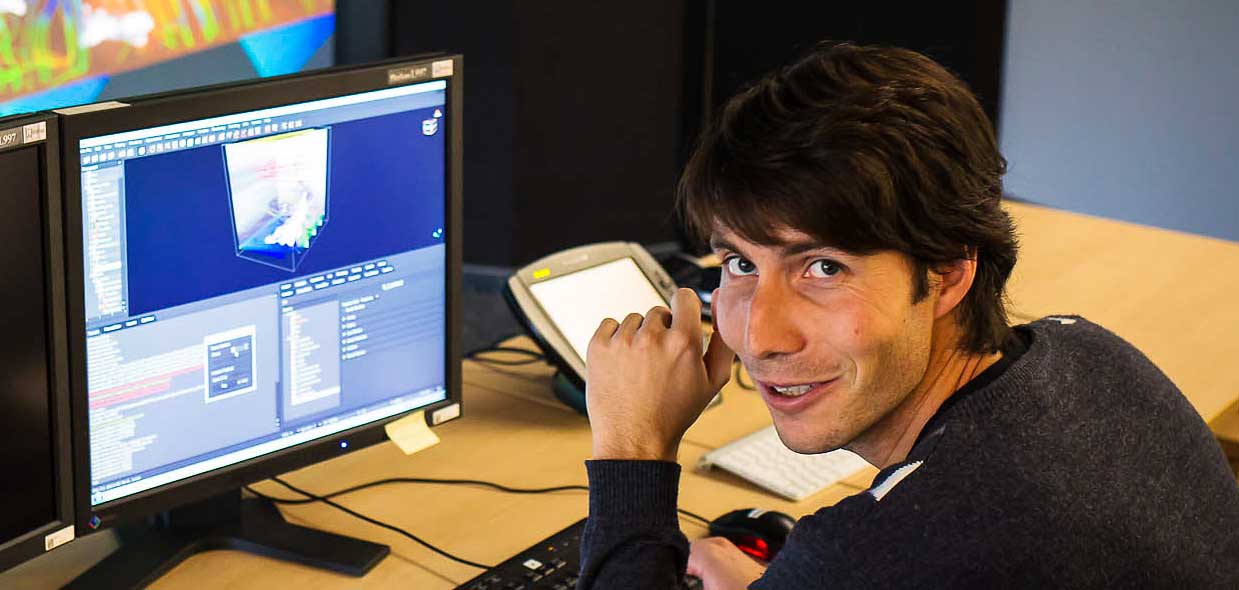
Lars Bilke is a Researcher at the Department of Environmental Informatics , Helmholtz Centre for Environmental Research - UFZ, Germany. His work focuses on software development for the OpenGeoSys simulation platform, build engineering for multiplatform systems, scientific 3D visualization, and virtual reality applications in environmental modeling. He leads the Software Engineering and Visualization workgroup and contributes to projects like TESSIN VISLab. Research interests include: Open-source geosimulation software development Multiplatform build systems Scientific visualization techniques Virtual reality for environmental data His publications from 2021-2025 cover advancements in geoscientific software tools, with a focus on OpenGeoSys and OGSTools versions. These works emphasize environmental system modeling, computational hydrosystems, and 3D data visualization methodologies. Bilke collaborates with teams on projects related to subsurface engineering, reactive transport modeling, and environmental risk assessment. Contact: lars.bilke@ufz.de
Afid Nur Kholis is a Researcher at the Helmholtz Centre for Environmental Research - UFZ in the Department of Environmental Informatics . His work focuses on Scientific 3D Visualization , Virtual Reality applications , and software development for environmental simulations , particularly through contributions to the open-source OpenGeoSys and OGSTools platforms. He collaborates on computational hydrosystems , reactive transport modeling , and environmental data integration . Research Interests: Primarily centered on multi-layered domain boundary rendering , groundwater flow modeling , and interactive visualization for hydrological systems. His projects address saline intrusion , radionuclide migration , and urban microclimate impacts . Publications: Recent work includes versions of OpenGeoSys (2025) and OGSTools (2025), with a focus on environmental informatics and open-source simulation frameworks . Earlier contributions (2023-2024) involve hydro-mechanical effects in clay rocks and multi-compartment water dynamics .
Özgür Ozan Şen is a Researcher in the Department of Environmental Informatics at the Helmholtz Centre for Environmental Research - UFZ in Leipzig, Germany. His work focuses on applying game technologies, virtual reality, and advanced visualization techniques to environmental science problems. Dr. Şen's research interests span across several cutting-edge domains in environmental informatics: Game Technologies for environmental applications Virtual Reality systems for scientific visualization Geoscientific Data Visualization techniques Computer Graphics applications in environmental science Unity Development for scientific purposes Unreal Engine Development for environmental modeling His publication record demonstrates a strong focus on developing innovative visualization and interactive systems for environmental applications. Dr. Şen's work bridges the gap between computer science and environmental research, creating tools that help scientists and decision-makers better understand complex environmental systems. His research particularly emphasizes virtual environments for education, urban water management, and energy systems analysis. Dr. Şen is an active member of the Environmental Informatics team at UFZ, contributing to the development of advanced visualization tools and systems that support environmental research and decision-making processes. His work is integral to the center's mission of creating innovative solutions for environmental challenges through interdisciplinary approaches.
Nicoletta Calzolari is a leading researcher at the Institute for Computational Linguistics (ILC) under the National Research Council of Italy (CNR) in Pisa. Her career spans decades of influential work in computational linguistics, language resource development, and standardization initiatives. She has co-chaired major conferences like LREC and COLING and contributed to EU projects (e.g., FLaReNet, META-NET) focused on multilingual NLP infrastructure. Research Interests: Calzolari specializes in: Lexical semantics and ontology development (e.g., Lexical Markup Framework). Multilingual language resource creation and interoperability. Corpus annotation standards and semantic lexicons. Reproducibility in language technology research. Publications: Her recent work emphasizes collaborative frameworks for resource sharing, large-scale lexical databases (e.g., WordNet integration), and infrastructure for sustainable language technology. Dominant themes include standardization, cross-lingual interoperability, and community-driven knowledge ecosystems. Leadership: She coordinates international consortia and editorial efforts, advancing tools and best practices for NLP resource documentation, access, and preservation.
Christopher Cieri is a prominent researcher in computational linguistics and speech technology, affiliated with the Linguistic Data Consortium (LDC). His work spans three decades, focusing on large-scale language resource development, speaker recognition, and interdisciplinary collaborations between linguists and technology developers. 30+ years of contributions to LDC's infrastructure Key roles in autism spectrum disorder research via speech analysis Leveraging citizen science platforms like LanguageARC His research has produced groundbreaking datasets such as the Greybeard Longitudinal Speech Study and the SAFE-T Corpus, with applications in forensic voice analysis, public safety communications, and clinical diagnostics. Cieri's publications reflect trends in machine translation, dialectology, and multimodal event detection, often working alongside collaborators like Mark Liberman and Kevin Walker. Recent projects emphasize cross-disciplinary challenges, including: Metadata interoperability Data management plans Intellectual property frameworks Low-cost corpus creation models
Boris Glavic is a Professor at Illinois Institute of Technology, Chicago, specializing in database systems with a strong research focus on data provenance, uncertain data management, and database optimization techniques. His work bridges theoretical database concepts with practical applications in data cleaning, debugging, and ML integration. Glavic's research primarily centers on data provenance, where he has developed innovative techniques for tracking data lineage, optimizing provenance computations, and applying provenance to various database tasks. His work spans theoretical foundations of provenance in database query languages to practical systems like GProM (a 'Swiss Army Knife' for provenance needs) and applications in data debugging, uncertain data management, and ML pipeline robustness. Key contributions include provenance-based data skipping, reenactment techniques for transaction debugging, and frameworks for explaining query answers and non-answers. Analysis of Glavic's recent publications reveals a clear evolution from foundational provenance research toward integration with machine learning systems and addressing data quality challenges. His work increasingly focuses on practical applications where provenance techniques enhance data reliability in ML pipelines, improve debugging of complex data workflows, and enable efficient handling of uncertain and incomplete data. The publications demonstrate strong interdisciplinary connections between database theory, data management systems, and machine learning. While specific awards aren't documented in the provided information, Glavic's extensive publication record in top-tier venues (VLDB, SIGMOD, ICDE) over more than a decade demonstrates significant recognition within the database research community. His work has clearly influenced both theoretical and practical aspects of data management systems. Glavic has mentored numerous researchers who have become frequent collaborators, including Seokki Lee, Xing Niu, Su Feng, and Pengyuan Li. His research has been supported by grants enabling substantial contributions to data provenance, database debugging, and uncertain data management. The collaborative nature of his work is evident through extensive co-authorship networks spanning multiple institutions and research groups. Though specific lab affiliations aren't detailed in the provided information, Glavic's research appears to be conducted within a vibrant database research group at Illinois Institute of Technology, with strong connections to other leading database research centers. His work on systems like GProM suggests an active research laboratory focused on practical database tools and techniques.
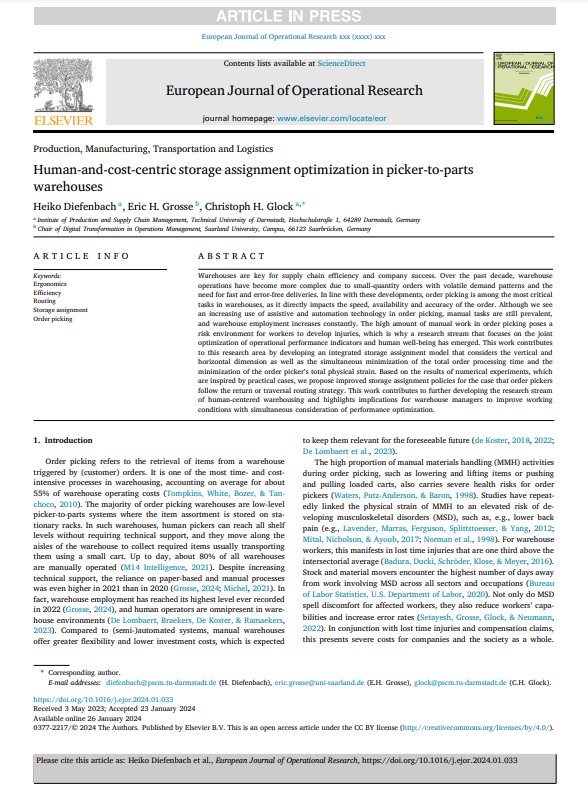
Eric Grosse is a Junior Professor for Business Administration, especially Digital Transformation in Operations Management, at Saarland University, Faculty of Humanities and Social Sciences. His research focuses on integrating human factors—such as ergonomics, fatigue, learning, and behavior—into decision models for logistics and production systems. He leads several interdisciplinary research projects including Human-Centric Production and Logistics, Models for an Active Aging Workforce, and Behavioral Order Picking. University: Saarland University School: Faculty of Humanities and Social Sciences Department: Junior Professorship for Business Administration, especially Digital Transformation in Operations Management Academic Rank: Assistant Professor Email: eric.grosse@uni-saarland.de His research interests include Operations Management, Digital Transformation, Human Factors in Logistics, Ergonomics in Warehousing, Behavioral Operations, and Sustainable Logistics. His work emphasizes human-centered design in warehousing and production, aiming to balance economic efficiency with worker well-being. He develops optimization models that simultaneously minimize costs and physical strain, and explores how learning, incentives, and fatigue affect order picking performance. The analysis of his recent publications reveals a consistent focus on integrating ergonomic and economic objectives in manual materials handling and order picking. Key themes include storage assignment optimization, workforce scheduling with ergonomic constraints, human-robot collaboration, and the impact of worker behavior and fatigue on system performance. His methodologies often combine mathematical modeling, simulation, and empirical validation through case studies and experiments. Eric Grosse actively collaborates with researchers from institutions such as TU Darmstadt and has published in top-tier journals like the International Journal of Production Research, Computers & Industrial Engineering, and International Journal of Operations & Production Management. His work supports warehouse managers in improving working conditions while maintaining operational efficiency. Human-Centric Production and Logistics System Design Models and Methods for an Active Aging Workforce Behavioral Order Picking Green Warehousing Supply Chain Resilience Warehousing 4.0/5.0 Digital Transformation Coaching He advises and co-supervises research with a team of collaborators and has contributed to the development of assessment tools like the Warehouse Error Prevention (WEP) tool. His research is funded by the German Federal Ministry for Economic Affairs and Energy, indicating active grant involvement. Though no formal students are listed, his co-authored papers suggest mentorship of junior researchers. He has no listed scientific awards in the provided text.
María José Domínguez Vázquez is a Professor of German Studies at the University of Santiago de Compostela, Spain. She is a fellow of the Alexander von Humboldt Foundation and leads innovative research in digital lexicography, valence grammar, and multilingual language processing. She is the Spanish coordinator and chair of the governing board of the Erasmus Mundus Master’s program in Lexicography (EMLex), reflecting her prominent role in international academic collaboration. Her research centers on the integration of lexicography with natural language processing and generation, focusing on the development of dynamic, computer-assisted tools for multilingual syntactic-semantic pattern generation. Key projects include the design of three plurilingual language generators— Xera , Combinatoria , and CombiContext —which model noun phrase structures and embed them in full sentences across German, French, and Spanish. These tools exemplify her work in data integration, resource interoperability, and automated lexicographic content creation. The recent publications listed demonstrate a strong trend toward digital, corpus-driven, and computationally enhanced lexicography, with emphasis on multilingualism, semantic representation, and practical applications in language technology. Her work bridges theoretical linguistics with applied computational methods. Fellow of the Alexander von Humboldt Foundation She leads major research projects in multilingual lexicography and automatic language generation and plays a leadership role in the EMLex program, overseeing academic training and international coordination. While specific grant details are not mentioned, her Humboldt fellowship and publication record suggest sustained research funding and institutional support. She has contributed to major edited volumes and peer-reviewed journals in applied and computational linguistics. She is associated with the research group behind the PORTLEX lexicographic portal (http://portlex.usc.gal/) and leads work on integrated digital lexicographic systems. Her team develops tools that combine corpus linguistics, word embeddings, and automatic dictionary generation, fostering innovation in how linguistic knowledge is structured and accessed.
Prof. Dr. Michaela Zeiss is Vice Dean of Department 4: Social Work & Health at Frankfurt University of Applied Sciences, where she holds a Professorship for Nursing and Health Management and leads the Master's Program in Inclusive Design (M.Sc.). Her academic roles include teaching responsibilities in Nursing and Health Management (MA) and Case Management for Barrier-Free Living (M.Sc.). Her research focuses on: Care support systems and counseling structures in Hessen Legal and financial frameworks for care provision security Elderly care models and home-based nursing innovations Implementation challenges in healthcare policy reforms Analysis of her 15 most recent publications (2004–2011) reveals concentrated expertise in healthcare system reforms, with thematic emphases on: integrated care coordination, policy implementation barriers, elderly support infrastructure, comparative European models, nursing management frameworks, and health insurance systems. Her work consistently bridges theoretical policy design and practical service delivery challenges. She directs significant research initiatives including: MainCareer - Open University project (2011–2014) Development of Hessen's care support centers (2009–2010) Cross-border collaboration with Italy's Emilia-Romagna region EU-wide care model evaluations through the European Academy of Work As Vice Dean, she oversees academic operations and maintains active memberships in the German Society for Gerontology, editorial boards of nursing journals, and EU health policy committees. Her professional network spans academia, government advisory bodies, and international healthcare institutions.