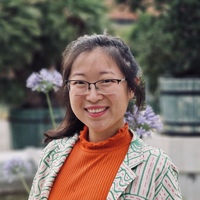
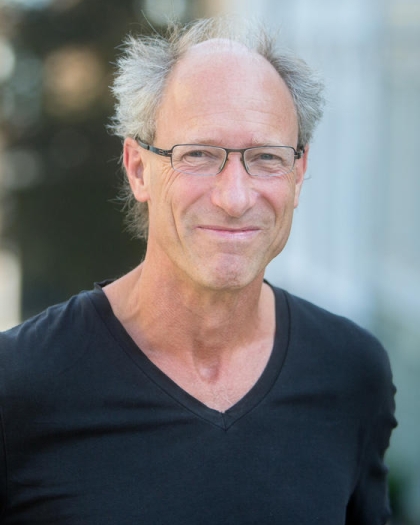
Ingjerd Hoëm is a Professor at the Department of Social Anthropology, University of Oslo, and serves as Vice-Dean for Education at the Faculty of Social Sciences. She holds a Magister (1990) and PhD (1996) from the University of Oslo. Her research focuses on communication, political change, labor dynamics, and performance in Pacific Island societies, particularly Tokelau and New Zealand. Education: Magister (1990), PhD (1996), University of Oslo Her work examines governance conflicts, identity formation through performance, and the interplay between state structures and kinship-based labor systems. Recent publications analyze democratic negotiations in Tokelau and the role of theatre in political processes. She directed NFR-funded projects 'Anthropos and the Material' and 'Identity Matters: Movement and Place'. Her research combines ethnographic fieldwork with theoretical frameworks in political anthropology and Pacific studies.
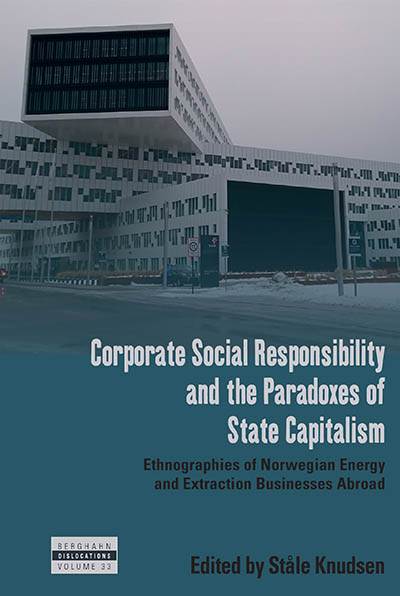
Ståle Knudsen is a Professor in the Department of Social Anthropology at the University of Bergen, Norway. His research bridges environmental anthropology and political ecology, focusing on transnational corporations, corporate social responsibility (CSR), and environmental governance. Key areas include Norwegian energy corporations' CSR practices abroad, Turkish fisheries management, and global energy policies. He led the EU-funded KNOWSEAS (2009–2013) and ENERGETHICS (2015–2019) projects, examining CSR in state-owned energy sectors. Knudsen has authored Fishers and Scientists in Modern Turkey (2009) and co-edited Corporate Social Responsibility and the Paradoxes of State Capitalism (2023). His work critiques the intersection of financial logics and environmental accountability in global corporate operations. From 2014–2021, he served as Head of the Department of Social Anthropology at UiB. Research Interests: Corporate responsibility, energy governance, political ecology, environmental conflict, and transnational corporations. Key Projects: ENERGETHICS (CSR in energy companies), KNOWSEAS (European marine management), and ELMÉ (EU fisheries policies). Knudsen’s research combines long-term fieldwork in Turkey with interdisciplinary analysis of global energy systems and CSR paradoxes. He critiques the 'Nordic Model' as a CSR framework and explores tensions between corporate profit and sustainability goals in Norway’s state-owned enterprises.
Toril Aalberg is a Professor and Head of the Department of Sociology and Political Science at the Norwegian University of Science and Technology (NTNU) in Trondheim. She was previously Head of the same department from 2017-2021 and serves as Guest Professor at Mid Sweden University in 2024-2025. Aalberg is a member of the research networks NEPOCS (Network of European Political Communication Scholars) and EVPOC (Elections, Values and Political Communication). Her research interests include comparative politics , election campaigns , media effects , public opinion , and stereotypes in political contexts. She has led major projects like the COST Action IS1308: Populist Political Communication in Europe (2014-2018). Toril Aalberg has authored or co-authored 9 books, including Populist Political Communication in Europe (2016) and Communicating Populism (2019). Her recent articles focus on misinformation during crises , media’s role in political efficacy , and cross-national disinformation studies , often analyzing data from 17-19 democracies. She has conducted extensive research on media polarization , immigrant attitudes , and news consumption patterns . Aalberg has held visiting appointments at institutions including the University of California, Berkeley , Stanford University , and University of Oslo , with current affiliations at the Centre for Advanced Studies in Oslo and Mid Sweden University . Her work spans political communication theory , media sociology , and democratic processes .
Anders Åkerman is a Professor in the Department of Economics and Finance at the UiS School of Business and Law, University of Stavanger. He is an active researcher in applied economics with a focus on labor, trade, technology, and environmental policy. His research interests span applied microeconomics , international trade , labor economics , and environmental economics . He investigates how technological change, market structure, and global shocks affect firms, workers, and policy outcomes. His work often combines empirical methods with policy relevance. The recent articles reflect a strong trend in analyzing digital transformation (e.g., broadband and trade), environmental impacts of trade and production , and economic resilience during crises such as the pandemic. His publications appear in leading journals like the Quarterly Journal of Economics and American Economic Journal: Applied Economics . He has contributed to public discourse through op-eds in Dagens Nyheter and Svenska Dagbladet , and has been involved in policy commissions like Sweden's Coronakommissionen. He regularly presents research at seminars and international conferences, including the Nordic International Trade Seminar and Stockholm Institute of Transition Economics. Anders Åkerman has advised or collaborated with several researchers and policy experts, including Torsten Persson, Magne Mogstad, and Karolina Ekholm. While formal student advisees are not listed, his collaborative work suggests active mentorship and team leadership. He is affiliated with research networks and institutes such as IFN (Research Institute of Industrial Economics) and participates in interdisciplinary teams focused on economic policy and transition. His upcoming work continues to explore the intersection of technology, environment, and labor markets.
Nicola Paltrinieri is a Professor of Risk Assessment at the Department of Mechanical and Industrial Engineering, NTNU (Norway), and an Adjunct Professor at the University of Bologna (Italy). His expertise spans risk assessment, hydrogen technologies, process safety, and data-driven safety management. He holds Chartered Engineer and Chartered Scientist certifications and has served on editorial boards for journals like Safety Science and Journal of Risk Research . Education: PhD in Environmental, Safety and Chemical Engineering (University of Bologna, 2012) Master’s in Chemical and Process Engineering (University of Bologna, 2008) Research Interests: Focuses on hydrogen infrastructure safety, Natech accident analysis, risk-based inspection strategies, and AI integration in safety systems. His work emphasizes sustainable energy transitions and mitigating risks in emerging technologies like hydrogen. Key Projects (2022-2026): H2Glass : Decarbonizing glass and aluminum sectors via hydrogen HyInHeat : Hydrogen technologies for industrial heating HYDROGENi : Norwegian research center for hydrogen/ammonia Awards: Onsager Fellowship (2016–2021) Frank Lees Medal (2012) for safety-related publications Grants & Leadership: Head of NTNU Energy Team Hydrogen, coordinator for EU-funded projects like SUSHy , and active in international risk committees (e.g., EFCE, ESRA). His work bridges academia and industry, with over 8 PhD examinations supervised. Labs/Teams: Leads the NTNU Energy Team Hydrogen and collaborates on initiatives like SH2IFT-2 for safe hydrogen fuel handling. His research group focuses on AI-driven risk analysis and hydrogen infrastructure resilience.
Deodat Edward Mwesiumo is a Professor of Supply Chain Management at Molde University College (HiMolde), part of the Faculty of Logistics. He holds a PhD in logistics from the same institution and has extensive teaching and research experience since 2012. His roles include Head of the Supply Chain Management Research Group and member of the PhD committee. Previously, he directed the Bachelor program in Supply Chain Management and Logistics. His research focuses on supply chain resilience, digital business transformation, and tourism management. Key areas include procurement strategies, sustainability, circular economy models, and interorganizational relationships in tourism. He has published in high-impact journals like Production Planning and Control , Journal of Purchasing and Supply Management , and Annals of Tourism Research . Dr. Mwesiumo has led externally funded projects and contributed to over 50 peer-reviewed publications. He is affiliated with research groups such as MIIBS (Marketing, Innovation, International Business & Strategy) and the Transport Research Group (TRG). His teaching spans BSc and MSc levels, including courses on value chain analysis, digital business, and supply chain theory. Recent work emphasizes airport digital maturity, supply chain risk mitigation, and the impact of data-driven decision-making in public procurement. He has authored books like Making Value Chains Work and Fundamentals of Digital Business Management , underscoring his commitment to both academic and applied knowledge dissemination.
Synne Sæther Mæhle is a Professor at the Faculty of Law , University of Bergen. She specializes in legal theory and methodology, with a focus on interdisciplinary research involving law, health data, and environmental protection. Email: synne.mahle@uib.no Research Interests: Her work explores legal methodology, welfare law, and the intersection of law with emerging technologies like big data. She has published extensively on property rights, environmental law, and the evolution of legal thinking. Publication Trends: Recent outputs (2017–2023) emphasize legal education reform (e.g., Juridisk metode i et nøtteskall ), biolaw, and environmental law. Collaborations with Ragna Aarli dominate her textbook contributions. Labs & Teams: Active in the Research Group for Legal Theory and Research Group in Welfare Law , fostering interdisciplinary discourse.
Sigrid Røyseng is a Professor of Cultural Sociology at the Norwegian Academy of Music (Department of Music Education) and holds an additional role as Professor II at BI Business School. She leads the government's newly formed Music Committee tasked with conducting a comprehensive public inquiry (NOU) into Norway's music sector, emphasizing institutional structures, cultural policy, and societal roles of music. Her research spans cultural policy analysis, arts management, and the intersection of artistic quality with administrative frameworks. Her work addresses topics like institutional change in higher music education, moral economies in cultural practices, and sustainability challenges in live music. She has published extensively on cultural policy decision-making processes, leadership in high-performance cultural environments, and the political dimensions of cultural institutions. The committee’s findings (due 2025) aim to inform future cultural policies by examining both professional and voluntary music sectors. Røyseng’s academic contributions include analyses of artistic quality assessment in audit societies, the paradoxes of Norwegian cultural policy frameworks, and the ethical dimensions of cultural work. She collaborates with interdisciplinary teams and maintains active engagement in music education reforms.
Torgeir Welo is a Professor at the Department of Mechanical and Industrial Engineering , Norwegian University of Science and Technology (NTNU) . He specializes in metal forming , particularly aluminum alloy structures , with a focus on plastic bending behavior , dimensional stability , and 3D forming technologies . His research also encompasses Lean Product Development , emphasizing knowledge reuse and maximizing customer value in automotive and aerospace applications. Key Research Areas : Metal Forming, Aluminum Processing, Springback Control, Lean Development, Additive Manufacturing, Material Substitution Teaching : Courses on Aluminum Technology , Metal Forming Analysis , and Machine Element Design Publications (15 most recent): Focus on springback monitoring , charge weld evolution , flexible forming , machine learning applications , and circular economy frameworks in metal manufacturing.
Marius Korsnes is an Associate Professor at the Department of Interdisciplinary Cultural Studies, Faculty of Humanities, Norwegian University of Science and Technology (NTNU). He leads the ERC-funded 'MidWay' project on sufficiency in meat and milk consumption in China and co-leads the NFR INTPART project 'Sociomaterial Transformations in Norway and East Asia (SoMaT)'. He is actively involved in the MEATigation, COJUST, and GreenBlack projects, and previously led research in the FME NTRANS center on deep decarbonization. His work bridges energy, sustainability, and socio-cultural transitions with a strong focus on Norway and China. BA in International Studies, University of Oslo (2009) BA in History, University of Oslo (2011) M.Phil. in Culture, Environment and Sustainability, University of Oslo (2012) PhD in Technology, Innovation and Culture, NTNU (2015) His research centers on sustainability transitions , energy use , renewable energy systems , consumer practices , and sufficiency , particularly in the context of China and Norway. He explores how socio-material practices shape energy and food systems, with attention to justice, inclusion, and policy implications. His work integrates Technology, Innovation and Society (TIS) perspectives and public engagement. His recent publications (2022–2025) reflect a strong trend in energy citizenship , meat and dairy consumption , prosumerism , and sufficiency . These articles analyze low-income energy practices, policy injustices, and cultural dynamics in food and energy transitions. The research is interdisciplinary, combining social science, environmental studies, and policy analysis. ERC Starting Grant (MidWay project) Member, Academy for Young Researchers (AYF) NTNU Star Program Korsnes has advised Master’s students and contributes to transdisciplinary research, including using improvisational theatre for collaborative research. He has been involved in major research centers like FME ZEN and FME CenSES, and his work emphasizes public engagement and societal impact. His projects often involve international collaboration, especially between Norway and East Asia.
Tae Eun Kim is an Associate Professor in Maritime Safety Management at UiT The Arctic University of Norway, working within the Department of Technology and Security. Her research, teaching, and industrial collaboration focus on maritime safety and human factors, with particular expertise in maritime safety management, accident analysis, Maritime Autonomous Surface Ships (MASS), and human factors in maritime operations. Dr. Kim's research spans four interconnected domains: maritime safety management and leadership, maritime accident and casualty analysis, Maritime Autonomous Surface Ships (MASS), and human factors in maritime operations. She has developed assessment instruments like the Safety Leadership Self-Efficacy Scale (SLSES) and conducted STAMP-based causal analyses of maritime accidents. Her work on MASS addresses safety challenges in mixed navigational environments and examines leadership competencies for autonomous shipping operations. Her human factors research explores how technological advancements impact navigators' performance, crew dynamics, and safety outcomes, including gender parity issues in the maritime industry. Dr. Kim's publication record reveals a strong focus on the intersection of maritime safety, technology, and human performance. Her recent work increasingly addresses autonomous shipping technologies, with numerous publications on AI decision transparency, learning analytics in maritime simulator training, and multi-modal data analysis for nautical skill development. She has conducted systematic reviews on simulator training approaches and scenario design, contributing significantly to methodology development in maritime education and training. Her research demonstrates a clear trajectory toward integrating emerging technologies with traditional maritime safety practices as the industry transitions toward greater automation. Dr. Kim is actively involved in several significant research projects, including the i-MASTER EU Horizon Europe Research and Innovation Project, the REFRAME project, and the SPRICE project (Multidisciplinary approach for spray icing modelling). She is a member of both the Advanced Maritime Ship Operations research group and the Maritime Safety Science (MARSCI) Research Group, demonstrating her commitment to collaborative research in maritime safety science. Dr. Kim teaches several specialized courses at UiT, including SVF-3206 Safety Management and Accident Investigation, TEK-3014 Navigation Technology, MFA-2100 Maritime Digitalization, MFA-8010 Maritime HTO (Human-Technology-Organisation) and Innovation, and MFA-2018 Maritime Administration and Leadership. Her teaching portfolio reflects the interdisciplinary nature of her expertise, bridging engineering, safety science, and organizational behavior in maritime contexts.
Dr. Mingyuan Zhang Betancourt is a socio-cultural anthropologist affiliated with the University of Oslo's Institute of Community Medicine and Global Health. Specializing in cross-cultural analysis between China and Africa, her work examines pharmaceutical supply chains and postcolonial development dynamics. PhD in Anthropology, University of Western Ontario (2018) Former Writing Fellow, University of Toronto Scarborough Her research spans multiple disciplines: Pharmaceutical Anthropology : Analyzing antibiotic shortages across India/China production networks China-Africa Relations : Investigating cultural identity formation through historic sugar plantations and Confucius Institute operations Political Ecology : Documenting resource conflicts in Malagasy agrarian systems Recent publications demonstrate: 2024 study on pharmaceutical production history 2023 comparative analysis of China-India trade disputes 2022 critique of cultural standardization in educational programs 2021 pandemic discourse analysis She actively explores: Global antibiotic accessibility Postcolonial development paradigms Transnational identity politics
Tor Helge Aas is a Professor at the Department of Management and Innovation, School of Business and Law, University of Agder, and holds a part-time position as Professor II at Kristiania University College. He is the Director of the Executive MBA program at UiA and actively contributes to research and teaching in innovation management. His affiliations include the Research Centre for Studies of Innovation for Sustainable Transition (RIST) and the ISPIM Scientific Panel. His research interests focus on innovation management , particularly in digital servitization, service innovation, innovation processes, collaboration for innovation, and management control. He examines how organizations in manufacturing and service sectors transition to service-oriented business models through digital platforms and ecosystem collaboration. The recent publications highlight a strong trend in digital servitization , platform-based innovation , and human-technology interaction in Industry 5.0. His work spans business model innovation, legitimacy in smart services, and coopetition in R&D projects, with a consistent focus on organizational transformation and sustainable innovation. Scientific Awards and Recognitions: No explicit awards mentioned in the text. Advising and Grants: He has supervised Master’s and PhD students (implied through academic roles). Actively involved in Horizon 2020 projects: OpenInnoTrain (Work Package Manager) and REDI program. Research funded by EU frameworks, indicating competitive grant acquisition. Labs and Research Teams: Member of RIST – Research Centre for Studies of Innovation for Sustainable Transition . Active in ISPIM (International Society for Professional Innovation Management) Scientific Panel. Collaborates extensively with researchers like Anne-Laure Mention, Katja Maria Hydle, and Karl Joachim Breunig.
Damon Clark is an Associate Professor (with tenure) in the Department of Economics at the University of California, Irvine, within the School of Social Sciences. He is also affiliated with several prestigious research institutions, including the National Bureau of Economic Research (NBER), IZA Institute of Labor Economics, and the Institute for Fiscal Studies (IFS) in London. Research Interests: His primary research focuses on the economics of education, with additional expertise in labor economics and public economics. His work explores school choice, educational policy, the signaling value of credentials, and the long-term impacts of education on health and economic outcomes. He employs rigorous empirical methods, including field experiments and quasi-experimental designs, to evaluate educational reforms and policies. The most recent publications reflect a consistent focus on education policy evaluation, school effectiveness, peer effects, and human capital formation. His research often uses large-scale administrative datasets and natural experiments to identify causal effects, contributing significantly to debates on equity, accountability, and efficiency in education systems. Scientific Awards and Honors: UC Irvine Faculty Mentoring Award (2015–2016) Excellence in Refereeing Award, Journal of the European Economic Association (2003) Excellence in Refereeing Award, American Economic Review (2012) Excellence in Refereeing Award, Quarterly Journal of Economics (2011) National Academy of Education/Spencer Post-Doctoral Research Fellow (2007–2008) European Economic Association Young Economist Award (2005) Advising and Grants: While specific student names are not listed, his role as a tenured associate professor and principal investigator on multiple grants indicates active mentoring of graduate students. He has secured significant external funding from agencies such as the National Institutes of Health (NIH), the Institute of Education Sciences (IES), the WT Grant Foundation, and the Nuffield Foundation, supporting research on test-based retention, school access, and intergenerational education transmission. Labs and Research Teams: Clark collaborates extensively with researchers at institutions like NBER, IZA, IFS, and universities across the U.S. and Europe. His work is often conducted through collaborative research networks rather than a single lab, reflecting the interdisciplinary and policy-oriented nature of his scholarship.
Don Kalb is a Professor in the Department of Social Anthropology at the University of Bergen, Norway. He is actively involved in research on political economy, class formation, financialization, and the rise of nationalist movements in the 21st century. His work bridges historical and contemporary anthropological inquiry, with a focus on global capitalism and its social consequences. His research interests center on political economy, class and value, financialization, and the anthropology of capitalism . He explores how economic transformations generate new forms of inequality, cultural identity, and political mobilization, especially in post-socialist Europe and the Global North. His scholarship critically engages Marxist theory, historical anthropology, and ethnographic fieldwork to understand the dynamics of labor, money, and social change. The recent publications reflect a strong trend toward analyzing neoliberalism, populism, and financial crisis through an anthropological lens. His work investigates how economic devaluations intersect with cultural and political shifts, particularly the rise of right-wing movements. Themes of labor, value, dispossession, and resistance recur across his articles, books, and public writings. He has received funding from the Bergen Research Foundation, the Norwegian government, and the University of Bergen for his project Frontlines: Class, Value, and Social Transformation in 21st Century Capitalism , which supports interdisciplinary research on emerging class inequalities. He has supervised master’s students such as Camilla Søreide Hansen and Marte Bruem Olsen. Don Kalb is affiliated with a vibrant research group within the Department of Social Anthropology that focuses on global capitalism, urban struggles, and political movements. His collaborative projects, including edited volumes with Chris Hann and Massimiliano Mollona, indicate strong team-based research efforts centered on class analysis and social transformation.