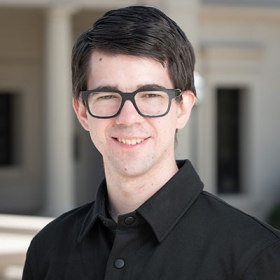
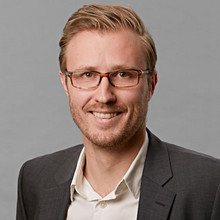
Alexander Müller-Rakow is a Researcher and PhD Candidate at the Design Research Lab at Berlin University of the Arts. His work explores the interplay between embodied interfaces , digital sovereignty , and social design , focusing on bodily movements as a medium for musical and interactive technologies. Education: Industrial and Interaction Design (University of Applied Science Magdeburg, University of Bergen) Current Roles: Research Scientist (Design Research Lab), Lecturer (Hochschule für Kunste Bremen, others) His research spans haptic technology , textile-integrated sensors , and experimental interfaces , often intersecting with digital justice and material interactions . Early-career publications include collaborations on capacitive sensing and urban design interventions , reflecting his interdisciplinary approach. As part of the Design Research Lab, he contributes to projects addressing inclusive digital futures , smart urban mobility , and collaborative tools , aligning with the lab's mission for ecologically sustainable design .
Tiago Loncan is a Senior Lecturer in Finance at King's Business School, King's College London, where he is affiliated with the Department of Accounting & Financial Management. He holds a PhD in Finance from the University of Strathclyde, an MSc in Economics from the University of Bologna, and a BSc in Economics from the Federal University of Rio Grande do Sul (Brazil), with additional leadership training from Georgetown University. PhD in Finance, University of Strathclyde (UK) MSc in Economics, University of Bologna (Italy) BSc in Economics, Federal University of Rio Grande do Sul (Brazil) Global Competitiveness Leadership, Georgetown University (USA) Tiago's research centers on the intersection of corporate finance and international economics, with a strong emphasis on emerging markets. His work explores corporate investment and financing decisions, foreign direct investment (FDI), cross-border capital flows, political risk, corruption, expropriation, ownership structure, and the cost of equity capital. He investigates how institutional environments and political uncertainty shape firm behavior, particularly in developing economies. His recent publications analyze topics such as the role of cash holdings in mitigating expropriation risk, the impact of homicides on corporate investment in Brazil, and the effects of political uncertainty on stock returns. His research spans high-impact journals including Journal of Corporate Finance , Journal of Financial and Quantitative Analysis , European Financial Management , and Pacific-Basin Finance Journal . A recurring theme is the interaction between macro-level institutional risks and micro-level corporate financial decisions. Tiago has collaborated with researchers across institutions and has contributed to discussions on research integrity, as seen in his co-authored piece on responsible science and pre-registration in finance research. While no specific scientific awards are listed, his work has gained recognition through citations and inclusion in academic databases. He previously served as a Lecturer in Finance at the University of Strathclyde and has industry experience in the corporate sector in Brazil. He advises on corporate risk, investment, and governance, particularly in politically volatile environments. Though no formal advisees are listed, his research output and academic engagement suggest an active supervisory and mentoring role. Tiago is based at the Strand Campus (Bush House) of King's College London. His work contributes to UN Sustainable Development Goals related to decent work, economic growth, and strong institutions, reflecting the real-world relevance of his research in finance and development.
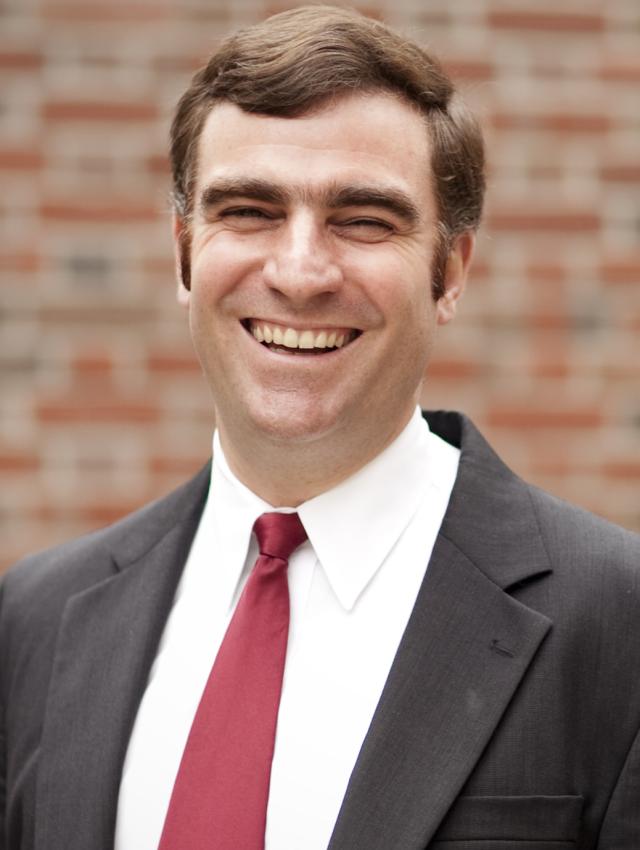
Stephen S. Hudson is an Assistant Professor of Music Theory at Occidental College. He holds a B.A. from the University of California, Davis, and a Ph.D. from Northwestern University. Appointed in 2022, he specializes in metal music studies and R&B/Soul harmony. Education: B.A., University of California, Davis; Ph.D., Northwestern University Hudson’s research focuses on embodied experiences of rhythm, timbre, and song form in metal music, as well as harmonic complexity in R&B and Soul. His work has been featured in Music Theory Spectrum , Metal Music Studies , and Current Musicology . Recent publications include articles on Drake’s harmonic loops and Meshuggah’s groove structures. He is authoring two books: Heaviness in Metal Music (Oxford University Press) and a study of Meshuggah’s riffs (Lever Press). As Vice President of the Pacific Southwest chapter of the American Musicological Society, he advocates for inclusive music theory pedagogy that extends beyond classical traditions. His teaching emphasizes tools for songwriters and producers. Hudson maintains an active interest in classical and baroque cello performance, reflecting his engagement with both historical and contemporary music practices.
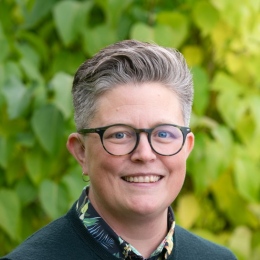
Michael T. Rizzo is an Assistant Professor in the Department of Psychology at the University of Illinois, Urbana-Champaign, within the College of Liberal Arts & Sciences. He directs the Developing Equitable Minds Lab (DEML Lab), which focuses on promoting social equity in childhood through research on children's developing conceptions of fairness and social biases. Dr. Rizzo earned his B.S. from the University of California, San Diego (mentor: Dr. David Liu), his Ph.D. from the University of Maryland, College Park (mentor: Dr. Melanie Killen), and completed a postdoctoral fellowship at New York University (mentor: Dr. Marjorie Rhodes). His research program examines three interrelated questions: (1) How do conceptions of equity develop? (2) How do social biases develop? (3) How can we promote concern for equity and disrupt social biases? Using a constructivist approach, his work investigates how children experience, interpret, and respond to the world around them. His primary research areas include conceptions of fairness, racism and racial bias, social status and structures, theory of mind, and unmoderated remote research with children. His work has been published in top journals including Proceedings of the National Academy of Sciences , American Psychologist , Child Development , and Developmental Psychology . Analysis of his recent publications reveals a strong focus on understanding the developmental origins of racial bias, particularly how children's beliefs about social norms and racial inequalities shape their developing racial attitudes. His work demonstrates how children distinguish between structural and individual causes of inequality, and how social status influences children's understanding of fairness and others' mental states. His research has increasingly incorporated innovative methodologies, including unmoderated remote research with children. Dr. Rizzo's work has been funded by prestigious organizations including the National Science Foundation (NSF), the Eunice Kennedy Shriver National Institute of Child Health and Human Development (NICHD), and Beyond Conflict. He is deeply committed to promoting equity, diversity, and inclusion through three primary pathways: transforming university spaces, advancing psychological research practices, and engaging with broader society. His lab partners with organizations like Embrace Race, Story Starters, and We Stories to develop anti-racist education programs and parenting materials. The DEML Lab has created a platform called Developing Minds Online (DMO) that allows for unmoderated remote research with children, enabling families to participate from anywhere.
Dr. Angela M. Locks is a Professor and Department Chair in Educational Leadership at California State University, Long Beach (CSULB), within the College of Education. She also serves as the Executive Director of the Center for Evaluation & Educational Effectiveness. Her career spans nearly three decades in higher education, with 16 years at CSULB, where she has held leadership roles in diversity, equity, and inclusion, including Executive Director for Diversity, Equity, and Inclusion in Academic Affairs (2020–2024), and founding roles in undergraduate research programs. Education: Ph.D. in Higher Education (Diversity & Governance), University of Michigan, Ann Arbor M.A. in Education, University of Michigan, Ann Arbor B.A. in Psychology, University of Michigan, Ann Arbor Her research centers on diversity, equity, and inclusion in higher education , with a focus on college access, retention, campus climate, and the experiences of racially and ethnically underrepresented students. She examines how institutional policies and practices affect student outcomes, particularly through intergroup dialogue, high-impact practices, and diversity programming. Her work emphasizes the holistic development of students and the role of equity-mindedness in educational leadership. The recent publications and edited volumes highlight a sustained focus on debunking deficit narratives (e.g., 'grit'), supporting Students of Color, and understanding the structural barriers faced by Latina/o, African American, and first-generation students. Her research bridges theory and practice, often involving longitudinal and qualitative studies that inform institutional strategies for inclusion and retention. Scientific Awards: 2021 Wang Family Excellence Award Outstanding Faculty Service Nominee, CSULB 2014 Outstanding Faculty Mentor for Student Engagement in Research, CSULB Academic Affairs 2014 Most Valuable Professor, College of Education, CSULB Alumni Association Dr. Locks has supervised 18 doctoral dissertations and 23 master’s theses, demonstrating a strong commitment to mentoring the next generation of scholars. She led the Mellon Mays Undergraduate Fellowship Program (2017–2024) and founded the Undergraduate Research Opportunity Program, securing external funding and institutional support for student research. Her leadership extends to national initiatives, including serving as principal investigator for the Truth, Racial, Healing, and Transformation (TRHT) Campus Center with AAC&U. She is actively involved in research centers and programs at CSULB, including the Center for Evaluation & Educational Effectiveness and the Office of Undergraduate Research Services. Her work continues to shape institutional practices around diversity, equity, and student success through research, policy engagement, and community collaboration.
Adam M. Kleinbaum is Professor of Leadership and Organizations at the Tuck School of Business, Dartmouth College, where he teaches MBA courses in organizational behavior, social networks, and leads global expeditions to Israel. He also serves as interim faculty chair for Health Care Management Education at Dartmouth, teaching in both the Masters in Healthcare Delivery Science and Masters of Health Administration programs, as well as an organizational behavior class in the Thayer School of Engineering. Dr. Kleinbaum holds a DBA from Harvard University (2008) and an AB from Harvard College (1998). Prior to joining Tuck, he served as a post-doctoral fellow at Harvard Business School. His research examines the antecedents and evolution of social networks in organizations, investigating how formal and informal structures, career history, personality, and even brain structure shape network formation. A second research stream applies network science to study diversity, equity and inclusion practices. His work has been published in top journals including Nature Communications , Administrative Science Quarterly , Organization Science , and Strategic Management Journal . Analysis of his publications reveals consistent focus on network dynamics within organizational contexts, with increasing attention to DEI applications and remote/hybrid work implications in recent years. His work bridges theoretical organizational research with practical business applications. 2018 ASQ Award for Scholarly Contribution for 'Organizational Misfits' Featured in 2018's 'Top Ten Insights from the Science of a Meaningful Life' Third most-read Life and Biological Sciences paper in Nature Communications (2018) Recognized as one of Poets & Quants' Best 40-Under-40 MBA Professors Professor Kleinbaum serves as Deputy Editor at Administrative Science Quarterly , with previous editorial roles at Management Science and Academy of Management Annals . He co-founded the Dartmouth Interdisciplinary Network Research (DINR) Group, which brings together scholars from multiple disciplines to advance network science applications. His research has been featured in major media outlets including the New York Times , Wall Street Journal , Scientific American , and The Atlantic .
Anna Danielsson is a Professor of Science Education at Stockholm University's Department of Teaching and Learning, where she also serves as head of the science education section. Her academic career spans prestigious institutions including Uppsala University, King's College London, and the University of Cambridge, with her current research focusing on equity and inclusion in science education contexts. Professor Danielsson earned her PhD in physics education research from Uppsala University in 2009. Her educational journey includes a two-year postdoctoral fellowship at the University of Cambridge's Faculty of Education, followed by positions as senior lecturer at Uppsala University and Reader in Science Education at King's College London during 2016/17. She was promoted to Professor in Curriculum Studies at Uppsala University in January 2018 before joining Stockholm University. Her research program centers on critical examinations of gender, identity, and power dynamics in science and technology education. As leader of the Science Education Equity research group, she investigates inclusion-exclusion patterns and participation barriers for minoritized learners in science, with particular emphasis on physical sciences. Her work employs innovative narrative and discourse methodologies to explore how students construct identities within science learning contexts. Analysis of her recent publications reveals a sustained focus on identity construction in physics education, particularly examining how underrepresented students navigate disciplinary spaces. Her scholarship bridges theoretical frameworks from post-structuralism, cultural studies, and critical discourse analysis with empirical research in both formal and informal learning environments. A notable trend is her increasing attention to mathematics education and cross-disciplinary identity formation, as evidenced by her 2025 work on mathematics capital. Principal Investigator for 'In(ex)clusion in higher education mathematics and physics: Identity enactment in educational trajectories and scientific practices' Lead researcher on 'The unlikely scientists: Exploring what has enabled students from under-represented groups to continue to higher education science studies' (Swedish Research Council, 2019-2023) Collaborator on multiple Swedish Research Council-funded projects examining identity, gender, and equity in STEM pathways Professor Danielsson directs the Science Education Equity research group, which creates interdisciplinary spaces for examining how marginalized learners engage with science education. The group's work combines theoretical innovation with practical implications for creating more inclusive science classrooms and curricula, particularly focusing on how physical sciences can become more accessible to diverse student populations.
Dan A. Iancu is an Associate Professor of Operations, Information & Technology at Stanford Graduate School of Business, affiliated with the Emmett Interdisciplinary Program in Environment and Resources (E-IPER). He holds a BS from Yale, SM from Harvard, and PhD from MIT. His research bridges operations, finance, and sustainability, focusing on dynamic optimization under uncertainty and its applications in supply chains, FinTech, and healthcare. Notable work includes designing financing solutions for global supply chains and promoting ethical analytics. Education: BS in Electrical Engineering (Yale, 2004), SM in Engineering (Harvard, 2006), PhD in Operations Research (MIT, 2010). Professional experience includes a Goldstine Fellowship at IBM Research and teaching roles at Wharton and INSEAD. He has won multiple awards including INFORMS Optimization Society (2009) and JFIG (2013) prizes. Research emphasizes fairness and environmental impact, with recent projects on sustainable palm oil production and climate impacts of digital supply chains. His work appears in Management Science, Operations Research, and Mathematics of Operations Research. Awards include Srivani Faculty Scholar (2023–24) and teaching commendations at Harvard, MIT, and INSEAD. He advises on multi-disciplinary projects involving engineering, environmental science, and business students.
Caitlin Mullarkey is an Associate Professor in the Department of Biochemistry and Biomedical Sciences at McMaster University's Faculty of Health Sciences. She teaches across multiple undergraduate programs including Biochemistry, Biomedicine, and Health Sciences, with courses ranging from Cellular and Molecular Biology to Immunological Principles in Practice and Principles of Virology. Dr. Mullarkey's research focuses on immunology and virology with particular emphasis on influenza virus immunity, antibody-mediated responses, and vaccine development. Her work explores intricate mechanisms of antibody function including Fc-mediated effector functions, neutrophil responses to viral infection, and the role of broadly neutralizing antibodies. She also investigates innovative approaches to biomedical education through virtual laboratory simulations and online course development. Analysis of her publication record reveals a strong focus on influenza immunology, with particular expertise in antibody structure-function relationships, hemagglutinin stalk-specific antibodies, and Fc-mediated immune responses. Her work bridges basic immunological mechanisms with practical vaccine development approaches, demonstrating consistent contributions to understanding host-pathogen interactions and immune protection mechanisms. Scientific Awards: Equality of Opportunity Award from the Government of Ontario (2024) for developing and leading McMaster's Biochemistry and Biomedical Sciences Summer Scholars Program Dr. Mullarkey actively supervises undergraduate research through Senior Research Thesis and Senior Thesis courses, providing mentorship to students across multiple academic years. Her teaching portfolio demonstrates significant commitment to both foundational and advanced topics in biochemistry and immunology. Beyond formal teaching, she leads the Summer Scholars Program which provides full research scholarships to students who identify as Black, Indigenous, and/or 2SLGBTQIA+, addressing barriers to participation in STEM research through comprehensive support for training, mentorship, and living expenses. As Chair of the Biochemistry and Biomedical Sciences Summer Scholars Program, Dr. Mullarkey has graduated 17 diverse scholars in just two years, with many continuing research at McMaster and receiving competitive awards. The program, supported by McMaster's Global Nexus and Michael G. DeGroote Institute for Infectious Disease Research, exemplifies her commitment to creating inclusive research opportunities in biomedical sciences.
Geoffrey Cohen is the James G. March Professor of Organizational Studies in Education and Business, and Professor of Psychology at Stanford University's Graduate School of Education. He holds a courtesy appointment in Organizational Behavior at the Graduate School of Business. His research focuses on identity, belonging, and interventions to address social inequities in education, healthcare, and workplace settings. Cohen earned his Ph.D. in Psychology from Stanford University (1998) and a B.A. in Psychology from Cornell University. Education: Ph.D., Stanford University, Psychology (1998) Bachelor of Arts, Cornell University, Psychology Research Interests: Cohen investigates how identity threats and belonging shape behavior, particularly for marginalized groups. His work emphasizes scalable interventions to improve academic outcomes, reduce disciplinary disparities, and foster inclusive environments. He is author of Belonging: The Science of Creating Connection and Bridging Divides (2022), which explores belonging's role in education, healthcare, and societal contexts. Key Contributions: Cohen's interventions, such as social-belonging exercises and self-affirmation techniques, have demonstrated long-term impacts on academic success, mental health, and social cohesion. His studies span disciplines including education, medicine, and public health, with findings published in top journals like Science Advances and Journal of Personality and Social Psychology . Grants & Teaching: Cohen teaches courses on social psychology, intervention design, and belonging. He mentors doctoral students and postdocs investigating identity processes and scalable solutions to social problems. His lab collaborates with schools and healthcare systems to implement evidence-based strategies. Labs/Teams: Cohen leads a research group at Stanford's Graduate School of Education, affiliated with the Institute for Human-Centered Artificial Intelligence (HAI) and the Wu Tsai Human Performance Alliance. His work bridges theory and practice, aiming to create real-world impact through psychologically informed interventions.
Dr. Seema A. Imam is a tenured Professor at the National College of Education (NCE) within National Louis University (NLU). She specializes in Elementary, Middle Level, and Special Education, with a focus on technology integration, culturally responsive pedagogy, and Islamic education. Dr. Imam has held leadership roles, including Co-Chair of NCE (2016-2018), Chair of the Faculty Senate (2009-2010), and Co-Chair of the University Leadership Council. She teaches in NLU’s MA in Teaching programs and has advised multiple doctoral candidates. Education: Ed.D. in Islamic Education (2015), Graduate Theological Foundation Ed.D. in Curriculum & Social Inquiry (2001), National Louis University M.A. in Educational Administration (1987), Northeastern Illinois University B.A. in Elementary & Learning Disabilities Education (1975), Northeastern Illinois University Research interests include diversity in education, technology’s role in teaching, and Islamic schooling. Her work spans international curriculum development and advocacy for Muslim students. Notable publications explore student belonging in Islamic schools and pedagogical strategies for inclusive classrooms. Dr. Imam has received awards for leadership, including the 2024 ISNA Lifetime Service Award and the 2015 Mary McLeod Bethune Educational Leadership Award. Her advising includes doctoral chairs for Azra Naqvi and Michael Kuhn. Grants and professional development efforts focus on Islamic school leadership and curriculum renewal. Dr. Imam co-founded an Islamic school and has consulted globally on educational policy, blending practical experience with academic rigor. Labs/Teams: Active in the Islamic Schools League of America (ISLA), serving on its national board for over a decade. Leads workshops on curriculum integration and educational technology for international audiences.
Dominic Furniss serves as Professor of Plastic and Reconstructive Surgery at the University of Oxford's Nuffield Department of Orthopaedics, Rheumatology and Musculoskeletal Sciences (NDORMS), concurrently holding an Honorary Consultant Plastic Surgeon position. His clinical expertise centers on hand surgery and supermicrosurgery for lymphoedema treatment. His educational background includes undergraduate medical studies at Trinity College, Cambridge (Junior and Senior Scholar, first-class degree in genetic pathology) followed by clinical training at Oxford University Clinical School. He completed basic surgical training in London before returning to Oxford's Plastic Surgery Department in 2003. Professor Furniss leads pioneering research into genetic and non-genetic causes of hand conditions through multiple initiatives including the Furniss Group, Centre for OA Pathogenesis, and Hand Research Group. His work spans molecular genetics of Dupuytren's disease, carpal tunnel syndrome epidemiology, and kidney stone disease mechanisms. Recent investigations extend to AI applications in health data through the PHAIR study and causal inference methods in genetic epidemiology. Analysis of his 2024-2025 publications reveals a strategic shift toward large-scale epidemiological studies of hand injuries, interdisciplinary genetic research, and AI integration in surgical practice. These works bridge orthopaedics, genetics, and medical informatics with significant real-world clinical implications. His major scientific recognitions include: Pushpa Chopra Award Plenary Prize of the MRS Wellcome Trust Intermediate Fellowship (first awarded to a plastic surgeon) Professor Furniss has secured substantial research funding including the NIHR Clinical Lectureship (2007) and Wellcome Trust Fellowship (2012). He directs multiple research streams: RAMBOH-1 studies, Molecular Genetics of Carpal Tunnel Syndrome project, and HAWAII initiative. His team actively investigates public perceptions of health data sharing for AI through the PHAIR study while advancing supermicrosurgical techniques for lymphoedema. He maintains active leadership in the Athena SWAN gender equality initiative as a Self-assessment team member, demonstrating commitment to inclusive academic culture.
Bruno Echauri Galván serves as Associate Professor in the Department of Modern Philology at the University of Alcalá (UAH), Spain, teaching core translation courses including Introduction to Translation Theory and English-Spanish Translation across multiple degree programs in Alcalá de Henares and Guadalajara. His research centers on Translation Studies and Reception Theory, with significant contributions to intersemiotic translation (particularly in children's literature), healthcare interpreting, and film adaptation reception. As an active member of the Research Group on Interdisciplinary Reception Studies, he investigates cultural reception, literary reception, and translation through frameworks including cultural mediation, censorship studies, and myth reception. Recent publications (2021-2024) demonstrate consistent innovation in translation pedagogy, including color-based translation assessment tools, service-learning translation projects, and pandemic-era teaching adaptations. His work on collaborative writing projects, mental health communication, and Carver-Lish translation controversies reveals methodological diversity across literary, audiovisual, and healthcare domains. Dr. Echauri Galván has participated in multiple research initiatives including the JOB AND MOVE student network project (2018), Homopoly strategic partnership (2016), and InterMed healthcare mediation project (2011), where he contributed expertise in intercultural communication and translation standards. He maintains active research leadership through the Interdisciplinary Reception Studies group, examining reception phenomena across cultural, literary, musical, and translational contexts while addressing contemporary issues like censorship and myth criticism.
Prof. Dr. Michael Gielnik is a Professor of Psychology, specializing in Entrepreneurship at Leuphana University of Lüneburg's Institute for Management & Organization (IMO), within the Faculty of Management and Technology. His research focuses on action-oriented entrepreneurship training, sustainable entrepreneurial behavior, and entrepreneurship in developing countries. He holds a PhD from Leuphana University (2010) and a Diplom in Psychology from Justus Liebig University Giessen (2005). His work has been published in journals such as the Journal of Applied Psychology and Entrepreneurship Theory & Practice . Key research interests include entrepreneurial processes, training methodologies, and cross-cultural entrepreneurship. He leads the STEP Entrepreneurship Training Program and collaborates internationally on initiatives like the DAAD-funded International Joint Master’s in Work and Organizational Psychology. Awards include the 2024 Impact Award (shared), 2014 FGF Sustainable Entrepreneurship Research Award, and recognition for his 2011 doctoral dissertation. He has held visiting fellowships at institutions like the National University of Singapore and the University of Sydney. Teaching focuses on entrepreneurship, business psychology, and innovation management. He advises on projects addressing social innovation, circular economy (e.g., MEHRCE), and inclusive workplaces. Active in academic governance, he serves on editorial boards, including as Field Editor for Journal of Business Venturing .
Scott McCabe is a Professor of Marketing at Birmingham Business School, University of Birmingham. He earned his PhD from the University of Derby in 2001, focusing on visitor motivations in the Peak District National Park, and holds an MA in Leisure and Tourism Studies from the University of North London (1993) and an HND in Leisure Studies from the University of Salford (1991). Current co-editor in Chief of the Annals of Tourism Research Editorial board member of Tourism Management Elected fellow of the International Academy for the Study of Tourism (2019+) His research spans social tourism , responsible tourism , tourist emotions , and socio-linguistic methodology , with significant work on wellbeing outcomes from supported holidays for disadvantaged families. He has contributed to Annals of Tourism Research , Journal of Travel Research , and other top-tier journals. Recent publications address topics like qualitative research sampling , tourism theory , dark tourism motivations , and smart destination engagement . His work combines tourism policy critique , consumer behavior analysis , and methodological innovation . Scientific awards include fellowships and leadership roles in international tourism research committees. He has served as VP for the International Sociological Association's Tourism Research Committee and co-chairs the Academy of Marketing's Tourism Marketing SIG.