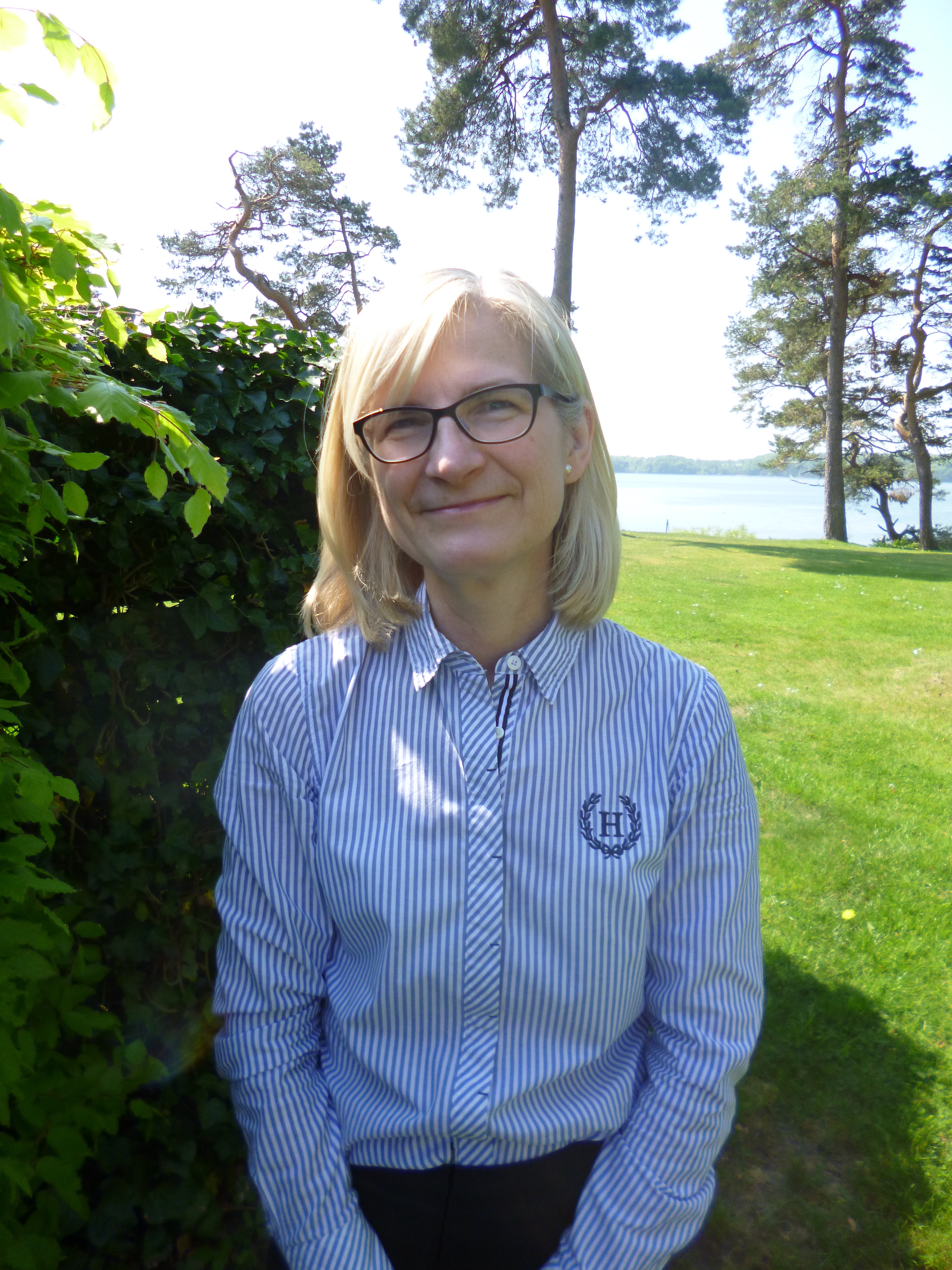
Anders Søgaard is a Professor at the University of Copenhagen , affiliated with both the Department of Computer Science and the Department of Communication. His research bridges Natural Language Processing and Machine Learning with a focus on AI ethics , explainability , and human-AI interaction . Primary Affiliation: Department of Computer Science, University of Copenhagen Secondary Affiliation: Department of Communication, University of Copenhagen Email: soegaard@di.ku.dk, soegaard@hum.ku.dk Research Interests His work spans Natural Language Processing , Machine Learning , and AI ethics , with recent studies addressing: Trustworthiness in AI systems Explainable AI (XAI) frameworks Multilingual model fairness and alignment Human-AI collaboration in reasoning tasks Ethical implications of social robots Mental health analytics using ML Recent Publications His 2025 output highlights trends in: AI ethics (e.g., fairness metrics, trustworthy systems) Multilingual model analysis (knowledge retention, cross-lingual transfer) Human-centric AI (gaze data, cultural considerations) Applications in healthcare and social good
Roberto Mora Cortez serves as an Associate Professor in the Department of Business and Sustainability at the University of Southern Denmark (SDU), Kolding campus, with a primary focus on Business-to-Business (B2B) marketing research and instruction. His academic contributions span teaching, publication, and industry engagement within the global B2B domain. His research expertise centers on B2B Marketing , Market Segmentation , and Quantitative Methods , with significant extensions into Sales , Trade Shows , Customer Journey mapping, and DEI in B2B contexts. His methodological approach combines systematic reviews, survey research, and empirical analysis, emphasizing practical applications for businesses across diverse economic environments including Chile and Peru. Key investigations address segmentation efficacy, digital transformation of trade shows, and the integration of diversity principles into B2B selling frameworks. Analysis of his 15 most recent publications (2022-2025) reveals dominant trends toward digitalization, sustainability, and inclusivity in B2B practices. His work consistently bridges theoretical frameworks with actionable implementation strategies, particularly in global and emerging markets. Notable thematic clusters include AI-driven business processes, relationship marketing resilience during economic fluctuations, and social media's role in B2B engagement. No scientific awards, prizes, or fellowships are documented in the available records. Mora Cortez has supervised at least one bachelor thesis student (Catherine Scheck) and teaches courses including Business-to-Business Marketing, Advanced Quantitative Analyses, and Scientific Research Processes. His academic service includes peer reviewing for the Journal of Business & Industrial Marketing and participation in conferences such as the AMA Winter Academic Conference. International collaborations with Georgia State University and the University of Chile indicate active research networking. His departmental work within SDU's sustainability-focused business unit involves media engagement on mining industry marketing in Latin America, including contributions to Peruvian business media on value propositions and trade show ROI. Current research trajectories emphasize digital transformation, sustainable innovation, and DEI integration within evolving B2B landscapes.
Sascha Struwe serves as a Postdoctoral Researcher at Aalborg University Business School within the Faculty of Social Sciences and Humanities, actively contributing to the International Business Research Group. Based at Fibigerstræde 11 in Aalborg Øst, Denmark, Struwe operates at the intersection of service innovation theory and business practice with international focus. Research expertise centers on service innovation , value co-creation , and digital servitization , particularly examining B2B contexts and open banking ecosystems. Work consistently explores institutional influences through German-Chinese case studies, addressing how cultural and regulatory frameworks shape service design. Recent trajectories reveal evolution from foundational service design challenges (2019-2021) toward digital transformation implications (2022-2023), with emphasis on value co-destruction mechanisms in financial ecosystems. Struwe led the PhD project Innovating the Invisible and Intangible: Value Creation in B2B service (2018-2021) investigating co-creation capabilities across industrial sectors. Academic engagement includes conference participation at EIBA and CICALICS events, plus a visiting researcher appointment at Fudan University's Nordic Centre (2019-2020). Current work continues through the International Business Research Group, focusing on digital literacies and service ecosystem resilience.
Per Christian Hansen is a Professor at the Department of Applied Mathematics and Computer Science (DTU Compute), Technical University of Denmark (DTU), where he leads the Section for Scientific Computing. He is a VILLUM Investigator and heads the CUQI (Computational Uncertainty Quantification for Inverse Problems) research initiative, aiming to develop accessible computational platforms for uncertainty quantification in inverse problems. His expertise lies in numerical analysis, numerical linear algebra, iterative reconstruction methods, and computational inverse problems, with applications in tomography, signal analysis, and plasma physics. His research integrates theoretical analysis—such as perturbation and convergence analysis—with the development of robust, adaptive, and efficient computational methods. He has co-authored five books, over 100 scientific papers, and several widely used MATLAB software packages, including IR Tools and Regularization Tools. His recent work (2023–2025) emphasizes uncertainty quantification, Bayesian inversion, and high-dimensional tomography in fusion plasmas, reflecting a strong trend toward probabilistic and robust modeling in inverse problems. He is a SIAM Fellow (2015) for his contributions to computational methods for rank-deficient and discrete ill-posed problems and regularization techniques. His scientific leadership is evident in both theoretical advances and practical software implementations. He actively collaborates across disciplines, particularly in nuclear fusion and medical imaging, and continues to supervise PhD students and publish in top-tier journals such as Inverse Problems , SIAM Journal on Scientific Computing , and Nuclear Fusion . SIAM Fellow (2015) VILLUM Investigator He advises PhD and Master’s students in computational mathematics and inverse problems, and his research is supported by major grants, including the VILLUM Investigator award. He leads the CUQI team, which develops open-source tools for non-experts to apply uncertainty quantification in inverse problems. His lab focuses on creating modeling frameworks that bridge theory, computation, and real-world applications in materials science, imaging, and plasma diagnostics.
Henrik Hansen is a Professor and Head of Department at the Department of Economics , University of Copenhagen , where he has held various academic and administrative roles since 1995. He is associated with the Development Economics Research Group (DERG) and affiliated with the Copenhagen Center for Disaster Research (COPE) network. Education : MSc in Economics (1991) and PhD in Economics (1995) from University of Copenhagen. His research focuses on development economics , with emphasis on development aid effectiveness , applied econometrics , and education research . He has conducted extensive fieldwork in Myanmar and Vietnam , analyzing enterprise surveys, household data, and policy impacts. Recent publications highlight productivity in manufacturing sectors, gender wage gaps, and credit access determinants. He teaches "Applied Research Methods" in the Global Development program and supervises development economics and applied econometrics students. Professional roles include editorial positions at Review of Development Economics and Asia & The Pacific Policy Studies , alongside advisory work for Statistics Denmark and Vietnamese Academy of Social Sciences . He has organized international conferences and contributed to 25+ media discussions on topics like corruption in Africa and development financing .
Desmond Elliott is an Associate Professor in the Natural Language Processing section at the Department of Computer Science, University of Copenhagen (UCPH). His research focuses on multimodal and multilingual models with specific emphasis on vision-language integration and tokenization-free NLP approaches. He teaches Bachelor and Master's level courses including Advanced Topics in Natural Language Processing (since 2019), Grundlæggende Data Science (since 2023), and previously Data Science (2021-2023). His research interests center on building and understanding multimodal and multilingual models , particularly exploring vision and language interactions through billion-parameter systems. Current work investigates cultural representation disparities in vision-language models, parameter-efficient captioning, and multimodal distributional semantics across diverse domains including food culture and medical imaging. His methodology emphasizes real-world applicability in non-English contexts and ethical considerations in multimodal systems. Elliott's recent publications (2025) demonstrate leadership in multimodal NLP, with significant contributions to vision-language pretraining, multilingual evaluation frameworks, and clinical NLP applications. His work spans theoretical advancements in model architectures and practical implementations addressing challenges in low-resource languages and domain adaptation. Best Long Paper Award at EMNLP 2021 Best Poster Award at COLING 2019 As an active educator, Elliott contributes to courses on Fair and Transparent Machine Learning and previously taught Information Retrieval. His research collaborations span international institutions with particular focus on European and non-English language contexts, reflecting UCPH's recognition as Europe's #1 institution for HCI research over the past decade.
Nina Torm is an Associate Professor at Roskilde University's Department of Social Sciences and Business, specializing in development economics with a focus on labor markets, informality, and environmental sustainability in sub-Saharan Africa and East Asia. She co-leads the DANIDA-funded STRESS project (2024-2029) examining resilience in Sahelian peri-urban areas and participates in the SWASH project (2022-2025) addressing sustainable water systems in Ghana. Her past work includes the SPIWORK project (2016-2022) on social protection for informal workers in East Africa. Education spans a PhD in Economics from the University of Copenhagen (2009-2013), MSc in International Development from University of Bath (2000-2001), and BA in Economics, Politics & Philosophy from University of York (1997-2000). Research interests center on regulatory frameworks, labor market dynamics in informal economies, and climate-resilient governance. Notable contributions include analyzing informal worker associations' roles in crisis response and exploring linkages between social protection and formalization in LMICs. She has published widely on training impacts, gender wage gaps in SMEs, and occupational safety in construction sectors. Teaching includes courses on ecological economics, global political economy, and informality studies. She supervises graduate students in Global Development Studies and serves as a censor at Copenhagen and Aarhus Universities. Professional roles include consultancy for ILO, World Bank, and UNU-WIDER, alongside editorial work for major journals like World Development and Journal of Development Studies.
Jan Damsgaard is a Professor at the Department of Digitalization, Copenhagen Business School, where he conducts research at the intersection of digital technology and business transformation. His work spans multiple domains including artificial intelligence, blockchain, digital platforms, and payment systems, with significant contributions to understanding how organizations navigate digital disruption. Professor Damsgaard's research interests focus on digital transformation , artificial intelligence implementation , blockchain applications , and digital sovereignty . He examines how organizations can strategically leverage emerging technologies while addressing governance challenges and societal implications. His work particularly emphasizes practical applications in the public sector, financial systems, and small-to-medium enterprises. His recent publications reveal a strong focus on AI adoption in Danish businesses , digital sovereignty challenges , and blockchain applications for sustainable commerce . The research demonstrates increasing attention to regulatory frameworks, national security implications of technology dependence, and practical implementation strategies for emerging digital tools across various sectors. With over 132 publications including books, journal articles, and conference contributions, Damsgaard has established himself as a leading voice in digitalization research. His work extends beyond academia through extensive media engagement, with over 1,122 press appearances where he discusses current technology trends and their societal implications. Professor Damsgaard actively participates in public discourse through media contributions, expert panels, and advisory roles. His research connects academic insights with practical business applications and policy recommendations, particularly regarding digital governance, payment systems, and AI implementation strategies across sectors.
Daniel Hershcovich is a Tenure Track Assistant Professor at the Department of Computer Science (Faculty of Science, University of Copenhagen) specializing in Natural Language Processing and Machine Learning . His research focuses on cross-cultural adaptation of language models, integrating human values into AI, and analyzing food-related cultural narratives for sustainable diets. Education: Ph.D. in Computational Neuroscience from Hebrew University of Jerusalem B.Sc. in Mathematics and Computer Science from Open University of Israel Recent publications highlight his work on multimodal models (haptic captioning, visual assistants for the blind), historical text analysis (Danish/Norwegian literature, euphemism detection), and cross-cultural NLP (recipe adaptation, cultural value alignment, climate awareness). His projects frequently combine AI ethics with domain-specific applications like food studies, historical linguistics, and accessibility research. Key collaborative networks include institutions in Denmark, Israel, and international partnerships through conferences like ACL, EMNLP, and workshops on cross-cultural NLP. The NLP section at DIKU serves as his primary affiliation for these efforts.
Professor Hans Gellersen is a faculty member at the Department of Computer Science, Aarhus University. His research focuses on human-computer interaction, virtual/augmented reality, eye tracking, and multimodal interaction. He leads projects exploring gaze-based interfaces, natural input techniques, and XR applications. Key interests include improving interaction efficiency in 3D environments and addressing accessibility challenges in extended reality systems. Recent work emphasizes dynamic eye dominance analysis for foveated rendering, multimodal input cascades (hand-head-eye), and gaze-assisted 3D object manipulation. He investigates user performance in VR/AR systems, calibration methods for eye tracking, and collaborative mixed reality tools. Notable contributions include frameworks for spatial interfaces, gesture fusion, and accessibility adaptations for users with movement disorders. His publications span top venues like CHI, IEEE VR, and ACM Transactions on Computer-Human Interaction. Research themes include gaze-hand coordination, implicit calibration systems, and reconfigurable collaboration spaces. Current projects explore seamless interaction techniques that combine gaze with physical movements and environmental cues.
Ditte Alexandra Winther-Lindqvist is a Professor at the Danish Institute of Education (Aarhus University), specializing in Educational Psychology. Her work focuses on early childhood education, pedagogy of care, play theory, and grief psychology, with a strong emphasis on sustainability and ethical practices in educational settings. Research Interests: Ethics of care, pedagogy, children's wellbeing, play dynamics, grief in educational contexts, and sustainable development goals. Projects: Leads the UNESCO CHAIR initiative 'Supporting Early Years Care and Education' (2022–2027) and contributes to 'Strengthening pedagogical care in daycare institutions' (2024–2027). Scientific Awards: Recipient of the 2023 Award for best practice in School-Based Family Counseling for ‘Green transition and Worldcare in ECEC’. Collaborations: Active in international networks, including the International Society for Theoretical Psychology (ISTP) and the International Play Association, Denmark.
Ann-Dorte Pedholt Christensen is a Professor of Sociology at Aalborg University’s Department of Sociology and Social Work, affiliated with The Faculty of Social Sciences and Humanities. She leads research initiatives within CASTOR (sociological/criminological research on social differentiation) and MIX (Center for Displacement, Migration and Integration). Her research focuses on gender and masculinity studies through an intersectional lens, examining how gender interacts with class, ethnicity, generation, and migration. Key themes include citizenship, social movements, identity formation, military masculinities, and everyday life practices. She employs qualitative methods, notably the biographical narrative approach, collaborating with artists and municipal archives to bridge academic and public spheres. Christensen has coordinated AAU’s PhD program in Sociology and Social Work, served as head of the CASTOR research group, and contributed to editorial boards of international journals. Her work addresses UN SDGs related to gender equality and social inclusion. Recent projects include studies on migrant narratives (MultiAalborg), military family dynamics, and the evolving constructions of masculinity in Nordic contexts. Her publications span journals like Armed Forces and Society and Childhood , with book chapters in Palgrave handbooks. She actively engages in public discourse through media commentary and museum collaborations, addressing topics like gender equality backlash and refugee integration.
John Rand is a Professor in Development Economics at the Department of Economics, University of Copenhagen, where he has been employed since 2021. He previously served as Professor (mso) at the Faculty of Social Sciences (2015-2020) and Faculty of Science (2011-2014), Associate Professor (2008-2011), and Assistant Research Professor (2005-2008) at the same institution. He is currently Vice-chair of The Consultative Research Committee for Development Research (FFU) and co-director of the Development Economics Research Group (DERG). Professor Rand's research focuses primarily on development economics, with specific expertise in applied econometrics, impact measurement, industrial economics, and interdisciplinary methods. His work spans topics including climate-smart agriculture, economic policy in developing countries, trade and productivity, and governance issues. He leads multiple externally funded research projects including 'Energy transition and climate-smart agriculture in Vietnam', 'Economic Research and Policy Making in Kenya', and 'Sedentarization and climate change resilience in Nigeria'. His extensive publication record shows a strong focus on empirical research in developing countries, particularly in Africa and Southeast Asia. His recent work demonstrates consistent attention to practical policy implications, with a growing emphasis on climate change adaptation, resource allocation efficiency, and the intersection of economic development with environmental sustainability. His research often employs rigorous quantitative methods to address real-world development challenges. Professor Rand is actively involved in several research networks including the Copenhagen Center for Disaster Research (COPE) as part of the steering group and the UCPH Migration Research Platform. He serves as Head of Studies for Global Development and teaches Development Economics (BA) and Theories, Facts and Current Issues (MSc Global Development). He has presented his research at numerous international conferences including UNU WIDER conferences, Nordic Conference in Development Economics, and various country-specific development forums. His work has been referenced in policy sources and picked up by news outlets, indicating its relevance to current development debates.
Anne Elisabeth Haxthausen is an Associate Professor at the Software Systems Engineering section within DTU Compute , Technical University of Denmark . Her work focuses on formal methods, railway control systems, and safety-critical software engineering. Founder and leader of the DTU Railway Verification Group Member of European Technical Working Group on Formal Methods in Railway Control Editorial board member for Springer Formal Aspects of Computing Journal Active in the Overture Language Board Her research emphasizes formal verification of railway interlocking systems, particularly through compositional approaches and automated tools. She has contributed to projects like RobustRailS, Overture, and RAISE, focusing on model-based development and verification. She serves as a tutor for bachelor students and contributes to the advisory committee for DTU's Computer Science and Engineering MSc program. Her recent publications explore challenges in verifying autonomous and AI-driven railway technologies.
Pernille Bjørn is a Professor in Computer Supported Cooperative Work (CSCW) at the Department of Computer Science , University of Copenhagen (DIKU), where she has been since May 2015. Her research investigates collaborative work practices to design cooperative technologies, focusing on domains like healthcare, global software development, startup companies, and digital fabrication. Faculty of Science, University of Copenhagen Human-Centred Computing Section Research Interests : Bjørn’s work spans CSCW , Human-Computer Interaction , and Digital Fabrication , with applications in healthcare systems, cross-cultural software development, and inclusive technology design. She explores collaborative virtual reality training, FemTech, and crisis computing. ACM Distinguished Member (2024) Publications : Published in top venues like ACM Transactions on Computer-Human Interaction , CSCW , and CHI , her recent work examines hybrid work asymmetry, neurodiverse accessibility, and art-driven collaborative research.