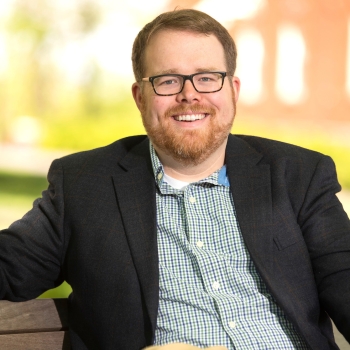
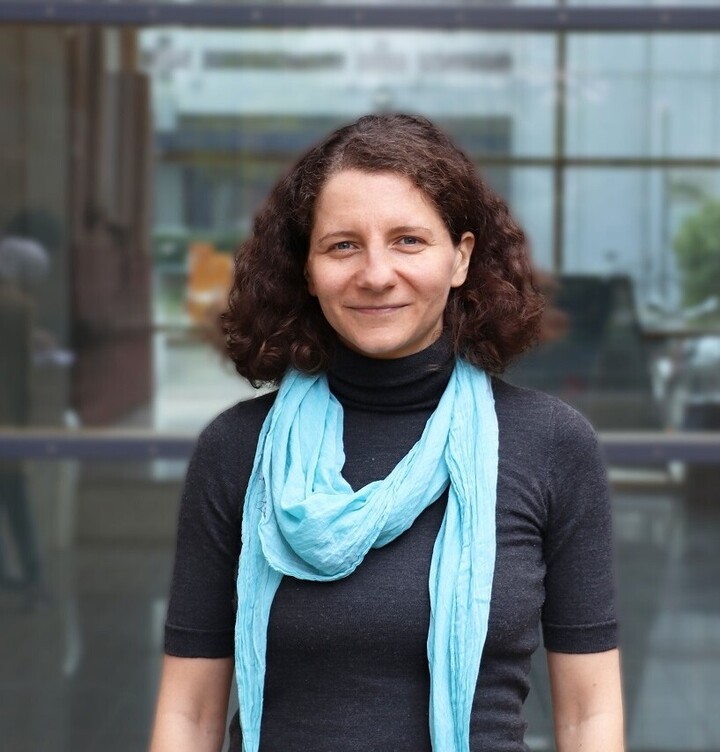
Samuel Moore is a Lecturer at Ulster University within the Computer Science and Informatics department. His work spans research areas including Deep Learning , Internet of Things (IoT) , and Behavioral Analysis , with a focus on reliability, anomaly detection, and ethical AI. Research Trends : Recent publications emphasize Neural Network Forecasting for chaotic systems, Imbalanced Learning in data science, and Privacy-Preserving AI in financial crime detection. His work also explores interdisciplinary applications in Urban Mobility Modeling and Smart Home Analytics . Scientific Awards : Gen AI in Education Awards "Team of the Year" (2025) Grants & Collaborations : Active roles in projects like Slipping Through the Net: An AI Assisted Analysis of High Risk Clients (2024–2028) and BTIIC Phase 2 (2024–2028) with collaborators from institutions like Economic and Social Research Council (ESRC) and Invest Northern Ireland. Labs & Teams : Collaborates with research groups such as the PwC Advanced Engineering and Research Centre and BTIIC , focusing on IoT, AI ethics, and urban data integration.
Dr. Young Ha is Professor and Area Coordinator of Fashion Merchandising & Design in the Department of Family and Consumer Sciences, College of Health and Human Services, California State University, Long Beach. Education Ph.D. in Consumer Sciences (Emphasis Fashion Merchandising), The Ohio State University M.S. in Consumer Sciences (Emphasis Fashion Merchandising), The Ohio State University B.S. in Textiles and Clothing, Hanyang University Research Interests Dr. Ha’s research bridges consumer psychology and retail technology. She investigates how consumers respond to visual and sensory cues in both physical and digital retail environments, with particular attention to: Online visual merchandising and website design quality Mobile coupon adoption, privacy trade-offs, and omni-channel shopping Social media word-of-mouth and its influence on young consumers Emotional and cognitive mechanisms underlying shopping intentions Publication Landscape Across more than fifteen years, her scholarly output has progressively tracked the evolution of digital retailing—from early studies on general Internet apparel shopping (2004) through nuanced explorations of mobile couponing (2012-2015) and recent work on interactive online learning tools (2020). The trajectory underscores a consistent focus on consumer–technology interactions, with methodological breadth spanning experimental designs, survey-based profiling, and critical literature reviews. Scientific Awards Best Paper Award (2014), American Collegiate Retailing Association (ACRA) Distinguished Paper Award (2013), Pan Pacific Business Research Conference Sara Douglas Fellowship for Professional Promise (2005), International Textiles and Apparel Association (ITAA) Layman Grant (2009), University of Nebraska Excellence in Teaching Award (2005), The Ohio State University Lois E Dickey and Esther A Meacham Endowment Research Award (2004), The Ohio State University Advising & Grants While specific doctoral or master’s advisees are not named in the provided material, Dr. Ha’s receipt of teaching and research awards, along with her coordination of the Fashion Merchandising & Design area, indicates active mentoring and curriculum leadership. Grant funding includes the University of Nebraska Layman Grant and multiple Ohio State University endowment awards that have supported her consumer-behavior research. Labs & Teams No dedicated laboratory or research group titles are supplied; however, as Area Coordinator she oversees the Fashion Merchandising & Design program and likely collaborates with interdisciplinary teams across CSULB’s College of Health and Human Services.
Elizabeth Wakefield is an Associate Professor in the Department of Psychology at Loyola University Chicago, specializing in Developmental Psychology and Neuroscience . She also serves as Assistant Chair of her department. Post-Doc: University of Chicago Ph.D.: Indiana University B.A.: Kalamazoo College Her research explores the role of gestures in learning, focusing on how hand movements enhance education in domains like mathematics, language, spatial reasoning, and music. Using behavioral experiments and eye-tracking technology, she investigates: The cognitive mechanisms behind gesture’s impact on learning Individual differences affecting gesture-based learning outcomes Recent publications highlight gesture’s influence on children’s analogical reasoning , mental rotation , and informant selection , with studies spanning neuroimaging and developmental cognition . She teaches foundational courses including Neuroscience , Developmental Psychology , and Psychology of Music , while leading the Movement Learning Lab to advance gesture-based pedagogical research.
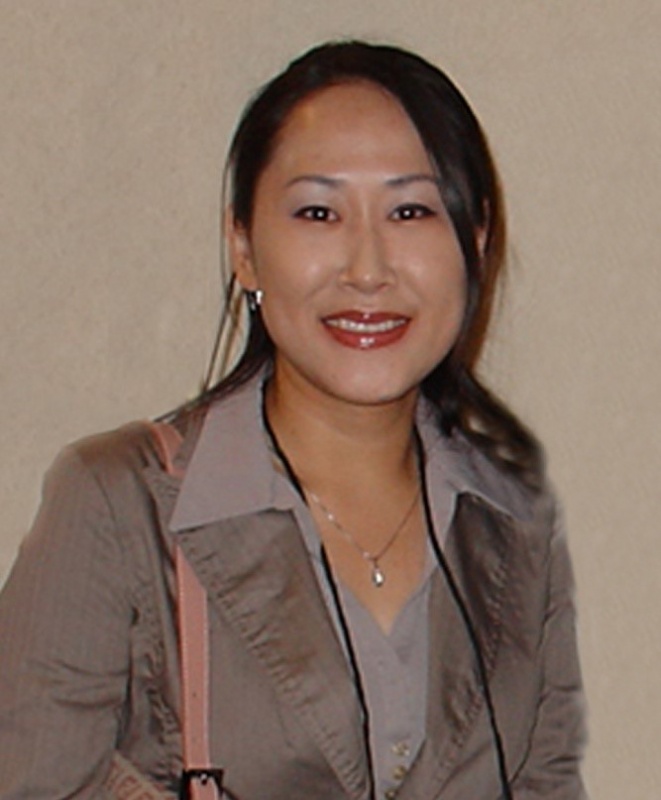
Dr. Bharatendra Rai is a Professor and Chairperson of the Decision & Information Sciences department at the University of Massachusetts Dartmouth's Charlton College of Business. His academic and research profile spans over two decades with contributions to business analytics, data mining, and reliability engineering. He teaches core business courses like MIS 101: The Business Organization and POM 212: Business Statistics , focusing on operations management and data-driven decision-making. PhD in Industrial Engineering (Wayne State University, 2004) MTech in Quality, Reliability & OR (Indian Statistical Institute, 1993) MSc in Statistics (Meerut University, 1991) His research interests include business analytics , deep learning , big data research , and reliability prediction , with applications in healthcare, manufacturing, and financial services. Recent publications cover topics from LSTM neural networks for sentiment classification to quantum computing in healthcare and energy efficiency optimization in renewable projects. Advising and grants: No formal advisees listed, but he has mentored students through University of Massachusetts Dartmouth's Big Data Club (winner of DataFest 2023's Best Data Visualization) and Data Challenge Kaggle initiatives. Collaborative projects include partnerships with NVIDIA and Dell on AI research.
Anders Martin Fjell is a Professor and Center Manager for the Center for Lifespan Changes in Brain and Cognition (LCBC) at the Department of Psychology, University of Oslo. His research focuses on how the brain and cognitive abilities develop in childhood and change throughout the adult lifespan. Dr. Fjell's research spans multiple areas of cognitive neuroscience and neuropsychology, with particular emphasis on: Brain development and aging across the lifespan Relationships between brain structure and cognitive function Memory processes and their neural correlates Neurodegenerative processes, particularly related to Alzheimer's Disease Effects of sleep on brain health and cognitive function His publication record demonstrates strong focus on lifespan neuroscience, with recent work examining brain aging trajectories, memory systems, Alzheimer's disease biomarkers, and the relationship between sleep patterns and brain health. His research frequently employs advanced neuroimaging techniques and large-scale longitudinal datasets to investigate cognitive and neural changes across the lifespan. Among his notable achievements: Elected to the Norwegian Academy of Sciences and Letters (2016) Recipient of the University of Oslo Research Prize (2015) LCBC awarded status as one of 5 world-leading research groups at UiO (2015) Morgenbladet's top 10 list of young Norwegian researchers (2012) Recipient of Fridtjof Nansen Award for Young Scientists and His Majesty the King's Gold Medal for best doctoral thesis (2006) Dr. Fjell has secured significant research funding including an ERC Starting Grant (€1.5 million), multiple grants from the Norwegian Research Council, and funding from the National Association for Public Health. His current projects focus on biomarkers for early Alzheimer's detection, brain inflammation and atrophy in aging, and memory development and decline across the lifespan. As Center Manager for LCBC, Dr. Fjell leads one of the world's leading research groups studying lifespan changes in brain and cognition, contributing significantly to our understanding of how the brain changes from childhood through old age.
Hanna Kędzierska serves as an Assistant Professor in the Department of English and Comparative Linguistics at the University of Wrocław, where she is affiliated with the Center for Experimental Research in Natural Language. Her academic trajectory includes doctoral research on foreign-accented speech processing using ERP techniques and postdoctoral work at Adam Mickiewicz University in Poznań. Her research program centers on psycholinguistic and neurolinguistic mechanisms in multilingual contexts, with specific expertise in foreign-accented speech perception, idiom processing, and phonemic contrast discrimination. She employs ERP and eye-tracking methodologies to investigate neural correlates of language processing across L1, L2, and L3 speakers. Current work examines how foreign pronunciation influences error detection in idiomatic expressions through her National Science Centre-funded Miniatura grant. Analysis of her 15 most recent publications reveals a consistent focus on multilingual speech processing using electrophysiological methods. Key trends include the neural basis of L2/L3 accent perception (2025), cross-linguistic vowel processing (2023), and idiom comprehension mechanisms (2018-2020). Her work bridges theoretical linguistics with experimental cognitive science, particularly in Slavic language contexts. Miniatura grant from National Science Centre (2024): 'The influence of foreign pronunciation on the processing of errors in idioms: a psycholinguistic study' Dr. Kędzierska has secured competitive research funding while contributing to corpus development (DiaBiz.Kom dialogue act project) and historical linguistics (Polish indefinite article grammaticalization). Her experimental work consistently employs rigorous psycholinguistic paradigms including timed cloze tasks and ERP measurements. She collaborates extensively with researchers like Magdalena Wrembel and Krzysztof Hwaszcz across multiple publications.
Wilson Ozuem is Professor at the Business School for the Creative Arts, University for the Creative Arts, holding this position since November 2023. His academic role bridges business theory with creative industry applications, contributing to the university's mission in arts-focused business education within the UK higher education landscape. His research centers on digital consumer interactions, with primary interests in social media marketing dynamics, user-generated content ecosystems, and service failure/recovery mechanisms in digital environments. He employs qualitative methodologies including thematic analysis and symbolic interactionism to examine millennial consumer behavior, particularly in fashion and online communities. His work integrates theoretical frameworks like commitment-trust theory and actor-network theory to decode complex brand-customer relationships. Analysis of his 2020-2025 publications reveals consistent focus on digital brand engagement during crises, especially pandemic-induced behaviors like panic buying and misinformation spread. Key trends include influencer-mediated service recovery, negative word-of-mouth dynamics, and brand community loyalty mechanisms. His research demonstrates strong interdisciplinary connections between marketing, psychology, and social media studies, with increasing methodological innovation in AI-driven qualitative analysis.
Dr. Minyu Chang is a cognitive psychologist and faculty member in the Department of Psychology at Trinity University, where she directs the Memory & Metacognition Lab. Her research investigates how memory errors occur, how people monitor and regulate their learning, how memory is shaped by semantic and contextual knowledge, and how these cognitive processes change across the human lifespan. Dr. Chang received her BSocSc in Psychology from the University of Hong Kong (2017), followed by a Ph.D. in Psychology from Cornell University (2022) under Dr. Charles Brainerd. She completed a postdoctoral fellowship at McGill University (2022-2024) with Dr. Brendan Johns before joining Trinity University. Her research employs behavioral experiments, mathematical models, and computational approaches to examine memory and metacognitive processes. She has made significant contributions to understanding false memory phenomena, particularly the distinctions between semantic and phonological false memories, demonstrating they follow different developmental trajectories and respond differently to experimental manipulations. Her work strongly supports fuzzy-trace theory's distinction between verbatim and gist memory processes. Dr. Chang's publications span top journals including Journal of Experimental Psychology, Psychonomic Bulletin & Review, and Memory & Cognition. Her research shows consistent patterns where semantic illusions increase with age in childhood while phonological illusions decrease, and hybrid list effects differ between short-term and long-term memory. Recipient of the 2021 Psychonomic Society Graduate Conference Award Recipient of the 2020 Psychonomic Society Graduate Conference Award Active research program with publications through 2025 Research has implications for cognitive aging and memory disorders As an educator, Dr. Chang teaches Fundamentals of Cognition and Memory and Cognition courses while mentoring undergraduate researchers in her lab. She encourages student applications at least two weeks before pre-registration and maintains an active research program integrating computational models with theoretical frameworks in memory research.
Aaron Mitchel is an Associate Professor of Psychology at Bucknell University, where he conducts research on speech perception, language development, and multisensory integration. He teaches courses including Introduction to Psychology, Psychological Statistics, Sensation and Perception, Applied Research Methods in Sensation & Perception, and Face Perception. Educational Background: B.A. with honors in Psychology from Macalester College (2005) M.S. in Psychology from Pennsylvania State University (2008) Ph.D. in Psychology from Pennsylvania State University (2011) Mitchel's research investigates mechanisms underlying early stages of speech perception and language development within a multisensory environment. His work focuses on four main areas: 1) how learners utilize facial cues to comprehend speech, 2) perceptual learning mechanisms that track input from multiple senses, 3) individual differences in multisensory integration abilities related to social/cognitive functioning, and 4) using eye tracking technology to reduce medication errors. His research employs behavioral, eye-tracking, genetic, and neuroimaging techniques, often involving undergraduate students in the research process. His publication record demonstrates a strong focus on multisensory integration in speech perception and language development, with particular attention to visual contributions to speech processing. The research spans cognitive psychology, linguistics, and neuroscience, often examining how visual information complements auditory information in speech perception tasks. Mitchel frequently collaborates with colleagues like D.J. Weiss and has engaged in interdisciplinary work with clinicians at the Geisinger Autism and Developmental Medicine Institute. Mitchel has received support from the Bucknell-Geisinger Research Initiative for his work investigating clinical determinants of multisensory integration functioning. He collaborates with faculty in engineering and pharmacists at Geisinger Health System on projects aimed at reducing medication errors through eye tracking technology. Mitchel directs the Multisensory Speech Perception (MSP) Lab, where he works closely with undergraduates on research projects. His lab has produced numerous publications highlighting the role of visual information in speech perception and language development, with particular emphasis on how facial cues help in segmenting continuous speech.
Dr. Hongda Tian is a Senior Lecturer at the University of Technology Sydney's Data Science Institute within the Faculty of Engineering and Information Technology. With a strong background in AI and data science, he focuses on translating research into practical solutions for real-world problems across multiple sectors including water, transport, energy, and retail. BSc and MEn from Beijing University of Posts and Telecommunications (2006, 2009) PhD from University of Wollongong, Australia (2015) Postdoctoral Fellow with DATA61 | CSIRO Computer Vision Scientist with Kandao Australia Pty Ltd Associate Research Fellow with University of Wollongong Dr. Tian's research spans artificial intelligence, computer vision, data science, and machine learning with a focus on practical applications. His work combines theoretical advancements with industry implementation, particularly in environmental sustainability, water management, and infrastructure monitoring. He excels at transforming real-world issues into data science problems and developing appropriate solutions that demonstrate industrial applicability to stakeholders. His publication record shows a clear trend toward applying AI to critical infrastructure and environmental challenges, with recent work focusing on water quality prediction, electricity price forecasting, carbon intensity modeling, and bushfire smoke detection. These publications appear in top journals including International Journal of Computer Vision, IEEE Transactions on Image Processing, and IEEE Transactions on Multimedia. 2025 The Australian Financial Review AI Awards (Sustainability category) 2024 NSW iAwards Winner for Sustainability & Environmental Solution 2024 NSW Merit iAwards for Government & Public Sector Solution 2024 Distilling Research Impact 2023 NSW Merit iAwards for Sustainability & Environmental Solution Chinese Government Award for Outstanding Self-financed Students Abroad Dr. Tian has secured approximately $1.07 million in external research funding as Chief Investigator since 2020 and has led or delivered over 15 research innovation projects with government and industry partners. His projects span multiple sectors including water (Dynamic Prediction of Raw Water Quality, Water Quality Prediction for Drinking Water Delivery Systems), transport (Structural Health Monitoring for Sydney Harbor Bridge, Computer Vision-Based Track Defect Detection), energy (Electrical Network-Related Incidents Prediction), and retail (Woolworths Endcap Compliance). He serves on thesis examination committees and as an editorial board member and reviewer for over 20 peer-reviewed journals and conferences.
Dr. Janet Fulton is an Adjunct Associate Professor at the RMIT University School of Media & Communication, Australia. Her research focuses on journalism , creative industries , media entrepreneurship , and work-integrated learning . She is actively involved in PhD and Masters research supervision. Institution: RMIT University, Australia Email: janet.fulton@rmit.edu.au Research Themes: Audience responses to news, diversity in media representation, creative ecosystems in journalism, and slow journalism practices in remote communities. Her recent articles (2024–2025) analyze news consumption behaviors , diversity gaps in journalism , and creative frameworks in media production . She explores how audiences verify news , regional journalism integrates with creative industries , and policy responses to climate crises neglect cultural dimensions . Collaborations with researchers like Park S, Fisher C, and Scott P highlight interdisciplinary approaches to media studies.
Dr. Bogi Perelmutter (they/them or e/em) is an Assistant Teaching Professor in the Department of Slavic, German, and Eurasian Studies at the University of Kansas. A Hungarian Jewish immigrant, they earned their PhD in Speech, Language, & Hearing from KU in 2022. Their interdisciplinary work bridges linguistic research, cultural studies, and science fiction scholarship. Research Focus Dr. Perelmutter's research explores: Linguistic and societal aspects of Hungarian and Jewish cultures in historical-political contexts Translation studies and cross-cultural adaptation Atypical language acquisition through laboratory research Gender nonconformity in literature through a Jewish studies lens Academic Contributions They have taught diverse courses including: Introduction to Slavic Folklore Jewish Mysticism and actively contributes to the KU Gunn Center for the Study of Science Fiction . Their research has been recognized with the Hadassah-Brandeis Institute Jewish Gender Studies Research Award for analyzing gender nonconformity in Zsuzsa Kántor's works.
Rhona Stainthorp is a Professor of Education at the Institute of Education, University of London. Her research focuses on literacy development, phonological awareness, and reading acquisition, with particular emphasis on early childhood education and interventions for reading difficulties. She has contributed to national educational policies in England, including the Rose Review on early reading instruction, and has authored influential works on phonics teaching and spelling development. Her work spans multiple languages and educational contexts, including studies in Turkish, Greek, and Taiwanese populations. Key research interests include the cognitive foundations of literacy, rapid automatized naming (RAN), and the impact of orthographic systems on reading acquisition. She has published extensively in journals such as Journal of Research in Reading , Scientific Studies of Reading , and Applied Psycholinguistics , and has co-authored books on literacy teaching and handwriting policy in primary schools. Her interdisciplinary approach integrates insights from developmental psychology, linguistics, and educational neuroscience to inform evidence-based practices in classrooms. Stainthorp’s research has addressed critical questions about the long-term implications of reading difficulties, the role of teacher training in phonics instruction, and the interplay between cognitive skills and literacy outcomes. She has collaborated with international researchers and institutions, contributing to cross-cultural studies on literacy development. Her work emphasizes practical applications, advocating for policy changes and pedagogical strategies to enhance literacy outcomes for all students.
Chenliang Li is a Professor at the School of Computer Science and Engineering, Nanyang Technological University, Singapore. He holds a PhD in Computer Science from the same institution (2013). His research focuses on information retrieval, machine learning, recommendation systems, natural language processing, and social media analysis. He has published extensively in top-tier venues such as SIGIR, CIKM, ACL, and IEEE TKDE. Key contributions include advancements in sequential recommendation systems using diffusion models and transformers, knowledge graph reasoning with GNNs, and applications of pretrained language models in NLP tasks. His work bridges theory and practice, addressing challenges in data-driven decision making and large-scale systems. Recent publications (2023-2025) explore topics like cross-city POI recommendation, bias-agnostic recommender systems, and multimodal vision-language models. He collaborates widely with industry and academia, contributing to open-source projects like ModelScope-Agent.
Ioana Hulpus is a post-doctoral researcher in the Data and Web Science Group at the University of Mannheim, collaborating with Prof. Heiner Stuckenschmidt and Prof. Simone Paolo Ponzetto. Her work bridges text mining and knowledge representation, with prior research at Insight Centre (NUI-Galway) involving projects with Elsevier, RTE, and Irish Times. She holds a Ph.D. from the National Insight Centre (2014), focusing on unsupervised word-sense disambiguation and knowledge graphs under Dr. Conor Hayes. Research Interests: Knowledge Graph Mining Entity Linking & Word-Sense Disambiguation Knowledge Representation & Linked Data Financial Network Analysis Research Trends in Articles: Her recent work emphasizes predictive analytics in education and knowledge-driven argument analysis, leveraging machine learning and semantic technologies. Earlier contributions explored argumentation frameworks integrated with knowledge graphs. Advising & Grants: No specific grants or advising roles explicitly listed. Collaborations include industry-academic partnerships with Elsevier and media organizations. Labs/Teams: Core member of the Data and Web Science Group, focusing on interdisciplinary applications of knowledge representation techniques.



/prod01/production-cdn-pxl/media/umassdartmouth/profiles/charlton/180406-rai-bharatendra-tjc-002.jpg)