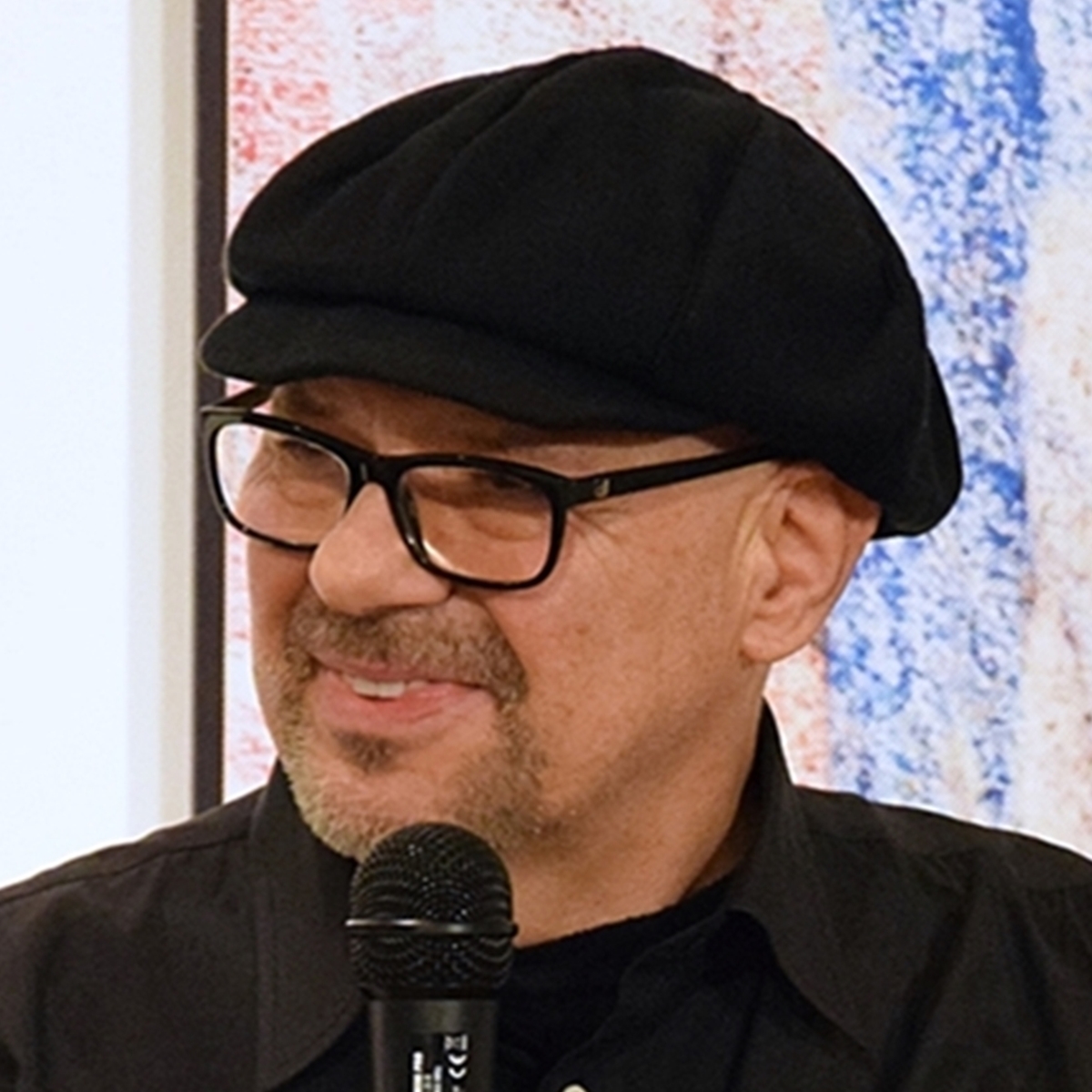
Professor James Stark is a historian of modern medicine and science at the University of Leeds , specializing in Medical Humanities . He joined Leeds in 2008 after completing a PhD (2011), MSc (2006), and BA (2005) at the University of Leeds, Manchester, and Cambridge, respectively. His academic rank advanced from University Academic Fellow (2012–2015) to Professor (2020), with leadership roles including Director of the Leeds Arts and Humanities Research Institute (2020–2023) and Head of the Graduate School (2020–25). Education: PhD, MSc, BA from Leeds, Manchester, Cambridge Leadership: Director of LAHRI, Head of Graduate School, Chair of Wellcome Strategy Group His research spans the history of medicine , microbes , ageing , and medical technologies . Current projects include LivingBodiesObjects (Wellcome Trust) and microbial research collections with the UK Health Security Agency. His 2020 book, The Cult of Youth , analyzes interwar rejuvenation practices. Articles highlight his work on germ imagery , anthrax , regeneration , and medical patenting . Collaborations include the Thackray Museum of Medicine and Science Museum. Awards include the Royal Society Essay Prize (2016) and World Association for the History of Veterinary Medicine (2014) , with a 2020 RHS fellowship.
Laura Mazow is an Associate Professor in the Department of Anthropology at East Carolina University. Her research bridges archaeology, history, and chemistry, focusing on the Mediterranean Bronze and Iron Ages, ancient technologies (especially weaving), and the intersection of archaeology with biblical studies. She has excavated extensively in Israel and Jordan and collaborates across disciplines to investigate ancient textile production and vessel functionality. PhD in Near Eastern Studies, University of Arizona (2005) BA in History, Georgetown University Mazow’s research explores ancient weaving technologies, organic residue analysis, and the cultural significance of artifacts like bathtubs. Her work combines field archaeology with laboratory methods, emphasizing interdisciplinary approaches. Recent publications highlight her innovative studies on lipid analysis in Levantine artifacts, gender construction in Aegean archaeology, and reinterpreting Mesopotamian bathtub coffins. She encourages student involvement in these projects. At ECU, Mazow teaches courses including Archaeology of the Old Testament World , Aliens, Atlantis and Archaeology , and Archaeology of Egypt , blending traditional and unconventional topics to engage students. Her collaborations with institutions like the Israel Antiquities Authority and her fieldwork at Tel Miqne-Ekron underscore her contributions to Levantine and Mediterranean archaeology.
Dr. Sameer Rahatekar is a Senior Lecturer in Sustainable Polymers and Composites at Cranfield University, working within the School of Aerospace, Transport and Manufacturing and the Composites and Advanced Materials Centre. His research focuses on the development of sustainable materials derived from natural polymers including cellulose, alginate, and chitin/chitosan for engineering and biomedical applications. Dr. Rahatekar earned his PhD from the University of Cambridge where he worked on nano-composites modelling and manufacturing. He subsequently worked as a postdoctoral researcher at the National Institute of Standards and Technology (NIST) in the USA, focusing on manufacturing natural polymer-based fibers using ionic liquids. He also served as a lecturer at the Advanced Composite Centre for Innovation and Science (ACCIS) at the University of Bristol. His research encompasses several key areas: Development of environmentally benign methods for spinning high-performance cellulose, chitin, and chitosan fibers Creation of biodegradable foams from natural polymers for packaging and biomedical applications Manufacturing toughened glass/carbon fiber composites using nanoparticles and rubber as toughening agents Development of unique roll-on coating processes for nanoparticle-reinforced composites with improved properties Dr. Rahatekar's publication record demonstrates expertise across multiple domains including sustainable materials, polymer science, nanotechnology, and composite manufacturing. His recent work has particularly focused on utilizing waste biomass and developing environmentally friendly textile alternatives with mechanical properties comparable to traditional materials like wool, polyester, and nylon. He has secured funding from multiple prestigious sources including: EPSRC Innovate UK The Royal Academy of Engineering BBSRC/BBNet Newton-Bhabha Funds The British Council Industrial partners including Haydale Ltd, Meggitt Aerospace, and Hexla Ltd His research aligns with United Nations Sustainable Development Goals 9 (industry, innovation and infrastructure), 12 (responsible consumption and production), and 14 (life below water), focusing on sustainable manufacturing approaches with reduced carbon footprint and transportation costs.
Dr. Aimaro Sanna is an Associate Professor in Chemical and Process Engineering at Heriot-Watt University's School of Engineering & Physical Sciences. His research focuses on catalytic systems for biofuel production, waste valorization, and CO2 capture technologies. He holds a PhD from the University of Nottingham and has extensive experience in clean fossil fuel technologies and catalytic reactor design. Research interests include advanced biofuels, catalytic membrane reactors, mineral carbonation, and thermochemical conversion of biomass and organic wastes. He leads the Advanced Biofuels Lab ( www.advancedbiofuelslab.com ), collaborating with industries to develop sustainable processes. He serves as Associate Editor for the Journal of CO2 Utilization and is a member of university disciplinary committees. His work contributes to UN Sustainable Development Goals related to affordable clean energy and climate action. Awarded the 2024 'World Top 2% Scientist' recognition, his research spans 91 publications. Key areas include CO2 capture via solid sorbents, catalytic pyrolysis of lignin, and green hydrogen production using novel photocathode materials.
Rico Del Sesto is a Professor of Chemistry at Utah Tech University, where he has been a faculty member since 2012. He previously served as Department Chair of Physical Sciences (2017-2021) and Director of the Research Office (2014-2022). Currently, he directs the Center for Climate Resilience and Sustainability. His career includes significant research positions at Los Alamos National Laboratory (2004-2012) and a National Research Council Postdoctoral Fellowship at the US Air Force Academy (2002-2004). Dr. Del Sesto received his education from prestigious institutions: Ph.D. in Organic Chemistry, University of Utah, 2002 B.A. in Chemistry, Colby College, Waterville, ME, 1997 His research interests span multiple interdisciplinary fields with a focus on materials chemistry. Dr. Del Sesto leads the Functional Materials Laboratory, which develops new materials with functional properties including optical, magnetic, electronic, and mechanical characteristics through strategic molecular design. His work bridges organic chemistry with applications in materials science, biology, inorganic chemistry, and physics. Current research projects address critical challenges in materials science, energy, national security, and climate resilience through collaborations with the Departments of Energy, Defense, Homeland Security, and the Intelligence Community. Analysis of his recent publications reveals a consistent research trajectory focused on ionic liquids and their diverse applications. His work spans from fundamental chemical properties to practical implementations in biomedical, security, and energy contexts. A notable trend is the evolution from basic ionic liquid chemistry toward increasingly sophisticated applications in drug delivery, antimicrobial technologies, and advanced materials for energy storage. Dr. Del Sesto has received significant recognition for his work, including: National Academies of Science Postdoctoral Fellowship Multiple patents with practical applications Front cover features for several publications Highlighting in Nature and Scientific American for groundbreaking research 'top 25' most cited in Journal of Organometallic Chemistry As an educator and mentor, Dr. Del Sesto has secured over $8 million in research funding as Principal Investigator for more than 15 programs from DOE, DOD, and DHS. He teaches a comprehensive range of courses from introductory organic chemistry to advanced materials chemistry. Drawing from his own experience as a first-generation, underrepresented undergraduate student, he actively encourages diversity in STEM research participation. His educational philosophy emphasizes connecting chemistry to real-world applications and the broader context of students' lives. Dr. Del Sesto contributes to scientific community engagement through regional Science Café events and his leadership in the Center for Climate Resilience and Sustainability, demonstrating commitment to both fundamental research and practical societal impact.
Pia Mouwitz is a Senior Lecturer in fashion design at the Swedish School of Textiles, University of Borås. She has held this position since 2006, contributing to research projects such as Knit on Demand and leading initiatives like the EU-funded Baltic Fashion (2010-2013). Her work bridges academic research with industry collaboration, focusing on sustainable textile systems and wearable technology. Research interests include circular fashion, material innovation, and the integration of technology into textile design. Key projects include a pre-study on circular textile flows in collaboration with Region Västra Götaland and development of sensorized garments for health monitoring. Her contributions span teaching roles in collection development, sustainable fashion, and design aesthetics. She has 17 years of industry experience as a designer and product developer across multiple fashion segments.
Samuel Clark is an Associate Professor in Animal Genetics at the University of New England , affiliated with the School of Environmental and Rural Science and the Faculty of Science, Agriculture, Business and Law . His work focuses on leveraging genomic technologies to enhance livestock breeding programs. Research Interests : Dr. Clark's research spans genetic resilience in sheep , genomic selection in beef cattle , and environmental sensitivity in livestock . He investigates how genetic variation interacts with environmental factors to optimize traits like meat quality, feed efficiency, and methane emissions. Publication Trends : Recent articles emphasize genomic prediction accuracy , genotype-environment interactions , and microbial profiling for health traits . His work includes large-scale studies on Angus and Hanwoo cattle and sheep resilience metrics , often integrating bioinformatics and statistical models. Collaborative Efforts : Dr. Clark contributes to initiatives like the Southern Multi-Breed Resource Population , which addresses complex phenotypes for genomic selection, and explores the impact of reproductive technologies on breeding programs .
Professor Anita Quye is a leading academic in the History of Art at the University of Glasgow, specializing in heritage science of textiles and decorative artifacts. She holds a professorial position in the History of Art department within the Kelvin Centre for Conservation and Cultural Heritage Research. Her work bridges chemistry, art history, and conservation science, focusing on historical dyes, synthetic materials, and the preservation of cultural heritage objects. Research Interests: Historical dyes (natural and synthetic) Microchemical analysis (UHPLC, FTIR, UV-Vis) Historical textiles and their degradation Reconstruction of 18th/19th-century dyeing practices UNESCO-recognized Crutchley Archive preservation Recent Projects: Getty Research Institute residency (2022) for modern materials studies Leadership of Dye-Versity and ReCREATE networks Analysis of historical Scottish tartans and Chinese Ming/Qing dyes Key Collaborations: PlasCO2, Synthetic Garments Project, Morton cope materials study, and Dunollie Museum textile research. Publications: Over 90 works including monographs Plastics: Collecting and Conserving and Wrought in Gold and Silk , and forthcoming Modern Materials in Decorative Arts and Fashion .
Professor Andrzej Banachowicz is a research worker at the University of the Arts in Poznań , active since 2023. He has held leadership roles including Head of the V Workshop of Sculpture and Spatial Actions (2019-2023) and Head of the II Workshop of Artistic Textile (2009-2018). His work bridges sculpture, textile art, and digital media , often exploring themes of human existence, memory imprints, and spiritual-matter interplay . Faculty of Sculpture member Active in international art-science collaborations (2023 Art & Science Apoptosis Symposium) Recipient of Golden Cross of Merit (2005) and multiple GLORIA ARTIS medals His artistic methodology combines: Unique textile materials (sizal, wool, linen) Digital prints on aluminum dibond Immersive spatial installations Recent works like Biological Spirituality (2023) and Materiality of Code (2022) demonstrate his focus on numerical art and material-spirit duality . His 2024 Florence XR Festival piece Numerical Art. Fractality of the Universe exemplifies his ongoing exploration of cosmic patterns in artistic representation . Scientific Recognition: 2023 35th Anniversary Medal (Warsaw School of Fine Arts) 2019 Golden Medal 'Zasłużony Kulturze GLORIA ARTIS' 2014 Scholae Bene Merito Medal (Poznań UAP Senate) 2005 Golden Cross of Merit (President of Poland)
John Milton is an Associate Professor Honorary Research Fellow at the Institute of Agriculture, The University of Western Australia, where he has been actively engaged since 1991. With expertise spanning ruminant nutrition and reproductive physiology, his work focuses on developing sustainable Clean, Green and Ethical (CGE) animal production systems. His academic journey began with honors in Agricultural Science from the University of Queensland in 1974, followed by a PhD in ruminant nutrition in 1984. His research interests center on nutritional and reproductive management in farm animals, with particular emphasis on meat and wool sheep production, beef and dairy cattle systems, and small ruminant management. Milton's work integrates fundamental understanding of ruminant physiology with practical applications to enhance sustainable production. His fingerprint analysis shows strong expertise in Merino sheep (100%), lamb production (81%), breed comparisons (70%), colostrum management (50%), lupin utilization (45%), Dorper sheep (42%), Australian livestock systems (36%), and supplementation strategies (34%). Over his career, Milton has secured five major research grants, including projects on beef production systems, nitrate-rich shrubs to reduce methane, cashmere production, focus feeding techniques, and wool improvement. His work contributes significantly to Sustainable Development Goals related to zero hunger, responsible consumption and production, and climate action. Milton currently co-supervises two PhD students and teaches Animal Science & Technology 3306. His extension work connects academic research with practical farming applications, helping producers implement evidence-based practices. His research extends beyond traditional livestock to include goats for fiber and meat production and alpacas for fiber development.
Gabor Meszaros is an Associate Professor at the University of Natural Resources and Life Sciences, Vienna (BOKU) , affiliated with the Institute of Livestock Sciences . His career spans roles as a researcher, project leader, and educator, focusing on genetics, animal breeding, and genomics. 2018 - Present: Associate Professor, BOKU 2014-2018: Assistant Professor, BOKU 2008-2013: Researcher, BOKU 2005-2008: PhD Student, Nitra, Slovakia Meszáros's research interests include genetic diversity analysis , population genetics , genomic selection , and bioinformatics tools for livestock breeding . His work addresses challenges in climate adaptation , inbreeding depression , and sustainable utilization of local breeds . His recent publications highlight advancements in genomic diversity studies across species like sheep, goats, pigs, and argali, with a focus on effective population size estimation , GWAS applications , and balancing selection markers . Collaborative projects span Austria, Mongolia, Ethiopia, and Burkina Faso. Meszáros actively contributes to academia by supervising 20+ theses at BOKU and serves as a reviewer for journals like Genomics and Small Ruminant Research . He participates in international symposia, including the World Congress on Genetics Applied to Livestock Production and Animal Science Days , and contributes to the Gregor Mendel Society as a managing board member.
Jennifer Harmon serves as an Associate Professor in the Department of Family and Consumer Sciences within the College of Agriculture, Life Sciences & Natural Resources at the University of Wyoming. Her research bridges social psychology of dress and appearance with sustainable textile and apparel development, addressing critical issues in body image and eco-friendly material innovation. Her academic credentials include: Ph.D. in Human Sciences (Fashion and Retail Specialization) with Sociology Minor from The Ohio State University M.S. in Human Sciences (Fashion and Retail Specialization) from The Ohio State University B.S. in Family and Consumer Sciences with Business Minor from Illinois State University Dr. Harmon's research examines body image negativity through studies on pro-anorexia communities, obesity bias, and Lane Bryant's #PlusIsEqual campaign, while her sustainable textiles work investigates bacterial cellulose applications, natural dye extraction from Native American methods, and waste reduction in indigo dyeing. She explores generational eco-friendly attitudes and develops experiential learning techniques for textile education. Analysis of her 15 most recent publications reveals three dominant research trajectories: groundbreaking investigations into nonbinary body image experiences (accounting for 40% of recent work), innovative sustainable material development focusing on bacterial cellulose and natural dyes (35%), and pedagogical research on experiential learning in textile science (25%). Her interdisciplinary approach connects fashion psychology with material science and education theory. Dr. Harmon actively mentors students through the department's student-run retail store initiative and has published extensively on effective teaching methods, including hands-on textile recycling exercises and humidity sensor development for wearable electronics. Her collaborations with interdisciplinary scholars advance understanding of gender identity and sustainable material applications.
Mohamed GAFSI is a Professor of Management Sciences at the National Higher School of Agricultural Education of Toulouse-Auzeville (ENSFEA) and a permanent member of the Interdisciplinary Laboratory for Solidarity, Societies, Territories (LISST), specifically within the Rural Dynamics team. His work focuses on sustainable farm management through analysis of farmers' strategies, innovations in production systems, and conditions for improving sustainability via collective action and learning processes across diverse agricultural contexts in France and Africa. Professor GAFSI's research spans productivist agriculture, organic farming, and subsistence farming, employing intervention research approaches with quantitative and qualitative methods. He is renowned for his contributions to the IDEA4 method for farm sustainability assessment, which provides scientifically valid, pedagogical tools for evaluating sustainability levels and identifying change levers in farming systems. His work bridges theoretical frameworks with practical applications in agricultural management and sustainability transitions. His recent publications reveal strong thematic continuity around sustainable agricultural systems, with particular emphasis on animal traction as part of sustainable production models, the emergence of biosourced value chains (especially hemp, wool, and leather), and the application of sustainability assessment methods in agricultural education. The IDEA4 framework serves as a unifying thread across his scholarly output, demonstrating consistent methodological rigor and practical relevance. Professor GAFSI actively supervises doctoral research with 5 theses currently in progress and contributes extensively to academic service through scientific committees for conferences and seminars, including the SFER 'Journées' in Montpellier (2010), the SFER-DEVAB colloquium on organic agriculture in Strasbourg (2011), and the ACTA-INRA seminar on crop-livestock systems in Toulouse (2013). He serves as a reviewer for leading journals including Agricultural Systems, Cahiers Agricultures, and Journal Rural Studies. As part of LISST's Rural Dynamics team, Professor GAFSI collaborates with researchers across France and internationally, particularly in West and Central Africa, to understand how family farms adapt to changing environmental, economic, and social conditions. His work on the adaptation and resilience of family farms addresses critical challenges related to climate change, market integration, and sustainability transitions in agricultural systems.
Dr. Reda M. El-Shishtawy is a Professor affiliated with multiple institutions including the National Research Centre (Egypt) , King Abdulaziz University (Saudi Arabia) , and Universidade da Beira Interior (Portugal) . His research spans catalysis, biocatalysis, and nanotechnology with emphasis on environmental sustainability. Key institutions: National Research Centre, King Abdulaziz University, Kyoto Institute of Technology Active since 1980s with 175 citations and 32 publications Research Focus: Development of advanced materials for environmental remediation, particularly enzyme immobilization matrices and graphene-based nanomaterials. Recent work includes Suzuki-Miyaura reaction applications for heterocyclic compounds (2023) and quantum energy transfer modeling (2017). Collaboration & Funding: Supported by international sponsors like the National Natural Science Foundation of China and European Regional Development Fund . His collaborations show strong institutional diversity across 9 institutions.
Dr. Alen Alempijevic is the Deputy Head of School (Teaching and Learning) at the School of Mechanical and Mechatronic Engineering, University of Technology Sydney (UTS). He holds the academic rank of Senior Lecturer and coordinates Mechatronic Engineering programs. His research focuses on robotic perception, multi-modal sensor fusion, and AI applications in physical systems, with industry-driven projects in livestock monitoring, critical infrastructure, and autonomous systems. He completed his PhD in Robotics at UTS and contributed to the DARPA Urban Grand Challenge with the Sydney-Berkeley team. Education: PhD in Robotics (2004-2008), B.Eng (Computer Systems) with First Class Honors (2000-2003), B.E and B.Sc in Computer Science and Engineering from University of Belgrade (1995-1999). Research Interests: Livestock monitoring via 3D imaging, autonomous vehicles, sensor fusion, and robotics perception. His work includes developing technologies for cattle trait estimation, crowd dynamics prediction, and industrial automation. Funded Research: Notable grants include UTS Wool Bioharvesting (2024-2027), Objective real-time live cattle assessments (2020-2023), and Advanced livestock measurement technologies (2017-2018).