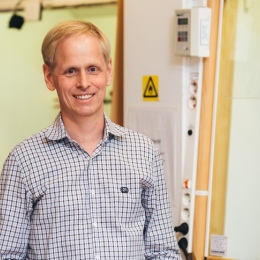
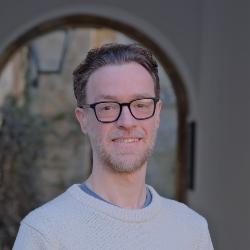
Friedrich Prinz is the Leonardo Professor in the School of Engineering at Stanford University, holding dual professorships in Mechanical Engineering and Materials Science and Engineering. He is also a Senior Fellow at the Precourt Institute for Energy and an affiliate of the Stanford Woods Institute for the Environment. Additionally, he directs the Nanoscale Prototyping Laboratory and co-directs the NPL-Affiliate Program. He earned a PhD in Physics from the University of Vienna (1975) and joined Stanford in 1994 after faculty roles at Carnegie Mellon University. His research focuses on nanoscale energy conversion and storage, employing advanced fabrication techniques like atomic layer deposition (ALD) to develop prototype fuel cells and capacitors. His lab investigates material structures using scanning tunneling microscopy, impedance spectroscopy, and atomic-scale modeling. Prinz has authored over 360 publications and advised numerous students. Notable awards include AAAS Fellowship (2007) and the AM Strickland Prize (2005). His work bridges solid-state physics, materials engineering, and renewable energy technologies. He teaches courses in manufacturing processes, quantum field theory applications, and advanced material science. Current roles include supervising doctoral and postdoctoral researchers in energy-related nanotechnologies.
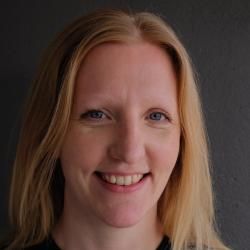
Maha Haji serves as Assistant Professor in Cornell University's Sibley School of Mechanical and Aerospace Engineering and Systems Engineering field member since 2021. She directs the Symbiotic Engineering and Analysis (SEA) Lab, pioneering sustainable offshore technologies for Blue Economy advancement and climate change mitigation through interdisciplinary symbiotic system design. Her academic credentials include: B.S. in Mechanical Engineering and B.A. in Applied Mathematics from University of California, Berkeley (2012) M.S. in Oceanographic Engineering from MIT/Woods Hole Oceanographic Institution (2015) Ph.D. in Mechanical and Oceanographic Engineering from MIT/Woods Hole Oceanographic Institution (2017) Professor Haji's research integrates Systems Engineering and Ocean Engineering to develop sustainable offshore solutions, emphasizing Design Optimization for renewable energy systems (offshore wind/wave), mineral extraction from seawater, desalination, and aquaculture. Her work creates synergistic multi-functional platforms that harmonize resource harvesting with ocean ecosystem preservation. Publication analysis reveals consistent focus on symbiotic offshore systems, with 2018-2019 studies demonstrating interdisciplinary approaches to ocean resource utilization—spanning environmental science, engineering design, and economic optimization for critical mineral extraction and renewable energy integration. She secured $2.6M in NOAA Sea Grant funding for the MOLLUSCA microplastic collecting robot project with Professor Sunny Jung, advancing ocean conservation technology. Her mentorship cultivates next-generation engineers in sustainable offshore development through the SEA Lab's research framework. The SEA Lab operates as a multidisciplinary hub developing symbiotic engineering solutions for offshore wind, mineral extraction, and aquaculture systems, emphasizing lifecycle sustainability and climate resilience in ocean technology deployment.
Jasmine Travers Altizer is an Assistant Professor at NYU Rory Meyers College of Nursing, where she conducts research to improve health outcomes and reduce disparities among vulnerable older adults. Her work spans long-term care systems, aging, and health equity, with a focus on both quantitative and qualitative approaches. Education: PhD, Columbia University School of Nursing MHS, Yale University MSN, Stony Brook University (Adult-Gerontological Health) BSN, Adelphi University Her research interests include gerontology, health disparities, workforce diversity, infection control, and policy in long-term care. She investigates how neighborhood disadvantage, staffing levels, and systemic inequities affect care quality in nursing homes and home-based settings. Her recent work has explored antipsychotic medication use, caregiver coping strategies, and the impact of federal programs like the Paycheck Protection Program on staffing. The 15 most recent publications reflect a strong trajectory in health services research, with recurring themes in equity, workforce well-being, and policy evaluation. Her studies frequently use large national datasets and mixed methods to address structural barriers in care delivery for underserved populations, particularly Black and Latino older adults. Scientific Awards and Honors: Rising Star Research Award, Eastern Nursing Research Society (2022) Health in Aging Foundation New Investigator Award (2022) NASEM Committee Member on Quality of Care in Nursing Homes (2020) Scholar, National Clinician Scholars Program, Yale (2020) Jonas Policy Scholar (2019) Douglas Holmes Emerging Scholar Paper Award (2018) Travers is actively involved in mentoring and accepting PhD students. She leads multiple federally funded research projects, including a Robert Wood Johnson Foundation Career Development Award and a National Institute on Aging K76 Beeson Award. She has served on national committees and contributed to high-impact policy reports, demonstrating leadership in translating research into action. Her work is frequently covered in media outlets such as Scientific American , AARP , and Crain's New York . Laboratories and Research Teams: She is affiliated with several active research initiatives, including the NH Explanatory Trials Network and projects examining dementia care workforce experiences, health equity in nursing home quality measures, and culturally sensitive interventions for Black adults with chronic conditions.
Niklas Hedin is a Professor and Head of the Department of Chemistry at Stockholm University . His research group specializes in developing advanced materials for environmental and energy applications, with a particular focus on CO₂ capture technologies , green material synthesis , and biochar-based solutions for pollution mitigation and sustainable resource utilization. Professor at Department of Chemistry Head of Department Stockholm University affiliation The research spans from fundamental molecular spectroscopy studies to industrial-scale applications . Key projects include the use of activated limestone for Baltic Sea eutrophication control, colloidal porous liquids for energy-efficient carbon capture, and engineered biochars for dual environmental remediation and agricultural applications. Recent publications highlight 2025 breakthroughs in aminated cellulose aerogels , graphene oxide composites for direct air capture , and ultrasound-assisted hydrogen peroxide synthesis . These works demonstrate Hedin's commitment to multiscale material engineering combining experimental validation with computational modeling. The group includes several PhD students and postdoctoral researchers working on specialized aspects of material synthesis and environmental application. His team actively collaborates with industrial partners and government agencies to translate laboratory findings into real-world solutions for sustainable chemistry and climate change mitigation .
Emily Lines is a forest ecologist affiliated with the University of Cambridge, Department of Geography. She specializes in remote sensing (ground to satellite) and data science techniques to study forest structure, function, and dynamics. Her research addresses ecological and conservation questions, ranging from fundamental forest processes to applied challenges like climate change, deforestation, and forest management effectiveness. Department of Geography, University of Cambridge DLA Supervisor, Cambridge NERC Doctoral Landscape Awards Collaborator with geomorphologists, computer scientists, geneticists, and paleoecologists Her group employs fieldwork using terrestrial and drone laser scanning, photogrammetry, and traditional forest mensuration. Methodologically, she integrates deep learning, computer vision, and computational modeling to analyze forests at multiple scales. Priority topics include biodiversity assessment, structural dynamics, competitive interactions, dieback/disease monitoring, microclimate effects, radiative transfer, and regeneration patterns. Key tools: Terrestrial LiDAR, TLS validation, PlotToSat, FOR-species20K dataset, Deadtrees.earth database Recent work spans 3D remote sensing benchmarking, AI applications in forest monitoring, and climate change impacts on European forests Her publications highlight forest-landscape interactions, scalability of data science methods, and cross-disciplinary integration of ecological and computational approaches. She advocates for environmental sustainability in AI applications through initiatives like the C-CLEAR Doctoral Training Programme.
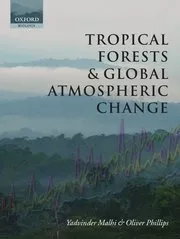
Professor Yadvinder Malhi is a leading ecosystem scientist at the University of Oxford , holding the Professor of Ecosystem Science chair at the Environmental Change Institute (ECI) within the School of Geography and the Environment. He also serves as Jackson Senior Research Fellow at Oriel College , Director of the Leverhulme Centre for Nature Recovery , and President of the British Ecological Society . Active researcher in tropical and temperate forest dynamics Advises UK and Scottish governments on nature restoration Global research across Amazon, Andes, Africa, and UK Research Focus: Malhi investigates how terrestrial ecosystems respond to global atmospheric changes, with emphasis on tropical forests , climate change adaptation , and nature-based solutions . His work integrates field physiology, remote sensing, and ecosystem modeling, notably through the GEM and RAINFOR networks. Recent Trends: Recent publications highlight cross-disciplinary approaches combining terrestrial laser scanning , trait-based ecology , and social-ecological analysis . Research spans from Arctic tundra to tropical coral reefs , with growing emphasis on UK nature recovery and global carbon cycling . Scientific Recognition: 2025: Ramon Margalef Prize in Ecology 2023: Fellow of the Royal Society (FRS) 2022: British Ecological Society President-Elect Academic Leadership: As Programme Leader of the Ecosystems & Biodiversity Research group and member of the ECI , Malhi mentors 24 graduate students while directing large-scale initiatives like the Wytham Woods monitoring station. His lab develops innovative tools for ecosystem assessment through projects like GEM Field Manual and TLS2trees algorithms.
Professor Hongbo Zhang is a leading academic at Åbo Akademi University , affiliated with the Faculty of Natural Sciences and Engineering and the InFLAMES (Innovation Ecosystem based on the Immune System) flagship program. With over 227 publications and 21 active/completed projects since 2006, his research spans Functional Materials , Drug Delivery , and Clinical Translation . Research Interests: His work focuses on Engineering nanostructures for blood-brain barrier penetration Microfluidics-enabled biomedical devices Antimicrobial resistance solutions Cellulose-based sustainable materials Mitochondrial delivery systems Theranostic hydrogels Scientific Awards: Fellow of the Royal Society of Chemistry (2024) MDPI Pharmaceutics Young Investigator (2020) Chinese Orthopedic Association 1st Prize (2019) Best Oral Drug Formulation (Control Release Society, 2014) 10 Leading Chinese Talents in Europe (2023) Collaborative Network: Actively hosts international researchers and contributes to EU/Nordic-funded projects like NAP4DIVE and Printed Intelligence Infrastructure . His recent publications demonstrate expertise in nanomedicine, biocomposites, and lignin valorization.
Melanie Matchett Wood is the William Caspar Graustein Professor of Mathematics at Harvard University. Her research spans number theory, arithmetic statistics, algebraic geometry, and probability theory, with a focus on distributions of class groups, Galois groups of unramified extensions, and random algebraic structures. She has been supported by prestigious awards including the Packard Fellowship, the NSF Waterman Award, and the MacArthur Fellowship. Her work connects number theory to topology through function field analogs, studying moduli spaces of curves and their statistical properties. She has made significant contributions to understanding the universality of random matrix cokernels and their applications to sandpile groups of graphs. Her editorial roles include the Journal of the American Mathematical Society and Algebra and Number Theory . Recent publications emphasize arithmetic topology, proving universality theorems for 3-manifold groups, and developing new heuristics for class group torsion. She organizes seminars on arithmetic statistics and topology-number theory interactions. Her teaching includes advanced courses like Algebraic Number Theory and Class Field Theory, with research supervision spanning PhD and undergraduate projects. Scientific Awards: Packard Fellowship for Science and Engineering National Science Foundation Waterman Award MacArthur Fellowship
Masatoshi Takano is a Professor at the Faculty of Science and Engineering, Waseda University, specializing in theoretical studies of nuclear physics, particle physics, and astrophysics. His work focuses on nuclear equations of state (EOS) for neutron stars and core-collapse supernovae, incorporating realistic nuclear forces like the Argonne v18 and Urbana IX potentials. He has developed variational methods with explicit energy functionals to model hyperonic nuclear matter, spin-orbit forces, and finite-temperature effects. Education : PhD in Science, Waseda University Professional Memberships : American Physical Society, Japan Physical Society Research spans neutron star structure, supernova simulations, and nuclear matter phase transitions. His recent presentations address neutrino emission rates, braking radiation in nuclear matter, and cluster variational methods. Key collaborations include H. Togashi, K. Nakazato, and K. Sumiyoshi. Scientific contributions involve refining variational energy expressions for asymmetric nuclear matter, incorporating three-body forces, and studying pion condensation effects on neutron star cooling. He has applied his EOS models to multidimensional supernova simulations and cosmic ray detector design.
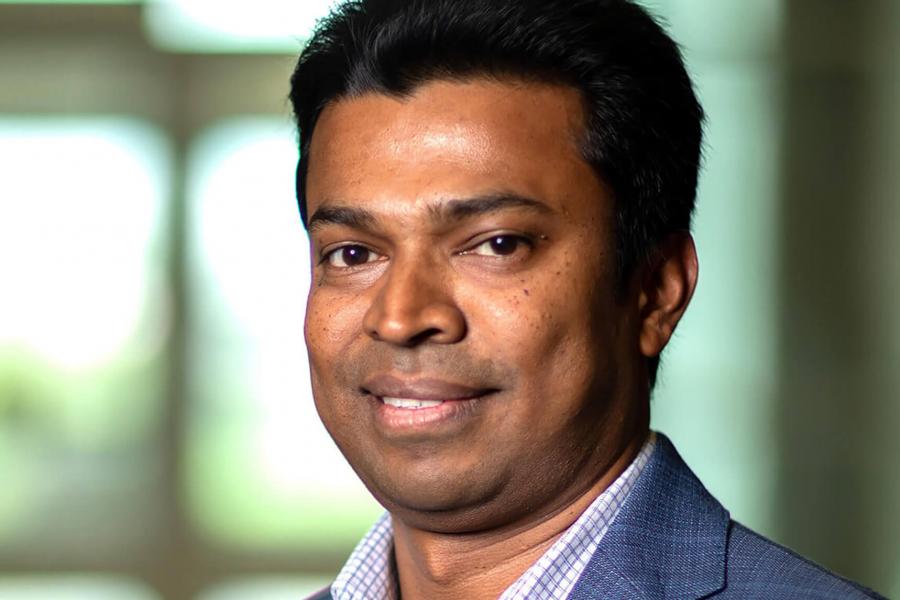
Dr. Nandika Bandara serves as Associate Professor and Tier 2 Canada Research Chair in Food Proteins and Bioproducts at the University of Manitoba's Department of Food and Human Nutritional Sciences within the Faculty of Agricultural and Food Sciences. Her research program focuses on advancing sustainable protein technologies for food, materials, and bioproduct applications through integration of material science and nanotechnology. Education: CFS (Certified Food Scientist), Institute of Food Technologists / International Food Science Certification Council PhD (Food Science & Bioresource Technology), University of Alberta, Canada MSc (Food Science & Technology), University of Alberta, Canada BSc (Agriculture), University of Peradeniya, Sri Lanka Dr. Bandara's research explores protein and biopolymer-based nanostructures for bioactive delivery, sustainable protein extraction from Canadian crops and byproducts, and renewable biopolymers for food packaging and biomedical materials. Her lab investigates novel processing technologies' effects on protein structure-function relationships using advanced characterization techniques. Current projects include protein-lipid conjugation for nanodelivery systems, feather keratin-based wound-healing materials, and deep eutectic solvents for protein extraction. Her publication record demonstrates strong focus on plant protein valorization, nanodelivery systems, and functional materials. Key trends include development of electrospun nanofibers, protein-based packaging films reinforced with nanocellulose, and metabolomics approaches for bioactive compound analysis in Canadian berries. The research bridges fundamental protein chemistry with industrial applications in sustainable food systems. Awards and Honors: Outstanding Volunteer Service Award of the Food Chemistry Division at Institute of Food Technologists (IFT) - 2019/2020 Institute of Food Technologists (IFT) Emerging Leaders Network (ELN) Program finalist - 2019 Natural Science and Engineering Research Council (NSERC) of Canada Postdoctoral Fellowship - 2018 Agricultural Institute of Canada Foundations' (AICF) Karl C Iverson Agricultural Scholarship - 2016 MITACS Accelerate Graduate Scholarship - 2015 Queen Elizabeth II Doctoral Graduate Scholarship - 2015 American Oil Chemist Society Honored Student Award - 2015 Graduate Student Teaching Award of the Faculty of Graduate Studies and Research/ Faculty of Agricultural, Life and Environmental Sciences, University of Alberta - 2015 Alberta Innovates Technology Futures Graduate Student Doctoral Scholarship Dr. Bandara actively supervises graduate students through the University of Manitoba's Food and Human Nutritional Sciences program and holds an adjunct professorship at Dalhousie University. She serves as Associate Editor for Food Chemistry Journal and on the editorial board of Food Research International. Her research is supported by her Canada Research Chair position and industry partnerships focused on Canadian agricultural innovation. She directs the Food Proteins and Bioproducts Lab at the Richardson Centre for Food Technology and Research, which specializes in protein characterization, nanomaterial development, and sustainable extraction technologies. The lab collaborates with researchers across Canada and internationally to translate fundamental discoveries into industrial applications for food, packaging, and biomedical sectors.
Elizabeth A. Edwards is a University Professor at the University of Toronto in the Department of Chemical Engineering and Applied Chemistry , with cross-appointments to the Department of Cell & Systems Biology . As Director of BioZone and Canada Research Chair in Anaerobic Biotechnology, she leads groundbreaking research in microbial bioremediation of groundwater pollutants and industrial wastewater treatment through anaerobic digestion. Ph.D. in Environmental Engineering (Stanford, 1993) M.Eng. and B.Eng. in Chemical Engineering (McGill, 1985/1983) Licensed Professional Engineer (P.Eng.) Her research focuses on anaerobic microbial communities that degrade pollutants like chlorinated solvents and aromatic hydrocarbons. Using advanced molecular biology, genomics, proteomics , and biochemical pathway analysis , her lab investigates functional interactions in microbial consortia and translates discoveries to commercial applications such as the KB-1® bioproduct . Recent studies examine enzyme activity, lignocellulose degradation, and granulation dynamics in anaerobic reactors. Scientific Recognition: 2020 Killam Prize in Engineering 2016 Canada Research Chair (Tier 1) 2014 Royal Society of Canada Fellow 2011 Canadian Academy of Engineering Fellow 2011 AAAS Fellow 2008-2010 Killam Research Fellowship She supervises extensive graduate student projects spanning enzyme discovery, bioremediation optimization, and microbial consortium analysis. Her lab collaborates with GeoSyntec Consultants and SiREM Labs for field implementation of bioremediation strategies.
Dr. F. Jerry Reen serves as a Senior Lecturer and Principal Investigator in the School of Microbiology at University College Cork (UCC), Ireland. With over two decades of academic experience since joining UCC's Department of Microbiology in 2002, he has established himself as a leading researcher in microbial communication systems and host-pathogen interactions. His research group operates within the BIOMERIT Research Centre, and he maintains active collaborations across multiple institutions in Ireland and internationally. Dr. Reen earned his BSc in Biochemistry at the National University of Ireland Galway (NUIG), followed by a PhD in the Molecular GlycoBiotechnology Group at NUIG, supported by an Enterprise Ireland Scholarship and an NUI Teaching Fellowship. His academic journey includes a postdoctoral position in the lab of Dr. E. Fidelma Boyd at UCC, during which he was a visiting scientist at the Sidney Kimmel Cancer Center in San Diego and received an IRCSET Postdoctoral Fellowship for bacteriophage-host interactions research. Dr. Reen's research focuses on deciphering communication systems underpinning polymicrobial-host interactions for human and ecosystem health, with particular emphasis on small molecule signaling in microbial communities. His work bridges fundamental microbiology with translational applications, targeting antimicrobial resistance through chemico-biological therapeutics and developing sustainable pharmaceutical production methods using marine biocatalysts. His research has evolved from early work on Vibrio species to current investigations of Pseudomonas aeruginosa signaling systems, bile acid interactions in cystic fibrosis, and marine enzyme applications in green chemistry. His laboratory's publication record demonstrates consistent productivity with over 80 peer-reviewed papers (h-index 26), spanning from foundational studies on LysR-type transcriptional regulators to recent innovations in virtual reality educational tools. The research trajectory reveals an expanding scope from molecular microbiology to systems-level understanding of microbial communities, with increasing emphasis on sustainable solutions for the pharmaceutical industry. Bronze LEAF Award (2022) - Green Campus University College Cork The Disciplinary Excellence in Learning, Teaching and Assessment (DELTA) Award (2021) - National Forum for the Enhancement of Teaching and Learning Purdy-Lucey UCC Life Sciences Invention of the Year 2015 (2016) Best Poster Exhibition (2012) - Royal Irish Academy National Researcher of the Year, Silver Medal (2011) - Roche BioSciences Researcher of the Year, Gold Medal (2011) - Roche Dr. Reen has successfully secured significant research funding from multiple sources including Science Foundation Ireland (SFI), Health Research Board (HRB), Enterprise Ireland, and Irish Research Council. His current projects include 'BioBloc' enhanced Contact LEns solutioNS (BBCLENS), HEACOVID19, SSPC3 Pharm5, and investigations into novel macrolides for cystic fibrosis management. He has mentored numerous graduate students, including Stephanie Flynn (PhD, 2019), Noelle McCarthy (PhD, 2009), and David Woods (MSc, 2008), with two doctoral students currently completing their research. His educational innovations, particularly student-partnered virtual reality simulations, have transformed how challenging molecular concepts are taught. Dr. Reen leads an interdisciplinary research group that combines microbiology, chemistry, bioinformatics, and education technology. His team collaborates with internal UCC colleagues including Dr. Gerard McGlacken and Prof. Anita Maguire, as well as external partners from institutions like the University of Warwick, Medical University of Graz, and University de Porto. The laboratory maintains strong connections with clinical researchers studying cystic fibrosis and has developed novel approaches for detecting bacterial signaling molecules using boron-doped diamond electrodes.
Liqiu Hu is a Doctoral Researcher at the Laboratory of Natural Materials Technology , affiliated with the Faculty of Science and Engineering at Åbo Akademi University. Their research focuses on bio-based materials , polymerization techniques , and nanocellulose applications , contributing to Sustainable Development Goals like responsible consumption and climate action. Key research areas: Lignin, Nanocellulose, Polymerization, Bio-based films, Green chemistry, Biocomposites Recent work trends: In-situ polymerization, Pickering emulsions, Drug delivery systems, Agricultural waste upcycling, Aqueous dispersion processing Collaborations include researchers from Åbo Akademi University and TAPPI Press. Publications span from 2017 to 2025, highlighting innovations in biopolymer interfaces and sustainable packaging . The laboratory's fingerprint indicates strong alignment with lignin (100%), nanocellulose (75%), and polymerization (66%) research.
James Wood serves as an Associate Teaching Professor in Political Economy within the Department of Politics and International Studies (POLIS) at the University of Cambridge, where he is also affiliated with the Faculty of Human, Social, and Political Science. Additionally, he holds a Staff Fellowship in Politics at Trinity Hall, Cambridge, where he serves as the HSPS Director of Studies and Undergraduate Tutor, having previously served as Acting Senior Tutor of the College. University of Sussex: B.A. in Economics (2010-2013) King's College London: M.A. (2014) and Ph.D. in International Political Economy (2017) Wood's research focuses on political economy with particular emphasis on innovation policy, housing systems, and crisis construction across the United States, United Kingdom, and European Union. His work examines how housing functions as an asset-based welfare system, the political dimensions of innovation policymaking, and the construction of economic crises in contemporary democracies. He investigates the role of megaprojects in regional development and the political economy of welfare state transformation, particularly examining housing as what he terms the 'fifth pillar' of the welfare state. His recent publications reveal a strong focus on polycentric governance approaches to innovation, the political dynamics of housing policy, and the comparative analysis of economic policy responses to crises. Wood's research connects theoretical political economy with practical policy analysis, often examining how economic policies are constructed and legitimized in different political contexts. Co-convenor of the Political Studies Association's British and Comparative Political Economy Specialist Group Associate Editor of the Cambridge Journal of Regions, Economy and Society Before entering academia, Wood spent nearly a decade working at one of the largest mortgage joint ventures in the United States, providing him with practical industry experience that informs his academic research on housing finance and asset-based welfare systems. His research bridges academic theory with real-world policy challenges, particularly in the areas of housing affordability, innovation ecosystems, and the political management of economic crises.
Sasa Zivkovic is an Associate Professor at Cornell University's College of Architecture, Art, and Planning, where he directs the Robotic Construction Laboratory (RCL). He co-founded the experimental architecture practice H.A.N.N.A.H in Ithaca, New York, focusing on integrating advanced technologies with traditional building techniques. Research Interests span architectural technology, robotic construction, 3D printing, sustainability, and mass-customized housing. His work explores additive concrete manufacturing, robotic wood construction, and ecological design solutions. Key projects: 3D-printed Guard House (Suzhou, China), Modular Dental Clinic (Ladakh, India), Corbel Cabin (Ithaca, NY) Won 2018 Folly/Function competition Recipient of Atkinson Center funding for sustainable wood construction Scientific Awards 2018 Folly/Function Competition Winner Architect magazine 'Next Progressives' (2018) Atkinson Center Rapid Response Fund Grant (2018) Rob|Arch 2018 Best Workshop Runner-Up Zivkovic teaches courses in architectural design studios and media representation, emphasizing interdisciplinary collaboration with the high-tech building industry through projects like RRRolling Stones and Emergency Wood initiatives.