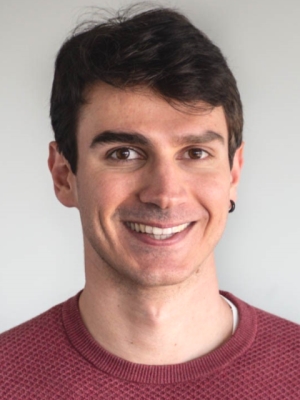
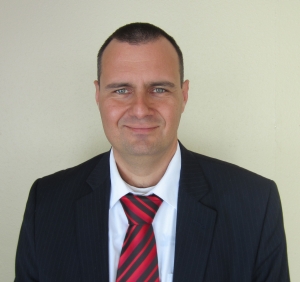
Dr. Iason Sideris is affiliated with ETH Zürich's Department of Neue Fertigungstechnologien (New Manufacturing Technologies), holding a Researcher position within the Professorship for Advanced Manufacturing. His work focuses on advancing additive manufacturing techniques, particularly in path planning optimization, temperature control, and material processing. He contributes to fields like Direct Energy Deposition, Wire-Arc Additive Manufacturing (WAAM), and data-driven finite volume methods. Key Research Areas: Additive Manufacturing, Thermal Modeling, Process Optimization, Materials Science Recent research emphasizes scalable path planning for temperature uniformity in AM processes, with publications addressing challenges in WAAM thermal management and real-time simulation methods. His work combines computational modeling with experimental validation to enhance manufacturing efficiency and material properties.
Dr. Ling Yin is an Associate Professor in the School of Electrical and Mechanical Engineering at the University of Adelaide, Faculty of Sciences, Engineering and Technology. She joined the University of Adelaide in 2018 as an Associate Professor in manufacturing and served as Faculty Research Theme Leader in Advanced Manufacturing from 2019 to 2022. Dr. Yin leads multi-institutional projects on advanced manufacturing funded by Defence SA (2024-2025) and the National Health and Medical Research Council (NHMRC) (2025-2028). Dr. Yin's educational background includes B.Sc., M.Sc., and Ph.D. degrees in mechanical engineering from Huazhong University of Science & Technology in Wuhan, China. Her academic career spans five countries across three continents, including positions at Tianjin University in China, Kumamoto University in Japan, Kansas State University in the USA, the Australian National University and James Cook University in Australia, the National Institute of Standards & Technology (NIST) in the USA, and A*STAR Singapore Institute of Manufacturing Technology (SIMTech) in Singapore. Dr. Yin's research focuses on manufacturing and mechanical characterization of advanced materials with applications in optics, semiconductors, mechanical structures, dental restorations, osteoporosis/osteoarthritis studies, and marine/animal sciences. Her work involves extensive collaborations across multiple disciplines. Her recent publications demonstrate expertise in ultrasonic vibration-assisted machining of dental ceramics, particularly zirconia and lithium silicate glass-ceramics, as well as advanced characterization techniques like micro-CT and in-situ SEM testing for understanding material behavior at micro and nano scales. JSPS Invitation Fellowship from the Japan Society for the Promotion of Science Japanese Government Scholarship from the Ministry of Education, Culture, Sports, Science and Technology, Japan Supervisor for a PhD Thesis cum laude with a Medal of Excellence awarded by James Cook University in 2017 Supervisor for a Best Honours Project in Mechanical Engineering at Ingenuity awarded by the University of Adelaide in 2023 Dr. Yin is actively involved in supervising higher degree research students and has available PhD projects in 2025 focused on ultrasonic-vibration assisted manufacturing techniques for dental applications. She has successfully led international academic delegations through the New Colombo Plan to manufacturing facilities in Singapore and Japan. Dr. Yin is a senior member of the North American Manufacturing Research Institution (NAMRI) and the Society of Manufacturing Engineers (SME), and also a member of several professional organizations including ASME, OSA, American Ceramic Society, ASM International, and SPIE.
Dr. Athanasios Toumpis is a Senior Lecturer in Mechanical and Aerospace Engineering at the University of Strathclyde, UK. He holds a Master of Science from the University of Glasgow (2012) and a Master of Engineering from the National Technical University of Athens (2003). His research focuses on friction stir welding (FSW), steel metallurgy, and fatigue analysis of structural materials. Key areas include defect analysis in FSW joints, thermal-mechanical behavior of materials, and gigacycle fatigue testing of welded steels. He has led multiple research projects funded by organizations like the Royal Society and Weir Group, including the development of novel FSW technologies for nuclear applications and investigations into steel joint performance under extreme conditions. Dr. Toumpis has authored over 50 publications, with recent work emphasizing very high-cycle fatigue behavior and additive manufacturing processes. He actively participates in international conferences and serves as a principal investigator on various collaborative projects. His teaching includes courses on applied metallurgy, biomaterials, and materials selection. Research Interests: Friction stir welding of low-alloy and stainless steels Fatigue analysis of welded joints, including gigacycle testing Thermal-mechanical analysis of additive manufactured materials Metallurgical characterization of dissimilar material joints Environmental impact assessment of manufacturing processes Professional Activities & Awards: Recipient of the Global Engagement Fund (2024) Organized the First Joint International Conference on Advances in Mechanical and Aerospace Engineering (2023) Participant in the International Institute of Welding Assembly (2024) and Very High Cycle Fatigue Conference (2024) Hosted visiting researchers and collaborated with institutions like Graz University of Technology Grants & Projects (Recent): Development of a novel friction stir additive manufacturing technology (Royal Society, 2025–2026) Investigation of friction stir welded steel joints for giga-cycle applications (Weir Group, 2025–2027) ESCO buckets weld performance investigation (University of Strathclyde, 2024–2027)
Inigo Flores Ituarte is a Research Professor at Tampere University's Faculty of Engineering and Natural Sciences, affiliated with the Automation Technology and Mechanical Engineering department. He leads the Digital Design and Manufacturing (D2M) research lab, focusing on sustainable manufacturing and twin-transition strategies integrating digital and green technologies. His work emphasizes optimization-driven design, additive manufacturing innovations, and AI-driven expert systems to enhance energy efficiency and reduce environmental impacts. Key research pillars include: Pillar 1: Twin-transition in Engineering Design and Manufacturing Processes, addressing sustainable manufacturing and intelligent systems Pillar 2: Development of open D2M systems and Process-Structure-Property-Performance (PSPP) linkages in advanced materials His research explores multi-disciplinary optimization combining model-based simulations and data-driven techniques. Notable contributions include generative AI integration in CAD systems, cognitive manufacturing systems, and cost-effective process monitoring using CNN-based methods. Inigo's work emphasizes environmental sustainability, with a focus on reducing manufacturing's energy consumption (54% of global use) and CO2 emissions. He advocates for interconnected material systems, smart manufacturing processes, and AI-assisted decision-making to achieve cognitive intelligence in industrial operations. His D2M lab's overarching goal is to maximize product/process performance while improving cost-effectiveness and minimizing environmental footprints. Recent projects include railway bogie demonstrators via multi-material deposition and sensor systems leveraging IoT and ChatGPT integration.
Dr. Yusuf AYAN is a Lecturer in the Department of Mechatronics Engineering at Karabük University's Faculty of Technology, Turkey, since 2022. He holds a PhD (2022) and Master's degree (2017) in Manufacturing Engineering from Karabük University, alongside a BSc (2012) in Mechanical Engineering from Kocaeli University. Education: PhD, Manufacturing Engineering, Karabük University (2022) MSc, Manufacturing Engineering, Karabük University (2017) BSc, Mechanical Engineering, Kocaeli University (2012) His research focuses on Welding Technologies , Metallic Materials , and Additive Manufacturing , with over 103 citations and an h-index of 5. Notable projects include TÜBA/TÜBİTAK-funded research on wire arc additive manufacturing (2023-2025) and functionally graded material development (2020-2024). His publications span journals like Materials Chemistry and Physics , Journal of Materials Engineering and Performance , and Materials Today Communications , emphasizing WAAM process optimization, fatigue properties, and multi-material fabrication. Collaborators include Nizamettin Kahraman (24 joint works, 2018-2024) and researchers such as Kenan Kaan Yetil and Ercan Çağlar.
Dr Yongle Sun is a Lecturer in Additive Manufacture at Cranfield University , specializing in cross-scale modelling of metal manufacturing processes for aerospace and energy applications. BSc & MSc in Mechanics from Xi'an Jiaotong University PhD in Mechanical Engineering from The University of Manchester His research focuses on multi-physics modelling of additive manufacturing and welding processes, with particular emphasis on residual stress/distortion prediction and mitigation. Current projects include: NEWAM (cross-scale additive manufacturing) SAM (smart manufacturing) I-Break (process innovation) With over £10M in research funding, his work bridges mechanistic models with engineering applications through collaborations with: GE Avio Aero WAAM3D Airbus EPSRC Innovate UK Key achievements include: First author of 16 leading journal papers Co-author of 35+ peer-reviewed works H-index of 23 Queen's Anniversary Prize contribution Top-cited paper in International Journal of Impact Engineering
Ed Pickering is a Senior Lecturer in Metallurgy and Materials Engineering at the University of Manchester. He has held roles since 2015, advancing to Reader in 2023. His affiliations include the Henry Royce Institute (Research Area Lead for Advanced Metals Processing), the Advanced Metallics System CDT and Fusion CDT Management Boards, and industrial technical advisory panels. Ed’s work bridges academic and industrial collaboration with Rolls-Royce, UKAEA, Airbus, EDF, and Sheffield Forgemasters. Ed completed his undergraduate studies (2011) and PhD (2014) in Materials Science at the University of Cambridge, followed by a Research Associate role in Cambridge’s Rolls-Royce UTC. His academic trajectory includes: Senior Lecturer (2019–present) Reader (2023–present) Ed’s research focuses on phase transformations, microstructural characterization, and alloy development for nuclear (fission/fusion) and aerospace applications. Key themes include optimizing processing routes to enhance material properties while minimizing waste and environmental impact. His studies frequently address steel, high-entropy alloys, and novel refractory alloys, emphasizing their service performance under extreme conditions. His scientific contributions span structural integrity assessment of welded joints, machine learning applications in metallurgy, and material flow uncertainties in forging. He has also advanced heat treatment optimization for reactor steels and explored cobalt-free hardfacing alloys. Frank Fitzgerald Medal (2017) Grunfeld Memorial Medal (2021) In advising and grants, Ed leads the Materials Performance Centre (MPC) and co-leads the NEWAM project on wire-additive manufacturing. He supervises research across these initiatives and collaborates with over 30 PGR students in interdisciplinary teams. His work also involves managing technical facilities like the Advanced Metal Processing platform. Ed’s laboratory affiliations include the MPC and WAAM-based Engineering and Process Metallurgy groups, where he explores sustainable materials solutions for energy and aerospace industries.
Christoph Gehlen is Professor and Chair of Materials and Materials Testing in Civil Engineering at the Technical University of Munich (TUM), based at Franz-Langinger-Str. 10 in Munich. His research group focuses on advanced concrete technologies, materials science, and digital construction methods, with significant contributions to additive manufacturing in civil engineering through the Collaborative Research Center TRR 277. His research spans concrete technology, durability assessment, and sustainable construction practices. Key interests include corrosion mechanisms in reinforced concrete, non-destructive testing methodologies, and additive manufacturing techniques like Selective Paste Intrusion (SPI). Recent work emphasizes 3D concrete printing for structural applications, life cycle assessment of printed elements, and fundamental studies on material behavior under environmental stressors including carbonation, chloride exposure, and freeze-thaw cycles. Analysis of his 15 most recent publications (2024-2025) reveals dominant research trajectories in digital fabrication of concrete structures, particularly SPI-based additive manufacturing. His work integrates materials science with structural engineering to develop functionally graded components, assess sustainability metrics, and solve reinforcement integration challenges. Significant interdisciplinary efforts address durability issues through electrochemical monitoring, coda wave interferometry, and advanced imaging techniques for concrete microstructure characterization. Gehlen leads the Chair of Materials and Materials Testing in Civil Engineering at TUM, which operates advanced laboratories for concrete characterization including confocal laser scanning microscopy and virtual testing environments. His team actively participates in TRR 277 (Additive Manufacturing in Construction), developing fabrication-aware design methods and experimental validation protocols for novel construction technologies.
Professor Gareth Pierce is a leading academic at the University of Strathclyde, serving as Co-Director of the Centre for Ultrasonic Engineering and Academic Director of the UK Research Centre in Non-Destructive Evaluation (RCNDE). He specializes in robotics, autonomous systems, and non-destructive evaluation (NDT&E), with a focus on structural health monitoring (SHM) and advanced manufacturing. His work integrates robotics, AI, and ultrasonics to address challenges in aerospace, energy, and healthcare sectors. He holds a Spirit Aerosystems/Royal Academy of Engineering Research Chair and leads the £50M SEARCH (Sensor Enabled Automation, Robotics & Control Hub), which spans manufacturing and asset management applications. Education: BSc (Hons) in Pure and Applied Physics from the University of Manchester (1989), PhD in Fibre-Optic Interferometers for Laser-Generated Ultrasound from UMIST (1993). Additional qualifications include City & Guilds certifications in electrical installations and a PGDip in Psychological Wellbeing. Research Priorities Autonomous robotic inspection for manufacturing and asset management Integration of AI/machine learning with NDT&E systems In-process inspection for additive manufacturing and welding Ultrasonic and guided wave technologies for defect detection Key Achievements 2023 Anne Birt Award for NDT innovation Leadership roles in SRPe Robotics & UK HVM Catapult initiatives Over 270 research outputs, 86 projects, and a £50M research portfolio Teaching Course organiser for EE312 (Instrumentation & Microcontrollers) and contributes to advanced systems engineering education. Supervises student projects across engineering disciplines. Labs & Collaborations SEARCH Hub operates from Royal College R2.41 (manufacturing applications) and Technology Innovation Centre TIC 7.14 (asset management). Collaborates with global industry partners like Spirit Aerosystems and Högskolan Väst (Sweden).
Tegoeh Tjahjowidodo is a Senior Lecturer at the Faculty of Industrial Engineering Sciences , KU Leuven , affiliated with the Department of Mechanical Engineering and the Manufacturing Processes and Systems (MaPS) unit at Campus De Nayer. He serves as Head of Education for Electromechanics programs and leads Subdivision 17 at the campus. Research Areas: Additive Manufacturing (Wire-Arc Additive Manufacturing), Process Monitoring, Control Systems, Laser Micromanufacturing, Wear Analysis, Robotics, and Condition Monitoring. Publication Trends: Focus on in-situ monitoring of laser micromanufacturing, machine learning for abrasive belt grinding, WAAM parameter optimization , and multi-sensor fusion for process control. Scientific Contributions: Co-promotor for MultiTRIBO (tribology), Promotor for WAAM structural integrity and pedicle screw surgical simulators . Active in international collaborations (e.g., 25th International Symposium on Laser Precision Microfabrication, Spain 2024).
Vera Popovich is a researcher in the Department of Mechanical Engineering at Delft University of Technology and a member of Team Vera Popovich. Her work focuses on advanced manufacturing techniques and material behavior analysis. Education: MSc in Engineering (implied PhD) Her research spans additive manufacturing, microstructure engineering, and material degradation mechanisms: Specializes in additive manufacturing processes and their impact on material microstructure. Investigates hydrogen embrittlement in high-strength steels. Pioneers texture control for corrosion resistance in NiTi alloys. Studies fatigue crack propagation in bi-material systems. Recent publications highlight computational modeling of grain structures, interface mechanics in wire-arc additive manufacturing, and advanced characterization techniques for material degradation. She contributes to editorial activities as an editor for Applied Sciences . Scientific Awards: 2012 Poster Prize: X-ray diffraction stress analysis in silicon solar cells She collaborates on projects like the Rhizome initiative (2021-2022) for off-Earth habitat robotics and participates in public engagement, including a 2023 media feature on Delft's 3D-printing lab.
Dr. Xiong Yi is an Assistant Professor at the School of System Design and Intelligent Manufacturing (SDIM) at Southern University of Science and Technology (SUSTech) in Shenzhen, China. He leads the Computational Design and Fabrication (CoDeFab) research group, focusing on the integration of computational design methods with advanced manufacturing technologies, particularly in the field of additive manufacturing. Dr. Xiong has established himself as a leading researcher in computational design for additive manufacturing, with a strong international research background spanning Europe and Asia. Dr. Xiong's educational journey includes: Doctor of Science (DSc) in Engineering Design and Production from Aalto University, Finland (2012-2016) Master of Science (MSc) in Machine Automation from Tampere University of Technology, Finland (2010-2012) Bachelor of Engineering (BEng) in Mechanical Engineering from Hubei University of Technology, China (2006-2010) Dr. Xiong's research primarily focuses on computational design and fabrication methodologies, with particular emphasis on design for additive manufacturing (DfAM), intelligent manufacturing systems, and smart materials. His work bridges the gap between theoretical design principles and practical manufacturing constraints, developing novel approaches for the production of complex engineered products. He has pioneered research in continuous fiber-reinforced composite additive manufacturing, developing innovative process planning and optimization techniques that enable the production of high-performance structural components. His research in electrothermally controlled origami and 4D printing of smart materials represents cutting-edge work at the intersection of materials science, mechanical engineering, and computational design. Dr. Xiong's recent publications reveal a strong focus on continuous fiber-reinforced composites, with significant contributions to 4D printing, metamaterials, and intelligent process planning. His work integrates computational design with manufacturing constraints, creating novel approaches for topology optimization, toolpath planning, and structural design that consider both performance requirements and manufacturability limitations. The research demonstrates increasing sophistication in materials science applications, particularly in programmable materials and multi-functional structures. Dr. Xiong has received multiple prestigious awards for his research contributions, including: Best Presentation Award at the 24th Chinese Conference on Mechanisms and Machine Science (IFToMM CCMMS2024) Best Presentation Award at the International Conference on Frontiers of Additive Manufacturing Research (RAAM 2024) Best Paper Award at the International Conference on Design for 3D Printing (ICD3DP 2023) PhD Scholarship from Aalto University (2016) Research Travel Grant from the International Association for Vehicle System Dynamics (IAVSD) (2013) National Scholarship from the Ministry of Education (2008) As a dedicated educator and mentor, Dr. Xiong serves as a PhD supervisor at SUSTech and has successfully guided students who have gone on to pursue advanced studies and careers at prestigious institutions including Hong Kong Polytechnic University, Beihang University, DJI Innovations, and Singapore's A*STAR research institute. His research is supported by multiple competitive grants, including key projects from the National Key R&D Program of China, the National Natural Science Foundation of China, and provincial and municipal funding agencies. Dr. Xiong also serves on the editorial board of the Journal of Engineering Design and as a guest editor for Composites Communications, contributing to the advancement of his field through scholarly service. Dr. Xiong leads the CoDeFab research group, which maintains a strong collaborative culture focused on 'design leading manufacturing, manufacturing driving design, and digital-intelligent integration.' The group has developed several advanced manufacturing platforms, including multi-axis continuous fiber-reinforced composite additive manufacturing systems, smart composite additive manufacturing platforms, and multifunctional soft matter open manufacturing platforms. With a focus on practical applications and innovation, the CoDeFab group actively collaborates with industry partners and has established a joint laboratory to bridge academic research with industrial implementation.
Chris Valentin Nielsen is an Associate Professor in the Department of Civil and Mechanical Engineering at the Technical University of Denmark (DTU). His research focuses on metal forming, joining processes, and tribology, with expertise in formability, tool development, and numerical modeling. His work contributes to UN Sustainable Development Goals related to sustainable manufacturing. He supervises PhD students in projects such as sustainable busbars for electric vehicles and adjustable tool design for high-volume production. His research interests include metal forming (e.g., deep drawing, ironing), joining technologies (resistance welding, laser welding), and advanced manufacturing methods like additive manufacturing. He employs finite element modeling and experimental analysis to bridge fundamental and applied research. Collaborations span global institutions, addressing challenges in material behavior, process optimization, and tool durability. Recent publications explore topics such as dieless Nakajima testing for additive materials, punch design improvements, and asperity deformation mechanics. His work emphasizes sustainability, robust production systems, and eco-friendly lubrication solutions. Projects involve interdisciplinary teams, integrating numerical simulations with industrial applications to enhance manufacturing efficiency and material performance.
Dr. Alex A. Volinsky serves as Associate Professor in the Department of Mechanical Engineering at the University of South Florida's College of Engineering. His research program focuses on advanced materials characterization with specialization in thin films processing, adhesion/fracture mechanics, and nanoindentation techniques. Current projects investigate pattern formation in irradiated materials and biomaterial interfaces. Volinsky's research explores fundamental relationships between material processing, microstructure evolution, and mechanical properties across diverse material systems including superalloys, shape memory alloys, and nanocomposites. Recent work emphasizes additive manufacturing processes, surface engineering solutions, and biomaterial development for medical applications. Publication analysis reveals consistent focus on: Advanced characterization of deformation mechanisms Performance optimization of additive manufactured components Novel approaches to fracture toughness assessment Surface engineering for functional applications Biomaterial-tissue interactions His laboratory develops experimental methodologies for nanoscale mechanical testing and maintains active collaborations with medical researchers on implant material design.
Professor Anthony Gachagan is a leading academic at the University of Strathclyde, serving as Head of Department and Research Director in the Department of Electronic and Electrical Engineering (EEE) within the Faculty of Engineering. He has been Director of the Centre for Ultrasonic Engineering (CUE) since 2010, leading a multidisciplinary team of around 55 researchers with over £5M in active funding. He also holds leadership roles in RCNDE as Academic Chair and Management Board member, and participates in BINDT committees. His research spans ultrasonic transducer design, non-destructive evaluation (NDE), robotics, high-power ultrasound, and industrial process control. His work is highly collaborative, involving national and international partnerships with industry and academia, and contributes to sectors such as energy, aerospace, nuclear, and healthcare. He is actively involved in major research initiatives aimed at net zero, structural integrity, and advanced manufacturing. Recent publications highlight his focus on robotic ultrasonic inspection, adaptive signal processing, phased array techniques, and in-process monitoring of additive manufacturing. These works demonstrate a strong trend toward automation, real-time defect detection, and integration of ultrasonic systems in industrial and safety-critical applications. Scientific Awards: The BINDT Annual Conference Award (2019) Prof Gachagan has secured significant grants from EPSRC, Innovate UK, and industry partners, including projects on future ultrasonic engineering, lightning impulse testing, and robotic inspection for offshore wind. He supervises numerous research students and leads large collaborative teams. He also contributes to research commercialization through IAA projects. He leads the Centre for Ultrasonic Engineering (CUE), a vibrant research unit integrating electronic, mechanical, and biomedical engineers, physicists, and material scientists. The centre focuses on next-generation ultrasonic technologies, robotics integration, and industrial deployment.