- MEMS
- Aeroacoustics
- Fluid Mechanics
- +۶ مورد دیگر
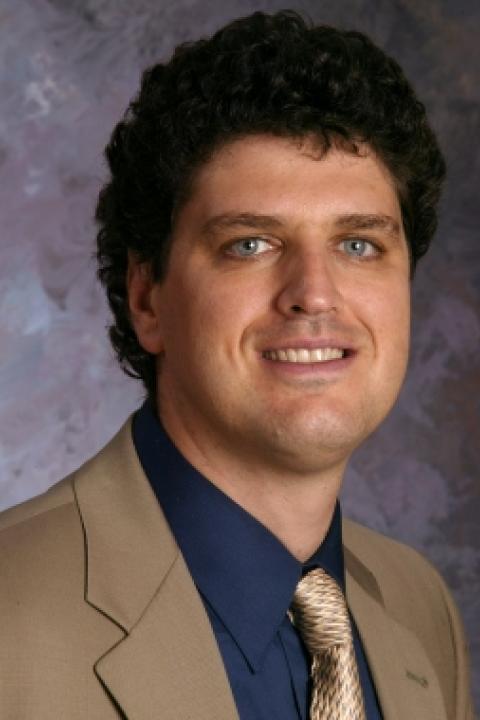
Mark Sheplak is a Professor at the University of Florida, holding joint appointments in the Department of Electrical & Computer Engineering and the Department of Mechanical & Aerospace Engineering within the Herbert Wertheim College of Engineering. He leads the Interdisciplinary Microsystems Group (IMG), focusing on MEMS-based sensor and actuator development for aerospace and fluid dynamics applications. His research emphasizes high-performance instrumentation in harsh environments, including hypersonic flow measurement, aeroacoustic noise localization, and wall shear stress sensing. Education: He earned his BS, MS, and PhD in Mechanical Engineering from Syracuse University (1989, 1992, 1995). Postdoctoral work at MIT (1995–1998) preceded his role at UF since 1998. He is affiliated with centers like the Multi-functional Integrated System Technology (MIST) and Florida Center for Advanced Aero-Propulsion (FCAAP). Research Highlights: His group develops MEMS sensors for pressure, shear stress, and dynamic flow characterization, with applications in aerospace, energy, and automotive sectors. Notable projects include the High Operational Temperature Sensors (HOTS) program (DARPA-funded) and the AEROMORPH Center of Excellence for morphing aerospace systems. He holds awards such as AIAA Associate Fellow and Acoustical Society of America Fellow. Grants & Collaborations: IMG collaborates with institutions like Sandia National Labs and Florida State University. Recent projects include sapphire-based pressure sensors and flush-mount microphones for aircraft arrays. His work spans academic-industry partnerships, including the start-up IC² for commercializing wall shear stress sensors. Students & Advising: He has advised numerous PhD students, including Austin Vera (NDSEG Fellow), Brett Freidkes (NSF GRFP), and Haocheng Zhou. IMG also fosters undergraduate research, exemplified by Alexander Reilly’s AIAA Region II award. Labs & Teams: IMG operates advanced fabrication and testing facilities, emphasizing interdisciplinary research. Key labs include the MEMS fabrication lab and wind tunnel facilities for sensor validation.