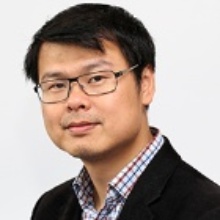
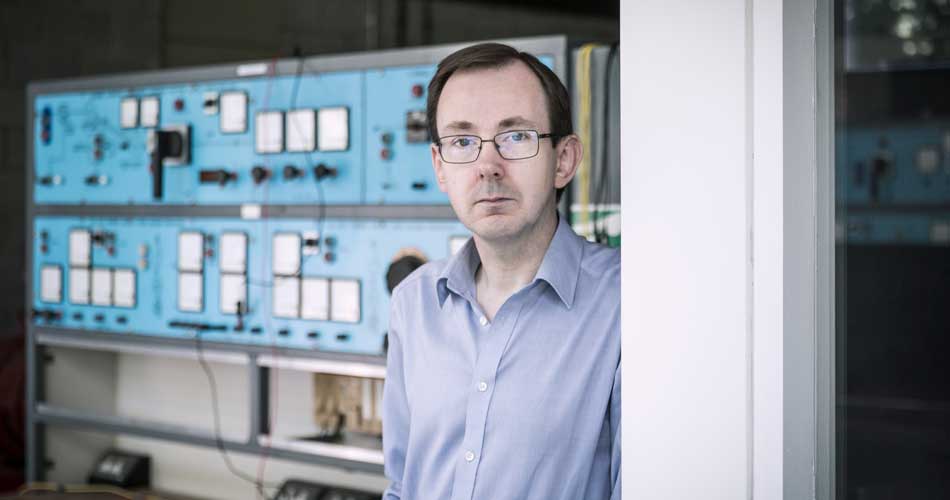
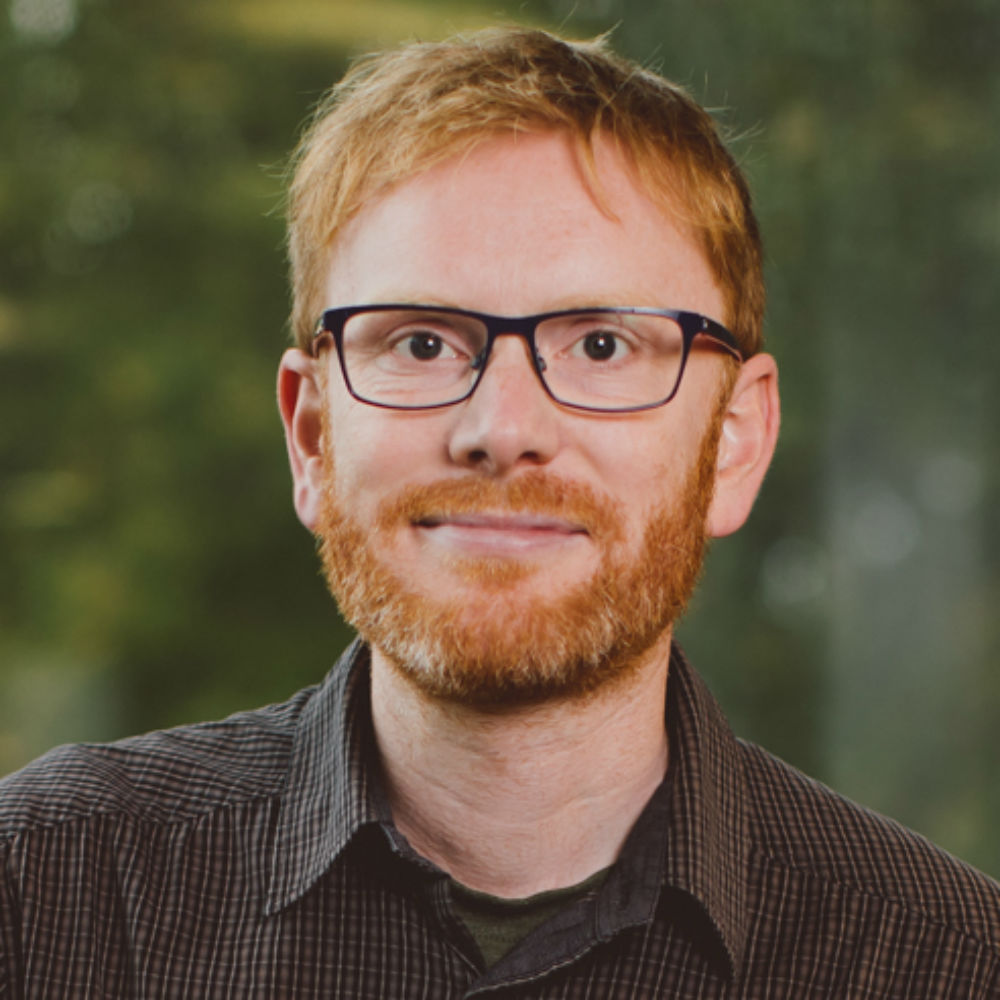
Alain Bensoussan is the Lars Magnus Ericsson Chair Professor of Operations Management at the University of Texas at Dallas and Director of the International Center for Decision and Risk Analysis. His work spans stochastic control, mathematical finance, and mean field games. He holds a PhD from the University of Paris (1969) and advanced degrees from École Polytechnique (1962) and École Nationale de la Statistique et de l’Administration Economique (1965). Research interests include inventory control under uncertainty, risk management frameworks, and applications of mean field theory to control problems. Recent work focuses on stochastic control in financial systems, machine learning integration with control theory, and optimal policies in dynamic environments. Notable awards: Legion d’Honneur (Officier), NASA Distinguished Public Service Medal, Member of French Academies of Sciences/Technology, and SIAM Charter Fellowship. Key grants: NSF-funded projects on mean field control theory (2016–2019) and mean field games (2023–present). Teaches advanced courses: Game Theory, Risk Analysis, Stochastic Dynamic Programming. His 2023–2025 publications emphasize theoretical advancements in stochastic control, mean field games, and machine learning applications. Ongoing work addresses infrastructure investment, wind farm optimization, and multi-agent system dynamics.
Prof. Dr. Po Wen Cheng is a Professor and Head of the Stuttgart Chair of Wind Energy (SWE) at the Institute of Aircraft Design, University of Stuttgart. His research focuses on wind energy systems, including floating offshore wind turbines, lidar applications in wind farm control, and structural dynamics of renewable energy systems. He leads interdisciplinary projects addressing challenges in mooring systems, aeroelastic analysis, and noise mitigation. Key areas of expertise include aerodynamic load optimization, lidar-assisted control strategies, and numerical modeling of wind farm interactions. His work integrates advanced machine learning techniques for predictive maintenance and performance enhancement. Cheng collaborates with international institutions and participates in high-profile wind energy initiatives like the Alpha Ventus offshore wind farm study. Teaching: Courses on Wind Turbine Design and Wind Energy Utilization Research Labs: Stuttgart Chair of Wind Energy, Institute of Aircraft Design Recent Projects: Scaled Flight Demonstrator e-Genius-Mod, Passively Self-Adjusting Floating Wind Farms, Lidar-Based Virtual Sensors His research emphasizes sustainable energy transitions, with particular attention to offshore wind infrastructure and turbulence mitigation in complex environments.
Dr Damian Flynn is an Associate Professor at the UCD School of Electrical and Electronic Engineering , University College Dublin. His research focuses on the challenges of integrating renewable energy sources like wind and solar into power systems while maintaining stability and reliability. Research Themes: High renewable penetration, grid-forming converters, energy storage, and smart grid technologies. Collaborations: EirGrid, Glen Dimplex, Electricite de France, and General Electric. Dr Flynn’s work addresses the technical and economic feasibility of transitioning to 100% renewable energy systems, particularly for islanded grids like Ireland’s. His models explore scenarios for 2030–2050, emphasizing the need for adaptive infrastructure and policy frameworks. Key challenges include balancing unpredictable renewable supply with demand, managing grid congestion, and leveraging technologies such as electric vehicles and blockchain for system stability. Recent Publications highlight trends in grid-forming converter design, renewable curtailment reduction, and multi-carrier energy systems. He investigates solutions like transportable storage and dynamic line rating to enhance grid flexibility. Scientific Awards: Smurfit Kappa Newman Fellowship Award.
Dr. Gregor Giebel is a senior researcher and Head of Section in the Department of Wind and Energy Systems at the Technical University of Denmark (DTU), specifically within the Renewable Plants in Energy Systems group. He is actively engaged in advancing wind energy technologies and their integration into modern power systems. His leadership extends to major international and EU-funded initiatives, including IEA Wind Task 51 and the NEST Facilities research infrastructure. Gregor Giebel's research focuses on short-term wind power forecasting , large-scale integration of wind into electricity grids , wind farm flow control , and condition monitoring of wind turbines . His work is instrumental in improving the reliability and efficiency of renewable energy systems. He has made significant contributions to international standardization through the IEC and is a key figure in global wind energy research coordination. The recent publications highlight a strong trend toward weather-driven energy forecasting , modeling wind farm impacts on weather systems , and developing national research infrastructures for energy transition . These works reflect a deep integration of meteorology, energy systems engineering, and policy-relevant research. His scientific recognition includes: Poster Award at the WindEurope Offshore Conference, Copenhagen 2019 Poster Award on WindEurope Conference, Copenhagen 2021 Dr. Giebel is a Principal Investigator (PI) on multiple high-impact projects such as NEST Facilities , IEA Wind Task 51 , and GreenHyScale . He is renowned for his success in research funding, with a proposal success rate exceeding 50%. He has led the EU Marie Curie Initial Training Network Train 2 Wind and previously headed the FarmConners EU Coordination Action on wind farm control. He leads and is deeply involved in the NEST Facilities —a distributed Danish research infrastructure for energy transition—and contributes significantly to the Weather2X and GreenHyScale projects, which aim to advance green hydrogen production and weather forecasting for energy systems.
Associate Professor Nesimi Ertugrul is affiliated with the School of Electrical and Mechanical Engineering and the Department of Electrical and Electronic Engineering at The University of Adelaide. His research focuses on renewable energy systems, power electronics, energy storage technologies, and grid modernization. He has contributed extensively to advancing offshore wind and wave energy integration, battery management systems, and wide-bandgap device applications in mining electrification. His work emphasizes techno-economic assessments of hybrid renewable systems, optimal design of energy storage solutions, and improving grid stability with high renewable penetration. Key areas include vanadium redox flow battery optimization, thermal management of energy systems, and offshore wind resource mapping in Australia. Recent publications highlight innovations in wave energy converters, hybrid offshore energy systems, and the role of battery storage in smart grids. His research bridges theoretical advancements with practical applications, addressing challenges in energy variability, cost efficiency, and system reliability.
Huadong Yao is an Assistant Professor at the Department of Marine Engineering, Chalmers University of Technology. His research spans renewable energy , fluid-structure interaction (FSI) , and transportation systems , with a focus on offshore wind farms, wave energy, and aero/hydroacoustics. Multi-University Collaboration : Guest professorships at international institutions Leadership Roles : Coordinator of Horizon 2020 projects (e.g., IVANHOE) and guest editor for journals Key Organizations : Member of AIAA, SAE International, RINA, ICNMT, and ICES Working Group on Offshore Renewable Energy His research integrates CFD and FSI coding (OpenFOAM, in-house codes) with turbulence modeling (LES, SNGR) to address problems in marine hydrodynamics (e.g., rim-driven thrusters, wind-powered ship propulsion) and terrestrial transportation (high-speed train aerodynamics, urban air mobility). Recent work explores biomechanics (whiplash injury hydrodynamics) and battery cooling systems for electric vehicles. Current projects focus on: Optimization of wave energy converter farms (hexagon layouts, mooring fatigue) Hubless rim-driven thruster design (gap geometry, concave cavities) Hydrographic impacts of offshore wind turbines on marine environments Urban air mobility (UAM) aerodynamics Multidisciplinary Design Optimization (MDO) using machine learning He collaborates with institutions like AIAA, SAE, and ICES, and has received funding from Horizon 2020 and Swedish national agencies.
Dr. Eoin O'Gorman is a Senior Lecturer in the School of Life Sciences at the University of Essex. His research investigates the impacts of global change across multiple levels of ecological organisation, from individual metabolism to ecosystem processes, with a particular focus on food web dynamics and body size as a functional trait. BSc, University College Cork (2004) PhD, University College Cork (2009) Current research projects include: Warming effects on trophic interactions Anthropogenic stressors in marine and freshwater systems Body size scaling in ecological networks Food web stability under climate change Recent work demonstrates how warming alters plankton body-size distributions (2025), simplifies freshwater food webs through multiple stressors (2025), and reduces trophic diversity in high-latitude ecosystems (2024). His studies span marine, freshwater, and terrestrial habitats, seeking universal responses to environmental change. Current grants include: 2024 WebDNA: Food web reconstruction through environmental DNA analysis (Leverhulme Trust) 2023 Predicting Impacts of Global Environmental Change on Ecological Networks (NERC) 2022 ORBIT: Offshore Renewables and Benthic Communities (NERC) Supervises PhD candidates studying: Zelin Chen: Offshore structures' impacts on North Sea biodiversity Patrick Eskuche Keith: Southern Ocean food web dynamics Anamika Poyil: Environmental biology of marine communities
Christopher Vogel is a Research Fellow at New College and a Senior Research Associate in the Department of Engineering Science at the University of Oxford. He holds a first-class BE(Hons) in Engineering Science from the University of Auckland and completed his DPhil at Oxford under the Oxford Martin School’s Programme on Globalising Tidal Power Generation. His work focuses on advancing renewable energy technologies, particularly in tidal and wind energy systems. His research interests include fluid dynamics of tidal turbines, aerodynamic performance optimization, blade design under erosion, and large-scale renewable energy array modeling. He has contributed to projects like the Tidal Energy Research Group and the FastBlade facility for full-scale tidal blade testing. Vogel’s work integrates computational fluid dynamics (CFD), experimental testing, and multi-scale analytical models to address challenges in energy extraction efficiency, structural durability, and system reliability. Recent publications highlight advancements in actuator line methods for turbine wake prediction, uncertainty quantification in blade-element momentum theory, and dynamic loading analysis of tidal arrays. His studies often bridge theory and application, emphasizing practical solutions for marine and wind energy deployments. Collaborations include the Tidal Benchmarking Project and investigations into hybrid systems combining wave energy converters with breakwaters. Vogel’s interdisciplinary approach addresses both technical and environmental dimensions of sustainable energy systems.
Professor Eigil Kaas is affiliated with the Niels Bohr Institute at the University of Copenhagen . His work spans climate dynamics , numerical weather prediction (NWP) , and atmospheric modeling . As former Section Head of Climate and Computational Geophysics , he leads research on climate-chemistry coupling and sea ice impacts. Education : MSc (1987) and PhD (1993) in Meteorology from University of Copenhagen Research Focus : Climate dynamics and physics Numerical methods in atmospheric models Machine learning for weather prediction Arctic sea ice-climate interactions Thunderstorm electricity and radiation Coupled atmosphere-ocean modeling Article Trends : Recent work combines neural networks with radiative transfer optimization Focus on storm dynamics and gamma-ray flashes Extreme precipitation modeling under climate change Pioneering tidal flow studies in Faroe Island fjords Teaching Legacy : Instructor of Atmospheric Physics and Dynamical Meteorology courses Developed zonally averaged climate model for educational use Mentored 12 PhD/MSc students with DMI/ECMWF collaborations Professional Roles : Chairman of BFI Group 28 (Geosciences & Climate) Scientific Advisory Committee member at ECMWF Project lead in EU ENSEMBLES and PEGASOS initiatives
Luciano Castillo is a Professor at the School of Mechanical Engineering within the College of Engineering at Purdue University . His research spans turbulent boundary layers, wind energy, renewable energy integration, and bio-inspired engineering, with a focus on societal impacts such as energy-water nexus and social equality. Turbulent Flow Modeling with emphasis on initial conditions and micro-surfaces Wind Energy optimization and boundary layer interactions Renewable Energy Integration with water and thermal storage Biomedical Engineering applications in respiratory flow studies His recent publications explore robotics for classroom safety, mangrove-inspired erosion prevention, and renewable-powered desalination. Awards include the Alumni Distinguished Career Award (2023), ASME Fellow (2013), and multiple best paper awards. He leads initiatives like the US-Mexico Energy Corridor and contributes to interdisciplinary labs focusing on energy and societal challenges.
Vladimir V. Terzija is a prominent researcher specializing in power systems engineering with a focus on smart grid technologies, synchronized measurement systems, and power system protection. His extensive publication record spans over two decades, demonstrating continuous contributions to the field of electrical power engineering across numerous IEEE journals and conferences. Terzija's research primarily centers on advanced power system monitoring, protection, and control methodologies. His work has significantly contributed to the development of synchronized measurement technology applications, fault analysis algorithms, and state estimation techniques for modern power systems. He has pioneered approaches for wide-area monitoring systems, transmission line fault analysis, and integrating renewable energy resources into power grids while maintaining stability and reliability. His research spans from fundamental power system theory to practical implementations addressing contemporary challenges in grid operation. Analysis of his recent publications reveals a strong focus on integrating artificial intelligence and machine learning techniques into power system applications, particularly for condition monitoring, anomaly detection, and predictive maintenance. His work increasingly addresses challenges posed by the energy transition, including grid stability with high renewable penetration, multi-energy system integration, and advanced control strategies for low-inertia power systems. The interdisciplinary nature of his research connects power engineering with data science, optimization theory, and cybersecurity. Throughout his career, Terzija has collaborated extensively with researchers across Europe and internationally, as evidenced by his numerous co-authored publications with institutions worldwide. His work appears consistently in top-tier IEEE publications, indicating recognition by the power engineering community. While specific awards aren't documented in the available publication records, his sustained research productivity and influence in the field suggest significant professional recognition. Terzija has supervised numerous research projects focused on power system monitoring and control, with particular emphasis on practical implementations that bridge theoretical developments with real-world grid applications. His work on WAMS (Wide Area Monitoring Systems), fault location algorithms, and state estimation techniques has contributed to advancing grid operational capabilities. The research trajectory shows increasing focus on addressing challenges associated with renewable energy integration, grid digitalization, and maintaining stability in modern power systems. His research group appears to focus on developing advanced monitoring and control systems for power networks, with particular expertise in synchrophasor technology applications. The collaborative nature of his work suggests involvement in international research consortia addressing contemporary power system challenges, particularly those related to grid stability in systems with high renewable penetration and the development of intelligent monitoring solutions for power infrastructure.
Dr Xiandong Ma is a Reader in Power and Energy Systems at Lancaster University's School of Engineering, where he has been a faculty member since December 2008. His research focuses on intelligent condition monitoring and fault diagnosis of power systems, with particular expertise in wind energy systems and smart grid technologies. His educational background includes: BEng in Electrical Engineering from Jiangsu University (1986) MSc in Power Systems and Automation from Nanjing Automation Research Institute (1989) PhD in Partial Discharge based High-voltage Plant Condition Monitoring from Glasgow Caledonian University (2002) Dr Ma's research spans intelligent condition monitoring and fault diagnosis/prognosis of wind power systems and electrical assets, condition-based operations and maintenance of power and energy systems, modeling, optimization, and control of smart/micro grids with renewable energy resources, power conversion and renewable energy integration, and associated machine learning and AI technologies and digital twin solutions. His work bridges theoretical advances with practical engineering applications in the renewable energy sector. His recent publications demonstrate a strong focus on quantum machine learning applications for wind turbine monitoring, electric vehicle-grid integration challenges, wave energy conversion systems, and nuclear fuel inspection technologies. The research shows a clear trajectory toward more sophisticated AI-driven solutions for energy systems, with increasing emphasis on multi-physics modeling and cross-domain applications. Dr Ma has received several prestigious recognitions: Chartered Engineer Fellow of the Institution of Engineering and Technology (FIET) Fellow of the Higher Education Academy (FHEA) Member of EPSRC Peer Review College KTP Fellowship awarded by University of Technology Sydney (2018) Ranked in the world's top 2% scientists by Stanford University He actively supervises numerous PhD students and postdoctoral researchers, with current projects including the Leverhulme Trust-funded "Self-Aware Power Networks: Autonomous Operation at Scale" and several EPSRC-funded initiatives. Dr Ma has secured significant research funding and collaborates extensively with industry partners to translate research into practical applications. Dr Ma leads research within Lancaster's Energy research group, focusing on the integration of advanced sensing, AI, and control techniques for next-generation power and energy systems. His team works closely with industrial partners including ALSTOM Power and various renewable energy companies to develop innovative solutions for real-world energy challenges.
Delibra Giovanni is an Associate Professor at Sapienza University of Rome, specializing in aerodynamics, aeroacoustics, and renewable energy systems. His research focuses on optimizing turbomachinery performance, including axial fans, wind turbines, and hydrogen storage systems. He employs advanced computational fluid dynamics (CFD) and machine learning techniques to address challenges in renewable energy integration, thermal management, and noise reduction. Key research areas include: Wind energy systems and offshore wind farm design Hydrogen storage and safety in green energy applications Aeroacoustic control in industrial fans and turbines CFD-based optimization of heat exchangers and cooling systems Recent work emphasizes the integration of photovoltaic and biomass systems in renewable energy communities, as well as experimental validation of wave energy turbines. His publications highlight innovations in fan blade design, leakage modeling, and multi-objective optimization frameworks for sustainable energy infrastructure. Collaborations involve both academic institutions and industry partners, focusing on real-world applications such as tunnel ventilation systems and Mediterranean island energy solutions. Giovanni's contributions bridge theoretical modeling with practical engineering challenges in the transition to clean energy.
Hakan Ergun serves as an Associate Professor at KU Leuven's Faculty of Engineering Science within the Department of Electrical Engineering (ESAT). He leads the Subdivisie EnergyVille Electa - Ergun and holds key roles in EnergyVille initiatives, including membership in the Division EnergyVille and the Council of the Faculty of Engineering Science. His research focuses on power systems engineering with specialization in HVDC grid technology, renewable energy integration, and stochastic optimization. Current projects include predictive maintenance for wind farms, congestion management for offshore HVDC grids, and development of hybrid AC/DC grid software tools. His work addresses critical challenges in grid resilience, uncertainty modeling, and multi-national offshore grid coordination. Recent publications demonstrate strong trends in hybrid AC/DC grid optimization under uncertainty, with emphasis on stochastic programming, polynomial chaos expansion, and risk-based operational models. Key themes include offshore grid protection, frequency stability with energy storage, and spatio-temporal variability in power system planning. Ergun actively supervises doctoral candidates including K. Phillips and C.K. Jat. His research portfolio includes significant EU-funded projects such as CROCODILE (Cross-border Coordination of Offshore Grids) and advanced HVDC grid development initiatives with multi-year funding through 2028-2029. He directs the EnergyVille Electa subdivision focused on electrical energy systems applications, collaborating with industry partners on real-world grid implementation challenges. Current work emphasizes practical solutions for multi-GW offshore energy hubs and resilient power systems leveraging HVDC transmission flexibility.
Armin Zare is an Assistant Professor at the University of Texas at Dallas in the Department of Mechanical Engineering , affiliated with the Center for Wind Energy . He obtained his PhD in Electrical Engineering from the University of Minnesota (2016) and previously held a postdoctoral position at the University of Southern California. Education : PhD (2016), MS (2016) in Electrical Engineering from University of Minnesota; BS (2010) in Electrical Engineering from Sharif University of Technology Research Interests : Modeling, dynamics, and control of large-scale and distributed systems; optimization; dynamics and control of complex fluid flows; renewable energy generation. His work focuses on stochastic modeling of turbulent flows and wind farm dynamics using control theory. Recent Publications highlight advancements in wind farm turbulence modeling, stochastic receptivity analysis, and covariance completion algorithms, reflecting his expertise at the intersection of control systems and fluid dynamics. Scientific Awards Young Investigator Program Award, Air Force Office of Scientific Research (2023) Doctoral Dissertation Fellowship, University of Minnesota (2015) Best Student Paper Award Finalist, American Control Conference (2014) Advisees include PhD students working on topics like wall turbulence modeling, wind farm forecasting, and stochastic dynamical systems, with several former students having completed theses on wind turbine wake modeling and fluid flow uncertainties.