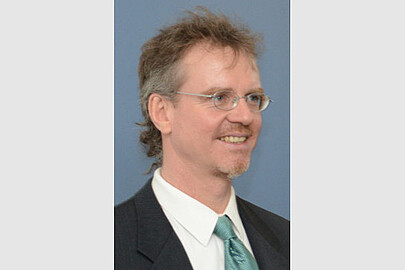
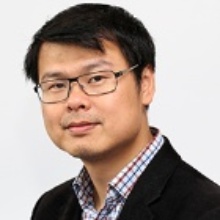
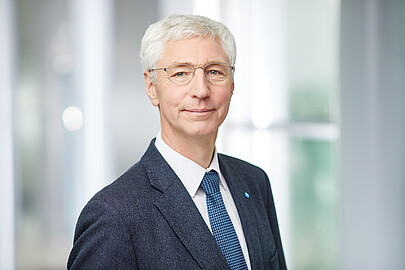
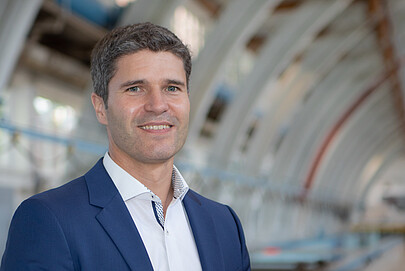
Prof. Dr. Christian Breitsamter is a Professor at the Technische Universität München (TUM), leading the Chair of Aerodynamics and Fluid Mechanics within the TUM School of Engineering and Design. He has held this position since 2007 and has been a member of key committees such as the ICAS Programme Committee and STAB-Programmleitung. His research focuses on aerodynamics of aircraft and rotorcraft configurations, including vortex dynamics, aeroelasticity, and fluid-structure interaction. Education: PhD in Aerodynamics (1997) Master’s in Aerospace Engineering (1989) Research Interests: Prof. Breitsamter’s work spans experimental and numerical studies of high-agility aircraft, helicopter aerodynamics, and advanced wing designs. Key areas include leading-edge vortices, gust load mitigation using flexible wings, and flow control techniques. His group investigates cutting-edge topics like deep learning for buffet prediction and hybrid neural networks for aerodynamic modeling. Awards: Willy Messerschmitt Preis (1999) AIAA Associate Fellow (2007) Advising & Grants: While specific student names are not listed, his research involves collaborative projects with industry partners (e.g., RACER Compound Helicopter) and EU initiatives like the FURADO program. His team contributes to the NFDI4ING infrastructure for engineering data. Labs/Teams: Active in the Aerodynamics Wind Tunnel facilities (Windkanäle A/B/C) and leads the SAGITTA flying wing demonstrator project. His group also explores membrane wings and elasto-flexible morphing technologies.
Matthias Becker is a Professor at the Institute for Practical Computer Science within the Faculty of Electrical Engineering and Computer Science at Leibniz University Hannover, where he has been a core member of the Human-Computer Interaction group since 2019. He serves as Internship Coordinator for Computer Science and Computer Engineering and holds key roles in the Computer Science Examination Board and Selection Committee, actively shaping academic governance and student development. His academic journey began with PhD studies at the University of Bremen (1996-2000) supported by a DFG grant, followed by a postdoctoral permanent position at Leibniz University Hannover (2000-2019), an Associated Assistant Professor role at École des Mines de Nantes (2000), and a Habilitation in Computer Science in 2013. This foundation enabled his transition to a full professorship in 2019. Becker's research spans Human-Computer Interaction, Simulation and Modeling, and Bio-inspired Computing, with applications in agriculture, renewable energy, and manufacturing. His work integrates distributed systems, optimization algorithms, and wireless sensor networks to solve complex real-world problems, such as greenhouse monitoring, wind farm logistics, and tire noise reduction. Recent publications reveal a strategic focus on practical validation of simulation models and cross-domain applications of nature-inspired algorithms. His 15 most recent publications (2018-2024) demonstrate consistent innovation in applying simulation techniques to offshore wind farm installation, agricultural pest management, and sports science. These works emphasize real-world validation, collaborative problem-solving, and the development of domain-specific optimization frameworks that bridge theoretical algorithms and industrial implementation. As Internship Coordinator, Becker facilitates critical industry-academia connections for students, while his examination board responsibilities ensure rigorous academic standards. His leadership in the Human-Computer Interaction group drives research on interactive systems for agriculture, energy, and health, with particular emphasis on user-centered design in complex operational environments like wind farm logistics and greenhouse automation.
Vladimir V. Terzija is a prominent researcher specializing in power systems engineering with a focus on smart grid technologies, synchronized measurement systems, and power system protection. His extensive publication record spans over two decades, demonstrating continuous contributions to the field of electrical power engineering across numerous IEEE journals and conferences. Terzija's research primarily centers on advanced power system monitoring, protection, and control methodologies. His work has significantly contributed to the development of synchronized measurement technology applications, fault analysis algorithms, and state estimation techniques for modern power systems. He has pioneered approaches for wide-area monitoring systems, transmission line fault analysis, and integrating renewable energy resources into power grids while maintaining stability and reliability. His research spans from fundamental power system theory to practical implementations addressing contemporary challenges in grid operation. Analysis of his recent publications reveals a strong focus on integrating artificial intelligence and machine learning techniques into power system applications, particularly for condition monitoring, anomaly detection, and predictive maintenance. His work increasingly addresses challenges posed by the energy transition, including grid stability with high renewable penetration, multi-energy system integration, and advanced control strategies for low-inertia power systems. The interdisciplinary nature of his research connects power engineering with data science, optimization theory, and cybersecurity. Throughout his career, Terzija has collaborated extensively with researchers across Europe and internationally, as evidenced by his numerous co-authored publications with institutions worldwide. His work appears consistently in top-tier IEEE publications, indicating recognition by the power engineering community. While specific awards aren't documented in the available publication records, his sustained research productivity and influence in the field suggest significant professional recognition. Terzija has supervised numerous research projects focused on power system monitoring and control, with particular emphasis on practical implementations that bridge theoretical developments with real-world grid applications. His work on WAMS (Wide Area Monitoring Systems), fault location algorithms, and state estimation techniques has contributed to advancing grid operational capabilities. The research trajectory shows increasing focus on addressing challenges associated with renewable energy integration, grid digitalization, and maintaining stability in modern power systems. His research group appears to focus on developing advanced monitoring and control systems for power networks, with particular expertise in synchrophasor technology applications. The collaborative nature of his work suggests involvement in international research consortia addressing contemporary power system challenges, particularly those related to grid stability in systems with high renewable penetration and the development of intelligent monitoring solutions for power infrastructure.
Prof. Dr. Po Wen Cheng is a Professor and Head of the Stuttgart Chair of Wind Energy (SWE) at the Institute of Aircraft Design, University of Stuttgart. His research focuses on wind energy systems, including floating offshore wind turbines, lidar applications in wind farm control, and structural dynamics of renewable energy systems. He leads interdisciplinary projects addressing challenges in mooring systems, aeroelastic analysis, and noise mitigation. Key areas of expertise include aerodynamic load optimization, lidar-assisted control strategies, and numerical modeling of wind farm interactions. His work integrates advanced machine learning techniques for predictive maintenance and performance enhancement. Cheng collaborates with international institutions and participates in high-profile wind energy initiatives like the Alpha Ventus offshore wind farm study. Teaching: Courses on Wind Turbine Design and Wind Energy Utilization Research Labs: Stuttgart Chair of Wind Energy, Institute of Aircraft Design Recent Projects: Scaled Flight Demonstrator e-Genius-Mod, Passively Self-Adjusting Floating Wind Farms, Lidar-Based Virtual Sensors His research emphasizes sustainable energy transitions, with particular attention to offshore wind infrastructure and turbulence mitigation in complex environments.
Christopher Conrad is a Professor of Geoecology at Martin Luther University Halle-Wittenberg, where he has served since 2019. His academic journey includes previous positions as Acting Professor at the same university (2017-2019), Junior Professor for Geographical Remote Sensing at Julius-Maximilians-University Würzburg (2011-2017), and research roles at the German Remote Sensing Data Center. He completed his habilitation on remote sensing applications for sustainable land/water use in the Aral Sea Basin in 2017 and earned his doctorate in 2006. Conrad's research integrates remote sensing, geospatial analysis, and landscape ecology to address sustainability challenges. His primary focus areas include: Agricultural landscape dynamics and land use systems Climate change impacts on water resources and migration patterns Advanced remote sensing techniques for environmental monitoring Ecosystem services assessment in vulnerable regions He leads multiple projects such as CawaGreen , MIGRAWARE , and AgriSens Demmin 4.0 focused on climate adaptation and agricultural innovation. His recent publications demonstrate strong thematic coherence around satellite-based environmental monitoring, with 63% focused on remote sensing applications, 25% on climate-water-agriculture nexus, and 12% on socio-ecological systems. The works predominantly utilize Sentinel, MODIS, and RapidEye data with machine learning integration. Conrad coordinates research teams and landscape laboratories investigating hydrological processes, soil erosion, and crop monitoring. His fieldwork spans Central Asia (Aral Sea Basin), West Africa, and European agricultural systems, emphasizing practical solutions for sustainable land management.
Prof. Dr. Christian Diller is a Professor at the Justus Liebig University Giessen, where he leads the Spatial Planning and Urban Geography Division within the Institute of Geography. He serves as Chairman of the Bachelor Examination Board in Geography and is responsible for B.Sc. internships and thesis supervision. His research spans multiple critical areas of spatial planning and urban geography with significant funding from DFG, BMBF, and other agencies. His research focuses on six interconnected areas: climate resilience and critical infrastructure planning; urban geography and gentrification processes; settlement geography and spatial development patterns; regional development and governance; spatial evaluation research; and planning theory and methodology. His current work examines how spatial planning can address climate change impacts, particularly regarding critical infrastructure vulnerability, and investigates state-led gentrification processes in German cities through large-scale empirical analysis. Professor Diller leads multiple major research projects including MAPROLEIT (Material and procedural models of spatial planning), State-Led Gentrification research, KritIKlima (critical infrastructure and climate change), and VALPLAN (values in planning processes). His work combines theoretical development with practical applications, often involving multi-method approaches that bridge quantitative and qualitative techniques. His research has significant policy implications for urban development, climate adaptation, and regional planning in Germany and beyond. The findings contribute to strengthening municipal capacities for climate resilience and improving planning practices through evidence-based evaluation of planning instruments and methods. Professor Diller supervises numerous doctoral candidates and has completed supervision of several PhD theses on topics ranging from wind energy planning to urban development instruments. His collaborative approach is evident in his extensive network of research partnerships across German universities and research institutions. Lead researcher on over 15 major research projects since 2009 Principal investigator for multiple DFG-funded projects Supervisor of 16+ doctoral candidates (completed and ongoing) Collaborator with researchers across Germany and internationally
Prof. Jörg Seume is the Executive Director of the Institute of Turbomachinery and Fluid Dynamics at Leibniz University Hannover (Faculty of Mechanical Engineering). He also serves as Spokesperson of the Collaborative Research Centre (CRC) 871 'Regeneration of Complex Capital Goods' and holds roles in the Leibniz Research Centre Energy 2050. His research focuses on turbomachinery, fluid dynamics, gas turbine technology, and aerodynamics. Education details are not explicitly provided, but his academic and professional trajectory indicates expertise in mechanical engineering and fluid dynamics. Research interests include compressor and turbine design, aeroelasticity, aeroacoustics, and energy systems (e.g., PEM fuel cells, organic Rankine cycles). Recent publications (2023-2024) emphasize numerical simulations of turbine and compressor performance, aeroacoustic scaling, labyrinth seal dynamics, and innovations in hydrogen and fuel cell systems. He leads experimental and computational projects, including wind tunnel tests and fluid dynamics modeling. Notable projects include the WiValdi wind farm research initiative and the development of electric turbochargers for automotive applications. His work bridges academic research with industrial applications in energy and propulsion systems.
Tina Kabelitz is a Researcher at the Leibniz-Institut für Agrartechnik und Bioökonomie e.V. (ATB) , leading the working group Infections and AMR in Farm Animals since September 2021. Her work integrates sensor technology, digitalization, and artificial intelligence to address antimicrobial resistance (AMR) in livestock systems through a One Health approach. Education : PhD in Epigenetics of Plants (University of Potsdam, 2011-2015) MSc Molecular and Cellular Biology (University of Potsdam, 2009-2011) BSc Molecular Biology/Physiology (University of Potsdam, 2006-2009) Her research focuses on antimicrobial resistance dynamics in livestock, particularly through environmental pathways in pig and poultry farming. She investigates resilient housing design for biosecurity and animal welfare, microbiome changes in manure storage , and machine learning-based mastitis risk assessment using multisensor systems. Her projects include LeibnizLabPP (pandemic preparedness), AirBarn (bioaerosol AMR transmission), ENVIRE (AMR control in chicken systems), and AMR-PIG (AMR spread mechanisms). Recent publications analyze AMR gene dynamics in manure systems (2025), machine learning applications for mastitis prediction (2025), and environmental impacts of dairy farming mitigation strategies (2024). Her work emphasizes systemic solutions like anaerobic digestion plants and slurry injection techniques to reduce emissions.
Thorsten Koch is a Professor for Software and Algorithms for Discrete Optimization at Technische Universität Berlin , with multiple leadership roles including Head of the Applied Algorithmic Intelligence Methods (A²IM) , Digital Data and Information for Society, Science, and Culture (D²IS²C) , Kooperativer Bibliotheksverbund Berlin-Brandenburg (KOBV) , and Forschungs- und Kompetenzzentrum Digitalisierung Berlin (digiS) . Based at Zuse Institute Berlin and affiliated with TU Berlin's Institute for Mathematics, he focuses on integrating mathematical optimization with high-performance computing and artificial intelligence to solve complex real-world problems. Research Pillars : Mathematical optimization algorithms Quantum computing applications AI/ML integration in decision systems Energy systems optimization Scientific software development Leadership Roles : Head of Applied Algorithmic Intelligence Methods (A²IM) Head of Digital Data & Information for Society, Science, and Culture (D²IS²C) Head of Kooperativer Bibliotheksverbund Berlin-Brandenburg (KOBV) Head of Forschungs- und Kompetenzzentrum Digitalisierung Berlin (digiS) Key Collaborations : Working with IBM Quantum on quantum optimization Collaborating across institutions for energy system modeling Developing open-source optimization tools like SCIP Contributing to digital library infrastructure Recent Research Trends : Quantum optimization benchmarking Machine learning-aided optimization Multi-objective decision frameworks Energy infrastructure optimization Adaptive algorithm design CO2 network modeling Impact : Advancing hybrid optimization methods Developing open-source tools for scientific computing Building digital infrastructures for libraries and research Exploring quantum-classical algorithm synergies
Prof. Arndt Hildebrandt is a faculty member at Leibniz University Hannover, affiliated with the Ludwig-Franzius-Institute within the Faculty of Civil Engineering and Geodesy. His research focuses on offshore engineering, hydraulic engineering, and structural dynamics, with a strong emphasis on wave-structure interactions, scour development, and renewable energy systems. He leads projects on offshore wind turbine foundations, wave energy converters, and environmental impact assessments. His work integrates experimental and numerical methods, often collaborating with industry partners like Cawthron Institute and Fraunhofer IWES. Key areas of research include hydrodynamic coefficients of marine structures, floating aquaculture systems, and probabilistic safety assessments for offshore megastructures. Projects such as 'BioSchWelle' explore ecological solutions for wave damping and biodiversity enhancement. He has extensive experience in coastal and hydraulic engineering, including studies on munitions drift in marine environments and scour patterns around offshore foundations. Prof. Hildebrandt contributes to collaborative initiatives like the DFG-funded SFB 1463, which develops integrated design methods for offshore megastructures. His publications span over two decades, addressing topics from wave energy converters to large-scale experimental modeling. Despite no listed awards, his contributions to offshore and environmental engineering are significant, with ongoing work on floating wind turbine operations and metocean data analysis in the German Bight.
Md. Ismail Hossain is an active academic researcher with a focus on Artificial Intelligence , Machine Learning , and Cybersecurity . His work spans both theoretical and applied domains, including Neural Network Pruning , Electric Vehicle Charging Systems , and Security Analysis of emerging technologies. Key Research Themes : Neural network optimization, deepfake detection, and energy systems integration Recent Trends : Articles from 2022-2025 show increasing focus on AI model efficiency and security frameworks
Mohamed A. Ahmed is a researcher affiliated with Central Michigan University, School of Engineering & Technology , with additional collaborations across institutions like Ain Shams University, Memorial University of Newfoundland, and Prince Sultan University. His work spans interdisciplinary domains including Internet of Things (IoT) Smart Grids Renewable Energy Systems Machine Learning Recent research focuses on IoT platforms for smart energy management , including electric vehicle charging infrastructure, remote elderly care systems, and large-scale wind turbine monitoring. He has contributed to wireless network architectures for cyber-physical energy systems and developed fuzzy logic algorithms for EV charging prioritization. Publications highlight expertise in time-series forecasting for energy demand, clustering algorithms for smart grid planning, and data aggregation techniques in wind energy applications. Collaborations frequently involve researchers such as Young-Chon Kim, Ali Mohamed Eltamaly, and José Luis Gallardo.
Carlo Bottasso is a Professor at the Technical University of Munich (TUM), with contact details including email carlo.bottasso@tum.de and telephone +49 (89) 289-16680. His professional homepage resides at the TUM Wind Energy Institute: https://www.wind.mw.tum.de . His research centers on Wind Energy systems, specifically turbine aerodynamics, structural dynamics, and renewable energy integration. This work spans the disciplines of Aerospace Engineering and Sustainable Power Generation, focusing on optimizing wind turbine performance and reliability through advanced computational modeling. Professor Bottasso leads research activities at the Wind Energy Institute, where his team develops cutting-edge methodologies for wind farm design and control systems. Current projects emphasize grid integration of wind power and next-generation turbine technologies for offshore applications.
Sabrina Hempel is a Researcher at the Leibniz Institute for Agricultural Engineering and Bioeconomy (ATB) in Potsdam, Germany. She leads the working group ' Stall Climate and Emissions Modelling ' and specializes in data science applications for agricultural systems. Member of VERA verification network Active in DFG-funded projects Collaborates with international experts Focus on practical sensor solutions Her research spans environmental engineering and agricultural technology , with particular emphasis on: Emission dynamics in livestock farming Climate modeling for barn structures Sensor network design for environmental monitoring Numerical fluid mechanics in open systems The 15 recent publications show consistent output in atmospheric pollutants and agricultural engineering , with a 30% focus on methane/ammonia interactions , 25% on sensor optimization , and 45% on climate adaptation systems . Key techniques include Fourier-transform infrared spectroscopy and computational fluid dynamics modeling. Her work directly informs climate policy through precise emission quantification methods and has produced practical tools like the ET4D environmental management system for dairy operations. Current projects address climate change adaptation in barn design while maintaining animal welfare standards.
Dr. Philipp Sebastian Sommer is a Research Software Engineer at the Helmholtz Coastal Data Center (HCDC) within Helmholtz-Zentrum Hereon. With a PhD in Physics from the University of Hamburg (2013) and a Master in Integrated Climate System Sciences (2012), he specializes in climate modeling, open source software development, and paleoclimatic data analysis. Current Affiliation: Helmholtz-Zentrum Hereon (2019–present) Past Roles: University of Lausanne (2015–2019), Max Planck Institute (PhD) Education: PhD in Physics (University of Hamburg), Master in Integrated Climate System Sciences, Bachelor in Physics His research interests span big data visualization, numerical modeling, and open science infrastructure. He develops tools like psyplot for interactive climate data visualization, straditize for digitizing stratigraphic diagrams, and IUCm for climate-smart urban planning. His work emphasizes robust software engineering, reproducibility, and FAIR data principles. Article trends show a focus on paleoclimatology , climate modeling software (ICON, GWGEN), and open science frameworks (DJAC, DASF). He collaborates with international teams across the Helmholtz Association and participates in the Climate Limited-area Modelling Community. Key projects include the Helmholtz Coastal Data Center for sustainable coastal data management and the Eurasian Modern Pollen Database (EMPD) for paleoenvironmental studies. His work often bridges computational methods with geoscientific research to advance interdisciplinary collaboration.