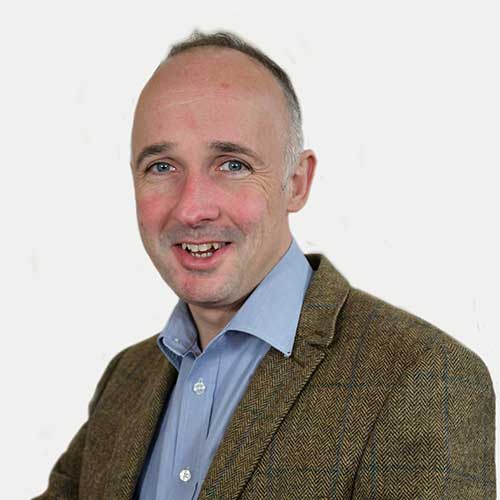
Dr. Sioned Pearce is a Lecturer in Social Policy at Cardiff University's School of Social Sciences, specializing in work, welfare, devolution, and civil society's impact on marginalized young people in the UK and internationally. She investigates how central and devolved policies shape grassroots employment support across different UK regions. Her research collaborations span UK academics and international partners in Canada and Italy, alongside civil society practitioners and policymakers. Key projects include leading a WISERD Work Package on devolved governance, civil society activism, and welfare for refugees/asylum seekers with Nivedita Narayan. She contributes to Cardiff University's Ignite program fostering positive research culture. Her work emphasizes cross-jurisdictional policy analysis and participatory research methods, such as film-based approaches to capture youth perspectives on Brexit. Dr. Pearce is available for postgraduate supervision and can be contacted via pearces11@cardiff.ac.uk. She is a Welsh speaker and active media commentator on social policy issues.
Paul Jones is Professor of Entrepreneurship and Innovation at Swansea University's School of Management. He previously served as Head of the School of Management and Head of the Business Department. His academic career includes positions at Coventry University, Plymouth University, and the University of South Wales. Professor Jones holds editorial roles including Editor-in-Chief of the International Journal of Entrepreneurial Behaviour and Research and Senior Editor at Information Technology and People . His research focuses on entrepreneurship, enterprise education, ICT, and small business management. Professor Jones has supervised 20 doctoral students to completion and secured over £1.6 million in external grants, including projects with the Nigerian government, European Structural funds, and Welsh government initiatives. His publications demonstrate consistent engagement with entrepreneurial behavior, cultural industries, and family business dynamics. Awards: Senior Fellow of the Higher Education Academy He serves on the Board of Trustees of the Institute of Small Business and Entrepreneurship and continues to develop international research collaborations across Europe, Africa, and Asia.
John Harrington is Professor of Global Health Law at Cardiff University's School of Law and Politics, where he focuses on the intersection of health, law, and the state. His work spans global health law, medical law, transnational law, and socio-legal studies, with particular emphasis on the Global South and devolved health systems within the UK. His educational background includes an LL.B from Trinity College, Dublin and a BCL from Oxford University. Harrington's research combines socio-legal and humanities approaches, drawing on qualitative empirical, legal doctrinal, and archival methods, as well as techniques from classical rhetoric and cultural studies. Harrington's research interests center on how national contexts shape global health law implementation. He examines access to essential medicines, pandemic control, indigenous medical knowledge, and the right to health in the Global South, alongside emerging health law in the UK's devolved nations. His work consistently explores the role of the state in health law, from Tanzania during structural adjustment to the impact of devolution on health law in the UK. His recent publications reveal a strong focus on pandemic governance, health sovereignty, and the impact of devolution on health law. Harrington's work demonstrates increasing attention to the Global South's agency in global health governance, with significant research on Kenya's vaccine diplomacy and the regulation of traditional medicine. His interdisciplinary approach bridges law, anthropology, political science, and public health. Runner-up, Socio-Legal Theory and History Book Prize (2017) Senior Research Fellow, British Institute in Eastern Africa (2010-14) Global Fellow, University of Melbourne (2007) Jean Monnet Fellow, European University Institute (2001-2) Harrington actively supervises PhD students on topics including children's participation in climate litigation, indigenous communities' access to healthcare in Kenya, and the law of minimum alcohol pricing. His research has been funded by ESRC, AHRC, British Academy, Leverhulme Trust, Welsh Government, and Open Society Justice Initiative. As Chair of the Socio-Legal Studies Association (2022-25) and former Founding Director of the Welsh Graduate School for Social Sciences, he plays a significant leadership role in the academic community. Harrington founded and directed Cardiff Law and Global Justice research center (2015-22), which included the Global Justice Law Clinic enabling students to work with global NGOs on human rights cases. He also developed the innovative Law and Literature module in collaboration with Cardiff's Sherman Theatre, integrating legal theory with cultural performance.
Professor Deborah Hann is a Professor in Employment Relations at Cardiff Business School, currently serving as Pro-Dean for Education and Students. She holds a PhD from Manchester and is a Fellow of the Higher Education Academy (FHEA), Academic Fellow of the Chartered Institute of Personnel and Development (FCIPD), and holds a Postgraduate Certificate in Higher Education (PGCHE). Her educational background includes a PhD from the University of Manchester, though specific details about earlier degrees are not provided in the available text. Professor Hann's research focuses on two primary areas: workplace dispute resolution and the Real Living Wage as a form of civil regulation. Her work examines how conflicts are managed in organizations and investigates the impact and implementation of the Living Wage movement across different sectors and regions. She has conducted extensive research on alternative dispute resolution mechanisms, the role of trade unions in wage campaigns, and the effects of political devolution on employment relations. Her research methodology often involves collaboration with key stakeholders including Acas, the Labour Relations Agency, and Citizens UK, ensuring practical relevance and impact. Professor Hann's scholarly contributions have been published in top-tier journals including Industrial and Labour Relations Review, Work, Employment and Society, Human Resource Management Journal, and Economic and Industrial Democracy. She serves on the Editorial Board of Work, Employment and Society and has co-authored the significant 2023 book "The Real Living Wage: Civil Regulation and the Employment Relationship" as well as co-editing "The Evolution of Workplace Dispute Resolution: International Perspectives." REF Impact case study recognition for her Living Wage research Living Wage Commissioner for Cardiff and Wales Member of the Editorial Board for Work, Employment and Society As an educator, Professor Hann is passionate about delivering engaging educational experiences that help students thrive both during and after their time at Cardiff Business School. She currently serves as Pro-Dean for Education and Students, overseeing educational strategy and implementation. She is particularly interested in authentic learning approaches and has partnered with Citizens UK to embed public value in leadership education. She supervises PhD students, including Xiao Han, whose research focuses on dispute resolution, Living Wage, and civil society organizations.
Dr Eleanor Mackillop is a Research Associate at the Wales Centre for Public Policy, affiliated with Cardiff Business School. Her work focuses on evidence-based policy, organizational change, and sustainable development governance. Research interests include: Evidence utilization in UK policy-making Knowledge brokering mechanisms Health economics and policy transfer Sustainable development implementation Post-structuralist organizational theory Recent research trends show expertise in: 2025: Analyzing UK What Works Centres' impact 2023: Investigating plural pathways to sustainability 2022: Examining evidence concepts in Welsh policy 2018: Historiography of QALYs in healthcare Key projects: Co-authoring pandemic response studies Evaluating Wales' Future Generations Act Developing knowledge co-production frameworks Contributing to European food policy reviews
Professor Peng Zhou is a distinguished academic at Cardiff University , serving as University Dean for International since May 2025. Affiliated with the Cardiff Business School , he leads the China Centre for Business Research and Welsh Institute for Research in Economics and Development . His career spans academic leadership, industry consultancy, and policy evaluation. PhD in Economics, Cardiff University MSc in Economics and Finance, University of York BA in Philosophy and BSc in Economics, Peking University Research interests span Macroeconomic Growth , Business Cycles , Economic Inequality , and Fiscal Devolution , with micro-level expertise in R&D and Innovation , Cultural Economics , and Public Policy Modelling . His work bridges Digital Economy and Sustainable Finance , utilizing DSGE , CGE , and Agent-Based Models . Recent publications highlight trends in AI and Environmental Economics , DeFi Insurance , Green Bonds , and Economic History . Methodological innovations include Nonlinear Teaching Approach (2024) and Semi-Structured Discussion frameworks. Innovation in Learning and Teaching Award Chinese Government Award for Outstanding Self-Financed Students Abroad Overseas Research Students (ORS) Awards Scheme Julian Hodge Macroeconomic Study Bursary Professor Zhou has supervised diverse research projects on topics like Chinese Economic Transformation , Price Rigidity , and Financial Market Infrastructure . He contributes to public discourse through media engagements with BBC , ITV , and The Conversation , and serves as referee for journals like Regional Studies and Energy Economics .
Gwilym Ap Gruffudd is a Lecturer in Education at the School of Education, Aberystwyth University. His academic work focuses on Welsh language education and contributes to UN Sustainable Development Goals related to quality education and reduced inequalities. As an active researcher with publications spanning 2022-2024, he maintains a strong presence in both Welsh and English academic publications. His research expertise centers on Welsh language education policy and implementation, with particular emphasis on translanguaging practices in educational settings and assessment methodologies for bilingual children. His work provides practical tools for educators working within the Welsh language context, addressing challenges in language instruction and evaluation. The research fingerprint shows strong concentration in Welsh language studies (100%), language instruction (57%), translanguaging (57%), and language skills development. Analysis of his publication trends reveals a consistent focus on practical applications of language education theory, with publications often co-authored with colleagues like Sioned Lloyd-Williams and R. Evans. His work bridges academic research and classroom practice, particularly through government-commissioned resources like the translanguaging guide for educators published by the Welsh Government. Gwilym Ap Gruffudd collaborates extensively within Wales and shows strong connections to UK educational research networks. His work receives attention across academic platforms with mentions on X (formerly Twitter), Bluesky, and readership on Mendeley, indicating impact within both academic and practitioner communities.
Ailsa Henderson is a Professor of Political Science at the School of Social and Political Science, University of Edinburgh. Her research focuses on political behavior, regionalism, voting patterns, and comparative territorial politics, with a particular emphasis on Scotland, the UK, and Canada. She has held prestigious fellowships, including membership in the Academy of Social Sciences and the Royal Society of Edinburgh, and has been recognized with awards such as the John McMenemy Prize. Education: She earned a Baccalauréat ès sciences sociales in Political Science from the University of Ottawa and an MSc in Social Research from the University of Edinburgh. Research Interests: Her work examines electoral systems, territorial politics, nationalism, civic engagement, and public opinion. She has supervised numerous PhD students on topics ranging from electoral governance in Nigeria to First Nations activism in Canada. Key Projects: She leads the Scottish Election Study and has contributed to initiatives like the Citizens’ Assembly of Scotland. Her research explores the impact of regional identities on voting behavior and the dynamics of multinational states. Awards and Recognition: In addition to her fellowships, she received the 'Best Impact from a Data-led Project' award in 2022 for innovative contributions to political analysis.
Professor Kevin Morgan is a Professor of Governance and Development at Cardiff University's School of Geography and Planning. He has held this position while teaching on the MSc Urban and Regional Development course and the Masters in Public Leadership in Cardiff Business School. His extensive career includes significant international engagement with organizations including the UN, OECD, European Commission, and Welsh Government. Professor Morgan's research interests focus on four core themes: Innovation/Spatial Development, Food/Sustainability/Public Procurement, Devolution/Governance/Territorial Politics, and Foundational Economy/Community Enterprise/Wellbeing Agenda. His work explores how different places govern themselves, develop in diverse ways, and distribute the costs and benefits of development. His research has been supported by major sponsors including the ESRC, British Academy, European Commission, OECD, Bill and Melinda Gates Foundation/World Food Programme, and various governments. His recent publications reveal a strong trend toward mission-oriented innovation policy, public food systems transformation, and regional development in peripheral areas. Morgan's work increasingly examines how foundational economy principles apply to public food provisioning, with significant focus on school meals, hospital food, and prison food systems. His research demonstrates how mundane, everyday services form the bedrock of societal wellbeing and economic resilience. ESRC award for outstanding impact on public policy in the UK (2013) FP7 award for Smart Specialisation (2013-2016) Professor Morgan has led major research projects including the ESRC-funded project on Delivering Sustainability: The Creative Procurement of School Food in Italy, the UK and the US, and currently serves as Principal Investigator for an ESRC-funded project on Inclusive Innovation in UK City Regions. His significant grant funding comes from diverse sources including the ESRC, British Academy, European Commission, Bill and Melinda Gates Foundation/World Food Programme, Joseph Rowntree Foundation, and Plunkett Foundation. Professor Morgan actively engages with policy through multiple high-level advisory roles, including as a member of the Academy of the UN-sponsored School Meals Coalition (2024-), the European Commission's S4 Scientific Committee (2020-2023), the Cardiff Capital Region's CJC Transition Board (2021-2023), and the Strategic Forum for Regional Investment in Wales (2021-).
Dr Osian Rees is an Associate Professor in Law at Swansea University's Hillary Rodham Clinton School of Law, part of the Faculty of Humanities and Social Sciences. He joined in October 2018, following a career at Bangor University where he held roles including Head of Quality Assurance (2015–2018). He specializes in devolution, children's human rights, and family law, with funded research on the impact of devolution on Welsh family law. Fluent in Welsh, he teaches undergraduate and postgraduate modules on family law, succession, and property law. His research focuses on legal frameworks for children's rights, devolution's role in shaping family law, and institutional accountability. He has contributed to leading journals like Child and Family Law Quarterly and Statute Law Review . Dr Rees has also led quality assurance initiatives, including a successful Quality Assurance Agency review of Bangor University (2018). Education: LLB (First Class Honors) from Aberystwyth University (2001), ESRC-funded PhD on the Children’s Commissioner for Wales (Aberystwyth). Awards: Sir Samuel Evans Award for Law Excellence (2001), ESRC Full Scholarship (PhD). He is Deputy Chair of Swansea University's Academic Data Quality Committee and serves on the Programme Approval Committee. His teaching includes modules on family law, succession law, and property law, delivered in both English and Welsh.
Professor Rick Rawlings is the Chair of Public Law at University College London (UCL), Faculty of Laws. He holds the academic rank of Professor and has been affiliated with UCL since 2006. His research focuses on criminology, policy and administration, and sociology, with a particular emphasis on constitutional law, devolution, and EU legal frameworks. He has held visiting positions at institutions such as the University of California, Berkeley, National University of Singapore, and University of Auckland, and was the Miegunyah Distinguished Visiting Professor at Melbourne University. His major works include Law and Administration (2021), Brexit and the Territorial Constitution (2017), and Delineating Wales (2005), reflecting his expertise in constitutional governance and devolution. Rick is a Fellow of the British Academy and Learned Society of Wales, an Honorary Bencher at Middle Temple, and a former Leverhulme Major Research Fellow. He currently serves on the Welsh Advisory Committee of the Law Commission and has advised the House of Lords Constitution Committee and the Thomas Commission on Justice in Wales.
Dr. Mari Wiliam is a Lecturer in Modern History at Bangor University's School of History, Law and Social Sciences, specializing in Welsh and modern British history since 2013. She earned her BA, MA, and PhD from Bangor University and is a Senior Fellow of the Higher Education Academy. Her administrative roles include History Reception Tutor and History/Heritage coordinator for the Coleg Cymraeg Cenedlaethol. Her research explores 20th-century nationalism, monarchy studies, devolution politics, and everyday life history, with a focus on Wales. Key interests include nuclear communities in north Wales, landscape/rurality, animal history, and cultural expressions like tattoos and food. She leads projects with the Welsh Estates Research Institute (ISWE) and collaborates on nuclear community research. Wiliam's publications emphasize Welsh identity, monarchy symbolism, and societal change. Recent works analyze nuclear energy's cultural impact, devolution roots in labor movements, and historical pedagogy. Her research consistently links local Welsh experiences to broader themes of memory, protest, and modernization. Awards: Senior Fellow, Higher Education Academy Advising & Projects: Supervises PhD students in mountaineering history, right-wing nationalism, and rural settlements. Co-supervises ISWE doctorates on squatters, women in agriculture, and estate histories. Collaborator on the Bodorgan Estate Heritage Route project (2022), integrating oral history and landscape conservation. She engages public audiences through TV/radio commentary, local history societies, and schools, discussing topics like monarchy, nationalism, and Welsh heritage.
Andrew Blick is a Professor of Politics and Contemporary History at King's College London, directing the Centre for British Politics and Government. He holds a prominent role in the Department of Political Economy within the School of Politics and Economics. His research bridges historical analysis with contemporary political challenges, focusing on UK constitutional frameworks, democratic development, and the impact of digital technology on governance. He has advised governments and international bodies such as the Welsh Government, the European Commission, and the UNDP. Prof Blick has authored over 11 books and contributed to numerous peer-reviewed publications, addressing topics like Brexit's constitutional implications, referendums in British history, and the role of special advisers in government. Key advisory roles include historical advice on the 2016 Supreme Court Article 50 case and leadership of the UK Constitution Monitoring Group’s analysis. He also served as director of History & Policy, promoting academic-historical engagement with policymakers. His work frequently explores tensions between representative and direct democracy, constitutional reform prospects, and the evolution of Prime Ministerial power. Recent projects include an AHRC-funded study on democracy’s historical trajectory and a Rowntree Trusts-commissioned report on constitutional conventions. Prof Blick’s contributions extend beyond academia through media appearances, parliamentary testimony, and international workshops on civil service policies. He actively engages with contemporary issues such as post-Brexit constitutional challenges, pandemic governance, and democratic resilience, maintaining a prolific publication record that spans from historical documentation to modern political analysis.
Sian Lloyd-Williams is a Lecturer in Education at Aberystwyth University, School of Education, where she has been serving since September 2012. She holds a PhD and is actively involved in research, teaching, and leadership as Director of Research for the School of Education. Her work is closely aligned with national educational initiatives in Wales, including the Evidence Informed Profession Group and the Collaborative Research Network on Welsh Language and Bilingual Education. University: Aberystwyth University School: School of Education Department: Department of Education Position: Lecturer Her research focuses on bilingualism, multilingualism, language acquisition, assessment, language awareness, and the maintenance of the Welsh language. She has led significant projects on translanguaging, the impact of the COVID-19 pandemic on Welsh-medium education, and diagnostic practices for bilingual children. Her work contributes to UN Sustainable Development Goals, particularly in education and linguistic equity. Recent research outputs include influential reports and articles on Welsh language education, pandemic-related educational challenges, and bilingual literacy. She has published extensively in both English and Welsh, contributing to journals like Wales Journal of Education and producing practical guides for educators and schools. Scientific Awards: None listed Grants: Principal Investigator on externally funded projects with Welsh Government and Health and Care Research Wales Advising: No named students, but coordinates postgraduate research skills and undergraduate dissertations She leads the National Professional Enquiry Programme and contributes to national policy through submissions to the Welsh Government’s Culture Strategy and Welsh Language Communities Commission. Her collaborative network includes researchers across Aberystwyth University and governmental bodies, reflecting her impact on both academic and policy spheres.
Professor Paul Carmichael is a Professor of Public Policy/Government at Ulster University, within the School of Applied Social and Policy Studies, Faculty of Arts, Humanities and Social Sciences. Since joining in 1992, he has held various leadership roles including Head of the School of Criminology, Politics and Social Policy (2005-2010), Dean of the Faculty of Social Sciences (2010-2017), and Associate Dean (Global Engagement) (2017-2022). Education: Honours degree in Economics and Public Policy, Leeds Polytechnic (1989) PhD in Public Policy, University of Strathclyde (1992) Postgraduate Certificate in Teaching in Higher Education, Ulster University (1995) Professor Carmichael’s research interests include local government , devolution , intergovernmental relations , and the civil service in Northern Ireland and the UK, with a comparative perspective. His work also touches on policy implementation and public administration reform . Recent publications reflect a strong focus on devolution impacts , local government structures , and post-conflict policy frameworks , particularly in the context of Northern Ireland after the Good Friday Agreement. Scientific Awards: Fellow of the Academy of Social Sciences (2007) Senior Fellow of the Higher Education Academy (2016) Fellow of the Joint University Council of the UK (2021) Doctoral Supervision: Katy Haskins – PhD Researcher focusing on Brexit and Northern Ireland Fatima Zucchi – PhD Researcher working on cultural revitalization and administrative structures Professor Carmichael is also a Visiting Fellow at the Centre for British Studies, Humboldt University of Berlin, since 2000.