Shweta Shinde is an Assistant Professor at ETH Zürich's Department of Computer Science. She leads the Secure & Trustworthy Systems (SECTRS) group and is affiliated with the Institute of Information Security and the ZISC Center. Her research focuses on foundational and practical aspects of trusted computing, system security, and program analysis to protect devices ranging from smartphones to cloud servers. Key areas include AMD SEV-SNP, Arm CCA, Intel SGX, and hardware-software co-design for security. Dr. Shinde has made significant contributions to confidential computing, including frameworks like OpenCCA and tools for analyzing hardware vulnerabilities. Her work has been recognized with Best Paper Awards and Distinguished Paper Awards at top venues. She advises a group of PhD students, including Mark Kuhne, Supraja Sridhara, and Benedict Schlüter. Her service includes program committee roles at IEEE Security & Privacy, USENIX Security, and as Track Co-Chair for AsiaCCS 2026.
Hanna Halaburda is an Associate Professor of Technology, Operations, and Statistics at the Leonard N. Stern School of Business, New York University, where she joined in 2019. Her research lies at the intersection of economics, technology, and digital platforms, with a strong focus on blockchain, cryptocurrencies, and platform competition. She has published extensively in top academic journals and co-authored the seminal book Beyond Bitcoin: The Economics of Digital Currencies . PhD in Economics, Northwestern University MA in Economics, Warsaw School of Economics MA in Philosophy, Warsaw University Her research interests center on the economic implications of digital transformation. She investigates how blockchain technology reshapes trust, governance, and competition in digital markets. Her work explores token design, consensus mechanisms, smart contracts, and the strategic use of decentralization in platforms. She also studies platform competition under network effects, consumer choice, and omnichannel marketing. A recurring theme is how digital technologies alter traditional economic forces and business models. The most recent articles show a strong trend toward analyzing the governance, security, and economic design of blockchain systems. Her work combines rigorous theoretical modeling with empirical insights, often applying game theory and industrial organization frameworks. Topics include permissioned vs. permissionless blockchains, the role of cryptographic tokens in coordination, and the macroeconomic implications of digital currencies. She also contributes to debates on Web3, AI, and the future of digital platforms. Scientific awards and recognitions include: ISR Best Paper Published in 2022 Runner-Up Lead article in RAND Journal of Economics Best Paper Award at Tokenomics 2023 Best Paper Award at WISE 2023 Best Paper Finalist at WISE 2022 and WISE 2021 Hanna Halaburda has advised and collaborated with numerous researchers and institutions. Her co-authors include leading scholars from Harvard, NYU, and international universities. She has received research recognition through best paper awards and invitations to contribute to high-impact journals and policy discussions. Her work has been supported by academic and policy institutions, including the Bank of Canada, where she previously served as a senior economist. She frequently publishes in both academic and practitioner outlets, including Harvard Business Review and Nature Human Behavior , indicating strong translational impact. She is actively involved in research teams focused on digital assets, blockchain governance, and platform economics. While no formal lab is mentioned, her extensive list of working papers and collaborations suggests leadership in a dynamic research group at NYU Stern. Her recent work on DAOs, public crypto mining firms, and CBDCs indicates ongoing, forward-looking research programs with real-world policy and business implications.
Christopher Kruegel is a Professor in the Department of Computer Science at the University of California, Santa Barbara (UCSB), where he conducts research in systems security. He is affiliated with the International Secure Systems Lab (iSecLab) and was a co-founder of Lastline, Inc., which was acquired by VMware in 2020. His work focuses on creating practical security solutions that address real-world problems through system building and experimental validation. Professor Kruegel's research spans multiple areas of computer security including malware analysis, web security, network security, and vulnerability analysis. His work often involves developing systems that analyze programs for malicious behavior, scanning web applications for vulnerabilities, and improving privacy on social networks. He has made significant contributions to firmware security, smart contract analysis, and mobile security through his extensive publication record. His 15 most recent publications (2022-2023) demonstrate a strong focus on practical security solutions across diverse domains including firmware security (Shimware, Fuzzware), blockchain and smart contract security (Confusum Contractum, NFT security), mobile security (TEEzz, Columbus), and vulnerability detection techniques (Actor, Toss a Fault to Your Witcher). His research shows consistent innovation in security tools and methodologies with several papers receiving distinguished awards. Fellow of the Institute of Electrical and Electronics Engineers Outstanding Graduate Mentor Award, UCSB Academic Senate Distinguished Artifact Award for Fuzzware paper Distinguished Paper Award for Ramblr paper Best Student Paper Award for Detecting Spammers On Social Networks Professor Kruegel has advised numerous graduate students and collaborated extensively with researchers at UCSB and beyond. His work has been funded by various research grants supporting his security research initiatives. He is actively involved in the International Secure Systems Lab, which focuses on practical security solutions for real-world problems.
Christine A. Parlour is the Sylvan C. Coleman Chair of Finance and Accounting at the Haas School of Business, UC Berkeley. She co-directs the Berkeley Center for Responsible Decentralized Intelligence. Her research focuses on Fintech, digital payments, and market microstructure, particularly in cryptocurrency and decentralized finance (DeFi). She has served on the Nasdaq Economic Advisory Board and the New Special Study of Securities Markets steering committee. Education: PhD and MA in Economics from Queen’s University (Kingston), BSocSci from University of Ottawa. Her work explores payment system externalities, blockchain protocols, and banking innovation. Recent research includes analysis of Bitcoin transaction fees, decentralized exchange liquidity, and systemic risks in DeFi markets. Publications span top finance journals, addressing topics like Uniswap’s AMM model, miner collusion in Bitcoin, and the impact of Fintech on traditional banking. She frequently engages with policymakers on digital currency regulation and CBDC design.
Victoria Lemieux is a Professor at the University of British Columbia (UBC) Faculty of Arts, School of Information, and Cluster Lead for Blockchain@UBC, Canada’s largest research cluster focused on blockchain technology. Her research centers on risks to trustworthy records in blockchain systems and their impact on transparency, financial stability, and human rights. She has pioneered Canada’s first research-oriented graduate blockchain training program and organized multiple interdisciplinary summer institutes. Education: Ph.D. in Archival Studies from University College London (2002), Certified Information Systems Security Professional (CISSP, 2005). Affiliated with UBC’s Peter Wall Institute for Advanced Studies, Sauder School of Business, and Institute for Computers, Information and Cognitive Systems (ICICS). Research interests span blockchain technology , trustworthy records , risk management , information governance , and visual analytics , with recent work addressing healthcare data frameworks, Web3 AI integration, and socio-cultural dynamics of decentralized systems. She has published extensively on blockchain applications in archives, land transactions, and privacy-preserving technologies. Scientific Awards : 2015 Emmett Leahy Award 2015 World Bank Big Data Innovation Award 2016 Emerald Literati Award 2016 Emerald Literati Outstanding Paper Award Supervision: Currently accepts doctoral students in Computational Archival Science and blockchain-related archival research. Affiliated with the Blockchain@UBC cluster and multidisciplinary research teams exploring decentralized systems for social good.
Nathalie Pignard-Cheynel is a Full Professor of Journalism and Digital Communication at the University of Neuchâtel since 2020, where she leads cutting-edge research on digital transformations in journalism. Previously, she held academic positions at the University of Neuchâtel (Assistant Professor, 2016-2020), University of Lorraine (2013-2016), and Grenoble 3 University (2005-2013), where she earned her doctorate in Information and Communication Sciences (2004). Doctorate in Information and Communication Sciences, University of Grenoble 3 (2004) Full Professor of Journalism and Digital Communication, University of Neuchâtel (2020-present) Assistant Professor in Digital Journalism, University of Neuchâtel (2016-2020) Lecturer in Information and Communication Sciences, Grenoble 3 University (2005-2013) Her research focuses on: Mutations in journalistic practices during digital transformations Social media usage by journalists, media, and audiences Participatory journalism and media-audience relationships Journalism and data practices Disinformation content dissemination and reception Platformization of information and algorithmic roles Digital formats analysis in journalism She has led multiple funded research projects including: PANDA (2023-2026, CHF 499,986) on pandemic data communication #sad2 (2021-2022, CHF 138,460) on disinformation architectures LINC (2018-2021, CHF 184,586) on local journalism innovation International collaborations on pandemic communication and digital media Her teaching includes: Digital technology courses for economics students NewsLab projects for journalism master's students Advanced seminars on digital media and communication Innovative journalistic format production She serves in leadership roles for: President of the Scientific Council, Initiative for Media Innovation (2018-2022) Board Member, Hirondelle Foundation (2021-present) Editorial Board Member, Cahiers du journalisme (2020-present) Qualis Commission, University of Neuchâtel (2019-present)
Dr. Tatsuya Mori is a Professor at the Department of Computer Science and Communication Engineering , Faculty of Science and Engineering, Waseda University . He also holds visiting researcher positions at RIKEN Center for Advanced Intelligence Project (since 2018) and National Institute of Information and Communications Technology (since 2019). Education: Ph.D. in Information Science (2005), Waseda University Research Interests: Spanning information security and privacy across emerging technologies like autonomous driving , AI , 3D sensing , VR , biometric measurement , and Web3 . His work focuses on offensive security and interdisciplinary research , including physical-layer attacks on sensors and behavioral studies on phishing detection. Scientific Awards: Recipient of multiple prestigious awards, including the Distinguished Paper Award Runners-Up at IEEE EuroS&P 2024 , IPSJ Outstanding Paper Award 2024 , and CSS2024 Concept Research Prize . His research has been recognized in top conferences like USENIX Security , NDSS , and ACM CCS . Professional Leadership: Active in academic governance as Chief Investigator for NISC Working Groups and Committee Member for JST Research Areas . He serves on program committees for NDSS , IMC , and ACM CCS .
Dr. Mary Lacity is a Distinguished Professor of Information Systems at the Sam M. Walton College of Business, University of Arkansas, and holds the David D. Glass Endowed Chair. She is also a Visiting Professor at the London School of Economics for Spring 2025. Director of Walton College’s Blockchain Center of Excellence (2014-2019) Former Curators’ Distinguished Professor at University of Missouri Holds visiting positions at MIT, Washington University, and Oxford University Senior Editor for MIS Quarterly Executive Contributing Editor for Journal of the British Blockchain Association Her research focuses on enterprise adoption of emerging technologies, particularly blockchain, metaverse, service automation, and ethical technology use. She has conducted extensive case studies and surveys on automation and Web3 implementation across hundreds of organizations globally. Recent publications include books like Human Privacy in Virtual and Physical Worlds (2024) and Blockchain Fundamentals for the Web 3.0 (2022). She has over 30 books and 26,300 Google Scholar citations (h-index: 68). 2014: Inducted into IAOP’s Outsourcing Hall of Fame 2024: Recognized as top 2% scholar in Business and Management (Stanford) 2024: Top 1% scholar in Business and Management (ScholarGPS) Fellow of the Association of Information Systems She actively contributes to blockchain standards via the Global Standards Mapping Initiative (GSMI) of the Global Blockchain Business Council and the Linux Foundation’s Trust over IP (ToIP). Her work bridges academic research and practical applications in enterprise technology adoption.
Magnus Westerlund is a Senior Lecturer in Information Technology and Director of the Laboratory for Trustworthy AI at Arcada University of Applied Sciences in Helsinki, Finland. His industry background spans telecom and information management, and he holds a doctoral degree in Information Systems from Åbo Akademi University. He actively contributes to the Z-Inspection® network, focusing on ethical AI implementation and governance. Westerlund’s research emphasizes trustworthy AI, cybersecurity, and distributed systems. Key areas include AI regulatory compliance (e.g., EU AI Act), healthcare AI applications, blockchain security, and IoT edge solutions. His work bridges academia and industry, such as the Valohai-CSC collaboration for machine learning infrastructure in Finnish academia. His publications highlight practical AI assessment methods, ethical AI integration, and decentralized technologies. Notable contributions include frameworks for sustainable AI development, privacy-preserving autonomous systems, and smart contract-based IoT security protocols. Westerlund also explores educational innovations, such as integrating large language models (LLMs) into coding education. His research consistently addresses real-world challenges like pandemic-era healthcare AI, edge computing for IoT, and cybersecurity in autonomous systems.
Guido Perboli is a Full Professor in the Department of Management and Production Engineering (DIGEP) at the Polytechnic University of Turin, where he also serves as Logistics Coordinator and Project Coordinator for activities supporting relationships with government bodies. He is a member of the Interdepartmental Center CARS@PoliTO (Center for Automotive Research and Sustainable Mobility) and serves as Director of the ICT for City Logistics and Enterprises (ICElab@Polito) research center, which he founded in 2016. His research interests span a broad range of topics including Operations Research, Logistics, Last-mile Delivery, Sustainable Logistics, Combinatorial Optimization, Stochastic Programming, Business Development, and Lean Business methodologies. His work particularly focuses on City Logistics, Green Logistics, and the application of emerging technologies like Blockchain and AI in supply chain management. He has developed GUEST, a Lean Business methodology for innovation processes from early idea definition to implementation. Professor Perboli's recent publications demonstrate a strong focus on urban logistics, last-mile delivery optimization, blockchain applications in supply chains, and the integration of AI techniques in transportation systems. His work shows an increasing trend toward interdisciplinary research that combines optimization methods with emerging technologies to address sustainable urban mobility challenges. Professional Recognition: CASE Best Paper award from IEEE Conference on Automation Science and Engineering (2011) Effective member of INFORMS (2019-present) Effective member of EURO (1995-present) Effective member of AIRO (1995-present) Associate Editor for Journal of Applied Research and Technology (2020-present) Associate Editor for Sustainability (2018-present) Professor Perboli actively advises PhD students and has supervised numerous research projects, including EU-funded initiatives like SINFONICA, HESTER, and 5G-LOGINNOV. He serves as Scientific Director for multiple commercial research projects focused on blockchain, IoT, and AI applications in logistics. Beyond academia, he is Chief Scientific Officer of Arisk S.p.A., a fintech company specializing in business crisis prediction using AI and machine learning. His research group, ICElab@Polito, focuses on two main areas supporting urban growth: logistics and enterprises. The center collaborates with numerous companies including Amazon, DHL, and FCA, addressing real-world challenges in urban logistics and supply chain management through innovative research approaches.
Professor Vlad Mykhnenko is Professor of Geography and Political Economy in the University of Oxford Department for Continuing Education, and a Research Fellow in Sustainable Urban Development at St. Peter's College, Oxford. He serves as Academic Director for Social Sciences at Oxford Lifelong Learning and has been with the Department since January 2017, initially taking up an Associate Professorship in Sustainable Urban Development. His academic career spans multiple institutions including the University of Birmingham, Al-Farabi Kazakh National University, the University of Nottingham, the University of Glasgow, and the Central European University. Professor Mykhnenko's educational background includes: PhD in Political Economy from Darwin College, the University of Cambridge (2005) MA in International Relations and European Studies from the Central European University (1999) MA (1998) and BA (1996) in International Relations from Taras Shevchenko National University of Kyiv As an economic geographer specializing in geographical political economy, Professor Mykhnenko challenges conventional wisdom about urban and regional development. His research initially focused on transition economies of Eastern Europe (particularly Polish Upper Silesia and the Ukrainian Donbas) before expanding to cities and regions worldwide. He has produced over 140 research outputs and secured £16 million in external research funding, with £2 million as Principal Investigator. His current research initiatives focus on green steel - rebuilding Ukraine's iron and steel sector post-war without fossil fuels - and sustainable urban development in Kazakhstan. His publication record demonstrates significant scholarly impact across diverse areas including urban shrinkage, post-war reconstruction, geopolitical analysis, and future trends in technology and governance. The breadth of his research interests spans from analyzing spatial economic patterns in African cities to examining the implications of the metaverse for future business practices. Professor Mykhnenko has substantial policy impact, with research quoted in at least 79 policy documents by 49 organizations across 21 countries. His work contributes to UN Sustainable Development Goals, with 30% directly attributed to SDG11: Sustainable Cities and Communities. He has advised governments, intergovernmental organizations, and multinational enterprises, including serving on a UN expert group to shape the New Urban Agenda and providing expert evidence to the UK House of Commons on Ukraine's recovery. In early 2025, he was appointed a commissioner for the Lancet Commission on Ukraine. Professor Mykhnenko has taught over 3,100 students across various institutions and currently contributes to Oxford's MSc in Sustainable Urban Development program. He has supervised numerous doctoral students and received recognition for his teaching excellence, including Fellow of the Higher Education Academy status and a Postgraduate Certificate in Academic Practice. His commitment to research-led teaching has resulted in innovative pedagogical approaches documented in peer-reviewed academic publications.
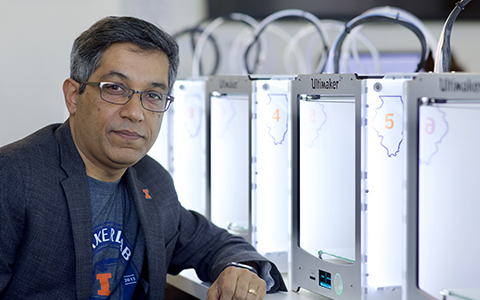
Vishal Sachdev is a Clinical Associate Professor of Business Administration at the University of Illinois at Urbana-Champaign's Gies College of Business. He serves as Director of the MS Analytics program, Director of Illinois MakerLab, and DPI Faculty in Residence. His academic roles span teaching, research, and leadership in educational technology and innovation. Education: B.A. in Mathematics, St. Stephen's College, New Delhi (1993) M.S. in International Business, Indian Institute of Foreign Trade (1996) Ph.D. in Information Systems, University of Texas at Arlington (2007) Research Interests: Dr. Sachdev focuses on technology's role in enabling collective action, cooperative production, and gamification in education. His work explores blockchain-based DAOs, 3D printing in educational settings, and the intersection of Web3 with decentralized business models. He emphasizes scalable peer-learning environments and online/blended education frameworks. Awards: Emerging Award for Excellence in Public Engagement (UIUC) List of Excellent Teachers (UIUC, multiple years) Research Excellence Award (Gies BADM, 2023) Grants & Labs: He leads Illinois MakerLab, a pioneering academic makerspace. Notable grants include Blockchain Analytics (Gies, 2023-2025), US Competitiveness in Web3 (Solana Foundation, 2022-2024), and Autodesk grants for Fusion 360 workshops. His work bridges technology, education, and innovation through applied research. Courses: Teaches courses like Blockchain Analytics, Database Design, and Digital Making Seminar, emphasizing hands-on, industry-relevant learning.
Dr Joseph Lee is a Reader in Corporate and Financial Law at the University of Manchester School of Law . Previously, he served as Senior Lecturer at the University of Exeter and Assistant Professor at the University of Nottingham. He directs the Manchester Online LLM in International Commercial and Technology Law and authored key publications including Crypto-Finance, Law and Regulation (2021) and Web3 Governance: Law and Policy (2025). Principal Investigator for UKRI/British Academy-funded projects Holds visiting positions at Bocconi University, KU Leuven, and National Taiwan University Acting Arbitrator in crypto-assets and fintech disputes His research focuses on commercial law intersecting with emerging technologies, including blockchain governance, AI systems in finance, and cybersecurity regulation. Recent work explores decentralized finance (DeFi), token transferability, and Web3 policy frameworks. Dr Lee contributes to the UN Sustainable Development Goals through digital trust initiatives. His projects include the AI Law and Policy: UK, US and EU Comparative Study (2023-2024), and he convenes the Digital Technology, Crime and the Law Conference 2025 .
Prof. Dr. Philipp A. Rauschnabel serves as Professor of Digital Marketing and Media Innovation at the University of the Bundeswehr Munich's Faculty of Business Administration. Recognized as one of the world's leading scientists in augmented reality, virtual reality, and metaverse research, he bridges academic theory with practical business applications across multiple industries. His educational background includes: Habilitation, Dr. habil; PD, Otto-Friedrich University of Bamberg Dr. rer. pol. (psychological brand management, 2014, summa cum laude), Otto-Friedrich University of Bamberg M.Sc. in Marketing and Distribution Management, Georg-August University of Göttingen (best of class) BA in Business (Marketing and Business Information Systems), Merseburg University of Applied Sciences (Top 10% graduate) Rauschnabel's research centers on the practical implementation of spatial computing technologies in marketing contexts. He has developed influential frameworks including the XR framework that redefines the relationship between augmented reality, virtual reality, and mixed reality. His work examines how these technologies transform consumer-brand relationships, workplace operations, and marketing strategies across retail, manufacturing, and service industries. He particularly investigates the psychological mechanisms through which AR/VR experiences influence consumer behavior, brand love, and purchasing decisions. Analysis of his recent publications reveals a clear progression from basic AR applications toward more sophisticated spatial computing environments and persistent metaverse experiences. His research demonstrates increasing sophistication in understanding contextual factors, emotional responses, and long-term consumer engagement with these technologies. The work consistently bridges theoretical marketing concepts with practical implementation challenges faced by businesses. His significant scientific recognition includes: Top 1% Scientist (Clarivate Highly Cited Researcher, 2023) Top 2% Scientist (Stanford List 2023) Microsoft Academics listed as one of the top 5 AR researchers worldwide based on citation output (2021) Named one of the top 15 AR marketing researchers worldwide (Kumar, 2021) Prof. Rauschnabel serves as Associate Editor for the Journal of Business Research and chairs the bdvb research institute. He has provided expert consultation to the German Federal Government on XR/Web3/Metaverse (2022) and regularly advises major corporations across multiple sectors including food, home appliances, insurance, automotive, and telecommunications across Germany, USA, Switzerland, China, and Austria. His practical consulting work complements his academic research, creating a valuable feedback loop between theory and practice. He leads multiple research initiatives on augmented reality marketing and spatial computing, collaborating with industry partners to develop practical applications of these emerging technologies. His work emphasizes the importance of understanding both the technological capabilities and human factors that determine successful implementation of AR/VR in business contexts.
Jeffrey K. Mullins is an Assistant Professor in the Department of Information Systems at the Sam M. Walton College of Business, University of Arkansas. His research explores the intersection of emotion, cognition, and ethics in information systems, with a focus on how digital technologies blur boundaries between work and play through gamification and metaverse development. Ph.D. in Information Systems, University of Arkansas Director of Ph.D. Program, Walton College Research interests span: Emotion and cognition in digital environments Ethics of biometric and gamification technologies Metaverse development and Web3 transitions Work-life convergence in IS-enabled contexts His publications in MIS Quarterly , Journal of Business Ethics , and Journal of the Association for Information Systems reflect these themes. Recent work examines AI biometrics policy and immersive learning applications. 2024 Walton College Executive MBA Teacher of the Year 2020 ACM SIGMIS Doctoral Dissertation Award 2016 Outstanding Lecturer Award With over a decade of IT experience at a Fortune 100 firm, he teaches graduate courses in IT management and multivariate analysis while maintaining certifications like ERPsim Level 2 Training.