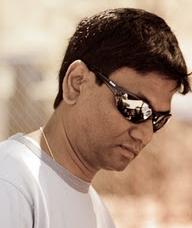
Rakesh Ranjan is a part-time Lecturer in the Computer Engineering Department at San José State University, teaching Enterprise Software Overview and Software Testing & QA courses. His industry expertise complements his academic role, where he focuses on cloud data services, big data analytics, and enterprise software platforms. Ranjan holds extensive industry experience as a Cloud Engineering Manager at IBM Silicon Valley Lab, where he leads development of data and analytics services for IBM Bluemix. With over 20 years in software development, he specializes in database technologies (DB2), cloud architectures, and large-scale system design. His textbook 'Enterprise Software Platform' covers middleware, cloud computing, big data, and emerging web technologies for software engineering students. At SJSU, Ranjan oversees innovative student projects applying Hadoop, MapReduce, and distributed systems to real-world problems. Student teams have developed solutions including social media sentiment analysis, distributed caching systems, real-time analytics platforms, and accessibility testing frameworks under his guidance.
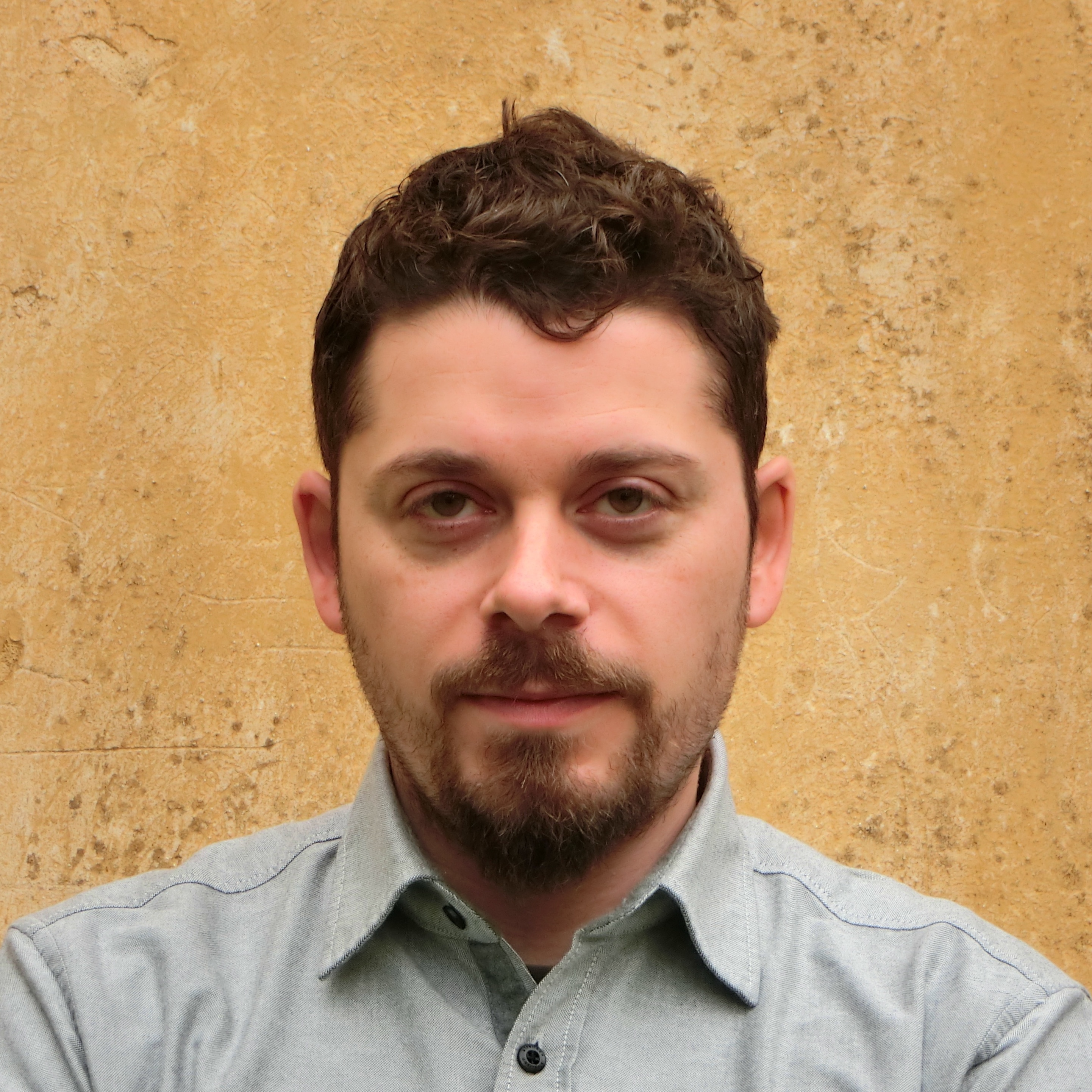
Kay Giesecke is Professor of Management Science & Engineering at Stanford University, where he has been on the faculty since 2005. He serves as the Founder and Director of Stanford's Advanced Financial Technologies Laboratory, Director of the Mathematical and Computational Finance Program, and is a member of the Institute for Computational and Mathematical Engineering. He has held visiting positions at Cornell, UCLA, and the International Monetary Fund, and serves on the Governing Board and Scientific Advisory Board of the Consortium for Data Analytics in Risk and the Council of the Bachelier Finance Society. Dr. Giesecke received his doctorate in 2001 from Humboldt Universität zu Berlin where he was a fellow of the Deutsche Forschungsgemeinschaft. His educational background forms the foundation for his interdisciplinary work at the intersection of finance, technology, and quantitative methods. Giesecke's award-winning research sits at the intersection of technology and finance, transforming risk intelligence, market oversight, and investment management. He pioneers stochastic models, statistical machine learning methods, computational algorithms, and software to better understand risk, identify opportunities, and support decision-making. His key application areas include risk management, market surveillance, fair lending, and sustainable investing. His work informs financial regulation, guides institutional practices, and contributes to more transparent, resilient, and equitable financial systems. His research spans blockchain technology, mortgage risk analysis, and computational methods for financial systems, demonstrating both theoretical depth and practical relevance. Professor Giesecke has been recognized with multiple prestigious awards for his research contributions: JP Morgan AI Faculty Research Award (2019) SIAM Financial Mathematics and Engineering Conference Paper Prize (2014) Fama/DFA Prize for the Best Asset Pricing Paper in the Journal of Financial Economics Gauss Prize of the Society for Actuarial and Financial Mathematics of Germany (2003) Giesecke has supervised 29 doctoral dissertations, with graduates going on to faculty positions at institutions such as UC Berkeley, Oxford, Wharton, and NYU; leadership roles at firms including Goldman Sachs, Google, JPMorgan, Amazon, and Morgan Stanley; and founding successful technology startups. His research has been supported by the National Science Foundation and several leading financial institutions including JP Morgan, Swiss Re, BBVA, Royal Bank of Scotland, State Street, and Amazon Web Services. As an academic leader, Giesecke is Editor of Management Science (Finance Area) and Associate Editor for Operations Research, Mathematical Finance, Journal of Financial Econometrics, SIAM Journal on Financial Mathematics and several other leading journals. He founded and organizes Stanford's annual AI in Fintech Forum, which brings together academic researchers and industry practitioners to discuss cutting-edge developments in financial technology. His Advanced Financial Technologies Laboratory serves as a hub for interdisciplinary research at the intersection of finance, computer science, and engineering.
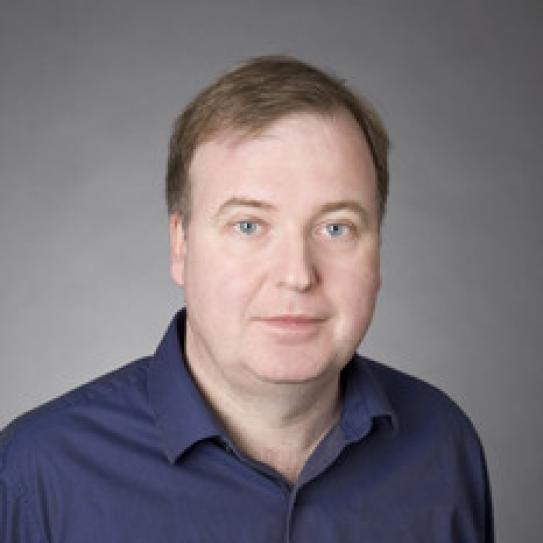
Hakim Achterberg is a researcher affiliated with Erasmus MC (Medical Center) at Erasmus University Rotterdam, specializing in Radiology & Nuclear Medicine. His work focuses on medical imaging applications, particularly in neurology, nephrology, and orthopedics. He has contributed to studies on cerebral small vessel disease, spinal alignment in children, and oncological imaging techniques. Education details are not explicitly provided in the text, but his research spans MRI analysis, data visualization tools (e.g., PIM), and clinical trial outcomes. Collaborations include projects on end-stage renal disease, CNS lymphoma treatments, and pediatric spinal abnormalities. Key research interests include: medical imaging methodologies, biomarker development for neurological conditions, and statistical shape analysis in radiology. His work integrates machine learning (e.g., Support Vector Machines) with clinical data to address diagnostic challenges.
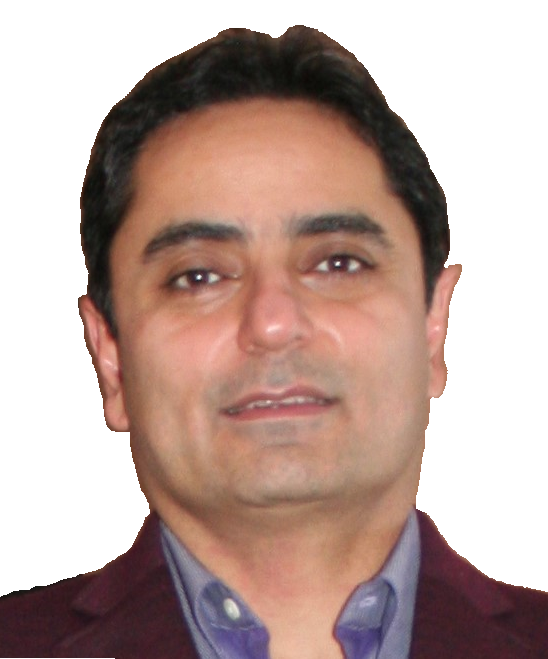
Dr. John Liagouris is an Assistant Professor at Boston University's Faculty of Computing and Data Sciences, appointed since July 2022. Previously, he served as an Adjunct Assistant Professor (2020–2022) and held roles at BU’s Hariri Institute for Computing, ETH Zurich’s Systems Group, UC Berkeley’s RISELab, and the University of Hong Kong. His research focuses on distributed systems, databases, and secure analytics, with a strong emphasis on privacy-preserving technologies in cloud environments. He earned a 5-year diploma in Electrical and Computer Engineering (2008) and a PhD (2015) from the National Technical University of Athens (NTUA). His academic journey includes visiting scholar positions at UC Berkeley and the University of Hong Kong, alongside research roles at the Athena Research Center in Greece. Liagouris’s research spans cryptographic cloud analytics, streaming state management, and spatial RDF data systems. His work on frameworks like Queryshield and TVA demonstrates expertise in securing distributed data processing. Recent trends in his publications emphasize multi-party computation and latency-conscious distributed systems. His contributions to fault-tolerant systems (e.g., Lineage Stash) and incremental routing logic (DeltaPath) highlight a focus on optimizing distributed workflows. Though no formal advising records are listed, his roles suggest active involvement in training researchers in distributed computing and cybersecurity. Labs and teams associated with his work include BU’s Hariri Institute and collaborations with institutions like ETH Zurich’s Systems Group, reflecting a networked approach to academic research.
Torsten Suel is a Professor and Director of the Computer Science Ph.D. Program at NYU Tandon School of Engineering. He holds a Diplom from Technical University of Braunschweig and Ph.D. from University of Texas at Austin, with postdoctoral experience at NEC Research Institute, UC Berkeley, and Bell Labs. His research focuses on scalable information retrieval, web search engine architectures, distributed algorithms, and data compression. Key areas include efficient top-k query processing, learned indexing structures, and high-dimensional nearest neighbor search. Recent publications demonstrate advances in graph-based search algorithms, sparse index optimization, and distributed query processing for web-scale datasets. Work integrates machine learning with traditional indexing techniques. No scientific awards are explicitly listed. He leads the search engine research group and advises graduate students in distributed systems and information retrieval.
Amir H. Razavi is a part-time Professor in the School of Electrical Engineering and Computer Science at the University of Ottawa. He holds a PhD in Machine Learning and NLP from the same institution (2012) and a Master's in Computer Software Engineering from the University of Tehran. His career spans over a decade of industry experience as a senior data scientist and team lead in Big Data analytics across cybersecurity, telecommunications, and financial sectors with companies like Bell Canada and BlackBerry. His research focuses on applying ML and NLP to cybersecurity (e.g., threat detection, DLP), behavioral analysis, fraud detection, and maritime risk mining. His academic contributions include over 25 peer-reviewed publications in venues like IEEE conferences and journals, with a focus on DNS-based cybersecurity, social network analysis, and NLP applications in healthcare and psychology. He has also managed large-scale enterprise projects in fraud management and customer care within telecommunications. Education: PhD in Machine Learning & NLP, University of Ottawa (2012) MSc in Computer Software Engineering, University of Tehran Research interests span: • ML-driven cybersecurity solutions (e.g., DNS exfiltration detection) • NLP applications in healthcare diagnostics and dream analysis • Privacy-preserving data models and risk assessment frameworks • Hybrid machine learning systems for adaptive learning and recommendation engines Labs/Teams: Collaborations include BlackBerry and Bell Canada on CTI projects, and interdisciplinary work with psychologists on dream sentiment analysis. Active contributor to ResearchGate with 17,304 reads and 1,668 citations.
Steve Cassidy is an Associate Professor in the School of Computing at Macquarie University. His research focuses on research data discovery, reproducibility, and accessible tools for language sciences. He specializes in linguistic annotation standards, speech analysis technologies, and interoperability infrastructure for human communication science. He holds a PhD in Computer Science from Victoria University of Wellington, an MSc in Knowledge-Based Systems from the University of Edinburgh, and a BSc in Physics with Astrophysics from the University of Leicester. He leads major projects such as FAIMS3 (Field Acquired Information Management Systems) and the Alveo Virtual Laboratory, which support digital data capture and management in diverse research contexts. His work emphasizes FAIR data principles and interdisciplinary collaboration, with applications in linguistics, archaeology, and speech technology. He has contributed to initiatives like the AusTalk corpus and Signbank, advancing open science practices and accessibility in research. Recent research highlights include machine learning models for military performance prediction and temporally rich deep learning approaches for magnetoencephalography analysis. His work has been recognized through awards including the 2024 Teaching Excellence Highly Commendation and the 2023 Inter-School Collaboration Award. Education: PhD in Computer Science (Victoria University of Wellington, 1993) MSc in Knowledge-Based Systems (University of Edinburgh, 1984) BSc in Physics with Astrophysics (University of Leicester, 1983) Postgraduate Certificate in Higher Education (Macquarie University, 2008) Key Projects: FAIMS3: Mobile field data collection platform Alveo Virtual Lab: Linguistic data repository AusTalk Corpus: Large-scale Australian English speech database His publications span machine learning applications, speech technology, and open research infrastructure. He actively collaborates across disciplines to develop tools that enhance reproducibility and accessibility in scientific research.
Pratika Dayal is an Associate Professor & Rosalind Franklin Fellow at the Kapteyn Astronomical Institute, University of Groningen. Her research focuses on galaxy formation in the first billion years of the Universe, cosmic reionization, and dark matter. She leads major projects like the UNCOVER survey with the James Webb Space Telescope (JWST) and collaborates internationally with initiatives like the Square Kilometre Array (SKA). Education: Doctorate in Astrophysics from SISSA, Trieste, Italy (2006-2010). Postdoctoral roles at Leibniz Institute (Potsdam), University of Edinburgh, and Durham University. Research Interests: Early galaxy formation, interplay between galaxy evolution and reionization, astrobiological habitability, and dark matter's role in cosmic structure. Her work combines theoretical models, simulations, and observational data from Hubble, ALMA, and JWST. Grants & Awards: ERC Starting Grant (2016), NWO VIDI Grant (2018), Addison Wheeler Fellowship (2015). She chairs astronomy committees and is a member of the International Astronomical Union. Teaching: Teaches 'Galaxy Formation and Evolution' and 'Quantum Universe Seminar' at the Master's level. Supervised over a dozen PhD, master's, and bachelor's students across institutions like Groningen, Edinburgh, and Cambridge. Outreach: Leads public lectures, stargazing events, and chairs the Young Academy of Groningen's outreach committee. Engages in international collaborations and science communication initiatives.
Franco Ruzzenenti is an Assistant Professor (tenure track) at the University of Groningen, affiliated with the Faculty of Science and Engineering and the Integrated Research on Energy, Environment & Society (IREES). He holds additional roles as Programme Director of the MSc 'Energy & Environmental Sciences' and Director of Education at the Energy & Sustainability Institute Groningen (ESRIG). His research focuses on complex systems, network theory, and energy sustainability, with particular emphasis on topics like energy efficiency, rebound effects, and carbon implications of global systems. Affiliations: University of Groningen, Faculty of Science and Engineering, IREES, ESRIG Expertise: Energy Modelling, Industrial Ecology, Climate Change, Sustainable Development Goals Ruzzenenti’s work bridges environmental and socio-economic systems, addressing challenges such as fossil carbon accumulation in the technosphere, sovereign wealth funds’ carbon footprints, and the dynamics of grid-scale battery storage in the EU. He employs interdisciplinary methods, including agent-based modeling, econometrics, and network theory, to analyze energy transitions and policy impacts. His research outputs span high-impact journals like Cell Reports Sustainability , Nature Climate Change , and Energy Policy , reflecting contributions to global sustainability science. Collaborations include projects funded by the EU and international partnerships on energy systems and environmental policy.
Timothy M. Heckman is the Dr. A. Hermann Pfund Professor at Johns Hopkins University's Krieger School of Arts & Sciences, holding a joint appointment in the Department of Physics & Astronomy and the Space Telescope Science Institute. With over 500 publications and 100k+ citations, his research focuses on galaxy evolution and supermassive black hole dynamics. He earned his PhD from the University of Washington and held postdocs at Leiden Observatory and Steward Observatory before joining Hopkins in 1989. Leadership roles: Directed the Center for Astrophysical Sciences (2002–2015) and chaired the Physics & Astronomy Department (2015–2021). Awards: National Academy of Sciences member, Catherine Wolfe Bruce Gold Medal recipient, and Alfred P. Sloan Fellow. Research emphasizes galactic winds, Lyman continuum escape mechanisms, and AGN feedback. His work leverages HST, JWST, and XRISM data to explore star formation regulation and interstellar medium dynamics. Current projects include the CLASSY treasury survey and JWST early release science programs. Publications highlight breakthroughs in quantifying feedback energy budgets, modeling multi-phase outflows, and linking galaxy morphology to quenching processes. His team pioneered MgII emission line diagnostics for LyC leakage studies and developed novel SED-fitting techniques for high-redshift galaxy analysis.
Paul Patras is a Professor of Mobile Intelligence at the University of Edinburgh's School of Informatics, leading the Mobile Intelligence Lab and affiliated with the Institute for Computing Systems Architecture (ICSA) and Security & Privacy group. He co-founded Net AI, a university spin-off advancing AI-driven network management. His expertise spans AI for network traffic analytics, security, and biomedical innovation. He holds a Ph.D. from University Carlos III of Madrid and has held visiting roles at institutions like Northeastern University and Rice University. Research focuses on bridging mathematical models with real-world network applications, including high-speed data stream processing and adversarial robustness. Recent work includes Stable-Sketch for web-scale data streams and Sabre for adversarial noise filtering. Awards include the SICSA Best Dissertation Award (2024, student Alec Diallo) and a best paper award at WWW '24 (with Weihe Li). Advising includes PhD students like Weihe Li and postdocs like Alec Diallo. He has supervised numerous students in areas like network security and machine learning. His labs and collaborations drive innovation in 6G, edge computing, and AI ethics. He frequently speaks at global forums, including the UN's AI for Good Summit and 6G Evolution Summit.
Kamran Entesari is a Professor of Electrical and Computer Engineering at Texas A&M University, holding the Texas Instruments Engineering Professorship. His research focuses on RF/microwave/mm-wave integrated circuits, integrated RF photonics, and biochemical sensing systems. He leads projects in silicon photonics, millimeter-wave communication, and dielectric spectroscopy. Education: Ph.D., Electrical Engineering, University of Michigan, Ann Arbor (2005) M.S., Electrical Engineering, Tehran Polytechnic University (1999) B.S., Sharif University of Technology (1995) Research Interests: RFIC and mm-wave systems for 5G and beyond Photonic-integrated circuits for next-gen communication Biomedical sensing via microwave dielectric spectroscopy Low-power, high-linearity transceiver architectures His work bridges silicon photonics with traditional RF systems to enable high-speed, low-power solutions. Recent Research Trends: Recent publications emphasize hybrid CMOS-silicon photonics for mm-wave front-ends, full-duplex transceivers, and ultra-wideband sensing systems. Key innovations include reconfigurable photonic filters, beamforming networks, and interferometric sensors. Awards: IEEE Fellow (2025) Qualcomm Faculty Award (2017, 2018) NSF CAREER Award (2011) Outstanding Faculty Award (2012) Grants & Labs: Leads the SpecEES Initiative for energy-efficient mm-wave platforms. Collaborates with Texas Instruments on silicon photonics integration. His lab develops prototypes ranging from chip-scale sensors to phased array systems. Facility Affiliations: Based in the Wisenbaker Engineering Building (WEB 315C), part of Texas A&M's College of Engineering. Active in the Department's photonics and RFIC research clusters.
Dr. Yongli Ren is an Associate Professor in the School of Computing Technologies at RMIT University, located at the City Campus in Australia. His research focuses on advancing Recommender Systems, with particular emphasis on fairness, quantum computing optimization, and spatio-temporal data analysis. He holds expertise in data mining, collaborative filtering, and context-aware systems. Dr. Ren is open to supervising Masters and PhD students in areas such as quantum annealer-based optimization, fairness-aware recommendation, and heterogeneous time-series analysis. His teaching interests include web search algorithms, collaborative filtering, data mining methodologies, and log analysis. Dr. Ren has contributed to over 70 research outputs, with recent works addressing recommendation system evaluation metrics, fairness in AI, and energy-efficient routing protocols in wireless sensor networks. His research has been published in prestigious venues like ACM Transactions on Information Systems, IEEE Access, and the ACM Web Conference (WWW). Key research themes include addressing the precision-diversity trade-off in recommendations, enhancing fairness through dual-temporal networks, and leveraging quantum computing for QUBO optimization. He has also explored applications in mobility pattern analysis, workplace productivity systems, and fog-based distributed recommendations.
Helge Marahrens is a Postdoctoral Fellow at the Massive Data Institute, Georgetown University. He holds a PhD in Sociology and an MS in Applied Statistics from Indiana University. His interdisciplinary work bridges sociology, statistics, and data science, focusing on large-scale patterns of inequality and globalization. His educational background includes: PhD in Sociology, Indiana University (2023) MS in Applied Statistics, Indiana University (2019) Marahrens' research centers on global inequality, city development, forced migration, and cultural tastes. He employs computational methods such as webscraping, APIs, text mining, network analysis, and machine learning to study how globalization reproduces hierarchies between cities, regions, and nations, particularly between the Global North and South. He is deeply engaged in advancing computational social science through innovative data collection and analytical techniques. Although no publications are listed, his methodological focus suggests strong contributions in data science applications to sociological questions, particularly using Python-based tools for text and network analysis. He has received recognition through competitive opportunities such as an internship at Facebook’s core data science group and leadership in prominent methodological workshops. Marahrens has extensive teaching experience, having led Python workshops and lab courses at Indiana University and Georgetown. He has taught topics including data collection via APIs and webscraping, predictive modeling, text mining, and network analysis. He served as a lab instructor for graduate courses such as Categorical Data Analysis and Statistical Techniques in Sociology, and taught undergraduate courses like Understanding Social Data. His pedagogical approach emphasizes making complex methods tangible through hands-on learning and interactive tools, such as web applications for understanding logistic regression. He has been affiliated with research centers including the Complex Networks and Systems Center at Indiana University and currently works at the Massive Data Institute at Georgetown University, where he continues to develop and apply computational methods in social science research.
Savvas Zannettou is an Assistant Professor at the Faculty of Technology, Policy, and Management (TPM) at Delft University of Technology (TU Delft). He is also an Associated Researcher at the Max Planck Institute for Informatics (MPI-INF) and a core member of the iDrama Lab. His research is centered on applying machine learning and data-driven analysis to understand online phenomena such as misinformation, hate speech, and algorithmic recommendations on social media platforms. His research interests lie at the intersection of computer science, social media, and policy. Key areas include online disinformation, hate speech detection, algorithmic transparency, toxic content in AI-generated media, and platform moderation. He employs large-scale data analysis to study user behavior on platforms like TikTok, Twitter, Reddit, and WhatsApp, with a strong focus on ethical and societal implications. His recent publications reveal a strong trend in auditing social media algorithms, analyzing AI-generated harmful content (e.g., hateful memes), and leveraging data donation frameworks to study user exposure. His work frequently appears in top-tier venues like WWW, IEEE S&P, USENIX Security, and ICWSM. He has led research on topics including QAnon, incel communities, state-sponsored trolls, and the impact of moderation policies. He has received several scientific honors, including: Distinguished Paper Award, ACM IMC 2018 Best Paper Honorable Mention, ICWSM 2020, 2024 Best Paper Honorable Mention, CSCW 2021 Best Paper Honorable Mention, ACM CCS 2022 Best Senior Program Committee Member, AAAI ICWSM 2022, 2023 Savvas Zannettou actively mentors students, with several PhD and Master’s advisees leading publications in top conferences. He has been involved in significant grant-funded research, including a €1.3M NWO project on trusted flaggers under the Digital Services Act (DSA), and has secured funding from Google’s Academic Research Award Program. He serves on the program committees of major conferences such as ICML, NeurIPS, USENIX Security, and The Web Conference. He is a core member of the iDrama Lab, which focuses on data-driven research for advanced modeling and analysis, particularly in the context of online safety and platform governance.