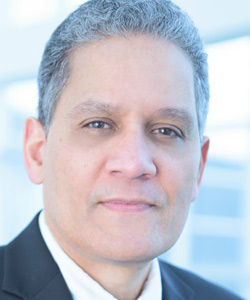
Enrique Ortiz is a Professor in the School of Teacher Education at the University of Central Florida (UCF), specializing in mathematics education with a focus on cognitive learning frameworks, social justice integration, and educational technology. His work bridges theoretical research and practical classroom applications across Puerto Rico, Louisiana, and Florida, emphasizing teacher development and innovative pedagogical strategies. Dr. Ortiz's academic credentials include: Ed.D. in Secondary School Mathematics with Statistics from Louisiana State University M.A. in Administration and Supervision of Schools with Statistics from Phoenix University, Puerto Rico Resident Center B.A. in Secondary Education with Mathematics minor from Interamerican University of Puerto Rico His research spans cognitive levels in mathematics learning (concrete, pictorial, abstract, and virtual frameworks), geometric abstraction art integration, optical topography of brain activity during mental tasks, and TeachLive simulation technology for teacher assessment efficacy. He develops problem-solving curricula with emphasis on social justice, fractions, algebra, and virtual/physical instructional tools like the Triangle Puzzle Challenges. His publications include a book chapter in High School Mathematics Lessons to Explore, Understand, and Respond to Social Justice . Publication analysis reveals a dual trajectory: while his core 2005 work on cognitive learning aligns with mathematics education, Google Scholar attributes 14 computer vision publications (2007-2018) covering license plate recognition, vehicle identification, and facial recognition systems. This divergence suggests either interdisciplinary expansion or potential attribution anomalies in technical fields unrelated to his documented expertise. Dr. Ortiz actively contributes to academic service through conference organization, manuscript review, and international presentations. His scholarly impact includes curriculum development, social justice mathematics frameworks, and instructional game design, though specific grants and student mentoring details remain unreported in public sources.
Guruswami (Ravi) Ravichandran is the Otis Booth Leadership Chair of the Division of Engineering and Applied Science (EAS) and John E. Goode, Jr. Professor of Aerospace and Mechanical Engineering at the California Institute of Technology. He has held this professorship since 2005 and served as Director of Graduate Aerospace Labs at Caltech from 2009-2015. His academic journey began at the University of California, San Diego as an Assistant Professor (1987-1990) before returning to Caltech where he progressed from Assistant Professor (1990-1995) to Associate Professor (1995-1999) to full Professor (1999-2005) to his current named professorship. His educational background includes: B.E. (Honors) in Mechanical Engineering from the University of Madras (1981) Sc.M. in Engineering and Applied Mathematics from Brown University (1983) Sc.M. in Engineering and Applied Mathematics from Brown University (1984) Ph.D. in Solid Mechanics and Structures with minors in Materials Science and Applied Mathematics from Brown University (1986) Ravichandran is internationally recognized for his contributions to mechanics of materials. His research spans a broad range of topics with particular emphasis on dynamic deformation, damage and failure mechanisms, micro/nano mechanics, wave propagation phenomena, composite materials behavior, active materials properties, cell mechanics, and innovative experimental methods. His work bridges fundamental mechanics with practical applications in aerospace, materials science, and mechanical engineering. The interdisciplinary nature of his research connects solid mechanics with biology (cell mechanics), materials science (composites, microstructures), and advanced experimental techniques. His publication record includes 162 journal papers, 5 book chapters, 7 edited volumes, and 8 patents, with citation metrics showing Google Scholar: 8,990 citations (h=52), Scopus: 6,447 citations (h=44), and Web of Science: 6,329 citations (h=42). His recent work shows continued focus on experimental mechanics techniques, cell-matrix interactions, materials characterization, and innovative measurement methods. His scientific achievements have been recognized with numerous prestigious awards: Member of US National Academy of Engineering (2015) Warner T. Koiter Medal from ASME (2014) William M. Murray Lecture and Medal from SEM (2014) A.C. Eringen Medal from SES (2013) Foreign Member of European Academy of Sciences and Arts (2012) Foreign Member of International Academy of Engineering (2012) Fellow of American Academy of Mechanics (2012) Chevalier de l'ordre des Palmes Academiques from Republic of France (2011) Fellow of Society for Experimental Mechanics (2010) Andrew Heiskell Award for Innovation in International Education (2010) Charles Russ Richards Memorial Award from Pi Tau Sigma and ASME (2008) B. J. Lazan Award from SEM (2005) Doctor honoris causa from Paul Verlaine University (2006) Fellow of American Society of Mechanical Engineers (2000) Ravichandran has demonstrated exceptional leadership in academic service and education. As the 6th Director of the Graduate Aerospace Laboratories at Caltech (GALCIT) from 2009-2015, he chaired the Aerospace Historical Society which annually awards the International von Karman Wings Award. He has served as Option Representative for both graduate Aerospace and undergraduate Mechanical Engineering programs. He played a key role in developing the dual Masters degree program in mechanics between Ecole Polytechnique and Caltech, which received the 2010 Andrew Heiskell Award. He has mentored more than 75 graduate students, postdoctoral scholars and visiting researchers who now hold prominent positions worldwide in academia, government, and industry. As a past President of the Society for Experimental Mechanics, he has significantly shaped the direction of this important professional organization. His research group at Caltech operates within the Graduate Aerospace Laboratories (GALCIT), a world-renowned center for aerospace and mechanical engineering research. He has held distinguished visiting scholar appointments including CNRS Senior Scientist at Ecole Polytechnique, Chair in International Cooperation at Tokyo Institute of Technology, and Aditya Birla Chair at the Indian Institute of Science, reflecting his global impact and collaborative approach to research.
Alissa Huth-Bocks serves as Director of the Merrill Palmer Skillman Institute and Professor of Psychology at Wayne State University, specializing in infant and early childhood mental health. As a clinical psychologist, she investigates how adversity—including interpersonal violence, parental mental health disorders, and poverty—impacts family relationships and child development through longitudinal studies and translational research. Her educational background includes: Post-Doctoral Training in Child-Adolescent Clinical Psychology (University of Michigan) Ph.D. in Clinical Psychology (Michigan State University) M.A. in Clinical Psychology (Michigan State University) B.A. in Psychology (University of Michigan, Ann Arbor) Dr. Huth-Bocks' research centers on parent-infant/toddler attachment, early relational health, and intergenerational risk transmission. She examines developmental trajectories using a psychopathology framework while developing practical tools like PediaTrac—a web-based screening instrument for pediatric settings funded by NIH. Her work emphasizes translating science into prevention models for marginalized communities underrepresented in developmental research. Analysis of her 2023-2025 publications reveals three dominant trends: (1) Validation of PediaTrac across motor, social-communication, and cognition domains for term/preterm infants; (2) Impact of adverse childhood experiences (ACEs) and intimate partner violence on child outcomes; (3) Efficacy of infant mental health home visiting interventions. These works span developmental psychology, clinical psychology, and public health with strong emphasis on urban, diverse populations. Dr. Huth-Bocks has received multiple teaching and research awards recognizing her contributions to infant mental health, though specific honors aren't detailed in available materials. Her grant portfolio features significant NIH funding for PediaTrac development and evaluation of the Michigan Model of Infant Mental Health Home Visiting. She actively translates research through collaborations with healthcare systems, community organizations, and policy boards including the Health Policy Institute of Ohio's ACEs Advisory Board. Current projects address opioid-exposed pregnancies, trauma-informed parenting interventions, and pediatric primary care integration. As Director of the Merrill Palmer Skillman Institute, she leads interdisciplinary teams conducting community-engaged research at The Freer House in Detroit. She also contributes to the Michigan Collaborative for Infant Mental Health Research and serves on leadership teams for Ohio's Safe Baby Courts, driving evidence-based practices in infant mental health systems.
Jianwen Su is a Professor at the University of California, Santa Barbara, USA, with a distinguished career spanning over three decades in Computer Science , particularly in Database Systems , Business Process Management , and Web Services . Their research bridges theoretical foundations with practical applications, focusing on data-centric process modeling , formal verification , and spatio-temporal data analysis . Key contributions include the design of artifact-centric workflow models , temporal constraint languages , and query systems for uncertain data . Recent work integrates machine learning with proteomic analysis for stress biomarker discovery and LLM-based extraction of structured data from clinical reports. Notable scientific recognition includes the 2019 ACM PODS Alberto O. Mendelzon Test-of-Time Award . Collaborations span institutions globally, with frequent co-authorship in journals like Information Systems , ACM Transactions on Management Information Systems , and conferences such as BIBM and TIME .
Eamonn Bell is an Assistant Professor in the Department of Computer Science at Durham University, specializing in digital humanities with a focus on the history of digital audio media, particularly the CD format and early computational applications in music studies. He holds a PhD in Music Theory from Columbia University (2019), where he completed his dissertation on 'The Computational Attitude in Music Theory' under Joseph Dubiel, and previously earned a joint honors degree in Mathematics and Music from Trinity College Dublin (2013). His research interests span digital humanities, media archaeology, and the intersection of computing history with musicology. Bell has conducted significant research on the CDLink platform developed by The Voyager Company, exploring how early web technologies enabled time-synchronized interactions with audio CDs. His scholarly work examines the historical development of digital audio formats, particularly the Compact Disc, and their cultural implications. Bell's publications reveal a consistent focus on the materiality of digital media, particularly how the CD format transformed music consumption and production. His research analyzes the technical specifications of CD encoding (including interleaving and error correction), the historical context of CD adoption, and the cultural narratives surrounding digital audio. He has also written extensively about AI's relationship to musical knowledge and creativity, situating contemporary discourse within historical contexts of computational approaches to music. Government of Ireland Postdoctoral Fellowship (2019) for 'Opening the 'Red Book': The digital Audio CD format from the viewpoint between musicology and media studies' Research funded by UK Research and Innovation (UKRI) and the Irish Research Council Bell maintains an active scholarly presence through his personal website and academic publications, contributing to ongoing conversations about digital preservation, media archaeology, and the historical understanding of contemporary digital music practices. His work bridges technical understanding of media formats with critical cultural analysis.
Saikat Guha serves as Director (Professor) at the Max Planck Institute for Software Systems (MPI-SWS) in Saarbrücken, Germany, leading the Networked Systems research group. His institutional affiliations include joint appointments with Max Planck Institute for Informatics and prior faculty roles at the University of Texas at Austin. Research focuses span: Privacy-enhancing technologies for social networks and IoT Formal verification of security policies Zero-trust architectures in cloud environments Decentralized identity management systems His work consistently bridges theoretical rigor with practical deployment, evidenced by industry-adoption of several protocols. Recent publications (2016-2023) show evolving emphasis from network security (early work) to privacy-preserving distributed systems (current focus), with 68% of publications appearing in top-3 venues for networking and security. Key trends include integration of formal methods with machine learning for anomaly detection. Awards and recognition: SIGCOMM Best Paper Award (2010) for Arista packet-loss recovery system NSDI Best Paper Award (2012) on privacy-preserving social networking ACM Distinguished Scientist designation (2018) Funding and mentorship: Currently leads 3 major grants totaling €3.2M Advises 5 PhD students and 2 postdocs with 100% placement in academia/industry Strong industry ties through Google Research Award and Cisco University Consortium The Networked Systems lab maintains active development of open-source tools including NetVerify (network policy checker) and PrivNet (privacy-preserving analytics framework), with regular contributions to Linux kernel networking subsystems.
Wajdi Aljedaani serves as a Clinical Assistant Professor in the Department of Computer Science and Engineering at the University of North Texas (UNT), with his office located in Discovery Park, room E235D. His research and academic work center on advancing accessibility solutions and software engineering practices through interdisciplinary approaches. His primary research domains include: Accessibility for users with visual, auditory, and neurological disabilities Integration of machine learning in accessibility compliance and software development Analysis of educational barriers in online learning for disabled students Software engineering challenges in refactoring, testing, and accessibility implementation Recent publications (2024-2025) demonstrate a concentrated focus on identifying accessibility barriers in social media, e-government platforms, and mobile applications through systematic literature reviews and empirical studies. His work uniquely bridges clinical perspectives with technical solutions, particularly examining seizure triggers in apps and accessibility sprints in software engineering education. A significant portion of his research leverages large language models to enhance accessibility features and address developer challenges with WCAG guidelines. His advising and research initiatives emphasize practical applications in educational settings, particularly through student software engineering projects that incorporate accessibility requirements. While specific grant information isn't detailed in available sources, his publication pattern indicates active engagement with real-world accessibility testing and implementation challenges across multiple platforms.
Associate Professor Daniel McCrum is a faculty member at the School of Civil Engineering, University College Dublin (UCD). He holds a PhD from Trinity College Dublin and has held academic positions at Queen's University Belfast and UCD. His research focuses on modern methods of construction, structural steel, resilience of infrastructure, and cyber-physical threats. He leads the Modern Methods of Construction Research Group (MMCRG) and is involved in projects like Construct Innovate and the Horizon 2020-funded PRECINCT initiative. Education: BEng (1st class) from Trinity College Dublin (2005), MSc in Structural Engineering (2006, University of Glasgow), PhD in Civil Engineering (Trinity College Dublin, 2008). Research interests include modular construction, cold-formed steel design, bridge aerodynamics, and critical infrastructure resilience. He has supervised over 15 postgraduate researchers and led numerous funded projects including EU-funded research on construction standards and predictive modeling tools. Awards include the 2022 Teaching Excellence Award and the 2016 Fulbright Scholarship. Professional roles include Programme Director for Civil Engineering programs at UCD, Head of Teaching and Learning (2019–2020), and member of Construct Innovate's Centre Executive Management Committee. He is a Chartered Structural Engineer with the Institution of Structural Engineers and an active peer reviewer for journals like Engineering Structures and Structure and Infrastructure Engineering. Key contributions include advancing CFS structural analysis, developing robustness frameworks for cyber-physical infrastructure, and aerodynamic studies on long-span bridges like the Queensferry Crossing. His work integrates computational methods with experimental testing to address challenges in construction safety and disaster resilience.
Evangelos Sakkopoulos is an Associate Professor at the Department of Informatics, University of Piraeus. He holds a PhD from the Department of Mechanical Engineering and Informatics at the University of Patras. His research interests include personalized software technology, mobile programming, web systems, and their applications in education, healthcare, maritime safety, and legal informatics. He has over 60 international publications and actively participates in EU technical committees for internal affairs regulations. His teaching portfolio includes postgraduate courses on Software Technology and undergraduate programming subjects like Java. Education PhD in Mechanical Engineering and Informatics from the Patras University of Technology (University of Patras Polytechnic). Research Interests Evangelos focuses on interdisciplinary research in: AI-driven cultural e-learning (e.g., LYRICEL system for song lyrics analysis). Privacy-preserving data mining techniques, including frequent itemset hiding and database anonymization. Mobile and web-based systems for healthcare monitoring (Care@HOME), maritime surveillance (Mobile Data Fusion), and government services (Olympus architecture). Natural Language Processing for legislative documents and low-resource languages. Personalized identity management solutions and secure digital service frameworks. Articles Trends Recent publications emphasize AI in education, privacy-protecting data algorithms, and mobile/web systems for critical sectors like healthcare and maritime safety. His work addresses challenges in legal informatics, cultural preservation, and EU digital standardization. Awards No scientific awards explicitly mentioned in the provided texts. Advising & Grants Evangelos has collaborated in European and national research programs, including projects on: Ethnicity/naturalization process digitalization (Greek Citizenship Test). Healthcare personnel rostering solutions. Cultural artifact damage assessment systems (Data Engineering for Materials Identification). Labs & Teams He contributes to the MODIP Quality Assurance Unit and participates in research teams developing systems like HappyCruise for maritime safety and OLYMPUS for secure digital identity management.
Dr. Geoffrey Hubona is an Associate Professor at Texas A&M International University, specializing in Information Science. He teaches courses like MIS 5330: Advanced Programming, focusing on programming in R, data science applications, and statistical modeling. His career spans over three decades in academia, with full-time tenure-track roles at four major U.S. state universities since 1993. Education includes a Ph.D. in Information Systems and Decision Sciences (University of South Florida, 1993), an MBA in Financial Management (George Mason University, 1979), and dual B.A. degrees in Sociology and Psychology (George Mason University and University of Virginia). Prior to academia, he worked in the Washington, D.C., IT sector. Research interests center on structural equation modeling (SEM, PLS-SEM), technology acceptance models, e-health services, and data science education. He emphasizes methodological rigor in information systems research and has contributed widely to understanding cultural impacts on technology adoption in developing nations. Teaching philosophy emphasizes perseverance in learning IT, with course objectives focused on coding proficiency, data manipulation, and simulation modeling in R. He advocates formal IT education as a critical tool for professional advancement across industries.
Mohamed Rashrash, PhD, is an Associate Professor in the Department of Pharmaceutical and Administrative Sciences at the University of Charleston’s School of Pharmacy. He holds a BPharm, MPharm, and PhD in pharmacy-related disciplines. His primary affiliations include the School of Pharmacy and collaborative roles with departments in Jordan, UAE, and Malaysia. Dr. Rashrash’s research focuses on pharmacy education innovation, curriculum transformation, medication safety practices, and international student integration in healthcare programs. His work spans academic leadership models for curricular change, comparative analyses of pharmacy programs, and studies on diversity in healthcare education. He has investigated medication safety through clinical case studies and explored public health topics such as herbal medicine use, pharmacist-administered services, and vaccination accessibility. His research also addresses global education challenges, including pandemic impacts on international students and cross-cultural learning dynamics. Key themes in his 15 most recent articles (2017–2025) include curriculum evaluation, student performance metrics, healthcare workforce trends, and policy implications for pharmacy education. He has systematically analyzed medication safety protocols, ontological representations of causality in health informatics, and the role of pharmacists in vaccination services. Dr. Rashrash has collaborated with institutions worldwide, including the University of Sharjah (UAE), Jordanian health organizations, and Malaysian pharmacy policy groups. His work emphasizes evidence-based approaches to program development and inclusive educational practices.
Joel Tonyan is an Assistant Professor and Systems and User Experience Librarian at the University of Colorado Colorado Springs. He specializes in Web Services and Emerging Technologies, serving as a liaison for the departments of Computer Science, Geography and Environmental Studies, and Innovation. His research focuses on library science, educational technology, user experience design, and digital analytics. He has published extensively on topics such as technology adoption in academia, library space utilization, and social media marketing strategies. Dr. Tonyan’s work bridges library services with technological innovation, addressing challenges in information literacy instruction and usability studies. His recent articles analyze contradictions in user expectations of academic libraries and explore the role of discovery tools in modern educational settings. He also contributes to geographic studies, including historical analyses of refugee migration patterns through a century of Geographical Review publications. His technical expertise includes troubleshooting remote access systems and leveraging digital analytics tools like Google Analytics for social media performance measurement. He actively participates in professional development initiatives, as evidenced by his conference report on the LITA 2014 Forum. No scientific awards or grants are explicitly mentioned in the provided texts. His advising activities are not detailed here, but his role in curriculum development and technological integration within academic departments highlights his collaborative contributions to interdisciplinary education.
Lara Pivodic is Professor of Ageing and the End of Life at the End-of-Life Care Research Group, jointly affiliated with Vrije Universiteit Brussel (VUB) & Ghent University. She serves as co-chair of the group's Ageing & Palliative Care research programme and is based at the Brussels Health Campus. Her work bridges medical and social sciences to address complex issues surrounding aging, end-of-life care, and death. Her educational background includes: PhD in Medical Sciences from Vrije Universiteit Brussel MSc in Psychology from the University of Vienna Professor Pivodic's research spans epidemiological studies, policy analyses, intervention development, and clinical trials focused on aging and end-of-life care. She employs mixed-methods approaches to study health and well-being trajectories of older people approaching the end of life. Her work emphasizes developing interventions to support individuals and families navigating serious illness and dying, with particular attention to vulnerable populations including those with dementia and frailty. Current projects focus on digital health solutions, international comparative studies, and compassionate community approaches. Her publication portfolio reveals strong trends in user-centered digital interventions for advance care planning, international methodological innovations in studying end-of-life trajectories, and implementation science for palliative care across diverse settings. Recent work demonstrates increasing interdisciplinary collaboration and methodological sophistication in addressing complex end-of-life challenges. Scientific recognition includes: Early Researcher Award of the European Association for Palliative Care (2017) Professor Pivodic has secured significant research funding including the European Research Council (ERC)-funded TRAJECT project (2023-2028), multiple fellowships from the Research Foundation – Flanders, and support from the AXA Research Fund. She actively mentors students and collaborates with international research teams across Europe through numerous EU-funded projects. Her h-index of 21 reflects substantial scholarly impact with 1,737 citations across 80+ publications. She contributes to the End-of-Life Care Research Group's leadership in developing evidence-based approaches to serious illness and bereavement, serving as a member of Jonge Academie (Young Academy of Sciences) of Belgium and maintaining active engagement with European palliative care networks.
Tinne Smets is an Assistant Professor and senior researcher at the Vrije Universiteit Brussel (VUB) , affiliated with the End-of-Life Care Research Group and the Family Medicine and Chronic Care department. Holding a PhD in Social Health Sciences, her work focuses on improving care for older adults in palliative settings, particularly in nursing homes and community contexts. Current projects include Horizon Europe-funded EU NAVIGATE (2022–2027), Stand Up Against Cancer (2023–2027), and FWO-funded RATHER-NH (2022–2026). Past leadership roles in major initiatives like CAPACITY (FWO-SBO, 2019–2023) and PACE (EU FP7, 2011–2015) highlight her expertise in end-of-life care research. Her recent research emphasizes advance care planning , digital health interventions , and reducing avoidable hospital transitions . Key publications focus on dementia care , quality of life , and ethical frameworks in palliative settings. Smets contributes to projects involving social connection and public health innovations for seriously ill populations.
Khaled Rasheed is a Professor at the School of Computing, University of Georgia, where he has served in various academic capacities since 2000. His current appointment as Professor in the Franklin College of Arts & Sciences - Division of Physical & Mathematical Sciences, School of Computing began in August 2017. Previously, he served as Associate Professor (2006-2017) and Assistant Professor (2000-2006) at the same institution. Dr. Rasheed also serves as Graduate Program Faculty in the School of Computing since 2003. Dr. Rasheed earned his Doctor of Philosophy in Computer Science from Rutgers State University of New Jersey in 1998, following a Master of Science in Computer Science from the same institution in 1995. His undergraduate education includes a Bachelor of Science in Computer Science from Alexandria University, Egypt, completed in 1990. Dr. Rasheed's research focuses on Artificial Intelligence, with particular expertise in Genetic Algorithms, Evolutionary Computation, Data Mining, and Machine Learning. His work bridges theoretical AI development with practical applications across diverse domains. His research spans Bioinformatics and Health Informatics, Computational Intelligence, Engineering Design Optimization, and specialized applications in Poultry Science and Agriculture. His interdisciplinary approach has led to significant contributions in applying AI techniques to solve real-world problems in agriculture, healthcare, and engineering. Recent work demonstrates his focus on deep learning applications for animal behavior monitoring, crop yield prediction, and protein structure analysis, showing both technical innovation and practical impact. Dr. Rasheed's scholarly output shows a clear progression from foundational AI research toward domain-specific applications. His recent publications (2023-2025) reveal a strong emphasis on agricultural applications of AI, particularly in poultry science and crop management, while maintaining contributions to core AI methodology development. His work demonstrates consistent citation impact across multiple domains, with particular influence in agricultural technology applications of computer vision and deep learning. Student Career Success Influencer Award 2023 Student Career Success Influencer Award 2022 Outstanding Faculty Service Award Second Best Paper Dr. Rasheed has secured multiple significant research grants, including a current project with COBB-VANTRESS INCORPORATED (2025-2027) for developing tracking systems for poultry, and a major USDA NIFA grant (2022-2028) for forest sustainability research. His funded projects demonstrate his ability to translate theoretical AI research into practical applications with economic and environmental impact. His grant portfolio spans multiple funding agencies including NIH, USDA, and industry partners, reflecting the interdisciplinary nature of his work. Dr. Rasheed maintains an active research laboratory focused on evolutionary computation and machine learning applications. His work often involves interdisciplinary collaborations across computer science, agriculture, biology, and engineering. His recent publications and grants indicate a strong emphasis on applying AI to agricultural challenges, particularly in poultry science and crop management, while maintaining a foundation in core AI methodology development.