Dr. Vicky Karaiskou is an Assistant Professor at the Open University of Cyprus, specializing in the Program “Studies in Hellenic Culture.” Her research focuses on the interplay between artworks and societal contexts, with particular emphasis on public sculpture, cultural memory, and national identity formation. She completed the research project Cyprus: Land of Memories, Places of Art (2013), examining public sculpture’s role in shaping cultural and national identities. Her monograph Uses and Abuses of Culture: Greece 1974–2010 (2013 in Greek, 2015 in English) analyzes cultural dynamics in modern Greece. Her work is accessible via her institutional website http://www.ouc.ac.cy/web/vkaraiskou and the project site http://publicart.ouc.ac.cy .
Marie-Michèle Dufour is an Associate Professor at the Université de Montréal, affiliated with the Faculté des arts et des sciences and the École de psychoéducation. She holds research affiliations with the Institut universitaire en déficience intellectuelle et en trouble du spectre de l'autisme (IU-DITSA) and the Réseau pour transformer les soins en autisme (RTSA). Her research focuses on three main axes: psychological well-being and positive approaches, complex issues like autism and intellectual disability, and AI/technology applications in healthcare settings. Her work includes studies on psychological distress in healthcare workers during the pandemic, interventions for autistic adults in residential settings, and AI-driven behavioral analysis. Notable awards include the 2022 Wiley Online Library top article for 'Artificial intelligence for the measurement of stereotypy.' She supervises multiple doctoral and master’s students and has secured grants from organizations like the CRSH and FRQSC. Dr. Dufour teaches courses such as PSE-2208 and PSE-6724, contributing to programs in psychoeducation at both undergraduate and graduate levels. Her interdisciplinary collaborations span institutions like UQAM and UQTR, emphasizing practical applications of research in clinical and organizational settings.
Julien Arino is a Professor in the Department of Mathematics at the University of Manitoba , specializing in Mathematical Epidemiology and Mathematical Population Dynamics . He is an active member of the Mathematical Biology group and focuses on the role of movement in disease transmission, with applications to both human and animal health. Department of Mathematics Faculty of Science University of Manitoba His research spans: Metapopulation dynamics with explicit movement Multi-pathogen and multi-species transmission modeling Computational epidemiology with data science integration Evaluation of travel control measures for disease variants Recent work includes publications on: Cholera transmission in Chad Multi-species bovine tuberculosis dynamics Measles resurgence patterns Software tools for R compilation and data visualization He maintains a public YouTube channel with lecture videos on Mathematical Epidemiology and contributes open-source code for scientific computing in R and Python. His methodological contributions include novel approaches to plot formatting and computational efficiency in epidemic modeling.
Christiane Gagnon is a Clinical Assistant Professor in the Department of Pediatrics at the University of Montreal's Faculty of Medicine. She practices at Maisonneuve-Rosemont Hospital (CIUSSS de l'Est) and is associated with CHU Sainte-Justine, where she has been active since 1989. Specializes in pediatric gastroenterology and socio-legal medicine (pediatrics of abuse). Contributed to clinical practice guides, including Quebec's bronchiolitis management report (2015) and the ALTE management guide for Sainte-Justine Hospital (2015). Active in continuing education and served as editor-in-chief for the Online Quiz – Pediatrics + Congress and Primary Care Pediatrics (2016), a Royal College of Physicians of Canada-certified activity. Research and Education Contributions: Dr. Gagnon focuses on pediatric clinical practice, gastroenterology, and educational innovation. She has presented at numerous pediatric training days at CHU Sainte-Justine and the Association des pédiatres du Québec, emphasizing evidence-based updates for practitioners. Awards: Professor of the Year, Maisonneuve-Rosemont Hospital Pediatrics Program (2017). Additional Roles: Member of the Advisory Committee for the Canadian Pediatric Society's online self-assessment project (2017–2019), and maintains a web page analyzing recent pediatric literature relevant to clinical practice.
Marcel Babin is a Professor at Université Laval and Canada Excellence Research Chair in Remote Sensing of Canada's New Arctic Frontier. He directs the International Research Laboratory Takuvik (CNRS/ULaval) and co-leads the Sentinelle Nord research program. An oceanographer specializing in light-matter interactions, his research combines laboratory experiments, field campaigns, remote sensing, and modeling to study Arctic marine ecosystems under climate change. Education Postdoctoral Fellowship in Marine Optics and Remote Sensing, Laboratoire d'Océanographie de Villefranche (1992-1996) Ph.D. in Biology, Université Laval (1988-1991) M.Sc. in Environmental Sciences, Université du Québec à Trois-Rivières (1986-1987) B.Sc. in Biology, Université du Québec à Rimouski (1983-1986) Research Focus Dr. Babin investigates fundamental light-driven processes in oceans and sea ice, including photosynthesis, biomass production dynamics, and photo-oxidation. His work develops remote sensing algorithms to monitor carbon fluxes and phytoplankton blooms, particularly in the rapidly changing Arctic. Key projects examine under-ice ecosystems, terrestrial carbon transport to oceans, and plankton community responses to environmental change. Scientific Recognition Canada Excellence Research Chair (2010-present) Leadership & Projects He leads major international initiatives including the GreenEdge project (Arctic phytoplankton blooms), Nunataryuk (permafrost-derived carbon), and QikIce (light-ice interactions). As CEO of Amundsen Science, he coordinates Arctic oceanographic research. He has chaired scientific committees for the French Arctic Initiative and International Ocean Colour Coordinating Group. Laboratory & Teams At Takuvik, he oversees interdisciplinary research on Arctic marine-terrestrial systems. Sentinelle Nord integrates optics, microbiology, and climate science to study northern ecosystems, deploying advanced sensors and autonomous platforms across the Arctic.
Jean-Éric Tremblay is a Full Professor in the Department of Biology at Université Laval, where he has been faculty since 2004, progressing from Assistant to Associate to Full Professor. He serves as Director of the Institut Nordique du Québec (since 2020) and previously led Québec-Océan from 2013-2023. His research focuses on Arctic and subarctic marine ecosystems, with particular emphasis on phytoplankton dynamics and biogeochemical cycles in a changing climate. Dr. Tremblay's educational background includes: B.Sc. Honours in Oceanography and Biology from University of British Columbia (1990) Ph.D. in Biology from Université Laval (1996) Postdoctoral fellowships at Soka University, Japan (1996-1997) and Alfred-Wegener Institute for Polar Research, Germany (1995-1996) His research examines the photosynthetic and nutritive ecophysiology of marine phytoplankton, functional roles of phytoplankton in organic matter fluxes and food webs, and biogeochemical cycles of nitrogen, carbon and other essential elements in polar and temperate seas. Dr. Tremblay's work specifically investigates how warming and melting ice affect the Arctic Ocean's capacity to provide abundant and high-quality marine food to coastal communities, addressing critical food security issues. His approach combines field observations, laboratory experiments, and modeling to understand ecosystem responses to environmental change. Analysis of his recent publications (2023-2024) reveals a strong focus on Arctic marine systems, particularly Baffin Bay and Hudson Bay regions. His research spans multiple dimensions including phytoplankton physiology, nutrient cycling, carbon dynamics, and ecosystem structure under changing environmental conditions. Key themes include the impacts of freshwater discharge, sea ice retreat, and warming on marine productivity and biogeochemical processes across the Arctic, with significant implications for understanding climate change effects on polar marine ecosystems. Dr. Tremblay has received notable recognition for his teaching excellence: Teaching Star, Faculty of Science and Engineering (2024, 2022, 2005) As a research leader, Dr. Tremblay has directed multiple significant projects including the Institut Nordique du Québec, Québec-Océan, and the Bridging Global Change and Inuit Health in the Transforming Arctic Ocean (BriGHT) initiative. His work has been supported by numerous grants focusing on Arctic ecosystem dynamics, climate change impacts, and sustainable marine resource management. He actively mentors graduate students in marine biology and oceanography, fostering the next generation of polar scientists. Dr. Tremblay is a key member of the Takuvik International Research Laboratory (IRL Takuvik), a Canada-France research unit that investigates Arctic environmental changes. He also contributes to the Apogée program "Transforming Climate Action" and has led major collaborative efforts through ArcticNet, examining the impacts of environmental change in Canadian coastal Arctic regions. His work bridges fundamental science with practical applications for policy and community adaptation in the rapidly changing Arctic environment.
José CÔTÉ is a Full Professor in the Faculty of Nursing Sciences at the University of Montreal and a regular researcher at the Centre de recherche du Centre hospitalier de l'Université de Montréal (CRCHUM). She holds the Research Chair on New Nursing Care Practices (2005-2025) and has been instrumental in pioneering innovative nursing practices in digital health. Her work spans multiple programs including undergraduate and graduate nursing education at the University of Montreal. Dr. CÔTÉ's educational background includes: Baccalaureate in Nursing Sciences (1985, Université Laval) Master's in Nursing Sciences (1989, Université de Montréal) Doctorate in Nursing Sciences (1999, McGill University) Postdoctoral Fellowship (2002-2005, Université Laval) As a pioneer in digital health nursing, Dr. CÔTÉ created the TAVIE™ concept (Traitement Assistance Virtuelle Infirmière et Enseignement) for supporting people in managing chronic health conditions. Her research focuses on innovative nursing interventions using information and communication technologies to improve chronic disease management, particularly for people living with HIV/AIDS. She explores how virtual nursing interventions can enhance therapeutic education, patient empowerment, and accessibility to healthcare services, with particular attention to salutogenesis and care continuum. Analysis of Dr. CÔTÉ's recent publications reveals a strong emphasis on digital health interventions for chronic disease management, particularly in HIV/AIDS care, mental health, and substance use disorders. Her work consistently explores how technology-mediated nursing interventions can improve patient outcomes, with a focus on virtual care models, patient empowerment, and tailored therapeutic approaches. The interdisciplinary nature of her research spans nursing, psychology, digital health, and public health, reflecting her commitment to innovative, evidence-based nursing practices. Dr. CÔTÉ has received numerous prestigious awards including: Fellow of the Canadian Academy of Nursing Sciences (2024) SIDIIEF International Recognition Award (2025) Canadian Association of Schools of Nursing Award Y Foundation for Women Award Order of Nurses of Quebec Award Quebec Government Women's Status Secretariat Award Millenia 2015 International Foundation Award Sanofi International Award Dr. CÔTÉ has supervised numerous graduate students across multiple cohorts, guiding PhD and Master's research in areas related to digital health nursing, chronic disease management, and HIV/AIDS care. Her research program is extensively funded by major Canadian research agencies including the Canadian Institutes of Health Research (CIHR), the Fonds de recherche du Québec - Santé (FRQS), and the Fonds de recherche du Québec - Société et culture (FRQSC). Current projects include 'Accueillir la parole de ceux qui cherchent refuge' (2025-2030), 'Science of Nursing and Health Practices' (2025-2030), and 'Réseau SOIN: SOigner et INnover avec et pour tous les acteurs du soin' (2024-2026). Dr. CÔTÉ co-directs the RRISIQ (Réseau de recherche en interventions en sciences infirmières du Québec), a research network focused on nursing interventions that brings together researchers from multiple Quebec universities. She is also affiliated with the CRCHUM research center where she conducts her clinical research. Her work with the TAVIE™ platform represents a significant technological infrastructure for developing and testing virtual nursing interventions across various chronic conditions.
Dr. Jörg Gsponer is Professor and Head of the Department of Biochemistry & Molecular Biology at the University of British Columbia's Faculty of Medicine, with a joint appointment at the Michael Smith Laboratories in the Faculty of Science. Appointed as Department Head in November 2024 after serving as interim Head since February 2024, he has been at UBC since 2009 and was promoted to Professor in 2021. Dr. Gsponer holds a dual degree in medicine and theoretical biophysics through the Swiss MD-PhD program. His educational background includes an MD from the University of Lausanne (1997), a PhD in Biochemistry from the University of Zurich (2002), post-doctoral training at the University of Cambridge Chemistry Department (2003), and MRC Research Fellow at the Laboratory of Molecular Biology in Cambridge (2006). His research focuses on intrinsically disordered proteins (IDPs) and their connections to cancer and neurodegeneration. Using advanced computational methods, molecular modeling, simulations, and bioinformatics approaches, his lab explores how protein structure and interactions contribute to cellular phenotypes. Recent work has incorporated generative AI tools like AlphaFold to advance protein biochemistry research. The lab has developed several computational tools including MoRFchibi, GraPES, and LIST for predicting protein features and interactions. Dr. Gsponer's research has resulted in numerous high-impact publications, particularly in areas of protein-protein interactions, intrinsically disordered regions, and computational approaches to understanding disease mechanisms. His work shows strong trends toward integrating AI with traditional biochemical approaches to solve complex problems in protein science. Michael Smith Foundation for Health Research Career Investigator Distinguished Achievement Award for Overall Excellence from UBC Faculty of Medicine As Department Head, Dr. Gsponer emphasizes team leadership and delegation, working with an executive team to advance scientific knowledge and innovate in training the next generation of scientists. He has spearheaded initiatives in data science teaching and recruitment in generative AI and nanomedicine. His lab continues to secure research funding for projects exploring protein interactions in disease contexts, with particular focus on cancer and neurodegenerative disorders. The Gsponer Lab maintains strong collaborations across multiple disciplines and institutions, operating within the Centre for High-Throughput Biology (CHiBi) at the Michael Smith Laboratories. The lab environment fosters interdisciplinary research combining computational approaches with experimental validation to address fundamental questions in protein science.
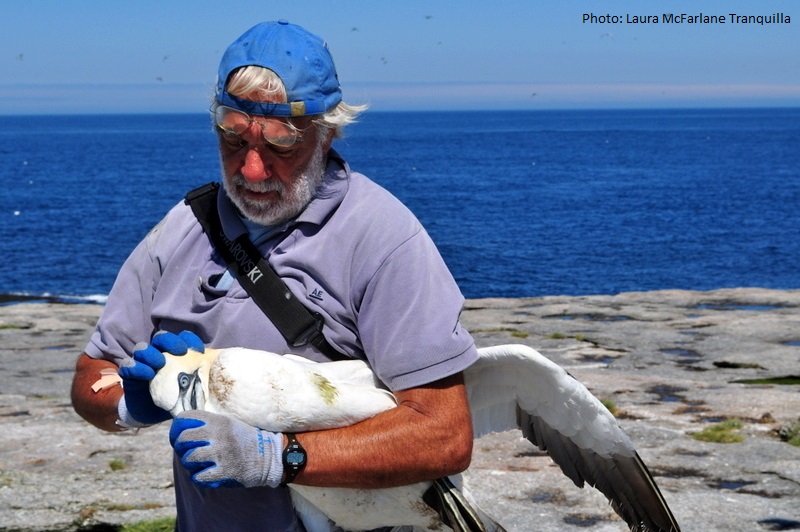
Dr. W. A. Montevecchi is a John Lewis Paton Distinguished University Professor and University Research Professor at Memorial University of Newfoundland, jointly appointed in the Departments of Psychology, Biology, and Ocean Sciences. He leads an interdisciplinary research program focused on marine bird behavioral ecology and environmental conservation. Research Interests: His lab investigates seabird responses to environmental change, including foraging/migratory ecology, multi-species food web dynamics in Arctic/Boreal ecosystems, seabird use as ecological indicators, bycatch mitigation in fisheries, and environmental impact assessments for energy developments. Research emphasizes conservation applications and collaboration with fishers, hunters, and scientists globally. Awards & Honors: John Lewis Paton Distinguished University Professor Students & Funding: Actively advises 6+ graduate students researching seabird ecology, gannet behavior, and storm-petrel conservation. Research is supported by Natural Sciences and Engineering Research Council of Canada (NSERC) and Fisheries and Oceans Canada. Collaborations: Partners with researchers across Canada, USA, Europe, Australia, and Africa, integrating Traditional Ecological Knowledge with oceanographic and fisheries science.
Jordan Bannerman serves as an Instructor II in the Department of Entomology within the Faculty of Agricultural and Food Sciences at the University of Manitoba. Based at the Fort Garry campus in Winnipeg, he teaches undergraduate courses including AGRI 2400 Experimental Methods, ENTM 1000 World of Bugs, and ENTM 2050 Introductory Entomology. Education Master of Pest Management (MPM), Simon Fraser University, Canada BSc Honours Evolution and Ecology, University of British Columbia Okanagan, Canada Research Focus Mr. Bannerman's research program investigates biological control mechanisms for agricultural pests through the lens of natural enemy ecology. His field studies examine parasitoid community composition in Diplolepis galls, stability dynamics of native and exotic lady beetle populations, and temperature-mediated effects on aphid-parasitoid interactions. Current projects focus on validating economic thresholds for canola flea beetles and understanding generalist predator roles in soybean aphid suppression within Manitoba's prairie ecosystems. This work directly informs sustainable pest management practices for Canadian agriculture. Publication Trends Analysis of Mr. Bannerman's 15 most recent publications reveals three dominant research strands: (1) parasitoid community ecology in gall systems, (2) invasive species dynamics involving soybean aphid and lady beetles, and (3) climate impacts on pest-natural enemy interactions. His methodological approaches combine field sampling with statistical modeling, often comparing native and exotic species responses. Geographically, his work centers on Manitoba's agricultural landscapes with implications for broader prairie farming systems. Professional Engagement Mr. Bannerman actively participates in the Entomological Society of Manitoba and contributes to regional entomological knowledge through faunistic studies like his 2019 paper on Manitoba earwigs. While not currently supervising graduate students, he mentors undergraduates through field courses including ENTM 3180 Field Techniques in Entomology and ENTM 3162 Manitoba's Insect Fauna. His teaching portfolio spans experimental methods, pest management ethics, and aquatic entomology.
Dr. Susan Yamamoto serves as Assistant Professor in the Department of Psychology at the University of Regina, where she directs the Normative Ethics and Law Lab (NELL). Her research program examines fundamental social processes in legal decision-making to promote fairness in justice systems. Her academic background includes: BA Hons from the University of Manitoba MA & PhD from Carleton University's experimental forensic psychology program Yamamoto's research centers on jury decision-making with specialized focus on insanity defence applications, racial/cultural dynamics in courtrooms, and the psychological underpinnings of punishment philosophies. She develops measurement tools using advanced psychometric methods and employs mixed-methodology approaches to investigate how utilitarian and retributive orientations shape legal judgments. Her work consistently addresses Canadian legal contexts with implications for judicial policy. Analysis of her 2015-2021 publications reveals a cohesive research trajectory examining intersections of race, mental health, and legal decision-making. Key trends include methodological innovations in mock jury studies, cross-cultural comparisons of punishment ethics, and development of validated scales for psychological constructs relevant to courtroom dynamics. Her collaborative work with Dr. Evelyn Maeder dominates this output, demonstrating sustained research partnerships. As an active supervisor, Yamamoto advises graduate students in psychology with opportunities in experimental legal psychology. Her lab infrastructure and publication record indicate successful grant funding for projects examining justice system biases and decision-making processes, though specific grant details aren't provided in available materials. The Normative Ethics and Law Lab provides specialized resources for experimental research on legal ethics, maintaining an active web presence (https://www.nellab.info) that facilitates collaboration and disseminates findings to legal practitioners and policymakers.
Carlyle Farrell serves as Associate Professor and Chair of the Global Management Studies Department at Toronto Metropolitan University's Ted Rogers School of Business Management, while also coordinating International Business programs in the G. Raymond Chang School of Continuing Education. With over 15 years of private-sector consulting experience across 20+ countries for organizations including the World Bank and African Development Bank, he bridges academic rigor with practical business insights in international marketing education. His academic foundation includes: B.Sc from the University of the West Indies M.Sc from the University of Guelph Ph.D from the University of Manitoba Professor Farrell's research centers on Third World Multinationals' global expansion strategies, with recent publications examining cultural distance impacts on Latin American subsidiaries and China's Belt and Road effects in Africa. His work consistently addresses how emerging market enterprises navigate institutional voids and cultural barriers, emphasizing practical applications for trade promotion and channel management. This focus stems from firsthand consulting experience across Caribbean, African, and Latin American markets. Analysis of his 14 journal publications (1985-2023) reveals evolving expertise: early work (1985-2008) concentrated on Caribbean trade and export promotion, while recent output (2011-2023) increasingly examines Chinese and Latin American multinationals through cultural/institutional lenses. His scholarship demonstrates methodological diversity spanning quantitative analysis of cultural distance, case studies of emerging market firms, and consumer behavior research, primarily published in international business and cross-cultural management journals. Key recognitions include: Toronto Metropolitan University Best New Scholar Award (2006) Transport Institute Fellowship, University of Manitoba Graduate Studies Fellowship, University of Manitoba J.L. Tennant Bursary, University of Guelph As an educator, Professor Farrell teaches international marketing across undergraduate and MBA programs while developing specialized courses like Latin American & Caribbean Business Environments. His industry experience informs active learning approaches, including marketing simulations evaluated in his 2020 pedagogy research. Though specific grant details aren't provided, his sustained collaboration with international development banks indicates robust funding for applied research on trade dynamics and emerging market strategies. While no formal lab structure is mentioned, Professor Farrell leads a research collective focused on emerging market internationalization, collaborating with scholars across Latin America, Africa, and Asia. This network facilitates comparative studies of multinational strategies while providing students with global research opportunities aligned with his expertise in Third World enterprise expansion.
Professor Dave Mason serves as Chair of the Department of Computer Science at Toronto Metropolitan University, where he leads academic and administrative operations while maintaining active research in Human Computer Interaction, Programming Languages, Software Engineering, and Web-Based Systems. His educational trajectory includes: PhD from University of Waterloo (2002) MSc from University of Toronto (1991) BSc from Acadia University (1973) Professor Mason teaches core courses including CPS 109 (Intro Computer Science), CPS 506 (Comparative Programming Languages), and CPS 710 (Translators), reflecting his expertise across foundational and advanced computing concepts. He directs the Software Engineering research group, driving innovation in software development methodologies. Professional engagement: Active member of Association for Computing Machinery (ACM) His leadership combines academic rigor with practical application, fostering student development through structured coursework and research mentorship within the department's collaborative environment.
Ettore Merlo is a Full Professor in the Department of Computer Engineering and Software Engineering at Polytechnique Montréal, where he leads research in cybersecurity, artificial intelligence, and software systems. He holds an M.Sc. from the University of Turin and a Ph.D. from McGill University. His affiliations include membership in the Institute for Data Valorization (IVADO), focusing on data science and AI innovation. His research integrates software engineering with AI, emphasizing: Software artifact analysis (static/dynamic/symbolic) AI-driven security solutions for clone detection, malware analysis, and access control Fairness and robustness in machine learning systems Evolutionary analysis of software vulnerabilities Recent publications (2022-2025) demonstrate a strong focus on ethical AI, including bias mitigation in neural networks, automated anomaly detection, and certification of safety-critical ML systems. His work frequently applies graph neural networks, unsupervised learning, and formal verification methods to industrial and cybersecurity challenges. Professor Merlo has supervised 25 graduate students (10 PhD, 15 Master's), with projects ranging from avionics software to phishing kit analysis. While no scientific awards are listed, his extensive publication record includes 136 works spanning journals, conferences, and technical reports. Collaborations include partnerships with industrial telecommunication firms and international academia. No dedicated lab is specified, but his research aligns with Polytechnique Montréal's 'New Frontiers in Information and Communications Technologies' center.
David Bird is a Full Professor in the Department of Biological Sciences at the University of Quebec in Montreal. His research program centers on freshwater ecosystems, with particular emphasis on cyanobacterial bloom dynamics, toxin production, and environmental health implications. He maintains an active publication record with frequent contributions to understanding bloom triggers and mitigation strategies. Research Focus: Professor Bird investigates cyanobacteria ecology through integrated approaches combining field studies, molecular biology, and environmental modelling. His key interests include: Bloom prediction using meteorological and genomic data Microcystin toxin accumulation in aquatic food webs Health impacts of recreational exposure to cyanotoxins Nitrogen-phosphorus interactions in eutrophic systems Innovative monitoring techniques for water quality management Publication Trends: His recent articles demonstrate strong focus on molecular detection methods (qPCR, amplicon sequencing), hydrodynamic modelling of bloom formation, and epidemiological assessments of cyanotoxin exposure. Work frequently involves interdisciplinary collaborations across limnology, public health, and environmental engineering. Laboratory & Fieldwork: Research activities include extensive field monitoring in Canadian lakes and international sites, with particular attention to Missisquoi Bay ecosystem dynamics. While no specific lab name is mentioned, his work involves water quality analysis and cyanotoxin detection methodologies.