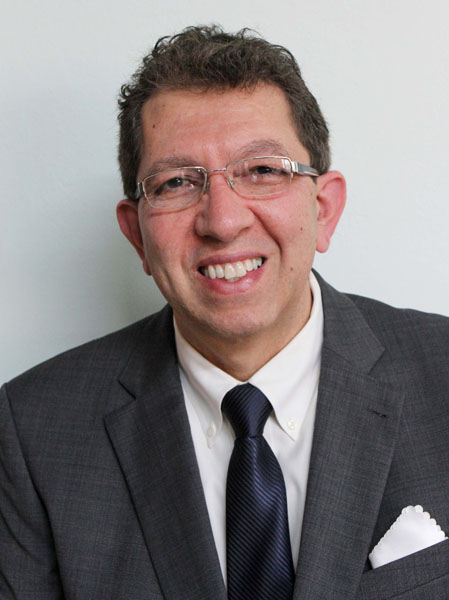
Marco Porta is a Full Professor at the University of Pavia, Department of Electrical, Computer and Biomedical Engineering. He teaches Web and Multimedia Technologies in the Computer Engineering Master's program and Web Design and Technologies in the interdepartmental CIM Bachelor's program. His research focuses on Eye Tracking, Vision-Based Perceptive Interfaces, and Human-Computer Interaction, with recent emphasis on AI applications for human-centered systems. He leads the Computer Vision & Multimedia Lab and chairs teaching councils for CIM and CoD programs. Education: Master's in Electronic Engineering (Polytechnic of Milan) and Ph.D. in Electronic & Computer Engineering (University of Pavia). Professional roles include vice-chair of IEEE's Technical Committee on Factory Automation. Over 118 publications in journals/conferences, with contributions to biometrics, e-learning interfaces, and industrial automation. Research highlights include gaze-based authentication systems, interactive museum interfaces, and ergonomic in-vehicle infotainment evaluations. Current projects explore gaze-driven intelligent tutoring systems and public space interaction frameworks.
Claire Le Goues is a Professor of Computer Science at Carnegie Mellon University, primarily affiliated with the Software and Societal Systems Department (S3D) within the School of Computer Science (SCS). She serves as the Associate Department Head for Faculty within S3D and leads the squaresLab research group. Le Goues also co-directs the REUSE@CMU summer program and teaches software engineering and program analysis at undergraduate, master's, and PhD levels. Her research spans software engineering and programming languages, with a particular focus on how to construct, maintain, evolve, improve/debug, and assure high-quality software systems. Le Goues has made significant contributions to automated program repair, program analysis, and defect detection. Her work often bridges theoretical foundations with practical applications, addressing real-world challenges in software development and maintenance. Le Goues' recent publications demonstrate a clear trend toward integrating large language models and generative AI with traditional software engineering techniques. Her research examines how these technologies can enhance program repair (BatFix, AdverIntent-Agent), vulnerability detection (Interpretable Vulnerability Detection Reports), and testing (LWDIFF for WebAssembly). This represents an evolution from her earlier foundational work in program repair (GenProg) toward leveraging contemporary AI advancements. She has mentored numerous students through her squaresLab research group and has been instrumental in developing educational programs that prepare the next generation of software engineers. Le Goues is also known for her advocacy for double-blind review processes in academic conferences, having implemented this approach when co-chairing the Symposium for Search-Based Software Engineering in 2014.
Jingling Xue is a Scientia Professor at the School of Computer Science and Engineering at the University of New South Wales (UNSW) in Sydney, Australia. As an IEEE Fellow of the Computer Society, he leads the Programming Languages and Compilers research group, focusing on practical applications of compiler optimization and program analysis techniques. His work bridges theoretical foundations with real-world software systems, particularly in developing open-source tools for large-scale program analysis. Professor Xue received his B.Eng and M.Eng degrees from Tsinghua University in 1984 and 1987, respectively, followed by a PhD from the University of Edinburgh in 1992. His academic journey has established him as a leading figure in programming languages and compiler technology. Xue's research spans programming languages, compiler technology, and program analysis with emphasis on practical relevance. His current projects include compiler techniques for improving parallelism and locality, pointer/alias analysis for million-line-scale programs, and static/dynamic analysis for detecting bugs and security vulnerabilities in real-world applications like web browsers and Android apps. His group actively develops open-source tools to support scientific replicability and reproducibility in these areas. His recent publications demonstrate a strong focus on applying program analysis techniques to modern challenges including AI compilers, homomorphic encryption, security vulnerability detection, and graph processing systems. The work shows evolution from traditional compiler optimization to addressing emerging domains like privacy-preserving computation and deep learning systems while maintaining rigorous theoretical foundations. Scientific Awards: Best Paper Award at CGO'13 Best Paper Award at CGO'16 Distinguished Paper Award at ECOOP'16 Distinguished Paper Award at ICSE'18 Distinguished Paper Award at ISSTA'19 Distinguished Paper Award at ASE'19 Distinguished Artifact Award at ISSTA'23 Best Artifact Award at FSE'23 Distinguished Paper Award at ASE'23 Test-of-Time Award at CGO'21 Professor Xue has successfully supervised 30 PhD students to completion, many of whom now work as professors or researchers in academia and industry. He has served as Program Chair for major conferences including LCTES'13, CC'18, CGO'20, and General Chair for LCTES'20. His group currently focuses on memory safety in Rust, smart contract analysis, AI compilers, compilation for privacy-preserving computation, and adversarial attacks in deep learning. The Programming Languages and Compilers group maintains strong connections with industry partners, translating theoretical advances into practical tools for real-world software development challenges. Their work on pointer analysis, memory safety, and compiler optimizations continues to influence both academic research and industrial practice.
Daye Nam is an Assistant Professor in the Department of Informatics at the University of California, Irvine, where they design, build, and evaluate AI tools for developers using natural language processing techniques. Their work sits at the intersection of software engineering, artificial intelligence, and human-computer interaction, with a strong focus on creating useful and usable tools that make software development more accessible, efficient, and enjoyable. Education PhD in Software Engineering, Carnegie Mellon University (2018-2024) MS in Computer Science, University of Southern California (2016-2018) BS in Computer Science, Yonsei University (2012-2016) Research Interests Dr. Nam's research focuses on designing, building, and evaluating AI tools for programmers at all levels, with an emphasis on making these tools both useful and usable. Their work spans several key areas including machine learning for software engineering (ML4SE), developer experience, and human-AI interaction. They employ a user-centered approach that involves conducting empirical studies to understand programmers' needs, building and training machine learning models based on those insights, creating tools for programmers, and evaluating them using human-computer interaction methods. Their research has particular relevance to AI-powered developer tools, API documentation and discovery, and educational applications of AI for programming students. Publications and Research Trends Dr. Nam's recent publications demonstrate a clear trajectory toward understanding and improving how developers interact with AI systems. Their work increasingly focuses on empirical studies of developer-AI interaction, particularly with large language models for code generation and understanding. There's a strong emphasis on understanding trust in AI systems among developers, measuring the actual impact of AI on development speed, and designing tools that balance automation with user control. Their research methodology often combines log analysis, user studies, and the development of novel AI-powered tools that address specific developer pain points. Scientific Awards and Honors Best Tool Paper Award at ASE ACM Student Research Competition 2nd Place SIGSOFT CAPS Student Travel Award for FSE ACM SIGSOFT NSF Travel Award NSF Travel Award for ICSE SIGSOFT Best Research Award from University of Southern California Teaching and Service Dr. Nam teaches SWE 233: Intelligent User Interfaces at UC Irvine, guiding students through the design and evaluation of AI-powered interfaces for software development. They have previously served as a Teaching Assistant and Co-Instructor for Foundations of Software Engineering at Carnegie Mellon University. In terms of service, they've been on program committees for major software engineering conferences including ICSE, ASE, and FSE, and have reviewed papers for journals like TOSEM and Empirical Software Engineering. They've also been active in student support programs, organizing and mentoring for graduate applicant support initiatives.
Yamine Ait-Ameur is a Full Professor in Data Engineering at ISAE-ENSMA (Institut Supérieur de l'Aéronautique et de l'Espace - École Nationale Supérieure de Mécanique et d'Aérotechique). He maintains dual laboratory affiliations with LIAS (Laboratoire d'Ingénierie des Applications de la Connaissance et des Systèmes) at both ENSIP (École Nationale Supérieure d'Ingénieurs de Poitiers) and ISAE-ENSMA campuses, reflecting his cross-institutional research activities. Professor Ait-Ameur's research program centers on formal methods for data engineering, with particular expertise in Event-B modeling applied to ontology-based database systems and multimodal human-computer interaction. His work bridges theoretical computer science with practical engineering applications, developing frameworks like OntoDB/OntoQL that enable semantic data representation and querying. His research trajectory shows evolution from foundational work in formal verification of numerical computations (1990s) to sophisticated applications in semantic web technologies, industrial automation systems, and multimodal interfaces (2000s-present). The publication record reveals strong thematic continuity across three decades, with recent work emphasizing formal verification of interactive systems (2013-2017), semantic data engineering methodologies, and multimodal interface design. His scholarly output demonstrates consistent international collaboration, particularly with researchers in Spain, Tunisia, and other European countries, as evidenced by co-authored publications and conference organization. Professor Ait-Ameur has played significant editorial roles including guest editing special issues of Data and Knowledge Engineering (2010) and Computers in Industry (2014), and co-organizing the Models and Data Engineering (MEDI) conference series. His research has practical applications in industrial automation, geological modeling, and transportation systems, as indicated by multiple publications addressing real-world implementation challenges.
Kimin Lee is an assistant professor at the Graduate School of AI at Korea Advanced Institute of Science and Technology (KAIST), where he focuses on developing safe and capable decision-making agents. His research spans multiple aspects of artificial intelligence with a strong emphasis on safety and reliability. Dr. Lee completed his educational journey at KAIST, earning a Ph.D. in Electrical Engineering with a focus on Machine/Deep Learning (2015-2020), advised by Professor Jinwoo Shin. He also holds a Master's degree in Electrical Engineering (Wireless Communication Networks, 2013-2015) and a Bachelor's degree in Electrical Engineering (2009-2013), both from KAIST. His primary research interests include: Physical AI - developing AI systems that can interact safely and effectively with the physical world Alignment - particularly reinforcement learning from human feedback (RLHF) and scalable oversight techniques Monitoring - safety evaluation frameworks and benchmarking for AI systems LLM Agents - enhancing the capabilities and safety of large language model-based agents Dr. Lee's recent publications reveal a strong trajectory toward addressing critical challenges in AI safety. His work consistently bridges theoretical advances with practical applications, particularly in the areas of reinforcement learning, computer vision, and natural language processing. A notable trend in his research is the development of methods to evaluate and enhance the safety of AI systems, especially large language models and diffusion models, while maintaining or improving their capabilities. As an active member of the academic community, Dr. Lee serves as an area chair for major conferences including NeurIPS, ICLR, and ICML, and regularly reviews for top-tier AI venues. He has also organized workshops focused on safe and trustworthy AI agents. Dr. Lee's research group at KAIST appears to focus on AI safety and decision-making, with research projects spanning from theoretical foundations to practical implementations of safe AI systems. His collaborative work with institutions like UC Berkeley and Google Research demonstrates the interdisciplinary nature of his research approach.
Kristian Koefoed Brandt serves as Associate Professor in the Department of Plant and Environmental Sciences at the University of Copenhagen's Faculty of Science, specializing in Microbial Ecology and Biotechnology. His research focuses on environmental microbiology, antibiotic resistance dynamics, and contaminant fate in agricultural systems. His primary research interests span Soil Microbiology, Antibiotic Resistance, Environmental Contaminants, and Wastewater Treatment, with significant contributions to understanding microbial processes in organic agriculture and wastewater systems. Key themes include bioremediation strategies, pesticide risk assessment, and the One Health implications of emerging contaminants. Analysis of his recent publications reveals a strong emphasis on antimicrobial resistance surveillance across environmental interfaces, particularly in wastewater-river systems and agricultural settings. His work integrates molecular techniques with large-scale environmental monitoring, often through European collaborative projects examining climate gradients and farming practices. 295 citations for 'Emerging contaminants: A One Health perspective' (2024) Featured in 13 news outlets and referenced in Wikipedia High-impact research on wastewater-based disease surveillance Extensive collaboration across European research networks Professor Brandt actively contributes to environmental risk assessment frameworks, particularly regarding recycled nutrients in organic agriculture. His research group employs advanced molecular markers and isotope techniques to study microbial interactions, with significant implications for sustainable agricultural practices and public health monitoring systems.
Stefano Ferilli is a Professor of Computer Science at the University of Bari, Italy, where he leads the ARA (Apprendimento e Ragionamento Automatico) research lab within the Department of Computer Science. His academic roles include former Director of the Interdepartmental Center for Logic and Applications (CILA) and current head of the Artificial Intelligence & Intelligent Systems node in the CINI national laboratory. He holds a PhD in Computer Science and has been a key figure in advancing machine learning, logic programming, and digital library technologies. Education: Laurea (MSc equivalent) in Information Sciences (1996), Specialist Laurea in Computer Science (2003), and PhD in Computer Science (2001). His research focuses on foundational aspects of machine learning, multi-strategy reasoning, process mining, and applications in cultural heritage, bioinformatics, and smart environments. Research Contributions: Developed frameworks like INTHELEX (incremental theory learner), WoMan (process mining), and DoMInUS (document management). Over 370 publications, including a Springer monograph and multiple award-winning papers. Active in organizing conferences like ECML-PKDD, ICDM, and IRCDL, and serves on editorial boards of journals like Information Sciences . Projects: Led or participated in over 30 national and European projects, including EU-funded initiatives on digital libraries (COLLATE, DELOS) and AI applications. Collaborates with industries like Samsung and institutions like the Italian Police for traffic analysis and cultural heritage preservation. Awards: Recognized for outstanding peer review (MDPI, ECMLPKDD), best paper awards, and contributions to AI education and cultural heritage. Member of prestigious associations like AI*IA (Italian AI Society) and AICA (Italian Computing Society).
Dr. Dongmei Zhao is a Professor in the Department of Electrical & Computer Engineering at McMaster University, part of the Faculty of Engineering. She specializes in wireless networking, network resource management, mobile edge computing, mobile computation offloading, and digital twins. Her research clusters focus on Digital & Smart Systems. Dr. Zhao holds a Ph.D. from the University of Waterloo. She teaches courses such as COMPENG 4DK4 (Computer Communication Networks), COMPENG 4DN4 (Advanced Internet Communications), and graduate-level courses like ECE 729 (Resource Management in Wireless Networks). Her research interests span cutting-edge topics including UAV-enabled edge computing, digital twin migration, vehicular networks, and reinforcement learning applications in resource allocation. She actively contributes to advancing 6G networks, security redundancy in autonomous systems, and decentralized manufacturing platforms. Dr. Zhao's recent publications emphasize optimization techniques for dynamic networks, platooning systems, and multi-agent learning frameworks. She has been recognized for her work in vehicular edge computing and digital twin integration, though explicit awards are not listed here. She advises on graduate studies in networking and edge computing, though no specific student names are provided in the text. Her work often intersects with practical challenges in smart infrastructure and autonomous vehicle systems.
Marcello Pietri is a Researcher (td art. 24 c. 3 lett. A) and Contract Professor at the Department of Engineering Sciences and Methods (DISMI) at the University of Modena and Reggio Emilia. His work focuses on Information Processing Systems, with expertise in IoT, Edge Computing, and Digital Twins. He teaches courses like 'Sistemi Informativi' (Information Systems) for the Engineering Management program, emphasizing database design, SQL, and web application development with Python. His research explores advanced topics including Digital Twin integration in Industry 5.0, Fluid Computing in IoT ecosystems, and Smart City data fusion using 5G MEC architectures. He collaborates with institutions like the DIPI Lab (Distributed and Pervasive Intelligence Group), contributing to projects on telecom security, energy forecasting, and human-centric manufacturing systems. Recent publications highlight innovations in operator digital twins for workplace well-being, distributed data mesh models for IoT-edge-cloud systems, and adaptive monitoring algorithms for large-scale cloud environments. His work bridges theoretical advancements with practical implementations, addressing challenges in scalability, real-time data processing, and interdisciplinary collaboration.
Arjun Mukherjee is a Lecturer at the Department of Computer Science , University of Houston , where he teaches courses in Machine Learning , Data Mining , Natural Language Processing , and Data Structures . His research focuses on Bayesian Inference , Data Mining , Natural Language Processing , Sentiment Analysis , Opinion Spam , and Web Mining , with a strong emphasis on deception detection and social media analysis. His recent publications explore advanced techniques in LLM-generated content detection synthetic data applications cross-domain deception modeling temporal user behavior analysis , reflecting his commitment to addressing modern challenges in digital content authenticity and machine learning robustness. Dr. Mukherjee has developed educational materials for graduate-level courses, including a well-structured Machine Learning course (COSC 6342) covering probabilistic inference, supervised/unsupervised learning, and neural networks. He earned his Ph.D. from the University of Illinois at Chicago in 2014, with a thesis titled Probabilistic Models for Fine-Grained Opinion Mining: Algorithms and Applications .
Dilara Torunoğlu Selamet serves as a Lecturer in the Department of Computer Engineering within the Faculty of Computer and Informatics at Istanbul Technical University. Holding a PhD, she specializes in Natural Language Processing for Turkish, with research emphases on social media text normalization, named entity recognition, and sentiment analysis. Her academic credentials feature: PhD in Computer Engineering, Istanbul Technical University (awarded circa 2013) Master of Science in Computer and Information Sciences (Non-thesis), Doğuş University (2009-2013) Bachelor of Science in Computer Engineering, Doğuş University (2004-2009) Dilara's scholarship tackles the complexities of Turkish NLP, a language with rich morphology. She has made notable contributions to text normalization for social media platforms, named entity recognition in authentic datasets, and semantic smoothing techniques for sentiment classification. Her work often bridges theoretical NLP with practical applications, as seen in resource-building projects like the ITU Web Treebank and Turkish sign language corpora. Her publication record (2011-2021) demonstrates methodical growth: initial work on text classification (2011) evolved into named entity recognition (2013) and social media normalization (2014, 2017), then expanded to data augmentation (2020-2021) and sign language processing (2020). This trajectory reflects her commitment to advancing Turkish NLP through both foundational research and innovative resource development. While no specific awards are documented, her research impact is evidenced by an h-index of 4 and over 127 citations in Scopus. Available information does not indicate any students supervised or research grants obtained. She is affiliated with Istanbul Technical University's Department of Computer Engineering, but no laboratory or research team memberships are specified in public profiles.
Professor Marios Polycarpou is a leading academic in intelligent systems and control engineering at the University of Cyprus, serving as Director of the KIOS Research and Innovation Center. He holds concurrent roles as Visiting Professor at Imperial College London and Founding Member of the Cyprus Academy of Sciences. His expertise spans neural networks, cyber-physical security, and critical infrastructure systems. Education: B.A. Computer Science & B.Sc. Electrical Engineering, Rice University, 1987 M.S. & Ph.D. Electrical Engineering, University of Southern California, 1989-1992 Research Interests: Intelligent systems and networks Adaptive learning control systems Fault diagnosis methodologies Machine learning applications Critical infrastructure resilience Awards: IEEE Neural Networks Pioneer Award (2016) ERC Advanced and Synergy Grants IEEE/IFAC Fellowships Cyprus Distinguished Researcher Award (2015) Grants & Leadership: Directed over 40 research projects Presidency roles in IEEE Computational Intelligence Society and European Control Association Edited prestigious journals including IEEE Transactions on Neural Networks Led major conferences: 2020 IEEE World Congress on Computational Intelligence and 2018 European Control Conference. Labs & Teams: Founder of KIOS Center (EU-funded excellence center) Developed SEMIoTICS semantic control framework
Dr. Dave Perkins is an Associate Professor (Reader) in Computer Science and Director of Teaching & Learning at Bangor University's School of Computer Science and Engineering. He additionally serves as the University Lead for Technology and Innovation in Teaching at the Centre for Enhancement of Learning and Teaching (CELT), driving educational technology initiatives across the institution. His leadership extends to the North West Wales Computing at Schools (CAS) Hub where he develops computer science education programs. Educational background includes: MEng in Computer Systems Engineering (University College of North Wales, Bangor, 2000) PhD in Optoelectronics (University of Wales, Bangor, 2004) Post Graduate Certificate in Education (University of Newport, 2012) His research focuses on computer science pedagogy , learning analytics , and educational technology innovation . He pioneers novel approaches to teaching through technological repurposing and develops analytical frameworks for understanding student journeys. Current investigations center on predictive modeling of student outcomes using machine learning and visualization techniques to enhance academic interventions. Publication analysis reveals two distinct research phases: early foundational work in optoelectronics and laser physics (2001-2005), followed by a contemporary focus on educational technology and learning analytics (2015-present). Current works demonstrate strong thematic clustering around student journey visualization, early-warning systems, and immersive educational interfaces. Honors and awards: Senior Fellowship, Higher Education Academy (2015) Bangor University Teaching Fellowship (2016) He leads significant projects including the JISC/Bangor Learning Analytics initiative and supervises postgraduate research in learner analytics. As former Regional Coordinator of Technocamps, he established outreach programs connecting universities with schools. Administrative responsibilities encompass admissions, employability programs, and institutional curriculum development.
Michalis Mountantonakis is a Postdoctoral Researcher at FORTH and Laboratory Teaching Staff in the Department of Computer Science at the University of Crete, Greece. He holds a PhD (2020), MSc (2016), and BSc (2014) in Computer Science from the University of Crete, all with top grades. His research focuses on Large-Scale Semantic Data Integration, Linked Open Data, and Semantic Web technologies, with over 45 publications in top venues like ACM VLDB, ISWC, and ECML. He has been awarded the prestigious SWSA Distinguished Dissertation Award (2020) and the Maria Michael Manasaki Fellowship (2020). His work includes tools like LODsyndesis and LODChain, addressing challenges in knowledge graph connectivity and validation of AI-generated content. Education: PhD in Computer Science (2016-2020), University of Crete (Excellent GPA 9.74/10) MSc in Computer Science (2014-2016), University of Crete (Excellent GPA 9.87/10) BSc in Computer Science (2010-2014), University of Crete (2nd in class with GPA 8.42/10) Research Interests: His work bridges semantic web technologies with modern AI challenges, emphasizing large-scale data integration, knowledge graph applications, and validation frameworks. He has contributed to cultural heritage informatics, machine learning-augmented semantic systems, and cross-lingual NLP solutions. Recent trends include leveraging LLMs for query generation and semantic enrichment while ensuring factual accuracy through knowledge graph-driven validation. Key Achievements: Developed LODsyndesis, a global-scale semantic integration service Pioneered real-time validation of ChatGPT responses using RDF knowledge graphs Won Best Paper Award (ISWC 2022) for entity enrichment techniques Recipient of Stelios Orphanoudakis Undergraduate Fellowship (2013-2014) Participated in Roche Continents 2019 (top 100 European science students) Grants & Labs: His research has been supported by GSRT/HFRI. He collaborates with FORTH-ICS and leads projects in EU-funded initiatives like iMarine and BlueBridge. Current work focuses on governance models for ontologies, interoperable thesaurus creation (e.g., FoodEx2), and semantic analytics for cultural heritage datasets.