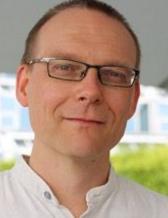
Tobias Pettersson is a Senior Lecturer at the Department of Pedagogy: Music, Dance and Drama , University of Gothenburg . His roles include Undergraduate Teaching Coordinator and Education Coordinator for both first/second cycle education and teacher training programs. He works at the intersection of musicology , gender studies , and pedagogical traditions . Current position since 2015 Active in teacher education since the 1990s Doctoral degree in musicology (2004) Research Focus: Analyzes the origins and persistence of musical traditions , gender equality in music life , and education for sustainable development . Led projects at the Centre for Environment and Sustainability (2012-2014) and developed web-based educational toolboxes. Key Contributions: Publications on Beethoven's canonization in Swedish education (2004), gender dynamics in performing arts (2006), and critical analyses of musicological epistemology (2005). His work bridges historical musicology , pedagogical theory , and sustainability education . Contact: Email: tobias.pettersson@gu.se Office: Eklandagatan 86, 41259 Göteborg
Yang Liu is a tenured Associate Professor at the Department of Management and Engineering , Linköping University, Sweden, and an Adjunct Professor at the University of Oulu, Finland. His expertise spans smart manufacturing, clean energy transition, and Industry 4.0 applications. He holds an M.Sc. and D.Sc. from the University of Vaasa, Finland. Research & Awards: Liu's work focuses on sustainable systems, decision support systems, and AI-driven energy efficiency. He has authored over 140 Web of Science publications, including top 0.1% ESI Hot Papers. He is ranked among the world's top 2% scientists (Stanford-Elsevier) and leads globally in 'big data analytics in manufacturing' and 'Industry 4.0-driven circular economy' research. Leadership & Projects: He leads projects like FlexSUS (EU Horizon 2020) and PERSEUS, developing tools for smart urban energy planning and 15-minute city models. He serves as Editor-in-Chief of Cleaner Engineering and Technology and Guest Editor for multiple journals. His research emphasizes bridging data science with sustainability challenges in manufacturing and energy systems. Key Achievements: Top-ranked in global citations, ESI Highly Cited Papers, and industry-driven sustainability frameworks. Grants: Leads EU-funded projects and collaborates with Siemens Energy on energy transition solutions. Labs & Teams: Part of the Environmental Technology and Management (MILJÖ) division and Unit for Product Service Innovation (MILJOPSI) at Linköping.
Olof Runborg is a Professor in Numerical Analysis at the Royal Institute of Technology (KTH) in Stockholm, Sweden. He works in the Division of Numerical Analysis, Optimization and Systems Theory within the Department of Mathematics at KTH. His research focuses on developing and analyzing numerical methods for partial differential equations, particularly for wave propagation problems. His educational background includes: MSc in Electrical Engineering from KTH (1992) BSc in Economics & Business Administration from SSE (1994) PhD in Numerical Analysis/Applied Mathematics from KTH (1998) Postdoc at Paris VI University (1999) Postdoc at Princeton University's Program in Applied and Computational Mathematics (2000-2001) Became Docent at NADA in 2003 Appointed Professor at KTH in 2010 Professor Runborg's research centers on the numerical treatment of partial differential equations, with special emphasis on wave propagation problems. His work spans multiple areas including high-frequency waves, multiscale phenomena, numerical homogenization, uncertainty quantification, multiresolution analysis, Gaussian beams, and mesh generation. A recurring theme in his research is developing methods to solve computationally expensive problems more efficiently while maintaining accuracy. His approach often involves coupling different numerical methods or reformulating equations to create more efficient computational approaches. His research has applications across physics and engineering domains where wave phenomena are important. An analysis of his recent publications (2015-2025) shows continued focus on high-frequency wave propagation with expanding applications to areas like the Landau-Lifshitz equation for magnetic materials and elastic wave propagation. His work bridges theoretical numerical analysis with practical computational techniques, often developing novel methods like the WaveHoltz iteration for solving the Helmholtz equation. The publications demonstrate increasing attention to uncertainty quantification and multiscale methods while maintaining strong theoretical foundations in error analysis. Professor Runborg teaches several courses at KTH including Numerical Methods (basic course), Applied Numerical Methods, Numerical Algorithms for Data-Intensive Science, and Selected Topics in Numerical Analysis II. He serves as examiner for degree projects in Scientific Computing. His teaching reflects his research expertise in numerical methods and computational mathematics, providing students with both theoretical foundations and practical implementation skills. Beyond his core research, Professor Runborg has engaged in interesting side projects, such as his analysis of 'Numbers on the Web' where he investigated the frequency of numbers 11-1000 in web content, revealing patterns related to dates, time, computer systems, and cultural phenomena. This demonstrates his broader interest in data analysis and computational approaches to understanding patterns in information.
Susanne Iwarsson is a Professor in Gerontology and Care for Older People at Lund University's Faculty of Medicine, holding the Mary and Seved Ribbing Professorship since 2005. She also serves as Director of the Centre for Ageing and Supportive Environments (CASE) and Coordinator of the Swedish National Graduate School for Competitive Science on Ageing and Health (SWEAH). Her academic journey includes a PhD in Medical Science (1997) and promotions to Associate Professor (1999) and Professor (2003). She has held leadership roles such as Pro-dean of the Faculty of Medicine (2006-2011) and Coordinator of the strategic research area MultiPark (2012-2014). Her research focuses on environmental gerontology, housing accessibility, and proactive ageing strategies. Key contributions include the Housing Enabler assessment tool and studies on ageing populations' participation in society. She has supervised 18 PhD students and 6 licentiates, with ongoing supervision of 4 current PhD candidates. Major projects include the Home, Health and Disability longitudinal study (2002-present) and the UserAge program exploring user participation in ageing research. Awards include the Excellent Teaching Practitioner title (2010) and Doctor Honoris Causa. Her work addresses UN Sustainable Development Goals related to health, sustainable cities, and reduced inequalities. Collaborations span universities in Sweden, Finland, Latvia, and the U.S., with partnerships in healthcare and municipal sectors.
Olof Bälter is a Professor in Computer Science at KTH Royal Institute of Technology, affiliated with the Division of Media Technology and Interaction Design within the School of Electrical Engineering and Computer Science. He is the founder of the Technology-Enhanced Learning research group and holds a focus on learning engineering and human-computer interaction. His research interests center on technology-enhanced learning , question-based learning , learning analytics , AI in education , and inclusive pedagogy . A consistent theme in his work is improving efficiency in education and daily life through digital tools. He developed the Pure Question-Based Learning (Pure QBL) methodology, a digital Socratic approach that enhances student engagement and learning outcomes. His work extends to wellness in education through initiatives like walking seminars, and he investigates digital interventions for mental health, such as online Cognitive Behavioral Therapy (CBT) courses. His recent publications highlight trends in AI-generated educational content , learning efficiency , digital pedagogy , and inclusive course design , with applications in computer science education, language instruction, and global development. His research often employs experimental and data-driven methods, including randomized controlled trials and learning analytics. Teacher of the Year at the Surveying program KTH's Pedagogical Prize Higher Education Hero STINT Excellence in Teaching Scholarship (2008 and 2013) Olof Bälter has supervised numerous courses in programming, computer science, media technology, and learning engineering. He has collaborated with institutions such as Stanford University, Williams College, Region Stockholm, Stockholm University, and organizations like Promobilia and Begripsam. His projects aim to scale effective learning methods globally and make education more accessible and efficient. He leads research on the effectiveness of Pure QBL for students with ADHD and is involved in developing digital tools for health literacy and professional development in Ethiopia and Rwanda. His work bridges theory and practice, aiming to transform educational delivery through innovation and evidence-based design.
Maria Fällman is a Professor at the Department of Molecular Biology at Umeå University, where she also serves as Deputy Head of Department. She is affiliated with Molecular Infection Medicine Sweden (MIMS), a leading research center for molecular infection medicine in Sweden. Dr. Fällman's research focuses on understanding the molecular mechanisms behind bacterial adaptation to different environments, with particular emphasis on Yersinia pseudotuberculosis and Salmonella enterica Typhimurium. Her group investigates gene regulation critical for establishing and maintaining infections, bacterial stress responses, and the molecular mechanisms of the Type Three Secretion System (T3SS). The lab has developed advanced methods for RNA extraction from complex tissue samples and performs in vivo gene expression analyses. Her publication record shows consistent contributions to understanding bacterial pathogenesis, with recent articles in high-impact journals including Nature Communications, Science, and PLOS Pathogens. Her work spans from fundamental molecular mechanisms of bacterial virulence to computational approaches for analyzing pathogen stress responses. A significant contribution is the PATHOgenex database (http://www.pathogenex.org), containing gene expression data of over 30 human pathogens exposed to different stress conditions. Dr. Fällman leads the Maria Fällman Lab, which has made important discoveries including the finding that sub-lethal doses of Yersinia result in persistent infection in mice with reprogramming of bacterial gene expression. Current projects focus on stress response modeling and deciphering heterogeneous populations of infecting bacteria using single-cell RNA-seq.
Grzegorz Niedzwiedzki is a Researcher at Uppsala University's Department of Organismal Biology, specializing in vertebrate palaeontology and early tetrapod evolution. He holds a PhD from the University of Warsaw (2013) and has conducted expeditions across Poland, Russia, Tunisia, Greenland, and Sweden. His research focuses on Triassic-Jurassic vertebrate ecosystems, coprolite analysis, and early dinosaur evolution. Education: PhD in Biology (2013), University of Warsaw Master's in Biology (2007), University of Warsaw Bachelor's in Biology (2004), University of Warsaw Research Interests: Grzegorz's work analyzes fossilized footprints, coprolites, and skeletal remains to reconstruct ancient ecosystems. He has pioneered studies on Early Triassic predator ecosystems via coprolites and contributed to understanding dinosaur dietary habits through coprolite microbiota analysis. His fieldwork has uncovered critical fossils like the archosaur Smok wawelski and Early Jurassic dinosaur tracks. Key Achievements: Recipient of multiple prestigious awards (National Geographic grants, Prime Minister's Special Award) Over 100 peer-reviewed publications in journals like Nature , Palaeogeography, Palaeoclimatology, Palaeoecology , and Acta Palaeontologica Polonica Co-discoverer of the oldest known mammaliaform fossil in Greenland Grants & Collaborations: Multiple international expeditions funded by Polish and Swedish institutions Collaborations with the American Museum of Natural History and Uppsala University Labs/Teams: Affiliated with Uppsala University's Evolution and Development research group and collaborates globally on fossil expeditions and synchrotron imaging projects.
Stefan Hallström is an Associate Professor in Lightweight Structures at KTH Royal Institute of Technology's Aeronautical and Vehicle Engineering School, affiliated with the MATERIAL AND STRUCTURAL MECHANICS department. He specializes in composite materials, structural mechanics, and lightweight design, focusing on aerospace and automotive applications. His research explores advanced composites, sandwich structures, and material behavior under various loading conditions. Hallström teaches courses including Lightweight Design (SD2432), Lightweight Structures and FEM (SD2411), and supervises degree projects in Lightweight Structures and Solid Mechanics. He has published extensively on topics like 3D-woven composites, damage tolerance, and mechanical reinforcement strategies, with over 90 peer-reviewed articles. His work emphasizes material characterization, finite element modeling, and practical applications in structural engineering. Key research trends include optimizing composite joint performance using metal inserts, analyzing moisture effects on composite laminates, and developing frameworks for modeling 3D textile architectures. His contributions address challenges in aerospace materials, energy absorption in beams, and improving simulation accuracy for molded composites. Hallström collaborates on projects involving novel instrumented test rigs for polymer composites and advanced manufacturing techniques for structural reliability. His expertise bridges theoretical mechanics with practical engineering solutions, influencing both academic research and industrial applications.
Niklas Wahlberg is a Professor in Biological Systematics at Lund University, Sweden. He holds roles including Museum Director of the Biological Museum and Principal Investigator in the BECC biodiversity initiative. His primary affiliation is with the Department of Biology, focusing on evolutionary biology and systematics of Lepidoptera. Education & Career: PhD in Evolutionary Biology from University of Helsinki (2000) Postdoc at Stockholm University (2000–2002) Academy Research Fellowship at University of Turku (2006–2011) Professor in Genetics at Turku (2014) before moving to Lund in 2015 Research Interests: His work centers on the evolutionary history of Lepidoptera, particularly diversification patterns linked to angiosperm evolution and mass extinction events. He employs molecular systematic methods, next-gen sequencing, and museum specimens to study clade origins and biogeography. Key topics include Cretaceous diversification, post-mass extinction radiation, and genomic discordance in butterflies. Awards & Recognition: Web of Science Highly Cited Researcher (2017, 2018) Elected to Kungliga Fysiografiska Sällskapet (2016) Grants & Projects: Swedish Research Council: Testing gene-trait associations in genome modifications (2025–2029) Infrastructure leader for museum collections and holistic specimen projects Labs & Collaborations: Head of the Systematic Biology Group at Lund, managing the Biological Museum’s collections. Active in global entomology networks and co-organizes major conferences like the International Congress of Entomology.
Nicolò Dell'Unto serves as Professor of Archaeology at Lund University's Department of Archaeology and Ancient History within the Faculty of Humanities and Theology. His research pioneers digital methodologies for archaeological analysis, specializing in 3D visualization, spatial technology, and virtual reality applications that transform how we perceive and investigate the past. Based at Helgonavägen 3 in Lund (Room LUX:A122), he directs the Digital Archaeology Laboratory (DARKLab) and oversees undergraduate/postgraduate digital archaeology programs. His educational background includes: Archaeology studies at University of Rome, La Sapienza PhD in Technology and Management of Cultural Heritage from IMT Lucca, Italy Postdoctoral fellowship at University of California Merced Dell'Unto's research focuses on how laser scanners, photogrammetry, GIS, and virtual reality technologies fundamentally reshape archaeological practice. His work bridges technical innovation with theoretical frameworks in landscape archaeology, emphasizing practical field applications while addressing methodological challenges in data interpretation. Key themes include digital documentation standards, 3D data management, and the cognitive impact of visualization tools on archaeological reasoning. His publication trends reveal a shift toward AI integration in archaeological data interpretation, infrastructure development for 3D data sharing, and cross-disciplinary collaborations examining Mediterranean connectivity. Recent works emphasize practical frameworks for implementing digital tools in fieldwork while addressing sustainability challenges in digital heritage preservation. Award highlights: Einar Hansen Prize for Humanities (2017) Royal Physiographic Society of Lund election (2024) Best Paper Award (2014) Highly Cited Research recognition (2017) Dell'Unto supervises PhD and master's students while leading major projects including RE-OSTRAKON (3D artifact scanning), TETRARCHs (data reuse), and AIR (Archaeological Interactive Report). His DARKLab serves as Sweden's national infrastructure for digital archaeology, collaborating with institutions like University of Oslo's Museum of Cultural History where he holds a visiting professorship since 2019. He actively shapes digital archaeology policy as Domain Specialist for Swedish National Data Service, Board Member for Statens historiska museer, and Open Science Champion at Lund University, driving national standards for archaeological data management and open science practices.
Damir Isovic is an Associate Professor and Vice-Chancellor for Internationalization at Mälardalen University's Academy of Innovation, Design and Technology. Previously, he served as Dean of the School of Innovation, Design and Engineering. His roles include leadership in academic administration and participation in national boards. He holds a PhD and has extensive international teaching experience. Research focuses on real-time systems, embedded systems design, and scheduling algorithms. Notable contributions include seminal work in real-time scheduling recognized by the IEEE Technical Community on Real-Time Systems. He has organized major conferences and delivered keynotes globally. His publications emphasize hybrid scheduling approaches, real-time operating systems (RTOS), media processing in resource-constrained systems, and MPEG standards. Recent work integrates memetic algorithms with fuzzy controllers and explores multi-core scheduling fairness. His research bridges theoretical scheduling models with practical embedded system implementations. No scientific awards explicitly listed in the text. Advising activities include supervising PhD students, though specific names are not provided. Lab affiliations include the Division of Networked and Embedded Systems, where he develops frameworks like GENESIS for embedded system engineering. His work emphasizes cross-disciplinary collaboration and industry partnerships in education and technology development.
Clare Bradshaw is a Professor in the Department of Ecology, Environment and Botany at Stockholm University. She is a marine ecologist and ecotoxicologist specializing in human impacts on marine ecosystems, with expertise in radioactive contaminants and bottom trawling effects. Her research focuses on how ecological processes determine the overall effects of disturbance, particularly in the Baltic Sea and Kattegat regions. Dr. Bradshaw's research interests span marine ecology, ecotoxicology, and sediment biogeochemistry, with a strong emphasis on understanding how bottom trawling affects seabed processes, sediment dynamics, and contaminant suspension. She has extensive experience studying marine pollution, particularly radioactive contaminants, and has evolved from earlier work on coral bleaching in the Indian Ocean and bottom trawling effects in the Irish Sea to her current focus on Baltic Sea ecosystems. Her recent publications reveal a strong focus on carbon cycling in marine environments, sediment biogeochemistry, and the cumulative impacts of human activities on seabed integrity. The research shows increasing attention to policy implications, with several publications addressing how scientific findings can inform marine conservation and fisheries management practices, particularly regarding carbon storage capacity in marine environments and the long-term recovery of benthic ecosystems. Member of the Bradshaw Research Group at Stockholm University Course organizer for the Marine Biology summer course Actively seeking Master's students for research on Baltic benthic macrofauna (as of Sept 2023) Dr. Bradshaw collaborates extensively with multiple institutions including SLU Aqua, DHI, Aquabiota, University of Cagliari, Edith Cowan University, IAEA Marine Lab Monaco, and NIVA. Her research has significant implications for marine conservation policy, fisheries management, and understanding the role of marine ecosystems in global carbon cycling.
Joakim Lindblad is a Professor at the Department of Information Technology, Uppsala University , and holds affiliated roles as Senior Research Associate at the Mathematical Institute of the Serbian Academy of Sciences and Arts, and Head of Research at Topgolf Sweden AB. With over two decades of expertise in image analysis and machine learning , his work bridges computational methods with biomedical applications. Key affiliations: Uppsala University, Serbian Academy of Sciences, Topgolf Sweden Specializations: Deep Learning, Multimodal Image Registration, Quantitative Microscopy His research focuses on reliable image processing frameworks that integrate intensity and spatial information , particularly for biomedical applications . Recent publications highlight innovations in autofluorescence-based cancer detection , self-supervised one-class learning for sparse instance identification, and rotation-equivariant CNNs for robust analysis of cytology images. Recent article trends demonstrate expertise in multimodal image analysis (2024: 3 papers), oral cancer detection (2025: 2 papers), and multiscale biomedical imaging . His 2025 work on the Uppsala Storytelling Dataset introduces novel frameworks for multimodal dataset creation in AI research. While no scientific awards are explicitly mentioned, his extensive publication record (2000-2025) across top venues like Pattern Recognition , PLOS ONE , and IEEE Transactions indicates significant academic impact. His methodological contributions span stochastic distance transforms , fuzzy set defuzzification , and multimodal image registration techniques. Collaborative work with researchers like Nataša Sladoje and interdisciplinary teams has produced innovations in automated cytology analysis , TEM image enhancement , and AI-driven medical diagnostics . His 2021-2022 projects introduced contrastive learning approaches for multimodal image registration and explainable AI frameworks for infant engagement analysis.
Elizabeth Rhoads is a Senior Lecturer and Researcher at the Centre for East and South-East Asian Studies, Lund University, under The Joint Faculties of Humanities and Theology. She is also a member of the LU Profile Area on Human Rights, reflecting her deep engagement with human rights issues in Southeast Asia. Her work is interdisciplinary, bridging law, anthropology, geography, and urban studies. Education: PhD in Law, King's College London (Dickson Poon Fellow) M.A. in Human Rights Law, SOAS A.B. in Anthropology, Bryn Mawr College Her research focuses on citizenship, displacement, property relations, and minority-state dynamics in Myanmar and Indonesia. She employs a multidisciplinary approach combining legal history, legal anthropology, and urban studies to examine how law shapes everyday life in contexts of political upheaval and marginalization. Her fieldwork in Myanmar and Indonesia includes work on land disputes, transitional justice, women’s political participation, and violent extremism. The analysis of her recent publications reveals a consistent focus on legal and social exclusion in Southeast Asia, particularly around citizenship and urban informality. Her work often explores how legal frameworks produce statelessness, displacement, and spatial violence, especially in Myanmar. She frequently collaborates with local organizations and researchers, emphasizing participatory and ethical research practices during crises. Her publications span journal articles, reports, book chapters, and reviews, with increasing attention to post-coup dynamics and community resilience. Scientific Awards and Honors: Dickson Poon Fellow, King's College London Blakemore-Freeman Fellowship for advanced Burmese language study British Academy Co-Investigator and Post-Doctoral Fellowship Elizabeth Rhoads is actively involved in advising and research grants. She is currently leading a Swedish Research Council-funded project on citizenship and displacement in Myanmar in collaboration with a Burmese organization. She is also a Co-Investigator on the EU-funded EUVIP project under Horizon Europe, examining the EU’s role in the Indo-Pacific. She serves on the editorial board and as Guest Editor for Jurnal HAM , contributing to academic discourse on human rights in the region. She has been involved in collaborative research networks focusing on spatial violence, urban informality, and legal pluralism in Southeast Asian cities. Her work emphasizes community-based and interdisciplinary methodologies, often co-producing knowledge with local actors. She contributes to public engagement through web publications and digital storytelling, such as the 'Yangon Stories' initiative.
Per Ahlberg is a Professor at Uppsala University's Department of Organismal Biology, specializing in vertebrate evolution and paleontology. His research focuses on early vertebrates, particularly Devonian tetrapods, placoderms, and the transition from fish to land vertebrates. He employs advanced imaging techniques like synchrotron tomography to study fossil anatomy and preservation. Key areas of study include the evolution of jaws, teeth, and skeletal structures in early vertebrates, as well as the ecological and environmental contexts of major evolutionary transitions. His work integrates anatomical, paleontological, and developmental approaches, collaborating on projects such as the analysis of the Gogo Lagerstätte fossils and the study of tetrapod trackways. Ahlberg's publications highlight contributions to understanding vertebrate origins, such as discoveries related to Romundina stellina and Ventastega curonica, which bridge gaps between fish and tetrapods. He has also addressed broader topics like fossil nomenclature stability and post-extinction ecosystem recovery.