Per Ahlberg is a Professor at Uppsala University's Department of Organismal Biology, specializing in vertebrate evolution and paleontology. His research focuses on early vertebrates, particularly Devonian tetrapods, placoderms, and the transition from fish to land vertebrates. He employs advanced imaging techniques like synchrotron tomography to study fossil anatomy and preservation. Key areas of study include the evolution of jaws, teeth, and skeletal structures in early vertebrates, as well as the ecological and environmental contexts of major evolutionary transitions. His work integrates anatomical, paleontological, and developmental approaches, collaborating on projects such as the analysis of the Gogo Lagerstätte fossils and the study of tetrapod trackways. Ahlberg's publications highlight contributions to understanding vertebrate origins, such as discoveries related to Romundina stellina and Ventastega curonica, which bridge gaps between fish and tetrapods. He has also addressed broader topics like fossil nomenclature stability and post-extinction ecosystem recovery.
Paul Johannesson is a Professor at the Department of Computer and Systems Science , Stockholm University. He leads the PRECIS research group (Process Requirements Enterprise Capability Information Systems Modeling), focusing on theories and methods for integrated organizational and IT solutions. Education: BSc in Mathematics (Stockholm University), PhD in Computer Science (1993, Stockholm University). Research Interests: Conceptual modeling, enterprise modeling, process integration, design science, and ontological analysis, with applications in healthcare systems, IoT security, and digital innovation. His work bridges linguistic instruments with information systems design. Recent Article Trends: Focus on healthcare interoperability, IoT security, and ontological frameworks. Topics include drug-drug interaction modeling, decentralized identity management, and policy-based decision-making systems. Projects: Current work includes intelligent IoT security solutions and data-driven services for elderly care (DISRA, DISAL). Past projects examine EU knowledge systems, IT in healthcare, and process modeling education. Teaching: Courses on enterprise modeling and business models at bachelor and master levels. Thesis supervision at the Department of Computer and Systems Sciences. Labs/Teams: Leads the PRECIS research group, which integrates conceptual modeling with IT strategy and organizational design.
Olaf Hartig is a Senior Associate Professor at Linköping University's Department of Computer and Information Science (IDA), affiliated with the Database and Information Techniques (ADIT) division. He is also an Amazon Scholar collaborating with the Neptune graph database team. His research focuses on data management, semantic web technologies, graph databases, and distributed data systems. Hartig holds a PhD from Humboldt-Universität zu Berlin and is a Docent at Linköping University. He has received numerous awards, including the SWSA Distinguished Dissertation Award and eight best paper awards, and was selected as a Wallenberg Academy Fellow in 2024. Education: PhD in Computer Science (Humboldt-Universität zu Berlin), Docent (Linköping University). Research interests span query processing for Linked Data, federated systems, RDF and GraphQL semantics, and knowledge graph construction. He leads research groups in Database and Web Information Systems and Semantic Web Technologies at IDA. Key achievements include pioneering traversal-based query execution, developing Triple Pattern Fragments, and contributions to standards like RDF* and SPARQL*. His work has been recognized through grants, patents (e.g., on graph acceleration techniques), and leadership roles in conferences like ISWC and ESWC. Teaching: Course leader for database technology courses (TDDD12, TDDD37) and advanced topics like big data analytics and bioinformatics databases. Active in curriculum design and interdisciplinary education. Labs/Teams: Database and Web Information Systems Group, Semantic Web Research Group, Sports Analytics Group (IDA) Grants: Wallenberg Academy Fellowship, Swedish Research Council funding
Reto Weber is a Lecturer in Technology at Chalmers University of Technology, specializing in Maritime Studies . With a professional background as a sea captain and pilot on the Swedish west coast, he brings practical maritime expertise to his academic work in bridge simulators and e-navigation systems. Education : Sea Captain's Degree, Master's from World Maritime University (Switzerland, England, Sweden) Affiliations : Chalmers University, Lighthouse - Swedish Maritime Competence Center, Swedish Transport Administration (Trafikverket) His research focuses on maritime navigation systems , particularly examining human factors in automated environments. Key areas include: Algorithmic decision support in maritime traffic Collision avoidance mechanisms Impact of automation on vessel traffic services Development of web-based simulation tools Route exchange protocols and e-navigation solutions Remote ship monitoring ergonomics Reto's publications reveal trends in SMART ship technologies and Lighthouse projects , emphasizing the integration of artificial intelligence with traditional maritime practices. His work spans simulation-based training tools, COLREG compliance, and physics-informed machine learning architectures for wind propulsion optimization. As an examiner for courses like MManeuvering and Navigation in Confined Waters and Bridge Service , he bridges academic research with practical maritime education through Chalmers' Full Mission Bridge Simulator . Collaborations with institutions like Lighthouse and Trafikverket demonstrate his commitment to advancing maritime safety and efficiency through technology.
Maria Hedelin serves as a Senior Lecturer at Karolinska Institutet's Department of Medical Epidemiology and Biostatistics since 2023, specializing in nutrition-dietetics intersections with cancer epidemiology, particularly prostate cancer research through dietary interventions and biomarker analysis. She earned her Doctor of Philosophy (PhD) from Karolinska Institutet's Department of Medical Epidemiology and Biostatistics in 2006, establishing her academic foundation in epidemiological methods and nutritional sciences. Hedelin's research centers on nutritional oncology, investigating how phytoestrogens, dietary fiber, and fatty acids influence cancer development and progression. Her work bridges clinical practice and population health through randomized controlled trials like PRODICA and cohort studies examining dietary patterns in Swedish cancer populations. She develops innovative assessment tools including mobile applications for dietary monitoring, emphasizing methodological rigor in nutritional epidemiology. Analysis of her 15 most recent publications reveals consistent thematic focus on prostate cancer nutrition interventions, with evolving methodological sophistication from cohort studies (2008-2013) to contemporary randomized trials (2021-2025). Her research spans dietary assessment validation, genetic-diet interactions, radiotherapy side effect mitigation, and cross-cancer applications from prostate to breast and colorectal malignancies. No major scientific awards or prizes are documented in publicly available information regarding her career achievements. While specific student advising details remain unpublicized, her doctoral thesis supervision and extensive publication record suggest active mentorship roles. Departmental context indicates involvement in Karolinska's Medical Epidemiology and Biostatistics unit which recently secured 120 million SEK in Swedish research funding (2024), supporting collaborative projects in cancer epidemiology and nutritional interventions. As a core faculty member in one of Europe's leading medical research institutions, Hedelin contributes to Karolinska Institutet's mission through interdisciplinary collaborations spanning oncology, nutrition science, and biostatistics, with growing emphasis on personalized dietary approaches based on genetic profiling in cancer care.
Andre Nyberg is a Professor at the Department of Community Medicine and Rehabilitation, Section of Physiotherapy, Umeå University, Faculty of Medicine. He serves as Group leader of Umeå Translational Respiratory EXercise group (U-TREX), a multidisciplinary research group dedicated to patient-centered research for individuals with respiratory diseases. His educational background includes: Associate Professor, Physiotherapy (2019) Ph.D. in Physiotherapy, Umeå University (2014) Master's degree in sports medicine, Umeå University (2013) Master's degree in physiotherapy, Umeå University (2013) Bachelor's degree in sports medicine, Umeå University (2011) Bachelor's degree in physiotherapy, Umeå University (2009) Bachelor's degree in health sciences, Umeå University (2007) Dr. Nyberg's primary research focuses on developing new strategies for the assessment and management of extrapulmonary manifestations among people with COPD. His work examines the effects and explanatory mechanisms of different forms of physical exercise on extrapulmonary manifestations such as impaired muscle, cardiovascular, and cognitive function. He investigates the reliability, validity, and feasibility of different strategies for assessing thigh muscle function in COPD and develops new treatment strategies optimizing physical exercise in COPD through both in-vivo and in-vitro experiments using quantitative and qualitative research methods. His recent publications (2023-2024) demonstrate a strong emphasis on high-intensity interval training for COPD patients, muscle function assessment, and digital health interventions. The research spans from physiological mechanisms to clinical implementation and patient-centered outcomes, reflecting a comprehensive translational approach that bridges laboratory findings with practical clinical applications. Scientific awards and recognitions: Erik K Fernströms Pris for young promising researchers (2023) European Research Council Starting Grant (2022) Heart and Lung Foundations Mentor Program for promising young scientists (2022) Prince Daniel's Research Grant for Promising Young Researchers (2021) Best Abstract at CR-IUCPQ, Quebec, Canada (2020) Best Poster presentation at Nordic Lung Congress (2017) Best abstract in COPD at European Respiratory Society, Munich (2014) Dr. Nyberg serves as a supervisor for bachelor's and master's level projects and has been teaching undergraduate and master's training for physiotherapists and occupational therapists since 2011. He became a Senior Lecturer in 2016 and was recognized as a distinguished university teacher in 2021. He is responsible for the course 'Physiotherapy - clinical evaluation and measurement methodology' and delivers lectures at Master and Research levels. He leads multiple research projects including 'Countering stigma in self-management in people with chronic obstructive pulmonary disease' (2024-2026) and 'COPD-HIIT' (2021-2028), and serves in various leadership roles including Chair of the European Respiratory Society - Physiotherapy Subgroup (2024-2027).
Agneta Andersson is a Professor at Umeå University's Department of Ecology and Environmental Science, and affiliated as Professor at the Umeå Marine Sciences Centre (UMF). She leads research projects in marine ecology and coordinates the strategic EcoChange program. Her work focuses on microbial ecology, eutrophication impacts, and climate change effects on marine ecosystems. She supervises PhD student Meifang Zhong and collaborates with postdoc Alef dos Santos and lab members Sonia Brugel, Kesava Ramasamy, Karolina Eriksson, and Li Zhao. Research Interests Her research explores microbial community dynamics, predator-prey interactions in aquatic systems, and the ecological consequences of terrestrial organic matter inflow. Key topics include mercury contamination in sediments, phytoplankton responses to environmental changes, and the role of dissolved organic matter (DOM) in coastal ecosystems. She investigates how climate-driven environmental shifts affect food web efficiency and toxin bioaccumulation patterns. Current Projects Scientific Coordinator for the strategic EcoChange program Leading a 2025–2026 project assessing eutrophication threats in the Bothnian Bay Developing DNA-based monitoring tools for marine phytoplankton Grants & Collaborations Her work is supported by grants funding studies on Baltic Sea microbial diversity and coastal DOM dynamics. She contributes to international initiatives like the CoastDOM database and collaborates with institutions globally to address climate change impacts on aquatic ecosystems. Labs & Teams Her research group focuses on microbial ecology and environmental monitoring. The lab emphasizes interdisciplinary approaches combining molecular techniques, field observations, and experimental mesocosm studies to address pressing environmental challenges.
Alejandro Russo is a Professor at Chalmers University of Technology , specializing in Information Flow Control (IFC) , Secure Programming Languages , and Functional Programming . His research bridges theoretical foundations and practical implementations, focusing on mitigating timing channels , covert channels , and data leakage in concurrent systems. Developed novel frameworks for Differential Privacy with provable accuracy bounds Pioneered COWL integration for browser security and instruction-based scheduling to prevent cache timing attacks Led major projects like HIPSTER (hybrid static/dynamic IFC) and AppFlow (practical IFC deployment) His publications reveal expertise in security libraries for Haskell and Python , with a focus on faceted execution , label manipulation , and mechanized security proofs . Students under his supervision have explored topics ranging from secure eDSLs to privacy-preserving compilation techniques . Scientific awards : Google Research Award (2011) for Python taint analysis Advising and grants : Principal Investigator for VR , STINT , and Google Research Award Supervised 12+ PhD and Master’s students in security and functional programming research
Marlene Ågerstrand is a Senior Lecturer at the Department of Environmental Science , Stockholm University . Her research focuses on the science-policy interface in chemical risk assessment and management, emphasizing how scientific data inform decision-making, the effectiveness of regulatory strategies, and the role of experts in policy development. She actively collaborates with ecologists, toxicologists, chemists, political scientists, and environmental lawyers. Key affiliations: International Panel on Chemical Pollution (IPCP) Board member Co-developer of the SciRAP web tool for structured chemical evaluations Member of the Baltic Sea Fellows interdisciplinary network Research Interests include improving environmental risk assessments of chemicals, science-policy interactions in chemical management, and pathways to a non-toxic circular economy. She specializes in qualitative methods like document analysis and stakeholder interviews. Recent Publications span environmental quality standards under the Water Framework Directive, essential-use concepts in REACH authorization, regulatory disparities in antimicrobial substance controls, and systematic review frameworks for endocrine disruptors.
Simon Butler is a Senior Lecturer in the Department of Information Technology at the University of Skövde's School of Informatics. He is an active member of the Distributed Real-Time Systems research group and contributes significantly to undergraduate computer science education. His academic work bridges theoretical research with practical industry applications in software development. Butler's research interests center on the challenges software developers face in creating and maintaining software systems, with particular focus on program comprehension, software maintenance, and the socio-technical and educational aspects of software development in hybrid environments where open source and proprietary solutions coexist. His work addresses critical issues in Internet of Things (IoT) systems and the practical implementation of open source software solutions in industrial contexts. His publication record from 2018-2023 reveals a strong research trajectory focused on open source software adoption, interoperability challenges, and standardization processes. His work spans diverse venues including Software Quality Journal, Journal of Systems and Software, IEEE Transactions on Software Engineering, and OpenSym proceedings, demonstrating both academic rigor and practical relevance to industry challenges. Butler is actively involved in several significant research projects including SUDO (2020-2024) addressing lock-in effects in IT systems, OSSD (2021-2023) developing educational programs for sustainable digitalization, and LIM-IT (2016-2020) investigating interoperability and long-term maintenance challenges. His teaching portfolio includes core computer science subjects such as Operating Systems, Object Oriented Programming, Algorithms and Data Structures, and Distributed Systems. As a member of the Distributed Real-Time Systems research group, Butler collaborates with industry partners to address real-world challenges in software development practices, particularly focusing on how organizations can effectively integrate open source solutions while avoiding problematic lock-in effects that compromise long-term system sustainability.
Anna Skogbergs serves as a Lecturer in Graphics Technology at Dalarna University's Department of Information Science within the School of Information and Engineering. Her academic leadership includes: Programme Director for: Graphic Design and Web Development - Bachelor's Programme (KGDWG) Information Design – Bachelor’s Programme (DIDFG) Course Coordinator for: Graphic Design (GIK32L) Interaction Design (GIK347) Layout and Typography (GIK32K) Her research centers on educational technology and pedagogy in higher education , with particular emphasis on graphic design , information design , and interaction design methodologies. She integrates practical design expertise with theoretical frameworks in educational assessment. Her publication record demonstrates focused research on formative feedback systems in academic settings, examining implementation strategies and organizational frameworks for educational improvement. These studies reflect her commitment to evidence-based teaching practices within design education. As Programme Director, she provides comprehensive academic oversight for undergraduate students across multiple design disciplines, managing curriculum development and ensuring alignment with industry standards through her course coordination responsibilities.
Professor Natascha Kljun is a leading academic at Lund University , affiliated with the Centre for Environmental and Climate Science (CEC) and the Department of Physical Geography and Ecosystem Science. She serves as Assistant Director and Manager at CEC, and is a Principal Investigator for the BECC: Biodiversity and Ecosystem services in a Changing Climate initiative. Kljun coordinates the MERGE: ModElling the Regional and Global Earth system project and contributes to the LTH Profile Area: Aerosols and LU Profile Area: Nature-based future solutions . Her research focuses on boundary layer meteorology , land-surface-atmosphere interactions , and footprint modelling to determine the upwind surface area of influence for atmospheric flux measurements. She developed the widely used Flux Footprint Prediction (FFP) model, which scales crosswind distribution and improves greenhouse gas budgeting. Her work addresses vegetation-atmosphere carbon and water vapour exchange and upscaling local flux measurements to regional scales, considering heterogeneous surfaces and complex terrain. Current projects include CLIMB-FOREST (European Commission Horizon Europe) and JACOBIAn (atmospheric CO2 and black carbon transport modelling). Kljun is a Web of Science Highly Cited Researcher (top 1% in 2024 and 2025), and her work contributes to UN Sustainable Development Goals 13 (Climate Action), 15 (Life on Land), and 11 (Sustainable Cities). Her recent publications include studies on post-wildfire soil respiration and carbon emissions from Nordic boreal forests.
Anna Metreveli is a researcher at the Department of English, Stockholm University , currently conducting doctoral studies on English-medium vocational education and coding bootcamps in Sweden, including their marketing strategies and stakeholder experiences. Her research spans: Discourse analysis of educational marketing Neoliberal influences on educational spaces Family language policies in transnational bilingual autistic households Gendered communication patterns Recent publications analyze: AI integration in vocational training Neoliberal rhetoric in coding bootcamp web presence Critical perspectives on menstruation representation in media Academic background includes an MA in Language Science with Specialisation in Bilingualism from Stockholm University, focusing on transnational family language planning. Contact: anna.metreveli@english.su.se
Garrelt Mellema is a Professor in the Department of Astronomy at Stockholm University, specializing in computational astrophysics and cosmology. His research focuses on the Epoch of Reionization, the period when the first stars and galaxies formed approximately 13 billion years ago. He leads work in developing computational tools for astrophysical research across various domains from solar physics to cosmology. Professor Mellema's primary research interest centers on the Epoch of Reionization and Cosmic Dawn, particularly studying the 21-cm signal from neutral hydrogen. His work employs advanced computational methods including radiative transfer simulations (C2-Ray, pyC2Ray), machine learning techniques, and analysis of observational data from radio telescopes like LOFAR and the future SKA. His research group develops computational tools for studying cosmic reionization, the formation of the first structures, and the evolution of the intergalactic medium. The analysis of his recent publications reveals a strong focus on extracting the faint 21-cm signal from observational data using innovative techniques including neural networks and advanced statistical methods. His work bridges theoretical modeling with observational constraints, particularly from LOFAR observations, to understand the physical conditions during the cosmic dawn and epoch of reionization. Current research trends show increasing integration of machine learning with traditional astrophysical methods to overcome systematic challenges in 21-cm cosmology. As leader of the Computational Astrophysics Group at Stockholm University, Professor Mellema oversees development of simulation tools used by the international community studying cosmic reionization. His work on the C2-Ray radiative transfer code has become a standard tool in the field, with GPU-accelerated versions enabling more detailed simulations of the complex processes during the formation of the first luminous objects in the universe.
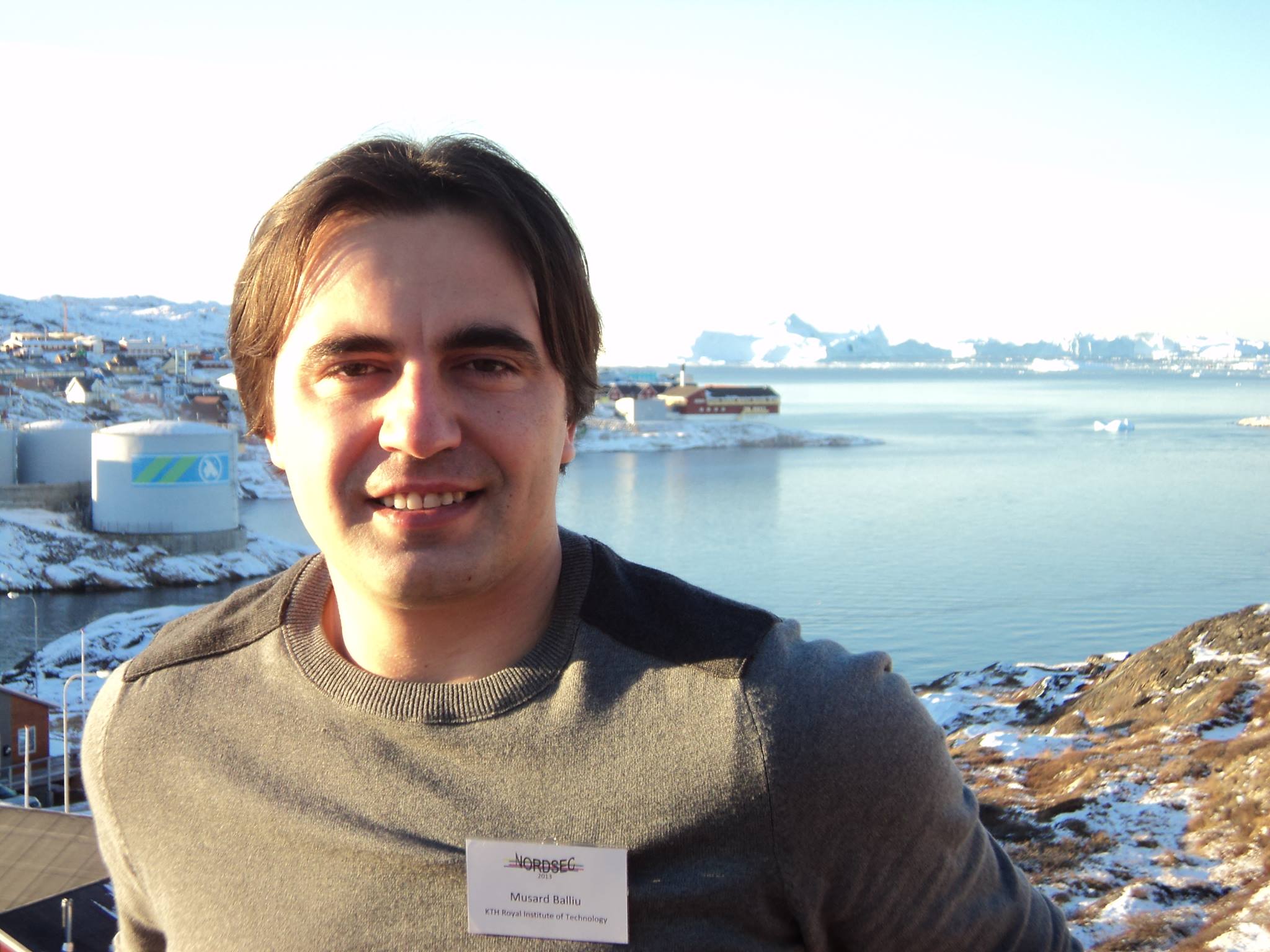
Musard Balliu is an Associate Professor at the School of Electrical Engineering and Computer Science at KTH Royal Institute of Technology in Stockholm, Sweden. He works in the Division of Theoretical Computer Science and leads the LangSec (Language-Based Security) research group. His research interests span multiple aspects of computer security, including: Information flow control Web and mobile application security IoT security Low-level security Program analysis and verification Logics in security contexts His recent publications focus on cutting-edge security challenges, with particular emphasis on JavaScript security (prototype pollution vulnerabilities), IoT platform security, database security, and formal methods for security verification. His work often bridges theoretical foundations with practical security solutions, addressing real-world security concerns in emerging technologies like IoT and modern web applications. His notable awards include: Best Reviewer Award at CCS 2022 Google Research Scholar Award in 2022 Facebook Award in Privacy-Enhancing Technologies in 2021 Dr. Balliu actively mentors students in the LangSec group, supervising both current students and recently graduated PhD candidates. He serves as Principal or Co-Principal Investigator on multiple research projects funded by prestigious organizations including Digital Futures, WASP, VR, and SSF, with a focus on next-generation security solutions for IoT, software supply chains, and cloud computing. He is also involved in various cybersecurity initiatives including the Swedish National Hacking Team (as co-founder and SC representative for Sweden), CDIS Cybercampus Sverige, and Digital Futures, demonstrating his commitment to advancing cybersecurity education and practice beyond academic research.