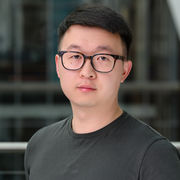
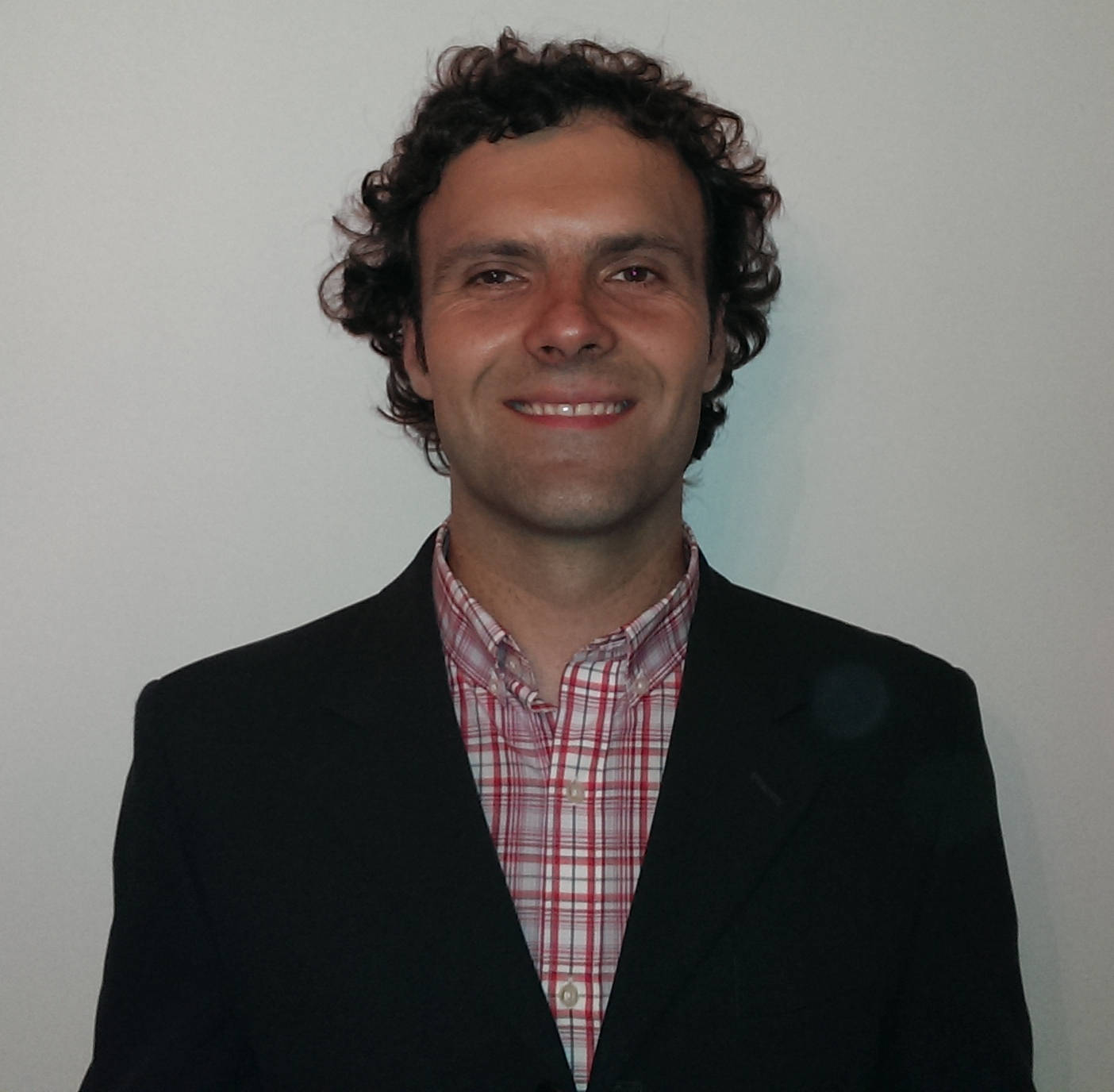
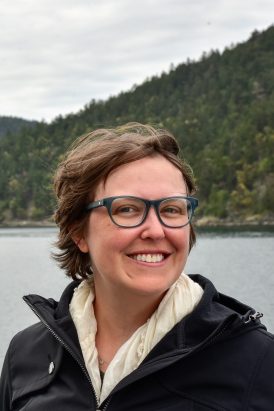
Sidney Shapiro is an Assistant Professor at the University of Lethbridge's Dhillon School of Business , specializing in data analytics and AI applications. His research spans Artificial Intelligence , Social Networks , Program Evaluation , and Research Methods , with a focus on ethical AI deployment in education and healthcare. PhD in Multi/Interdisciplinary Studies from Laurentian University His work explores the intersection of business intelligence , data engineering , and machine learning , particularly in digital transformation contexts. Recent publications analyze generative AI governance, data privacy challenges, and AI's impact on creative industries. Shapiro bridges technical and managerial domains through projects like database modernization for non-profits and participatory evaluation methods in community programs. He also contributes to educational strategies, including HyFlex teaching models and data-driven program development.
Dr Xi Wang is a Lecturer in the School of Computer Science at the University of Sheffield, specializing in Natural Language Processing. His research focuses on conversational AI systems, personalization techniques, retrieval-augmented generation, and fairness in AI applications. He actively contributes to the school's Natural Language Processing research group and maintains strong industry connections through publications in top-tier conferences. Dr Wang earned his PhD from the University of Glasgow under Prof. Iadh Ounis and Prof. Craig Macdonald, where he developed review text-based recommender systems. He subsequently conducted postdoctoral research at University College London's web intelligence group with Prof. Emine Yilmaz, focusing on knowledge-augmented task-oriented dialogue systems. His research spans critical NLP domains with emphasis on: Conversational AI: Building dialogue systems that handle complex user interactions Retrieval-Augmented Generation: Integrating external knowledge into language models Personalization: Developing adaptive systems that respect user context Fairness: Addressing bias in recommendation and dialogue systems Machine Learning: Applying advanced techniques to information retrieval challenges Analysis of Dr Wang's 15 most recent publications (2021-2025) reveals a clear trajectory toward more sophisticated conversational systems. His work increasingly integrates retrieval methods with generative models, particularly in recommendation contexts. Key trends include cold-start problem solutions, bias mitigation in conversational agents, and novel approaches to clarification question handling. The research demonstrates growing emphasis on fairness and knowledge grounding in dialogue systems. Dr Wang received a Google research workshop grant ($20,000) in 2022 for developing knowledge-enriched task-oriented dialogue systems during his postdoctoral work at UCL with Prof. Emine Yilmaz. While no current advisees are listed, Dr Wang's grant activity demonstrates research leadership. His Google-funded project focused on action-oriented dialogue systems, showing capability in securing competitive research funding. The Natural Language Processing research group at Sheffield provides his primary academic home, where he contributes to the school's strengths in speech and language technologies. His recent publications indicate active collaboration with researchers across multiple institutions including UCL, University of Glasgow, and international partners.
Ana Oskoz is a Professor at the University of Maryland Baltimore County (UMBC) in the Department of Modern Languages, Linguistics & Intercultural Communication. She currently serves as Associate Dean in the College of Arts, Humanities, and Social Sciences and chaired her department from 2018 to 2022. Her research focuses on technology-driven second language acquisition. Key areas include: Use of synchronous/asynchronous tools (chats, blogs, wikis) Promotion of cultural discussions through digital platforms Enhancing intercultural competence and FL writing Digital storytelling and Web 2.0 integration in education Recent publications highlight her work with collaborative technologies like Wikis, Screencast-O-Matic, and Microsoft Word for multimodal feedback in FL classrooms. She co-edits the CALICO Journal, contributing to CALL (Computer-Assisted Language Learning) discourse.
Dr. Nicole Gardner is a Professor and Program Director of Computational Design at the School of Built Environment, Faculty of Arts, Design and Architecture (ADA), UNSW. A Registered Architect in NSW (#7921), she holds a PhD in Architecture from the University of Technology Sydney (2018) and a First Class Honours Bachelor of Architecture from the University of Adelaide (2000). Her research bridges digital transformation, urban technology ethics, and computational design practices. PhD, School of Architecture, University of Technology Sydney (2018) Bachelor of Architecture (1st Class Honours), University of Adelaide (2000) Bachelor of Design Studies, University of Adelaide (1998) Her research interrogates digital transformation in the AEC industry through organizational learning theory, computational pragmatism, and ethical frameworks for smart cities. She explores human-machine configurations, augmented reality applications, and sustainable fabrication techniques like hybrid clay 3D printing for bio-reef structures. The 15 most recent articles reveal trends in computational design ethics, smart city scaling, digital compliance workflows, waste reduction strategies, and human-scale urban technology. Keywords span urban technology , machine learning , design automation , and gender dynamics in tech , with subfields like parametric acoustic modeling , semantic BIM consistency , and privacy-preserving occupancy analysis . 2021-2022: UNSW Faculty Research Fellowship 2022: Chief Investigator for $9M ARC Industrial Transformation Training Centre 2024, 2021, 2019: DFAT Australia-Japan Foundation Grants Nicole supervises practice-based MPhil/PhD candidates focused on smart cities and digital transformation in AEC. She co-edited CAADRIA conference proceedings and chaired the 2024 CAADRIA conference 'Accelerated Design'.
Kutay UZUN is an Associate Professor at Trakya University's Foreign Languages School, Department of English Language Education, where he has progressed from Lecturer (2007) to his current position (2021). He serves as Director of the Foreign Languages School (2024-2027) and holds key administrative roles including membership in the University Rectorate Quality Commission and Academic Incentive Arrangement Inspection Appeal Commission. His educational background includes dual undergraduate degrees in Public Relations (Anadolu University, 2007) and English Language and Literature (Hacettepe University, 2007), followed by a Master's (2014) and PhD (2019) in English Language Education from Trakya and Çanakkale 18 Mart Universities respectively. His Master's thesis examined age factors in foreign language acquisition anxiety, while his doctoral research investigated genre-based instruction and feedback on writing performance. Uzun's research spans second language writing, corpus linguistics, natural language processing applications in language education, and the psychological aspects of language learning. His work demonstrates a strong focus on quantitative analysis of writing features, machine learning applications for writing assessment, and the impact of task design on language production. He has published extensively in high-impact journals and presented at numerous international conferences, with recent work exploring AI applications in language education and digital humanities approaches to social sciences. PhD Student Travel Grant Sponsored by the US Embassy, Ankara (2018) As an educator, Uzun has supervised numerous MA and PhD students in scientific research methodology and ethics. His teaching portfolio includes Academic Discourse, Corpus and Language Teaching, Critical Reading and Writing, and English Literature courses. He has received research grants including TÜBİTAK 3501 project on detecting English writing skills of Turkish learners using corpus linguistics and natural language processing methods. Uzun actively contributes to the academic community as editor for Contemporary Education: Reframing Theory and Practice Across Fields and Language, Society, History, Economy and Politics in Social Sciences, while serving on editorial boards for Journal of Language and Linguistic Studies and Sage OPEN. His laboratory work focuses on developing computational tools for language assessment, including the Turkish-English Learner Corpus (TELC) with web interface.
SAHNOUN M'hammed is a Research Director at CESI LINEACT, affiliated with Normandy University. His work spans automation, robotics, and optimization in industrial systems, with a focus on Human-Robot Collaboration , Industry 4.0/5.0 , and Sustainable Logistics . He has advised numerous PhD students across international institutions including Neoma-bs, Université de Batna, and Université Le Havre Normandie. Education: HDR (Normandy University, 2019), Doctorate in Automation (Paul Verlaine University, 2007), DEA Robotics (Pierre and Marie Curie University, 2002) Research Themes: Simulation and optimization of industrial flows, renewable energies, collaborative robotics, and human-centric production systems His research explores multi-agent systems for scheduling optimization, fog computing in smart factories, and predictive maintenance strategies. Recent projects include AntihPert (human behavior modeling in production) and OPTIMAN (human-centered machining workshop optimization). Publications since 2019 demonstrate expertise in cyber-physical systems , transportation task allocation , and bio-waste management . Key journals include IEEE Transactions on Industrial Informatics , Journal of Manufacturing Systems , and Computers & Industrial Engineering . He actively participates in scientific organization, serving as reviewer and chair for conferences like MIM, Codit, and CyMaEn.
Unai Hernandez Jayo is a Lecturer at the University of Deusto's College of Engineering, Bilbao campus, teaching Electronics , Electrical Engineering/Circuits , and Power Electronics in industrial degrees. He serves as Director of the Master's Degree in Industrial Automation, Electronics and Control and has been accredited as Professor by ANECA. His research focuses on remote laboratories , e-learning , and vehicular communications within the DEUSTEK research group (A-rated by Basque Government). Teaches core electronics subjects in industrial engineering Active in educational technology and remote experimentation Develops scalable remote lab architectures and real-time control systems Research Interests include: Remote Laboratories E-Learning and Educational Technology Vehicular Communication Systems Wireless Sensor Networks Smart City Applications Engineering Pedagogy His publications show a strong focus on remote laboratories (especially VISIR platform), vehicular communication protocols , and smart city sensor networks . He has contributed to systematic reviews on extended remote labs and VR/AR techniques in educational experimentation. Academic Contributions : Accredited Professor by ANECA (Spanish quality agency) Holds two active 6-year research periods and one technology transfer period from CNEAI Academic Editor (Sensors journal 2022-2023)
Eduard Dragut is an Associate Professor in the Department of Computer and Information Science at Temple University's College of Science and Technology. He received his Ph.D. in Computer Science from the University of Illinois at Chicago, M.S. from the University of Iowa, and B.S. in Computer Science from the University of Bucharest. His research spans databases, information retrieval, extraction, cleaning, and integration, with particular focus on opinion mining, web data management, and cyber-infrastructure for science. His educational background includes a Ph.D. from University of Illinois at Chicago, M.S. from University of Iowa, and B.S. from University of Bucharest. His research interests cover multiple areas including databases, information retrieval, extraction, cleaning, and integration; opinion mining and retrieval; web data management; and cyber-infrastructure for science. Current research activities focus on record linkage and fusion, deep learning for entity recognition, sentiment analysis, and news mining. His recent publications demonstrate a consistent focus on information extraction, data integration, and sentiment analysis across various domains including climate science, social media, and scientific literature. His work increasingly bridges traditional database research with machine learning applications, particularly in the areas of entity recognition, knowledge graph construction, and comment analysis. Professional Service Chair SIGMOD/PODS PhD Symposium 2016, San Francisco, USA Chair ICDE PhD Symposium 2015, Chicago, USA PC Member: SIGMOD 2016, SIGMOD 2015, EMNLP 2015, DASFAA 2015, INFOCOM 2015, NAACL-HLT 2015, WWW 2014, COLING 2014, DASFAA 2014, ADBIS 2014 Referee for TKDE, TWEB, TSC, TiiS, ISJ, TKDD, JWS, WWWJ Served on NSF CISE/IIS panels in 2016 Professor Dragut has advised multiple graduate students including Andrew Thomas Schneider (PhD Fourth Year), Lihong He (PhD Second Year), and Abdullah Aljebreen (PhD First Year). His teaching portfolio includes courses such as Data-Intensive and Cloud Computing, Principles of Data Management, and Topics in Computer Science: Information Retrieval. He has taught consistently from Fall 2013 through Spring 2025, demonstrating his commitment to education in the field of computer science. He co-authored the book 'Deep Web Query Interface Understanding and Integration' with Weiyi Meng and Clement Yu, contributing significantly to the field of web data integration.
Karen Alofs is an Assistant Professor at the School for Environment and Sustainability, University of Michigan, specializing in freshwater conservation ecology. Her research addresses climate change impacts, invasive species, and habitat degradation on biodiversity in aquatic ecosystems. Alofs leads the Alofs Lab, focusing on ecological predictions and sustainable fisheries management. Education: PhD in Ecology, Evolution, and Behavior (2010), University of Texas at Austin BA in Biology (2002), University of Chicago Research Interests: Alofs investigates how ecological communities adapt to environmental stressors, emphasizing species interactions, climate-driven range shifts, and generalizable ecological predictions for both aquatic and terrestrial systems. Her work bridges empirical data with conservation strategies for freshwater ecosystems. Scientific Awards: National Science Foundation International Research Fellowship Program (Postdoctoral) Lab Members: Current and former students include PhD candidates like Hannah Cohen and Scott Jackson, and MSc students such as Evan Hill, Lian Anderson, and Olivia Williams. Lab staff includes Postdoctoral Researchers Peter Flood and Kelly Hoyer, and Lab Manager Andrew Runyon. Publications: Alofs' recent work explores climate change effects on fish communities, community science data integration, and functional diversity conservation, with a focus on museum specimen analysis and hydrodynamic modeling.
Valérie Beaudouin is Professor of Sociology at Telecom Paris, Institut Polytechnique de Paris (SES department) and Director of Studies at EHESS – Center for the Study of Social Movements (CEMS). A statistician-economist by training (ENSAE 1991), she holds a PhD in language sciences (EHESS 2000) and an HDR in sociology (Université Paris-Descartes 2018). Her career spans industrial R&D leadership (France Télécom/Orange Labs, 1997-2008) and full-time academia since 2008. Education ENSAE – Statistician-Economist Diploma (1991) PhD in Language Sciences, EHESS (2000) HDR in Sociology, Université Paris-Descartes (2018) Research focus Beaudouin studies the social, ethical, and cultural impacts of digital technologies. She combines quantitative and qualitative methods—text mining, network analysis, online ethnography—to investigate AI ethics, online collective memory (notably of World War I), amateur cultural production, and digital sociability. Her current work with the Operational AI Ethics research group explores how ethical principles are operationalized in AI systems and organizations. Recent publication trends Between 2019 and 2023 her articles cluster around three themes: (i) AI ethics and explainability, (ii) online commemoration and collective memory, and (iii) amateur digital practices such as film criticism and self-publishing. These works appear in both French and international journals spanning sociology, digital humanities, and STS. Scientific awards & honors No specific prizes or medals are mentioned in the provided text. Grants, projects & advising Bibli-Lab (2013-2019) – Research partnership with the French National Library (BnF) on digital library usage. Operational AI Ethics – Ongoing Telecom Paris initiative on practical AI ethics. Apprendre par la bande – Multi-institutional project on online learning collectives (with Université Paris-Descartes & Paris VII). Collectifs en ligne et production de savoirs – Study of online knowledge production and collective memory. Laboratory affiliations She is affiliated with the Interdisciplinary Institute of Innovation (i3) and the Digital Technologies, Organization and Society (DTOS) research team at Telecom Paris.
Jean-Claude Moissinac is a Lecturer at Télécom Paris, part of the Institut Mines-Télécom, affiliated with the Image, Data, Signal department and Multimedia research group. He serves as the educational manager for the CPD master's degree program (Digital Project Designer). His research focuses on semantic technologies applied to multimedia systems and knowledge representation. His primary research areas include: Semantic representations of knowledge and knowledge graphs Machine learning techniques for graph-based data analysis Advanced multimedia document processing (production, transport, representation) Semantic web technologies across diverse application contexts His publications demonstrate consistent focus on semantic technologies, knowledge graphs, and multimedia systems, with recent work emphasizing cultural heritage applications and graph-based machine learning techniques. Earlier publications focused on multimedia systems optimization and SVG standards development. He has led multiple research projects including: ILOT Project : Intelligent Learning Object for Teaching SOA2M : Multimodal interface research Data&Musée : Semantic applications for cultural heritage data SemBib : Semantic representation of bibliographic data GeoRacing : Interactive mobile TV services for sporting events He contributes to standardization efforts as co-author of the SVG web standard and participates in academic committees including SVG Open, IEEE International Symposium on Multimedia, and project evaluations for the French National Research Agency.
Jeni Tennison is an expert in data governance, policy, and open data who serves as an Associated Researcher at the Bennett Institute for Public Policy at the University of Cambridge. She is also the founder and Executive Director of Connected by Data, a Shuttleworth Foundation Fellow, and co-chair of the Data Governance Working Group at the Global Partnership on AI. Her research focuses on challenging traditional notions of data ownership and consent, advocating for collective governance of data when processed in aggregate. She has a long-standing interest in open and web standards, having served on the W3C's Technical Architecture Group and co-chaired the W3C's CSV on the Web Working Group. Her work bridges academic research with practical implementation, having previously served as CEO of the Open Data Institute for nine years. Tennison's publications reveal a consistent focus on agent-based modeling of information economies, data governance frameworks, and the societal implications of data monopolies. Her work spans disciplines including computer science, economics, public policy, and information science, with particular emphasis on creating practical tools and frameworks for better data governance. OBE for services to technology and open data Shuttleworth Foundation Fellow As Executive Director of Connected by Data, she leads initiatives that put community at the heart of data narratives, practices, and policies. She serves on the Boards of Creative Commons, the Global Partnership for Sustainable Development Data, and the Information Law and Policy Centre. Her work involves substantial collaboration with governments, international organizations, and private sector entities to build trustworthy data ecosystems. She is also known for co-creating Datopolis, an open data board game that helps people understand data infrastructure concepts through gameplay.
Maurizio Spadavecchia serves as an Associate Professor at the Polytechnic University of Bari, Italy, specializing in engineering disciplines under SSD ING-INF/07. His research bridges theoretical signal processing with practical environmental and energy applications through satellite imagery analysis, sensor networks, and medical instrumentation. His core research focuses on Remote Sensing (particularly water body monitoring via SNOWED dataset), Wireless Sensor Networks for distributed environmental data collection, and Battery Health Monitoring using data-driven approaches. Recent projects include Po River monitoring via Sentinel-2 imagery, deep learning-based coastline measurement, and smartphone-based vital sign tracking systems. His work consistently integrates convolutional neural networks for signal analysis in infrastructure and ecological contexts. Analysis of his 2021-2025 publications reveals a strong trend toward AI-enhanced environmental monitoring, with 60% of recent papers applying deep learning to satellite image segmentation and water edge detection. Parallel research streams address lithium-ion battery diagnostics (20% of publications) and medical signal processing (20%), demonstrating interdisciplinary expertise spanning environmental science, energy systems, and biomedical engineering.
Prof. Dr. Jan Seibert is a hydrologist at the University of Zurich's Department of Geography, Faculty of Science. His research spans field studies, hydrological modeling, and citizen science applications, with a particular focus on water resource management, climate change impacts, and interactive educational tools. His work includes global and regional hydrological modeling, drought analysis, and development of citizen science platforms such as CrowdWater. He has contributed to understanding water level dynamics, geological influences on streamflow, and biogeochemical transport models. Recent publications (2024-2025) emphasize climate change effects on mountain runoff, transboundary water systems, drought-media interactions, and innovative modeling frameworks like BioRT-HBV. His articles also explore flood risk assessment, reforestation impacts, and temporal-spatial analysis of hydrological variables.
Professor Tamara Hervey is a distinguished academic at The City Law School, City St George's, University of London , holding the Jean Monnet Professor of EU Law ad personam title. With a career spanning over three decades, she has held positions at Durham, Manchester, Nottingham, and Sheffield Law Schools before joining City St George's in 2021. Her expertise lies in EU Law , Comparative Health Law , and Equality and Diversity , with visiting roles at the University of Vienna and Amsterdam. Doctorate from the University of Sheffield Principal Fellow of the Higher Education Academy Member of the Academy of Social Sciences and Faculty of Public Health Her research integrates transnational health law , EU policy post-pandemic , and critical legal education . She emphasizes student collaboration, co-authoring works with advisees like Laura Robinson and running a student co-production module with Francesca Strumia. Her projects, including the ESRC-funded Health Governance after Brexit , have produced significant outputs like Not What the Bus Promised (2023) and contributions to the Covid Lex-Atlas . She co-edited the OUP Research Handbook on Comparative Health Law and leads entries in the OUP Online Encyclopaedia of EU Law . She has received accolades such as the Jean Monnet ad personam Chair and Principal Fellow of the Higher Education Academy , reflecting her commitment to blending research with teaching. Her work spans clinical legal education , disability rights under the Equality Act , and ethnographic methodology , often intersecting with charities like Cancer Research UK. Tamara’s recent publications in journals like Yearbook of European Law and Common Market Law Review highlight her influence in post-pandemic EU health law.