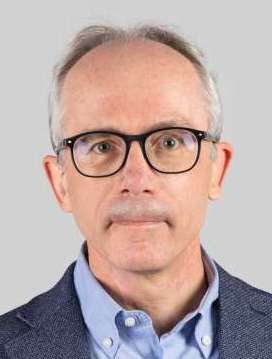
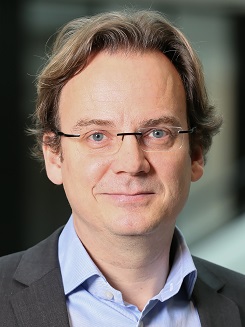
Paolo Tonella is a Full Professor and Director of the Software Institute at the Faculty of Informatics, Università della Svizzera italiana (USI) in Lugano, Switzerland. He also holds an Honorary Professorship at University College London (UK) and previously led the Software Engineering group at Fondazione Bruno Kessler (Italy). His research focuses on software testing, analysis, and AI-driven systems. He has authored over 200 peer-reviewed papers and 100 journal articles, with an H-index of 72. He teaches courses in Data and Software Engineering and Informatics, including Information Modeling, Probability & Statistics, and Knowledge Search. Key contributions include foundational work on web application testing (ICSE MIP award), evolutionary testing techniques (eToc/EvoSuite tools), and reverse engineering of object-oriented systems. He led the ERC-funded PRECRIME project on anticipatory testing. His recent work addresses AI dependability, autonomous systems testing, and deep learning fault analysis. Scientific awards include the ICSE MIP Award (2001) and ERC Advanced Grant (2018). He has served on editorial boards for major journals like IEEE Transactions on Software Engineering and ACM TOSEM. Current roles include leadership in the Software Institute and organizing the SIESTA summer school.
Mathias Payer is an Associate Professor at EPFL's School of Computer and Communication Sciences (IC), leading the HexHive Laboratory . His work focuses on software security, particularly addressing memory corruption and type violations through binary analysis and compiler-based techniques. He contributes to research in secure system design, fault isolation, and fuzzing methodologies. Current PhD students : Di Bartolomeo Luca, Feng Zhiyao, Hofhammer Florian, Lyu Tao, Mao Philipp Yuxiang, Zhang Chibin, Zheng Han Past EPFL PhD students: Badoux Nicolas Daniel, Bhattacharyya Atri, Hazimeh Ahmad His research explores software security in areas like: Protecting applications from vulnerabilities Binary exploitation and mitigation Compiler-driven security hardening Strong sanitization and privilege separation Memory corruption detection The HexHive group develops tools and frameworks for: Automated fuzz driver generation Gradual compartmentalization State inference for feedback optimization Secure cell architectures Recent publications highlight advancements in: Fuzzing hybrid approaches (e.g., DUMPLING, MendelFuzz) Memory safety validation (QMSan, Pacmem) Compiler-assisted defenses (Gradient, Type++)
Prof. Oliver Faude is a Professor and Researcher at the Department of Motor Performance & Biomechanics within the University of Basel's Department of Sport, Exercise and Health (DSBG). His research focuses on exercise physiology, sports medicine, and the application of physical activity in managing chronic conditions like type 2 diabetes. He supervises doctoral students, including Vivien Hohberg, whose work on telephone-based health coaching for diabetes patients was published in the Journal of Science and Medicine in Sport. Faude collaborates on projects such as the dbcoach intervention, funded by Innosuisse and health insurers, demonstrating how personalized coaching increases physical activity in diabetic populations. His work also extends to musculoskeletal imaging innovations, such as the UMUD web application for ultrasonography data access, and the PrepAir study addressing chemotherapy-induced sensory dysfunction in children. Faude's interdisciplinary approach integrates clinical research, biomechanics, and public health, with a particular emphasis on aging populations and pediatric oncology. He contributes to injury prevention strategies in sports like badminton and soccer, while advancing methodologies for muscle volume assessment via 3D ultrasound and MRI comparisons. Key Projects: dbcoach program, PrepAir study, musculoskeletal imaging tools, agility training for frailty prevention. Grants: Innosuisse, SwissLife Foundation, Voluntary Academic Society of Basel. Students: Vivien Hohberg (PhD). Labs/Teams: Motor Performance & Biomechanics lab, collaborations with Prof. Bart Roelands (Vrije Universiteit Brussel) on overtraining syndrome research.
Jinhan Kim is a Postdoctoral Researcher at the Università della Svizzera italiana (USI) in the Faculty of Informatics, working in the TAU lab under Prof. Paolo Tonella. He earned his Ph.D. from KAIST under Prof. Shin Yoo, focusing on software engineering research in mutation testing, fault localization, and deep learning system testing. His work bridges traditional software engineering techniques with AI-driven methodologies, emphasizing AI4SE and SE4AI paradigms. Education: Ph.D. in Software Engineering, KAIST, 2023 Research Interests: Mutation Testing Deep Learning System Testing Autonomous Systems Testing Adversarial Attack Detection Empirical Software Engineering Service and Leadership: Organized SBFT 2026 and DeepTest 2026 (co-located with ICSE 2026) Program Committee Member for ASE, ISSTA, Mutation, and DeMeSSAI Board of Distinguished Reviewers for TOSEM (2024–2025) Labs and Teams: Active contributor to the TAU Lab at USI, focusing on advanced software testing and AI integration.
Jürgen Sauer is a Full Professor at the University of Fribourg , affiliated with the Department of Psychology under the Faculty of Letters and Human Sciences . With over 120 publications, his research focuses on Human-Machine Interaction , Usability Testing , User Experience (UX) , and Automation Design , particularly in high-stakes environments like X-ray baggage screening and spaceflight simulations . Email: juergen.sauer@unifr.ch Phone: +41 26 300 7622 Address: RM 01 bu. C-1.117, Rue PA de Faucigny 2, 1700 Fribourg Orcid: 0000-0003-2105-1694 His research projects, funded by the Swiss National Science Foundation (FNS), include: Improving work design for airport security officers (2019-2024): Developed pictorial scales for measuring psychological constructs in security environments. Social stress and support in hybrid teams (2018-2023): Investigated machine-induced social stressors and mitigation through social support. Automation in visual inspection tasks (2014-2018): Examined adaptable automation for baggage screening and system reliability effects. Usability testing effectiveness (2012-2016): Analyzed cultural background impacts and non-usability product features influencing test outcomes. Key contributions include the Luggage Inspection Simulation (LIS) environment for modeling work environments and the development of pictorial usability scales for multilingual applicability. His work bridges ergonomics , human factors , and applied psychology , with notable collaborations with researchers like Adrian Schwaninger and Andreas Sonderegger . His recent publications (2025-2014) analyze: Human-machine performance under false alarms and miscues Social stressor dynamics in hybrid teams Usability scale animation effects Phubbing behavior in professional contexts Accessible website design for non-disabled users
Krisztian Balog is a Professor of Computer Science at the University of Stavanger and a Staff Research Scientist at Google DeepMind. His work focuses on advancing AI-driven information retrieval, natural language processing, and machine learning for user-centric systems. Key affiliations include co-organizing the Sim4IA 2025 Workshop at SIGIR, leading tutorials on user simulation in generative AI, and directing the NorwAI research center’s PhD project on LLMs for recommendations. Research Interests: User simulation, conversational AI, transparency in recommender systems, and simulation frameworks like SimIIR 3 . Scientific Recognition: Recipient of the Karen Spärck Jones Award (2018) and Best Resource Paper Award at CIKM’23 . Leadership: Serves on program committees for SIGIR, WSDM, WWW, and ECIR. Co-organized workshops and tutorials at SIGIR, AAAI, and WWW. Recent Publications highlight advancements in user simulation methodologies, generative AI applications, and open web infrastructure (e.g., SimIIR 3 , OpenWebSearch.eu ). His work bridges theoretical models (e.g., Markov Decision Processes) with practical toolkits for synthetic data generation and system evaluation.
Gianvito Laera is a Postdoctoral Research Fellow at the University of Geneva's Department of Psychology within the Faculty of Psychology and Educational Sciences. He works in the Cognitive Aging Lab, focusing on prospective memory research with particular emphasis on time-based memory processes across the lifespan. His research integrates cognitive psychology, neuroscience, and gerontology to understand how people remember to perform future intentions. Dr. Laera received his PhD in Psychology from the University of Geneva (2018-2023), following a Master of Science in Neuroscience and Neuropsychological Rehabilitation from the University of Padua, Italy (2013-2016), and a Bachelor of Science in Psychological Sciences and Techniques from the University of Bari 'Aldo Moro', Italy (2010-2013). Prior to his doctoral studies, he worked as a Research Assistant at Keele University's Neuropsychology Lab (2016-2018) and completed a research internship at the University of Padua (2015-2016). His research primarily investigates prospective memory—particularly time-based prospective memory—which involves remembering to perform intended actions at specific future times. His work examines age-related differences in these processes, neural correlates using EEG methodology, strategic monitoring behaviors, and the impact of various contextual factors on memory performance. He employs both laboratory and web-based experimental approaches to study how people monitor time, check clocks, and manage cognitive resources when executing delayed intentions. His research has important implications for understanding cognitive aging and developing interventions to support memory in older adults. Analysis of his publication record reveals consistent focus on time-based prospective memory mechanisms across 15 recent publications. His work demonstrates sophisticated methodological approaches including meta-analyses, experimental manipulations of clock-speed, EEG measurements, and longitudinal assessments. Key trends include examining the cost of monitoring behavior, strategic clock-checking patterns, neural correlates of memory retrieval, and the relationship between personality factors and cognitive performance in aging populations. While no specific scientific awards are documented in the available information, his research has been published in high-impact journals across psychology, neuroscience, and gerontology, reflecting recognition within his field. As a postdoctoral researcher, Dr. Laera continues to develop his independent research program while collaborating with senior researchers in the Cognitive Aging Lab. His work bridges experimental cognitive psychology with real-world applications for understanding memory changes in aging populations.
Auke Jan Ijspeert is a full professor at the École Polytechnique Fédérale de Lausanne (EPFL), where he serves as head of the Biorobotics Laboratory (BioRob). He holds a primary affiliation with the Institute of Bioengineering and a secondary affiliation with the Institute of Mechanical Engineering. His academic leadership and research excellence have established him as a leading figure in bio-inspired robotics and computational neuroscience. B.Sc./M.Sc. in Physics, École Polytechnique Fédérale de Lausanne (EPFL), 1995 Ph.D. in Artificial Intelligence, University of Edinburgh, 1999 Postdoctoral research at IDSIA/EPFL and University of Southern California (USC) SNF Assistant Professor at EPFL, 2002 Promoted to Associate Professor, October 2009 Promoted to Full Professor, April 2016 His research lies at the intersection of robotics, computational neuroscience, nonlinear dynamical systems, and applied machine learning. He investigates animal locomotion and movement control using numerical simulations and robotic platforms, aiming to understand biological principles and apply them to novel robot designs and controllers. His work has led to groundbreaking robots like the salamander-inspired Pleurobot and amphibious robotic systems. He also explores applications in assistive technologies such as exoskeletons and smart furniture for people with limited mobility. The recent publications reflect a strong trend in bio-inspired robotics, neuromechanical modeling, and the use of robots to understand biological locomotion. Key themes include spinal cord modeling for gait control, amphibious and aquatic locomotion, central pattern generators, and the evolutionary transition from swimming to walking. His work integrates neuroscience, biomechanics, and robotics to create physical models that serve both engineering and scientific discovery purposes. Scientific Awards and Honors: IEEE Fellow (2020) Best Paper Prize, CLAWAR 2019 Best Conference Paper Award, SAB 2018 Best Paper Award, IEEE RO-MAN 2014 Best Paper Award, IEEE Humanoids 2007 Overall Best Paper Award, IEEE ICRA 2002 Young Professorship Award, Swiss National Science Foundation Marie Curie Scholarship, European Commission Auke Ijspeert has been actively involved in academic service, serving as an associate editor for IEEE Transactions on Robotics (2009–2013) and Soft Robotics (2018–2021), and as an associate editor for IEEE Transactions on Medical Robotics and Bionics and the International Journal of Humanoid Robotics. He has secured major funding from the Swiss National Science Foundation, Human Frontier Science Program, European Commission (FP7, H2020), Human Brain Project, and other international agencies. He has organized seven major international conferences and served on over 50 program committees. His laboratory, BioRob, is a hub for interdisciplinary research, training students and researchers in biorobotics, and fostering collaboration across neuroscience, robotics, and biomechanics.
Matteo Biagiola is a Researcher in the Faculty of Informatics at Università della Svizzera italiana (USI), Lugano, Switzerland, and a PostDoctoral researcher at the University of St. Gallen (HSG). He specializes in software testing, particularly test generation for Web applications, deep reinforcement learning systems, and autonomous driving software. His work focuses on enhancing AI robustness through testing and improving software testing via AI techniques. Biagiola holds a Ph.D. from Università degli Studi di Genova (Italy) in collaboration with Fondazione Bruno Kessler, Trento. He has conducted postdoctoral research at USI on the Precrime ERC Advanced Grant project under Paolo Tonella. His research tools include μPRL (mutation testing for RL agents), STILE (web test parallelization), and GenBo (boundary state generation for autonomous systems). Education: Ph.D.: Università degli Studi di Genova / Fondazione Bruno Kessler (2016–2020) M.Sc.: Università Politecnica delle Marche (2014–2016) Affiliations: PostDoc & Scientific Collaborator: University of St. Gallen / USI (2025–present) PostDoc: USI (2020–2025) Visiting Ph.D. Student: University of British Columbia (2018) His research interests span AI-driven testing tools, autonomous system validation, and simulation-based testing. He has received the Distinguished Paper Award at ICST 2025 and serves on program committees for major conferences like FSE, ICSE, and ICST. He co-organizes workshops like DeepTest (co-located with ICSE) and the Cyber-Physical Systems tool competition (SBFT).
Curdin Derungs is a Lecturer in Data Science at the Lucerne School of Computer Science (HSLU), Switzerland. He specializes in applying statistical and machine learning techniques to energy systems, spatial analysis, and natural language processing. His professional competencies include data-driven automation, deep learning, time series analysis, and energy systems optimization. Derungs holds a PhD in Natural Sciences (University of Zurich, 2013) with a focus on NLP and spatial analysis, and a DAS in Applied Statistics (ETH Zurich, 2019). Earlier degrees include a Master's in Geography (2008) and Atmospheric Physics (ETH Zurich, 2008). His research explores intersections between data science and environmental sustainability, including energy efficiency optimization, spatial language dynamics, and landscape modeling. Recent work focuses on occupant behavior in energy systems, geotagged text analysis, and soil formation modeling. Key projects include SCCER FEEB&D Work Package 2 on renewable energy systems, the Romande Energy Demonstrator, and urban greening studies. He actively contributes to interdisciplinary initiatives like the IGE Innovationswettbewerb 2019 and Innovationspark Zentralschweiz.
Olivier Ertz is a Professor at the Media Engineering Institute (MEI) of the University of Applied Sciences and Arts Western Switzerland (HES-SO), based in Yverdon-les-Bains. He specializes in geospatial technologies, augmented reality (AR), and educational technology, focusing on applications for biodiversity education and citizen science. His work emphasizes open-source tools and interoperability standards, particularly within the Open Geospatial Consortium (OGC). Key projects include: BiodivAR: A location-based AR platform for biodiversity education, enabling users to explore geolocated media in natural environments. ArODES: Research on symbology encoding standards for cartographic interoperability, contributing to OGC specifications. CrowDPLOS: Developing pedestrian navigation tools for disabled users using crowdsourced geospatial data. Research interests span: Augmented Reality applications in education and cultural heritage. Geospatial data visualization, including 6DoF georeferencing and real-time AR integration. Citizen science platforms for biodiversity monitoring and data validation. Open-source geospatial tools and standards compliance (OGC). His recent work explores: The impact of AR on screen time and environmental engagement. Optimizing geolocation accuracy for AR usability in outdoor settings. Interoperability of citizen science datasets through standardized formats. He has led multiple funded projects (e.g., FNS, Fondation Hasler) with total funding exceeding CHF 1.5 million. Collaborations include institutions like Swisstopo, Camptocamp, and academic partners across Switzerland.
Antonio Carzaniga is a Full Professor and founding member of the Faculty of Informatics at Università della Svizzera italiana (USI), where he has been active since 2004. Previously, he served as an Assistant Research Professor at the University of Colorado at Boulder from 2001 to 2007. He holds a Ph.D. in Computer Science and a Bachelor’s degree in Electronic Engineering from Politecnico di Milano. Full Professor, Faculty of Informatics, Università della Svizzera italiana (2004–Present) Assistant Research Professor, Department of Computer Science, University of Colorado at Boulder (2001–2007) Ph.D. in Computer Science, Politecnico di Milano Bachelor’s in Electronic Engineering, Politecnico di Milano His research spans distributed systems and software engineering, with a strong focus on content-based addressing networks, publish/subscribe systems, middleware, software fault tolerance, and verification. He has pioneered work in information-centric networking and developed the Siena project, a scalable publish/subscribe service. His recent work extends into programmable networks, GPU-accelerated matching, and performance annotations for cloud systems. The 15 most recent publications highlight a consistent trajectory in scalable, high-performance networking and adaptive software systems. Key themes include content-based communication, packet subscriptions, information-centric networking, and leveraging redundancy for fault tolerance and testing. His work bridges theoretical foundations with practical implementations, often involving system-level software and performance evaluation. Best Paper Award, ACM SIGCOMM Workshop on Information-Centric Networking (ICN'13) Carzaniga has advised multiple graduate students, including Michele Papalini, Koorosh Khazaei, and Daniele Rogora, and has collaborated on funded research projects in distributed systems and networking. He has contributed to software development through projects like the Siena Fast Forwarding engine and the Synthetic Workload Generator. His service includes organizing workshops and contributing to major conferences in software engineering and computer systems. He leads research initiatives such as Siena and Content-Based Networking, focusing on scalable, decentralized communication infrastructures. His lab has developed key tools for evaluating publish/subscribe performance and implementing high-speed forwarding algorithms.
Pooja Rani is a Senior Researcher at the Software Evolution and Architecture Lab (SEAL), Department of Informatics, University of Zurich. She holds a PhD from the University of Bern (2022) and an M.E. in Software Systems from BITS Pilani (2017). With industry experience at Samsung, VMware, and People Interactive Ltd., she bridges theoretical and practical software engineering. Her research focuses on: Empirical Software Engineering, particularly developer practices in code comprehension and maintenance. Green Software Engineering, including energy anti-patterns and sustainability tooling. NLP and machine learning applications in software evolution, documentation quality, and polyglot environments. AI-driven approaches for debugging, testing, and optimization. Her publications emphasize energy efficiency in software systems, AI-assisted development tools, code comment analysis, and metamorphic testing. Recent work explores LLMs for sustainable coding, object-centric debugging, and autonomous system validation. She actively advises students, with ongoing supervision of 15+ BSc/MSc theses on topics like comment quality, energy anti-patterns, and polyglot development. She collaborates internationally with institutions including TU Delft, Inria, and the University of Victoria.
Dr. Don Tuggener is a Researcher at the ZHAW Zurich University of Applied Sciences' School of Engineering, affiliated with the Centre for Artificial Intelligence. His work focuses on Natural Language Processing (NLP), Computational Linguistics, and Machine Learning applications in professional training and AI evaluation. He leads or collaborates on projects such as Meaning@Work (stress management for healthcare professionals), Virtual Kids (child interrogation training), and Favi-Score (bias detection in AI evaluation). His research emphasizes dialogue systems, generative AI ethics, and legal text analysis. Key projects include developing frameworks for conversational AI evaluation (Spot The Bot), large-scale legal text classification (LEDGAR corpus), and innovative training tools using LLMs. He has contributed to over 30 peer-reviewed publications since 2011, spanning topics like compound splitting in German, coreference resolution, and generative AI applications in professional contexts. As an editor for SwissText conferences and reviewer for ACL/EMNLP, he actively participates in the NLP academic community. Project Leadership: Virtual Kids, Interscriber Deputy Leadership: AutoNews, PRISM, SCAI Core Research Themes: AI ethics, dialogue systems, legal NLP Recent work highlights AI's role in professional education (e.g., investigative interviews with children) and societal challenges (hate speech mitigation via social influencers).
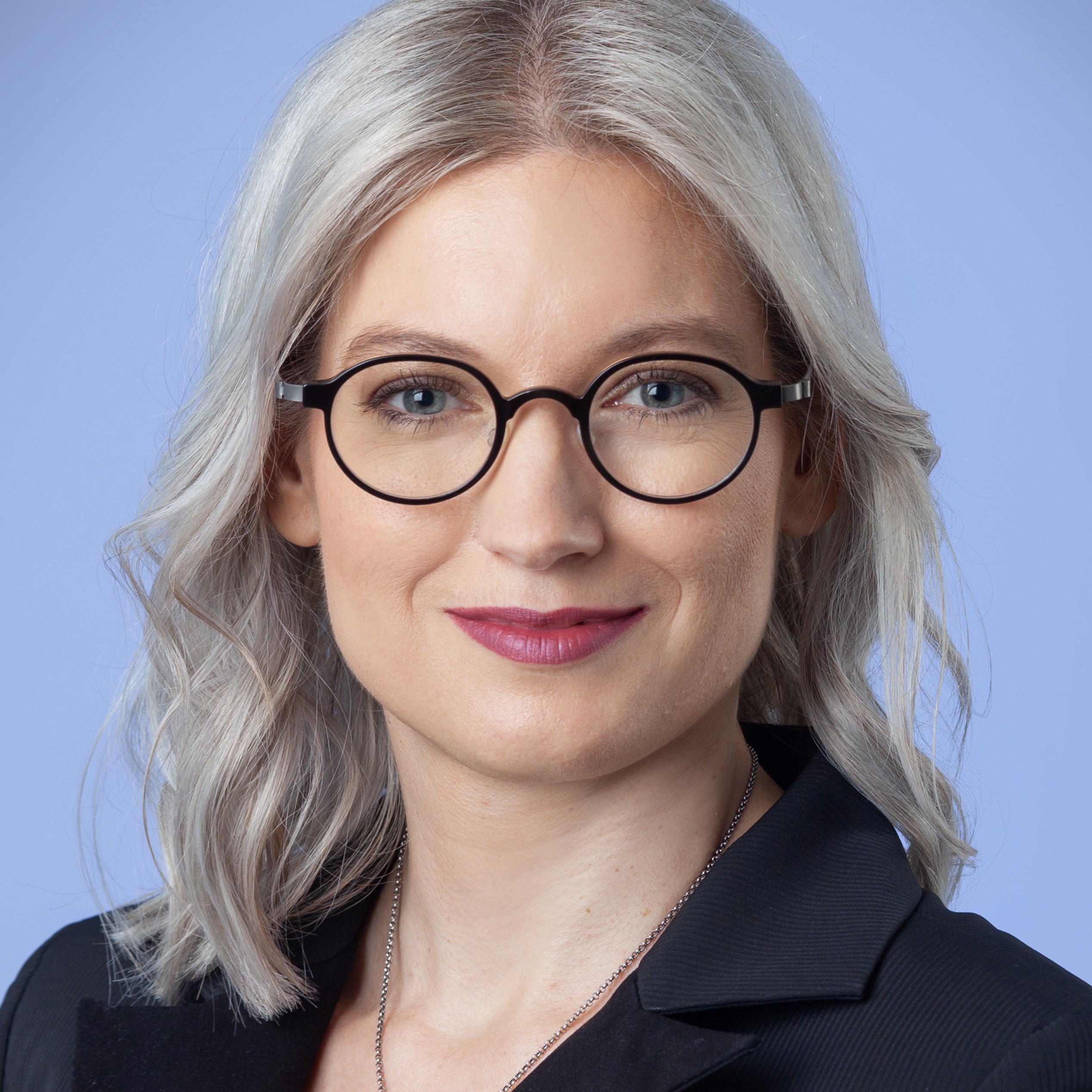
Prof. Henriette Elise Breymann is a Professor in the Department of Finance, Risk Management and Econometrics at the ZHAW School of Engineering, Zurich University of Applied Sciences (ZHAW). Her research focuses on financial risk modeling, algorithmic contract standards (ACTUS), big data analytics, and regulatory technology (RegTech). She has led numerous projects, including Data Driven Financial Risk and Regulatory Reporting, Strengthening Swiss Financial SMEs through Reinforcement Learning, and Explainable AI in Credit Risk Management. Her work intersects finance, physics, and computational methods, with contributions to energy economics (e.g., renewable energy systems), high-frequency financial data analysis, and quantum chaos applications. She co-authored Unified Financial Analysis: The Missing Links of Finance (2009) and pioneered the ACTUS framework for standardizing financial contracts. Projects: 12+ leadership roles in applied finance, risk modeling, and energy systems. Key Expertise: Regulatory reporting, stress testing, and data-driven financial systems. ACTUS Standard: Global initiative for granular financial contract representation. Her research spans interdisciplinary collaborations, including the Risk- and Finance-Lab, and has been presented at major conferences like the Society for Economic Measurement. She advises on regulatory innovations and financial resilience strategies for SMEs.