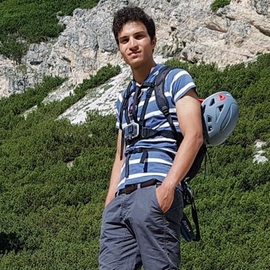
Maryam Tavakol is an Assistant Professor at Eindhoven University of Technology, affiliated with the Uncertainty in AI group within the Mathematics and Computer Science department. Her expertise bridges artificial intelligence, machine learning, and computational modeling for sequential systems. PhD in Machine Learning, TU Darmstadt B.Sc. & M.Sc. in Computer Science, University of Tehran Her research focuses on uncertainty estimation , reinforcement learning , and transformer architectures applied to domains like drug-target interaction prediction, soccer analytics, and music generation. Recent work explores activation sparsity in LLMs and robust VAE frameworks. Key trends in her publications (2012–2024) span reinforcement learning , neural network architectures , and applications in healthcare and creative domains . Notable themes include contextual bandits, variational inference, and energy-efficient computing. Contributed to UN Sustainable Development Goals (Education/Academic Qualification) She has supervised multiple research projects and served as corresponding author in peer-reviewed conferences. Collaborations include TU Dortmund, Leuphana University, and industry internships at Criteo.
Paul Fieguth is a Professor and Associate Vice President - Academic Operations at the University of Waterloo. He holds affiliations with the Full-time Faculty, Faculty of Mathematics, and the Intelligent and Autonomous Systems research group. His work focuses on interdisciplinary areas including machine learning, computer vision, medical imaging, and deep learning techniques for solving complex engineering and biological problems. He has contributed to advancements in photoacoustic remote sensing, autonomous systems, and large-scale biodiversity datasets like BIOSCAN-5M. His research bridges theoretical foundations (e.g., pattern recognition, inverse problems) with practical applications in robotics, medical diagnostics, and environmental monitoring. Education details are not explicitly provided in the text, but his professional roles suggest advanced training in computer science and engineering disciplines. His research interests span a wide range, including but not limited to: pattern recognition algorithms, deep learning architectures, remote sensing technologies, and computational methods for medical imaging. Recent work emphasizes innovations in rail defect detection, 3D reconstruction, and biodiversity assessment through multimodal datasets. Publications from 2022–2025 highlight contributions to fields like neural network optimization, uncertainty quantification, and generative adversarial networks for medical applications. While no specific awards are listed, his prolific publication record reflects recognition in academic circles. Advising and grants sections remain underdeveloped in the provided information, though his leadership roles suggest involvement in institutional research initiatives. He is a key member of teams advancing technologies such as PARS imaging and autonomous systems at the University of Waterloo.
Nilesh Madhu is a Professor for Audio and Speech Processing at Ghent University and imec, Belgium, where he leads research in the Internet Technology and Data Science Lab (IDLab). His academic journey began with a Dr.-Ing. degree (summa cum laude) from Ruhr-Universität Bochum, Germany in 2009, followed by a Marie-Curie postdoctoral fellowship at KU Leuven. Prior to his academic appointment, he served as Principal Scientist and team lead at NXP Semiconductors from 2011-2017, developing advanced audio algorithms for mobile devices. His research spans multiple domains within signal processing, with a particular focus on machine learning applications for audio and speech enhancement, automated audio scene analysis, and hearing prostheses. Professor Madhu's work bridges theoretical signal processing with practical implementations in communications, healthcare, and assistive technologies. Analysis of his recent publication record reveals a strong emphasis on deep learning approaches for speech enhancement, with particular attention to phase reconstruction, multichannel processing, and efficient model architectures. His research increasingly incorporates biomedical applications, particularly in cardiovascular monitoring using advanced sensing techniques like laser Doppler vibrometry. His laboratory work centers around the Internet Technology and Data Science Lab (IDLab) at Ghent University, where his team develops innovative signal processing algorithms with applications spanning mobile communications, hearing aids, and biomedical monitoring systems. The group maintains strong industry connections, evidenced by their focus on practical implementation constraints and real-world performance metrics.
Honglak Lee is a Professor of Computer Science and Engineering at the University of Michigan, Ann Arbor, and Executive Vice President and Chief Scientist at LG AI Research. He holds a Ph.D. from Stanford University (2010) under Andrew Ng. His research focuses on deep learning, representation learning, and their applications in computer vision, robotics, and healthcare. Lee has served on the editorial boards of IEEE TPAMI and as an area chair for ICML, NIPS, and CVPR. Education: Ph.D. in Computer Science, Stanford University (2010); M.S. in Computer Science and Applied Physics (2006); B.S. in Physics and Computer Science, Seoul National University (2003). Research Interests: Machine learning, deep learning, representation learning, multimodal learning, reinforcement learning, and applications in healthcare and robotics. His work emphasizes scalable unsupervised feature learning, invariant feature extraction, and deep generative models. Key Contributions: Pioneered convolutional deep belief networks (ICML 2009), multimodal autoencoders (ICML 2011), and weakly supervised learning techniques. His work on disentangled representations (ICML 2014) and reinforcement learning algorithms (NIPS 2015) has been highly influential. Awards: Sloan Research Fellowship (2016), NSF CAREER Award (2015), AI's 10 to Watch (2013), and multiple best paper awards. Students and Advising: Advised over 50 students, including PhD graduates Xinchen Yan (Uber), Ruben Villegas (Adobe), and Junhyuk Oh (DeepMind). Current students include Lajanugen Logeswaran, Kibok Lee, and Sungryull Sohn.
Yingbin Bai is a Research Fellow at Australian National University's School of Computing, collaborating with Professor Sylvie Thiebaux. His research focuses on machine learning applications in planning, weakly supervised learning, and unsupervised representation learning. He holds a PhD supervised by Professors Tongliang Liu and Dadong Wang. His work emphasizes addressing challenges in noisy label environments, early stopping techniques, and biomedical image analysis. Key contributions include QUBIQ (uncertainty quantification in medical imaging) and frameworks for robust representation learning under imperfect data conditions. Publications span topics like symmetry breaking in learning systems, semantic shift mitigation in self-supervised learning, and analysis of biomedical image competition practices. Collaborations involve cross-disciplinary teams tackling both theoretical and applied machine learning problems.
Dr. Purang Abolmaesumi is Professor and Canada Research Chair in Biomedical Engineering at the University of British Columbia's Department of Electrical and Computer Engineering, with cross-appointments in Urologic Sciences and the School of Biomedical Engineering. His internationally recognized research program develops advanced techniques in medical imaging analysis, machine learning for healthcare, and computer-assisted interventions. His research focuses on developing AI-driven solutions for medical challenges, particularly in ultrasound-based diagnostics for cardiovascular conditions (aortic stenosis, left ventricular function) and cancer detection (prostate, endometrial). His team works on improving robustness in medical AI through uncertainty quantification, federated learning, and domain adaptation techniques. Current projects include real-time cancer detection in micro-ultrasound, automated echocardiogram analysis, and trustworthy AI frameworks for clinical deployment. Analysis of Dr. Abolmaesumi's recent publications reveals strong emphasis on improving clinical applicability of AI through: 1) Enhanced uncertainty quantification in diagnostic models 2) Development of federated learning approaches for multi-center studies 3) Novel methods for continual learning in healthcare 4) Integration of foundation models with medical domain knowledge 5) Conformal prediction frameworks for reliable classification. His work consistently translates technical innovations toward solving concrete clinical problems in cardiac and cancer diagnostics. His scientific contributions have been recognized through major awards including the Killam Faculty Research Prize, Killam Award for Excellence in Mentoring, and Canada Research Chair appointment. As a leading researcher in medical AI, he has supervised numerous graduate students and postdoctoral fellows who have advanced to academic and industry positions. Dr. Abolmaesumi directs research laboratories focused on medical image computing and AI for healthcare applications. His team collaborates extensively with clinical partners at Vancouver General Hospital and the Vancouver Prostate Centre to validate technologies in real clinical environments. Future research directions include developing real-time AI guidance systems for interventions and creating robust diagnostic frameworks deployable across diverse healthcare settings.
Chulwoo Pack is an Assistant Professor in the McComish Department of Electrical Engineering and Computer Science at South Dakota State University. His research focuses on Document AI, Computer Vision, and Deep Learning, with applications in historical document analysis, semantic segmentation, and explainable AI. He holds a Ph.D. in Computer Science from the University of Nebraska-Lincoln (2023), an M.S. (2017), and B.S. (2015) in Computer Science from South Dakota State University. Key research areas include parameter-efficient fine-tuning, weakly-supervised learning, and adaptive image processing techniques for large document images. His work bridges computer science and digital humanities, addressing challenges in archival description, historical document restoration, and cultural heritage preservation. Notable collaborations include projects with the Library of Congress on digitization and data analytics. Professional roles include membership in the ACM, participation in the Graduate Program Development Committee, and contributions to the Faculty Search Committee. His technical expertise spans software engineering, robotic navigation simulators, and intelligent tutoring systems for API misuse correction. The Pack Research Site provides further details on ongoing projects and publications.
Marco Fumero is a PostDoctoral Researcher at the Institute of Science and Technology Austria (ISTA), where he conducts foundational research at the intersection of geometry and artificial intelligence. Previously, he completed his Ph.D. in Computer Science at Sapienza University of Rome as a core member of the GLADIA research group under Professor Emanuele Rodolà's supervision, establishing a trajectory bridging theoretical geometry with practical deep learning applications. Ph.D. in Computer Science, Sapienza University of Rome Dr. Fumero's research program centers on exploiting geometric structures to revolutionize artificial intelligence systems, with primary focus on geometric deep learning, geometry processing, and representation learning. He pioneers methodologies for analyzing neural network latent spaces through spectral geometry and dynamical systems theory, developing frameworks that enable cross-model communication and zero-shot transfer. His work systematically addresses challenges in representation alignment, latent space dynamics, and disentangled feature extraction, with direct applications in 3D shape analysis, multimodal learning, and quantum-inspired computing. This research demonstrates exceptional theoretical rigor while maintaining strong connections to real-world problems in computer vision and scientific computing. His publication record reveals a dominant trend toward unifying geometric principles with deep learning architectures, particularly through spectral methods and functional map theory. The 2024-2025 publications showcase a coherent evolution from foundational latent space analysis (e.g., attractor dynamics in autoencoders) to practical frameworks for cross-model communication (e.g., cycle-consistent merging and semantic alignment). Key thematic threads include zero-shot capability development, invariance exploitation, and the translation of classical geometry processing techniques into neural network contexts. These contributions have established new paradigms for latent space manipulation across computer vision, graphics, and multimodal AI. Spotlight presentation at ICLR 2024 for "From Bricks to Bridges: Product of Invariances to Enhance Latent Space Communication" Multiple papers accepted at NeurIPS 2024 including "Latent Functional Maps" and "C2M3" During his doctoral training at Sapienza, Dr. Fumero actively mentored junior researchers within the GLADIA group, contributing to the development of next-generation geometric AI specialists through collaborative projects and technical guidance. His research has been supported by institutional funding from Sapienza University and ISTA, with potential backing from European research initiatives targeting foundational AI advances. Current work focuses on scaling geometric deep learning frameworks to complex multimodal scenarios while maintaining theoretical guarantees. Dr. Fumero maintains strong ties to the GLADIA research group at Sapienza University of Rome, which specializes in geometric learning and data analysis. At ISTA, he operates within a highly collaborative interdisciplinary environment that emphasizes theoretical computer science and its applications, contributing to the institute's mission of advancing frontier research through mathematical rigor and computational innovation.
Chunluan Zhou is a researcher at Nanyang Technological University (NTU), Singapore, with a PhD in Computer Vision and Deep Learning. His research focuses on object detection, pedestrian detection, transformer-based tracking, and occlusion reasoning. He has published extensively in top-tier conferences and journals such as ICCV, CVPR, ECCV, TIP, and TCSVT. Education: PhD from NTU under Prof. Junsong Yuan and Prof. Kai-Kuang Ma, M.Eng from Zhejiang University, and B.Eng from Harbin Institute of Technology. Research Interests: Computer Vision and Deep Learning, with emphasis on object detection, occlusion reasoning, transformer networks, and video analysis. His work addresses challenges like heavily occluded pedestrian detection, weakly supervised learning, and scene-debiasing action recognition. Professional Contributions: Active reviewer for top conferences (CVPR, ICCV, ECCV, NeurIPS) and journals (TIP, TCSVT, PR). His recent research includes scene-debiasing open-set action recognition (SOAR), cyclic self-training for object detection, and transformer-based visual tracking methods like AiATrack. Labs/Teams: Collaborates with Prof. Junsong Yuan's research group, focusing on computer vision and deep learning applications.
David A. Clausi is a Professor and University Research Chair at the University of Waterloo in the Department of Systems Design Engineering, Faculty of Engineering, with a distinguished career spanning computer vision, image processing, and pattern recognition. He previously served as Associate Dean - Research and External Partnerships (2019-2024) and leads the Vision and Image Processing (VIP) Research Group, whose work bridges academic research with commercial applications including the spinout company CREZ. His academic foundation was built entirely at the University of Waterloo: Doctorate in Systems Design Engineering (1996) Master's in Systems Design Engineering (1992) Bachelor's in Systems Design Engineering (1990) Professor Clausi's research pioneers AI-driven remote sensing for Arctic sea ice monitoring and video sports analytics in baseball/ice hockey. His group develops cutting-edge algorithms for sea ice classification, player tracking, and hyperspectral imaging, with strong emphasis on uncertainty quantification and weakly supervised learning techniques that solve real-world challenges in environmental monitoring and sports technology. Analysis of his 2023-2025 publications reveals dominant trends in sea ice analysis using SAR satellite imagery (particularly AI4Arctic Challenge datasets) and sports video analytics, with growing integration of Bayesian methods and transformer networks for enhanced accuracy in polar regions and athletic performance analysis. His exceptional contributions are recognized through: University Research Chair appointment (2024-2031) Triple Fellowship status (CAE, EIC, and Asia-Pacific AIA) CIPPRS Lifetime Achievement Award (2010) Five-time Outstanding Performance Award recipient Stanford University "Top 2% Scientist" designation As an active educator teaching SYDE 575 (Image Processing) and SYDE 121 (Digital Computation), he mentors graduate students under Sole-Supervisory Privilege Status. His research receives substantial grant support from federal agencies and industry partners, particularly for Arctic monitoring initiatives and sports technology commercialization through the VIP Research Group. The VIP Research Group maintains strategic partnerships with government agencies like the Canadian Ice Service and sports analytics firms, driving innovation in AI applications for climate resilience and athletic performance through cross-disciplinary collaboration between engineering, computer science, and domain specialists.
Sinisa Todorovic is a Professor in the School of Electrical Engineering and Computer Science at Oregon State University (OSU). He holds a Ph.D. (2005) and M.S. (2002) from the University of Florida, and a B.S./M.S. from the University of Belgrade (1994). Before joining OSU, he was a postdoc at the Beckman Institute, University of Illinois, and a software engineer at Siemens (1998–2001). His research focuses on computer vision, machine learning, and AI, particularly semantic/instance segmentation, action segmentation in videos, few-shot learning, weakly-supervised learning, and cross-domain adaptation. He leads projects like fruit orchard segmentation datasets and transformer-based cross-domain semantic segmentation. Key contributions include the Volleyball dataset for group activity analysis, Hough Forest Random Fields for object segmentation, and boundary flow estimation. His work bridges theory and applications, including robotics, medical imaging, and sports video analysis. Todorovic advises over 20 graduate students and collaborates on grants involving AI ethics, explainable systems, and agricultural automation. He is affiliated with OSU's Data Science and Engineering and AI/Robotics research groups.
Trygve Christian Eftestøl is a Professor of Information Technology at the Department of Electrical Engineering and Computer Science, University of Stavanger. His academic background includes a PhD in signal processing from NTNU and an M.Sc. in Electrical and Computer Engineering from HiS, Stavanger. He is a senior member of IEEE and serves on the board of the Cognitive Lab at UiS since 2025. Educations: PhD in Signal Processing (NTNU/HiS, 2000) M.Sc. in Electrical and Computer Engineering (HiS, Stavanger) Research Interests: His work focuses on biomedical data analysis, including resuscitation, cardiac science, waveform analysis (ECG, thorax impedance), and MRI for myocardial injury. He is involved in multidisciplinary projects such as digital pathology, newborn resuscitation, sports medicine, neurogenerative diseases, and prostate cancer imaging. He co-founded the Biomedical Data Analysis Laboratory (BMDLab) and serves as its deputy leader since 2020. Articles Trends: Recent publications emphasize machine learning applications in healthcare (e.g., EEG-based neurodegenerative disorder classification, MRI segmentation for myocardial injury), predictive models for cardiac arrest outcomes, and AI-driven solutions in oncology and pathology. His work bridges signal/image processing with clinical needs, addressing challenges in resuscitation, cardiology, and diagnostic accuracy. Awards/Grants: No specific awards listed, but his leadership roles and research contributions highlight sustained academic and clinical impact. Advising & Labs: Supervises/co-supervises PhD projects in areas like human activity recognition and prostate cancer detection. Active in BMDLab, collaborating nationally and internationally on biomedical data analysis.
Christoph H. Lampert is a Professor at the Institute of Science and Technology Austria (ISTA), leading the Machine Learning and Computer Vision Group. His research focuses on creating robust, fair, and verifiable machine learning systems with strong theoretical foundations. Academic Rank: Professor (ISTA) Research Focus: Machine Learning, Computer Vision, Robustness, Fairness, Formal Verification Editorial Roles: Action Editor (JMLR), Former Editor (IJCV), Associate Editor-in-Chief (TPAMI) His recent publications explore robust deep learning architectures, formal verification of neural networks, and fairness in multi-source learning environments. Research keywords span neural network design, algorithmic accountability, and structured data modeling. Scientific achievements include: DARPA Disruptive Ideas award (2023) ISTA Alumni Award (2023) He has mentored numerous PhD students including: Bernd Prach (2022 thesis: Robust image classification with 1-Lipschitz networks) Egor Zverev, Nikita Kalinin, Hossein (Qualifying Exam passed 2023-2025) Alex Peste (2023 thesis: Robustness and Fairness in Machine Learning) Mary Phuong (2021 thesis: Underspecification in Deep Learning) Amelie Royer (2020 thesis: Computer Vision applications) Alexander Kolesnikov (2018 thesis: Weakly-Supervised Segmentation) Alex Zimin (2018 thesis: Dependent data learning)
Jagannathan Ramanujam serves as the John E. and Beatrice L. Ritter Distinguished Professor in the Division of Electrical & Computer Engineering at Louisiana State University's School of Electrical Engineering and Computer Science. With a Ph.D. from The Ohio State University (1990), his academic career spans over three decades of research and teaching in computer science and engineering disciplines. Dr. Ramanujam's research trajectory demonstrates a significant evolution from foundational computer science to cutting-edge biomedical applications. His early work focused on optimizing compilers, high-performance computing, embedded systems, and computer architecture. Recent publications reveal a strategic pivot toward applying computational techniques to biological problems, with emphasis on drug synergy prediction, cancer therapeutics, protein-ligand interactions, and multi-omics data integration. This transition showcases his ability to adapt computational methods to address pressing challenges in biomedicine, particularly through graph neural networks and advanced machine learning approaches. The analysis of his 15 most recent publications indicates a strong focus on AI-driven solutions for drug discovery and cancer treatment. His research group has developed innovative tools like SynerGNet for predicting anticancer drug synergy, CancerOmicsNet for multi-omics drug profiling, and Graphsite for ligand binding site classification. These contributions represent significant advancements at the intersection of computer science and biomedical research, with potential clinical applications in personalized cancer therapy. While specific awards beyond his distinguished professorship aren't detailed in the available information, his extensive publication record spanning multiple high-impact domains demonstrates scholarly impact. His research likely involves active mentorship of graduate students and successful acquisition of research funding to support interdisciplinary collaborations between computer science and biomedical domains. Dr. Ramanujam's laboratory work appears focused on computational approaches to biomedical problems, likely involving high-performance computing infrastructure and collaborations with domain experts in pharmacology and oncology to validate computational findings. His research program exemplifies the growing trend of applying advanced computational techniques to solve complex biological challenges.
Khaled Rasheed is a Professor at the School of Computing, University of Georgia, where he has served in various academic capacities since 2000. His current appointment as Professor in the Franklin College of Arts & Sciences - Division of Physical & Mathematical Sciences, School of Computing began in August 2017. Previously, he served as Associate Professor (2006-2017) and Assistant Professor (2000-2006) at the same institution. Dr. Rasheed also serves as Graduate Program Faculty in the School of Computing since 2003. Dr. Rasheed earned his Doctor of Philosophy in Computer Science from Rutgers State University of New Jersey in 1998, following a Master of Science in Computer Science from the same institution in 1995. His undergraduate education includes a Bachelor of Science in Computer Science from Alexandria University, Egypt, completed in 1990. Dr. Rasheed's research focuses on Artificial Intelligence, with particular expertise in Genetic Algorithms, Evolutionary Computation, Data Mining, and Machine Learning. His work bridges theoretical AI development with practical applications across diverse domains. His research spans Bioinformatics and Health Informatics, Computational Intelligence, Engineering Design Optimization, and specialized applications in Poultry Science and Agriculture. His interdisciplinary approach has led to significant contributions in applying AI techniques to solve real-world problems in agriculture, healthcare, and engineering. Recent work demonstrates his focus on deep learning applications for animal behavior monitoring, crop yield prediction, and protein structure analysis, showing both technical innovation and practical impact. Dr. Rasheed's scholarly output shows a clear progression from foundational AI research toward domain-specific applications. His recent publications (2023-2025) reveal a strong emphasis on agricultural applications of AI, particularly in poultry science and crop management, while maintaining contributions to core AI methodology development. His work demonstrates consistent citation impact across multiple domains, with particular influence in agricultural technology applications of computer vision and deep learning. Student Career Success Influencer Award 2023 Student Career Success Influencer Award 2022 Outstanding Faculty Service Award Second Best Paper Dr. Rasheed has secured multiple significant research grants, including a current project with COBB-VANTRESS INCORPORATED (2025-2027) for developing tracking systems for poultry, and a major USDA NIFA grant (2022-2028) for forest sustainability research. His funded projects demonstrate his ability to translate theoretical AI research into practical applications with economic and environmental impact. His grant portfolio spans multiple funding agencies including NIH, USDA, and industry partners, reflecting the interdisciplinary nature of his work. Dr. Rasheed maintains an active research laboratory focused on evolutionary computation and machine learning applications. His work often involves interdisciplinary collaborations across computer science, agriculture, biology, and engineering. His recent publications and grants indicate a strong emphasis on applying AI to agricultural challenges, particularly in poultry science and crop management, while maintaining a foundation in core AI methodology development.