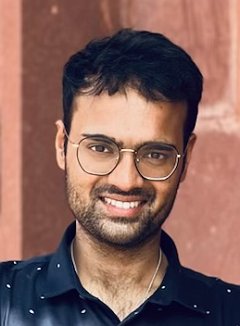
Stavros Sintos is an Assistant Professor in the Department of Computer Science at the University of Illinois at Chicago (UIC). He joined UIC after a postdoctoral fellowship at the University of Chicago, where he was part of the ChiData group under Sanjay Krishnan. He earned his Ph.D. in Computer Science from Duke University in 2020, advised by Pankaj K. Agarwal. His research focuses on designing efficient algorithms for databases, data mining, and computational geometry . Key themes include: Theoretical guarantees for practical problems Compact indexing structures for query efficiency Geometric optimization combined with database systems Fairness in algorithmic design (e.g., Fair Set Cover, FairHash) Temporal data analysis and dynamic query processing Notable scientific contributions include a Best Paper Award at ICDT 2024 for work on range entropy queries. His publications span top venues like SIGMOD, PODS, VLDB, and SODA, covering areas such as clustering algorithms, synthetic query witnesses, and temporal join optimizations.
Sandy Irani is a Full Professor at the University of California, Irvine (UCI) in the Department of Computer Science within the Donald Bren School of Information and Computer Sciences. She received her Ph.D. from UC Berkeley in 1991 and has been at UCI since 1992. Her research focuses on algorithm design, computational complexity theory, and quantum computing, with notable contributions to online algorithms and quantum complexity theory. She currently serves as Associate Director of the Simons Institute for the Theory of Computing at UC Berkeley, a role she has held since 2022. This position allows her to collaborate with researchers across theoretical computer science and related disciplines. Irani’s teaching excellence is recognized through the UCI Distinguished Faculty Award for Teaching (2021), and she has contributed to education through her zyBook on Discrete Mathematics, used by over 94,000 students globally. Her work bridges foundational computer science with practical applications, including power management strategies and distributed computing algorithms. Notably, she has collaborated with industry leaders like Mike Luby on optimizing distributed systems. Her research in quantum computing explores computational problems inspired by condensed matter physics, aiming to understand quantum advantage over classical systems. She has also authored influential papers on topics like cache hierarchy design, scheduling algorithms, and the theoretical limits of electronic structure calculations. Awards: ACM Fellow (2022), UCI Distinguished Faculty Award for Teaching (2021). Key Roles: Associate Director, Simons Institute; Vice Chair, Computing Division at UCI. Recent Projects: Quantum algorithms for condensed matter systems, maximal independent set algorithms in distributed networks.
Ori Lahav is a faculty member in the School of Computer Science at Tel Aviv University. His research is generously supported by an ERC Starting Grant and an ISF Grant. He actively supervises PhD and MSc students, and seeks highly motivated candidates for postdoc, PhD, and MSc positions in programming language theory, concurrency, and formal methods. Dr. Lahav completed his PhD at Tel Aviv University under the supervision of Arnon Avron. In 2014, he was a postdoctoral researcher at Tel Aviv University hosted by Mooly Sagiv. From 2014 to September 2017, he was a postdoctoral researcher at MPI-SWS in Germany hosted by Viktor Vafeiadis and Derek Dreyer. His primary research areas focus on programming languages and verification, with specialization in concurrency and relaxed memory models. He also has significant interests in proof-theory, semantics of non-classical logics, and automated reasoning. His work bridges theoretical foundations with practical applications in programming language design and implementation. Dr. Lahav's publication record shows a consistent trajectory of high-impact research in top-tier conferences including PLDI, POPL, OOPSLA, and ESOP. His recent work (2023-2025) demonstrates continued leadership in memory models, concurrency semantics, and verification techniques. His research spans both theoretical contributions in denotational semantics and practical tools for verification. Best Paper Award DISC 2024 Best Student Paper Award DISC 2024 Distinguished Artifact Award ESOP 2022 Distinguished Paper Award OOPSLA 2021 Kleene Award for Best Student Paper LICS 2013 Dr. Lahav actively advises students including Yoav Ben Shimon, Yotam Dvir, Amir Karniel, and Roy Margalit (PhD students), Yuval Katsman Ezra (MSc student), and has alumni including Ori Saporta (MSc) and Abhishek Kr Singh (postdoc, now Assistant Professor at IIIT Hyderabad). He has organized significant events including VMCAI 2024 and Dagstuhl Seminars on persistent programming. His teaching portfolio includes courses on Shared Memory Concurrency Semantics, Programming Language Foundations, and Software Foundations in Coq.
Camillo De Lellis is a Professor at the Institute for Advanced Study since July 2018, with a distinguished career spanning multiple institutions including the University of Zürich, where he served as Full Professor from 2005 and Assistant Professor in 2004. Prior to that, he held postdoctoral positions at the Max Planck Institute for Mathematics in the Sciences (Leipzig) and ETH Zürich. Research Interests encompass calculus of variations , geometric measure theory , partial differential equations , and incompressible fluid dynamics . His work bridges deep analytical techniques with geometric insights, particularly in understanding regularity theory for area-minimizing surfaces and anomalous dissipation in fluid flows. Publications highlight groundbreaking contributions to geometric analysis and fluid dynamics, including regularity theory for currents, Onsager's conjecture, and convex integration methods for Euler equations. These works span subfields like center manifold theory , blow-up analysis , Hölder continuous flows , and Q-valued functions . Scientific Awards Maryam Mirzakhani Prize (2022) Feltrinelli Prize (2021) Bôcher Memorial Prize (2020) Caccioppoli Prize (2014) Stampacchia Medal (2009)
Kyoko Iwaki is a Senior Lecturer at the Department of Literature of the University of Antwerp, with a focus on Japanese theatre, performance studies, and post-catastrophe narratives. She actively engages in collaborative research and holds internal governance roles, including membership in the Departmental Council for Literature and the Education Committee for the Educational Master in Languages. Her research explores Japanese contemporary theatre's intersections with ethics, digital performance, and nuclear trauma. Key themes include collaborative methodologies, liminality, and the philosophical implications of post-Fukushima art. Her work spans classical adaptations, avant-garde practices, and interdisciplinary approaches to performance. Recent publications analyze experimental Japanese theatre (Okada Toshiki, Sankai Juku), post-disaster memory, and the politics of digital pandemic spaces. She contributes to global discourse through interviews with practitioners and critiques of institutional frameworks in theatre and academia.
Matthew Allen Bishop is a Professor in the Department of Computer Science at the University of California, Davis. His primary affiliation is with the College of Engineering. Bishop's research focuses on cybersecurity, including secure programming, insider threat detection, malware analysis, and cybersecurity education. He has contributed extensively to curricular guidelines (e.g., CSEC 2017) and frameworks for cyber defense. His work spans theoretical advancements (e.g., intrusion detection models) and applied systems (e.g., secure voting platforms). Notable research areas include: Cybersecurity Education: Developing curricula and pedagogical frameworks for secure coding and ethical practices. Insider Threat Mitigation: Declarative approaches and behavioral analysis for detecting and preventing attacks. Malware Mitigation: Techniques leveraging uncertainty principles and defensive programming. Election Security: Analyzing vulnerabilities and designing secure voting systems. Bishop has collaborated with institutions like the Department of Homeland Security (DHS) and National Security Agency (NSA) on critical infrastructure protection. His publications span conferences like IEEE Security & Privacy, HICSS, and NSPW, emphasizing real-world applications of cybersecurity principles.
Dr. Kirsten Winter is an Honorary Senior Fellow at the University of Queensland's School of Electrical Engineering and Computer Science. Her research focuses on formal verification, concurrent programming, and weak memory models. She has contributed significantly to areas such as model checking, railway interlocking systems, and behavior trees. Her work spans theoretical foundations (e.g., linearizability, concurrency semantics) and practical applications in security and embedded systems. Recent projects include the Program Analysis Cell and BASIL: Boogie Analysis for Secure Information-Flow Logics. Winter has collaborated extensively with researchers like Graeme Smith and Robert Colvin. Her most recent publications address speculative execution vulnerabilities and compositional reasoning in weak memory architectures.
Prof. Masaru Shibata is a leading figure in computational relativistic astrophysics, currently serving as Director at the Max Planck Institute for Gravitational Physics (Albert Einstein Institute) since 2018 and Professor at Kyoto University's Yukawa Institute for Theoretical Physics since 2009. His career spans multiple prestigious institutions including University of Tokyo and Osaka University. PhD in Physics, Kyoto University (1994) Graduate studies in Physics, Kyoto University (1989-1993) Undergraduate in Science, Tokyo Institute of Technology (1985-1989) As a Professor with primary focus on Relativistic Astrophysics , Shibata's research investigates gravitational wave sources , neutron star mergers , black hole formation , and multimessenger astrophysics . His work combines general relativistic simulations , magnetohydrodynamic modeling , and neutrino radiation studies to understand high-energy cosmic phenomena. Recent publications (2024-2025) demonstrate expertise in supermassive star collapse , binary neutron star merger dynamics , and black hole-torus systems . These studies employ advanced numerical relativity techniques with applications to gravitational wave astronomy and gamma-ray burst modeling . 2025 Japan's Medal of Honor (Shiju-houshou) 2018 Nishina Memorial Prize 2013 International Society of General Relativity and Gravitation Fellow 2010 JSAP Excellent Young Researchers Prize 2008 Physical Society of Japan Outstanding Paper Award 2003 Nishinomiya-Yukawa Memorial Prize Shibata contributes to both theoretical frameworks and computational methodology in relativistic astrophysics, maintaining active collaborations with international research teams while leading computational projects at his dual institutions.
Praveen Agarwal is a Professor of Mathematics at the Department of Mathematics, International College of Engineering, located near Kanota, Agra Road, Jaipur-303012, Rajasthan, India. He also maintains a significant affiliation with the Lepage Research Institute in Slovakia. His academic profile demonstrates a strong international presence with collaborations spanning multiple continents. Dr. Agarwal's research expertise centers on Special functions , Fractional calculus , and Mathematical Physics . His work in fractional calculus represents cutting-edge contributions to this specialized mathematical field, developing theoretical frameworks with applications across diverse scientific disciplines. His research in special functions has led to numerous extensions and generalizations of classical mathematical constructs, creating innovative tools for solving complex differential equations. In mathematical physics, he applies rigorous analytical techniques to model physical phenomena, particularly those involving wave propagation, diffusion processes, and energy systems. Analysis of Dr. Agarwal's extensive publication record reveals a sophisticated approach to fractional-order differential equations with applications spanning viscoelastic wave behavior, neural networks, energy storage systems, and biomedical engineering. He frequently develops novel mathematical methods, including specialized integral transforms and polynomial-based solution techniques, to address complex nonlinear systems. His research consistently bridges pure mathematical theory with practical engineering applications, particularly in areas requiring precise modeling of memory effects and non-local phenomena. The interdisciplinary nature of his work is evident in publications addressing both theoretical mathematics and practical engineering challenges. Dr. Agarwal maintains active research collaborations with prestigious institutions worldwide, including The Union of Czech Mathematicians and Physicists, University of Prešov in Prešov, Eötvös Loránd University, Italian Society for General Relativity and Gravitation, Transilvania University of Brasov, VŠB-TU Ostrava, and Lodz University of Technology. These international partnerships reflect the global recognition of his contributions to mathematical sciences and demonstrate his ability to work across disciplinary boundaries to solve complex problems.
Zhijing Jin is an Assistant Professor at the University of Toronto and a postdoc at the Max Planck Institute for Intelligent Systems, working with Bernhard Schölkopf. She is also a faculty member at the Vector Institute and an ELLIS advisor. Her research focuses on Causal Reasoning with LLMs , Moral Reasoning in LLMs , and AI Safety , with contributions to AI for Science and NLP for Social Good. She leads the Jinesis AI Lab , which explores causal LLMs, multi-agent systems, and ethical AI applications. Education: PhD in Computer Science from Max Planck Institute (Germany) and ETH Zurich (Switzerland) Bachelor’s degree from University of Hong Kong, with visiting semesters at MIT and National Taiwan University Research Interests: Her work bridges causal inference and NLP, addressing robustness, interpretability, and ethical alignment of LLMs. Key projects include Corr2Cause (causal reasoning), GovSim / MoralSim (multi-agent LLMs), and frameworks like NLP4SG for social impact. She advocates for causal mechanisms to tackle AI safety and societal challenges. Recent Articles: Recent work explores political bias in LLMs, ethical dilemmas in multi-agent systems, and causal foundations for trustworthy AI. These studies emphasize real-world applications, such as healthcare NLP and policy analysis. Awards & Recognition: 3 Rising Star Awards 2 Best Paper Awards at NeurIPS 2024 Workshops Fellowships from Open Philanthropy and Future of Life Institute Grants & Mentorship: Funded by NSERC, Schmidt Sciences, and the Cooperative AI Foundation. She mentors ~20 students globally, including PhD candidates in multi-agent LLMs, causal LLMs, and AI safety. The Jinesis Lab offers remote mentorship across institutions like UofT, ETH Zurich, and University of Michigan. Labs & Collaborations: Active collaborations include MPI-IS, Vector Institute, and ETH Zurich’s AI Center. Her lab emphasizes open science, with tools like MoralLens and RouterAttack released publicly.
Auguste Genovesio is a Research Director (DR INSERM) leading the Computational Bioimaging and Bioinformatics team at the Centre for Computational Biology within the École Normale Supérieure (ENS) in Paris. His work focuses on large-scale cellular morphology analysis, integrating machine learning, microscopy, and computational modeling to study cellular responses to perturbations. His team develops algorithms for analyzing high-dimensional biological data, with applications in drug discovery, functional genomics, and neuroscience. Education and Affiliations: Genovesio’s research is anchored at ENS and collaborates with institutions like Institut Curie, Collège de France, and ESPCI. His lab develops open-source tools such as PySpacell and ALFA , advancing spatial analysis and genomic data processing. Research Interests: His group combines deep learning, bioinformatics, and experimental biology to tackle challenges in cellular dynamics, morphological heterogeneity, and predictive modeling. Recent work includes applying diffusion models to reveal subtle phenotypes and optimizing microscopy image analysis pipelines. Key Projects: Cross-modal knowledge distillation for transcriptomics, latent diffusion models for small datasets, and super-resolution microscopy via StyleGAN regularization. Applications: Collaborations in drug screening, neurobiology (e.g., Drosophila memory studies), and cancer cell analysis. Publications: Over 50 peer-reviewed articles since 2007, including work in Nature Communications , Developmental Cell , and NeurIPS . Recent focus on generative AI for biological image analysis and self-supervised learning biases. Grants & Awards: While specific grants aren’t listed, his lab’s cutting-edge research suggests significant institutional and collaborative support. No explicit awards mentioned in texts. Labs/Teams: Director of the Computational Bioimaging group, part of the Functional Genomics section at ENS. Supervises PhD students and postdocs in AI-driven biology and computational microscopy.
James Tuck is a Professor and Senior Associate Department Head for Undergraduate Affairs in the Department of Electrical and Computer Engineering at NC State University. He holds a BE from Vanderbilt University, and MS and PhD from the University of Illinois at Urbana-Champaign. His research focuses on computer architecture, compiler design, and DNA-based data storage, with notable contributions to chip multiprocessors and speculative execution. He has been recognized with two IEEE Micro Top Picks Paper Awards and the William F. Lane Outstanding Teaching Award. Education: Ph.D. in Computer Science, University of Illinois at Urbana-Champaign (2007) MS in Electrical and Computer Engineering, University of Illinois at Urbana-Champaign (2003) BE in Computer Engineering, Vanderbilt University (1999) Research Interests: Computer Architecture and Systems Compiler Design for Multiprocessors Hardware Support for Speculative Execution Advances in DNA Data Storage Non-Volatile Memory Systems Recent work emphasizes DNA storage scalability and security, including frameworks like FrameD and innovations in nanopore decoding. His articles span hardware optimization, persistent memory security, and biochemical storage solutions. Awards highlight both technical and pedagogical excellence. Advising and Grants: Leadership in Undergraduate Engineering Affairs NSF grants for DNA storage and memory systems Labs/Teams: Member of Undergraduate Affairs Team in NC State ECE Collaborations with Chemical and Biomolecular Engineering
Umang Mathur is an Assistant Professor at the National University of Singapore's School of Computing, where he leads the FOCS Lab and is affiliated with PLSE@NUS. His research focuses on Formal Methods , Concurrency , and Decidability in Programming Languages and Software Engineering . PhD in Computer Science from the University of Illinois at Urbana-Champaign (advisor: Prof. Mahesh Viswanathan) Former Research Scientist at Facebook Inc. and Research Fellow at the Simons Institute Recipient of Google PhD Fellowship, 2024 CPP Distinguished Paper Award, 2023 ACM SIGPLAN Award, and ASPLOS 2022 Best Paper Award His recent work explores algorithmic techniques for detecting concurrency bugs , decidable program verification , and synthesis , with a focus on weak memory models, predictive monitoring, and automata-theoretic approaches. Articles span topics like causal concurrency, tree clock data structures, and probabilistic counting algorithms, reflecting interdisciplinary intersections of logic and systems research. Scientific Awards Google PhD Fellowship 2024 CPP Distinguished Paper 2023 ACM SIGPLAN Distinguished Paper 2022 ASPLOS Best Paper 2018 ESEC/FSE Distinguished Paper He advises PhD students in Formal Methods and supervises teams in the FOCS Lab. Teaching includes advanced modules on Automata Theory, Logic, and Verification at NUS.
Souradeep Dutta is an Assistant Professor in the Department of Electrical and Computer Engineering within the Faculty of Applied Science at the University of British Columbia (UBC), joining in Fall 2024 after postdoctoral research at the PRECISE center, University of Pennsylvania. His academic credentials include a PhD in Electrical and Computer Engineering from the University of Colorado Boulder and a BE in Instrumentation and Electronics Engineering from Jadavpur University, India. Education: PhD, Electrical and Computer Engineering, University of Colorado Boulder BE, Instrumentation and Electronics Engineering, Jadavpur University, India Dr. Dutta's research centers on artificial intelligence with emphasis on reinforcement learning, cyber-physical systems, and formal methods. He investigates fundamental challenges in efficient data-driven learning and assurance techniques for learned models, targeting applications in robotics and medical devices. His work bridges theoretical guarantees with practical implementations for safe human-machine knowledge transfer. Analysis of his 15 most recent publications reveals dominant trends in robustness verification for learning-enabled systems, memory-based adaptation techniques, and distribution shift handling. His research consistently addresses safety-critical applications, particularly in medical diagnostics (e.g., ECG analysis, acne grading) and autonomous control systems, while maintaining strong theoretical foundations in formal methods. Awards: Recognition at top-tier conferences including ICLR, CORL, HSCC, ICCPS, ICAPS, NFM, L4DC, CHASE, and ADHS Dr. Dutta actively seeks graduate students for Fall 2025 and welcomes interdisciplinary collaborations. He serves on program committees for AAAI, ICCPS, ICML, and NeurIPS, and is available for undergraduate research supervision. His advising philosophy emphasizes safe and efficient transfer of human expertise to machine systems. He leads a research group at UBC focused on developing verifiable AI frameworks for cyber-physical applications, with current projects spanning medical device assurance and adaptive robotics control systems.
Kasper Green Larsen is a Professor in the Department of Computer Science at Aarhus University. His research focuses on theoretical computer science, machine learning, algorithms, and data structures. He has made significant contributions to boosting algorithms, PAC learning theory, and computational geometry. His work often bridges algorithm design with complexity theory, addressing challenges in optimization, memory efficiency, and lower bounds analysis. Key research areas include: Algorithmic Learning Theory (e.g., boosting, bagging, and PAC learners) Data Structure Design (e.g., invertible Bloom tables, succinct representations) Computational Complexity (e.g., lower bounds for dynamic and oblivious algorithms) Geometric Algorithms (e.g., hierarchical searching, range queries) Recent publications emphasize foundational advancements in learning theory (e.g., optimal weak-to-strong learning) and data efficiency (e.g., memory-reduced Bloom filters). His work frequently appears in top conferences like IJCAI, ICALP, and SODA, reflecting rigorous theoretical contributions with practical implications.