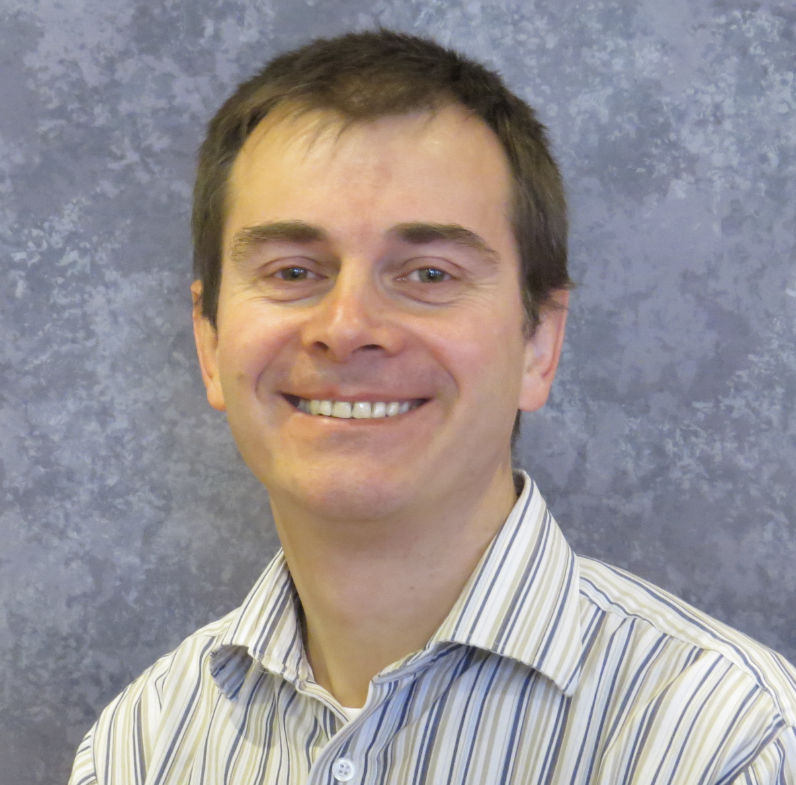
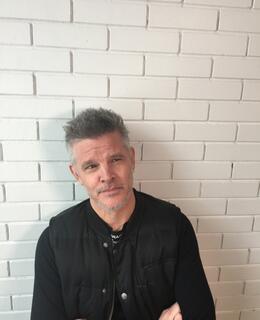
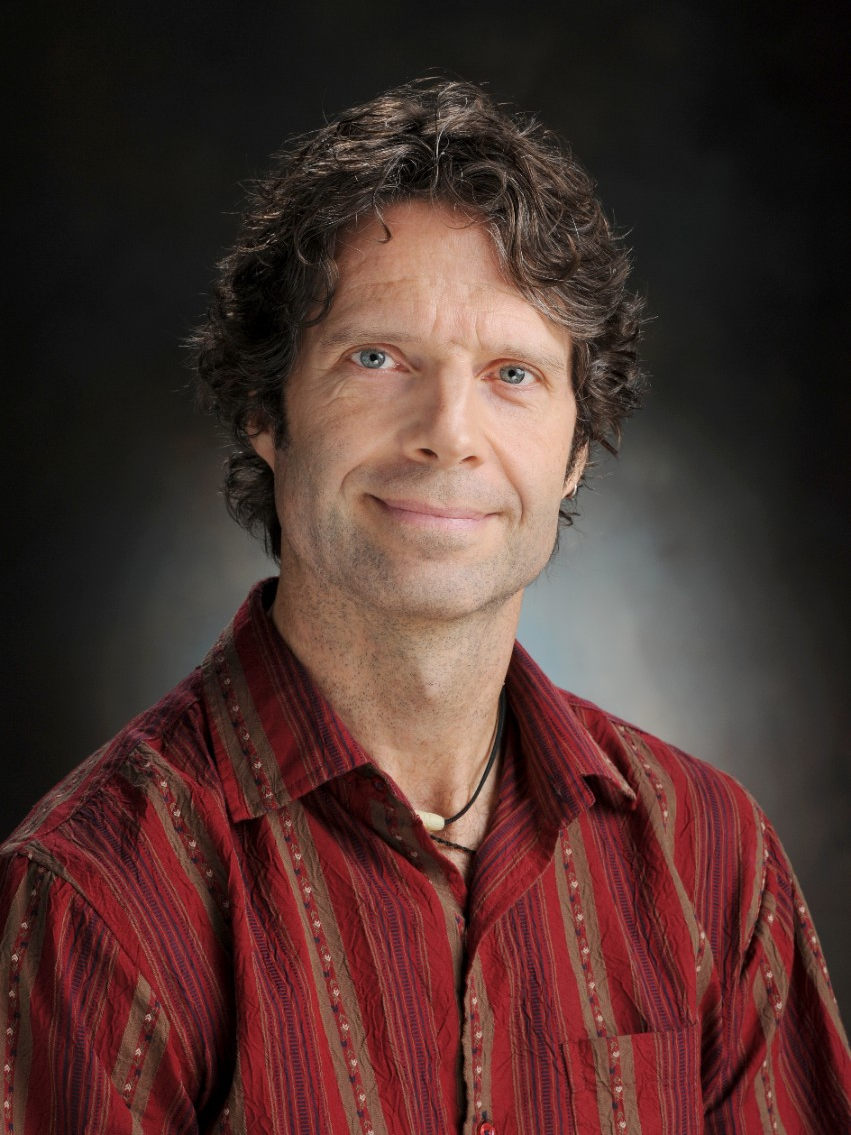
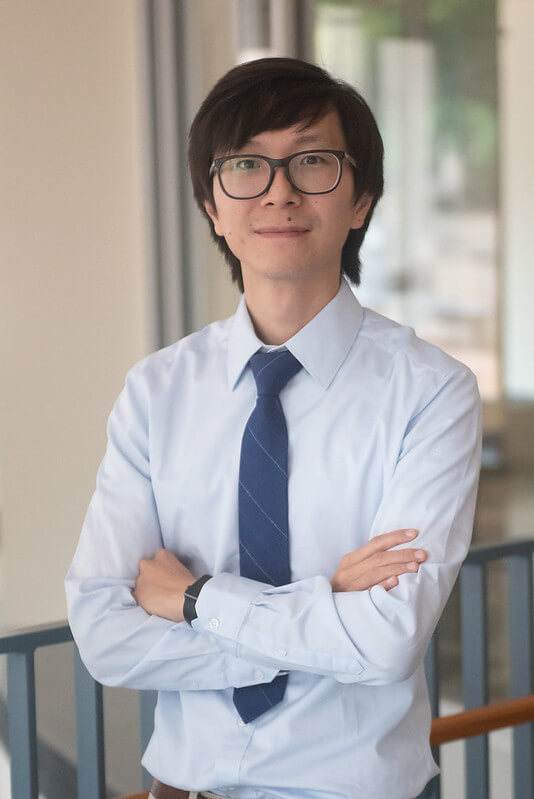
Bogdan Hnat is a Reader in Physics at the University of Warwick, specializing in plasma physics, solar wind dynamics, and turbulence modeling. His research investigates fundamental processes in complex plasma systems including solar wind-magnetosphere interactions, magnetic reconnection dynamics, and turbulence scaling properties. Current work employs wavelet analysis, fractal dimension estimation, and information geometry approaches to plasma phenomena. Dr. Hnat's publications demonstrate consistent focus on turbulence characterization in space and fusion plasmas, with recent methodological innovations in wavelet-based spectral analysis and stochastic modeling. He coordinates physics courses including PX390 and contributes to the Centre for Fusion, Space and Astrophysics research initiatives.
Elie Bouri is a Professor of Finance at the Lebanese American University's School of Business, Department of Finance. His extensive research portfolio demonstrates expertise in cryptocurrency markets, financial volatility analysis, and cross-market risk transmission. With over 30 scholarly publications indexed on SSRN, his work has garnered significant attention with more than 26,000 downloads and 162 citations. Professor Bouri's research interests focus on cryptocurrency market dynamics, particularly Bitcoin's properties as a hedge, safe haven, or diversifier relative to traditional assets. His work employs advanced econometric techniques including asymmetric GARCH models, quantile regression, and network analysis to examine volatility spillovers, market efficiency, and extreme dependence across financial markets. Recent research extends into climate risk, energy transition, and geopolitical influences on financial markets. His publication record shows consistent output since 2016 with significant recent activity, including multiple papers published or posted in 2024-2025. His research demonstrates methodological sophistication with applications of mixed data sampling, time-varying parameter models, and higher-order moment analysis to contemporary financial questions. Bouri frequently collaborates with an international network of researchers across Europe, Asia, and the Americas. Professor Bouri's scholarly contributions have appeared in journals such as the Journal of Finance, Finance Research Letters, Applied Economics, and Resources Policy. His work on cryptocurrency market properties during crisis periods has been particularly influential in understanding Bitcoin's role in diversified portfolios. His research program addresses critical questions about market efficiency, risk transmission, and asset pricing in both traditional and emerging digital asset markets, with practical implications for portfolio management, risk assessment, and financial regulation.
Feng Dai is a Professor in the Department of Mathematical and Statistical Sciences at the University of Alberta. His research focuses on harmonic analysis, approximation theory, and related areas such as orthogonal expansions, cubature formulas, and spherical harmonics. He serves as an editor for the Journal of Approximation Theory . His research interests include harmonic analysis, approximation theory, orthogonal expansions, cubature formulas on spheres and other domains, N-widths, nonlinear approximation, weighted polynomial inequalities, moduli of smoothness, spherical harmonics, wavelet frames, and radial basis functions. He has authored books on approximation theory and harmonic analysis on spheres and balls, and analysis on h-harmonics and Dunkl transforms. Dr. Dai has secured multiple NSERC Research Grants of Canada, spanning from 2005 to 2020, and a University of Alberta Startup Fund. His work emphasizes theoretical advancements with applications in numerical analysis and functional analysis. His recent publications explore topics such as discretization of integral norms, sampling recovery, and inequalities in function spaces. His contributions bridge harmonic analysis and approximation theory, addressing both foundational and applied mathematical challenges.
Dr. Robert Ferguson is an Associate Professor in the Department of Earth, Energy, and Environment at the University of Calgary. His research focuses on geophysical methods for studying the built environment, including urban infrastructure, glacial hazards, and historical site preservation. Notable projects include glacial seismicity monitoring at Mt. Meager using distributed acoustic sensing and machine learning, georadar fault imaging in Italy, and urban vibration studies. Received Best of EAGE 2023 award from the European Association of Geoscientists and Engineers. Research integrates field measurements with advanced signal processing to address challenges in natural hazard assessment, climate change impacts, and infrastructure protection. Work contributes to Energy Innovations and Earth-Space Technologies initiatives.
Mário A. T. Figueiredo is an IST Distinguished Professor and Feedzai Professor of Machine Learning at the Department of Electrical and Computer Engineering, Instituto Superior Técnico (IST) . He leads the Lisbon Unit for Learning and Intelligent Systems (LUMLIS) within ELLIS and coordinates research clusters at Instituto de Telecomunicações. His research focuses on machine learning , signal processing , and image restoration , particularly using sparsity-based methods , wavelet transforms , and Bayesian algorithms . Recent work includes 3D shape correspondence , hyperspectral sharpening , and adaptive optimization techniques . Key article themes: Biclustering , ADMM algorithms , sparsity regularization , and generative embeddings Scientific recognition: EURASIP Fellow , Clarivate Highly Cited Researcher , IEEE/IAPR Fellow , and multiple best paper awards He has mentored numerous PhD/MSc students and contributed to information-theoretic kernels , feature discretization , and multimodal data analysis in biomedical and computer vision applications.
Jose Luis Cantero Guisandez is a Full Professor at the Department of Mechanical Engineering, University Carlos III of Madrid. He is affiliated with the Álvaro Alonso Barba Institute of Chemistry and Materials Technology and leads the 'Mechanical and Biomechanical Component Manufacturing and Design Technology' research group. His work focuses on advanced machining processes, tool wear monitoring, composite materials (especially CFRP), and aerospace component fabrication. Key research interests include drilling process optimization for hybrid material stacks, tool failure detection using signal analysis (wavelet transforms), and machine learning applications in manufacturing systems. He has published extensively on topics like Inconel 718 machining, Haynes 282 finishing, and MQL drilling techniques. Current projects involve collaboration with Airbus on drilling process improvement (funded by Airbus Operations S.L.) and digitalization of industrial drilling systems (DIGITDRILL project with AEI). He has supervised multiple theses on tool health monitoring and multi-material drilling optimization. His work integrates experimental analysis with numerical modeling, addressing challenges like delamination in CFRP drilling and thermal effects in dry machining. Recent efforts emphasize data-driven approaches for process control and predictive maintenance in aerospace manufacturing.
Gordon Lightbody is a Senior Lecturer in the Department of Electrical Engineering at University College Cork (UCC). He holds a MEng (Distinction) and PhD from Queen's University Belfast. His research focuses on intelligent control systems applied to biomedical engineering, renewable energy, and power systems. He has been a key figure in projects like the MAREI and INFANT research centres, addressing marine energy and neonatal health challenges. His academic career includes roles at Queen's University Belfast (1993-1997) and UCC since 1997, where he was promoted to Senior Lecturer in 2008. He has contributed to over 194 peer-reviewed publications and won the UCC Invention of the Year Award (2010) for neonatal seizure detection algorithms. Research interests span energy systems (wind/wave power, smart grids) and biomedical signal processing (neonatal EEG analysis). His work on neonatal seizure detection is under clinical trials and recognized in government innovation reports. He also serves on committees like the IFAC National Member Organisation for Ireland. He has supervised 17 PhD students and currently leads a research group with 5 PhD candidates. His grants include SFI funding for NEOPRISM and roles in MAREI (28M) and INFANT (6M) centres.
JORGE PLEITE GUERRA is an Associate Professor at the Universidad Carlos III de Madrid (UC3M), affiliated with the Electronic Technology Department and the Electronic Power Systems Group (GSEP). His research focuses on power electronics, transformer monitoring, and fault-tolerant architectures. He holds a PhD in Electrical Engineering and has been active in advancing diagnostic methods for electrical systems. His work emphasizes practical applications of signal processing techniques like wavelet transforms for transformer diagnostics and frequency response analysis. He has contributed to aerospace electronics reliability through fault-tolerant design innovations. His research also involves nonlinear modeling of magnetic components using finite element methods. Publications span prestigious journals including IEEE Transactions on Aerospace and Electronic Systems, IEEE Transactions on Power Delivery, and Materials. His textbook Electrónica analógica para ingenieros (2009) remains a reference in analog electronics education. Dr. Pleite Guerra has collaborated on projects involving integrated magnetics design for grid-connected power converters and RVM test interpretation improvements. His expertise bridges theoretical analysis with applied engineering solutions in power systems.
Randall Pyke is a Senior Lecturer in the Department of Mathematics at Simon Fraser University (SFU), based at the Surrey campus. He holds a Ph.D. in Mathematics from the University of Toronto (1996). His academic roles include teaching and research in mathematical physics, dynamical systems, and industrial mathematics. He is a key contributor to SFU’s Operations Research programs, including the BSc, MSc, and PhD tracks, and has been involved in designing curricula for industrial mathematics and mathematical modeling. His research interests span nonlinear wave equations, soliton dynamics, partial differential equations in image processing, and wavelets in signal processing. He has supervised numerous student projects in operations research, optimization, and applied mathematics, highlighted in journals like Analytics Now . He is affiliated with the CORDS (Centre for Operations Research and Decision Sciences) and actively participates in industrial mathematics workshops. Pyke teaches courses on fractals, chaos theory, differential equations, and linear algebra. He emphasizes the practical applications of mathematics in interdisciplinary contexts. His work includes developing educational materials for first-year students and advising on career paths in mathematics. Notable student projects supervised by him address real-world challenges like airline scheduling, water distribution optimization, and telecommunication infrastructure planning. While no scientific awards are explicitly listed, his contributions to academic programs and student mentorship reflect his impactful role in advancing applied mathematics education and research.
Raymond Ka Wai Wong is an Associate Professor and Director of the PhD Program in the Department of Statistics at Texas A&M University. He holds a PhD in Statistics from the University of California, Davis (2014), an MPhil from The Chinese University of Hong Kong (2010), and a BSc with minors in Mathematics and Risk Management Science (2008). His research focuses on causal inference, functional data analysis, low-rank modeling, reinforcement learning, and statistical learning with applications in astronomy, brain imaging, and genomics. Wong's professional roles include Associate Editor for Journal of Computational and Graphical Statistics , Journal of the American Statistical Association , and member of the Research Institute for Foundations of Interdisciplinary Data Science (FIDS). He has secured grants from NSF, NASA, and NIH, including leadership in projects like Virtual Assistant for Spacecraft Anomaly Treatment and phenomic selection in maize hybrids. His awards include Top Reviewer distinctions at NeurIPS (2023) and ICML (2020), and a 2016 Discussion Paper in the Annals of Applied Statistics. He has advised numerous doctoral students, with notable advisees receiving awards such as the ICSA Student Paper Award and Emanuel Parzen Fellowship. Wong’s recent work emphasizes methodological advancements in reinforcement learning (e.g., distributional off-policy evaluation) and matrix/tensor completion under informative missingness. His research bridges theoretical statistics with practical applications in interdisciplinary domains such as neuroscience, agriculture, and space exploration.
Dmitry Vedenov is an **Associate Professor** in the Department of Agricultural Economics at Texas A&M University, part of the College of Agriculture & Life Sciences. His research focuses on commodity futures, risk management, agribusiness finance, and decision-making under uncertainty, with contributions to crop insurance and dynamic economic models. He previously served as an Assistant Professor at the University of Georgia. Education: B.S. Applied Mathematics and Physics, Moscow Institute for Physics and Technology M.S. Applied Economics and Computers, Moscow Institute for Physics and Technology M.S. Economics, The Ohio State University Ph.D. Agricultural, Environmental, and Development Economics, The Ohio State University Research Interests: Dr. Vedenov explores financial instruments for managing agricultural risk, including hedging strategies, weather derivatives, and commodity market dynamics. His work integrates econometric methods to analyze managerial decision-making and climate impacts on agriculture. Recent studies highlight innovations in crop insurance design and the valuation of public-private partnerships. Advising & Grants: While no formal advisees are listed, his research has been supported by grants addressing agricultural finance, climate adaptation, and commodity market volatility. He collaborates with Texas A&M AgriLife Research and Extension on applied solutions for agribusiness challenges.
Professor Michael Chappell is a faculty member of the School of Engineering at the University of Warwick , where he has held academic roles since 1990. He leads the Systems and Information Discipline Stream and serves as the MEng Course Manager for all Engineering streams. His research focuses on mathematical modeling of biomedical, pharmacokinetic, and biological processes, emphasizing structural identifiability analysis, system dynamics, and nonlinear systems. He collaborates with academic, industrial, and hospital-based groups, securing funding from EPSRC, BBSRC, and MRC. Currently, he is Deputy Director of Warwick's Mathematics in Medicine Initiative (MiMI) and Co-director of the Centre for Medical Science and Technology. Research interests include biomedical engineering , pharmacokinetics , systems biology , and control theory , with applications to drug development, medical technology, and disease modeling. Techniques such as computer algebra systems and robust simulation of stiff systems are central to his work. He also explores the interplay between theoretical models and experimental data in pharmacology and physiology. Key Projects/Grants: "Analyses to Improve Efficiency in Oncology Clinical Drug Development" (AstraZeneca, 2020–2024) "A sensorimotor PROsthesis for the upper LIMB (PROLIMB)" (EPSRC, 2020–2023) Co-founded the UK Quantitative and Systems Pharmacology Network (EPSRC, 2015–2018) His 2001 Snell Premium award recognizes contributions to biomedical signal processing via wavelet analysis of heart rate variability for sleep apnoea detection. He advises students such as Edmond Watson and C. Thornton through collaborative studentships and maintains office hours every Friday from 10 am to 12 noon. His interdisciplinary work bridges engineering methodologies with medical and biological applications, promoting efficient translational research and reducing reliance on animal testing through quantitative systems toxicology.
Francesco Aristodemo is an Associate Professor in the Department of Civil Engineering at the University of Calabria, where he leads the Coastal and Offshore Engineering research group (CAMEL Laboratory) within the “Grandi Modelli Idraulici” facility. His academic career includes prior roles as Assistant Professor at both the University of Calabria and eCampus University. He holds a PhD in Hydraulic Engineering for Environment and Territory from the University of Calabria and a degree in Civil Engineering cum Laude. His research expertise lies in hydraulic, coastal, and environmental engineering, with a focus on experimental and numerical modeling. Key areas include wave-structure interaction, hydro-morphodynamic processes, Smoothed Particle Hydrodynamics (SPH), tsunami dynamics, wave energy conversion, pollutant transport, and statistical analysis of marine trends. He employs advanced computational techniques such as CFD and LES within SPH frameworks and conducts large-scale physical experiments. The 15 most recent articles highlight a consistent research trajectory centered on coastal hydrodynamics, numerical modeling innovation (especially SPH), and environmental impact assessment. Topics span solitary wave run-up, wave trends in the Mediterranean, propeller-induced scour, multiphase flows, and sustainable coastal protection systems. The publications reflect strong interdisciplinary collaboration and a blend of experimental and computational methodologies. Scientific Awards: 2017 Outstanding Reviewer Award, journal Water (MDPI) Francesco Aristodemo has supervised over 60 graduate theses and 3 PhD students. He has been actively involved in numerous national and international research projects including PRIN, HYDRALAB, RITMARE, and PON initiatives (SILA, SIGIEC, SMoRI). He also serves on the editorial board of Mathematical Problems in Engineering (Hindawi) and has acted as Guest Editor for special issues in Water . His research has been supported through academic and industrial collaborations across Europe and beyond. He is a key member of the Coastal and Offshore Engineering research group (CAMEL Laboratory) within the “Grandi Modelli Idraulici” at the University of Calabria. This laboratory supports both research and teaching activities in hydraulic modeling, with facilities for large-scale physical experiments in coastal and fluvial environments. The team focuses on innovative, low-impact solutions for coastal defense and environmental sustainability.
Manuel Blanco Velasco is a Professor at the Department of Signal Theory and Communications, Universidad de Alcalá. His research focuses on biomedical signal processing, particularly in electrocardiogram (ECG) analysis, machine learning applications in healthcare, and communication systems. He holds a PhD from Universidad de Alcalá (2004) with a thesis on ECG compression using modulated filter banks. His work bridges signal processing theory and practical biomedical engineering, addressing challenges in ECG noise classification, T-wave alternans detection, and telemedicine systems. Research interests include: Medical signal processing for arrhythmia detection Deep learning models for clinical data interpretation OFDM-based communication systems ECG compression and denoising algorithms His recent publications emphasize interpretable deep learning methods for ECG analysis, noise characterization in long-term monitoring, and ensemble approaches for T-wave alternans detection. Contributions span both biomedical and communication engineering domains, reflecting his interdisciplinary expertise.
Fernando Cruz Roldán is a **Professor** at the Universidad de Alcalá (UAH) , affiliated with the Department of Signal Theory and Communications . He holds a PhD from UAH with a thesis on filter bank design for minimal amplitude distortion. His research focuses on signal processing, communications engineering, and biomedical applications. Key areas include OFDM systems , power line communications , filter design , and machine learning in healthcare . His work spans theoretical advancements in multicarrier modulation (e.g., DCT-based systems) and practical applications like ECG/EEG signal compression and T-wave alternans detection. Recent contributions address AI-driven solutions in education and medical diagnostics. He has published extensively on topics such as channel estimation, intersymbol interference mitigation, and biomedical signal analysis. Notable achievements include pioneering work on α-spline digital filters and innovative approaches to signal processing in noisy environments. His research bridges theoretical signal theory with real-world applications in telecommunications and healthcare.