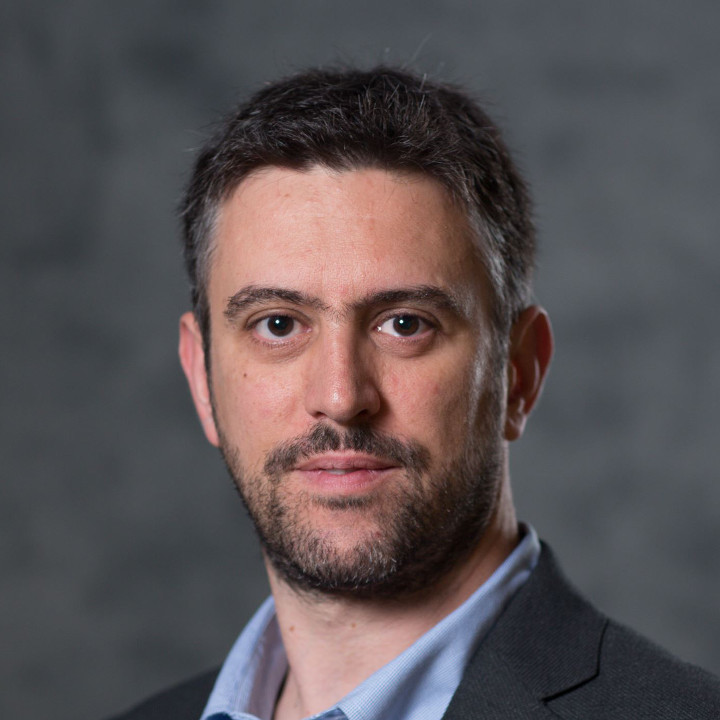
Fotis Kopsaftopoulos is an Assistant Professor at the Department of Mechanical, Aerospace, and Nuclear Engineering (MANE) at Rensselaer Polytechnic Institute (RPI) , where he has been since 2017. His research focuses on intelligent aerospace and mechanical systems , particularly structural health monitoring (SHM) , stochastic modeling , and machine learning applications for damage detection and fault diagnosis. Education: Ph.D. in Mechanical Engineering & Aeronautics (2012), University of Patras Diploma in Mechanical Engineering & Aeronautics (2004), University of Patras Research Interests: Kopsaftopoulos develops data-driven SHM frameworks using stochastic time series models , Gaussian process regression , and guided wave propagation for aerospace structures. His work addresses damage detection under varying loads , rotor fault diagnosis in multicopters, and health monitoring of batteries and adhesively bonded joints . Scientific Awards: 2021 Class of 1951 Outstanding Teaching Award at RPI 2015 Most Practical SHM Solution for Aerospace Award (sponsored by Airbus) 1998–1999 Academic Scholarship of Excellence from the State Scholarship Foundation of Greece Teaching & Leadership: He has taught courses such as System Identification , Aerospace Structures and Materials , and Engineering Dynamics at RPI. He served as co-Editor for Structural Health Monitoring proceedings, Associate Editor for the Structural Health Monitoring Journal , and Topic Editor for Sensors Journal . He has advised 6 PhD, 14 MEng/MS, and 46 BS projects.
Professor Peter Haynes FRS is a Professor of Applied Mathematics at the University of Cambridge and a Fellow of Queens' College. He served as Head of the Department of Applied Mathematics and Theoretical Physics from 2005 to 2015 and currently co-convenes the Cambridge Centre for Climate Science. He holds the title of Official Fellow and Director of Studies, Part II Mathematics, at Queens' College. Research Interests: Large-scale fluid dynamics of atmosphere and ocean Wave propagation and breaking Transport and mixing of trace species, including reacting chemical and biological species Atmospheric dynamics, including global circulation Interactions between dynamics, chemistry, and radiation in atmospheric science Physical and dynamical processes controlling chemical species distribution, such as water vapor Scientific Awards: Fellow of the Royal Society (FRS) Contact: Email: phh1@cam.ac.uk | Phone: +44 (0)1223 769378
Dominic Deslandes is a Professor in the Department of Electrical Engineering at École de technologie supérieure (ETS) in Montreal, Canada. His research focuses on RF and microwave circuits, antennas, high-frequency interconnections, and wireless system integration. He is a member of the LACIME – Communications and Microelectronic Integration Laboratory, which conducts research from the smallest devices and circuits to complex communication systems. Dr. Deslandes earned his B.Ing. from Université de Sherbrooke, and his M.Sc. and Ph.D. from Polytechnique Montréal. His research expertise includes: RF and microwave circuits Antennas and wave propagation High-frequency interconnections and signal integrity Wireless system integration Analog filters and transmission lines RF circuit modeling His research spans both theoretical and applied aspects of microwave engineering, with applications in wireless communications, sensing systems, and medical devices. Dr. Deslandes has made significant contributions to substrate-integrated waveguide technology, leaky-wave antennas, and ultrasonic transducer systems. His work often involves interdisciplinary collaborations, particularly in biomedical applications where microwave and ultrasonic technologies are applied to healthcare monitoring and diagnostics. Dr. Deslandes has been involved in numerous patents related to ultra-wideband communication systems, working with Frederic Nabki and others. His research group has developed innovative solutions for wireless sensor networks, antenna systems, and ultrasonic transducers. The practical applications of his research include fall detection systems for elderly care, cardiopulmonary monitoring, and high-frequency communication technologies. As an educator, Dr. Deslandes teaches courses in electromagnetism and electromagnetic waves, contributing to the training of the next generation of electrical engineers. His recent work has begun incorporating AI techniques to enhance engineering education, particularly in the domain of electromagnetism. Dr. Deslandes has supervised numerous graduate students working on projects related to antennas, wireless communications, and ultrasonic systems. His research has been supported through collaborations with industry partners, reflecting the practical relevance of his work.
Professor Ammar B. Kouki is affiliated with the École de Technologie Supérieure in the Department of Electrical Engineering . With a Ph.D. from the University of Illinois and academic roots at Pennsylvania State University, his work bridges microwave engineering, electromagnetism, and wireless systems. Research Axes: Aeronautics/Aerospace, Microwave Circuits, Electromagnetic Modeling Labs: LACIME Laboratory His research interests focus on: RF and microwave circuit design Antenna arrays for 5G and satellite communications Power amplifier efficiency and linearity LTCC (Low-Temperature Co-fired Ceramic) integration MEMS-based reconfigurable systems Thermoelectric energy harvesting Notable article trends include advancements in: LTCC cavity-backed phased arrays for Ka-band 3D microfabrication techniques Harmonic optimization for Class-GF amplifiers Fluidic tuners for microwave adaptability Electromagnetic education via AI Thermal management in GaN HEMTs Academic Leadership : Supervised 20+ graduate theses (PhD and Master’s) Collaborated with industry leaders (Ghannouchi, Gagnon, Landry) Authored 91 peer-reviewed journal articles and 150+ conference reports Holds 8 patents in RF duplexer and amplifier technologies
Hao Bai serves as an Associate Professor in the Department of Mechanical & Mechatronics Engineering at Lakehead University, where he holds the professional designation P.Eng. and maintains active teaching and research responsibilities. His academic qualifications include: BSc from Peking University, Beijing, China MSc from University of Science and Technology of China, Anhui, China PhD from Peking University, Beijing, China PhD from University of Manitoba Dr. Bai's research integrates theoretical and applied mechanics with engineering innovation, specializing in structural health monitoring through guided wave propagation, nondestructive evaluation techniques for pipeline systems, energy harvesting mechanisms, and advanced computational modeling. His methodological expertise spans finite element analysis, boundary element methods, and vibration control systems, contributing to safer infrastructure and sustainable energy solutions. No scientific awards were documented in the source material. Information regarding graduate student supervision, research grants, laboratory facilities, or collaborative teams was not provided in the available text.
Prof. Dr. Ahmet DEMİR is a faculty member at the Faculty of Engineering and Natural Sciences, Karabük University, Turkey. He has served as Department Head and Major Field Head at Karabük University since 2017. PhD in Electronic Engineering from Gebze Technical University (2001-2003) MSc in Mathematics from Gebze Technical University (1999-2001) BSc in Mathematics from Dokuz Eylül University (1993-1998) His research focuses on applied mathematics and acoustics, particularly sound wave propagation, diffraction, and radiation in complex waveguide structures. He employs Wiener-Hopf techniques and advanced mathematical modeling to analyze noise control in mechanical systems. His work demonstrates trends in aeroacoustics, duct acoustics, and impedance-based sound propagation analysis. Collaborations include institutions like Technische Universiteit Eindhoven and University of Southampton.
Shadi Safaei Jazi is a Doctoral Researcher at Aalto University's Department of Electronics and Nanoengineering. Their work focuses on advanced optical phenomena, particularly in metamaterials and nanophotonic structures. Research highlights include contributions to optical metasurfaces and birefringence manipulation in nanostructured materials. Current collaborations span theoretical and experimental studies with the Viktar Asadchy Group . Key research areas: Optical Metamaterials Electromagnetic Coupling Nanophotonic Structures Material Anisotropy
Yves Aurégan is a CNRS Research Director affiliated with Le Mans University's Institute of Acoustics . His work focuses on sound-flow interaction in complex materials, particularly metamaterials , and spans disciplines including acoustics , fluid dynamics , and wave propagation . Recent research highlights include studies on non-reciprocal acoustic systems , resistive waveguides , and flow-induced sound amplification . His publications in journals like Physical Review Research and Nature Communications demonstrate expertise in designing ultra-thin acoustic absorbers , analyzing surface modes in liners, and modeling exceptional points in wave propagation. Key themes include the Hatano-Nelson model for acoustic systems, Autler-Townes resonators , and slow sound applications for broadband absorption. Experimental facilities like MAINE Flow enable characterization of liners under realistic flow conditions. His scientific production emphasizes innovative liner designs for aerospace applications, flow-structure interaction in corrugated pipes, and nonlinear acoustic phenomena in porous materials. Collaborative work spans institutions in France, Sweden, and the USA.
Joachim Golliard is an associated researcher at Le Mans Université's Institute of Acoustics. His work focuses on acoustics, particularly wave propagation in complex media, aeroacoustics, and experimental characterization of acoustic liners under flow conditions. He contributes to transversal axes including nonlinear acoustics and metamaterials. Primary Affiliation: Institute of Acoustics, Le Mans Université Research Topics: Flow-induced acoustics, sound propagation in ducts, experimental facilities Collaborations: Yves Aurégan, Thomas Humbert, Gwenael Gabard, Jean-Christophe Le Roux His recent publications explore shear flow effects in 2D ducts, multimodal characterization of liners, and experimental validation of acoustic-structure interactions in corrugated geometries. Articles analyze wave propagation dynamics, impedance eduction techniques, and flow-acoustic coupling mechanisms. He actively participates in international conferences like AIAA/CEAS Aeroacoustics and contributes to the MAINE Flow experimental facility development for advanced acoustic testing under representative flow conditions.
Manuel Melon is a Professor at the Acoustics Laboratory of the University of Le Mans , where he co-supervises the International Master in Electroacoustics (IMDEA) . His career spans institutions like the Conservatoire National des Arts et Métiers in Paris and focuses on advanced acoustic research. His research interests include electroacoustics , sound field synthesis , personalized listening zones , and acoustic material characterization using transducer arrays. He explores both theoretical and applied aspects of wave propagation in complex media. Recent publications highlight trends in acoustic metamaterials for directional sound control, MEMS speaker modeling , and adaptive filtering for automotive sound zones. He also contributes to online acoustic education through the ACOUCOU platform.
David Russell Luke is a Professor of Continuous Optimization at the Institute for Numerical and Applied Mathematics, University of Göttingen, where he also serves as Managing Director of the Institute. He holds editorial positions as Area Editor for the Open Journal of Mathematical Optimization and Associate Editor for multiple prestigious journals including Journal of Optimization Theory and Applications, ESAIM: Control, Optimization and Calculus of Variations, SIAM Journal on Optimization, and Advances in Computational Mathematics. Dr. Luke earned his BSc with honors in Applied Mathematics from the University of California, Berkeley in 1991, followed by an MSc (1997) and PhD (2001) in Applied Mathematics from the University of Washington under James Burke. His academic journey included positions at the University of Göttingen (2001-2003), Simon Fraser University (2002-2004), and University of Delaware (2004-2009) before returning to Göttingen. His research focuses on Continuous Optimization, Variational Analysis, and Inverse Problems , with particular expertise in nonsmooth and nonconvex optimization, phase retrieval, and computational imaging. His work bridges theoretical mathematics with practical applications in photonic imaging, tomography, and adaptive optics. Current research projects include atomic orbital tomography, stochastic computed tomography for X-FEL imaging, probabilistic analysis in fixed point theory, and topological optimization for tree structure analysis. Analysis of his recent publications reveals a strong trend toward computational methods for imaging science, particularly phase retrieval problems, with increasing focus on three-dimensional reconstruction techniques and applications in photoemission orbital tomography. His work consistently integrates theoretical convergence analysis with practical algorithm development, often implemented in the ProxToolbox software framework. NASA/GSFC Graduate Student Research Fellow (1998-2001) Editorial roles with multiple leading optimization journals Principal investigator on numerous DFG-funded research projects Dr. Luke has advised several PhD students including Patrick Neumann and Thao Nguyen. His research has been supported by significant grants from the National Science Foundation, German Research Foundation (including Collaborative Research Center 755, Graduiertenkolleg 2088), Bundesministerium fuer Bildung und Forschung, German Israeli Foundation, and Australian Research Council. He leads the Working Group on Continuous Optimization, Variational Analysis and Inverse Problems at the University of Göttingen, which maintains the ProxToolbox software laboratory for proximal algorithms and optimization methods. The group actively develops computational tools for inverse problems and optimization, with applications ranging from space telescope wavefront reconstruction to atomic-scale imaging. Current projects are organized within the Collaborative Research Center 1456 and Graduiertenkolleg 2088 frameworks, focusing on mathematical modeling of complex imaging scenarios and developing efficient numerical algorithms for large-scale optimization problems.
Vanya Rafaeli Barseghyan is a Professor in the Department of Mechanics at the Faculty of Mathematics and Mechanics, Yerevan State University. Her research focuses on optimal control theory, vibrational mechanics, thermal systems control, and variable structure systems. She has published extensively in journals such as Mathematics MDPI , Axioms , and Mechanics of Solids , often collaborating with researchers like Svetlana Solodusha, Tamara Simonyan, and Aram Matevosyan. Her work addresses boundary control problems, including string vibrations with intermediate constraints, thermal process control in heterogeneous materials, and dynamical systems with variable structure. Key methodologies involve energy minimization, partial differential equation control, and state-dependent constraints.
Michael Schmähl is a Lecturer and scientific staff member at the Chair of Aircraft Design at the Technical University of Munich (TUM). His research focuses on the analysis and optimization of UAV and eVTOL aircraft noise, with a particular emphasis on propeller noise reduction and acoustic metamaterials. Research Interests: Schmähl’s work spans aeroacoustics, computational modeling, and environmental impact assessment for advanced aerial vehicles. Key areas include tilt-rotor configurations, hybrid acoustic analogy methods, and integration of noise models into geoinformation systems. Publication Trends: His recent articles (2020-2025) highlight interdisciplinary approaches to UAV and eVTOL noise mitigation, combining numerical simulations, empirical modeling, and optimization techniques for aerodynamic and acoustic performance. Labs & Infrastructure: He is affiliated with TUM’s Flying Demonstrator Lab System Integration Lab Rapid Prototyping supporting experimental validation and design innovation.
Professor Alan Tennant is a leading academic in applied electromagnetics at the University of Sheffield , School of Electrical and Electronic Engineering. His career spans industry (BAE Systems, Defence Research Agency) and academia (Hull University, returning to Sheffield in 2001). He pioneered research in active radar absorbers , nonreciprocal metasurfaces , and secure wireless communication using directional antenna modulation. Research trends in his work include orbital angular momentum (OAM) beams for radio communications, textile-based electromagnetic structures , and time-modulated antenna arrays . Key collaborations involve BAE Systems, QinetiQ, and DSTL. Supervised students include Kaleeba P N , Mufti S , and Wang Y . He contributes to the Electrical Machines and Drives Research Group and teaches modules like EEE334 and EEE6220.
Deniz Ülgen is a Professor in the Department of Civil Engineering at Mugla Sitki Kocman University's Faculty of Engineering. With a distinguished academic career spanning over two decades, Professor Ülgen serves as a key faculty member in the Geotechnical Science Department and holds regular staff position at the Rectorate. His extensive research and teaching activities have established him as a prominent figure in geotechnical earthquake engineering within the Turkish academic community. Professor Ülgen received his Bachelor's, Master's, and Doctorate degrees in Civil Engineering from Middle East Technical University in 2000, 2004, and 2011 respectively. His educational background provided the foundation for his specialization in geotechnical engineering with a strong emphasis on earthquake-related phenomena. Professor Ülgen's research interests center on geotechnical earthquake engineering, with particular expertise in vibration isolation techniques, wave barrier systems, and the seismic behavior of civil infrastructure. His work bridges theoretical geomechanics with practical engineering applications, focusing on mitigating environmental ground vibrations from construction activities, highway and railway traffic. His research has significant implications for urban infrastructure development in seismically active regions. His publication record demonstrates a consistent focus on experimental and numerical approaches to vibration control, with recent work emphasizing sustainable solutions using recycled materials like waste rubber chips. Professor Ülgen's research trajectory shows progression from fundamental soil dynamics studies toward more complex field applications of vibration isolation systems, with increasing emphasis on environmentally conscious engineering solutions. Professor Ülgen has supervised multiple graduate students through thesis research on vibration isolation, wave barriers, and earthquake engineering applications. His research portfolio includes numerous completed projects, notably a TUBITAK 1001 project (2019-2021) on environmental ground vibrations and multiple university-supported research initiatives from 2013-2019. He has served on various committees including the Faculty Management Board, Pre-Evaluation Committee, and Senate. Professor Ülgen teaches core courses in soil dynamics and earthquake engineering, including Introduction to Soil Dynamics & Earthquake Engineering, Geotechnical Earthquake Engineering, and Earthquake Design Codes for Geotechnical Structures. His teaching reflects his research expertise, preparing the next generation of civil engineers to address seismic challenges in infrastructure design.