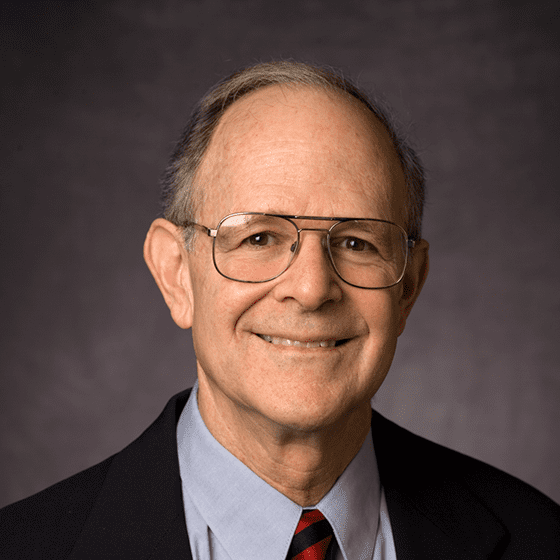
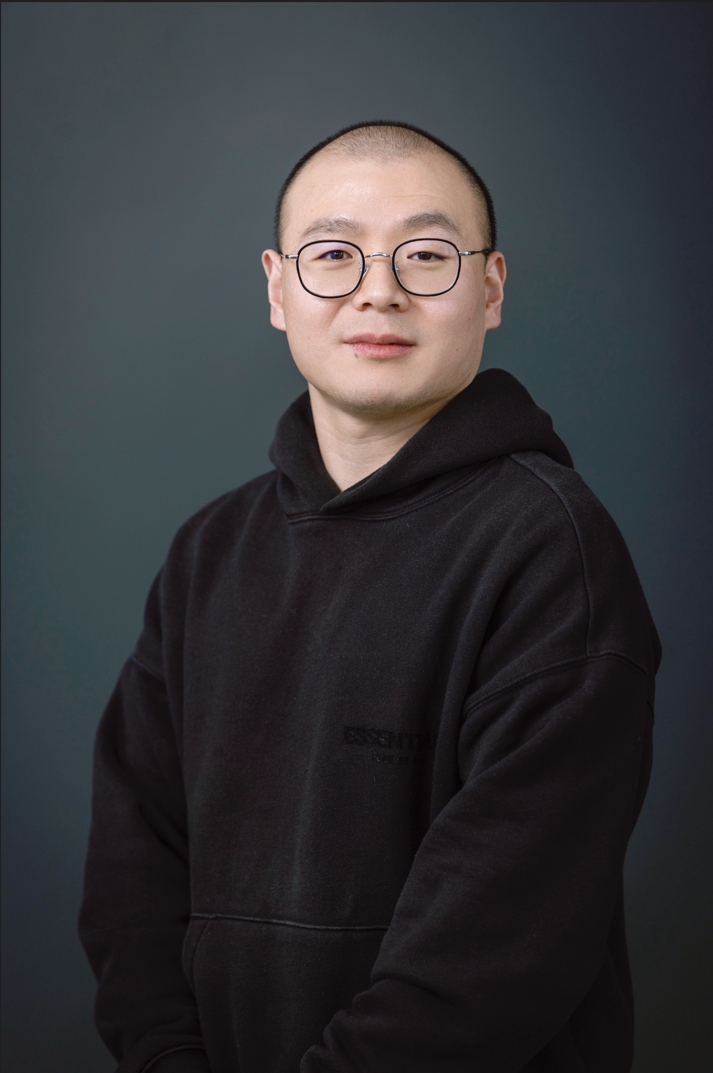
Marco Pirola is a Full Professor at the Department of Electronics and Telecommunications (DET) of the Polytechnic University of Turin, Italy. He is a member of the Interdepartmental Center 'CleanWaterCenter@PoliTo' and actively contributes to research in high-frequency electronics and microwave engineering. His work focuses on power amplifiers, device characterization, and advanced microwave circuit design. Research Interests: Microwave power devices, GaN technology, 5G/mm-Wave applications, space communications, and smart pipeline monitoring systems. Awards: IEEE Fellow (since 2019), IEEE Senior Member. Recent Publications address topics like Ka-band MMIC amplifiers for SAR systems, broadband Doherty amplifiers using GaN, and harmonic analysis of current-mode power stages. His projects include STARGATE (European GaAs power architectures) and Millimetre-Wave GaN Radar for UAV detection. Teaching: He leads courses on 'Radio Frequency Integrated Circuits' and 'Advanced Devices for High Frequency Applications' at the Polytechnic University of Turin. Supervised PhD students include Wenjun Zhang and Abbas Nasri, who worked on III-V HEMT circuits and GaN power amplifiers.
Joanna Austin is a Professor of Aerospace and serves as the Graduate Option Representative for Aeronautics and Space Engineering, as well as the Undergraduate Option Representative for Aerospace at the California Institute of Technology (Caltech). She leads the Caltech Hypersonics Group, which operates facilities like the T5 Reflected Shock Tunnel and the Hypervelocity Expansion Tube (HET). Her research focuses on reactive, compressible flows in applications such as hypervelocity flight, planetary entry, supersonic combustion, bubble dynamics, and explosive geological events. Key projects include studying shock-boundary layer interactions, Martian atmospheric entry aerothermodynamics, and high-speed fluid-structure interactions. She advises four Ph.D. students and collaborates with a team including staff members like Liza Bradulina and research assistants such as Noel Esparza-Duran. Her work bridges experimental fluid dynamics with geophysical phenomena, leveraging advanced diagnostics like Focused Laser Differential Interferometry (FLDI) and laser spectroscopy. The group’s facilities enable studies of high-enthalpy flows and hypersonic aerodynamics critical for aerospace and planetary exploration. Research highlights include investigations into CO₂ Martian entry conditions, boundary layer transition mechanisms, and fluid-structure coupling in high-speed flows. The Hypersonics Group’s experimental setups replicate extreme environments to advance predictive models for aerospace systems. Her contributions span both fundamental fluid mechanics and applied engineering challenges, with a focus on real-gas effects and shock dynamics. Collaborations with institutions like NASA and academic partners further her interdisciplinary impact.
Dr. Rameeza Moideen is a Researcher at the University of Edinburgh's School of Engineering, affiliated with the Energy Systems Research Institute. Her work focuses on offshore renewable energy infrastructure, coastal structural resilience, and fluid-structure interaction dynamics. Research Interests Her research spans vortex-induced vibrations in marine power cables, extreme wave impacts on coastal decks, and climate change adaptation for port infrastructure. She applies advanced numerical simulations to analyze hydrodynamic forces, structural stresses, and material degradation mechanisms. Key Research Trends Recent work emphasizes lazy wave dynamic cables under varying currents (2025), focused wave impacts on bridge decks (2023-2021), and marine growth effects on tubular structures (2021). These studies combine computational modeling with real-world climate scenarios to improve offshore energy systems and coastal infrastructure durability. Awards & Grants No specific awards or grants mentioned in available texts. Research is likely funded through institutional and collaborative projects within the Energy Systems Institute. Labs & Teams Active within the Energy Systems Research Institute at Edinburgh, collaborating on offshore renewable energy projects and coastal engineering initiatives.
Dr. Kidambi Sreenivas is an Associate Professor in Mechanical Engineering at the University of Tennessee at Chattanooga (UTC), affiliated with the College of Engineering and Computer Science. He holds a PhD in Mechanical Engineering and specializes in computational fluid dynamics (CFD), with a focus on unstructured multi-physics flow solvers and applications in aerospace, environmental systems, and biomedical engineering. His research bridges academia and industry, collaborating with NASA, the U.S. Navy, Department of Energy, and private companies. Dr. Sreenivas' research interests include rotating machinery simulations, pre-conditioners for non-ideal fluids, and real-world applications such as submarine hydrodynamics, wind farm optimization, aerodynamic efficiency of vehicles, and contaminant dispersal modeling. He has pioneered methods for simulating complex geometries and physics, including high-fidelity simulations of hypersonic vehicles, weapons bay cavities, and shock-wave interactions. Recent work emphasizes advanced CFD methodologies for high-speed flows, thermal effects on turbulence, and aerothermal characteristics of hypersonic test articles. His collaborations have led to practical solutions for drag reduction on Class 8 trucks and improved accuracy in wind turbine modeling. Dr. Sreenivas also contributes to educational initiatives, such as developing PIV systems for undergraduate fluid mechanics labs. His advising and grants reflect partnerships with federal agencies and private sectors, focusing on projects like microplastic sampling devices for stormwater management. These projects highlight his interdisciplinary approach to solving real-world engineering challenges through cutting-edge computational methods.
David A. Hammer is the J. Carlton Ward, Jr., Professor of Nuclear Energy Engineering and Professor of Electrical and Computer Engineering at Cornell University's College of Engineering. He has been a faculty member since 1977 and has held visiting positions at Imperial College London, Applied Materials, Inc., and the Paris Observatory. His work bridges nuclear engineering, plasma physics, and electromagnetics. His research focuses on high energy density plasmas generated by pulsed power systems, particularly through wire explosions, X-pinches, and gas-puff Z-pinches. Key areas include inertial confinement fusion, magneto-Rayleigh-Taylor instabilities, and plasma diagnostics using visible and X-ray spectroscopy, laser-based methods, and electro-optical instruments. He also explores the application of X-pinch radiation for biomedical radiography. His recent publications reveal a strong emphasis on Z-pinch and hybrid X-pinch dynamics, plasma turbulence, magnetic field diagnostics using Faraday rotation and Zeeman splitting, and the development of advanced imaging and spectroscopic techniques. His work frequently involves the COBRA pulsed-power generator and addresses fundamental questions in plasma stability, implosion dynamics, and radiative collapse. Distinguished Career Award, Fusion Power Associates Board of Directors (2018) Cornell College of Engineering Teaching Award (2006, 1998) Cornell IEEE Professor of the Year Award (2006) McCormack Advising Award (2005) IEEE Plasma Science and Applications Committee Award (2004) Hammer has advised numerous graduate students and led experimental campaigns involving plasma diagnostics, liner implosions, and laboratory astrophysics. His work is supported by grants from agencies interested in fusion energy, plasma science, and advanced diagnostics. He has developed innovative platforms, including 3D-printed plasma loads, to study turbulent plasma jets and magnetization. His lab at Cornell is a key facility for high-energy-density plasma research. He leads a research group focused on plasma diagnostics and pulsed power experiments, operating the COBRA generator and developing novel measurement techniques. His team investigates plasma instabilities, magnetic field generation, and the transition from radial implosions to collimated jets, with implications for both fusion and astrophysics.
Seung Eock Kim is a Professor in the Department of Civil and Environmental Engineering at Sejong University, Korea, where he has served since 1997. Previously, he held executive leadership as Senior Vice President (2015-2018) and brings industry experience from Daewoo Engineering. His academic credentials include a Ph.D. from Purdue University (1996), M.S. from KAIST (1990), and B.S. from Yonsei University (1983). Kim leads research in structural systems optimization with emphases on: Nonlinear inelastic analysis of steel/composite structures AI-driven structural design methodologies LRFD (Load and Resistance Factor Design) frameworks Advanced computational mechanics for infrastructure His recent publications (2024-2025) demonstrate strong focus on machine learning applications for structural health monitoring, nano-scale material characterization of steels, and sensor-based corrosion detection. This represents a strategic expansion into intelligent infrastructure systems beyond traditional mechanics. Awards and honors: National Research Laboratory designation (Ministry of Science, 2000) Elected Full Member of Korean Academy of Science and Technology (2011) He directs the Steel Structure Laboratory , where he developed the specialized nonlinear analysis software 3D-PAAP. His research has generated 132 SCIE-indexed publications with 1,599+ citations, including the influential CRC Press book LRFD Steel Design Using Advanced Analysis (1997).
Youssef M A Hashash is the W. W. Grainger Chair and Professor in the Department of Civil and Environmental Engineering at the University of Illinois. His research focuses on geotechnical and earthquake engineering, with emphasis on seismic site response analysis, soil-structure interaction, and advanced computational methods like the Discrete Element Method (DEM). He has led projects on infrastructure resilience, including studies of buried water reservoirs, railway systems, and post-earthquake reconnaissance. Hashash has developed influential models for site amplification in Central and Eastern North America, contributing to seismic hazard assessments. His work integrates experimental centrifuge testing, numerical simulations, and field data. Notable contributions include guidelines for implementing NGA-East ground motion models and advancements in pore-water pressure generation models for liquefaction evaluation. Key Research Areas: Ground movement, seismic response, soil dynamics, and geotechnical data systems Major Projects: NGA-East Geotechnical Working Group, Beirut Explosion Analysis, and LA Metro Tunnel Projects Recipient of prestigious awards including the NAE Membership (2022), PECASE (2000), and Walter L. Huber Prize (2006), he collaborates internationally on earthquake engineering and geotechnical innovations. His lab develops tools like the DEEPSOIL software for nonlinear site response analysis and explores AI applications in geotechnical data interpretation.
Maria Garlock is the Daniel Tsui Professor in Engineering at Princeton University, serving as Co-Director of the Program in Architecture and Engineering and Head of Forbes College. Her roles also include membership in the Executive Committee of the Council on Science and Technology, Associated Faculty in the School of Architecture, and Associated Faculty in the Program in Latin American Studies. Garlock holds a PhD in Structural Engineering (Lehigh University, 2002), an MS in Civil Engineering (Cornell University, 1993), and a BS in Civil and Environmental Engineering (Lehigh University, 1991). Her research focuses on resilient structural design for extreme hazards like fires, earthquakes, and storm surges. She explores both isolated and cascading multi-hazard scenarios while also analyzing historical structural designs (e.g., Félix Candela’s thin-shell concrete umbrellas) and improving STEM education for non-technical majors through innovative teaching methods, including MOOCs and scale model exhibitions. Recent work emphasizes coastal defense systems using hyperbolic-paraboloid forms and steel-concrete girder performance under shear stress. Garlock has received notable honors including the ASCE SEI Fellowship (2016 T.R. Higgins Lectureship), President’s Award for Distinguished Teaching (2012), and the Emerson Electric Co. Faculty Advancement Award (2006). In education and grants, she teaches courses like Structures and the Urban Environment and Advanced Design of Steel/Concrete Structures , and has secured government funding for STEM literacy initiatives. Her research collaborations include the BRITE Pivot project and studies on Cuba’s historic National School of Ballet domes. She also leads efforts in deploying kinetic umbrellas as flood barriers and advancing probabilistic models for fire fragility in multi-hazard contexts. Garlock’s work bridges engineering and art, exemplified by her preservation studies of Candela’s architectural masterpieces and pedagogical innovations that emphasize creativity in structural design.
Dr. Haoran Zuo is a Research Fellow and ARC DECRA Fellow at Curtin University's School of Civil and Mechanical Engineering within the Faculty of Science and Engineering. He holds a PhD (2019) and has held postdoctoral and research roles at Curtin and The Hong Kong Polytechnic University. His research focuses on structural dynamics, vibration control of offshore wind turbines, and seismic response analysis. He has secured prestigious fellowships including ARC DECRA (2024) and Marie Curie (2025). Education: PhD in Civil Engineering, Curtin University (2019) Research Interests: Structural dynamics and vibration mitigation Offshore wind energy systems Seismic response analysis Energy-harvesting control technologies Key Research Trends (2022-2025): Focused on advanced vibration control solutions for offshore wind turbines, including novel damper technologies (e.g., TTMD, KDamper), metamaterial applications, and fatigue analysis under multi-hazard conditions. His work combines experimental validation, numerical modeling, and innovative control system design. Awards: ARC DECRA Fellowship (2024-2028) Marie Skłodowska-Curie Fellowship (2025) Highly Cited Paper in Engineering (2024) Best Paper Awards (2024) Grants & Advising: Sole CI on ARC DECRA grant for hybrid wind-wave energy systems. Advises on projects involving floating platforms and structural resilience. Active in collaborative research with industry and international institutions. Labs/Teams: Part of the Curtin Research Centre for Infrastructural Monitoring & Protection, focusing on structural health monitoring and resilient infrastructure design.
Dr. Alan Lloyd is an Assistant Professor in Civil Engineering at the University of New Brunswick, specializing in structural response to extreme loads. He directs experimental research at the Drop Mass Impact Test Facility, focusing on blast-resistant design and retrofit techniques. Education: PhD Civil Engineering, University of Ottawa MASc Civil Engineering, University of Ottawa BEng Civil Engineering, Lakehead University Diploma Civil Engineering Technology, Camosun College Research: Investigates blast/impact effects on structures, structural retrofitting, material behavior under high strain rates, and experimental validation using shock tubes and impact testing. Current projects include developing blast-resistant building components and retrofit solutions for existing infrastructure. Publications: Focus on blast dynamics, FRP composites for structural strengthening, and experimental mechanics. Recurring themes include concrete/wood material performance under explosive loads and design methodologies for blast mitigation. Awards: NSERC Graduate Scholarships National Security Innovation Competition prizes (2010, 2011) ACI Blast Prediction Contest winner Advising: Supervises graduate students researching FRP materials, concrete properties, and structural modeling. Manages industry collaborations on blast-resistant technologies. Facilities: Leads development of the Drop Mass Impact Test Facility for structural component testing under controlled impact conditions.
William Parnell is a Professor of Applied Mathematics at the University of Manchester's School of Mathematics. His research focuses on continuum mechanics, metamaterials, and industrial composites, with applications in soft tissue mechanics and acoustic wave manipulation. He leads the Mathematics of Waves and Materials (MWM) group and co-founded the Manchester Materials Modelling Centre (M3C). He has held roles including EPSRC Fellowship 'NEMESIS' (2014-2019) and its extension, contributing to transformative materials science. Education: BSc Mathematics (First Class), University of Bristol (1996-1999) MSc Mathematical Modelling and Scientific Computing (Distinction), University of Oxford (1999-2000) PhD in Applied Mathematics, University of Manchester (2001-2004) His research interests span elastic wave propagation, cloaking, and viscoelastic modeling. He has pioneered hyperelastic cloaking techniques and developed mathematical methods for metamaterials. His work contributes to UN Sustainable Development Goals related to advanced materials and digital innovation. Key achievements include the 2019 Whitehead Prize and over 80 publications. His grants include funding for microstructured material design and collaborations with Thales UK and the National Physical Laboratory. Grants & Awards: EPSRC Fellowships (NEMESIS and extension) Whitehead Prize (2019) Labs/Teams: MWM Group (focusing on waves and materials) M3C (Manchester Materials Modelling Centre)
Dr Jonathan Shek serves as Senior Lecturer and Deputy Head of Research Institute in the Department of Electronics and Electrical Engineering at the University of Edinburgh's School of Engineering. He actively supervises PhD students and leads research initiatives within the Energy Systems Research Institute. His academic background includes: Ph.D. in Electronics and Electrical Engineering, University of Edinburgh (2009) MEng (Hons) in Electronics and Electrical Engineering, University of Edinburgh (2004) Dr Shek's research specializes in marine renewable energy systems , with particular expertise in wave and tidal energy conversion , power electronics for marine applications , and advanced control strategies . His work bridges theoretical modeling with experimental validation to address grid integration challenges and improve energy capture efficiency in ocean environments. Current projects focus on modular power take-off systems and wake control optimization for tidal arrays. His publication trends reveal increasing emphasis on hybrid energy storage solutions and circular economy approaches for batteries, reflecting industry shifts toward sustainable grid integration and second-life applications. Recent work demonstrates strong interdisciplinary connections between power electronics, control theory, and renewable energy deployment. Professional recognition includes: Senior Member of the Institute of Electrical and Electronics Engineers (IEEE) Dr Shek has secured major research funding through EPSRC and European Commission projects including Advanced Modular Power Take-Off Design for Marine Energy Converters and RealTide . His academic service encompasses editorial roles for Ocean Engineering and Journal of Energy Storage , plus conference organization for the International Conference on Renewable Energy Research and Applications. As Deputy Head of Research Institute, he directs strategic research initiatives within the Energy Systems Research Institute, fostering collaborations with industry partners to advance marine renewable energy technologies toward commercial viability.
Jukka Tuhkuri is a Professor at Aalto University's Department of Energy and Mechanical Engineering, specializing in ice mechanics and arctic marine technology . He serves as Editor-in-Chief of Cold Regions Science and Technology and became an Honorary Professor at University College London (Department of Earth Sciences) in 2023. His work spans numerical simulations using the Discrete Element Method (DEM) and experimental research in the Aalto Ice and Wave Tank, with fieldwork in both Arctic and Antarctic regions. Research Focus : Understanding ice fracture mechanics, sea ice ridge formation, and ice-structure interaction processes. He investigates how global warming alters ice conditions and affects loads on ships/marine structures, addressing risks from increased Arctic shipping activity. Scientific Awards 2023 POAC Founders Lifetime Achievement Award Teacher of the Year 2003 Espoo Ambassador 2012 1996 Best Dissertation Stipend from Helsinki University of Technology Collaborative Impact : His research directly informs offshore wind engineering and Arctic risk management frameworks through publications like Challenges with sea ice action on structures for Offshore wind (2023) and A comprehensive approach to scenario-based risk management for Arctic waters (2022).
Dr. Boyin Ding is an Associate Professor at the University of Adelaide , serving as Academic Director at Haide College and researcher in the Mechanical Engineering department within the Faculty of Sciences, Engineering and Technology. He leads the Wave Energy Research initiative established in 2014, while also contributing to Robotics and Biomechanics through his work with the Flinders Medical Device Research Institute. Research Areas: Ocean Wave Energy Harvesting Control Systems for Renewable Energy 6DOF Robotic Testing Spine Biomechanics Transnational Education Programs Key Collaborations: Australia-China Joint Research Centre for Offshore Wind & Wave Energy Acoustics, Vibration and Control Research Group Scientific Awards: Australian Endeavour Fellowship Malcolm Kinnaird Engineering Excellence Award (2012) His recent publications focus on hybrid offshore energy systems, nonlinear hydrodynamics in wave energy converters, and biomechanical testing technologies. He has developed control algorithms for floating offshore wind-wave systems and pioneered 6DOF robotic platforms for medical applications. As an eligible PhD supervisor, he actively collaborates with global industries and academic institutions.
Domniki Asimaki is a Professor of Mechanical and Civil Engineering at the California Institute of Technology (Caltech), part of the Division of Engineering and Applied Science. Her research focuses on geotechnical engineering, computational mechanics, and structural dynamics, with an emphasis on understanding ground motion effects on natural and engineered systems such as dams, tunnels, and urban infrastructure. She holds a Dipl. from the National Technical University of Athens (1998), an M.S. (2000) and Ph.D. (2004) from MIT, joining Caltech in 2014. Key research interests include soil dynamics, wave propagation, regional ground deformation, and soil-foundation-structure interaction. She has pioneered data-driven approaches to integrate numerical simulations with field observations for resilient infrastructure design. Notable achievements include developing the open-source Seismo-VLAB software for seismic analysis and receiving prestigious awards like the Bodossaki Award of Scientific Excellence and the Geotechnical Earthquake Engineering Award. Her work addresses seismic hazards at urban and regional scales, with recent studies on the 2023 Türkiye earthquake, the 2019 Ridgecrest earthquake, and Kathmandu Basin dynamics. She leads initiatives to enhance ground motion prediction, landslide hazard assessment, and infrastructure resilience through advanced modeling and AI-driven methods. Education: Dipl., National Technical University of Athens, 1998 M.S., Massachusetts Institute of Technology, 2000 Ph.D., Massachusetts Institute of Technology, 2004 Awards: Bodossaki Award of Scientific Excellence Geotechnical Earthquake Engineering Award Labs/Teams: Leads research groups focusing on seismic hazard modeling, open-source software development, and geotechnical data assimilation techniques.