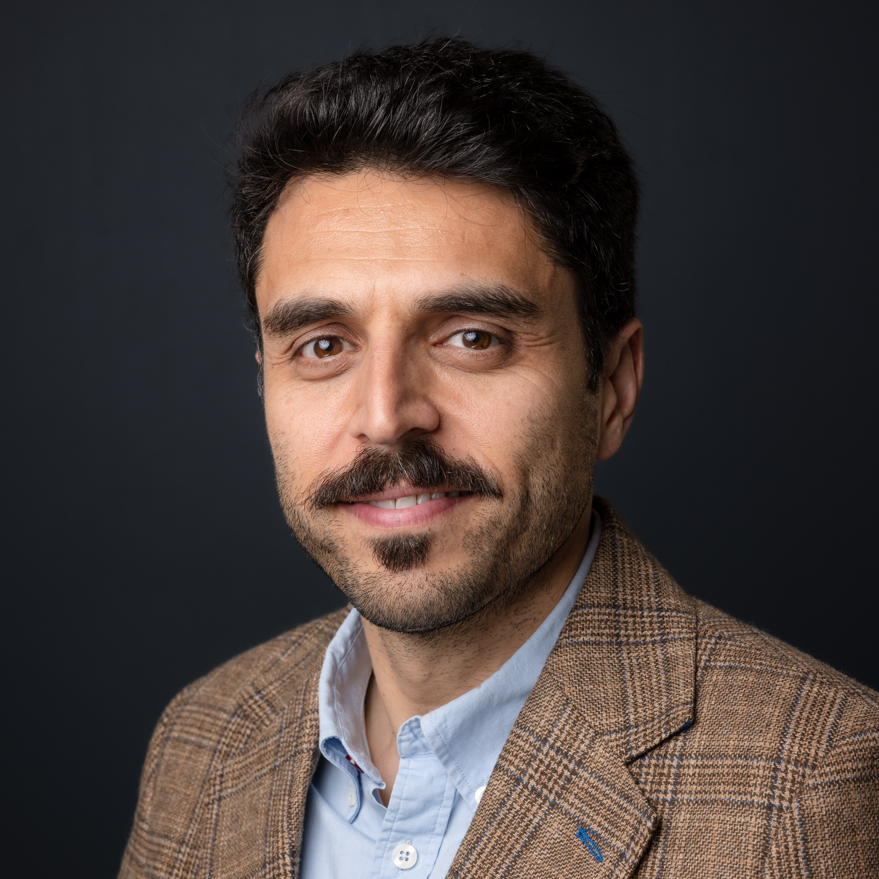
Dr. Anthony Filippi is an Associate Professor and Director of Graduate Programs at Texas A&M University. His research focuses on remote sensing, geographic information systems (GIS), and machine learning applied to aquatic and terrestrial environments. He leads the Fluvial-GEOS Lab, studying riverine/floodplain systems using remote sensing and GIS technologies. Educational Background: Ph.D. in Geography, University of South Carolina (2003) M.S. in Geography, University of South Carolina B.A. in Geography, Kansas State University Research Interests: Imaging spectroscopy, hyperspectral remote sensing of rivers and coastal oceans, GIS-based modeling, data fusion, aquatic optics, and machine learning. His work addresses coastal ocean bathymetry estimation, floodplain dynamics, and applications in environmental monitoring, including hazardous waste site tracking and agricultural studies. Recent Research Trends: Recent publications highlight advancements in UAS-based image analysis, LSTM networks for floodplain classification, and environmental policy impacts on forest resources. His work integrates machine learning with remote sensing to improve ecological and geomorphological understanding. Labs/Teams: Director of the Fluvial-GEOS Lab, focusing on remote sensing and GIS applications in riverine environments.
William Powrie is Professor of Geotechnical Engineering at the University of Southampton and former Dean of the Faculty of Engineering and the Environment (2010-2018). He authored the seminal textbook 'Soil Mechanics: Concepts and Applications' and chairs HS2's Independent Geotechnical Expert Panel. Research focuses on geotechnical challenges in transportation infrastructure including railway track behavior, earthworks, tunneling, and groundwater control. His work applies soil mechanics principles to complex materials like landfilled waste and railway ballast. As Convenor of the UK Collaboratorium for Research on Infrastructure and Cities (UKCRIC) and leader of UK Rail Research and Innovation Network (UKRRIN), he coordinates national infrastructure research initiatives. Recent publications emphasize experimental and numerical investigations of infrastructure performance, particularly railway geotechnics and sustainable construction practices. Awards and honors include Fellowship of the Royal Academy of Engineering (2009), British Geotechnical Association Medal (2017, 2021), and invited lectureships worldwide. Current research projects receive support from EPSRC, Network Rail, and HS2. Advises multiple PhD students including Akeem Faniran, Benjamin Robert Lee, and Tracey Anne Najafpour Navaei. Leads the iPACT network developing infrastructure solutions for coastal communities.
Abbas Milani is a tenured Professor of Mechanical Engineering at the University of British Columbia's Okanagan campus, where he holds the Tier 1 Principal's Research Chair in Sustainable & Smart Manufacturing and serves as Director of the Materials and Manufacturing Research Institute (MMRI). He also serves as Technical Director of the Composites Research Network (CRN), Lead of the Canadian-International Biocomposites Research Network, and leads multiple major initiatives including the UBC-Pacific Economic Development Canada-Advancing Circular Economy (ACE) program and the UBC-NRC IRAP National Circular Economy CtO Program. Dr. Milani's primary research focuses on advanced modeling, simulation, and multi-criteria design optimization of composite and biocomposite materials, structures, and manufacturing processes. His expertise spans Textile Composites/Biocomposites, Materials Constitutive Relations, Finite Element Modeling, Robust Inverse Methods, Material Selection for End-of-Life Design Strategies, Multiple Criteria Decision Making, and Industry 5.0 applications. His interdisciplinary research bridges mechanical engineering, sustainable materials science, and smart manufacturing technologies. Analysis of his recent publication record reveals a strong emphasis on sustainable materials development, with particular focus on biocomposites, life cycle assessment methodologies, and optimization of manufacturing processes. His work integrates computational modeling with experimental validation across diverse application areas including medical devices, sustainable packaging, and circular economy strategies. The publications demonstrate increasing integration of artificial intelligence and machine learning approaches with traditional engineering methods. 2015 UBC Okanagan Researcher of the Year Award Killam Faculty Research Award (2016) Inducted into Royal Society of Canada - College of New Scholars (2020) Gold Medal Service Contribution Award by Academics World Reviewer Contribution Award by ASM International Multiple teaching excellence awards from UBC Dr. Milani has successfully mentored over 100 students and postdoctoral fellows who have secured positions in both industry and academia. His research program has been supported by more than $15 million in funding from government and industrial organizations. He leads the NSERC CREATE in Immersive Technologies (CITech) program and co-leads the Advanced Materials and Fabrication Core Competency within the Survive and Thrive Applied Research (STAR) program, demonstrating his commitment to training the next generation of engineers and advancing applied research.
Yang Liu is a tenured Associate Professor at the Department of Management and Engineering , Linköping University, Sweden, and an Adjunct Professor at the University of Oulu, Finland. His expertise spans smart manufacturing, clean energy transition, and Industry 4.0 applications. He holds an M.Sc. and D.Sc. from the University of Vaasa, Finland. Research & Awards: Liu's work focuses on sustainable systems, decision support systems, and AI-driven energy efficiency. He has authored over 140 Web of Science publications, including top 0.1% ESI Hot Papers. He is ranked among the world's top 2% scientists (Stanford-Elsevier) and leads globally in 'big data analytics in manufacturing' and 'Industry 4.0-driven circular economy' research. Leadership & Projects: He leads projects like FlexSUS (EU Horizon 2020) and PERSEUS, developing tools for smart urban energy planning and 15-minute city models. He serves as Editor-in-Chief of Cleaner Engineering and Technology and Guest Editor for multiple journals. His research emphasizes bridging data science with sustainability challenges in manufacturing and energy systems. Key Achievements: Top-ranked in global citations, ESI Highly Cited Papers, and industry-driven sustainability frameworks. Grants: Leads EU-funded projects and collaborates with Siemens Energy on energy transition solutions. Labs & Teams: Part of the Environmental Technology and Management (MILJÖ) division and Unit for Product Service Innovation (MILJOPSI) at Linköping.
Dr. Geng Guoqing is an Assistant Professor in the Department of Civil and Environmental Engineering at the National University of Singapore (NUS). He holds concurrent roles as East Asian Regional Convener for RILEM and board member of ACI-Singapore Chapter. His research focuses on sustainable construction materials, particularly durability, microstructural characterization, and waste material utilization. Geng earned his PhD from UC Berkeley (2017), followed by postdoctoral research at the Paul Scherrer Institute (Switzerland). He has authored over 50 papers and leads multiple projects funded by Singapore’s Ministry of Education, Energy Center, and National Research Foundation. Education: Bachelor of Engineering, Southeast University, China (2010) Master of Science, UC Berkeley, USA (2013) PhD, UC Berkeley, USA (2017) Research interests center on sustainable construction materials, multi-scale characterization, and material durability . Key themes include recycling low-grade materials, mitigating degradation in concrete, and developing high-performance binders like LC3. His work employs advanced techniques like molecular modeling, X-ray diffraction, and NMR. Recent articles explore hydration kinetics, CSH matrix mechanics, and waste clay applications. Awards include the 2023 RILEM Medal and multiple teaching excellence recognitions. Current projects address CO 2 absorption, sustainable cement blends, and resilient façade materials. Professional service includes editorial roles at Cleaner Materials and Frontiers in Materials , plus organizing the 2022 EASEC Conference. His lab focuses on bridging microstructural insights with macro-scale material performance.
Marian Chertow is the Manufacturer’s Association Professor of Industrial Ecology at Yale University and Director of the Center for Industrial Ecology at the Yale School of the Environment. She holds an appointment at the Yale School of Management (SOM) and previously taught at the National University of Singapore (NUS) for 20 years, contributing to the development of their Master’s of Environmental Management program. Her research focuses on industrial ecology, circular economy, and industrial symbiosis—the study of material, energy, and byproduct exchanges among businesses. She pioneered frameworks for understanding industrial ecosystems and their resilience, emphasizing collaboration among firms for environmental and economic benefits. Her work spans global case studies, including China, India, and Singapore, and explores urban metabolism, resource reuse, and policy innovation. Chertow has received prestigious awards, including recognition from the U.S. EPA, the CT Women’s Hall of Fame, and the International Society for Industrial Ecology (ISIE). She advises organizations like Trane Technologies and chairs initiatives like the Industrial Symbiosis Research Symposium. Beyond academia, she founded a theater company staging Greek tragedies and teaches a course linking environmental themes to theater. Her research integrates complex adaptive systems theory, social network analysis, and policy design to address sustainability challenges in emerging economies. Current projects include analyzing waste management in China and urban resource flows in Singapore. Chertow’s interdisciplinary approach bridges environmental science, economics, and management to advance sustainable industrial practices globally.
Claudia R. Binder is Full Professor at EPFL's School of Architecture, Civil and Environmental Engineering, leading the Laboratory for Human-Environment Relations in Urban Systems (HERUS) since 2016. Previously, she held professorships at the University of Munich (2011-2016), University of Graz (2009-2011), and University of Zurich (2006-2009). She served as Dean of EPFL's ENAC School from 2020-2023 and holds advisory roles with Swiss federal institutions including the Mercator Foundation since 2024. Her academic foundation includes a Biochemistry degree and PhD in Environmental Sciences from ETH Zurich, followed by postdoctoral research at the University of Maryland. This interdisciplinary background underpins her research approach spanning natural and social sciences. Professor Binder's work centers on urban sustainability transitions, examining urban metabolism dynamics through systems science frameworks. She investigates energy-food-transport interdependencies in cities using transdisciplinary methods that integrate material flow analysis, spatial modeling, and socio-technical assessments. Her research particularly emphasizes regulatory mechanisms and transformation drivers in human-environment systems, with case studies across Swiss and global urban contexts. Recent publications reveal evolving focus from foundational urban metabolism studies toward actionable transition strategies. Her 2024-2025 work increasingly addresses social tipping dynamics, circular decarbonization, and spatially explicit waste management, demonstrating methodological innovation through geo-referenced material flow analysis and participatory backcasting frameworks. Key thematic clusters include energy innovation diffusion, plastic waste governance, and demand-side flexibility in residential systems. She actively mentors 7 current PhD candidates while supervising 11 graduates since 2018, with research spanning urban metabolism modeling, sustainability assessment, and transition governance. Her leadership extends to Swiss National Science Foundation committees and National Research Program 71 on energy consumption management. At EPFL, she directs the HERUS laboratory which develops the Sustainability Solution Space methodology for urban assessment. The lab operates at the intersection of data science, environmental engineering, and social theory, maintaining strong field connections in Switzerland, Indonesia, and Germany for empirical validation of transition models.
Associate Professor Mohsen Kalantari is a Geospatial Engineering academic at the University of New South Wales (UNSW) School of Civil and Environmental Engineering , with concurrent roles as co-founder of the startup Faramoon . His career spans roles at the University of Melbourne's Department of Infrastructure Engineering and Victorian government's land administration initiatives through DELWP. Education : PhD in Geomatics Engineering (2008, University of Melbourne), Master of GIS Engineering (2004), Bachelor of Surveying Engineering (2001) His research bridges geospatial engineering with construction automation , focusing on 3D cadastre , BIM-GIS integration , and smart cities . Recent publications show trends in underground land administration , digital twins , and LADM standard implementations . Scientific Awards : National educational recognition (2019), Victorian educational grants (2018), and prestigious fellowships (2012) As a supervisor , he guides PhD candidates in topics ranging from BIM for waste management to underground cadastral systems . His industry engagement includes partnerships with the United Nations , Open Geospatial Consortium , and Singapore Land Authority .
Prof. Dr. Stefanie Hellweg serves as a Full Professor for Ecological Systems Design at the ETH Zürich , Department of Civil, Environmental and Geomatic Engineering. She is Deputy Head of the Institute of Environmental Engineering and leads groundbreaking research at the intersection of industrial ecology, life cycle assessment, and circular economy systems. PhD in Environmental Engineering (ETH Zürich, 2000) Industrial Engineering Degree (Karlsruhe University, 1996) Her research develops advanced methodologies for environmental impact assessment of products and technologies, focusing on: Life Cycle Assessment (LCA) with correlated uncertainty modeling Circular economy implementation in chemical and energy sectors Industrial symbiosis optimization for heat and nutrient flows Urban wastewater systems redesign for resource recovery Chemical pollution analysis in plastic materials Key publication trends reveal expertise in: Hybrid wastewater treatment systems Energy-efficient greenhouse cultivation Exergy analysis for sustainability metrics Machine learning applications in environmental modeling Policy-relevant industrial ecology studies She actively participates in global sustainability initiatives as: President of the International Society of Industrial Ecology (ISIE) Member of UN Environment's International Resource Panel Editorial board member for leading environmental journals
Prof. Johannes A. Lercher is a retired professor (as of April 2023) at the Technical University of Munich (TUM), holding the Chair of Chemical Technology II within the Department of Chemistry. His research focuses on heterogeneous catalysis, particularly understanding catalytic processes at solid-liquid and solid-gas interfaces, with applications in sustainable energy production, CO₂ conversion, and catalytic upcycling of polymers. He has held academic positions at the University of Twente (Netherlands) and the Pacific Northwest National Laboratory (USA), and has been Editor-in-Chief of the Journal of Catalysis . His honors include the Alwin Mittasch Prize (2021), ENI Award (2016), and Kozo Tanabe Prize (2013). His recent work emphasizes low-temperature polymer upcycling, methane activation, and bioinspired catalyst design, leveraging advanced spectroscopic and operando techniques. Despite retirement, his contributions to catalysis research remain impactful. Education: PhD (1980) and Habilitation (1985), Vienna University of Technology Visiting Lecturer, Yale University (1982) Research Interests: Heterogeneous catalysis, catalytic interfaces, sustainable energy carriers, CO₂ valorization, and polymer waste upcycling. Key areas include: Design of catalysts for selective hydrocarbon synthesis Mechanistic studies using advanced spectroscopy Development of scalable catalytic processes for industrial applications Recent Trends in Publications: Focus on low-temperature polymer recycling (e.g., PVC and polyolefin upcycling), methane activation via novel catalysts (e.g., Co 2+ in ZSM-5), and bioinspired catalytic strategies. His work bridges fundamental catalysis with industrial relevance, emphasizing sustainability and energy efficiency. Awards and Recognition: Member, Academia Europaea and US National Academy of Engineering Recipient of multiple international catalysis awards (see full list above) Grants and Labs: Led the Institute for Integrated Catalysis (Pacific Northwest National Lab, 2011–present). His research groups have pioneered studies on zeolite-confined reactions and interfacial catalysis, with collaborations spanning academia and industry. Labs/Teams: Active in the TUM Department of Chemistry and international networks focused on catalytic innovation for a carbon-neutral economy.
Ashwani K. Gupta is a Distinguished University Professor at the University of Maryland, holding the Minta Martin Professorship in Engineering. He serves as Professor in the Department of Mechanical Engineering, Professor at the Institute of Physical Science and Technology, and Affiliate Professor in the Department of Aerospace Engineering. With over 45 years of experience in combustion engineering since graduating from Southampton University in 1970, Gupta has established himself as a leading authority in advanced combustion technologies. Dr. Gupta earned his Ph.D. from the University of Sheffield in 1973, followed by a D.Sc. from the same institution in 1986 and another D.Sc. from Southampton University in 2013. His academic journey includes six years at MIT as a research staff member and three years at Sheffield University as an independent research worker before joining the University of Maryland in 1983. Gupta's research focuses on revolutionizing combustion technology through innovations in swirl flows, high-temperature air combustion (HiTAC), and distributed combustion systems. His pioneering work on 'colorless distributed combustion' has enabled ultra-low emission combustion processes with significant applications in gas turbine engines and waste-to-energy conversion. His research spans biofuels, CO2 utilization, sulfur chemistry, waste conversion, and advanced laser diagnostics, addressing critical challenges in sustainable energy and environmental protection. Analyzing his recent publications reveals a strong emphasis on waste-to-energy conversion, biomass processing, and CO2-assisted technologies. Gupta's work demonstrates a clear trajectory toward sustainable energy solutions, with increasing integration of artificial intelligence for combustion optimization and emission control. His research bridges fundamental combustion science with practical engineering applications for cleaner energy systems. Among Gupta's numerous accolades are: Election to Fellowship of the Royal Academy of Engineering (2023) Honorary Fellowship of the Royal Aeronautical Society (2020) Recognition as one of the top 2% of scientists worldwide by Stanford University (2022-2024) Multiple prestigious medals from ASME and AIAA including the Soichiro Honda Medal (2018) and AIAA Air Breathing Propulsion Award (2014) Honorary doctorates from three international universities Gupta has secured substantial research funding throughout his career, resulting in over 850 technical papers, three books, 18 edited books, and 22 book chapters. He has delivered over 100 plenary/keynote/invited presentations at international conferences. His mentorship has shaped numerous graduate students who continue to contribute to the field of combustion engineering. Gupta directs the Combustion Laboratory at the University of Maryland, which serves as a hub for cutting-edge research in sustainable combustion technologies. The Combustion Laboratory, under Gupta's leadership, has become a center of excellence for advanced combustion research, particularly in distributed combustion systems, waste-to-energy conversion, and alternative fuels. The lab maintains strong collaborations with industry partners and international research institutions, facilitating technology transfer and practical implementation of research findings. Gupta's team employs state-of-the-art diagnostics and computational tools to advance fundamental understanding while developing practical engineering solutions for cleaner energy systems.
Justin D. Holmes is Professor of Nanochemistry in the School of Chemistry at University College Cork (UCC) and serves as a Principal Investigator at the Environmental Research Institute. He holds the position of Deputy Director at the Advanced Materials and Bioengineering Research (AMBER) centre, a Science Foundation Ireland-funded initiative that bridges academic research with industry applications. With more than 400 peer-reviewed publications in materials science, Professor Holmes has established himself as a leading figure in nanochemistry research and development. Professor Holmes' research program centers on developing chemical methods to synthesize and assemble nanostructured materials for environmental and energy applications. His work spans three primary domains: atmospheric sensors for detecting radicals and gases (RADICAL project), energy conversion through nanofluidic platforms for waste heat conversion (TRANSLATE project) and solar-to-chemical energy conversion (FreeHydroCells project), and sustainability through chemical recycling of waste plastics (AMBER project). His interdisciplinary approach integrates chemistry, materials science, and environmental engineering to address critical sustainability challenges through nanoscale innovation. Analysis of Professor Holmes' recent publications reveals a strong emphasis on sustainable materials development and energy applications. His research demonstrates consistent focus on germanium-based nanomaterials for electronics and energy storage, innovative polymer recycling techniques, and sustainable nanomaterial synthesis. The progression of his work shows increasing integration of circular economy principles, with significant contributions to plastic waste management and green chemistry approaches. Professor Holmes has received significant recognition for his contributions to science: Member of the Royal Irish Academy Fellow of the Royal Society of Chemistry His research is supported through substantial funding mechanisms, including his leadership role in the AMBER centre. Professor Holmes has successfully translated research into commercial applications through co-founding Glantreo Ltd., a UCC spin-out company. His work demonstrates a strong commitment to both fundamental scientific advancement and practical applications that address environmental challenges. Professor Holmes leads an active research group within the School of Chemistry at UCC, collaborating extensively through the Environmental Research Institute and the AMBER centre. His team maintains strong interdisciplinary connections across chemistry, materials science, and engineering disciplines, with sophisticated capabilities in nanomaterials synthesis, characterization, and application development. The research environment fosters innovation in environmental sensing, energy conversion technologies, and sustainable materials development.
Robert M. Holt is a Professor in the Department of Geology and Geological Engineering at the University of Mississippi. His research focuses on geological CO2 sequestration, fluid transport in porous media, and hydrogeological characterization for nuclear waste disposal. Holt investigates how fluid behavior in heterogeneous geological formations impacts environmental processes ranging from carbon storage to groundwater contamination. His work examines the fundamental physics governing multiphase flow through porous and fractured geological media, with applications to contaminant transport, energy resources, and waste isolation. Holt has developed experimental methods for visualizing and modeling fluid behavior in heterogeneous subsurface environments, improving understanding of capillary processes and flow dynamics. Holt's research includes field studies of evaporite karst systems, geochemical assessments of aquifer systems, and investigations of hydraulic properties in low-permeability mudrocks. His work on CO2 injection monitoring has contributed to safer implementation of carbon sequestration technologies.
Professor Judy Lee is a Professor in Chemical and Process Engineering at the University of Surrey, affiliated with the School of Chemistry and Chemical Engineering within the Faculty of Engineering and Physical Sciences. She holds a B.Eng. (Chemical Engineering, Hons), B.Sc. (Physics), PG.Dip.Ed. (Secondary), and a Ph.D. Her research focuses on advanced oxidation processes, sonochemistry, membrane technology, and environmental remediation. She collaborates with industry on projects like wastewater treatment and microplastic mitigation. Current research includes osmotically driven membrane processes for dairy waste and ultrasound-enhanced contaminant removal. She supervises PhD students Dom Falconer and Ben Parrish. She is a member of the European Society of Sonochemistry, British Association for Crystal Growth, and European Membrane Society. Education: B.Eng. (Chemical Engineering, Hons), B.Sc. (Physics), PG.Dip.Ed. (Secondary), Ph.D. Research Interests: Sonochemical degradation of pollutants, membrane fouling mitigation, pharmaceutical removal from water, and crystal growth under sonication. Her work integrates sonochemistry with environmental engineering to address industrial and environmental challenges, such as PFAS remediation and microplastic filtration. Grants and Collaboration: Projects include industry-funded research on dairy waste concentration and wastewater treatment. She leads collaborations on membrane technology and ultrasound applications. Labs/Teams: Active in Surrey’s Chemical Engineering labs, focusing on advanced oxidation and membrane systems.
ONG Soh Khim is a Professor in the Department of Mechanical Engineering at the National University of Singapore (NUS) and a member of the NUS Graduate School. She is a Fellow of CIRP (International Academy for Production Engineering), the first Asian and fourth female Fellow globally. Her research focuses on augmented reality (AR) and digital twins in manufacturing, with applications in assistive technology and sustainable design. She has authored/co-edited 6 books, over 300 journal/conference papers, and holds an H-index of 66 (Google Scholar) and 52 (Scopus). She has held leadership roles, including serving as a Nominated Member of the Singapore Parliament (2005–2006) and on multiple NUS governance boards. Her honors include the Singapore Youth Award (2004), M. Eugene Merchant Award (2004), and the 2021 Long Service Medal. She advocates for gender diversity in STEM, leading initiatives like the Girls2Pioneers program. Her current roles include Senior Principal Investigator at NUS Research Institutes in Suzhou and Guangzhou, and Visiting Professorships at Chinese universities.