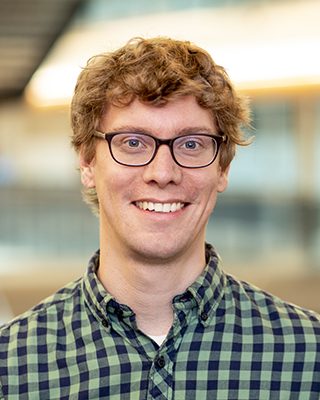
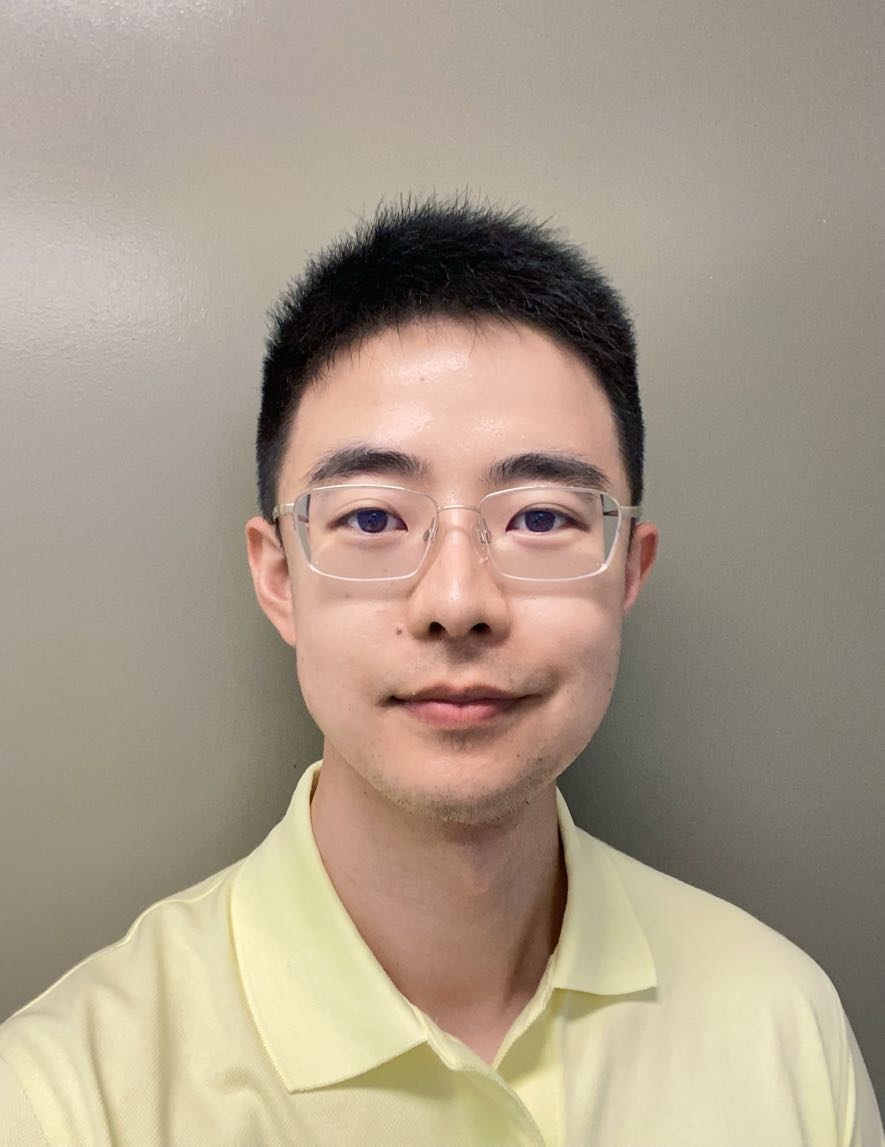
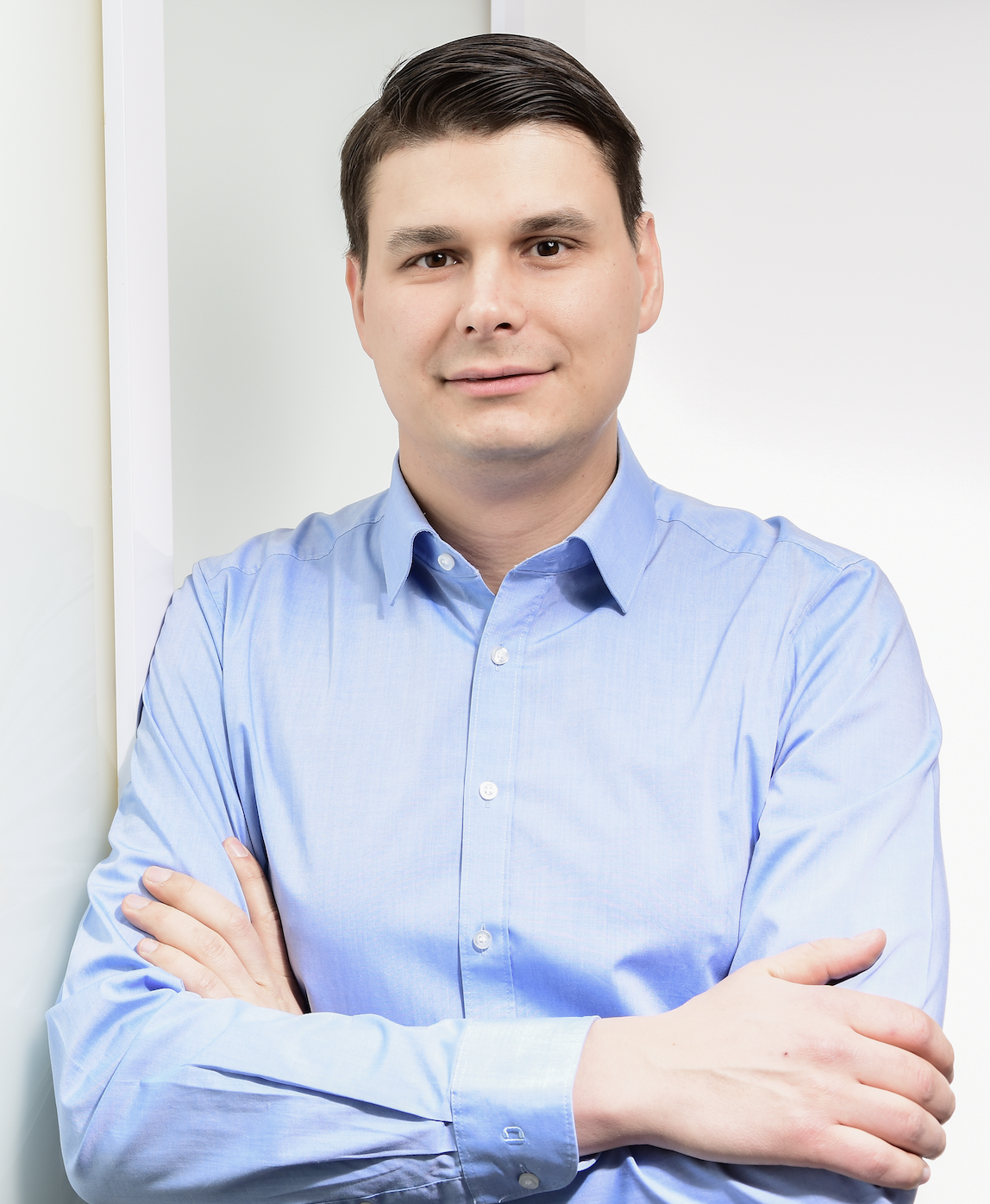
Tim Althoff is an Associate Professor at the Paul G. Allen School of Computer Science & Engineering, University of Washington, specializing in Artificial Intelligence and Human-Centered Computing. His research focuses on behavioral data science, combining Data Science Natural Language Processing Social Computing Human-Centered AI Ethics & Fairness to extract insights about health and well-being. Recent publications highlight advancements in: Mental health support through AI Wearable sensor health monitoring Online community analysis Reproducibility in data science Public health interventions with notable papers in ACL, Nature Machine Intelligence, and NeurIPS. Scientific recognition includes: ACL 2023 Outstanding Paper Award WWW 2021 Best Paper Award Double ICWSM 2021 Best Paper Awards SIGKDD Dissertation Award 2019 Fulbright Scholarship German National Merit Foundation Actively mentoring postdoctoral researchers and seeking PhD students in areas like neural representation learning, NLP applications to psychology, and mobile health technologies through his Behavioral Data Science Group .
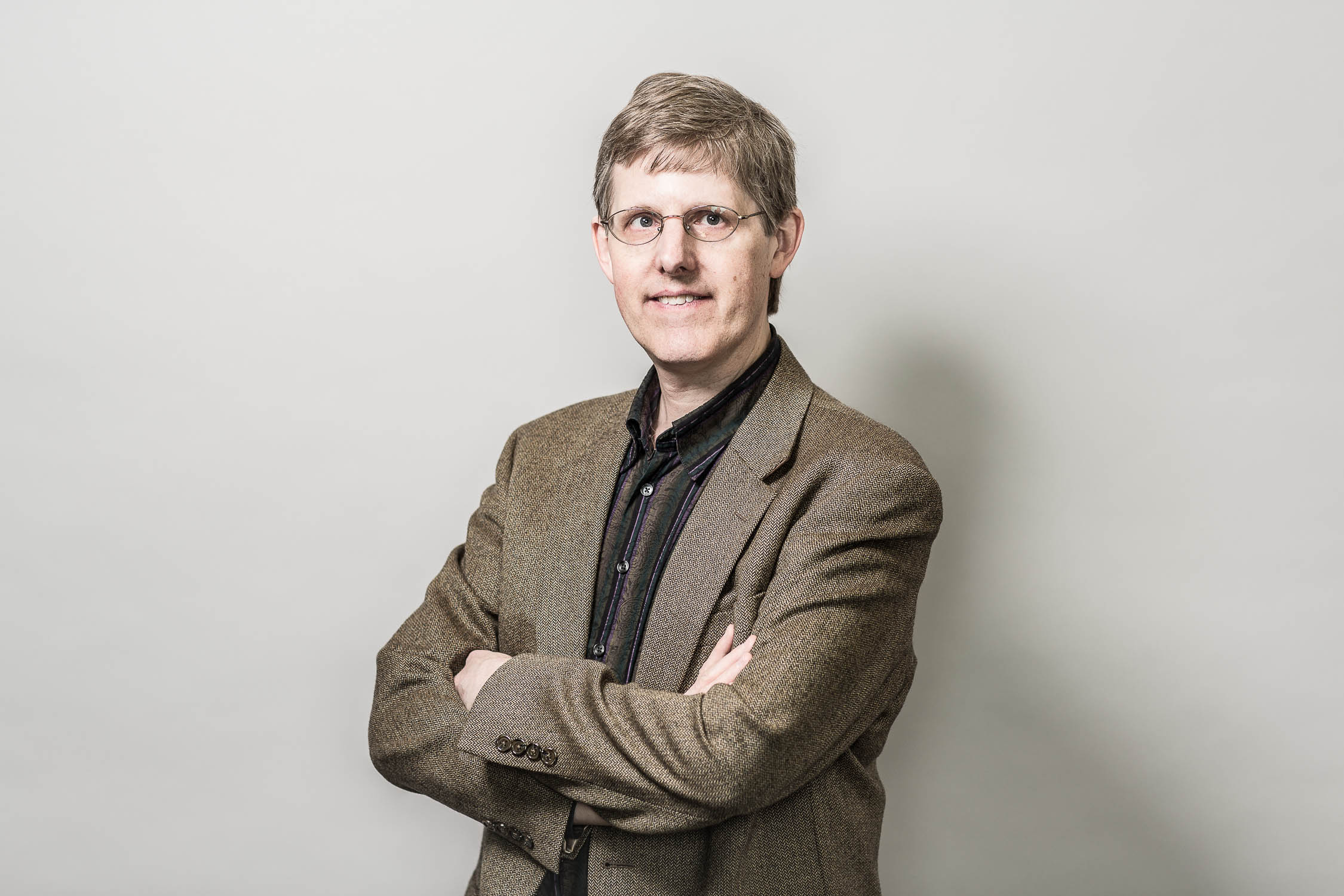
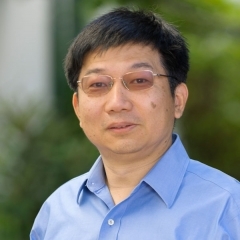
Panos Ipeirotis is a Professor at the Leonard N. Stern School of Business at New York University, affiliated with the Department of Technology, Operations, and Statistics. He also serves as the George A. Kellner Faculty Fellow and is associated with the Center for Data Science and Computer Science departments at NYU. PhD in Computer Science (Columbia University, 2004) MSc in Computer Science (Columbia University, 2001) BSc in Computer Engineering & Informatics (University of Patras, 1999) His research spans crowdsourcing, machine learning, human-AI collaboration, online labor markets, and social media analytics. He pioneered human-machine loop systems that combine human and machine intelligence to achieve superior outcomes. His work has applications in data quality assurance, visual media search (e.g., Google Project Glass), and economic valuation of user-generated content. Recent publications focus on algorithmic fairness in hiring systems, occupational segregation analysis, and theoretical advancements in crowdsourcing consensus mechanisms. Earlier work includes foundational studies on data quality in crowdsourcing platforms, economic impacts of product reviews, and query optimization for text-centric tasks. 2015 Lagrange Prize in Complex Systems NSF CAREER Award SIGKDD Test of Time Award (2020) Multiple Best Paper awards (WWW 2011, KDD 2008, SIGMOD 2006) He has received significant grants, including a $1.5 million Google Research Grant (2013) for integrating crowdsourcing with machine learning algorithms. His work bridges computer science, economics, and social psychology, with implications for policy-making and business strategy.
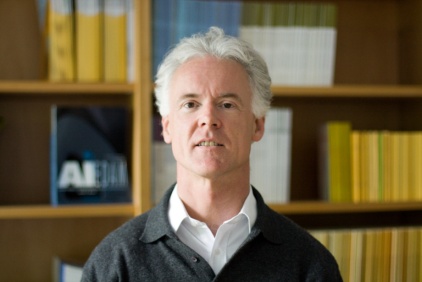
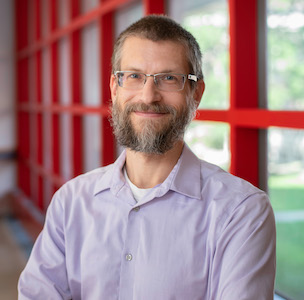
Krishna Gummadi is a Scientific Director and Professor at the Max Planck Institute for Software Systems (MPI-SWS) in Germany, where he leads the Networked Systems Research Group. He also holds a professorship at the University of Saarland, demonstrating his dual commitment to research and academic instruction in computer science. His educational background includes: Ph.D. in Computer Science and Engineering from the University of Washington (2005) B.Tech. in Computer Science and Engineering from the Indian Institute of Technology, Madras (2000) Gummadi's research spans networked and distributed computer systems with a current focus on social computing systems. His work addresses critical challenges in algorithmic fairness, privacy in social media, trustworthiness of online identities, and information dissemination in social networks. He approaches these problems through interdisciplinary methods combining user-centric studies, data-centric analysis, and systems-centric design to create practical solutions that enhance fairness, transparency, and user control in online platforms. His methodology integrates large-scale observational studies, computational modeling, and system implementation to tackle complex human-computer interaction challenges at societal scale. His recent publications reveal a strong emphasis on fairness in algorithmic decision making, with significant contributions to quantifying and addressing discrimination in machine learning systems. His work bridges computer science, social science, and ethics, creating frameworks for fair classification, understanding media bias, and developing privacy-preserving techniques that maintain functionality while protecting user data. The research demonstrates a progression from technical system design to addressing societal implications of computing systems. Among his notable scientific achievements: ERC Advanced Grant in 2017 for 'Foundations for Fair Social Computing' Test of Time Awards at ACM SIGCOMM and AAAI ICWSM Casper Bowden Privacy Enhancing Technologies (PET) and CNIL-INRIA Privacy Runners-Up Awards IW3C2 WWW Best Paper Honorable Mention Multiple Best Paper awards across prestigious conferences Gummadi has advised numerous PhD students and postdoctoral researchers who have gone on to prominent positions in academia and industry. His ERC Advanced Grant has supported extensive research into fair social computing, while his leadership in major conferences (including serving as General Chair for ICWSM 2016 and Program Chair for WWW 2015) has shaped research directions in the field. His teaching portfolio includes courses on Distributed Systems, Human-Centered Machine Learning, and Social Media Analysis. He leads the Networked Systems Research Group at MPI-SWS, which has developed several publicly available systems including tools for fair classification, privacy risk assessment, trust evaluation in social media, and information diet management. The group's work bridges theoretical advances with practical implementations that address real-world challenges in social computing, with numerous software releases and datasets made available to the research community.
Prof. Dr. Wolfgang Nejdl is a Professor at the Institute for Data Science within the Faculty of Electrical Engineering and Computer Science at Leibniz University Hannover. He serves as Executive Director of the L3S Research Centre and Leibniz Forschungszentrum Inclusive Citizenship. Web Science Information Retrieval Artificial Intelligence Deep Learning His recent research focuses on AI applications in medicine , multimodal data fusion , and ethical AI systems . Projects include CAIMed (AI in Causal Medicine) and DAISEC (AI & Cybersecurity). His publications span conferences like AAMAS, WWW, and SIGIR. Notable awards include membership in the National Academy of Science and Engineering (acatech) . Former students hold positions at institutions like Stanford, TU Dresden, and ETH Zürich. Current projects involve climate resilience AI , federated learning for healthcare , and quantum-inspired data science .
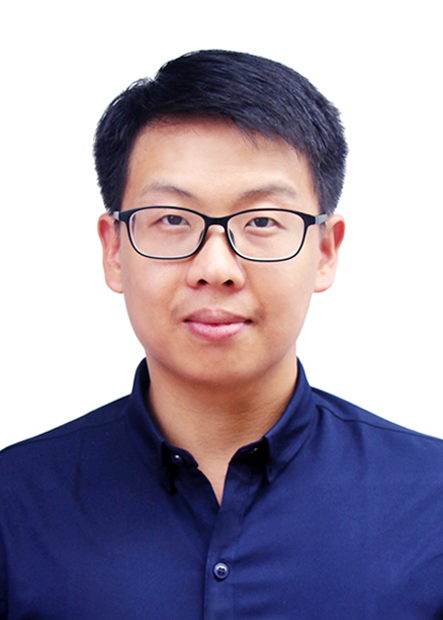
Min Peng is a Professor at Wuhan University's School of Computer Science. His research focuses on artificial intelligence, machine learning, natural language processing, and knowledge graphs. He has collaborated extensively with institutions like Hefei University of Technology and the University of Chinese Academy of Sciences. His work bridges theoretical advancements in AI with practical applications in finance, social media analysis, and network optimization. Recent contributions include neural-symbolic reasoning frameworks, contrastive learning for knowledge graphs, and financial benchmarking with large language models. Research interests emphasize scalable machine learning models for complex reasoning tasks, explainable AI, and domain-specific applications in finance and social networks. Over 100 publications span venues like WWW, ACL, and NeurIPS, highlighting interdisciplinary impact. Notable projects include SymAgent (neural-symbolic agent frameworks), PIXIU (financial LLM benchmark), and DTC (commonsense machine comprehension). Key technical trends include integrating large language models with structured data, temporal knowledge graph reasoning, and transfer learning across domains. His work often addresses real-world challenges in data efficiency, interpretability, and cross-domain scalability. Current efforts explore financial LLMs, agent-based reasoning systems, and multimodal applications. While no specific grants or awards are listed in the provided data, his prolific publication record indicates sustained research excellence. Collaboration networks include teams in computer science, electrical engineering, and finance disciplines.
Dr. YANG, Renchi is an Assistant Professor in the Department of Computer Science at Hong Kong Baptist University, Faculty of Science. He earned his BEng in Software Engineering from Beijing University of Posts and Telecommunications and his PhD in Computer Science from Nanyang Technological University, followed by a postdoctoral fellowship at the National University of Singapore. His research is centered on developing efficient algorithms and systems for large-scale data management and analysis. His research interests include: Big Data Management and Analysis Graph Learning and Network Embedding Databases and Data Management (especially graph query processing and similarity search) The Web and Information Retrieval (search, ranking, recommendation, web mining) Data Mining and Machine Learning (social network analysis, text mining, large language models) Dr. Yang’s recent publications span top conferences such as KDD, SIGMOD, WWW, ICDE, and AAAI, focusing on scalable graph clustering, network embedding, GNNs, and LLM integration. His work emphasizes algorithmic efficiency, scalability, and practical applications in real-world graph data. Scientific honors include: VLDB 2021 Best Research Paper Award 2022 ACM SIGMOD Research Highlight Award Best Paper Award Nominee in WWW 2022 Honorable mention as best PC member in WWW 2022 Dr. Yang actively mentors PhD and research students, currently supervising several RPg students including LIN Xiaoyang, LAI Yurui, and ZHENG Haoran. He has secured research funding enabling PhD scholarships and research assistant positions. He serves on the program committees of major conferences like VLDB, KDD, WWW, and SIGIR, and reviews for journals including TKDE and VLDBJ. He is a key member of the Database Research Group at HKBU, which has published extensively in top venues, including 8 papers at SIGMOD 2023. His research lab, the LAGAS Group, focuses on large-scale graph analytics and systems. The team is actively working on projects involving graph clustering, embedding, GNNs, and integration with large language models. Dr. Yang is currently recruiting PhD students for 2026 and research assistants for 2025, indicating active and expanding research operations.
Parke Godfrey is an Associate Professor in the Department of Electrical Engineering & Computer Science at York University. His research focuses on databases, data mining, and artificial intelligence, particularly cooperative query answering, skyline queries, and logic-based query optimization. PhD in Computer Science from University of Maryland, College Park (1999) MS in Information and Computer Science from Georgia Institute of Technology BS in Mathematical Sciences from University of North Carolina at Chapel Hill His current research endeavors include: SPQL (Skyline-based Preference Query Language) for extending SQL Understanding properties of skyline sets Relational algorithms for skyline computation Pareto Search for effective web search Optimizing RDBMS for data mining and scientific applications He has affiliations with: Laboratory for Computer Systems Research at York University IBM Visiting Research Scientist at IBM Toronto Laboratory
Wolfgang Nejdl is a Full Professor of Computer Science at Leibniz Universität Hannover since 1995 and the Head of the L3S Research Center since 2001. His research focuses on Web Science, search and information retrieval, semantic web technologies, peer-to-peer infrastructures, databases, technology-enhanced learning, and artificial intelligence. Education: M.Sc. (1984) and Ph.D. (1988) in Computer Science from Vienna University of Technology. Previous Positions: Assistant Professor in Vienna (1988–1992), Associate Professor at RWTH Aachen (1992–1995), and visiting professor/researcher at Xerox PARC, Stanford, University of Illinois at Urbana-Champaign, EPFL Lausanne, and PUC Rio. His research spans foundational and applied Web technologies, including social networks, trust and reputation, Web infrastructure, digital libraries, semantic web, collaborative filtering, and privacy-preserving systems. Recent projects like PHAROS, OKKAM, LiWA, and LivingKnowledge highlight his work in audio-visual search, web entities, web archive management, and diversity bias algorithms. Wolfgang Nejdl published over 230 scientific articles and held leadership roles as General Chair for AH'08 and PC Chair for WWW'09. He co-founded iSearch IT Solutions in 2006 to commercialize digital library and web engineering research from L3S projects. Scientific Awards: Founding member and head of the L3S Research Center The L3S Research Center, with a 2009 budget of €6 million (75% third-party funding), focuses on connecting the Web to real-world entities through research in Web Science, service computing, and security. Funding comes equally from the European Union and national/industry sources.
Xin Huang is an Associate Professor in the Department of Computer Science at Hong Kong Baptist University (HKBU), Faculty of Science. He serves as Coordinator of Research Postgraduate Programme (PhD&MPhil) and Coordinator of Programming Contest Teams. His educational background includes: Ph.D. in Systems Engineering and Engineering Management from The Chinese University of Hong Kong (2014) B.Eng. in Computer Science from Xiamen University (2010) Huang's research focuses on innovative technologies for large-scale graph data management and analysis. His work spans graph data management including keyword search and graph indexing, graph mining techniques for summarization and decomposition, community search algorithms, and graph learning approaches including graph neural networks. His research integrates theoretical foundations with practical applications in social network analysis and privacy-aware computing. His publication record shows consistent output in top-tier venues with a clear evolution from foundational graph algorithms to more complex applications involving dynamic and uncertain graphs, reflecting the growing importance of graph analytics in real-world systems. Notable awards include: Best Student Paper Award at ACM/IEEE IWLS 2023 Best Faculty Article Award from Chinese Communication Association (2022) HKBU President's Award for Outstanding Performance as Young Researcher (2021) RGC Early Career Award (2020) Best Paper Award at WISE 2019 Huang actively mentors PhD students and postdoctoral fellows, currently supervising five PhD candidates and four postdocs. His research has been supported by competitive grants including the RGC Early Career Award. He serves as Associate Editor for Data Science and Engineering and World Wide Web Journal, and participates extensively in program committees for major conferences including VLDB, ICDE, and WWW. As part of HKBU's Database Research Group, Huang contributes to a vibrant research environment that has secured over $10 million in research funding and published more than 200 papers in top venues.
Dr. Shixun Huang is a Lecturer in the School of Computing and Information Technology at the University of Wollongong, Australia. He holds a PhD from RMIT University and specializes in data mining, machine learning, and optimization algorithms for high-dimensional data problems. His research develops efficient algorithms for data discovery, similarity search, and network analysis. Current projects focus on optimized data acquisition strategies for machine learning, cost-effective labeling for graph neural networks, and cardinality estimation in high-dimensional databases. Methodologically, he combines combinatorial optimization with machine learning techniques. Dr. Huang supervises graduate research on diffusion models for medical imaging, graph prompt learning, and image captioning systems. His honors include multiple best paper awards at top database conferences and recognition for teaching excellence (College Top Course Award at RMIT). Recent publications address dataset distinctiveness maximization (WWW 2025), high-dimensional similarity search (VLDB 2025), and edge computing optimization (2024). Earlier foundational work established new approaches for influence maximization in social networks and temporal graph representation learning.
Tao Yang is a Professor in the Department of Computer Science at the University of California, Santa Barbara, where he has been a faculty member since 1993. His research spans web search and mining, database and information systems, machine learning and data mining, parallel and distributed systems, and cloud computing. He serves as an active educator, teaching courses including CS170 Operating Systems (Spring 2024), CS291A Neural Information Retrieval (Fall 2024), and CS140 Parallel Computing (Winter 2025). PhD in Computer Science, Rutgers University ME in Artificial Intelligence, Zhejiang University MS in Computer Science, Rutgers University BS in Computer Science, Zhejiang University Professor Yang's research focuses on advancing the field of information retrieval with particular emphasis on neural approaches to search and ranking. His recent work explores neural document ranking, privacy-aware search systems, and versioned data search. He has led significant projects including Neptune clustering infrastructure, Sorrento self-organizing storage cluster, and TMPI for MPI execution optimization. His research bridges theoretical advances with practical implementations, particularly in scaling search architectures to handle billions of documents while maintaining relevancy, performance, and freshness. His publication record shows a clear evolution from foundational work in parallel and distributed systems toward contemporary research in neural information retrieval. Recent publications demonstrate expertise in optimizing both sparse and dense retrieval methods, with particular focus on efficiency improvements for multi-vector representations. His work consistently addresses real-world challenges in search scalability and privacy preservation. Faculty Research Award, Google Research Research Initiation Award, NSF (1994) UC Regents' Junior Faculty Award (1994) Computer Science Faculty Teacher Award (1995) CAREER Award, NSF (1997) Noble Jeeviant Award, AskJeeves (2002) Professor Yang has supervised numerous graduate students, many of whom have gone on to prominent positions at companies like Google, Apple, and Coursera, or academic positions at universities worldwide. His industry experience as Chief Scientist for Ask.com (2001-2010) and founding Chief Scientist for Teoma (2000-2001) has informed his research direction and provided valuable practical context for his academic work. He has served on program committees for major conferences including WWW, SIGIR, KDD, WSDM, CIKM, ECIR, and EMNLP. His research group maintains active projects in neural information retrieval, privacy-aware search, similarity computing, and parallel computing systems. The group collaborates closely with industry partners, particularly in the search technology space, and has developed systems that power major search engines serving over 100 million users.
Dr. Yang Deng is a tenure-track Assistant Professor at the School of Computing and Information Systems, Singapore Management University, and a Lee Kong Chian Fellow. Previously, he was a Postdoctoral Research Fellow at NExT++ (National University of Singapore). His research focuses on Natural Language Processing, Information Retrieval, and Large Language Models, with special interests in Proactive Conversational AI, Trustworthiness of LLMs, and Human-Centered Information Seeking. He has published over 40 papers in top-tier venues including ACL, EMNLP, WWW, and SIGIR. PhD from The Chinese University of Hong Kong (2023) Research Advisor to CHEANG Chi Seng Research Domains: Natural Language Processing Information Retrieval Large Language Models Human-Agent Interaction Digital Transformation Trustworthy AI Scientific Recognition: Lee Kong Chian Fellowship Google South Asia & Southeast Asia Research Awards 2024 EMNLP 2024 Outstanding Area Chair NeurIPS 2024 Best Reviewer
Nicholas Hopper is a Professor and Associate Department Head of Instruction in the Computer Science & Engineering Department at the University of Minnesota's College of Science and Engineering. He has been a faculty member at the University of Minnesota since completing his PhD at Carnegie Mellon University in 2004, and has established himself as a leading researcher in online communications security and privacy. Dr. Hopper received his B.A. from the University of Minnesota, Morris in 1999 and his Ph.D. in Computer Science from Carnegie Mellon University in 2004. Nicholas Hopper's primary research interest is in online communications security and privacy. Within this field, his main focus is on anonymous communication, censorship resistance, and applied cryptography. His work has significantly advanced the understanding of website fingerprinting attacks and defenses, particularly in the Tor network. Hopper has also made important contributions to secure messaging protocols, privacy-preserving technologies, and network security. His research often combines theoretical cryptography with practical implementations to address real-world privacy challenges. Over his career, his work has been cited more than 5,000 times, demonstrating substantial impact in the security and privacy community. Hopper's recent publications demonstrate a strong focus on website fingerprinting in Tor, with multiple papers on defenses like RegulaTor and analyses of information leakage. His work increasingly incorporates machine learning techniques for both attacks (like DeepCoFFEA) and defenses. There's also a consistent thread of research on secure messaging protocols and group communication. The breadth of his work spans theoretical cryptography, practical security implementations, and privacy metrics, with a particular emphasis on real-world applicability and evaluation. Dr. Hopper has received numerous prestigious awards for his work: NSF CAREER award (2006) Institute of Technology Student Board "Professor of the Year" award (2007) McKnight Land-Grant Professor award (2008) Best Student Paper Award at ACM CCS (2012) Andreas Pfitzmann Best Student Paper Award (2013) Honorable Mention for the 2013 PET Award for Outstanding Research Dr. Hopper has advised numerous graduate students, including over 10 PhD graduates who have gone on to academic positions at institutions like Ewha Womens University, University of Colorado Colorado Springs, and University of Tennessee. His current PhD students continue to work on cutting-edge privacy and security problems. He has served in significant leadership roles in the security research community, including as Program Chair for PETS 2010 and 2011, and as an Associate Editor for ACM TISSEC. His extensive service on program committees for major security venues (IEEE S&P, NDSS, CCS, CRYPTO, TCC, PETS, WPES, Financial Crypto, and WWW) demonstrates his standing in the field. While specific lab information isn't prominently featured in the provided materials, Dr. Hopper's research group appears to focus on privacy-enhancing technologies, particularly related to the Tor network. His students' work on website fingerprinting, secure messaging, and censorship resistance suggests an active research group working at the intersection of theory and practice in security and privacy. His research has practical implications for users seeking anonymity online and has influenced the design of privacy-preserving systems.
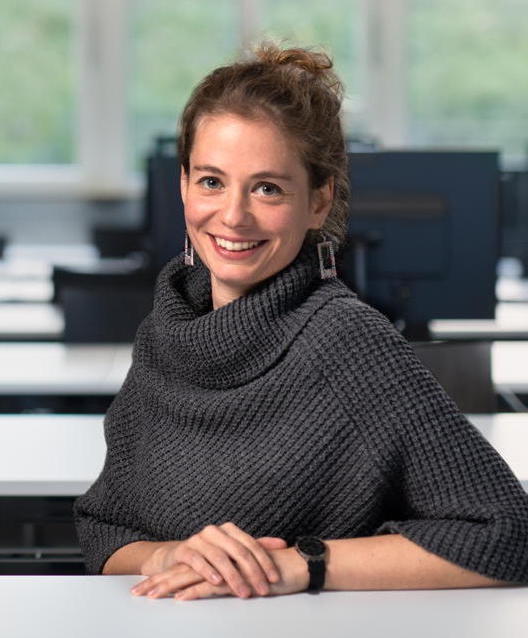
Prof. Aniko Hannak is an Assistant Professor in the Department of Informatics at the University of Zurich. She earned her PhD from Northeastern University under advisors Alan Mislove and David Lazer, focusing on algorithmic auditing methodologies. Her research addresses societal impacts of large online systems, including filter bubbles, price discrimination, and labor market inequalities. She pioneered Algorithmic Auditing to uncover biases in search engines, freelance platforms, and e-commerce systems. Education: PhD in Computer Science from Northeastern University (2016), BSc in Applied Math from Eötvös Lóránd University (2010). Professional Experience includes roles at CSH & WU Vienna, CEU Budapest, and GESIS Köln. Research Interests: Algorithmic Transparency, Fairness in AI, Online Labor Markets, Digital Ethics Awards include the Best Presentation Award at the 2017 European Symposium on Societal Challenges and a $113k grant from the Russel Sage Foundation. Her work has been featured in Bloomberg, MIT Tech Review, and The Wall Street Journal. Teaching includes courses on data processing, Python for data management, and digital trace data biases. She organizes conferences on fairness in AI and computational social science, and has served on program committees for ICWSM, FAT*, and WWW. Key contributions include exposing racial/gender disparities in gig economies, developing fairness frameworks for sharing platforms, and analyzing feedback loops in automated decision systems.
Evgeny Kharlamov is an Associate Professor at the University of Oslo and Senior Research Expert at Bosch AI. His research focuses on Neuro-Symbolic AI, Knowledge Representation (knowledge graphs, rules, ontologies), data integration, and applications in manufacturing, energy, and corporate intelligence. He has published over 190 papers in venues like IJCAI, AAAI, WWW, and holds an h-index of 41 with ~6K citations. Key awards include ranking 7th in the AI 2000 Knowledge Engineering list (2024) and top 111 German AI researchers (2023). **Education & Previous Roles**: Previously held positions at the Universities of Oxford and Bozen-Bolzano, INRIA Saclay, and Telecom Paris. His expertise spans individual research to managing teams at Bosch AI and coordinating a research center at the University of Oslo. He raised ~6.7M EUR in EU/UK research funding and led multiple large-scale EU projects. **Research Interests**: Combines theoretical advances in AI with industrial applications, emphasizing explainable and scalable solutions. Key areas include knowledge graphs, semantic web technologies, and LLM-centered systems like RAG. **Awards**: Notable recognitions include the 2020 Best Research Paper Award at ESWC, multiple ISWC awards (2015–2017), and IBM’s Best Master’s Thesis Award (2008). His PhD thesis was honored by AI*IA (2012). **Grants & Projects**: Co-secured ~6.7M EUR in funding. Led projects in semantic data integration (e.g., Siemens streaming data), digital twins, and predictive quality monitoring in manufacturing. **Teaching**: Taught courses on Digital Ecosystems (2024), Semantic Web (2023), Knowledge Graphs (2023), and Foundations of Databases (2007). **Labs/Teams**: Active in Bosch AI’s research initiatives and the University of Oslo’s data science teams, focusing on industrial AI applications.