Stéphane Gonzalez is a full Professor at the Saint-Etienne School of Economics affiliated with the University of Saint-Etienne . His academic journey includes a PhD in Theoretical Economics from Université Paris 1 Panthéon-Sorbonne, with affiliations to the Centre d'Economie de la Sorbonne and the Paris School of Economics. Master's in Pure Mathematics, Université Paris-Saclay Master's in Theoretical Economics, Université Paris 1 Panthéon-Sorbonne His research focuses on economic theory , game theory , and social choice , emphasizing axiomatic methods . Recent articles explore topics such as proportional threshold methods, objections structure implementation, dynamic coalitional stability in resource exploitation, and voting theory. His work bridges foundational economic theories (Bentham vs. Rawls) with practical applications in decision science. He leads editorial roles as Associate Editor of Theory and Decision and has founded academic programs like the Master's in Economics and Data for Decision Science and the Microcertification in AI: Challenges & Opportunities. His extensive conference participation includes organizing workshops like GO22 Games and Optimization and MARS: Measures, Axioms, Rights and Stability .
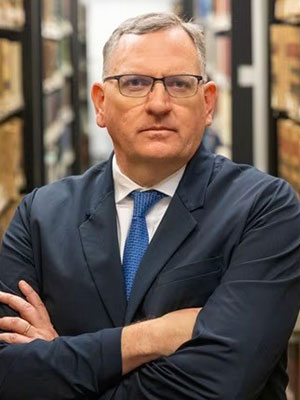
James Sample is a Professor of Law at the Maurice A. Deane School of Law at Hofstra University, where he has been a faculty member since 2009. He teaches Constitutional Law, Federal Courts, Civil Procedure, Administrative Law, and occasionally courses in Political Science. He has been recognized four times by graduating students as the school’s Professor of the Year. Institution: Hofstra University School: Maurice A. Deane School of Law Academic Rank: Professor Joined Faculty: 2009 Professor Sample holds a J.D. from Columbia Law School (2003), where he was a Harlan Fiske Stone and James Kent Scholar and a notes editor on the Columbia Law Review. Prior to law school, he was a three-time Emmy Award-winning producer with NBC Sports. JD, Columbia University, 2003 BA, Boston College, 1995 His research centers on constitutional law and democracy, with a focus on judicial ethics, campaign finance, voting rights, and constitutional democracy. His scholarly work has led to publications in prominent law reviews and journals, including the American University Law Review and the Georgetown Journal of Legal Ethics. He is also co-author of the sixth edition of Judicial Conduct & Ethics . His recent publications reflect a consistent trend in examining the intersection of law, politics, and democratic institutions. Themes include judicial recusal, electoral reform, the impact of campaign spending on judicial impartiality, and the evolution of judicial elections. These works demonstrate a deep engagement with both doctrinal legal analysis and empirical political science perspectives. Professor Sample is frequently cited in major media outlets and serves as a legal and political analyst for national networks including MSNBC, CNN, CBS-NY, ABC, and Fox News. His public commentary appears in The New York Times , The Wall Street Journal , Slate , Newsweek , and The National Law Journal . Chosen as Professor of the Year by graduating students (4 times) Three-time Emmy Award winner (as NBC Sports producer) Professor Sample has advised governmental committees and spoken at national conferences on legal and constitutional issues. He previously served as counsel in the Democracy Program at the Brennan Center for Justice at NYU and worked on Brian Schweitzer’s gubernatorial campaign in Montana. He also clerked for Judge Sidney R. Thomas of the U.S. Court of Appeals for the Ninth Circuit. He is actively involved in public legal education and media commentary, contributing regularly to ABC News as a legal contributor. His work bridges academia and public discourse, making complex constitutional issues accessible to broader audiences.
Alejandro López Peceño is a Max Weber Fellow at the European University Institute (EUI) within the Department of Political and Social Sciences. He is also a researcher and teaching assistant at New York University's Department of Politics, where he is completing his PhD. Educational Background : MA in Social Sciences (Carlos III-Juan March Institute), BA in Economics (Carlos III University of Madrid). Research Focus : Employs causal inference methods to investigate the rise of mass politics and its implications for political modernization. His work examines historical cases like 19th-century France to analyze how primary education and voting rights shaped democratic outcomes. Current projects explore state-actor conflicts, nationalism, ethnic conflict, and education expansion in political development contexts. Affiliations : Member of the Max Weber Programme for Postdoctoral Studies at EUI, mentored by Elias Dinas.
Sam Fluit is a political psychologist and Research Fellow at the Faculty of Social Sciences, University of Oslo , affiliated with the PROMENTA Research Center. His work examines life-course development's impact on political attitudes, focusing on mental health, social relationships, and psycho-political beliefs (trust, conspiracy theories, gender equality perceptions). Education: BSc in Political Science (VU Amsterdam), MSc in Migration & Ethnic Relations (Utrecht University), MSc in Political Science (Radboud University) Skills: Longitudinal data analysis, structural equation modeling, LGBTQ+ research, teaching (certified 200-hour pedagogical course) Research highlights include hatred crime barriers in LGBTQ+ communities , transgender discrimination across Europe , and mental health impacts on political behavior . His teaching spans bachelor and master courses, with supervision of student theses. Sam collaborates with the Body x Identity x Society (BodIS Lab) and Norwegian Research Center for Sexual Health (CENSE).
Dr. Alexander Yendell is a researcher at the Institute for Practical Theology, University of Leipzig, specializing in political science and sociology. His work focuses on democracy, extremism, racism, and social cohesion, with methodologies combining qualitative and quantitative research. His research explores the intersections of religiosity, political polarization, and threats to democratic cohesion. Projects include analyses of anti-Muslim racism, right-wing attitudes in Saxony, and the role of religion in societal integration. Key publications address right-wing radicalization, climate/ecology impacts on social dynamics, and comparative studies of populist movements in Germany and Austria. Collaborations span FGZ Leipzig's research topics on democratic resilience and institutional racism. He contributes to projects like "Trust in democracy, populism and voting behavior in times of transformation" and "Combating and preventing racism in public authorities and sports associations."
Sebastian Piecha is a Professor of Constitutional and European Law and General Administrative Law at HSPV NRW since 2021. He has previously served as a Lecturer at the Federal University of Applied Sciences (Münster), BiTS University of Applied Sciences (Iserlohn), and HSPV NRW (Bielefeld). His affiliations include the Chair of German and European Constitutional and Administrative Law and International Law under Prof. Dr. Haratsch at FernUniversität in Hagen. University: HSPV NRW School: Faculty of Law Department: Department of General Administration Academic Rank: Professor Research Interests : Professor Piecha specializes in Constitutional Law, European Law, General Administrative Law, Municipal Law, and Data Protection Law. His work focuses on EU legislative processes, norm control in municipal law, and the interplay between national and supranational legal frameworks. Recent Publications : His articles from 2020-2024 examine EU legal procedures, municipal law challenges, and data protection implementations. Notable trends include analysis of the Euro crisis, GDPR compliance, and constitutional governance. Education & Career : He studied law at Ruhr University Bochum (2005-2010), earned his doctorate at FernUniversität in Hagen (2015), and completed legal preparatory service (2013-2015). He has coordinated municipal law studies at HSPV NRW since 2022 and served as a local legal speaker in Hagen from 2023.
Christine PINA is a University Professor of Political Science at the University of Côte d'Azur, affiliated with the ERMES research laboratory. She currently serves as Director of the Master 1 Political Science with specialization in "Political Expertise and Public Action" (2023-present) and previously directed the Department of Political Science from 2017-2024. Her academic leadership extends to chairing selection committees and directing various educational programs including the professional Master 2 "Political Expertise and Public Affairs" from 2004-2017. Professor PINA's research focuses on electoral sociology, elections and political parties, elected officials, Catholicism and Politics, and survey methods. Her work explores the dynamics of political participation, particularly in rural areas and during municipal elections. She has made significant contributions to understanding political iconography and visual analysis in political science, examining how images shape political communication and representation. Her methodological approach combines quantitative survey research with qualitative analysis of political imagery and electoral dynamics. Her recent publications reveal a strong focus on French regional and municipal elections, with particular attention to the 2020 municipal elections during the pandemic and the 2022 French elections in southern regions. PINA's work often analyzes the rise of the National Rally (Rassemblement National) in southern France, examining how far-right politics has evolved from warning signs to dominance in certain regions. She has also conducted significant research on political mandates, electoral conflicts in rural areas, and the evolution of exit polling methodologies in France and the United States. Professor PINA has supervised doctoral students including Prune Parriaux, whose thesis examined social group boundaries among Maralpine farmers, and Mathilde Works, who studied the Association of Rural Mayors of France. Her collaborative work with Gilles Ivaldi on regional elections in southern France represents a significant contribution to understanding contemporary French political shifts. As a member of the ERMES research unit, PINA contributes to interdisciplinary research bridging political science, law, and social sciences. The laboratory, which includes six university professors and ten lecturers, focuses on providing original knowledge about social, political, and legal phenomena through collective research and scientific events.
Doug Sarro is an Assistant Professor at the University of Ottawa Faculty of Law , specializing in corporate law, securities regulation, and the intersection of innovation, law, and politics. He holds a JD (Gold Medal) from Osgoode Hall Law School and an SJD from the University of Toronto, with additional qualifications as a CFA charterholder and a member of the bars of New York and Ontario. Education: HBA, SJD (Toronto); JD (Osgoode Hall Law School) His research examines regulatory frameworks for financial markets and corporate governance, with recent publications in leading journals including the McGill Law Journal and Capital Markets Law Journal . His work spans topics like judicial review of rulemaking, sustainable investment management, and regulatory sandboxes. Doug actively engages with industry through his role as Academic Director of the uOttawa Startup Law Clinic and as a member of CFA Societies Canada’s Advocacy Council. Scientific Awards: David Watson Memorial Prize (Queen’s Law Journal)
Daniel J. Tichenor is the Philip H. Knight Chair of Social Science and Professor of Political Science at the University of Oregon, where he also directs the Program on Democratic Governance at the Wayne Morse Center for Law and Politics. His academic home is within the College of Arts and Sciences, specifically in the Department of Political Science. Tichenor is widely recognized as both a leading scholar in immigration policy and an exceptional educator who has received numerous teaching awards. Tichenor's research focuses on immigration and citizenship policy, social movements, the American presidency, ethnic and racial politics, patterns of nativism, religion and politics, and war and civil liberties. His scholarship examines how interest groups, social movements, and political institutions interact to shape American political development, with particular attention to the historical evolution of immigration policy. His work bridges theoretical and empirical approaches, often combining historical analysis with contemporary policy evaluation to understand the complex dynamics of American political institutions. His extensive publication record includes seven books and over 80 scholarly articles and book chapters. Recent works include "Democracy's Child: Young People and the Politics of Control, Leverage, and Agency" (Oxford University Press, 2022) with Alison Gash, "Rivalry and Reform: Presidents, Social Movements, and the Transformation of American Politics" (University of Chicago Press, 2019) with Sidney Milkis, and the forthcoming "Unsettled: Governing Immigration in a Polarized Nation" (Princeton University Press). His research consistently analyzes the intersection of historical patterns and contemporary challenges in American democracy, with a growing focus on the political dynamics of immigration enforcement during national crises. Tichenor's academic honors include: American Political Science Association's Gladys Kammerer Award Jack Walker Prize Mary Parker Follett Award Polity Award Charles Redd Award Andrew Carnegie Fellowship (2015) A.J. Ersted Award for Distinguished Teaching 2020 Williams Fellowship for "exceptional and innovative teaching" As an educator, Tichenor is renowned for transforming lectures into dynamic conversations, inspired by the educational philosophy of Paulo Freire. He created the Wayne More Scholars program in 2012, which has graduated over 150 students across 28 different majors, providing interdisciplinary skill building, service learning, and leadership training related to public affairs. His commitment to undergraduate education extends beyond the classroom through mentorship and professional development opportunities for students interested in political engagement and public service. The Wayne Morse Center's Program on Democratic Governance, which Tichenor directs, serves as a hub for interdisciplinary research and public discussion on critical issues facing democratic institutions. His work regularly influences policy debates, as evidenced by his testimony and expert briefings to Congress on immigration reform and history, as well as his frequent commentary in major media outlets including National Public Radio, The Atlantic, The Washington Post, and The New York Times.
Dr. Naomi Parkinson serves as Project Officer within the School of Humanities & Languages at the University of New South Wales' Faculty of Arts, Design & Architecture, where she also manages the Laureate Centre for History and Population. Her institutional affiliation reflects deep engagement with historical research frameworks and academic administration. Her educational background includes a PhD (2018) and MPhil (2013) from the University of Cambridge, complemented by a BA Hons (2012) from the University of Sydney. This strong academic foundation supports her specialized research trajectory. Dr. Parkinson's research centers on 19th century British Empire history with emphasis on colonial law and governance across diverse regions including southern Africa, Sri Lanka, Australia and the Caribbean. Her work demonstrates methodological innovation through digital humanities approaches to historical evidence, particularly in analyzing royal commissions and legislative frameworks. This interdisciplinary focus bridges traditional historical scholarship with quantitative analysis techniques. Her recent publications reveal consistent scholarly output in high-impact journals, examining themes of liberation, subjecthood, and imperial administration. The research trajectory shows increasing sophistication in combining archival analysis with digital methodologies to address complex questions of colonial governance and identity formation. As Manager of the Laureate Centre for History and Population, she leads research initiatives examining demographic and institutional aspects of historical populations within imperial contexts. This leadership role involves coordinating interdisciplinary research teams and managing significant scholarly projects within the university's research ecosystem.
Dr. hab. Marlena Sakowska-Była is a Professor at the University of Lodz, Faculty of Law and Administration, where she holds position at the Department of European Constitutional Law. She is a distinguished scholar specializing in information law, European law, constitutional law, and new technologies law, with particular expertise in personal data protection, public information access, and legal aspects of artificial intelligence. She also serves as the director of Postgraduate Studies "Law of New Technologies - Business and Public Sector Services" at the University of Lodz. Professor Sakowska-Była's research focuses on the intersection of law, technology, and human rights. Her work explores critical areas including the legal frameworks for personal data protection (particularly GDPR implementation), access to public information, reuse of public sector information, and the legal challenges posed by emerging technologies such as artificial intelligence, drones, and digital health solutions. She investigates constitutional dimensions of information rights, examining how freedom of expression, privacy rights, and data protection principles interact within European and Polish constitutional frameworks. Her research also addresses practical implementation challenges faced by public administration and private entities in complying with evolving data protection regulations. Her recent scholarly output demonstrates a clear trajectory toward increasingly complex digital governance issues. Over the past five years, her publications have evolved from foundational analyses of GDPR implementation to more sophisticated examinations of AI regulation, data altruism, open data ecosystems, and the interplay between national security concerns and data protection rights. A significant portion of her recent work addresses the practical implementation challenges of data protection regulations across various sectors including healthcare, local government, and financial services. She has made notable contributions to understanding how constitutional principles apply in digital contexts, particularly regarding the balance between transparency, privacy, and security. Professor Sakowska-Była has received significant recognition for her contributions to legal scholarship and practice: Listed among "25 best female lawyers in business" by Forbes Women magazine and Women in Law Foundation (2022) in the category of "Academic Activity" Included in the "List of 100 People who contributed to improving digital skills of citizens in Poland" (2023) Beyond her academic work, Professor Sakowska-Była maintains an active legal practice as a legal counsel, partner at Sakowska-Baryła, Czaplińska Legal Counsel Firm, and vice-president of SBC Inspektor Sp. z o.o. She serves as editor-in-chief of "ABI Expert," a respected journal focused on data protection and information security. She has supervised numerous postgraduate students through the programs she directs and has conducted training for over 20,000 participants on data protection and information law topics. She is also active in science popularization, maintaining a YouTube channel that explains data protection, information law, and new technologies to broader audiences. Professor Sakowska-Była collaborates with multiple research centers including the Center for Personal Data Protection and Information Management at the University of Lodz, the Silesian Center for Legal Engineering, Technology and Digital Competencies CYBER SIENCE, and the Institute of New Technologies Law and Personal Data Protection at Lazarski University. She is a member of the Scientific Team of Experts at the President of the Personal Data Protection Office (appointed June 2024) and was previously vice-president of the Association of Data Protection Practitioners (2019-2023).
J. Christopher Grant serves as Professor and Chair of the Department of Political Science within Mercer University's College of Liberal Arts and Sciences, where he has taught since 2005 after nine years at other institutions. His academic credentials include: Ph.D. from the University of Georgia M.A. from the University of Georgia B.S. from Birmingham-Southern College Dr. Grant's research centers on American electoral politics , Congressional studies , U.S. foreign policy , and post-Soviet political systems , with particular expertise in Georgia state politics and Moldovan/Ukrainian governance. His monograph Our Arc of Constancy established him as a leading scholar of Southern state legislatures, while his Fulbright work in Moldova and Ukraine reflects deep regional specialization. He champions experiential learning through presidential primary trips to Iowa and New Hampshire, European Union institution visits, and Mercer On Mission programs across the former USSR. His publications demonstrate consistent focus on institutional resilience in both American political systems and post-Soviet states, with recurring themes of electoral representation, legislative behavior, and the interplay between domestic politics and international engagement. Recent works examine rural political dynamics and Georgia's legislative evolution alongside transnational studies of EU expansion and NGO impact. Major honors include: Two Fulbright Scholarships (Moldova 2006, Ukraine 2022) Congressional Fellowship with Senator Max Cleland (2000) Dr. Grant actively mentors students as faculty sponsor for Mercer's Young Democrats and former director of the University Honors Program's service track. His applied research portfolio features significant government and foundation collaborations including SPLOST feasibility studies for Bibb County, Knight Foundation evaluations, and federal grant evaluations for Goodwill Industries and Education First. He directs the "Deciders Project" analyzing local elected officials while developing student-led research initiatives through Mercer On Mission. He leads multidisciplinary teams for experiential learning programs including presidential primary observation delegations, European Union institutional studies, and post-Soviet field research, often deploying minivans as mobile classrooms during campaign seasons.
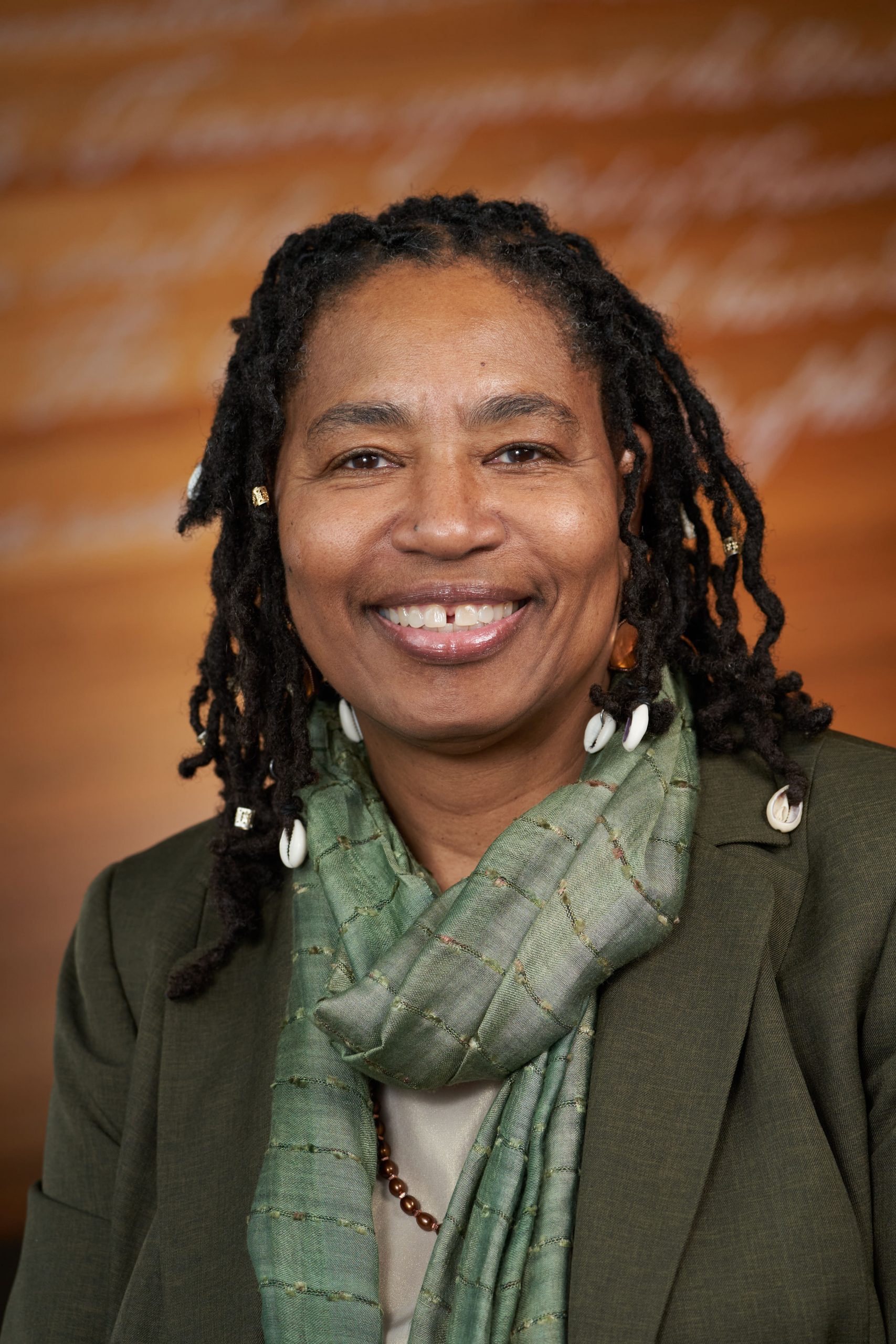
Paula C. Johnson serves as Professor of Law at Syracuse University College of Law and Director of the Cold Case Justice Initiative (CCJI), which she co-founded to investigate racially-motivated murders from the civil rights era and contemporary times. She also holds an appointment on New York's Franklin H. Williams Judicial Commission, advising on equity issues within the court system. Education: B.A., University of Maryland, College Park (1981) J.D., Temple University School of Law (1985) LL.M., Georgetown University Law Center (1990) Her research critically examines intersections of race, gender, and criminal law through frameworks of international human rights and voting rights. Work focuses on systemic inequities affecting incarcerated women, gentrification as racial violence, and barriers to educational access, emphasizing community-centered legal advocacy and historical justice. Publications reveal consistent thematic threads: documenting marginalized voices (particularly African American women in prison), analyzing spatial violence in urban environments, and connecting civil rights-era atrocities to contemporary racial justice movements through rigorous interdisciplinary scholarship. Scientific Awards: Syracuse University College of Law CCJI Award (2018) Black Law Students Association Outstanding Advisor Award (2018) Trailblazer Award from Syracuse University (2016) Central New York ACLU Ralph E. Kharas Distinguished Service Award (2015) Emmett Till Legacy Foundation Woman of Courage Award (2015) National Civil Rights Social Justice Award (2014) Syracuse University Chancellor’s Citation for Excellence Unsung Heroine Award from Syracuse University MLK Committee Professor Johnson actively advises law students' research and serves on committees for joint-degree candidates across Syracuse University. She chairs the College of Law Curriculum Committee, participates in Promotion and Tenure reviews, and advises the Black Law Students Association and OUTLAW (LGBTQ organization), demonstrating deep institutional engagement. She co-directs the Cold Case Justice Initiative, a collaborative research team working with civil rights organizations and affected communities to reinvestigate unresolved civil rights-era murders, combining archival research, community testimony, and legal advocacy.
Professor Dhammika Dharmapala serves as Professor of Law at the University of California, Berkeley, School of Law, where he conducts interdisciplinary research at the intersection of legal and economic systems. He maintains significant affiliations as a Fellow of the CESifo Research Network and Co-Editor of the Journal of Law and Economics , and recently held the Richard Musgrave Visiting Professorship at CESifo during March 2025, delivering the prestigious 17th Richard Musgrave Lecture. His scholarly focus centers on three dynamic research domains: taxation and public finance systems, economic analysis of legal frameworks, and corporate finance with governance structures. This work examines how fiscal policies, regulatory environments, and corporate mechanisms interact with market dynamics and societal outcomes, with publications appearing in top-tier journals across law, economics, and finance disciplines. Professor Dharmapala's contributions have earned significant recognition: National Tax Association’s Outstanding Doctoral Dissertation Award 2023 Distinguished Article Prize of the American Law and Economics Association His research demonstrates notable real-world impact through citations in major media outlets including The New York Times , Washington Post , Bloomberg Businessweek , The New Yorker , and The Economist . While specific details about current student advising and grant funding aren't provided in available sources, his active editorial role and recent working papers indicate ongoing scholarly productivity. His 2024-2025 publications reveal methodological innovation in using digital data for social measurement and creating historical datasets to analyze institutional development.
Dr. Iain MacLeod serves as Principal Lecturer in Strategy and Politics at Aberdeen Business School, Robert Gordon University, where he also leads Strategy and International Business curriculum development. His extensive academic profile spans teaching, research, and cross-sector knowledge exchange with policymakers across public, private, and voluntary domains. His educational foundation includes: PhD in Political Science from Robert Gordon University (2004-2009), examining youth participation in the Scottish Parliament MA (Hons) in Political Science and French from University of Aberdeen (1997-2001) Post Graduate Certificate in Research Methodology from Robert Gordon University (2004-2005) MacLeod's research centers on comparative institutional analysis, devolution dynamics, deliberative democratic processes, and marginalized group political engagement—with pronounced emphasis on youth participation. His scholarly trajectory reveals consistent exploration of Scottish political evolution, electoral behavior patterns, and digital-era civic mobilization, notably through studies of referendum impacts and cross-national youth voting experiences. Publication trends demonstrate evolving focus from foundational youth participation frameworks toward contemporary digital democracy investigations, while maintaining strong connections to Scottish governance contexts. His work bridges political theory with practical policy applications across both civic engagement and energy sector workforce development domains. Professional recognition includes: Fellow of the Higher Education Academy (FHEA, 2015) Advance HE Senior Fellow (SFHEA, 2024) MacLeod actively mentors doctoral candidates, currently supervising April Cuffy's research on youth voter experiences in Canadian and UK elections. His grant portfolio features Scottish Funding Council-supported projects on oil and gas workforce optimization and Communities and Culture Network+-funded studies of post-referendum digital activism. Current knowledge exchange initiatives maintain direct connections to policymaking processes through sustained sector partnerships.