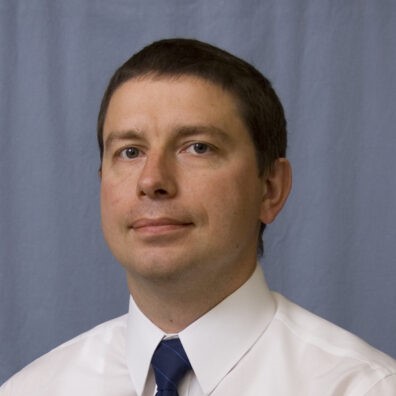
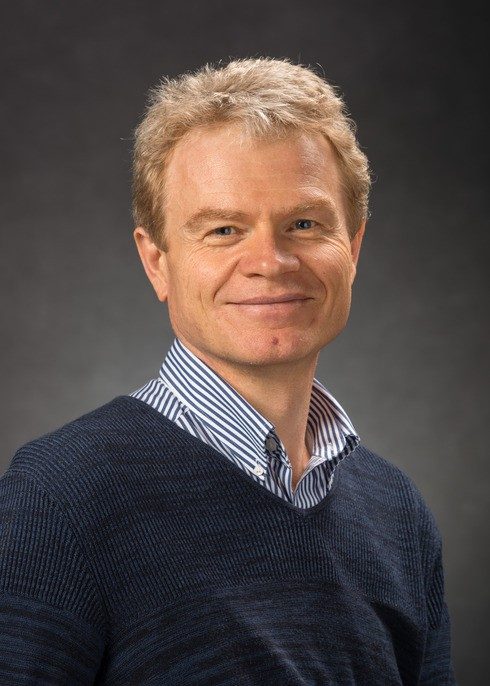
Mihály Ádám Ulveczki is an academic affiliated with the Budapest University of Technology and Economics (BME) , specifically within the Department of Network Systems and Services under the Faculty of Electrical Engineering and Informatics (VIK) . He is also associated with the Doctoral School of Electrical Engineering at BME. His research focuses on aeroacoustics, computational fluid dynamics, and vibroacoustic modeling , with a particular emphasis on simulating complex acoustic phenomena such as co-rotating vortices, Helmholtz resonators, and sound production mechanisms in percussion instruments. His work bridges numerical simulation techniques with real-world applications in mechanical and aerospace engineering. Key research areas include: Numerical methods for aeroacoustic problems Vortex dynamics and turbulence modeling Finite element analysis for musical instrument acoustics CFD-based acoustic noise prediction Ulveczki has contributed to conferences such as the European Acoustics Association’s Forum Acusticum and DAGA, presenting advancements in hybrid simulation methods and coupled vibroacoustic models. His publications reflect a deep engagement with both theoretical and applied aspects of acoustic engineering.
Yi Huang is a Professor in the Department of Atmospheric and Oceanic Sciences at McGill University, Canada. His research focuses on atmospheric radiation and its role in climate and weather variability, with emphasis on remote sensing techniques and radiative feedback analysis. He leads a research group integrating satellite observations and numerical modeling to address climate and weather challenges. His group actively collaborates with international institutions and has supervised numerous graduate students and postdocs. Key research areas include radiative kernel analysis, stratospheric water vapor dynamics, and Arctic climate feedbacks. The group maintains an active website with publication lists and research data. Education: Ph.D. in Atmospheric and Oceanic Sciences (not explicitly detailed in text), but mentions visiting at McGill (2018-2020). Research interests span atmospheric radiation, radiative remote sensing, and climate feedback mechanisms. Recent work includes studies on Arctic radiative processes, spectral radiative kernels, and stratospheric water vapor impacts on global circulation patterns. The Huang Group collaborates with institutions like Environment and Climate Change Canada and has secured grants for climate monitoring projects. Graduate students and postdocs are involved in satellite data analysis, climate model evaluation, and field campaigns. Labs/Teams: The group operates within McGill's Atmospheric and Oceanic Sciences department, leveraging advanced computational facilities and satellite datasets. Collaborations include international initiatives like the HiSRAMS instrument development project.
Konstantin Matveev is a Professor in the Department of Mechanical and Materials Engineering at Washington State University, College of Engineering and Architecture. He leads the HYPER Laboratory, focusing on modeling and simulation of advanced engineering systems. His research spans thermo-fluid sciences, cryogenics, hydrogen systems, thermoacoustics, multiphase flows, and unmanned mobile platforms. He is an ASME Fellow, reflecting his significant contributions to mechanical engineering. Dr. Matveev earned his Ph.D. in Mechanical Engineering from the California Institute of Technology in 2003, an M.S. in Applied Physics from the Moscow Institute of Physics and Technology in 1996, and a B.S. in Applied Physics from the same institution in 1994. Prior to joining WSU, he was a Postdoctoral Research Associate at Los Alamos National Laboratory and worked as a Senior Hydrodynamicist in industry. His research interests include liquid hydrogen systems , thermoacoustics , advanced marine vehicles , and autonomy in unmanned systems . He investigates fundamental phenomena in energy conversion and develops practical systems for propulsion, power generation, and sustainable technologies. His work integrates experimental, numerical, and analytical methods. The 15 most recent articles reflect a strong focus on energy and acoustics, particularly thermoacoustic engines, instability control, and wave propagation in complex media. There is also significant emphasis on autonomous systems, marine vehicle design, and educational outreach. The keywords span mechanical engineering, fluid dynamics, acoustics, robotics, and energy systems, with subfields including vortex-driven tonal sound, fractal materials, ski friction modeling, and hydrogen infrastructure. His scientific recognition includes being named an ASME Fellow. Additional honors may exist but are not detailed in the provided text. Dr. Matveev has supervised research projects and mentored students, though specific advisees are not listed. His research is supported by major grants from DARPA, NSF, DOE, ONR, NASA, and JCATI, enabling large-scale industry-academia collaborations. He also provides consulting and participates in SBIR/STTR projects. He leads experimental and modeling efforts in propulsion, energy systems, and autonomy, with applications in aerospace, marine, and high-tech industries. He directs the HYPER Laboratory, which conducts research in high-performance marine vehicles, hydrogen systems, and unmanned platforms. The lab combines computational modeling with physical experimentation, including tests on hovercraft, thermoacoustic engines, and autonomous vehicles. Outreach initiatives include K-12 engineering workshops on advanced marine technologies.
Professor Richard Manasseh is a mechanical engineer at Swinburne University of Technology, School of Engineering, specializing in fluid dynamics and acoustics. He is a Professor in the Department of Mechanical and Product Design Engineering, where he previously served as Discipline Leader and Head of Department. He became a full-time academic in 2010 after a career in industrial R&D. Education: PhD, University of Cambridge, United Kingdom Bachelor of Engineering (Mechanical), University of Melbourne, Australia His research focuses on wave modes, oscillators in fluids, and bubble acoustics, with applications in ocean wave energy, coastal protection, medical diagnostics, and environmental monitoring. He is the author of the textbook Fluid Waves and is ranked in the top 2% of global researchers in mechanical engineering acoustics (Stanford, 2022). His recent publications span fluid dynamics, acoustics, and renewable energy, with a strong emphasis on wave energy converters, bubble dynamics, gravity currents, and biomedical applications of ultrasound. Trends include dual-purpose offshore structures for energy and protection, passive acoustic sensing, and high-fidelity numerical modeling. Scientific Awards and Recognition: Top 2% researcher worldwide in mechanical engineering acoustics (Stanford, 2022) Fellow, Institution of Engineers, Australia (IEAust) IEAust Chartered Professional Engineer Fellow, Australasian Fluid Mechanics Society President (2012–2014) and Vice President (2015) of the Australasian Fluid Mechanics Society He has supervised numerous PhD and Master’s students in areas including wave energy, fluid-structure interaction, and biomedical engineering. He has secured extensive research funding from the Australian Research Council (ARC), Department of Defence, and industry partners for projects on wave energy, bubble dynamics, and ultrasound applications. He leads research on extracting climate data from ocean wave sounds and developing medical and food-processing technologies using ultrasound. He is actively involved in science communication through public lectures, radio, and television, and leads a multidisciplinary research team working on sustainable energy and environmental fluid mechanics.
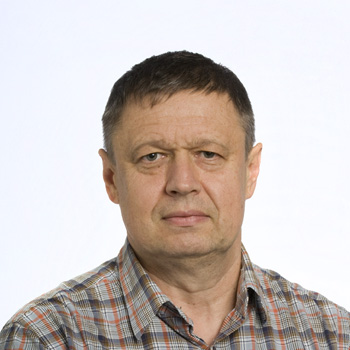
Prof. Dr. Werner Jürgens is affiliated with the Technische Hochschule Mittelhessen (THM) as a Professor in the Department of Physics with a focus on computer science. His research spans multiple domains within fluid dynamics and computational modeling. Areas of Work: Numerics and simulation, Microcomputer technology, Acoustics, Fluid dynamics, Molecular physics, Laser measurement technology Professor Jürgens' research focuses on turbulent flow control, shear layer dynamics, and computational modeling applications in mechanical systems. His work addresses both fundamental fluid mechanics and industrial applications like railway engineering and turbomachinery diagnostics. Publications from 2000–2022 demonstrate sustained expertise in vortex dynamics, heat transfer measurement, and noise source localization.
Stefan Braun is an Associate Professor at the Vienna University of Technology (TU Wien) in the Department of Fluid Mechanics, where he has been employed since 2003. He previously served as a Visiting Professor at the University of Manchester's School of Mathematics in 2006. His academic qualifications include a Dipl.-Ing. in Physics (1986-1992), Dr.techn. (1993-1997), and Habilitation (1998-2003), all completed at TU Wien. His research focuses on applied mathematics in fluid mechanics, specializing in asymptotic methods for boundary layer analysis including flow separation and transition phenomena. Additional expertise includes spectral methods for PDEs and industrial applications of coupled heat/mass/momentum transfer. Current investigations span transitional separation bubbles, boundary layer singularities, and multiphase flow modeling. His recent publications demonstrate strong emphasis on boundary layer theory, with 75% of his last 15 articles focused on separation phenomena, transition physics, and asymptotic methods. Industrial applications include fuel cell modeling and multiphase flow in champagne bottle dynamics. He has supervised 14 graduate students including Dominik Kuzdas, Florian Altmann, and Lukas Wagner. Student theses cover topics from transitional separation bubbles to fuel cell modeling and multiphase flows. He leads research activities within the Fluid Mechanics group at TU Wien, collaborating with institutions including the University of Manchester. Current projects involve numerical simulations of boundary layer transitions and industrial fluid applications.
Martin Brouillette is a Professor of Mechanical Engineering at the University of Sherbrooke, Canada, with a distinguished career spanning fluid mechanics, propulsion systems, and biomedical device innovation. His research focuses on shock wave physics, microscale combustion, and needle-free vaccination technologies, bridging aerospace and medical engineering. Ph.D. in Aeronautics (1989) and M.S. in Aeronautics (1985) from Caltech; B.Eng. in Mechanical Engineering (1984) from McGill University. His scholarly work, highlighted in journals like International Journal of Refrigeration and Shock Waves Journal , explores energy-efficient microsystems, shock-induced combustion, and advanced medical devices for arterial recanalization and drug delivery. Collaborations span institutions in France, the U.S., and Asia, with a strong emphasis on translational research. Martin Brouillette’s 15 most recent articles (2017–2012) reflect his expertise in microscale fluid dynamics, biomedical applications of shock waves, and propulsion systems. Key themes include energy recovery, acoustic pulse amplification, and high-speed combustion diagnostics, with sub-fields such as supersonic microturbines, foam reticulation, and MEMS sensor arrays. Scientific Awards: McConnell Award (McGill, 1984) Top 10 Discoveries in Québec Science (2012, 2017) Weldon Scholarship (McGill) R.J. Hebert Award (Canadian Aeronautics and Space Institute) Advising & Grants: Overseen research on hydrogen engines, shock wave therapies, and MEMS sensors. Secured CAD $120,000 Accelerator Grant (2018–2023), CAD $380,000 Discovery Grant (2018–2023), and CAD $3.2M RDC grant with Ceragy Engines Inc. (2016–2020).
Stéphane Moreau is a Tenured Full Professor in the Department of Mechanical Engineering at Université de Sherbrooke, Canada, where he has been faculty since 2009 (initially as Assistant Professor, then promoted to Full Professor in 2011). His research focuses on aeroacoustics, fluid mechanics, and turbomachinery noise prediction, with particular expertise in fan and propulsion system noise. He leads multiple research projects funded by NSERC, MITACS, and industry partners, and has established himself as a leading expert in computational aeroacoustics and noise reduction techniques. Dr. Moreau's academic credentials include: PhD in Science from Stanford University (1993) Master's Equivalent (Masters of Science) from École Nationale Supérieure d'Aéronautique et de l'Espace (1988) Bachelor's Equivalent (Diplôme d'ingénieur Grandes Ecoles) from École Nationale Supérieure d'Aéronautique et de l'Espace (1988) His research interests span fluid mechanics, turbulence modeling, and aeroacoustics, with a strong focus on noise prediction and reduction in turbomachinery systems. Dr. Moreau specializes in computational methods for predicting fan noise, aeroacoustic modeling of propulsion systems, and developing innovative noise control techniques for ventilation and cooling systems. His work combines advanced computational fluid dynamics with experimental validation to address real-world noise problems in aerospace and automotive applications. He has made significant contributions to understanding the mechanisms of tonal and broadband noise generation in low-speed fans and turbomachinery. Analysis of Dr. Moreau's recent publications reveals a strong focus on computational aeroacoustics using advanced numerical methods. His research has evolved from fundamental studies of airfoil noise to complex industrial applications involving fans, compressors, and propulsion systems. Recent work shows increasing integration of machine learning techniques with traditional computational methods, particularly for acoustic wave propagation and noise prediction. His research consistently bridges theoretical models with practical engineering applications, addressing both tonal and broadband noise mechanisms across various flow regimes. Dr. Moreau has received numerous scientific awards and recognitions: AIAA Associate Fellow Meilleure présentation SAE orale for paper "FEA Computations Applied to Engine Cooling Fans" Meilleur papier NAFEMS "Vers La Conception Robuste de Groupe Moto Ventilateurs de Refroidissement Moteur" Patent Award 2000 for "Ultra-slim fan range" Patent Award 2007 for "Quiet thick leading edge airfoil design for cooling fans" Prix ADRIQ recognizing best industry-researcher partnerships Dr. Moreau has secured substantial research funding through numerous grants totaling millions of dollars. His current projects include major NSERC Discovery Grants, Ontario Research Fund awards, and industry partnerships with companies like Valeo, Bell Helicopter, and Ziehl-Abegg. He leads the Industrial Chair in Aeroacoustics at Université de Sherbrooke and has established strong collaborations with international research groups. His research program supports numerous graduate students and postdoctoral fellows working on cutting-edge problems in computational aeroacoustics and noise control. Dr. Moreau leads a vibrant research group specializing in computational aeroacoustics and fluid dynamics at Université de Sherbrooke. His team operates advanced computational facilities for Large Eddy Simulation and other high-fidelity flow modeling techniques. The group maintains strong industry partnerships, particularly with aerospace and automotive companies seeking noise reduction solutions. They also collaborate with international research institutions on projects related to turbomachinery noise prediction and control.
Dr Alex Skvortsov is a Researcher at Defence Science and Technology within the Engineering domain. He holds a PhD in Theoretical Physics from Moscow University of Applied Physics and Technology, with a thesis on sound-vortex interaction and flow acoustics. His career spans academia and industry, focusing on defense-sponsored R&D projects since 2005. Since 2014, he leads the Acoustic Signature Control group, advancing solutions for acoustic signature management. His research interests include Acoustics and Noise Control , with a focus on flow noise , vibro-elastic materials , and data fusion . He has contributed to 106 journal articles, 73 conference papers, and 7 book chapters, though no specific titles are listed in the provided data.
Clement Mocquard (M.Sc., Ph.D.) is a researcher at the Professorship for Thermofluid Dynamics at the Technical University of Munich. His work focuses on nonlinear processes in thermoacoustics, combustion dynamics, and fluid instabilities, with applications in wave amplitude growth and dynamical systems modeling. His research interests include: Thermoacoustic Instability Combustion Noise Nonlinear Dynamics Adjoint Sensitivity Analysis Wave Propagation in Fluid Systems The analysis of his publications reveals trends in nonlinear acoustics, combustion dynamics, and dynamical systems modeling, emphasizing practical applications in prime movers, flame excitation, and stability prediction. Contact: clement.mocquard@tum.de
Matt Woolley is an Associate Professor at UNSW Canberra, School of Engineering and Technology, specializing in theoretical quantum systems engineering. He leads research in quantum optomechanics, quantum control, and superconducting quantum circuits, with a focus on entanglement, squeezing, and state stabilization. His work has applications in quantum sensing, cryptography, and information processing. Education: BE(Hons)-BSc (University of Tasmania), PhD (University of Queensland) Collaborations with experimental groups at Cornell, ETH Zurich, University of Western Australia, University of Queensland, and Aalto University Visiting Scientist at Keio University (2015), University of Tokyo (2015), and Princeton University (2017) His research interests span quantum optomechanics, superconducting quantum circuits, quantum acoustics, and quantum control. Recent publications address Lyapunov stability analysis, reservoir engineering for pure Gaussian states, and entanglement stabilization in mechanical oscillators. He has contributed to advancements in quantum filtering, quantum cryptography, and nonlinear metrology. He has received prestigious fellowships, including the Australian Academy of Science Fellowship (2015) and Endeavour Fellowship (2017). Current affiliations include the ARC Centre of Excellence for Engineered Quantum Systems (EQuS 2) and the Advanced Electromagnetics group at UNSW Canberra.
Morteza (Mory) Gharib is a Hans W. Liepmann Professor of Aeronautics and Medical Engineering at the California Institute of Technology (Caltech) since 1992, with appointments in Aeronautics, Bioengineering, and Medical Engineering. He earned degrees from Teheran University (B.S. 1976), Syracuse University (M.S. 1978), and Caltech (Ph.D. 1983). Administrative Roles: Vice Provost (2010-16), Director of the Linde Institute (2014-15), and Director of Graduate Aerospace Laboratories (2015-25). Research Leadership: Director of the Center for Autonomous Systems and Technologies (2017-25), focusing on bioinspired engineering and autonomous systems. His research spans biofluid dynamics , biomechanics , medical device development (e.g., heart valves, drug delivery systems), and advanced flow diagnostics . Recent work includes AI-driven turbulence control, cardiovascular health monitoring, and morphing robots for dynamic environments. Key publications reveal expertise in machine learning for fluid dynamics, autonomous navigation in complex flows, and non-invasive diagnostics for aortic stiffness. His Google Scholar list highlights interdisciplinary collaborations in robotics, plasma physics, and stroke research. Scientific Awards: Ronald J. Adrian Award (2023) for contributions to particle image velocimetry As director of the Gharib Research Group, he leads studies on fluid dynamics in physiological systems and innovative imaging techniques, supported by Caltech’s state-of-the-art facilities.
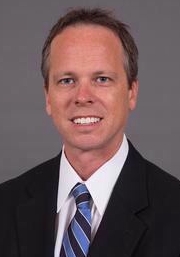
Jeffrey Kastner is a researcher at the University of Cincinnati's Department of Aerospace Engineering and Engineering Mechanics within the College of Engineering and Applied Science. His work focuses on aeroacoustics, jet noise reduction, and high-speed flow control, with extensive collaborations in experimental and computational fluid dynamics. His research spans supersonic jet mechanics, combustion instabilities, and innovative noise mitigation strategies using chevrons, fluidic injectors, and plasma actuators. Key projects include studies on pressure skewness in jets, turbulent structure correlation, and acoustic liner optimization. Funded by agencies like the National Science Foundation, Department of the Navy, and General Electric, Kastner's contributions bridge industry and academia in aerospace technology. Scientific awards and distinctions are not explicitly mentioned in the provided data. He has collaborated on over a dozen grants since 2008, often serving as principal investigator or collaborator in projects related to jet noise reduction, combustion testing, and plasma actuator development.
William Devenport is a Professor and the Crofton Professor in Engineering at the Virginia Tech College of Engineering , where he also serves as Director of the Virginia Tech Stability Wind Tunnel and the Center for Renewable Energy and Aero/Hydrodynamic Testing (CREATe) . He holds a Ph.D. from Cambridge University (1985) and a B.Sc. from Exeter University (1981). Education Ph.D., Experimental and Computational Fluid Dynamics, Cambridge University (1985) B.Sc., Engineering Science, Exeter University (1981) His research focuses on experimental aeroacoustics and advanced wind tunnel technology , with over 200 publications in journals such as Journal of Fluid Mechanics and AIAA Journal . Key contributions include the development of the hybrid aeroacoustic wind tunnel and studies on roughness noise, turbulence ingestion, and boundary layer superstructures. Recent publications highlight interdisciplinary trends in acoustic metamaterials , CFD validation , and non-equilibrium turbulence . His 2025 work addresses sub-convective pressure fluctuations, Kevlar-covered sensors, and 3D smooth-body separation, while 2024 studies explore roughness impacts, hybrid tunnel boundary simulation, and pressure gradient effects. Scientific Awards : 2019 AIAA Aeroacoustics Award 2017 von Kármán Institute Lecture 2015 Virginia Tech Teaching Excellence and Health & Safety Recognition 2006 AIAA Associate Fellow Prof. Devenport teaches AOE 3114 Aerodynamics , AOE 5104 Advanced Aero/Hydrodynamics , and AOE 5124 Aero/Hydroacoustics , emphasizing student-driven experimentation and historical context. He leads the Stability Wind Tunnel and contributes to NATO AVT-349 and AIAA technical committees.
Petronio Augusto Santos Nogueira is a Research Fellow in the Department of Mechanical & Aerospace Engineering at Monash University. His research focuses on aeroacoustics, turbulent shear flows, and jet noise reduction mechanisms. He holds a PhD from the Instituto Tecnologico de Aeronautica (2019), an MSc (2017), and a BSc (2015) in Aeronautical Engineering. His current work includes an Australian Research Council (ARC)-funded project investigating noise-reduction mechanisms in jet engines using chevron designs. Education: PhD: Streaky structures in turbulent shear flows (Instituto Tecnologico de Aeronautica, 2019) MSc: Sound radiation by installed jets (Instituto Tecnologico de Aeronautica, 2017) BSc: Aeronautical Engineering (Instituto Tecnologico de Aeronautica, 2015) Research interests include fluid dynamics, coherent flow structures, and numerical/experimental aeroacoustic analysis. His recent work explores non-axisymmetric jet behavior, acoustic radiation patterns, and optical flow diagnostics. He collaborates internationally on jet noise reduction technologies and turbulence modeling.