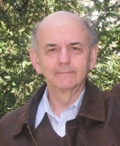
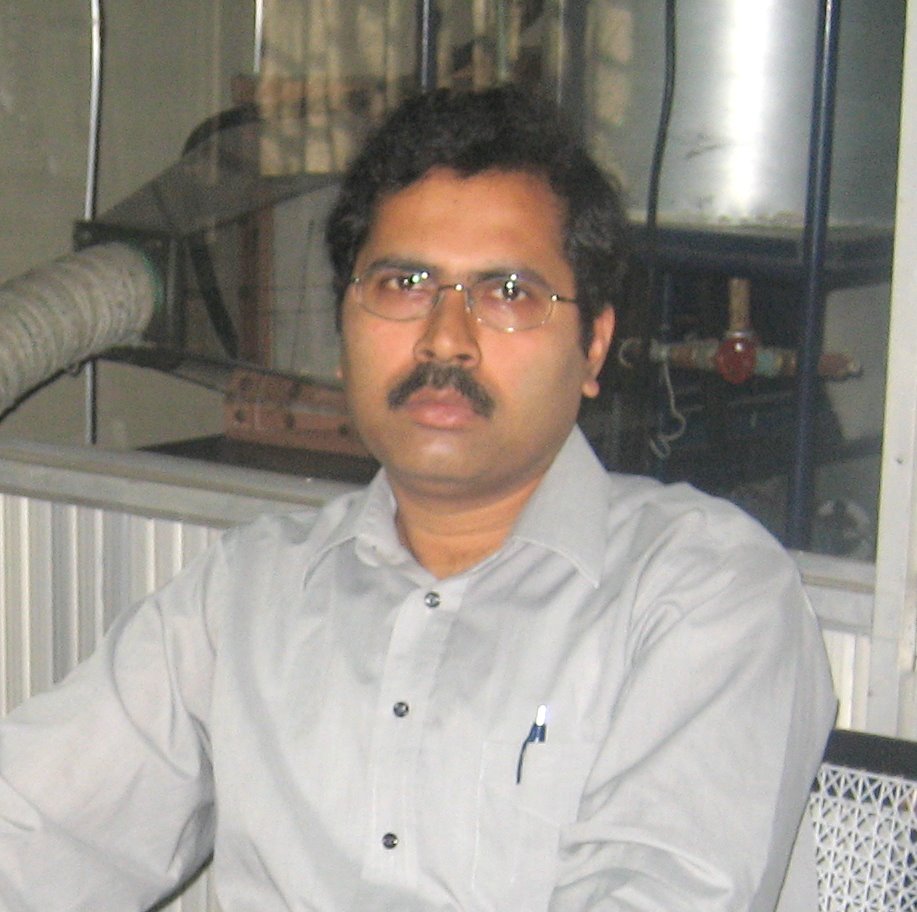
Hugo de Lasa is a Full Professor at the Department of Chemical and Biochemical Engineering, Faculty of Engineering, University of Western Ontario. He holds a Bachelor in Chemical Engineering (1968) from Universidad Nacional del Sur, Argentina, and a Doctoral degree (1971) from Université de Nancy, France. Research Focus: Catalysis, Photocatalysis, Chemical Reactor Engineering, Fluidization, Biomass Gasification Awards: Research Excellence Prize (1998), Fellow of the Chemical Institute of Canada (2000), Medal of Research and Development (2000), Doctor Honoris Causa (2004, 2018) His work spans chemical reactor design , photocatalytic hydrogen production , and fluidized bed technologies . Recent publications highlight machine learning applications in chemical equilibrium modeling and CO2 capture using microalgae. He founded the Chemical Reactor Engineering Centre (CREC) and Recat Technologies Inc. , a university spin-off commercializing reactor innovations. Awards include the Vanguard Award (2019) and Commemorative Issue in Catalysts Journal (2020). His research has generated 389 peer-reviewed publications , 14 patents , and over 10,000 citations .
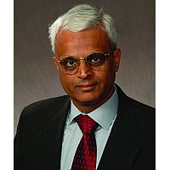
N.K. Anand is a Distinguished Professor of Mechanical Engineering at Texas A&M University, holding the James J. Cain III Regents Professorship. He leads research in advanced computational methods and thermal-hydraulic systems, with affiliations to Multidisciplinary Engineering and Nuclear Engineering programs. His work focuses on physics-informed machine learning, finite volume methods, and aerosol transport in nuclear reactor contexts. Education: PhD (Mechanical Engineering, Purdue University, 1983), M.S. (Kansas State University, 1979), and B.E. (Bangalore University, 1978). Awards include the ASME James Harry Potter Gold Medal (2020) and multiple teaching/administrative excellence awards from Texas A&M. Research emphasizes fluid dynamics modeling (e.g., PINNs for periodic flows, turbulent deposition studies), heat pipe systems, and nuclear reactor thermal-hydraulics. His Versatile Test Reactor (VTR) contributions include cartridge loop designs and aerosol transport experiments. Active in high-temperature reactor safety, with facilities studying pebble beds, helical coil exchangers, and HTGR upper plenum dynamics. Publications span physics-informed ML applications, finite volume techniques, and nuclear thermal systems. Grants supported development of advanced CFD tools and reactor safety infrastructure. His lab collaborates on international nuclear energy projects and emerging AI-driven simulation methodologies.
Ashwani K. Gupta is a Distinguished University Professor at the University of Maryland, holding the Minta Martin Professorship in Engineering. He serves as Professor in the Department of Mechanical Engineering, Professor at the Institute of Physical Science and Technology, and Affiliate Professor in the Department of Aerospace Engineering. With over 45 years of experience in combustion engineering since graduating from Southampton University in 1970, Gupta has established himself as a leading authority in advanced combustion technologies. Dr. Gupta earned his Ph.D. from the University of Sheffield in 1973, followed by a D.Sc. from the same institution in 1986 and another D.Sc. from Southampton University in 2013. His academic journey includes six years at MIT as a research staff member and three years at Sheffield University as an independent research worker before joining the University of Maryland in 1983. Gupta's research focuses on revolutionizing combustion technology through innovations in swirl flows, high-temperature air combustion (HiTAC), and distributed combustion systems. His pioneering work on 'colorless distributed combustion' has enabled ultra-low emission combustion processes with significant applications in gas turbine engines and waste-to-energy conversion. His research spans biofuels, CO2 utilization, sulfur chemistry, waste conversion, and advanced laser diagnostics, addressing critical challenges in sustainable energy and environmental protection. Analyzing his recent publications reveals a strong emphasis on waste-to-energy conversion, biomass processing, and CO2-assisted technologies. Gupta's work demonstrates a clear trajectory toward sustainable energy solutions, with increasing integration of artificial intelligence for combustion optimization and emission control. His research bridges fundamental combustion science with practical engineering applications for cleaner energy systems. Among Gupta's numerous accolades are: Election to Fellowship of the Royal Academy of Engineering (2023) Honorary Fellowship of the Royal Aeronautical Society (2020) Recognition as one of the top 2% of scientists worldwide by Stanford University (2022-2024) Multiple prestigious medals from ASME and AIAA including the Soichiro Honda Medal (2018) and AIAA Air Breathing Propulsion Award (2014) Honorary doctorates from three international universities Gupta has secured substantial research funding throughout his career, resulting in over 850 technical papers, three books, 18 edited books, and 22 book chapters. He has delivered over 100 plenary/keynote/invited presentations at international conferences. His mentorship has shaped numerous graduate students who continue to contribute to the field of combustion engineering. Gupta directs the Combustion Laboratory at the University of Maryland, which serves as a hub for cutting-edge research in sustainable combustion technologies. The Combustion Laboratory, under Gupta's leadership, has become a center of excellence for advanced combustion research, particularly in distributed combustion systems, waste-to-energy conversion, and alternative fuels. The lab maintains strong collaborations with industry partners and international research institutions, facilitating technology transfer and practical implementation of research findings. Gupta's team employs state-of-the-art diagnostics and computational tools to advance fundamental understanding while developing practical engineering solutions for cleaner energy systems.
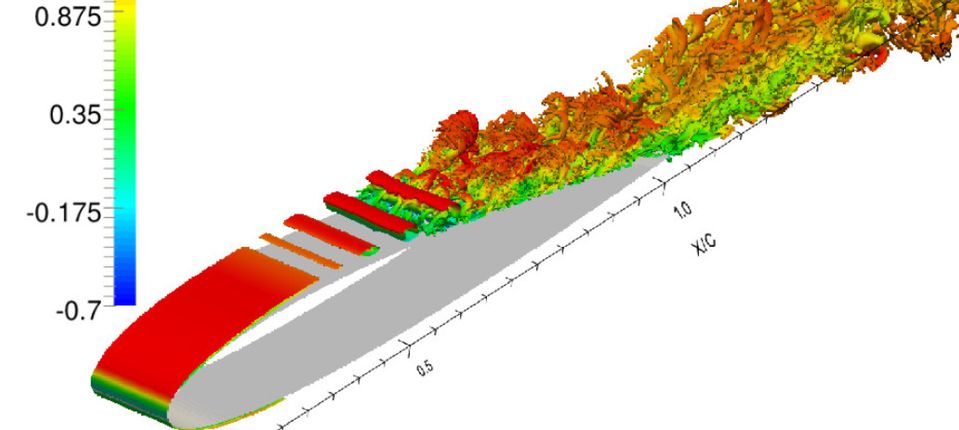
Dr. Joshua Brinkerhoff is an Associate Professor in Mechanical Engineering at the University of British Columbia Okanagan Campus. He serves as the Associate Director for Research & Industrial Partnerships in the School of Engineering and leads the UBC-Okanagan Computational Fluid Dynamics Laboratory. His research spans computational fluid dynamics, turbomachinery, multiphase flows, hydrogen safety, wind energy, and biofluid mechanics. He teaches courses in mechanics of materials, alternative energy systems, turbulence, computational fluid dynamics, and aircraft design. PhD, Aerospace Engineering (Carleton University, Ottawa, ON) BEng, Aerospace Engineering (Carleton University) Dr. Brinkerhoff’s research interests include: Computational Fluid Dynamics (CFD) for laminar-to-turbulent transition and instability analysis Wind energy systems and turbine aerodynamics Hydrogen storage and safety protocols for transportation Biofluid mechanics for respiratory diseases and aneurysm modeling Multiphase flows in industrial and environmental contexts His publications focus on CFD simulations for: Aerosol dispersion and mitigation in indoor environments Wind farm interactions and atmospheric gravity waves Cavitation and phase transitions in cryogenic and LNG systems Heat transfer optimization in industrial and thermal systems Instability dynamics in buoyancy-driven and swept flows Turbulent structures in fluidized beds and reactors Dr. Brinkerhoff has no listed scientific awards in the provided data but has extensive contributions to renewable energy, hydrogen safety, and medical fluid dynamics. His laboratory develops open-source tools like TOSCA for large-eddy simulations and investigates practical applications in urban air quality, dental aerosol control, and turbine wake modeling.
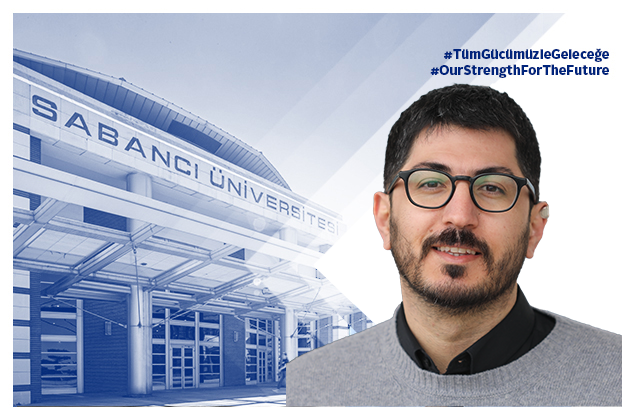
Dr. Morteza Ghorbani is a researcher and faculty member at Sabancı University's Faculty of Engineering and Natural Sciences (FENS), specializing in fluid mechanics and environmental engineering. He leads the AquaCav project, a collaborative effort with Oxford Brookes University, focused on developing sustainable water treatment solutions using hydrodynamic and acoustic cavitation. His research addresses global challenges such as PFAS pollution and wastewater management, with applications in biomedical devices and energy-efficient technologies. Key collaborations include projects funded by the International Science Partnership Fund (ISPF), leveraging his expertise in microfluidic systems and cavitation dynamics. Dr. Ghorbani's work combines experimental and numerical methods to optimize cavitation-based processes for environmental and biomedical applications. His contributions span from fundamental fluid dynamics studies to applied technologies like flexible cystoscopes and clot-on-a-chip platforms. Scientific achievements include the ISPF Research Collaboration Grant (2024) and advancements in PFAS removal, graphene exfoliation, and microalgae cultivation. His research group at Sabancı University explores interdisciplinary solutions at the intersection of engineering, nanotechnology, and sustainability.
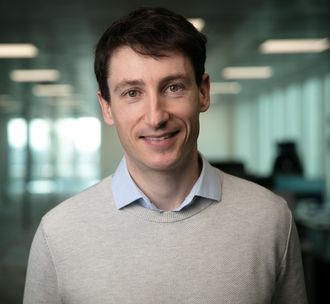
Johannes Brandstetter is an Associate Professor at the Institute for Machine Learning at Johannes Kepler University Linz (JKU) where he leads the "AI for data-driven simulations" research group. He is also Co-founder and Chief Scientist at Emmi AI, bridging academic research with industrial applications in AI-driven physics simulation. Brandstetter earned his PhD after working at CERN's CMS experiment on Higgs boson physics. In 2018, he transitioned to machine learning, joining Sepp Hochreiter's research group in Linz. From 2021-2023, he worked at the Amsterdam Machine Learning Lab under Max Welling and Microsoft Research, developing expertise in Geometric Deep Learning and neural surrogates for partial differential equations. He returned to JKU in October 2023 to establish his own research group. His research spans Machine Learning, Deep Learning, and Physics-Informed Machine Learning with focus areas including Neural PDE solvers, Computational Fluid Dynamics, and Climate Modeling. Brandstetter believes AI is poised to revolutionize industrial-scale simulations, potentially saving thousands of compute hours across engineering domains. His work integrates computer vision, numerical simulation, and engineering components to advance data-driven approaches. Recent publications reveal a strong trend toward foundation models for scientific applications, particularly in atmospheric modeling (Aurora), geometric deep learning, and neural surrogates for complex physical systems. His interdisciplinary work spans computer vision, climate science, computational physics, and engineering, demonstrating the versatility of his research approach. Principal Investigator for "AlKa-DL: Alpine karst spring discharge prediction" (FWF-funded, 2024-2027) Principal Investigator for Cluster of Excellence "Bilateral Artificial Intelligence" (FWF-funded, 2024-2029) Co-PI for "Fast, efficient and flexible CFD simulation through generative AI" (FFG-funded, 2025-2026) As an educator and researcher, Brandstetter actively engages with the scientific community through invited talks at major conferences including presentations on "Closing the Gap Between Scientific Foundation Models and Real-World Applications" (March 2025) and "Scientific Machine Learning for Science and Engineering" (February 2025).
Professor Tilak Chandratilleke is a faculty member in the School of Civil and Mechanical Engineering at Curtin University, part of the Faculty of Science and Engineering. He holds a PhD from the University of Cambridge and has extensive post-nominals including MIEAust, CPEng, and MASME. His research focuses on advanced thermal engineering, computational fluid dynamics (CFD), and heat transfer optimization. Key areas of interest include thermal energy storage systems, fluid flow in curved ducts, and thermal design for industrial applications. He also serves in the Office of the Provost, contributing to academic governance. Research Interests: - Computational Fluid Dynamics (CFD) modeling of complex thermal systems. - Heat and mass transfer in energy storage and manufacturing processes. - Design and analysis of heat exchangers and thermal recuperators. - Fluid dynamics in curved geometries and secondary vortex structures. - Applications in renewable energy systems and advanced manufacturing. Selected Publications (2022–2010): - Investigated high-temperature thermal energy storage using CaCO₃/Al₂O₃ reactors (2022). - Developed numerical models for metal hydride thermal storage systems (2021). - Analyzed boiling heat transfer in curved ducts and laser-assisted machining thermal effects (2020–2019). - Advanced CFD methodologies for convective boiling and turbulent flow modeling (2018–2016). - Pioneered studies on Dean vortices and microfluidic heat enhancement (2011–2010). Teaching: - Thermodynamics and Heat Transfer. - Fluid Mechanics and Engineering Applications. Labs/Teams: - Involved in Curtin’s thermal energy and advanced manufacturing research groups. - Collaborates with industry partners on renewable energy and thermal system optimization projects.
Dr. Zak Mansouri serves as a Senior Lecturer in Aerospace Engineering at Nottingham Trent University's School of Science & Technology, where he acts as Course Director for Aerospace Engineering and leads the Development and Diagnostic of Alternative Fuels (DDAF) Laboratory. A core member of the Imaging, Materials and Engineering Research Centre (IMEC), he oversees critical engineering modules including Solid Mechanics & Dynamics and Advanced Dynamics & Vibration as Module Leader, shaping curriculum for undergraduate and postgraduate aerospace programs. His academic foundation includes a PhD from Algeria's University of Laghouat (2016), doctoral research at France's CNRS, and postdoctoral work at the French Alternative Energies and Atomic Energy Commission. Key milestones: PhD in Combustion Engineering, University of Laghouat (2016) Doctoral Researcher, CNRS France (2013-2016) Postdoctoral Researcher, CEA France (2016-2017) Mansouri's research pioneers net-zero combustion technologies, with current focus on iron fuel systems (funded by The Royal Society), hydrogen combustion dynamics, and aerothermal optimization of gas turbines. His expertise bridges experimental diagnostics and computational fluid dynamics to address combustor-turbine interactions in next-generation aero engines, directly supporting global decarbonization efforts in aerospace and energy sectors through industry-academic partnerships. Analysis of his 2021-2025 publications reveals a cohesive research trajectory centered on turbine performance under non-ideal conditions, with growing emphasis on alternative fuels. His work consistently targets aerothermal challenges in gas turbines—particularly hot-streak and swirl effects—while expanding into micro-combustion systems for hydrogen and metal powders, demonstrating a strategic shift toward scalable net-zero propulsion solutions. His scientific recognition includes: ANR Research Fellowship (2017) for low-carbon combustion technology (€50,000) Mansouri secures competitive funding from The Royal Society and previously from French National Research Agency, with industrial consultancy contributions to €2.5M projects at GE Renewable Energy modernizing hydropower infrastructure. He actively supervises PhD candidates through NTU's Doctoral School, prioritizing projects in sustainable combustion and turbomachinery, and maintains open collaboration channels for industrial R&D partnerships. He directs the DDAF Laboratory's experimental research on alternative fuel diagnostics and leverages IMEC's multidisciplinary facilities for thermal-fluid investigations. His global network integrates industrial partners (Lanemark, ArcelorMittal, TSI) with academic institutions across France and Algeria, driving innovation in turbine cooling systems and zero-emission combustion through shared expertise in computational modeling and experimental validation.
Prof. Dr. Peter Manz leads the Experimental Plasma Physics group at the Institute of Physics, University of Greifswald . His research focuses on understanding plasma turbulence in magnetically confined fusion plasmas and simulating astrophysical phenomena like accretion disks through laboratory experiments. The group collaborates with the Max Planck Institute for Plasma Physics in Greifswald and Garching. Conducts fundamental experiments using the linear plasma experiment VINETA Investigates drift wave turbulence and its impact on fusion reactor designs Develops tabletop models for astrophysical systems Recent Research Highlights include publications on tokamak density limits (2025) and vortex dynamics in Keplerian rotation experiments (2025). The group emphasizes collaborative research with international institutions and offers thesis opportunities in both experimental and theoretical plasma physics. Teaching includes lectures on fusion plasmas (Fr. 12-14) and low-temperature plasmas (Fr. 8-10) at the University of Greifswald.
Dr. Mehdi Jafarian is a Senior Lecturer in the School of Chemical Engineering at the University of Adelaide . His work focuses on hydrogen production , CO2 capture , solar thermal energy , and chemical looping combustion . Key research areas include: Solar thermal integration in industrial processes Hydrogen generation via methane pyrolysis CO2 sequestration technologies Advanced water treatment systems Thermochemical energy storage Research Trends : Recent publications emphasize hydrogen production optimization , PFAS removal , and molten metal reactor systems . Sub-fields span flash reactor modeling , hydrodynamic cavitation , and membrane-free electrolysis . Contact : mehdi.jafarian@adelaide.edu.au
Professor George Papadakis is a Professor of Aerodynamics at the Department of Aeronautics, Faculty of Engineering at Imperial College London. His research focuses on fundamental analysis and manipulation of transitional or turbulent flows, with applications in aerodynamics, flow control, and mixing enhancement. He leads the Papadakis Lab, which develops computational methods and optimization algorithms for fluid dynamics problems. Education: PhD in Mechanical Engineering (National Technical University of Athens, 1996), BEng in Mechanical Engineering (National Technical University of Athens, 1990). Professional history includes roles as Lecturer at King's College London (1999–2011) and Reader at Imperial College (2011–present). Research interests include turbulence enhancement/suppression, sensitivity analysis of chaotic systems, and DNS/LES simulations. His group is funded by EPSRC, European Union, Leverhulme Trust, and the President's Scholarship Fund. Key affiliations include the Energy Futures Lab and Flow Control networks. Advising and grants: Supervised numerous PhD students (e.g., Dandan Xiao, Felipe Alves Portela) and secured funding from multiple agencies. Current students include Hanxun Yao, Karim Shawki, and others. Research outputs span flow control, vortex dynamics, and industrial mixing applications. Labs/teams: Papadakis Lab focuses on aerodynamics, turbulence, and computational methods. Collaborations include Temasek Labs (Singapore) and Prof. J.C. Vassilicos (Imperial College).
Univ.-Prof. Dr. Alexander Kendl is a Professor and Director of the Institute of Ion Physics and Applied Physics at the University of Innsbruck. His research focuses on computational plasma physics with critical applications to magnetic confinement fusion energy, particularly addressing challenges in plasma edge physics and turbulence modeling for next-generation fusion reactors. Dr. Kendl received his Doctorate from the Technical University of Munich in 2000, following his Abitur from Gymnasium Schrobenhausen in 1990. He was appointed Associate Professor at the University of Innsbruck in 2010 and promoted to University Professor in 2020. His academic journey reflects a deep commitment to advancing plasma physics through rigorous computational approaches. Dr. Kendl's research interests center on plasma turbulence in magnetically confined systems , with particular emphasis on gyrofluid modeling , edge-localized modes (ELMs) , zonal flow dynamics , and impurity transport in fusion plasmas. His work bridges fundamental plasma physics with practical applications for ITER and DEMO, addressing critical challenges in plasma confinement and stability. He has developed sophisticated computational tools including GREENY, GHW, and TIFF to simulate complex plasma phenomena with high fidelity. His recent publications reveal a strong focus on advancing full-f gyrofluid approaches that capture kinetic effects while maintaining computational efficiency. Dr. Kendl's research spans from fundamental investigations of plasma dynamics to direct applications for current fusion devices like ASDEX Upgrade, with particular attention to hysteresis phenomena, electron-positron plasmas as fundamental testbeds, and the development of novel numerical methods for plasma simulation. As Director of the Institute of Ion Physics and Applied Physics, Dr. Kendl leads a vibrant research group that contributes significantly to the international fusion community. His team develops cutting-edge simulation codes and collaborates extensively with major fusion facilities worldwide, advancing our understanding of plasma edge physics and turbulence.
Alex Rashkovan is a Visiting Assistant Professor in the Department of Engineering Physics at McMaster University. His academic work focuses on computational fluid dynamics (CFD), nuclear reactor thermal hydraulics, and heat transfer, with a strong emphasis on modeling fluid behavior in reactor containment systems and experimental validation of CFD simulations. His research spans turbulent jet dynamics, stratified layer erosion, mixed convection, and vortex analysis, as evidenced by publications in journals such as Nuclear Engineering and Design , Physics of Fluids , and Progress in Nuclear Energy . Key trends in his scholarly activity include the optimization of gas-coolant channels, scaling considerations for reactor experiments, and the thermal and fluid dynamic analysis of complex geometries like wavy walls and rotating containers. His work often bridges numerical simulations with empirical validation to enhance reactor safety and efficiency.
Malay K. Das is a Professor in the Department of Mechanical Engineering at the Indian Institute of Technology Kanpur . With a PhD from PennState, his career spans advanced research in thermofluid science, focusing on energy systems, carbon capture, and battery thermal management. B. E. (University of Calcutta), M. Tech. (IIT Kanpur), PhD (PennState) Teaches graduate-level courses like Machine Learning for Engineers and Mathematics for Engineers Leads two research laboratories: Energy Conservation and Storage Laboratory and Gas Hydrate Research Laboratory Research Interests: Computational Fluid Dynamics (CFD) applications in energy systems Physics-informed machine learning for thermofluid applications CO2 Sequestration and Methane Hydrate Reservoirs Thermal Management of Batteries and Fuel Cells Modeling Transport Phenomena in Porous Media Recent Publication Trends: His work focuses on energy conversion , gas hydrate dynamics , and advanced materials for electrochemical systems . Key areas include Lattice Boltzmann Methods , viscoelastic flow analysis , and nanofluid applications in carbon capture. Advising: Currently supervising PhD students Sourav Dhawan (CO2 Hydrates), Randeep Ravesh (Methane Recovery), Ayaj A. Ansari (Coalbed Methane), and Pawan K. Pandey (Cerebral Aneurysm Flow). Labs and Teams: Leads the Energy Conservation and Storage Laboratory (8 PhD graduates, 3 in progress) and Gas Hydrate Research Laboratory (2 PhD graduates, 1 in progress). Research teams work on fuel cells , CO2 sequestration , and graphene-based nanomaterials for energy applications.
Dr. Sang Hyun Lee serves as an Assistant Professor in the Department of Microbiology at the University of Massachusetts Amherst . Contact: sanghyunlee@umass.edu | Lab: 101 Morrill Science Center IVN | Phone: 413-545-9363 PhD in Chemical and Biological Engineering from Seoul National University (2017) Research Focus : Microbe-fluid interactions across natural, engineered, and clinical systems using microfluidics (Lab-on-a-chip), confocal microscopy, and numerical simulations. Key areas include: Porou Media Biofilm Dynamics - Investigating flow-biofilm mutual interactions affecting groundwater, water treatment, and medical infections Clogging Mechanisms - Studying pore-scale fluid dynamics and nutrient transport in biofilm systems Sustainable Biotechnology - Developing bioremediation and anti-biofilm solutions with microfluidic chips and bioreactors Research Translation : Bridging lab-scale discoveries (microfluidic chips, soil columns) with industrial-scale implementations for climate action and resource sustainability. Notable work includes quorum quenching strategies for biofouling control in membrane bioreactors across various temperature regimes. Publication Trends (2013-2024): Focus on membrane biofouling prevention, fluid dynamics in microbial systems, and quorum sensing disruption. 67% of recent publications (2020-2024) address biofilm-fluid interactions under operational stressors, while 33% explore material innovations for membrane processes. Lab Infrastructure : 101 Morrill Science Center IVN | Research Group: Biofilm Engineering Lab | Collaborations: Environmental Biotechnology, Chemical Engineering, and Geobiology