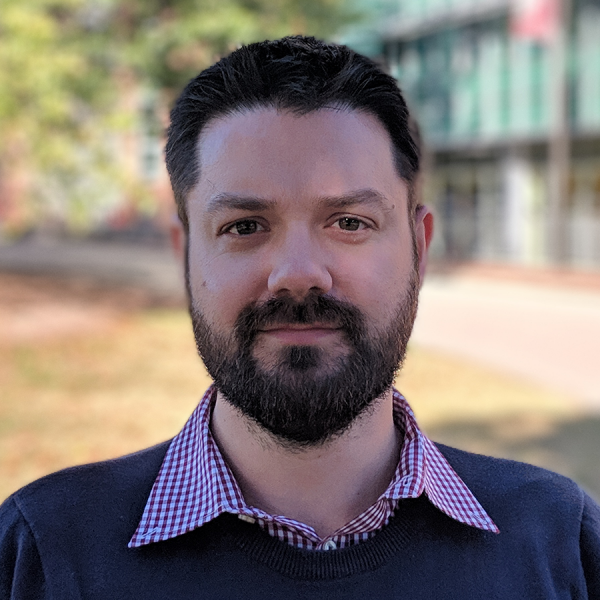
Paul Byrne is an Associate Professor in the Department of Earth, Environmental, and Planetary Sciences at Washington University in St. Louis. He is affiliated with the McDonnell Center for the Space Sciences and the Remote Sensing Laboratory. His research focuses on comparative planetary geology, studying planetary bodies from Mercury to Pluto and beyond to exoplanets. Byrne employs remote sensing, numerical modeling, and fieldwork on Earth to understand planetary surface and interior dynamics. Education: BA in Geology (Trinity College Dublin), PhD in Planetary Geology (Trinity College Dublin). Prior to joining Washington University, he held positions at North Carolina State University and postdoctoral fellowships at the Carnegie Institution for Science and the Lunar and Planetary Institute. Research interests include Venusian volcanism and tectonics, Martian structural geology, and the application of remote sensing techniques to planetary surfaces. His work emphasizes understanding planetary evolution through comparative analysis, with recent focus on Venus' surface processes and exoplanet studies. Key contributions include studies on Venus' gravitationally deformed volcanoes, Mercury's global contraction, and the exploration potential of extraterrestrial resources. Byrne has advised on mission concepts for Venus and Mercury exploration, including aerobot missions and landed investigations. Labs/Teams: McDonnell Center for the Space Sciences, Remote Sensing Laboratory. Collaborates on interdisciplinary projects involving planetary geology, astrobiology, and mission design.
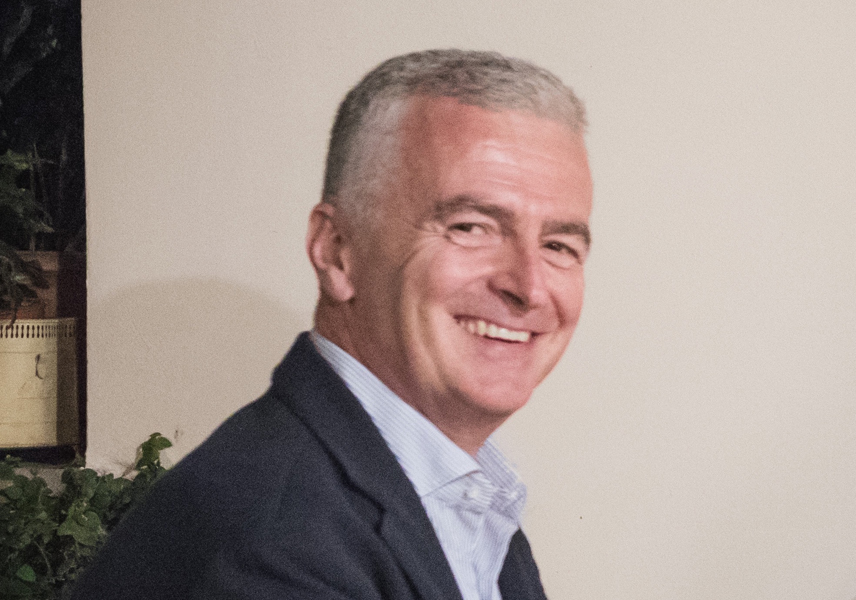
Professor John Howell is a Chair in Virtual Geosciences at the School of Geosciences, University of Aberdeen. He has been a Professor there since 2012, following academic and industry roles in Norway and the UK. His research bridges sedimentology, digital field methods, and energy transition geoscience. He leads multiple international research initiatives and collaborates widely across academia and industry. Education: BSc in Geology, Cardiff University, 1988 PhD in Geology, University of Birmingham, 1992 — Dissertation: Sedimentology of the Rotliegend of the UK Southern North Sea John Howell's research is centered on virtual geosciences, focusing on digital outcrop modeling using LiDAR and drones, virtual field trips, and the use of geological analogues to improve subsurface models for reservoirs, carbon capture and storage (CCS), and hydrogen storage. His work spans clastic sedimentology, sequence stratigraphy, and reservoir modeling, with field areas including the Colorado Plateau (Utah), the North Sea, and global deep-water systems. He pioneered virtual outcrop geology and co-founded V3Geo, a public repository hosting over 500 virtual models. His recent publications reflect a strong trend toward integrating digital technologies—such as machine learning and photogrammetry—into geological analysis and education. Themes include reservoir heterogeneity, virtual field trip efficiency, and the application of modern depositional systems to ancient subsurface analogues. His work increasingly supports the energy transition, particularly in subsurface storage and sustainable resource management. Scientific Awards: Perce Allen Award (2018) ExxonMobil Young Researcher Award (2000) Alaister Pilkinton Award for Excellence in Teaching (2000) John Howell has supervised 56 PhD students and leads or co-leads five major Joint Industry Projects (JIPs), including the fifth phase of the SAFARI project, funded by nine energy companies and the Research Council of Norway. His research has attracted significant industry and public funding, supporting numerous postdocs and PhD candidates. He collaborates with institutions in Bergen, Leeds, Manchester, Oslo, and Barcelona. He is actively involved in knowledge exchange, having developed V3Geo, presented TEDx talks, and appeared in numerous TV documentaries such as 'The Big Monster Dig', 'Dinosaur Detectives', and 'World's Deadliest Jobs'. He also produced educational content like 'Drone vs Volcano' with over 375,000 views.
Warner Marzocchi is Professor of Geophysics and Natural Hazard Forecasting at the University of Naples Federico II and Scuola Superiore Meridionale. He holds a PhD in Physics (1992) and a degree in Earth Sciences (1987) from the University of Bologna. Previously, he served as Chief Scientist at the Istituto Nazionale di Geofisica e Vulcanologia (2003-2018) and held visiting positions at the University of Southern California and the Institute of Statistical Mathematics in Tokyo. His research focuses on seismic/volcanic hazard analysis, earthquake forecasting, statistical seismology, and hazard model validation. He coordinates international projects in natural hazard assessment and serves on advisory panels including the International Atomic Energy Agency, US National Seismic Hazard Model, and Global Volcano Model. Marzocchi's recent publications demonstrate advances in probabilistic forecasting models, operational earthquake forecasting systems, and statistical validation methods. His work frequently applies machine learning and complex systems theory to seismic and volcanic processes across Italy, California, and New Zealand. Honors: Ranked among world's top 2% scientists (2019-present) Member of Academia Europaea (2018) Editorial awards from Geophysical Journal International (2010) and Geophysical Research Letters (2003) He teaches graduate courses in geophysics, statistics, and hazard forecasting, and has advised numerous PhD students. He leads research teams focused on seismic risk mitigation and volcanic unrest management.
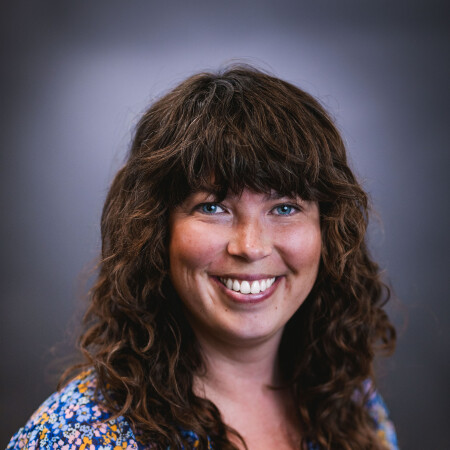
Kristina Butler is an Assistant Professor at the School of Natural Sciences and Mathematics , The University of Texas at Dallas . Her research bridges sedimentary geology, geochemistry, and critical mineral resources through studies of earth surface processes and tectonic evolution. Education : PhD in Geosciences (The University of Texas at Austin, 2022), BS in Geosciences (University of Alaska Anchorage, 2017) Her research focuses on: Critical Mineral Resources : Investigating lithium brine systems in Chile and Nevada, oil field brines in Canada, and lithium-rich clays across the Americas Tectonic Evolution : Reconstructing uplift mechanisms in the Central Andes and Cretaceous mountain-building in Patagonia Hydroclimate Records : Using terrestrial proxies to decode paleoenvironmental conditions in arid regions Recent publications highlight her work in lithium resource sustainability, volcano-sedimentary deposits, and paleoelevation reconstruction using novel isotope techniques. Her research spans Quaternary climate shifts in the Great Basin (2024) to Cretaceous-Paleogene basin evolution in Patagonia (2020). Scientific Awards : NSF EAR Postdoctoral Fellowship She mentors undergraduate students, particularly from underrepresented communities, and contributes to DEI initiatives in geoscience education through academic book clubs and science communication platforms like futureROCKdoc and Science Y’all .
Professor Adrian Hartley is a faculty member at the University of Aberdeen, affiliated with the School of Geosciences and Department of Geology & Geophysics. His research focuses on clastic sedimentology, sequence stratigraphy, and tectonostratigraphic evolution, particularly in continental environments and Large Igneous Provinces. He leads industry-funded projects like the Triassic JIP Phase 2 & 3 and the Fluvial System Research Group, collaborating with institutions such as University of New Mexico and Royal Holloway. Research Highlights : Application of geomorphology to rock records, Central Andes uplift/climate reconstruction, stratigraphic controls on subsurface resources, geothermal favorability mapping, and virtual field trip efficiency. Teaching : Coordinates field-based courses including the Level 3 Torridon/Gairloch Fieldtrip, Level 4 Mapping Project, and Level 5 MSc sedimentology fieldwork in Utah and the Pyrenees. Collaborations : Works with Gary Weissmann & Louis Scuderi (University of New Mexico), Amanda Owen (University of Glasgow), Anne Mather (University of Plymouth), and Laura Evenstar (University of Brighton). Email : a.hartley@abdn.ac.uk
Tibor Guzmics is a Research Fellow and lecturer at Eötvös Loránd University's Institute of Geography and Earth Sciences, specializing in petrology and geochemistry. His research focuses on carbonatite magmatism, fluid and melt inclusions, and mantle processes. Primary affiliation: Department of Petrology and Geochemistry Secondary affiliation: Center of Earth Sciences Email: tibucka@caesar.elte.hu His work investigates the geochemical behavior of minerals during energy storage, trace element transport in carbonatite systems, and magmatic processes in rift zones. He employs advanced techniques like 3D Raman mapping and FIB-SEM to analyze fluid inclusions and melt compositions. Trends in his publications (2024–2020) emphasize carbonatite genesis via liquid immiscibility, fluid inclusion characterization, and mantle xenolith studies. Key methodologies include experimental geochemistry and high-resolution imaging.
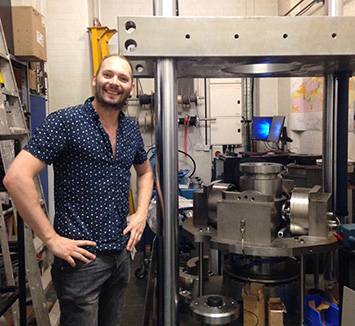
Prof. Tom M. Mitchell is a Professor of Earthquake Geology & Rock Physics at University College London, part of the Rock and Ice Physics Laboratory. His research focuses on experimental rock deformation, fault zone dynamics, and field geology, with applications to earthquake mechanics, geothermal systems, and lunar geology. Education: Ph.D. in Geology (2007), University of Liverpool B.Sc. (1st Class Honors) in Geology (2003), University of Liverpool Associate Fellow of the Higher Education Academy (2014) Research Interests: Experimental rock deformation under simulated geological conditions Field studies of fault zones and their seismic properties Integration of laboratory and field approaches to understand fault mechanics and fluid flow Lunar and planetary geology, including regolith analysis Geothermal energy and fluid migration in fractured systems Labs/Teams: Rock and Ice Physics Laboratory (UCL) SeismoLab Collaborations with international institutions including INGV (Rome), Brown University, and Hiroshima University Grants/Advising: Contributor to London NERC Doctoral Training Partnership programs Supervised numerous postdoctoral researchers and visiting scholars globally Active in interdisciplinary projects linking geophysics, structural geology, and planetary science
Prof. Nicole Richter is an Assistant Professor in the Department of Neotectonics and Geohazards at RWTH Aachen University, holding the Junior Professorship for Remote Sensing of Natural Hazards. Her research focuses on active volcanic systems, satellite geodesy for volcanic deformation monitoring, and lava flow modeling. She leads projects in over 20 countries, emphasizing interdisciplinary approaches to natural hazard assessment. Her work integrates remote sensing techniques like InSAR and TLS with field studies to understand volcanic processes, tectonic activity, and earthquake geology. She collaborates with the Natural Hazards Group (NUG), which includes 15 researchers working on geohazards such as tsunamis and seismic risks. Key research themes include magmatic activity monitoring, volcanic eruption dynamics, and geophysical data interpretation. Her publications highlight innovations in hazard modeling and deformation analysis, with global fieldwork in regions like Greece, La Réunion, and Cabo Verde. Advising and grants: Supervises doctoral students and research assistants, contributing to international hazard mitigation efforts. Labs/teams: Part of the NUG, specializing in remote sensing and field-based hazard research.
Dr. Felix Gross serves as the Group Leader of the 'Marine Geohazards' working group at the Center for Ocean and Society within Kiel Marine Sciences. He is affiliated with the Marine Geophysics and Hydroacoustics department at Christian-Albrechts-Universität zu Kiel, where he has established himself as a leading researcher in submarine landslide dynamics and coastal hazard assessment. His work integrates field expeditions, advanced imaging techniques, and hazard modeling to understand geological processes at continental margins. Dr. Gross received his academic training at German institutions: Bachelor of Science in Geosciences (2009) from Albert-Ludwigs-Universität Freiburg Master of Science in Marine Geosciences (2012) from Christian-Albrechts-Universität zu Kiel Doctoral degree (2015) from Christian-Albrechts-Universität zu Kiel with thesis on 'Architecture, tectonic control and instability of the submarine continental margin offshore Mount Etna, Italy' His research focuses on coastal hazard assessment, deformation processes at continental margins, and submarine landslide mechanisms. Dr. Gross employs multiple methodologies including marine 2D/3D seismics, sediment echo-sounding, multibeam bathymetry, and UAV/drone technology for mapping coastal areas and shallow waters. His work has significant implications for understanding tsunami generation, volcanic flank collapse, and slope stability in various marine environments worldwide. Analysis of his publication record reveals a consistent focus on submarine landslides across diverse geographical settings including New Zealand's Hikurangi Margin, the Mediterranean Sea, Northwest Africa, and Arctic regions. His research demonstrates an evolution from studying specific landslide complexes to developing broader understanding of triggering mechanisms, including the role of gas hydrates, tectonic activity, and volcanic processes in slope instability. Dr. Gross has participated in numerous research expeditions aboard vessels including RV Maria S. Merian, RV Meteor, RV Poseidon, and others, conducting fieldwork in regions such as Cape Verde, Labrador Sea, Chile/Peru margin, Greece, Italy, New Zealand, Svalbard, Sicily, Thailand, and the Baltic Sea. His collaborative approach is evident through extensive co-authorship with international researchers across multiple disciplines. As Group Leader of the 'Marine Geohazards' working group since February 2019, Dr. Gross directs research on coastal hazard assessment and slope stability mechanisms. Previously, he served as Coordinator for the 'Ocean Disasters' research area (2017-2018) and held PostDoc positions focused on submarine clathrate hydrate imaging and marine geophysics at Kiel University. His extensive field experience includes participation in over 14 research cruises since 2010, demonstrating sustained engagement with marine geological processes in diverse settings worldwide.
Dr. Ilka Kleinhanns is a Research Scientist in the Isotope Geochemistry Group at the University of Tübingen's Faculty of Mathematics and Natural Sciences, Department of Geosciences. Her career spans institutions including the University of Bergen (2008-2010) and University of Göttingen (2005-2008). She earned her PhD (2003) at the University of Bern and a Diploma in Geology/Palaeontology (1999) at Göttingen. Her research focuses on crust-mantle interactions , utilizing non-traditional stable isotopes (Cr, Ti, Fe, Zn) to study high- and low-temperature environments. Key projects include Quaternary volcanism in France, oxygenation of Earth's surface, and sedimentary redox variations in South Africa. Recent publications highlight her work on the Great Oxidation Event , stable isotope fractionation in mantle processes, and hydroclimate dynamics in the Black Sea. She collaborates on topics like OIB/MORB basalt isotopic signatures and Antarctic crustal evolution.
Corentin Caudron is an Associate Professor & Principal Investigator at the WEL Research Institute, Université Libre de Bruxelles (ULB). His research focuses on volcano monitoring through geophysical approaches, with expertise in hydrothermal systems, magma dynamics, seismic noise analysis, volcanic lakes, infrasound, and hydroacoustics. He collaborates internationally with institutions in Indonesia, Iceland, New Zealand, the Philippines, and Hawaii. PhD in Science (2013) from ULB and Royal Observatory of Belgium MSc in Earth Sciences (2009) from ULB His three primary research routes include: Understanding (volcano-)hydrothermal systems using seismic and lake-monitoring approaches, with a focus on precursors to gas-driven eruptions Developing seismic noise-based methodologies (seismic interferometry, amplitude ratios, tremor analysis) for volcanic system monitoring Investigating low-frequency seismic and acoustic signals for underwater volcano degassing quantification Recent publications highlight trends in fiber optic volcano monitoring, machine learning for eruption forecasting, infrasound-seismic integration, and seasonal influences on volcanic activity. His team employs interdisciplinary techniques combining geochemistry and geophysics. Scientific contributions include: FNRS postdoctoral Fellow (2016-2017) Postdoctoral Fellow at University of Cambridge (2015-2016) Postdoctoral Fellow at Earth Observatory of Singapore (2013-2015) He actively supervises 8 PhD students and has co-supervised 2 former PhDs, with projects funded by FWO, FNRS, Wel-T, Fondation Wiener Anspach, and Catalyst. His lab maintains equipment like DAS/FBG interrogators, seismic arrays, and hydrophones. He serves as Co-Leader of the IAVCEI Commission on Volcanic Lakes and Editor for multiple journals.
Dr. Thanushika Gunatilake is an Assistant Professor in the Department of Geology and Geochemistry at the Faculty of Science, Vrije Universiteit Amsterdam (VU). Her research focuses on physics-based modeling of fluid-driven earthquake sequences, with an emphasis on understanding how fluids like CO₂ and H₂O influence seismic activity in subduction zones, volcanic regions, and other geological settings. She also investigates sustainable energy solutions such as geothermal energy and carbon capture and storage (CCS) to optimize subsurface utilization while mitigating risks like induced seismicity. Her work integrates interdisciplinary approaches, including studies on fluid migration, fault reactivation, and permeability changes. Notable contributions include analyzing monsoon-triggered earthquakes in India, aftershock dynamics in the Apennines, and the interplay between geothermal energy exploitation and volcanic activity in Japan. She teaches the course 'Geothermal Energy' and collaborates internationally on projects addressing climate change mitigation through geoscientific innovations. Dr. Gunatilake’s research highlights the critical role of fluid dynamics in both natural seismic processes and human-driven subsurface activities. Her recent studies emphasize decarbonization strategies and the application of earthquake modeling to epidemiological challenges, showcasing her innovative approach to bridging geophysics and societal needs.
John Stix is Full Professor and Dawson Chair in Geology at McGill University's Faculty of Science. His research focuses on volcanology, petrology, and geochemistry with emphasis on volcanic gas monitoring, eruption forecasting, and isotopic analysis. Recent work involves developing remote sensing techniques for volcanic emissions detection and analyzing eruption precursors through ground deformation and seismic signals. Professor Stix leads field research at active volcanoes worldwide including Costa Rica's Rincón de la Vieja and Poás volcanoes, New Zealand's Whakaari, and Yellowstone Caldera. His integrative approach combines: Gas geochemistry and isotopic analysis GNSS and seismic monitoring Satellite remote sensing Phreatic eruption mechanisms Publication analysis reveals dominant themes in volcanic degassing processes, isotopic techniques, eruption forecasting methodologies, and societal aspects of volcanology including geoheritage conservation.
John Pallister is a Research Geologist at the USGS Cascades Volcano Observatory and leader of the Next-Generation Volcano Hazard Assessment project. He previously served as Chief of the USGS-USAID Volcano Disaster Assistance Program (VDAP) from 2004-2018 and has held adjunct professor positions at multiple universities worldwide including University of Colorado, University of Arizona, Portland State University, Nanyang Technical University, Université Blaise Pascal, University of Pittsburgh, and University of Hawaii Center for the Study of Active Volcanism. Ph.D., 1980, Geology - University of California, Santa Barbara, CA B.Sc., 1974, Geology - Emory University, Atlanta, GA Federal Executive Institute, U.S. Federal Executive Qualification, 1996 Dr. Pallister's research spans volcanology, volcanic emergency response, monitoring techniques, forecasting methodologies, and petrology. His work focuses on improving volcano hazard assessment and early warning systems through innovative monitoring approaches and international collaboration. He has been instrumental in developing best practices for volcano observatories worldwide and has contributed significantly to understanding volcanic processes during major eruptions including Mount St. Helens, Pinatubo, Merapi, and Chaitén. His expertise bridges scientific research with practical disaster risk reduction strategies. His publication record demonstrates consistent contributions to volcanic hazard assessment, eruption forecasting, and monitoring technologies. The articles show an evolution from fundamental petrologic studies of ophiolites and magma chambers to applied research on eruption forecasting, satellite monitoring techniques, and volcano observatory best practices. A clear trend emerges toward increasingly collaborative, interdisciplinary research focused on practical applications for volcanic risk reduction. U.S. Geological Survey: G.K. Gilbert fellowships for research on Precambrian Ophiolites (1984-1986) U.S. Geological Survey: G.K. Gilbert fellowships for petrologic studies of Mount Pinatubo (1994-1995) 1992 University of Arizona: Lowell Distinguished Field Geologist 1999 U.S. Vice Presidential Hammer Award for work on the National Atlas 2000 U.S. Geological Survey Customer Service Award University of California, Santa Barbara: Distinguished Alumnus Award 2006 U.S. Department of Interior (DOI) Distinguished Service Award 2016 Samuel J. Heyman Service to America Medal, Finalist Dr. Pallister has advised numerous graduate students across multiple institutions, serving on PhD committees for research on mantle xenoliths, caldera petrology, geomorphology, and remote sensing applications in volcanology. His policy contributions include serving on Science and Program Committees for USGS-INGV-IAVCEI Volcano Observatory Best Practices Workshops, providing external advisory services for the DOMERAPI project on Merapi Volcano, and delivering briefings to high-level officials including the Indonesian Vice President and Chilean President Michelle Bachelet during volcanic crises. He has testified before U.S. Congress on geologic hazards and mapping. As leader of the Next-Generation Volcano Hazard Assessment project and former Chief of VDAP, Dr. Pallister directs teams focused on improving volcanic crisis response capabilities worldwide. His work with the USGS Cascades Volcano Observatory involves monitoring active volcanoes in the Pacific Northwest, while his international collaborations through VDAP have strengthened volcano monitoring capabilities in numerous countries facing volcanic threats.
Dr. Lorenzo Tavazzani is a Lecturer at ETH Zurich's Department of Earth and Planetary Sciences (D-EAPS), located at Clausiusstrasse 25, 8092 Zürich, Switzerland. His research focuses on magmatic processes, igneous petrology, and geochemical systems, with a strong emphasis on integrating field observations, geochronology, and isotope geochemistry. His work spans diverse geological settings, including volcanic calderas (e.g., Turkey’s Ulukışla Caldera), plutonic systems (e.g., the Angicos plutonism in Brazil), and hydrothermal ore deposits (e.g., lithium in Peru and tin in Bolivia). Recent studies highlight his expertise in zircon geochronology, magma reservoir dynamics, and tectonic controls on magmatism. Dr. Tavazzani’s publications frequently address the interplay between magmatic processes and tectonic environments, with contributions to understanding the timing and mechanisms of crustal evolution. He has collaborated on projects in Turkey, Italy, Chile, Peru, and Bolivia, showcasing a global research footprint. His research outputs reflect a balance between fundamental petrology and applied mineral resource studies, with a focus on novel analytical techniques such as in-situ petrochronology and LA-ICP-MS dating methods.