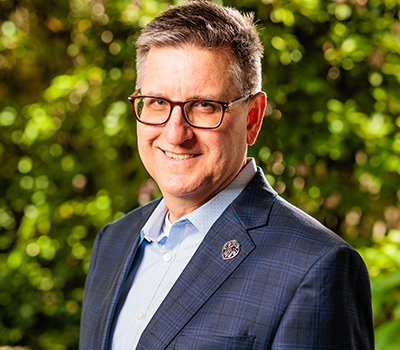
Mike Burton is a Professor and Chair in Volcanology at the University of Manchester's Earth and Environmental Sciences department. His research focuses on volcanic processes, gas emissions, and eruption forecasting, with emphasis on remote sensing and numerical modeling. He collaborates closely with volcano observatories to improve monitoring techniques. Key areas include magma dynamics, degassing processes, and the impact of volcanic activity on climate. Recent work includes studies on the 2021 Cumbre Vieja eruption (La Palma), Fagradalsfjall (Iceland), and Soufrière Hills (Montserrat). His projects involve advanced remote sensing technologies and satellite data analysis to quantify gas emissions and eruption dynamics. Burton has been a Principal Investigator in major initiatives like the EUROVOLC network and CarbSens remote sensing system development. Publications highlight contributions to understanding magma degassing, volcanic plumes, and the role of volatiles in eruptions. His interdisciplinary approach integrates field observations, lab experiments, and computational models to address global volcanic hazards and climate interactions. Media engagements include expert commentary on recent eruptions worldwide.
Joel Ruch is an Assistant Professor in the Department of Earth Sciences at the University of Geneva. His research focuses on volcano-tectonic processes, integrating deformation analysis using satellite imagery, drone mapping, and analogue modeling. He leads the Volcano Tectonic Laboratory and collaborates with institutions like KAUST University. Key projects include the TEMPO initiative studying multi-scale deformation, Southern Red Sea rifting dynamics, and caldera collapse mechanisms. His work bridges short-term volcanic activity with long-term tectonic processes, emphasizing interdisciplinary approaches. Ruch’s research spans global volcanic systems, including Iceland, Ethiopia, and the Galápagos. Ongoing projects explore rift zone dynamics, magma intrusion effects, and seismic activity at divergent boundaries. He has pioneered the use of high-resolution drone imagery for fault mapping and developed experimental models to simulate caldera collapse. His publications emphasize structural geology, magmatic processes, and geodetic monitoring. Despite no explicitly listed scientific awards, his contributions highlight innovative methodologies in volcanic hazard assessment and tectonic deformation analysis. He supervises two PhD students in Iceland and Hawaii, advancing studies on volcanic island formation and rift zone evolution. Grants include Swiss National Science Foundation funding for TEMPO and collaborations with KAUST on Red Sea rifting. Ruch’s lab focuses on interdisciplinary volcano-tectonic research, blending field observations with computational and experimental tools. Ongoing studies address caldera subsidence, dike-induced faulting, and the interplay between tectonic stress and magmatic activity.
Luca Caricchi is a Full Professor at the University of Geneva's Department of Earth Sciences, within the Section of Earth and Environmental Sciences. He serves as Secretary of the VGP AGU, IAVCEI Swiss national representative, and editor for Progress in Earth and Planetary Science and Artificial Intelligence in the Geosciences . His research focuses on understanding magmatic processes, including magma transfer in the crust, eruption dynamics, and the formation of magmatic ore deposits. Current projects include studies on volcanic degassing, mineral zoning, and machine learning applications in geosciences. His administrative roles include membership in the Faculty Council, ELSTE council, and SwissSIMS steering committee. He advises multiple PhD and master's students, including Corin Jorgenson and Alessandro Musu. Research is supported by the Swiss National Science Foundation (SNSF). His fieldwork and teaching include courses on magmatic processes and field trips to active volcanoes like Mt. Etna.
Dr. Teh-Ru Alex Song is a Reader in Seismology at the Department of Earth Sciences, University College London. He leads the Seismolab research group and teaches the course GEOL0029: Seismology I. His work focuses on observational seismology, including seismic anisotropy, volcano dynamics, and tectonic processes. Key research interests include magma chamber interactions, core-mantle boundary structure, and earthquake behavior near plate boundaries. His recent studies involve Aso Volcano seismic monitoring and post-seismic velocity changes in Sumatra subduction zones. Research highlights include investigating magma dynamics through repetitive volcanic seismic signals and analyzing temporal variations in seismic anisotropy. His work bridges seismological observations with tectonic and volcanic processes across spatial and temporal scales. Collaborative efforts include global seismic array data analysis and volcano remote sensing techniques. Dr. Song’s publications span over two decades, addressing topics like mantle discontinuities, induced earthquakes, and seismic waveform modeling. His contributions have advanced understanding of seismic wave propagation, subduction zone dynamics, and the interplay between magmatic and tectonic systems.
Loÿc Vanderkluysen, PhD, is an Associate Professor in the Department of Biodiversity, Earth and Environmental Science at Drexel University. A volcanologist, he investigates how volcanic systems impact environments through multidisciplinary approaches spanning magma generation to eruption emplacement. Education: PhD, Geology and Geophysics, University of Hawaii, 2008 MSc, Earth Science, University of Lausanne (Switzerland), 2002 Diploma, Geology, University of Lausanne (Switzerland), 2001 Research Focus: His work examines volcanic eruption cyclicity, degassing processes, aerosols, and Large Igneous Provinces. Key methodologies include volcano monitoring, thermal remote sensing, high-temperature geochemistry, petrology, and experimental volcanology. Major projects include NSF-funded Deccan Traps research linking massive Cretaceous eruptions to environmental changes during dinosaur extinction. Publication Trends: Recent articles focus on volcanic morphodynamics (lava flows, domes, rift zones), integrating advanced techniques like photogrammetry, analog experiments, TanDEM-X satellite data, and machine learning. Geographic emphasis includes Indonesia, Equatorial Guinea, Yellowstone, and flood basalt provinces. Active Projects: Drone-based volcanic ash/aerosol characterization (PhD) Eruptive history/hazards of Bioko Island, Equatorial Guinea (PhD) Yellowstone volcanic gas monitoring (student projects) 3D architecture of Deccan Traps units (undergraduate) Machine learning for basalt classification Effusive-explosive transition mechanisms Lab & Advising: Directs research involving undergraduates (including STAR/co-op students) and PhD candidates in global field campaigns across active volcanic regions.
Sri Budhi Utami is a Researcher at the University of Liège , affiliated with the Faculty of Sciences and the Department of Geology . Her academic work focuses on volcanology, petrology, and geochemistry , particularly investigating magma dynamics, volatile element behavior, and eruptive processes. Key research themes include magma ascent rates, diffusion of redox-sensitive elements, and fluid phase impacts on eruption styles. Recent publications (2013–2025) analyze volcanic systems in Indonesia (Kawah Ijen, Kelud), Chile (Villarrica, Osorno), and Hawaii (Kaua’i dykes), with a growing emphasis on diversity and inclusion in geosciences.
Jeffrey Ryan is a Professor in the School of Geosciences at the University of South Florida (USF), within the College of Arts and Sciences. He specializes in geochemical analysis of rocks to understand Earth's dynamic processes, particularly focusing on subduction zones and fluid-rock interactions. Ryan manages the USF Center for Geochemical Analysis and is a core user of the Florida Center for Analytical Electron Microscopy (FCAEM). His research involves studying metamorphic rocks and arc lavas in subduction settings, using isotopes like boron to trace fluid sources. He has led or co-PI'd multiple National Science Foundation (NSF) grants, including projects on remote microscopy education and the Noyce Scholarship Program. Ryan has been recognized with prestigious awards such as the Carnegie Foundation Professor of the Year (1999) and the USF Phi Kappa Phi Artist/Scholar Award (2000). Education: M.A., M.Phil., Ph.D. in Geochemistry, Columbia University (1983–1989) B.S. in Geology, Western Carolina University (1978–1983) Research Interests: Ryan’s work centers on tracing fluid-mobile elements (B, Cs, As) and isotopes in subduction zones to understand slab-derived water fluxes and their impact on magma generation. He investigates shallow forearc metamorphic rocks and arc lavas, with recent focus on the Mariana Trench and South China Sea via IODP Expeditions. His contributions include analyzing serpentinite mud volcanoes and seamounts to study fluid-rock exchange in subduction settings. Publications and Trends: Recent articles explore subduction dynamics, mantle wedge processes, and educational strategies. Key themes include tracking volatile cycling, slab dehydration, and the role of serpentinites in Earth’s deep carbon cycle. Ryan’s work bridges field, analytical, and educational research, emphasizing undergraduate involvement in IODP sample analysis. Awards and Recognition: USF Outstanding Undergraduate Teacher Award (1997) Carnegie Foundation/CASE Florida Professor of the Year (1999) USF Phi Kappa Phi Artist/Scholar Award (2000) USF President’s Award for Faculty Excellence (2003) Academic and Professional Achievement Award, Western Carolina University (2009) Advising and Grants: Ryan has advised students like Ray Johnston (Mariana forearc studies) and Antonio Luna (slow-spreading ocean crust comparisons). He secured NSF grants for educational innovation and geoscience workforce development, including projects on virtualizing undergraduate research and adapting geoscience curricula for diverse audiences. Labs and Collaborations: Ryan’s research leverages advanced facilities like the ICP-MS and SEM at FCAEM. He collaborates on international expeditions, such as IODP 366 (Mariana forearc) and 367-368 (South China Sea), to integrate fieldwork, lab analysis, and student mentorship.
Ingrid Ukstins Peate is an Assistant Professor in the Department of Geoscience at the University of Iowa, with a focus on volcanology, igneous petrology, and planetary geology. Her research integrates geochemistry and sedimentary geology to study explosive volcanic systems and extraterrestrial analogs. She has extensive field experience in Chile, Ethiopia, China, and the U.S., and is actively involved in graduate student mentoring. University of Iowa: 115 Trowbridge Hall Mount Holyoke College (BA 1994), University of California, Davis (MSc 1998), Royal Holloway University of London (PhD 2003) Research interests include: Volcanology of flood basalt provinces Planetary geology analogs Magma petrogenesis and crustal assimilation Geochemical heterogeneity in eruptions Field-based volcanic stratigraphy Remote geologic exploration methods Selected publications highlight her work on massive volcanic eruptions' climate impacts, planetary analog studies in the Atacama Desert, and geochemical processes in Afro-Arabian flood basalts. She received the Mary Lyon Award (2009) and Geological Society Young Author Award (2003). Grants and advising : NSF-funded projects on melt inclusions and crustal assimilation; NASA grants for planetary spherules and high-lakes astrobiology. She serves as advisor or committee member for 12 graduate students and mentors numerous undergraduates.
Stephen S. Gao is the Curator's Distinguished Teaching Professor and Department Chair of Geosciences, Geological and Petroleum Engineering at Missouri University of Science and Technology. He also serves as Professor of Geophysics and Earth Sciences and Engineering Chair of the Geology and Geophysics Program. With over 250 scholarly works published throughout his career, Dr. Gao is a prominent figure in geophysics specializing in earthquake seismology, crustal deformation, and Earth's deep interior structure. Dr. Gao received his educational foundation from prestigious institutions: Ph.D. in Geophysics and Space Physics, University of California, Los Angeles (1995) M.S. in Geophysics and Space Physics, University of California, Los Angeles (1993) B.S. in Marine Geology and Geophysics, Ocean University of China (1984) Dr. Gao's research integrates multiple scientific disciplines to explore Earth's structure and dynamics. His work combines geology, physics, mathematics, and computer science to investigate Earth's interior using seismic waves generated by earthquakes. His research spans six continents including Brazil, China, Egypt, Ethiopia, Japan, Kenya, Mongolia, Russia, South Africa, the United States, and Zimbabwe. Key research areas include earthquake seismology and hazard prediction, mantle and crustal structure imaging using seismic tomography, seismic anisotropy and mantle flow patterns, continental rifting processes, and application of machine learning to seismic data analysis. Dr. Gao's recent publications demonstrate continued focus on understanding mantle dynamics and crustal deformation across diverse tectonic settings worldwide. His work increasingly incorporates advanced computational methods including convolutional neural networks for seismic event classification. The research spans from deep Earth structure to practical applications in exploration geophysics for locating oil, gas, and minerals, as well as environmental protection applications. Dr. Gao has received significant recognition for his contributions: Elected Fellow of the Geological Society of America h-index of 40 according to citation metrics As Department Chair and research leader, Dr. Gao oversees multiple research initiatives with substantial funding for geophysical investigations. His work has practical applications in earthquake hazard prediction and mitigation, as well as resource exploration. He maintains active international collaborations across six continents and contributes significantly to the field through his role as an educator, mentoring students and developing curriculum in geophysics and exploration techniques.
Annett Junginger is a researcher at the University of Tübingen's Department of Geosciences, leading the Micropaleontology research group and contributing to the Senckenberg Center for Human Evolution and Paleoenvironment (HEP Tübingen). With a career spanning over two decades, she specializes in paleoclimatology, micropaleontology, and environmental-geochemical analysis of rift lakes. Education: Dr.rer.nat. in Paleoclimatology (2011) and Diploma in Geosciences (2006) from University of Potsdam/FU Berlin Key Projects: Hominin Sites and Paleolakes Drilling Project (HSPDP), Chew Bahir Basin studies, Suguta Valley hydrology Her research focuses on paleoclimate dynamics in East Africa, using lake sediments , isotope geochemistry , and micropaleontological proxies to understand climate variability across Quaternary periods. She investigates how hydroclimate fluctuations impacted hominin evolution and dispersal routes, particularly during the African Humid Period (15–5 ka BP) and MIS 12 glacial stage. Recent publications (2024) examine Lake Albert biodiversity via environmental DNA, Lake Naivasha metal sources , and Chew Bahir strontium isotopes . Earlier work includes volcano-tectonic fragmentation of Turkana-Suguta Megalake (2023), paleo-hydrology of Greece (2021), and Angolan diatom studies (2020). She employs multi-sensor remote sensing and phytolith analysis for climate modeling. Teaching responsibilities include BSc/MSc courses in Micropaleontology, Paleontology, and field practicals in Austria. She organizes African fieldtrips (Kenya, Tanzania, Ethiopia, etc.) for paleoenvironmental data collection.
Ross Maguire is an Assistant Professor in the Department of Earth Science & Environmental Change at the University of Illinois, affiliated with the School of Earth, Society & Environment. His research focuses on planetary seismology, with a strong emphasis on Mars and Earth's magmatic systems. He employs advanced techniques like deep learning, seismic tomography, and waveform analysis to study seismic events, core-mantle interactions, and volcanic structures. Key research areas include Marsquake analysis, mantle dynamics, and the application of machine learning to seismic data. His work on the InSight mission to Mars has contributed significantly to understanding Martian interior structure through seismic wave studies. He also explores volcanic systems such as Yellowstone and Changbaishan, using seismic imaging to map magma reservoirs and crustal anomalies. Recent publications highlight advancements in classifying seismic events (e.g., earthquakes vs. explosions), resolving Mars' crustal and core structures, and modeling seismic wave propagation in diverse geologic settings. His interdisciplinary approach bridges geophysics, planetary science, and computational methods. Maguire collaborates on international projects like the InSight mission and contributes to initiatives such as the CRESCENT velocity model for the Cascadia subduction zone. His research addresses fundamental questions about planetary evolution, seismic hazards, and Earth's dynamic processes.
Maxim Smirnov is an Associate Professor at Luleå University of Technology's Department of Civil, Environmental and Natural Resources Engineering. His research focuses on Applied Geophysics , particularly magnetotelluric methods for investigating crustal structures, tectonic processes, and geothermal systems. Key areas include continental collision zones, mineral exploration, and geoelectrical imaging of geological formations. He has contributed to studies in Fennoscandia, the Arabian Plate, and Iran, leveraging advanced electromagnetic modeling and multi-disciplinary data integration. Publications highlight expertise in crustal architecture, post-collisional tectonics, and 3D inversion techniques. Recent work includes analysis of the Norwegian Caledonides, the Slovakian Alpides, and geothermal reservoir characterization. He collaborates on projects like the European Plate Observing System (EPOS) and integrates seismic-MT data for orebody delineation. His research emphasizes bridging geophysical methods with tectonic and resource exploration challenges, with a focus on cross-scale analysis from deposit to regional scales.
Barry Parsons is a Professor of Geodesy and Geophysics at the University of Oxford, leading the NERC-funded Looking inside the Continents from Space (LiCS) project. Previously, he directed the Centre for the Observation and Modelling of Earthquakes, Volcanoes, and Tectonics (COMET) from 2002 to 2013. His research focuses on using satellite geodetic techniques (e.g., InSAR) to study tectonic deformation, earthquake processes, and crustal dynamics. His work integrates geophysical observations with seismological and geological data to understand fault mechanics, post-seismic recovery, and seismic hazards in regions like the Tibetan Plateau, Anatolia, and the Philippine Fault. Current projects emphasize high-resolution strain mapping using Sentinel-1 radar satellites to improve models of continental deformation and earthquake cycle dynamics. Key contributions include analyzing surface ruptures in major earthquakes (e.g., 2013 Balochistan, 2015 Pishan), assessing historical seismic events (e.g., 1556 Huaxian), and developing methods for geodetic data fusion. Parsons collaborates widely, with over 200 peer-reviewed publications and a focus on translational research for disaster risk reduction, such as participatory seismic scenario construction in China. Grants: NERC-funded LiCS project. Labs/Teams: COMET Centre, LiCS consortium. Future work includes advancing geodetic imaging techniques and their application to global tectonic studies.
Shanaka de Silva is a Professor at Oregon State University's College of Earth, Ocean, and Atmospheric Sciences (CEOAS). His research focuses on volcanology, igneous petrology, and aeolian geomorphology, with fieldwork in the Andes, Indonesia, and Saudi Arabia. He teaches courses including Volcanology and Advanced Petrology. His work integrates field studies, geochemistry, and geophysics to understand volcanic processes and hazards. Education B.Sc. (Hons) Geology, University of Southampton, 1982 Ph.D. Earth Sciences, Open University, 1987 Research Interests De Silva investigates explosive volcanism, caldera formation, and magmatic-tectonic interactions. Key themes include: (1) magmatism in volcanic arcs, (2) physical volcanology (pyroclastic currents, lahar sedimentology), (3) petrology of explosive eruptions, and (4) aeolian processes as planetary analogs. His work emphasizes volcanic hazard assessment and planetary surface evolution. Collaborations & Outreach He collaborates globally, including with Saudi Arabia's Harrat Khaybar and Indonesia's Toba Caldera. His outreach includes VolcanoWorld and programs promoting equity in Earth Sciences, such as Increasing Diversity in Earth Sciences . Grants & Advising Advises ~20 current and former Ph.D./M.S. students Hosts visiting researchers from institutions like Monash University and NASA NSF and international grants fund projects on magma dynamics and planetary processes Labs & Teams His research group integrates fieldwork, lab analyses, and computational modeling. Key projects include the Toba Caldera resurgent dome study and aeolian bedform analysis in Argentinean gravel plains.
Frank Tepley is a Professor and Program Director in the Geology Program at Oregon State University’s College of Earth, Ocean, and Atmospheric Sciences. He specializes in igneous petrology, isotope geochemistry, and electron probe microscopy. His research focuses on magma dynamics, crustal contamination processes, and volcanic system evolution. Tepley holds a B.S. in Geology from California State University, Northridge (1991) and a Ph.D. in Geochemistry from UCLA (1999). His work includes studies on mid-ocean ridge basalts, arc volcanism in Peru and New Zealand, and the application of microprobe analysis to trace magma histories. He directs the Electron Microprobe Laboratory and has led fieldwork on submarine volcanoes like Brothers Volcano in the Kermadec Arc. Key areas of exploration include magma mixing timescales, volcanic eruption chronology, and the role of hydrothermal systems in metal transport. Education: B.S. Geology, California State University, Northridge (1991) Ph.D. Geochemistry, University of California, Los Angeles (1999) Research interests emphasize volcanic processes, including magma storage, crustal assimilation, and the use of mineral isotopes to reconstruct magmatic histories. Recent studies explore the evolution of Misti Volcano (Peru), Kermadec Arc submarine systems, and mid-ocean ridge geochemistry. His analytical contributions include refining techniques for trace element and Sr-isotope analysis in plagioclase feldspars. Publications highlight advancements in understanding magma dynamics through crystal-scale geochemistry and experimental petrology. Current projects focus on volcanic hazard assessment via tephra analysis and magmatic timescale modeling. Tepley’s lab supports collaborative research in electron microprobe analysis for mineral characterization.