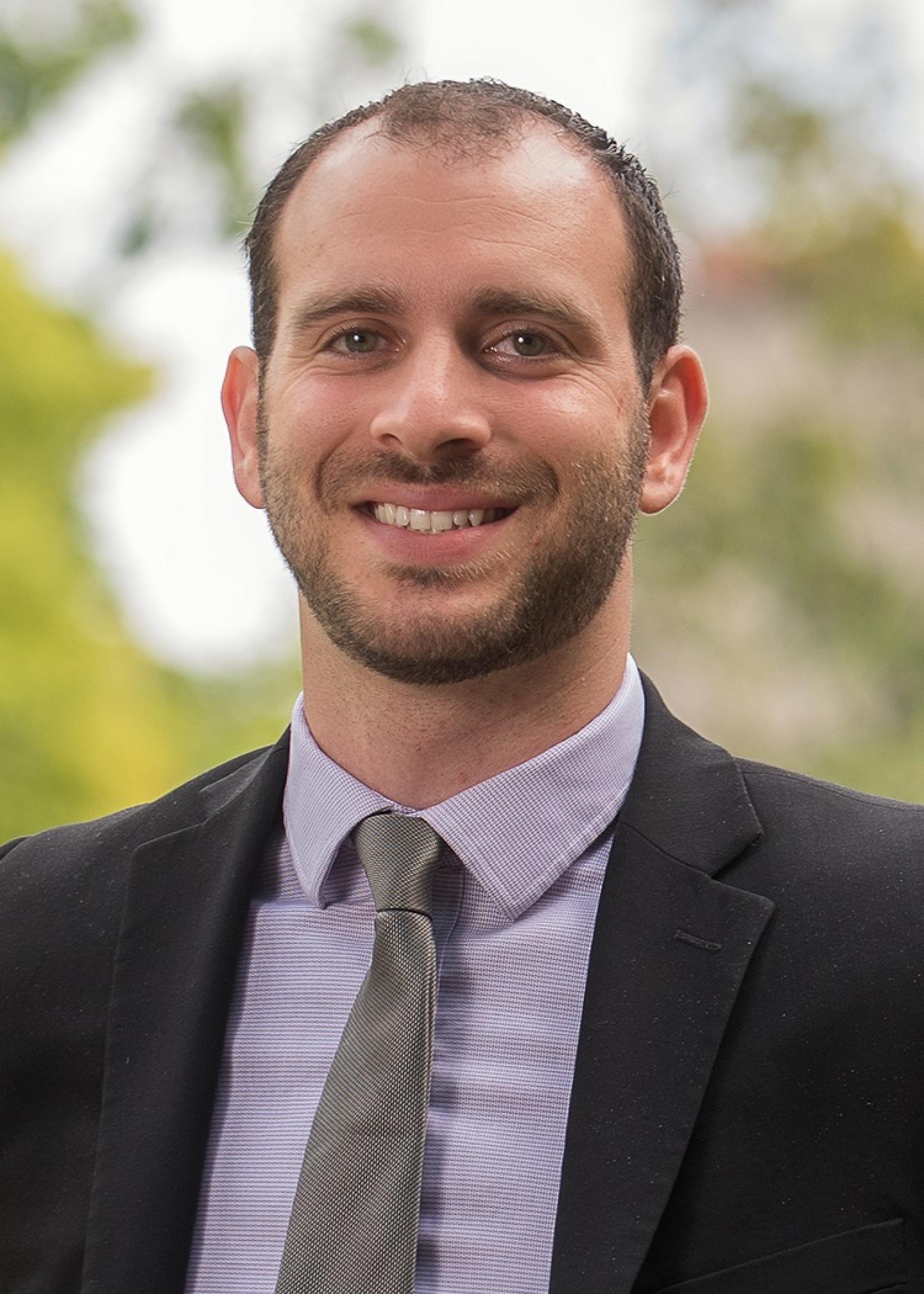
W. Brent Lindquist is a Professor in the Department of Mathematics and Statistics at Texas Tech University, affiliated with the TTU Mathematical Finance Program. His contact details include office location in the Mathematics & Statistics building (Room 104), phone (+1 806 834 2348), and email brent.lindquist@ttu.edu. His research spans computational financial mathematics, porous media flow, neuroscience applications, and quantum electrodynamics. Key contributions include dynamic asset pricing with market microstructure integration, pore-scale flow modeling using 3D micro-tomography, automated neuron morphology identification, and QED computations for electron magnetic moments. Recent work emphasizes ESG factor incorporation into financial models. Analysis of 2023–2025 publications reveals a dominant focus on sustainable finance, particularly ESG-integrated option pricing and portfolio optimization. Methodologies include random forests for market microstructure analysis, skew random walks for volatility modeling, and Lévy processes for Bitcoin dynamics. Cross-cutting themes involve hedonic real estate models with ESG factors and unified asset pricing frameworks bridging classical finance theories.
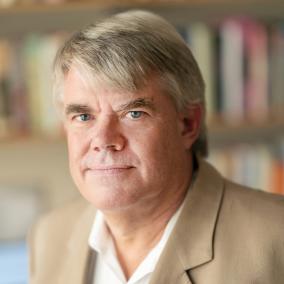
Mark P. Kritzman is a Senior Lecturer in Finance at the MIT Sloan School of Management. He concurrently serves as President & CEO of Windham Capital Management LLC and Senior Partner at State Street Associates. His roles include board memberships at the Institute for Quantitative Research in Finance, Investment Fund for Foundations, and editorial boards of journals like the Journal of Investment Management and Financial Analysts Journal. Education: MBA from New York University and Chartered Financial Analyst (CFA) designation. His research focuses on investing strategies , risk management , and predictive analytics , with recent work addressing federal spending's impact on inflation, bubble detection, and NBA draft prospect evaluation. He has authored six books, including Puzzles of Finance and The Portable Financial Analyst . Key publications from 2023–2025 explore themes like transparent predictive modeling, volatility forecasting, and algorithmic alternatives to neural networks. His work bridges academia and industry, emphasizing practical applications of quantitative methods. Awards : 2025 James R. Vertin Award, 2013 Peter L. Bernstein Award, multiple article honors. Grants/Advising : No explicit student advisees listed; professional contributions focus on institutional advisory roles. He leads Windham Capital Management and actively contributes to editorial boards, shaping discourse in finance and quantitative research.
Andrea Beltratti is a Full Professor at Bocconi University, specializing in financial economics and asset pricing. He holds a Ph.D. in Economics from Yale University (1989) and a B.A. in Economics from the University of Turin (1982). His research focuses on stock and bond volatility, mortgage markets, environmental economics, and financial crises. Notably, his work on asset price dynamics was mentioned during the 2013 Nobel Prize Ceremony. He teaches courses on equity portfolio management, financial investments, and real estate valuation. Education: Ph.D., Yale University; B.A., University of Turin Key Research Areas: Financial markets, banking systems, sustainable development, and macroeconomic policy Beltratti’s publications span journals like the Journal of Banking and Finance, Journal of Financial Economics, and Oxford Economic Papers. His award-winning contributions include analyses of global credit crises and asymmetric contagion effects in European sovereign debt markets. He actively contributes to academic discussions through teaching and research on fintech, infrastructure finance, and alternative investments.
Mitchell A. Petersen is the Glen Vasel Professor of Finance and Director of the Heizer Center for Private Equity and Venture Capital at Kellogg School of Management, Northwestern University. He holds a Ph.D. in Economics from MIT (1990) and an AB in Economics from Princeton (1986, Summa Cum Laude). His research focuses on empirical corporate finance, particularly how firms finance investments, manage risk, and interact with financial intermediaries. Education: PhD, Economics, Massachusetts Institute of Technology (1990) AB, Economics, Princeton University (1986, Summa Cum Laude, Phi Beta Kappa) Professor Petersen's research examines the impact of information costs, technology, competition, and taxation on corporate financial decisions. He has published extensively on topics such as lending relationships, trade credit, capital structure, and panel data methodology. His recent publications emphasize corporate cash management, tax strategies, and credit market dynamics. These works explore cash accumulation motives, seasonal loan pricing, and the role of foreign tax policies in capital allocation. Scientific awards and recognitions include: Smith-Breeden Prize (Journal of Finance, 1995) Michael Brennan Award (Review of Financial Studies, 1998 & 2013) Sidney J. Levy Teaching Awards (1996, 1999, 2001, 2003, 2006, 2008, 2010, 2012) Kellogg Professor of the Year (2000) Richard J. Daley Award (Illinois Venture Capital Association, 2024) Professor Petersen has advised numerous academic programs, served on editorial boards of major finance journals, and contributed to financial research as a NBER Research Associate and Moody's Academic Advisory Committee member.
Dr Anandadeep Mandal is an Associate Professor in Finance and the Scotcoin Distinguished Chair of Digital Finance at the University of Birmingham , within the Birmingham Business School and the Department of Finance . He is the founding director of the MSc Financial Technology programme and the Programme Director for the MBA (Distance Learning), demonstrating significant leadership in academic program development. Education: PhD in Probability Distribution Fitting, Cranfield University (2016) MRes in Management Science, Cranfield University (2012) MSc in Finance and Investments, Durham University (2008) Bachelor’s in Electronics Engineering Research Interests: Dr Mandal’s interdisciplinary research lies at the intersection of mathematical modelling, artificial intelligence, finance, and digital innovation . His work focuses on AI-enabled investment strategies , blockchain for financial transparency , ESG performance measurement , and the development of the Sustainable Efficiency Index (SEI) . He also pioneers AI applications in digital education , including a patent-pending platform for automated grading of multi-modal student submissions using ensemble AI methods. Publication Trends: His recent scholarly output spans high-impact journals and conferences, reflecting a strong focus on digital finance , climate and social media analytics , cryptocurrency regulation , and AI in financial forecasting . His work combines advanced data science techniques with real-world policy and financial applications, particularly in sustainability and public health. Scientific Awards: No specific awards are mentioned in the provided text. Advising and Grants: Dr Mandal has secured over £2 million in research funding from sources including UKRI, UoB QR Funding, and industry partners. While specific students are not listed, his role as programme director and research leader suggests active mentorship. His research has direct policy impact through collaborations with the NHS Trusts , NIHR , and the UK Government . Labs, Teams, and Impact: Dr Mandal leads a research agenda that bridges academia and public policy. His work extends beyond the university through public engagement at science festivals, outreach for young learners, and expert contributions to UK Parliamentary consultations on AI, sustainability, and financial innovation. He is a key figure in advancing digital finance education and research at the University of Birmingham.
Abhinav Goyal is a Professor of Finance and Director of Global Engagement at Birmingham Business School, University of Birmingham. He is affiliated with the Department of Finance and plays a leadership role in shaping the school's international strategy. His research is widely published in premier finance journals, and he serves on editorial boards including as Associate Editor for British Accounting Review . Education: PhD in Banking and Finance, University College Dublin, Ireland (2013) MA in Financial Risk Management, Simon Fraser University, Canada (2007) BE (Hons) in Computer Science, India (2006) His research focuses on corporate finance , particularly IPOs, corporate governance, privatization, and dividend policy, with a strong emphasis on institutional and emerging market contexts. His work explores how legal, political, cultural, and media factors influence corporate financial decisions, especially in initial public offerings and payout policies. Using empirical methods, he investigates global patterns in financial markets, often drawing on cross-country datasets to assess the impact of governance reforms, ownership structures, and socio-political events. The recent articles reflect a consistent focus on IPO pricing dynamics, influenced by democracy, media, terrorism, board reforms, and legal frameworks. His research integrates insights from political economy, behavioral finance, and institutional theory, demonstrating a multidisciplinary approach to understanding financial markets. A recurring theme is the role of transparency, governance, and external shocks in shaping corporate financial behavior. Scientific Awards and Editorial Roles: Associate Editor, British Accounting Review Area Editor (Frontier Markets), Research in International Business and Finance Dr. Goyal has advised doctoral and postdoctoral researchers in finance, though specific names are not listed. He has secured research funding through collaborative projects reflected in his co-authored publications with international scholars. His past academic appointments include positions at University College Cork and the University of Liverpool, along with visiting roles at Monash University, Xi’an Jiaotong-Liverpool University, and Manipal University, indicating a strong global academic network. He teaches advanced courses such as Contemporary Topics in Banking and Finance (MBA) and Private Equity and Venture Finance (MSc), contributing significantly to graduate education. He leads no named research lab or center in the provided text, but his editorial roles and global engagement position suggest active participation in research communities and international academic collaborations.
Henry Lam serves as an Associate Professor in the Department of Industrial Engineering and Operations Research (IEOR) at Columbia University's Columbia Engineering, having joined the department in 2017 after faculty appointments at Boston University and the University of Michigan. His educational background includes: Ph.D. in Statistics, Harvard University, 2011 Professor Lam's research centers on computational operations research, specializing in Monte Carlo methods for uncertainty quantification, risk analysis frameworks, and stochastic/simulation-based optimization techniques. His work develops algorithmic solutions for complex decision-making under volatile conditions across engineering and business analytics domains. His scientific achievements have earned recognition through: NSF Career Award (2017) INFORMS JFIG Competition Second Prize (2016) Adobe Faculty Research Award (2016) He contributes to academic discourse as an editorial board member for Operations Research and INFORMS Journal on Computing. Research funding includes the NSF Career Award, though specific student advisement details remain unreported in available materials.
Duane J. Seppi is a Professor of Financial Economics at the Tepper School of Business , Carnegie Mellon University since 2001, currently holding the Richard C. Green Professor chair. His research focuses on market microstructure (price manipulation, limit orders, market liquidity) and derivative pricing for commodities. PhD in Finance from University of Chicago (1988) MBA from University of Chicago (1984) BA from Stanford University (1977) His work bridges financial theory with commodity operations , exploring topics like natural gas storage valuation , electricity price modeling , and merchant commodity asset management . Key publication trends include Nash equilibrium in price impact , latent trading demand analysis , and commodity real options . Scientific awards include: Best Paper Award (2015) WFA/NYSE Prize (2005) George Leland Bach Award (2002) Roger F. Murray Prize (1998) As a dedicated educator , he teaches option pricing , stochastic processes , and algorithmic trading . His editorial board service spans the Journal of Finance , Journal of Financial Markets , and Review of Finance . Duane has held visiting fellowships at the U.S. SEC , University of Vienna , and Nanyang Technical University .
Prof. Dr. Rudi Zagst is a Professor of Mathematical Finance at the Technical University of Munich (TUM), where he serves as Head of the Department of Mathematical Finance within the TUM School of Computation, Information and Technology. He has held this position since 2001 and is actively involved in teaching, research, and academic leadership. In 2003, he was appointed as a second member of the Faculty of Economics, and since 2004, he has served as Deputy Chairman of the joint elite degree program 'Finance & Information Management' of the University of Augsburg and TUM. Prof. Zagst earned his doctorate in business mathematics from the University of Ulm, where he later completed his habilitation in 2000. His academic journey began with a professional career at HypoVereinsbank AG, where he served as Head of Product Development in Institutional Investment Management before becoming Managing Director of RiskLab GmbH in 1997. His research focuses primarily on financial engineering, risk management, and asset management, with particular emphasis on portfolio optimization, mathematical finance, and quantitative risk management. His work bridges theoretical finance with practical applications, often incorporating advanced mathematical techniques to solve complex financial problems. Recent publications demonstrate his continued interest in GARCH models, portfolio optimization under various constraints, and the application of machine learning techniques to financial problems. Analysis of his recent publications (2024-2025) reveals a strong focus on portfolio optimization under complex market conditions, particularly using GARCH models to capture volatility dynamics. His work increasingly incorporates machine learning techniques (as seen in the credit spread analysis paper) while maintaining rigorous mathematical foundations. Many papers explore the intersection of theoretical finance with practical investment strategies, reflecting his commitment to bridging academic research with real-world financial applications. Professor of the Year 2007 (awarded by Unicum Profession magazine) Prof. Zagst has supervised numerous bachelor's, master's, and doctoral theses through TUM's Finance and Actuarial Science research group. His collaborative work with industry partners through the TUM CAIR Labs and RiskFactory demonstrates strong connections between academic research and practical financial applications. He has received research funding through various industry partnerships with major financial institutions including Allianz, Munich Re, and ERGO Group AG. Prof. Zagst leads the Research Group Finance and Actuarial Science at TUM, which includes Professors Matthias Scherer, Aleksey Min, and Christoph Knochenhauer. The group maintains strong industry connections through the TUM CAIR Labs initiative, collaborating with over 25 financial institutions including Allianz, Munich Re, Deloitte, PwC, and KPMG. Their RiskFactory laboratory serves as a bridge between academic research and practical financial risk management applications in the industry.
Asaf Bernstein is an Associate Professor of Finance at the University of Colorado Boulder’s Leeds School of Business, a Faculty Scholar, Co-Director of the Center for Research on Consumer Financial Decision Making, and a Research Associate at the National Bureau of Economic Research. He earned his Ph.D. in Financial Economics from MIT in 2016 and served as Senior Academic Advisor on Climate Issues to the U.S. Securities and Exchange Commission during 2021-22. Education: Ph.D. Financial Economics, Massachusetts Institute of Technology, 2016 B.S. Economics & Mathematics, Harvey Mudd College Research Focus: Bernstein’s work lies at the intersection of policy and finance, using plausibly identified empirical designs to study financial regulation, climate risk, household balance-sheet dynamics, and the real effects of credit markets. His current agenda spans macro-prudential policy, public-pension wealth transmission, historical introduction of credit ratings, and partisan sorting under climate change. Publication Trends: Across more than a dozen forthcoming or published papers, Bernstein consistently exploits natural experiments—regulatory shocks, historical clearinghouses, Dutch amortization reform, Great-Depression bank distress, SLR exposure—to quantify how financial frictions affect prices, allocations, and innovation. The corpus maps broadly onto household finance, corporate finance, and climate-finance fields, with frequent overlap in real-estate and financial-history contexts. Honors & Awards: 2019 AQR Insight Distinguished Paper Award 2016 AQR Top Finance Graduate Award (global top-six PhD honor) 2022 Brattle Group Distinguished Paper Prize, Journal of Finance 2018 Northern Finance Association Best Paper in Risk Management Kahle Family Research Award Grants & Advising: While specific grant amounts are not disclosed, his projects have been supported by data access from Dutch administrative panels, U.S. credit-bureau micro-data, and historical securities archives. He advises PhD students in empirical finance and climate-economics and collaborates extensively across Leeds, NBER, MIT, and Stanford networks. Centers & Labs: Bernstein co-leads the Center for Research on Consumer Financial Decision Making at Leeds, an interdisciplinary lab linking finance, real-estate, and public-policy scholars to external regulatory partners including the SEC, Federal Reserve, and FINRA.
Stephen Morris is the Peter A. Diamond Professor of Economics at the Massachusetts Institute of Technology (MIT). He specializes in economic theory, game theory, and financial economics. Born in England, he earned a degree in Mathematics and Economics from the University of Cambridge (1985) and a Ph.D. in Economics from Yale University (1991). Before MIT, he taught at the University of Pennsylvania, Yale, and Princeton. Morris has held leadership roles, including President of the Econometric Society (2019) and President of the Society for the Advancement of Economic Theory (2023). His research focuses on higher-order beliefs, strategic coordination, and financial market dynamics. Notable contributions include work on global games, contagion effects, and information design. Morris has advised numerous PhD students across institutions like Penn, Yale, Princeton, and MIT, many of whom hold academic and industry positions globally. His awards include the Sloan Fellowship (1996), Econometric Society Fellowship (2002), and membership in the American Academy of Arts and Sciences (2005), National Academy of Sciences (2021), and British Academy (2023). His work spans theoretical frameworks in mechanism design, macroeconomic policy, and political economy, emphasizing the role of information in shaping economic outcomes.
Andrei A. Levchenko is the John W. Sweetland Professor of International Economics at the University of Michigan's Department of Economics. He holds affiliations with prominent institutions including NBER, CEPR, and CEBRA, where he directs the International Trade and Macroeconomics Program. His research focuses on international trade, global production networks, business cycle transmission, and the macroeconomic implications of institutional changes. Levchenko's work bridges micro and macroeconomics, analyzing firm-level data to understand aggregate phenomena. Key contributions include studies on global supply chains' role in economic fluctuations, the impact of industrial policy on long-term growth, and the distributional consequences of large devaluations. He has been recognized with the Bhagwati Award and featured in the Economic Report of the President multiple times. His research spans topics such as trade elasticities, inflation dynamics, and the intergenerational trade-offs of pandemic lockdowns. Levchenko collaborates with leading economists globally, producing influential papers in top journals like the American Economic Review and Review of Economic Studies. His Google Scholar profile highlights over 10,000 citations, underscoring his significant impact on modern international economics. Education: Not explicitly listed in the provided materials. Affiliations: NBER Research Associate, CEPR Research Fellow, CEBRA Director of ITM Program. Grants & Awards: Bhagwati Award (2021/2022), multiple NBER/CEPR working papers, and contributions to policy dialogues via IMF and World Bank collaborations.
Jean-Pierre Fouque is a Professor in the Department of Statistics and Applied Probability (PSTAT) at the University of California, Santa Barbara. His research focuses on stochastic processes, financial mathematics, systemic risk, and reinforcement learning, with a particular emphasis on mean field games and multi-scale stochastic models. He explores applications in portfolio optimization, risk management, and algorithmic finance. His work combines theoretical advancements in stochastic analysis with practical applications in economics and finance. Notable contributions include developing models for systemic risk in financial networks, analyzing reinforcement learning algorithms in mean-field frameworks, and studying stochastic volatility effects in derivatives pricing. Recent research trends include integrating deep learning techniques for systemic risk quantification, advancing multi-scale asymptotic methods for portfolio optimization, and investigating strategic interactions in financial systems using game-theoretic approaches. His publications frequently address topics such as stochastic volatility calibration, optimal investment strategies under uncertainty, and the dynamics of financial markets under stress scenarios. Dr. Fouque has contributed to foundational textbooks and edited volumes on systemic risk and mean field games. His interdisciplinary work bridges probability theory, mathematical finance, and computational methods, impacting both academic research and practical risk management practices.
Patrick Flynn is the Matthew and Soogi Hong Fellow and Assistant Professor of Management at North Carolina State University's Poole College of Management, Department of Management, Innovation & Entrepreneurship. He holds a Ph.D. in Organizational Behavior and Human Resources from the University of South Carolina and a B.S. in Supply Chain Management from the University of Maryland. His research focuses on dynamic individual and group processes, including event-based adaptation, team citizenship behaviors, and resilience. He teaches courses in people analytics, management consulting practicum, and leadership consulting. Dr. Flynn’s work has been published in top journals such as Journal of Management , Journal of Applied Psychology , and Annual Review of Organizational Psychology . He serves on the editorial board of Group & Organization Management . His research explores transitions, sustainability, and organizational change, with media features in CNBC, MSN, and the Raleigh News & Observer . His academic contributions emphasize practical applications of organizational behavior theories, particularly in post-pandemic workplace dynamics, remote work adaptations, and employee well-being strategies. His recent work addresses collective turnover, trust dynamics, and proactive sustainability approaches in volatile environments.
Christopher Polk is Professor of Finance at LSE and former Head of the Finance Department. His research on asset pricing and investment strategies has received numerous awards including the Fama-DFA Prize for best paper in capital markets. Polk developed influential models integrating stochastic volatility into intertemporal asset pricing theory and has made significant contributions to understanding value investing cycles. He currently teaches Sustainable Finance and Impact Investing while leading research on factor premia variation across business cycles. Fama-DFA Prize (2018) AQR Insight Award (2014) Jensen Prize (2002) Q Group Research Award Inquire Europe Research Award