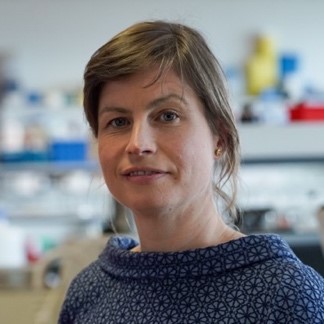
Dr. John Leslie Byrne is an Assistant Lecturer at the Department of Applied Sciences, enviroCORE, SETU Carlow. He holds a PhD in advanced statistical and mathematical modelling of constructed wetlands treating abattoir wastewater. As Programme Director, he oversees the MSc in Pharmaceutical Regulatory Affairs and MSc in Medical Device Regulatory Affairs. His research focuses on environmental chemistry, brewing science, and sustainable development goals. Education: PhD from SETU Carlow (2019), BSc (Hons) Environmental Chemistry (2006), BSc (Hons) Applied Physics (1997), and a National Diploma in Physics (Photonics) (1996). Research interests include whiskey production optimization, enzyme impacts in brewing, and environmental modeling. His work addresses UN SDGs related to environmental sustainability and innovation. Recent articles analyze terroir influences on Irish whiskey and process optimization in spirit alcohol production. No scientific awards listed, but he actively advises PhD students (no current advisees listed). His research collaborations involve interdisciplinary teams focusing on agricultural and food technologies.
Michael Mark Dowling is a Professor at DCU Business School, Dublin City University, Ireland. With an extensive research portfolio spanning finance, economics, and emerging technologies, he has published 58 documents with 2,347 citations and maintains an h-index of 20. His work bridges traditional financial systems with innovative blockchain applications, positioning him at the forefront of digital finance research. Dr. Dowling's research interests span several critical areas in contemporary finance and economics. His primary focus includes Decentralized Finance (DeFi) , Cryptocurrency markets , and Blockchain technology applications . He has made significant contributions to understanding NFT markets, Bitcoin volatility, and the intersection of financial systems with virtual worlds. His work on economic policy uncertainty and its impact on cryptocurrency markets has been particularly influential. Additionally, he explores Environmental Economics , examining the relationship between economic growth and carbon emissions in emerging economic blocs. His recent work on AI applications in finance, particularly with large language models like ChatGPT, demonstrates his ability to engage with cutting-edge technological developments. Analysis of Dr. Dowling's recent publications (2022-2024) reveals several key trends in his research. There's a clear progression from traditional financial analysis toward emerging digital asset markets, with a particular emphasis on non-fungible tokens (NFTs) and their market dynamics. His work demonstrates a sophisticated methodological approach, frequently employing advanced statistical techniques, machine learning, and big data analysis. The interdisciplinary nature of his research is evident in publications spanning finance, environmental economics, sports risk management, and virtual reality economics. His recent focus on AI applications in finance represents a timely exploration of how emerging technologies are transforming financial analysis and research methodologies. Dr. Dowling has made significant contributions to academic discourse through his extensive publication record. His research on the relationship between economic policy uncertainty and Bitcoin markets has provided valuable insights for investors and policymakers. The development of FinSentGPT represents an innovative approach to financial sentiment analysis across multiple languages. His work on NFT market dynamics has helped establish foundational understanding of these emerging digital markets. Through his bibliometric analyses, he has also contributed to mapping research landscapes in areas like advertising expenditure and stock performance, as well as Islamic economics and finance.
Cal Muckley is a Full Professor at the Quinn School of Business, University College Dublin (UCD), and a Fellow at the UCD Geary Institute. His expertise spans applied AI in financial misconduct, customer vulnerability, and fraud mitigation, alongside corporate finance and capital markets research. He holds a Ph.D. from Trinity College Dublin and has been a Visiting Scholar at institutions including NYU Stern and Yale University. Muckley’s research has been published in top journals like the Journal of Corporate Finance and Journal of Econometrics. He has received notable awards such as the Fulbright Scholarship and the Barrington Medal. His teaching spans corporate finance, financial econometrics, and machine learning, with a UCD Teaching Excellence Award (2024). Administrative roles include Academic Director of the B.Sc. in Economics & Finance and MBA programs. He leads research teams funded by SFI, Enterprise Ireland, and EU agencies. Education: BA, Dublin City University MSc, Dublin City University PhD, Trinity College Dublin Research Interests: Muckley’s work focuses on AI-driven solutions for financial ethics, regulatory risk, and fraud detection. He explores the intersection of corporate behavior and capital markets, with recent studies on algorithmic bias in lending and cultural influences on financial misconduct. His methodologies include machine learning, econometric modeling, and empirical finance analysis. Grants & Awards: Fulbright Scholar Thomas Moran Fellowship (2014–2016) UCD Early Career Research Award UCD Research Impact Award Barrington Medal (2010) Labs/Teams: Leads interdisciplinary teams under grants from Science Foundation Ireland, European agencies, and industry partners, focusing on risk assessment, financial innovation, and compliance.
Akhilesh Kumar Verma is a Post-Doctoral Research Fellow at the Economic Analysis Division since November 2021, specializing in macroeconomic modeling and financial stability. He holds a PhD in Economics from Indira Gandhi Institute of Development Research (IGIDR) , India (2021), with a focus on open-economy macroeconomics. Education: PhD in Economics (IGIDR, India) His research bridges macroeconomic theory and empirical analysis, focusing on cross-border financial flows , macroprudential regulation , and monetary policy in emerging markets. Current projects include developing a macroeconomic framework for Northern Ireland in collaboration with the National Institute of Economic and Social Research (NIESR, London). Recent publications analyze European housing markets and all-island economic integration , utilizing DSGE models and econometric forecasting to address financial stability risks. Key Collaborations: NIESR (London)
Dr. Aoife Morrin is an Associate Professor at the School of Chemical Sciences, Dublin City University (DCU), and Director of the National Centre for Sensor Research (NCSR) at DCU. She leads the 'Sample & Sense' research strand within the Insight Centre for Data Analytics, focusing on biochemical sensor platform development. Her work integrates electrochemical and optical transduction mechanisms with soft responsive materials to create wearable sensors for skin surface applications. She has published over 60 peer-reviewed papers (H-index 29, 4000+ citations), edited a book, and contributed to three book chapters. Dr. Morrin’s research spans wearable sensor formats, skin volatile emission profiling for disease biomarker discovery, and educational technology innovations in chemical education. Her recent publications highlight advancements in mobile phone-based sensors, volatilomic analysis of infections, and green chemistry approaches to sensor fabrication. She actively explores the intersection of analytical chemistry, biomedical diagnostics, and environmental monitoring through printed electronics and flexible sensor platforms. Her work also addresses the integration of digital tools like virtual laboratories and micro-skill badging for chemical sciences education. Dr. Morrin collaborates across disciplines to develop non-invasive diagnostic technologies, including for diabetic foot ulcer infections and skin pH monitoring. She contributes to environmental sensor development for pollutants like PFAS and cooking oil VOCs, as well as emerging applications in honey characterization and aging research via skin volatiles.
Meghana Kshirsagar serves as Assistant Professor in the Department of Computer Science & Information Systems at the University of Limerick, with dual appointments at Lero – the Irish Research Centre for Software and the Limerick Digital Cancer Research Centre. Her interdisciplinary work bridges computer science with healthcare innovation, focusing on real-world applications of advanced computational techniques. Her research spans Machine Learning, Artificial Intelligence, Evolutionary Computation, Blockchain, Digital Health, Large Language Models, and Digital Twins. She develops novel algorithms like grammatical evolution for hyperparameter optimization and blockchain frameworks for secure healthcare data sharing, with applications in cancer risk stratification, hip fracture pathway modeling, and financial portfolio optimization. Her work consistently addresses ethical AI implementation and sustainable computing practices. Analysis of her 52+ publications (2011-2025) reveals three dominant trends: (1) Evolutionary computation techniques for symbolic regression and digital circuit design, (2) Blockchain applications in healthcare data security and scientific collaboration, and (3) Responsible AI implementations in medical diagnostics and finance. Her recent focus emphasizes mitigating algorithmic bias in cancer diagnostics and sustainable hyperparameter optimization. As an active member of Lero and the Limerick Digital Cancer Research Centre, she collaborates with clinicians, data scientists, and industry partners to translate research into clinical tools. Her work contributes to UN Sustainable Development Goals through digital health innovations that improve healthcare accessibility and efficiency.
Davide Romelli is an Associate Professor of Economics at Trinity College Dublin, with affiliations to multiple research institutions including the IM-TCD (International Macro-TCD), SUERF, and the BAFFI-CAREFIN Centre. He serves as an Associate Editor for journals like the European Journal of Political Economy and participates in policy advisory groups such as the CBDC Academic Advisory Group (UK) and the European Parliament’s Monetary Policy Expert Panel. His research focuses on central banking institutions, monetary policy design, and their implications for fiscal stability. Key interests include central bank independence, climate change communication strategies, and the historical evolution of monetary frameworks. He has developed influential datasets, including the CBS Dataset (35k+ central bank speeches) and the CBI Data (central bank independence indices since 1923). Recent work explores how central banks address climate risks through communication, the persistence of inflation under independence reforms, and gender dynamics in central bank governance. His methodological contributions span natural language processing, machine learning approaches to policy analysis, and historical institutional comparisons. Education: PhD Economics (ESSEC Business School, 2015), MSc Banking and Finance (Catholic University of Milan, 2009) Labs/Teams: Principal investigator on central bank communication projects, collaborates with institutions like the Bank for International Settlements and the LSE Grantham Institute
Professor Ronald Davies is a Full Professor of Economics at the School of Economics, University College Dublin. He holds an Orcid identifier (0000-0002-9738-9256) and coordinates multiple academic modules including International Trade Economics, Microeconomic Theory, and PhD-level courses. His research focuses on international trade, foreign direct investment (FDI), tax policy, and public finance. He has authored/co-authored over 80 publications, with recent work analyzing Brexit's impact on student migration, tax competition effects on FDI, and AI integration in regional economies. Education: BA and MA from Miami University (Ohio), PhD from Penn State University. Professional activities include editing journals like International Tax and Public Finance , Review of International Economics , and Economic and Social Review . He received the Young Economist Award (2009). His work bridges theoretical frameworks with empirical analysis, addressing global economic challenges such as trade policy, tax avoidance, and innovation dynamics. Collaborations span institutions worldwide, reflecting his role in shaping international economic discourse. Teaching responsibilities include coordinating advanced modules for undergraduate and postgraduate students, emphasizing microeconomic theory and applied economics. Research supervision spans topics like FDI patterns, tax policy design, and regional development. His involvement in academic networks and conferences highlights his commitment to fostering interdisciplinary dialogue in economics.
Dr. Thomas Flavin is an Associate Professor in Finance at the School of Business, Maynooth University. He joined the Department of Economics, Finance and Accounting in 1998 after completing his D.Phil. in Financial Economics at the University of York. His research focuses on empirical finance, particularly financial contagion, systemic risk, portfolio management, and corporate finance. He has held visiting positions at the University of York, University of Cambridge, and the Federal Reserve Bank of Atlanta. Education: University of York: D.Phil. in Financial Economics NUI Maynooth: M.A. in Economics and Finance University of Limerick: Bachelor of Business Studies in Accounting and Finance Research Interests: Financial Contagion and Shock Transmission Systemic Risk in Financial and Non-Financial Sectors Portfolio and Investment Management Strategies Macroeconomic Influences on Financial Markets Corporate Payout Strategies in Emerging Markets His work emphasizes policy-relevant insights into crisis dynamics and market stability, with contributions to journals such as Journal of Corporate Finance and European Journal of Finance . Teaching: Current modules include FN107 (Introduction to Finance), FN308 (Derivatives II), FN399T (Research Project), and FN624 (Advanced Derivatives). He has supervised four successful PhD students and contributed to MSc thesis guidance. Professional Activities: Irish Economic Association Member (1998–2020) Council Member, Irish Academy of Finance (2018–2021) Reviewer for FSI Crisis Management Series Lab/Team Affiliations: Active in research groups focused on systemic risk and financial market dynamics within Maynooth University's School of Business.
Dr. Lu Xu is an Assistant Professor of Global Strategy at Dublin City University Business School, affiliated with the Department of Work, Psychology and Strategy. She holds dual PhDs in Management Science from Université Clermont Auvergne and Rennes School of Business in France. Her research explores catching-up strategies, emerging markets, industrial policy, and innovation systems. Research interests focus on: Global competitive dynamics in technology and manufacturing Policy frameworks for emerging economies Disruptive innovation in digital and green technologies Publications predominantly analyze technological catch-up mechanisms in Chinese industries through qualitative and policy-focused methodologies. Recent work examines pandemic-induced digitalization opportunities and sustainability transitions in transportation. Teaching responsibilities include strategy modules at undergraduate and postgraduate levels. No awards, grants, laboratories, or supervised students are documented.
Julie Byrne is a Full Professor of Finance at Dublin City University's Business School, affiliated with the Financial and Operational Performance Group. Her research focuses on sustainable finance, energy economics, and corporate financial strategies. Professor Byrne's publications demonstrate consistent focus on renewable energy finance, corporate investment decisions under uncertainty, and environmental economics. Her recent work analyzes carbon emissions drivers in aviation, solar investment valuation, and tokenized renewable energy assets. This research integrates financial modeling with sustainability transitions, particularly in European energy markets.
Micheál L. Collins serves as Assistant Professor of Social Policy and Head of Social Policy at University College Dublin's School of Social Policy, Social Work and Social Justice. His academic leadership extends to roles including Member of School Executive, Programme Director for B.SocSc (Social Policy & Sociology), and Deputy Assistant Dean. As Fellow of the UCD Geary Institute for Public Policy and coordinator of the European Social Survey Round 11 in Ireland, he maintains significant institutional affiliations. BA from NUI Galway MA from University College Cork PhD from Trinity College Dublin Dr. Collins' research centers on the critical intersection of taxation and social policy, with particular expertise in income distribution, poverty measurement, fiscal welfare systems, and pension economics. His interdisciplinary approach bridges economics and social policy to examine how taxation structures influence social outcomes, especially regarding gender disparities in pension systems and the public cost burden of poverty. Recent work analyzes the cost-of-living crisis through comparative UK-Ireland policy responses, revealing administrative challenges in targeted support systems. His publication trends demonstrate consistent focus on taxation's role in social policy, with 2023-2025 works establishing frameworks for understanding tax expenditure impacts on poverty costs and gender pension gaps. Key contributions include estimating Ireland's annual public service cost of poverty at €3bn-€7bn and documenting how tax supports for pensions disproportionately favor males. Professional engagement includes membership on Ireland's Commission on Taxation (2008-2009), Advisory Group on Tax and Social Welfare (2011-2014), and current roles with the EU-wide Cost Action PROFEEDBACK and European Social Policy Analysis Network. He serves on editorial boards for Journal of Social Policy and Social Policy and Society . As an advisor, Dr. Collins has provided expert evidence to Oireachtas Select Committees and chaired roundtables on tax expenditure research agendas. His grant portfolio includes major projects like the European Social Survey Round 11 and research on low-paid workers across age groups. Teaching responsibilities span modules including Inequality in Irish Society and Applied Public Policy, reflecting his commitment to experiential learning approaches.
Dr. Darren Shannon is an Associate Professor in Quantitative Finance at the Kemmy Business School, University of Limerick. He also holds associate professor roles at the Centre for Emerging Risk Studies and Lero – the Irish Software Research Centre. Educational Background: BSc in Mathematics MSc in Computational Finance PhD in Applied Statistics His research focuses on AI applications in finance (machine learning, deep learning, NLP), cryptocurrencies/NFTs, econometrics, and quantitative transportation studies. He directs the MSc in Finance and MSc in Insurance & Risk Management programs. Key Research Contributions: AI in financial risk modeling Cryptoasset market dynamics Transportation safety econometrics European Commission-funded projects on emerging risks Scientific Awards: President’s Research Excellence and Impact Award: Interdisciplinary Research (2024) He serves as Associate Editor for Transportation Research Interdisciplinary Perspectives and has contributed to EC projects like Anti-FINTER, ENSEMBLE, VIDAS, and Cloud-LSVA.
Martin Crane is Professor and Head of School at Dublin City University School of Computing. Funded Investigator in ADAPT Centre, with PhD in Mechanical Engineering from Trinity College Dublin. Research spans computational finance, complex systems modeling, and high-performance computing applications. Key research areas: Time series analysis in finance/biology Complex systems in finance, immunology, and lifelogging Wavelet methods for market analysis Parallel computing for large-scale simulations Current projects examine cryptocurrency dynamics, healthcare analytics, and brain tumor segmentation using deep learning. Leads FinTech Fusion initiative exploring financial technology applications. Authored significant works on random matrix theory filters for portfolio optimization and agent-based HIV modeling.
Dr. Marija Bezbradica serves as Associate Professor and COMBUS Programme Board Chair at Dublin City University's School of Computing. Her research bridges computational finance, educational analytics, and complex systems modeling. Key research areas include financial risk modeling using Bayesian methods, educational data mining for programming courses, and healthcare analytics for infection control. She holds affiliations with ADAPT (FinTech research), ARC-SYM (complex systems modeling), and Lero (software engineering). Recent publications demonstrate cross-disciplinary applications, spanning cryptocurrency market analysis, hospital readmission prediction, and synthetic data generation for medical conditions. Work frequently employs machine learning, graph-based methods, and advanced statistical modeling. No information is available regarding awards, supervised students, or specific laboratory facilities.