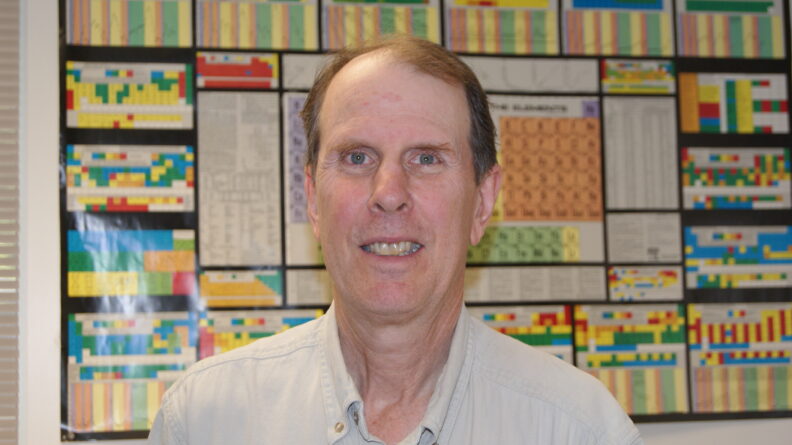
Philip K. Hopkeمشاهده پروفایل
استاد مدعو
Philip K. Hopke, Ph.D., serves as an Adjunct Professor in both the Department of Public Health Sciences and Department of Environmental Medicine at the University of Rochester School of Medicine and Dentistry. With a distinguished career spanning over five decades since earning his Ph.D. from Princeton University in 1969, Dr. Hopke has established himself as a global leader in environmental chemistry and air pollution research. Ph.D. in Chemistry, Princeton University (1969) M.A. in Chemistry, Princeton University (1967) B.S. in Chemistry, Trinity College (1965) Dr. Hopke's pioneering work focuses on particulate matter source apportionment , where he developed innovative methodologies like dispersion-normalized positive matrix factorization (DN-PMF). His research integrates chemometrics , atmospheric chemistry , and environmental epidemiology to address critical air quality challenges worldwide. Recent projects span China's megacities, Iran's water crisis, and New York State's vehicle emission regulations, with particular emphasis on health impacts of source-specific pollutants. Analysis of his 15 most recent publications reveals consistent focus on advanced source apportionment techniques , health outcomes linked to air pollution , and policy evaluation using sophisticated statistical modeling. His work increasingly incorporates machine learning approaches while maintaining rigorous chemical characterization of environmental samples. Scientific Recognition Fellow of both the Air and Waste Management Association (2021) and American Association for Aerosol Research Recipient of the Lifetime Achievement Award in Chemometrics (2014) Albert Nelson Marquis Lifetime Achievement Inductee (2018) Multiple international awards including the Fissan-Pui TSI International Aerosol Research Award (2018) Dr. Hopke maintains an exceptionally active research program with collaborators across six continents, evidenced by his 2025 publications from China, Iran, Kazakhstan, and the United States. His work bridges fundamental atmospheric science with practical public health applications, particularly in evaluating regulatory impacts on air quality and health outcomes.