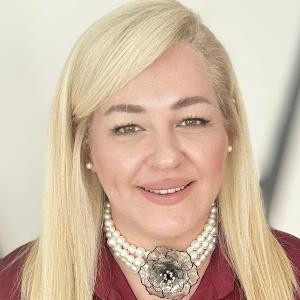
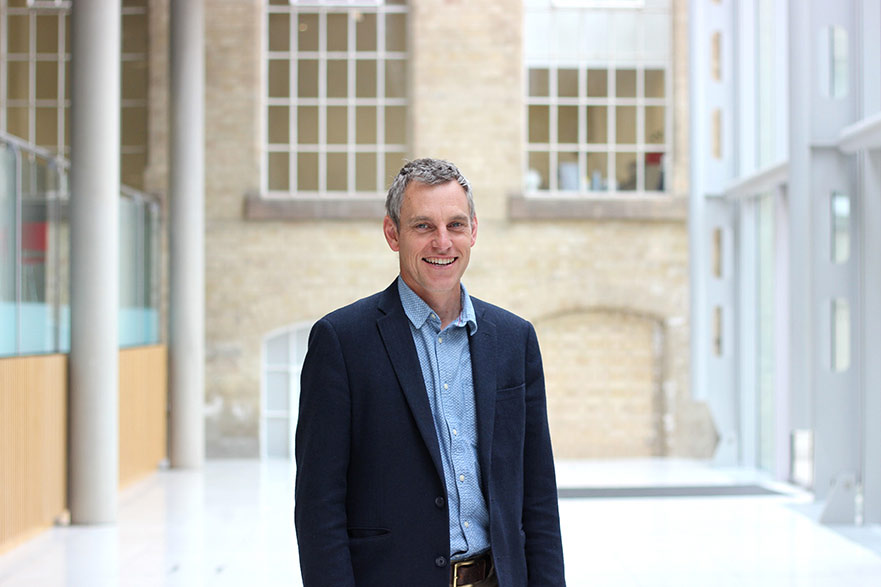
Assoc Prof. Dr. İrem PELİT is an academic at Cag University's Vocational School. She holds the position of Associate Professor and contributes to applied educational programs focused on vocational training. Her current affiliation includes administrative and instructional roles within the institution's technical education framework. Primary Affiliation: Vocational School, Cag University Email: irempelit@cag.edu.tr Research interests are not explicitly detailed in available records, though her institutional role suggests focus on practical educational methodologies aligned with vocational training needs. No specific awards or publications are documented in the provided text.
Asst. Ph.D. Alem Merdić is an Assistant Professor at the Faculty of Economics, University of Zenica. He holds a Ph.D. in Economic Theory and Policy from the Faculty of Economics in Tuzla (2017). His academic background includes a Master’s in Economics (Economic Theory and Policy) and a Bachelor’s in Economics, both from institutions in Bosnia and Herzegovina. His research focuses on Economic Policy , International Economics , and Regional Development . Recent studies include analyses of global competitiveness, trade liberalization impacts, and economic convergence processes. He also explores labor market alignment with educational programs. His publications span topics like the effects of economic integration on trade flows and employment dynamics in Bosnia and Herzegovina. He teaches courses such as Economic Development , International Economy , and Economic Policy . Consultations are arranged via email, with schedules aligned to teaching hours. He is reachable at alem.merdic@unze.ba or at Office 14, First Floor, Faculty of Economics, Zenica.
Dr Olga Cara is an Associate Professor in the Sociology of Education at the UCL Institute of Education (IOE), part of the Faculty of Education and Society. She holds a PhD in Sociology from UCL and has over 15 years of experience in sociological research and education. Her work focuses on ethnicity, language, and education systems, with particular emphasis on migrant and ethnic minority communities. She leads the Social Research MRes programme, emphasizing research design and interdisciplinary approaches. Her research explores identity production in educational contexts, family literacy programmes, and ESOL (English for Speakers of Other Languages) outcomes. Notable projects include a Bell Foundation-funded study on EAL (English as an Additional Language) learners in further education and the Family Skills project evaluating literacy initiatives. She has published extensively on topics such as racial microaggressions in teacher education and the impact of family literacy programs. Dr Cara teaches modules on mixed methods research and ethnicity in education, supervising PhD students in sociology and education. She is a Fellow of the Higher Education Academy (2017) and has contributed to policy briefings on education equity and employability for minority groups. Her work aligns with UN Sustainable Development Goals 4 (Quality Education), 3 (Good Health), and 10 (Reduced Inequalities).
Professor Gill Wyness is a Professor of Economics and Deputy Director of the Centre for Education Policy and Equalising Opportunities (CEPEO) at University College London's Institute of Education. Her research focuses on socio-economic gaps in higher education access, financing, and outcomes. She also serves as a Research Associate at the London School of Economics' Centre for Economic Performance. Her work addresses structural barriers to educational opportunity, including mismatches between student abilities and university course rigor, labor market consequences of mismatch, and policy solutions to reduce inequalities. Notable affiliations include collaborations with the Sutton Trust, Universities UK, and the Institute for Fiscal Studies. Key research areas include university admissions processes, tuition fee policies, and the impact of the pandemic on educational equity. She has advised policymakers on higher education funding reforms and intergenerational mobility strategies. Her research outputs span peer-reviewed journals and policy briefings, with a focus on evidence-based solutions for disadvantaged students. Education: PhD in Economics from UCL Institute of Education. Professional accolades include recognition for her contributions to education policy analysis, though no specific awards are listed here. Her teaching roles include contributions to the Social Science BSc and Social Science with Quantitative Methods BSc programs at UCL. Current initiatives include directing CEPEO's research on pandemic impacts and leading studies on student-course matching dynamics. She advocates for data-driven policymaking to enhance educational equity and labor market outcomes.
Dr. Irene Renaud-Assemat is a Senior Lecturer (Education-focused role) at the School of Mechanical and Manufacturing Engineering, UNSW. She holds a MSc in Mechanical Engineering from the National Institute of Applied Sciences, Lyon, and a PhD in Computational Fluid Dynamics from the National Polytechnic Institute of Toulouse. Prior to UNSW, she served as a Lecturer and Senior Tutor at the University of Bristol (UK), focusing on thermofluids education and student support. Her academic roles emphasize engineering education innovation, including problem-based learning, flipped classrooms, and STEM outreach. Education Background: MSc in Mechanical Engineering, National Institute of Applied Sciences, Lyon, France PhD in Computational Fluid Dynamics, National Polytechnic Institute of Toulouse, France Research Interests: Irene’s work centers on enhancing engineering education through methodologies like flipped learning, peer-assessed assessments, and hands-on project-based curricula. She advocates for improving student communication skills and equitable STEM access through outreach programs targeting school-aged students. Her contributions include designing work experience programs and virtual collaborative learning environments. Recent Trends in Publications: Her articles highlight strategies to modernize engineering education, including virtual conference formats for collaborative learning, scaffolding technical writing skills, and integrating authentic learning experiences in mechanical design courses. These efforts align with broader goals of fostering student autonomy and real-world problem-solving. Awards: Fellow of the Higher Education Academy (UK) Teaching & Supervision: Irene leads units in thermodynamics and mechanical design at UNSW. She previously supervised undergraduate research projects and was Unit Director for Computer-Based Modelling. Her roles include academic advising and pastoral support for students. Labs & Teams: While her primary focus is pedagogical innovation, she collaborates with the UNSW Engineering Education Research Group and contributes to outreach initiatives to diversify engineering education access.
Maria Tugores Ques is a Full Professor ( Profesora titular de universidad ) in the Department of Applied Economics at the Faculty of Economics and Business, University of the Balearic Islands (UIB). She has held this position since March 30, 2004, and currently teaches Industrial Economics across multiple Business Administration degree programs on the islands of Mallorca, Menorca, and Ibiza, as well as the Tourism System course for the Master's in Tourism Economics Monitoring and Evaluation. Her educational background includes a degree in Economics from the University of Barcelona (1995) and a PhD in Economics from Universidad Carlos III de Madrid (2000). She has held various academic positions since 1994, progressing from collaboration scholarships to her current professorship. Dr. Tugores Ques specializes in three main research areas: Tourism Economics, Labor Economics, and Industrial Economics. Her Tourism Economics research has resulted in publications in high-impact journals including Annals of Tourism Research (2 publications) and Tourism Economics (6 publications), as well as with Springer. Her Labor Economics work focuses on work-life balance from gender perspectives, human capital investment decisions, and worker qualification analysis in Spain and the Balearic Islands. In Industrial Economics, she has explored market structures and competitive dynamics. Her research output includes 10 publications in SSCI JCR journals (7 in the last 10 years), with a total of 50 citations and an h-index of 4. Her work has been recognized with a best paper award at the 4th Conference of the International Association for Tourism Economics (IATE) in Ljubljana, Slovenia (2013), and she has been granted 2 research six-year periods (sexenios), the last in 2017 covering 2011-2016. Best paper award at IATE Conference (2013) 2 research six-year periods recognized 10 publications in SSCI JCR journals 2 publications in Q1 journals h-index of 4 Dr. Tugores Ques has directed two PhD theses to completion with 'Sobresaliente cum laude' distinction and has participated in numerous research projects, including 10 competitive projects with the Ministry of Science, Innovation and Universities, and regional government funding. She is an active member of three research groups: Analysis and Economic Modeling (GAME), Research and Innovation in Vocational Training (LABVET), and Cultural Tourism (CULTUR LAB). Her administrative experience includes serving as Director of the Department of Applied Economics (2007-2015), Deputy Director of the same department (2003-2007), and Director of the School of Hospitality of the Balearic Islands (2015-present).
Eileen Roscoe serves as Adjunct Faculty in the Psychology Department at Western New England University while holding a primary role as Director of Behavior Analytic Research at the New England Center for Children (NECC). She joined NECC in 2002 as Assistant Director of the Staff Intensive Unit before transitioning to the Research Department in 2005. Her academic credentials include: B.S. from the University of Florida M.S. from the University of Florida Ph.D. from the University of Florida Dr. Roscoe's research program centers on evidence-based interventions for individuals with autism, with particular emphasis on: Functional Analysis Refinements : Developing remote staff training protocols using enhanced instructions and video modeling to overcome resource barriers Individualized Reinforcer Identification : Creating socially valid preference assessments for leisure, vocational, and social interaction contexts Practical Treatment Innovations : Engineering reinforcement parameters to treat socially maintained behavior when extinction is impractical, and developing competing stimulus protocols for automatically reinforced behaviors Cross-Application Extensions : Translating core principles to sleep enhancement, medical procedure cooperation, fitness tracking competitions, and schedule thinning Her scholarly recognition includes: B. F. Skinner Foundation New Researcher Award (2009) from APA Division 25 Dr. Roscoe maintains significant editorial leadership as current board member for both the Journal of Applied Behavior Analysis (JABA) and Behavioral Interventions, following her tenure as JABA Associate Editor (2010-2013). She has secured federal research funding through collaborations with prominent behavior analysts including Bill Dube, Bill McIlvane, and Willie DeLeon. Her teaching portfolio at WNEU features graduate courses strictly aligned with BACB task lists, utilizing active learning through small-group problem solving. At NECC, she directs a translational research program training clinicians in functional assessment and treatment implementation while mentoring emerging researchers through JABA's editorial mentorship program.
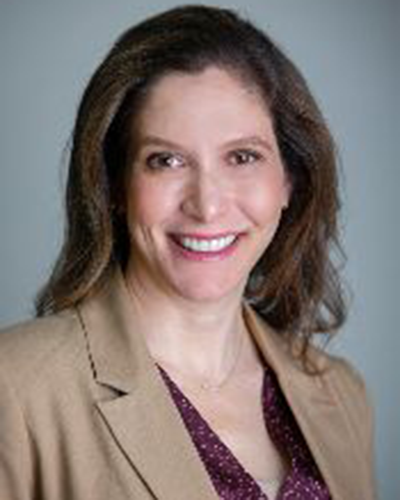
Michal Kurlaender is a Professor of Education at the University of California, Davis. Her research focuses on education policy, program evaluation, and equity in educational access and outcomes, particularly addressing racial, ethnic, and socioeconomic disparities across the education life course. Education: Ed.D. (2005) and Ed.M. (1997) from Harvard University Graduate School of Education; B.A. (1995) from UC Santa Cruz. Her work examines postsecondary pathways, community college effectiveness, K-12 school desegregation, and the economics of education. Recent studies explore transitions from high school to college, labor market outcomes, and policy interventions like California’s Early Assessment Program. Her research has been supported by grants from the Institute of Education Sciences, Bill & Melinda Gates Foundation, Spencer Foundation, and UC Davis. Key findings highlight the limitations of low tuition in ensuring degree completion and the importance of aligning K-12 and postsecondary systems. Scientific Awards and Honors Elected into the National Academy of Education (2020) UC Davis Chancellor’s Leadership Professor (2022) Chancellor’s Fellow, UC Davis (2013-2018) National Academy of Education/Spencer Foundation Postdoctoral Fellowship (2009-2010) Education Week RHSU Edu-Scholar Public Influence Rankings (2015-2017) Kurlaender co-directs the Policy Analysis for California Education (PACE) , leads the Wheelhouse: Center for Community College Leadership and Research , and serves on advisory boards for national education centers. Her grants and policy briefs emphasize data-driven solutions to educational inequality.
Dee Birnbaum serves as Associate Professor of Business at Rhodes College, where she has taught since 1991 after prior appointments at University of Kansas and Tulane University. Her evidence-based pedagogy focuses on translating scientific research into management practice across three core courses: BUS 361 (Management of Organizations), BUS 466 (Personnel and Human Resource Management), and BUS 463 (International Management). Her educational credentials include: B.A. in Music Performance (Cello) from State University of New York at Stony Brook M.B.A. in Industrial/Organizational Psychology from Baruch College M.Phil. and Ph.D. in Business from City University of New York Dr. Birnbaum's research program examines occupational socialization dynamics within healthcare systems, with special emphasis on nursing profession challenges. She investigates how pre-vocational experiences shape occupational identity, analyzes cultural influences on international management practices, and develops evidence-based frameworks for addressing healthcare workforce shortages. Her methodology consistently bridges theoretical organizational concepts with practical healthcare administration applications. Publication trends across her 1989-2010 output reveal persistent focus on occupational identity formation in stigmatized professions, particularly nursing. Early work established measurement frameworks for occupational image subcultures, while later research evolved toward actionable marketing strategies for nursing recruitment. Cross-cultural management emerges as a secondary thread connecting her international business teaching with healthcare organizational studies, demonstrating longitudinal commitment to evidence-based solutions for workforce challenges.
Tat-Siong Benny Liew is the Class of 1956 Professor in New Testament Studies at the College of the Holy Cross in the USA. He is an influential scholar in biblical hermeneutics, particularly focusing on Asian American and postcolonial perspectives . Liew has authored and edited multiple academic volumes, including Politics of Parousia and Colonialism and the Bible , and serves as Executive Editor of Biblical Interpretation (Brill) and Series Editor for T&T Clark’s Study Guides to the New Testament . Publications : What Is Asian American Biblical Hermeneutics? (2008), Postcolonial Interventions (2009), and Psychoanalytical Mediations between Marxist and Postcolonial Readings of the Bible (2016). Research Focus : Explores intersections of biblical texts , social justice , critical race theory , and pedagogical innovation . Liew’s recent blog series on teaching, such as “Safe Space for Free Speech” and “Teaching What is ‘Real’” , examines classroom power dynamics, trauma-informed pedagogy , and strategies for anti-racist education . His work emphasizes student agency , decolonizing methodologies , and the ethical responsibility of educators in pluralistic and crisis contexts. Editorial Contributions : As Executive Editor of Biblical Interpretation and Series Editor for T&T Clark, Liew actively shapes scholarly discourse in New Testament studies and pedagogical approaches to religion and theology.
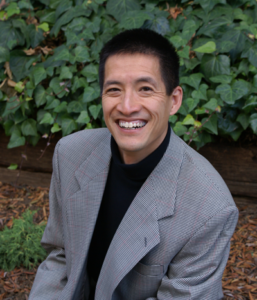
Paul Ragnar Svennevig is the Head of the Department of Engineering Sciences at the University of Agder (UiA), where he has served as a Senior Lecturer since April 2017. His academic career spans roles such as Study Coordinator for BSc Civil Engineering (2009–2017) and Chief Engineer at UiA’s Construction Laboratory (2008–2017). Currently, he leads the Section for Civil Engineering at UiA. Education : MSc in Civil and Constructional Engineering (2014–2016), MSc in Industrial Economics and Technology Management (55 ECTS, 2010–2011), Basic Course in University Pedagogy (2008–2009), Bachelor of Civil Engineering (2004–2007), and vocational training in carpentry (1991–1994). His research focuses on construction and building materials, aligning with his practical experience in civil engineering and construction management. Prior to academia, he worked as a carpentry apprentice (1994–2000) and foreman (2000–2003) in the construction industry, later transitioning to roles like Site Engineer (2007–2008) and Study Coordinator.
Marian McLaughlin is a Senior Lecturer at the School of Psychology, Ulster University , with a focus on child and adolescent health psychology. She contributes to research aligned with UN Sustainable Development Goals (SDGs) related to health and well-being (SDG3) and reduced inequalities (SDG10). Her research spans: Behavioral change interventions for adolescent health Child health and well-being HPV education and prevention Pro-environmental behavior Policy development through participatory methods Recent publications include systematic reviews on adolescent mental health programs and HPV education. Her work employs behavioral models like Theory of Planned Behavior and COM-B framework. Scientific awards include Fellow of the Higher Education Academy Associate Fellow of the British Psychological Society (BPS) Member of Northern Ireland Division of Health Psychology Member of Children’s Research Network She collaborates with researchers across Ulster University's Business School and Psychology faculty on projects like EPIC Futures NI , addressing economic inactivity through behavioral science. Funders include BBSRC/ESRC, Health Services Executive, and Northern Ireland Chest Heart and Stroke. Her methodological expertise includes qualitative studies (focus groups, semi-structured interviews), psychometric evaluations, and systematic reviews. She supervises PhD researchers like Samantha Royston-Woods and contributes to public health policy design.
Dr. Chris Rolph is an Associate Professor of Education Policy and Practice and Director of the Nottingham Institute of Education (NIE) at Nottingham Trent University (NTU), part of the School of Social Sciences. He transitioned from astrophysics research into secondary education, serving as a teacher, Advanced Skills Teacher, and headteacher across three schools. His current role at NIE focuses on teacher training and education research, emphasizing collaboration and research-informed practice. Rolph advises doctoral students, including Atkinson and Blaszko, and collaborates internationally with institutions like Strathmore University and RMIT University. Research interests include education policy, school leadership, curriculum design, and gender equity. Notable work includes Understanding Education Policy (2023) and the Supervising Doctoral Candidates edited volume (2024). Recent articles address issues like neoliberal education metrics, school funding crises, and post-pandemic recovery. Collaborations span global projects on teacher CPD and education-to-employment transitions. Rolph’s work aligns with UN SDGs 4 (Quality Education), 5 (Gender Equality), and 8 (Decent Work). He leads NIE’s international partnerships and has conducted funded research for UK education bodies like the TDA and NCSL. His Grit Evaluation report (2024) demonstrated social work training’s impact on team dynamics. Rolph advocates for equitable policy reforms through outlets like BERA Research Intelligence and The Conversation . Professional highlights include supervising over 20 doctoral candidates and contributing to policy debates on school funding, grade deflation, and austerity impacts. His research bridges theory and practice, emphasizing systemic accountability and equitable resource allocation in education systems.
Adrian Hickey is a Senior Lecturer in Interactive Media at the School of Communication and Media, Ulster University. He contributes to the Faculty of Arts, Humanities & Social Sciences and is affiliated with the Centre for Media Research. His work bridges pedagogy, digital media, and civic engagement, with a focus on participatory practices and societal impact. Research interests emphasize practice-driven approaches to media, including augmented reality, animation, and digital storytelling. His projects often engage underserved communities through creative expression and problem-based learning (PBL), aligning with UN Sustainable Development Goals like Education and Quality Education. His recent articles explore vocational learning spaces, intergenerational pedagogy, and media's role in promoting human rights. Notable awards include the Distinguished Education Excellence Award (2018) and recognition for innovative educational technology. He actively collaborates with industry via schemes like Invest NI's Innovation Voucher. 2020: Two articles on participatory action research in animation and child rights. 2019: Article on rethinking digital media teaching environments. Scientific Awards INVENT Top Ten Finalist (2009) Best in Festival, BEA Festival of Media (2014) Distinguished Education Excellence Award (2018) Best Use of Educational Technology (2018) Adrian’s civic roles include mentoring students through Project-Social, contributing to STEM outreach via 'All SySTEMs Go!', and fostering industry partnerships in tourism, recruitment, and media sectors.
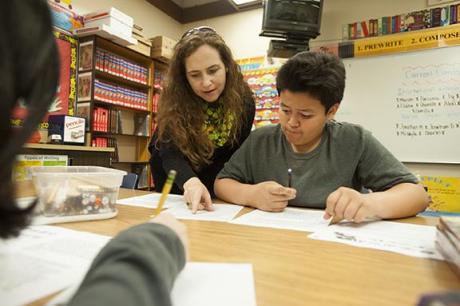
Rachel Terry is a Senior Lecturer in TESOL at the Department of Education, School of Business, Education and Law, University of Huddersfield. She is a member of the Huddersfield Centre for Research in Education and Society (HudCRES) and actively supervises PhD students in education-related fields. Her research interests center on vocational education , further education , qualification reform , and teacher development , with a particular focus on England's T Levels. Her work explores perceptions of quality, workplace learning, and policy implementation in technical education. The recent publications highlight a consistent focus on vocational education reform, teacher learning, and participatory research methods. Her work bridges academic inquiry with practical and policy implications in lifelong learning and technical education. Raising the value of VET through qualification reform: the Case of English T levels (2024) Perceptions of quality and the shaping or misshaping of vocational education: the case of T level qualifications in England (2023) Capturing learning: Using visual elicitation to investigate the workplace learning of ‘newly qualified’ in-service teachers in further education (2019) Equality and diversity (2018) 'No research is insignificant': implementing a Students-as-Researchers Festival (2016) Rachel is actively involved in research projects, including a 2024–2025 study on the professional lives of further education teacher educators. She regularly presents at conferences and contributes expert commentary in the media, such as her 2019 piece on qualitative research rigor. She is also engaged in fostering student research through initiatives like the Students-as-Researchers Festival. Rachel Terry contributes to the UN Sustainable Development Goals, particularly those related to quality education and reduced inequalities, through her research in equitable and effective vocational education systems.