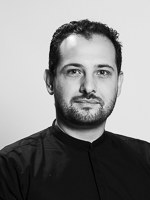
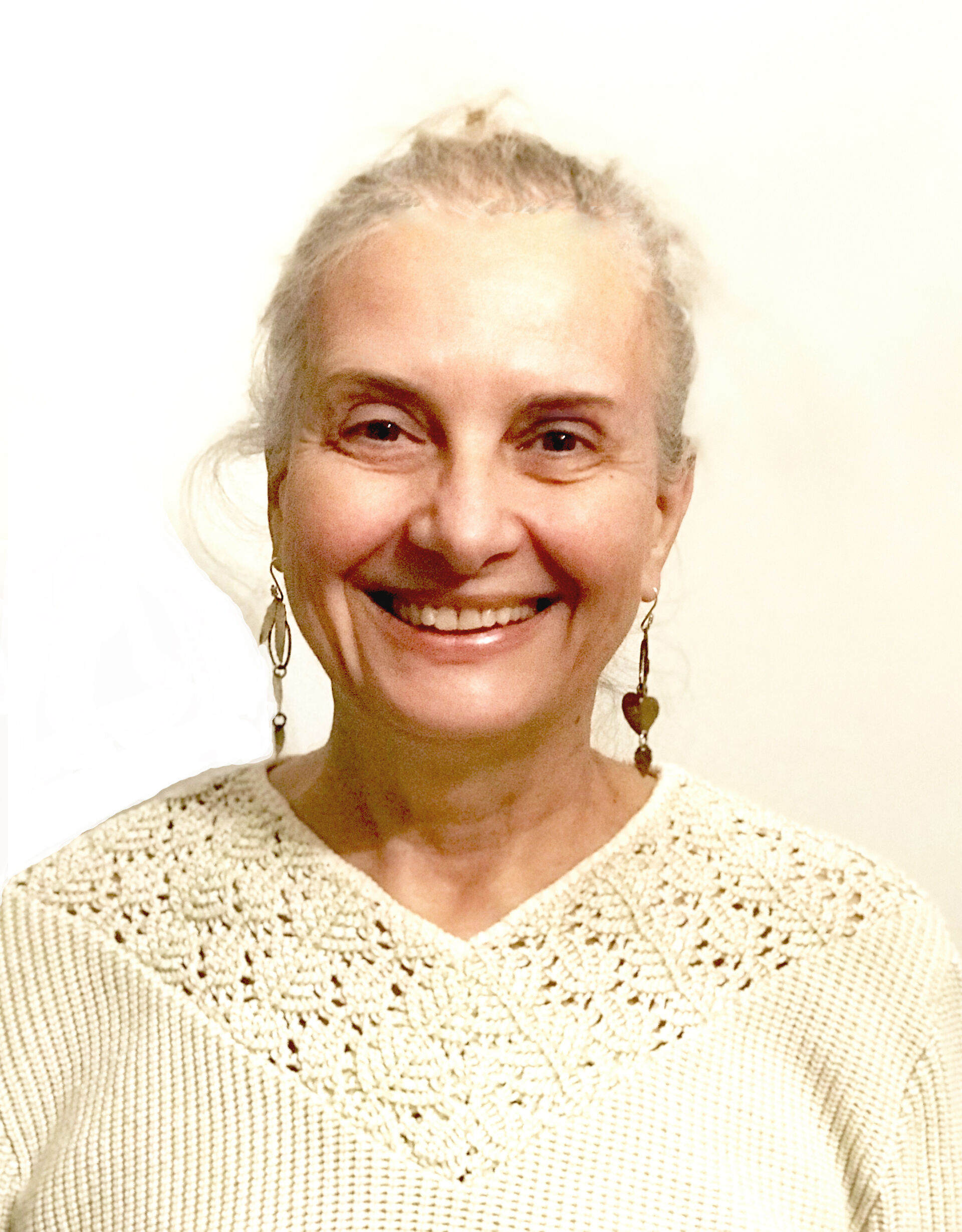
Nahum Welang is an Associate Professor of English Literature/Culture and Didactics at Nord University, Norway. His work bridges literary studies with cultural analysis, focusing on American literature, pandemic narratives, and transnational identities. He teaches courses including British Literature and Culture , American Literature and Culture , and Language, Text and Culture in the English-speaking World . His research explores intersections between Black female authorship, pandemic representation, and popular culture. Notable works include The Affirmative Discomforts of Black Female Authorship (2023) and Cultural Appropriation or Cultural Appreciation? (2022). His recent publications analyze Zora Neale Hurston's Barracoon , Claude McKay's works, and Beyoncé's visual albums. He frequently examines how literary and visual art forms reinterpret historical traumas and contemporary social issues. Welang's articles often blend textual analysis with cultural theory, addressing themes like transnationalism, critical media literacy, and masculine identity. He maintains active research collaborations through membership in Nord University's Humanities, Education and Culture Research Group and the University of Bergen's Aesthetic and Cultural Studies group. His scholarly output spans monographs, edited volumes, and peer-reviewed journals such as Journal of Popular Culture and Open Cultural Studies . Current research trends emphasize pandemic narratives' role in shaping modern cultural discourse and reinterpreting marginalized histories through literary frameworks.
Eduard Kamburjan is a Researcher at the University of Oslo , affiliated with the Reliable Systems (PSY) and Data and Knowledge Systems (DKM) research groups. His work bridges formal methods , digital twin engineering , and knowledge graph applications . Research interests include: Formal verification of hybrid systems using deductive methods Digital twin architecture with compositional correctness guarantees Semantic lifting and ontology-driven modeling for complex systems Concurrency analysis and non-determinism in program verification Interactive visualization as serious games for formal methods His 2024-2023 publications demonstrate expertise in digital twin reconfiguration , semantic interoperability , and knowledge-based runtime enforcement . Key contributions include Crowbar for active object verification and ABS simulator toolchain for model-driven engineering. Collaborations span institutions like Springer , ACM , and IEEE , with work featured in Lecture Notes in Computer Science (LNCS) , Software and Systems Modeling (SoSyM) , and Science of Computer Programming . His research integrates RDF data management , behavioral contracts , and modular analysis for distributed systems.
Jason Nelson is a Professor of Digital Culture in the Department of Linguistic, Literary and Aesthetic Studies at the University of Bergen, Norway. He is a creator of digital poems and fictions, builder of surrealist and politically focused art games and digital creatures. His work is exhibited widely in galleries and journals around the globe at FILE, ACM, LEA, ISEA, SIGGRAPH, ELO and numerous other venues. Nelson serves on organizational boards including the Australia Council Literature Board and the Electronic Literature Organization. Nelson's research focuses on the intersection of digital technology, creative writing, and artistic expression. He explores how AI and machine learning can be harnessed for creative purposes, developing new forms of digital literature and interactive art. His work often involves building expansive visual worlds through collaborative AI processes, creating interactive digital poetry, and developing novel approaches to digital narrative. Nelson's research spans digital humanities, electronic literature, AI-generated art, and interactive media, with particular emphasis on how these technologies transform creative processes and experiences. Over the past decade, Nelson's work has increasingly focused on the creative potential of AI technologies, especially in the areas of text-to-image generation and multimodal authorship. His projects often blend game engines with poetic expression, creating immersive experiences that challenge traditional boundaries between human and machine creativity. Recent works explore themes of multispecies futures, time perception, and the transformation of physical spaces through augmented reality. Nelson has received numerous scientific awards and fellowships including: Fulbright Fellowship at the University of Bergen Moore Fellowship at the National University of Ireland Winner of the Digital Writing Prize, Queensland Literary Awards (15,000 AUD) Winner of the Woollahra Library Digital Poetry Prize (5,000 AUD) Runner-Up Prize at the Videomedeja digital art exhibition Finalist for the Turn-on Literature Prize Finalist for the Queensland Literary Awards, Digital Writing Category Multiple finalist nominations for the New Media Writing Prize Nelson actively participates in academic advising and has secured significant research funding, including a 125,000 AUD grant from the Australia Council of the Arts, Literature Board for his project "Cube Cryptext and Nomencluster," which was recognized as the world's largest interactive art-game. His work "Nine Billion Branches" received multiple awards including the Digital Writing Prize from the Queensland Literary Awards. He has also received a 75,000 NOK grant for the "Flood Mosaic Artwork" project featured in the Floodlines Exhibition at the State Library of Queensland. Nelson is affiliated with the Center for Digital Narrative at the University of Bergen, where he collaborates with researchers like Scott Robert Rettberg and Alinta Krauth. Together they form EphemerLab, exploring new creative processes that move beyond simple "ask and generate" AI methods. Their work involves stitching together hundreds of individual image fragments and components into cohesive visual and narrative concepts, pushing the boundaries of what's possible with current AI technologies.
Kjetil Nordby is a Professor at the Oslo School of Architecture and Design (AHO), specializing in interaction design for maritime environments. He leads the Ocean Industries Concept Lab (OICL) and manages the OpenBridge Design System, an open-source framework for standardized ship bridge interfaces. Research focus: Augmented/Virtual Reality in maritime operations Key projects: OpenRemote (remote operation center UI), OpenAR (AR integration) Collaborations with institutions like Royal Institution of Naval Architects His work addresses cross-vendor interface consistency, safety-critical UX, and open innovation in maritime design. Recent publications explore AR/VR applications for navigation, collaborative workstations, and energy-conscious maritime systems. Scientific contributions include: 15+ peer-reviewed articles in journals like Journal of Marine Science and Engineering and Applied Ergonomics Book chapters on sensemaking in safety-critical maritime environments
Alexander Refsum Jensenius is a Professor of Music Technology and Director of the RITMO Centre for Interdisciplinary Studies in Rhythm, Time and Motion at the University of Oslo. He also leads the fourMs Lab and co-founded the MishMash Centre for AI and Creativity. His work bridges musicology, psychology, and technology, focusing on embodied music cognition, human motion analysis, and creative applications of AI. Notably, he pioneered research on air guitar motion and human micromotion through projects like the Oslo Standstill Database . Educated at the University of Oslo (BA in Music and Mathematics, MA in Musicology) and Chalmers University of Technology (MSc in Applied IT), Jensenius holds a PhD in Music Technology from UiO. He has held visiting researcher roles at UC Berkeley, McGill University, and KTH. Leadership roles include Department of Musicology Head (2013–2016) and Steering Committee Chair for the International Conference on New Interfaces for Musical Expression (NIME, 2011–2022). Research interests span music-related body motion, AI in creative contexts, and open research practices. Key contributions include the Music Moves and Motion Capture MOOCs, the Musical Gestures Toolbox software, and monographs like Sound Actions and Sonic Design . His work emphasizes interdisciplinary collaboration, with projects addressing ventilation systems' acoustic properties and cell culture vibrational effects. Awards include the European Open Data Champion recognition. He advocates for open science and maintains extensive digital archives of research materials, emphasizing institutional web pages as critical research infrastructure.
Eirik Valseth is an Associate Professor of Scientific Computing at the Norwegian University of Life Sciences (NMBU), Department of Data Science. He holds concurrent roles as a research associate at the Oden Institute, University of Texas at Austin, and an affiliated researcher at Simula Research Laboratory (Department of Numerical Analysis and Scientific Computing). His expertise lies in advanced finite element methods for PDEs with applications in flood modeling and hydropower systems. Current Affiliation: NMBU (Norwegian University of Life Sciences) Secondary Affiliations: Oden Institute (UT Austin), Simula Research Laboratory Research interests span numerical methods for challenging PDE systems, including: Stabilized finite element formulations Hurricane storm surge and riverine flood modeling Hydropower infrastructure analysis Computational mechanics and applied mathematics His recent publications (2024–2025) emphasize flood risk assessment (compound flooding, dam breaks, dredging impacts), advanced numerical methods (isogeometric analysis, stochastic finite elements, graph-grammar algorithms), and environmental applications (pollution transport, pathogen distribution, mosquito population dynamics after hurricanes). Key trends include cross-disciplinary integration of physics-aware machine learning and robust hydrodynamic simulation tools. Valseth's work extends to software development (e.g., WAVEx for spectral wave models, SWEMniCS for coastal circulation) and large-scale modeling frameworks like the ADCIRC unstructured mesh model for US coasts. Collaborative projects involve institutions such as University of Texas at Austin, Simula, and NOAA.
Hans Petter Hildre is Head of Department at the Department of Ocean Operations and Civil Engineering , part of the Faculty of Engineering at the Norwegian University of Science and Technology (NTNU). His work focuses on maritime engineering, digital twin technology, and marine operations. Research interests include: Digital Twin Applications in Maritime Industry Offshore Operations and Wind Turbine Installation Marine Robotics and Autonomous Systems Wave Field Estimation and Environmental Load Analysis Human-Machine Interaction in Maritime Contexts Co-simulation and Real-time Monitoring Recent publications highlight trends in: Wave shielding effects for offshore vessels Knowledge transfer from automotive/aviation to maritime Crane path planning using digital twins Visual attention zone recognition systems Hydrodynamic modeling and sensitivity analysis Smart city-maritime integration Scientific collaborations span institutions including: European Commission (Future Skills Reports) Royal Institution of Naval Architects The American Society of Mechanical Engineers (ASME) IEEE Transactions on multiple domains Springer Publishing
Petter Nielsen is a Professor at the Department of Informatics , University of Oslo, specializing in large-scale information systems, digital platforms, and health informatics in developing countries. He leads the Information Systems research group and serves as Head of the PhD program at his department. His research focuses on: Digital innovation in resource-constrained settings Architecture of health information systems Governance of digital global public goods Socio-technical aspects of platform ecosystems Frugal innovation for healthcare Recent work examines scaling digital platforms (DHIS2, OpenMRS) across sectors and regions, with emphasis on institutional dynamics, standardization, and pandemic response systems. Publications highlight hybrid solutions in health informatics and the role of boundary resources in platform adoption. Projects include: HISP (Health Information Systems Programme) DHIS2 software development ETHIC student exchange program with African universities He serves as Senior Editor for Information Systems Journal and Information Technology for Development , and has chaired multiple IFIP9.4 conferences.
Karen O'Brien is a Professor in the Department of Sociology and Human Geography at the University of Oslo, where she has been a full-time faculty member since 2005. She is internationally recognized for her work on the human and social dimensions of global environmental change, with a focus on climate change, adaptation, and transformative pathways to sustainability. She currently serves as co-chair of the IPBES transformative change assessment and has contributed to major scientific assessments including the IPCC Fifth Assessment Report. Her educational background includes a BA in International Relations from the College of William and Mary (1985), an MS in Environmental Studies from the University of Wisconsin-Madison (1990), and a PhD in Geography from Pennsylvania State University (1995). She completed a postdoc at the North American Commission for Environmental Cooperation in 1996 and was a Senior Research Fellow at CICERO from 1997 to 2005. Karen O'Brien's research centers on integrative and transdisciplinary approaches to sustainability, emphasizing the role of beliefs, values, and worldviews in driving social and systems change. She is a leading proponent of quantum social science as a framework for understanding and scaling transformative change. Her recent scholarly output explores youth activism, climate education, and the philosophical underpinnings of transformation in the Anthropocene. Her publications reveal a strong thematic focus on transformation, adaptation, and the intersection of climate change with social theory. Articles consistently engage with interdisciplinary frameworks, action research, and innovative methodologies such as SenseMaker, reflecting her commitment to bridging science, policy, and societal action. BBVA Foundation's Frontiers of Knowledge Award for Climate Change (2021) Member of Academia Europaea (2022) University of Oslo Student Parliament's Teaching Award (2015) Burtoni Prize for Adaptation Research (2011) AAG Meridian Book Award (2008) Shared in the 2007 Nobel Peace Prize as part of the IPCC Karen O'Brien has supervised numerous PhD and Master’s students, though specific names are not listed in the provided text. She has led significant research projects such as the AdaptationCONNECTS project and co-founded cCHANGE, an organization dedicated to sustainability transformations. Her advisory roles include membership on the Science Committees of Future Earth and Our Common Future in a Changing Climate, as well as leadership in the transition to global sustainability research initiatives. She has no reported grants listed, but her involvement in large-scale international assessments implies substantial funding support. She is affiliated with key research platforms including the Department of Sociology and Human Geography at the University of Oslo, where she has served on the Board, and the Research Center for Socially Inclusive Energy Transition (Include). Her work is deeply collaborative, involving networks such as IPBES, IPCC, and Future Earth, and she frequently publishes with interdisciplinary teams across Europe and North America.
Alma Leora Culén is a Professor in the Design of Information Systems at the Department of Informatics, University of Oslo, part of the Faculty of Mathematics and Natural Sciences. She holds a prominent role in advancing sustainable interaction design, research through design methodologies, and transformative design practices focused on societal transitions. Her academic journey includes contributions to HCI education reform, emphasizing ethical and sustainable design principles. Culén has pioneered projects like 'Plurishop' exploring sustainable smartphone alternatives and 'Transition Design' approaches for mitigating democratic erosion. She actively engages in interdisciplinary collaborations through research groups such as DESIGN and Design4Dem. Key research interests span sustainable technology, participatory design processes, and leveraging AI for complex design mediation. Her work often intersects with societal challenges like climate action, youth engagement in socio-technical systems, and rural sustainability initiatives. Culén's pedagogical innovations include intensive design courses and speculative installations for civic education. She leads projects funded by the Norwegian Research Council, focusing on sustainable consumption patterns and MaaS solutions for rural areas. Notable collaborations include international design research societies and EU-funded sustainability initiatives. Her lab activities emphasize participatory prototyping and transition design frameworks, with a focus on vulnerable populations such as chronically ill youth and elderly users. Culén's work bridges academic research with real-world impact through partnerships with libraries, municipalities, and tech industries.
Ellen Marie Krefting is a Professor in the Department of Philosophy, Classics, History of Art and Ideas (IFIKK) at the University of Oslo's Faculty of Humanities. Specializing in early modern intellectual history, she focuses on European and Denmark-Norway contexts with particular expertise in the history of knowledge, genres and communication forms, periodicals, and the emergence of public debate and freedom of speech concepts. Professor Krefting's research spans multiple interconnected fields including early modern intellectual history, history of knowledge, public sphere development, gender studies, historiography, and cultural history of the ocean. She has particular expertise in 17th-18th century French philosophy and literature, Denmark-Norway intellectual history, and book history. Her work examines how knowledge was formatted and communicated through various media including periodicals, catechisms, and ship logs, with attention to how these formats shaped intellectual discourse and public opinion during the Enlightenment. Her recent publications demonstrate a consistent focus on Scandinavian and European Enlightenment periodicals, political literature, and the development of public debate. Krefting has produced significant scholarship on La Spectatrice danoise , Den patriotiske Tilskuer , and other "spectator"-type journals, examining how these publications navigated censorship while promoting Enlightenment ideals. Her 2024 work with Paulsen on nautical charts as knowledge formats extends her research into maritime modernities. Professor Krefting leads the research project "Maritime Modernities: Formats of Oceanic Knowledge" (NFR-funded 2021-2025) and serves as the roving head of the master's program in European Culture. She has been an editorial member of Arr - Idéhistorisk tidsskrift since 1996 and has served on the Institute Board at IFIKK from 2017-2025. Her teaching includes courses IDE1105, IDE2001, EKUL4000-4002, and specialized courses on the public sphere and freedom of press around 1814.
Elisabet Apelmo serves as Senior Lecturer in the Department of Social Work at Malmö University, Sweden. A visual artist with a PhD in Sociology, she bridges creative practice and academic inquiry to explore the complex intersections of bodily experience, sport, disability, and gender within contemporary society. Her research program centers on sociological analyses of bodily difference, particularly examining how physical education environments construct inclusion and exclusion through gendered and ableist frameworks. Apelmo employs phenomenological approaches and visual methodology to investigate how disabled bodies navigate sporting spaces, challenging normative assumptions about athletic participation and bodily capability. Her work consistently reveals how sporting cultures simultaneously enable and constrain identities, particularly for women and people with disabilities. Analysis of Apelmo's publication history shows sustained engagement with critical disability theory, gender studies, and sport sociology spanning nearly two decades. Her scholarship demonstrates methodological innovation through visual approaches and phenomenological frameworks, with recurring themes including the social construction of disability in sport contexts, gendered bodily experiences in physical education, and the material-semiotic relationships between bodies and technologies like wheelchairs. Among her current research initiatives are investigations into participation and exclusion dynamics in mainstream physical education from disability and gender perspectives, and ethnographic studies examining how dancers strategically use their bodies and gazes to disrupt stereotypical perceptions of physical impairment. These projects reflect her commitment to generating knowledge that directly challenges ableist assumptions within sporting cultures and educational settings.
Tore Slaatta is a Professor of Media Studies at the University of Oslo (UiO) and holds a Professor II position at the Department of Archives, Library and Information Science (ABI) at Oslo Metropolitan University (OsloMet). He is also an Honorary Research Fellow at the Centre for Cultural Policy Research at the University of Glasgow. With extensive experience in media and cultural research, he has led major projects for institutions like the Research Council of Norway, the Norwegian Media Authority, and the Fritt Ord Foundation.
Carlos Velasco is an Associate Professor in the Department of Marketing at BI Norwegian Business School, where he co-founded the Center for Multisensory Marketing. He holds a D.Phil. in Experimental Psychology from the University of Oxford and has established himself as a leading researcher at the intersection of psychology, marketing, and human-computer interaction. His research focuses on multisensory experiences and their underlying principles, with particular attention to crossmodal correspondences between sensory modalities. His work spans diverse areas including digital dining, food technology, customer experience management, and the application of emerging technologies like AI, VR, and the Metaverse in sensory marketing. Velasco has published extensively in top journals across multiple disciplines including Food Quality and Preference, Journal of Retailing, Journal of Business Research, Psychology and Marketing, and International Journal of Human-Computer Studies. His research reveals consistent patterns in how sensory inputs influence consumer behavior and product perception, particularly examining how visual elements, sounds, and shapes correspond with taste experiences. Velasco's work also explores the ethical dimensions of customer experience design in digital environments and investigates how cultural contexts shape multisensory food experiences globally. Velasco has authored several influential books including Multisensory experiences: Where the senses meet technology (2020 and 2025, Oxford University Press), Digital dining: New innovations in food and technology (2025, Springer Nature), and the edited collection Multisensory packaging: Designing new product experiences (2019, Palgrave Macmillan). Serves on editorial boards of Food Quality and Preference Journal of Business Research Psychology and Marketing International Journal of Gastronomy and Food Science International Journal of Food Design Currently, Velasco co-hosts the customer experience management podcast and collaborates with companies worldwide on topics including multisensory experiences, immersive technologies, Web3, food and drink, branding, and consumer research. His work bridges academic research with practical applications in marketing and product design.
Dr. Espen Sagsveen is an Assistant Professor in the Department of Public Health and Nursing at the Faculty of Medicine and Health Sciences, Norwegian University of Science and Technology (NTNU). His research focuses on user involvement in healthcare, particularly within Norway's Healthy Life Centres framework. Research Interests: Utilizing qualitative methodologies, Dr. Sagsveen investigates patient-professional dynamics, trust-building in healthcare settings, and lifestyle intervention programs. His work addresses organizational challenges in implementing participatory healthcare models. Publications Trends: Recent studies (2018-2023) emphasize systemic approaches to patient engagement, while earlier works (2004-2011) focused on gerontological care and psychosocial rehabilitation for substance abuse patients. Teaching: Dr. Sagsveen contributes to clinical nursing education through courses like SYT2300PSY - Nursing Management and Service Development across various clinical specializations.