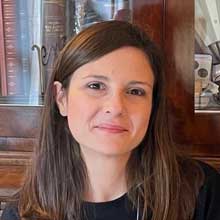
Agnese Macchiarelli is a Contract Lecturer at Ca' Foscari University of Venice's Department of Humanities. Her academic work bridges medieval studies and digital humanities, with a focus on textual criticism, manuscript studies, and the digital preservation of historical texts. She maintains office hours during lecture periods and coordinates via email. Education: PhD in Italian Studies, Ca' Foscari University of Venice (2017-2021) Master's in Italian Studies and Linguistic Sciences, University of Bologna (2013-2015) Bachelor's in Italian Studies, Sapienza University of Rome (2009-2013) Classical High School Diploma, Santa Teresa di Gesù, Rome (2003-2008) Research Focus: Macchiarelli specializes in medieval Italian literature, Dominican theological texts, and digital scholarly editing. Her work frequently examines 14th-century authors like Iacopo Passavanti and Dante, employing both traditional philological methods and digital tools like treebanking and text encoding. She maintains particular expertise in the digital representation of sacred historical texts. Professional Activities: Scientific Fellow at Bergische Universität Wuppertal and VeDPH (2023-2026) for the DFG/FWF project History as a Visual Concept: Peter of Poitiers' Compendium Historiae Research Grant: Legacy of Thomas Aquinas Treebank Project (2021-2022) Teaching Assistant in Medieval/Romance Philology (since 2021) Affiliated with Venice Centre for Digital and Public Humanities (VeDPH) since 2021 Research stay at École des Hautes Études en Sciences Sociales, Paris (2019-2020)
Dr. Naoko Kinoshita is an Associate Professor at Waseda University's Center for Japanese Language , with affiliations also extending to the Global Education Center . Her career spans over two decades of research and practice in Japanese language education, phonetic acquisition, and learning advising systems. She serves on multiple academic committees including the Phonetic Science of Japan and Society of Japanese Speech Communication . Major Research Areas : Japanese language education, phonetic education, second language acquisition, language learning advising Key Sub-Fields : Japanese pronunciation pedagogy, collaborative community development, autonomous learning systems, multicultural workplace training, special mora instruction, rhythmic pattern analysis Her recent research focuses on pattern language applications for multicultural workplaces and web-based pronunciation systems like "Tsutaeru Hatsuon". The 15 most recent publications span topics from collaborative community development to phonetic learning mechanisms, with keywords showing consistent emphasis on Japanese phonology, language technology, and cross-linguistic rhythm studies. Scientific Awards : e-Teaching Award Good Practice Prize (2021) Waseda Teaching Award (2020) Waseda e-Teaching Award (2019) e-Teaching Award (2015) As lead author on multiple refereed papers, she has developed innovative phonetic learning frameworks and multilingual educational tools . Her work bridges theoretical phonetics with practical language instruction, particularly focusing on visual and kinesthetic learning methods for Japanese rhythm acquisition.
Lisa Graham is a researcher at Northumbria University's Department of Sport Exercise and Rehabilitation , focusing on neuroscience and neurorehabilitation. Her work bridges biomedical engineering with clinical applications in movement disorders. Research Areas: Parkinson's Disease, Gait Analysis, Eye Movement, Wearable Technology, Neurological Biomarkers Collaborators: Stuart, Morris, Godfrey, Vitório, Walker Her recent publications highlight digital biomarkers for neurological conditions and wearable sensor barriers . She contributes to neurorehabilitation through clinical trials and systematic reviews. Notable trends include eye-tracking innovations and personalized gait interventions using blazepose technology. She co-authored works on cognitive-motor interactions in Parkinson's, with implications for fall prevention and freezing of gait.
Jacob Doherty is a Lecturer in Anthropology of Development at the University of Edinburgh's School of Social and Political Science, Department of Social Anthropology. Based in room 6.07 of the Chrystal Macmillan Building (15a George Square, Edinburgh, EH8 9LD), he conducts ethnographic research on urban infrastructures in African cities, challenging deficit narratives through analyses of waste and mobility systems as sites of economic production and social contestation. Education: PhD in Anthropology, Stanford University (2016) MA in Anthropology, New School for Social Research (2009) BA in Globalization Studies, University of Mary Washington (2006) Research Focus: Doherty investigates how Kampala and Abidjan residents navigate inequality through everyday practices in waste management and informal transport. His work emphasizes social reproduction in mobility systems, racialized disposability in labor, and infrastructure paradoxes where systems simultaneously enable wellbeing and entrench marginalization. Key contributions include reframing waste as a "frontier" of innovation rather than failure and analyzing gendered mobility in maternal care work. Urban anthropology Environmental justice Informal economies Transport labor Race and capitalism Visual culture of infrastructure Publication Trends: Recent works (2017-2024) reveal a sustained focus on Kampala's waste economies and Abidjan's transport systems. He documents how motorbike taxis (boda bodas) and tricycles (salonis) generate class/gender identities while reproducing inequities, and how garbage collection becomes a tool of political authority. His scholarship consistently centers African urban agency over Western interventionist models. Advising and Professional Context: Doherty is not currently accepting PhD students and maintains regular office hours (Wednesdays 11:30-13:30). Prior appointments include Wesleyan University (Anthropology), University of Pennsylvania (Wolf Humanities Center), and Oxford University (Transport Studies Unit). No grants are specified in available texts. Research Affiliations: He contributes to the International Development Cluster and Work & Economy research theme at Edinburgh, examining how urban infrastructures mediate belonging in contexts of environmental and economic precarity.
Dr. Kelly Garner is a Postdoctoral Research Fellow at the University of Queensland's School of Psychology, with a research focus on cognitive neuroscience and attentional processes. Her work primarily investigates multitasking, executive function, and visual search paradigms, with significant contributions to understanding the neural mechanisms underlying cognitive control. Her research interests center on cognitive neuroscience , specifically examining how the brain manages multiple tasks simultaneously. Dr. Garner's work explores attentional mechanisms, learning transfer, and the neural substrates of executive function using advanced neuroimaging techniques. She has made notable contributions to understanding how training influences multitasking abilities and how brain stimulation can facilitate learning generalization. Her research often bridges theoretical cognitive psychology with practical applications for improving cognitive performance. Analysis of Dr. Garner's publication record reveals a strong focus on attentional mechanisms and cognitive control processes. Her work spans both basic cognitive neuroscience research and clinical applications, with recent publications addressing topics from multitasking in healthy populations to appetite regulation in motor neuron disease. She frequently employs multimodal approaches combining behavioral measures with neuroimaging and brain stimulation techniques. Dr. Garner demonstrates a consistent pattern of high-impact publications in top-tier journals including Cerebral Cortex , Nature Reviews Neuroscience , and Journal of Experimental Psychology . Dr. Garner has established a robust collaborative network, particularly with Professor Paul Dux at the University of Queensland, with whom she has co-authored numerous publications. Her research has been supported by multiple grants enabling sophisticated neuroimaging studies and cognitive training experiments. She is actively involved in open science initiatives as evidenced by her contribution to the Neurodesk project, which promotes reproducible neuroimaging analysis. Dr. Garner is affiliated with the Queensland Attention and Control Lab and contributes to the broader neuroscience community through participation in initiatives like Brainhack, which fosters open, inclusive neuroscience research practices. Her work bridges cognitive psychology, neuroscience, and clinical applications, positioning her at the forefront of contemporary cognitive neuroscience research.
Kevin M. Kain is a Senior Lecturer in the Department of Humanities at the University of Wisconsin-Green Bay, affiliated with the College of Arts, Humanities and Social Sciences. He specializes in Russian cultural, religious, and visual history, with a focus on Orthodox Christianity and print cultures. His scholarly contributions include co-editing three volumes and authoring over twenty book chapters and journal articles. Education: BA (UNC Wilmington, 1990), MA (Appalachian State, 1995), PhD (Western Michigan, 2004) Teaching: Online courses in Foundations of Western Culture, Introduction to the Humanities, and Eurasian Frontiers Kain's research explores the intersection of Orthodox religious practices, visual representation, and political legitimacy in early modern Russia. His recent work analyzes Soviet antireligious propaganda and digital reconstructions of historical sites. Scientific awards include the 2021 UW-Green Bay Founders Award for Excellence in Scholarship and participation in a $1.45 million European Research Council Grant (2022-226). He has secured grants from the National Endowment for the Humanities, Kennan Institute, and Fulbright-Hays programs. He collaborates with technologist Luke Konkol on digital projects, including a virtual heritage installation at the Museum of Russian Icons (2022). His grants and research emphasize interdisciplinary approaches to Russian historical and cultural studies.
Jessica Thompson is a Professor in the College of Education at the University of Washington , specializing in Teaching, Learning & Curriculum . She is a leading researcher in science and mathematics education , with particular expertise in ambitious and equitable teaching practices for multilingual students. Professor, University of Washington (College of Education) Director, Elementary Teacher Education Program (ELTEP) Co-Director, IslandWood Graduate Program Dr. Thompson's research focuses on: Science Education Reform through research-practice partnerships Culturally Responsive Teaching for racially and linguistically minoritized students Networked Improvement Communities for sustained educational change Teacher Education that emphasizes understanding of NGSS-aligned instruction Her recent publications emphasize ambitious science teaching approaches, equitable science discourse , and culturally sustaining pedagogies in both formal and informal learning environments. Scientific awards include: Dissertation fellowship from the American Association of University Women 2007 Selma Greenberg Dissertation Award Knowles Science Teaching Foundation fellowship Dr. Thompson has received significant grant funding including: Teachers as Learners Grant from the James S. McDonnell Foundation NSF Grants for multiple research-practice partnership projects Race To The Top funding for STEM education initiatives She has developed innovative tools and professional development models for: Novice science teachers through the TOOLS4TEACHERS project Mentor teachers through the TOOLS4MENTORS initiative Learning communities with her Lenses on Learning video club
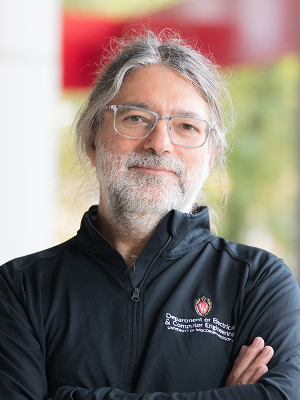
John Paul Shen is a Distinguished Service Professor of Electrical and Computer Engineering at Carnegie Mellon University (CMU), based at the Silicon Valley campus. With over three decades of experience in academia and industry, he has held prominent roles including founding director of Nokia Research Center-North America Lab (2007–2012) and director of Intel’s Microarchitecture Research Lab (2000–2006). His academic career includes a tenured professorship at CMU’s ECE Department from 1990–2000 and a return to CMU in 2015 as a tenured professor. Education: Ph.D. in Electrical Engineering, University of Southern California M.S. in Electrical Engineering, University of Southern California B.S. in Electrical Engineering, University of Michigan Research Focus: Modern Processor Design: Specializes in superscalar processors, instruction-level parallelism (ILP), and microarchitecture validation tools like VMW (Visualization-Based Microarchitecture Workbench). Neuromorphic Computing: Develops energy-efficient temporal neural networks (TNNs) and CMOS implementations for sensory processing. Edge AI: Focuses on low-precision accelerators, sparsity exploitation, and real-time data analytics for edge devices. Dependable Computing: Leverages idle processor resources for error-checking and fault tolerance. Awards & Impact: Recipient of multiple teaching awards during his CMU tenure. Supervised 17 Ph.D. students and dozens of M.S. students, with notable contributions to compiler design and parallel computing. Authored two influential textbooks, including Modern Processor Design: Fundamentals of Superscalar Processors , used at Stanford. Generated over 100 patents and 200+ papers at Nokia and Intel, with a focus on mobile computing and hardware architecture innovations. Labs & Collaborations: Founded and led the Nokia Research Center-NAL, advancing mobile Internet and computing. Directed Intel’s Microarchitecture Research Lab, advancing IA32/IA64 processor designs. Current research at CMU Silicon Valley focuses on neuromorphic systems, wearable computing, and real-time data analytics.
Professor Rex Koontz is a renowned scholar in the School of Art at the University of Houston, specializing in Mesoamerican art and archaeology. His research focuses on public sculpture of ancient Mesoamerica, particularly in the regions of El Tajín and Veracruz, blending art historical analysis with archaeological insights. He has authored or co-authored influential publications such as Lightning Gods and Feathered Serpents and Organized Violence in the Art and Architecture of Mesoamerica , and contributed to Mexico’s bicentenary exhibition catalog at the National Museum of Anthropology and History. His academic roles include fellowships at Dumbarton Oaks (Harvard) and the National Endowment for the Humanities. Research interests span design and communicative functions in non-Western art, with a focus on how public art reflects political, ritual, and cosmic ideologies. Recent work explores themes like decapitation sacrifice, urbanism, and the materiality of color in Tenochtitlán’s monuments. Awards: Fellowship at Dumbarton Oaks (Harvard) Fellowship from the National Endowment for the Humanities Publications highlight interdisciplinary approaches to Mesoamerican art, including studies on ballgame iconography, mobile images, and global art history pedagogy. His collaborative projects emphasize museum partnerships and digital tools for visual argumentation in humanities research.
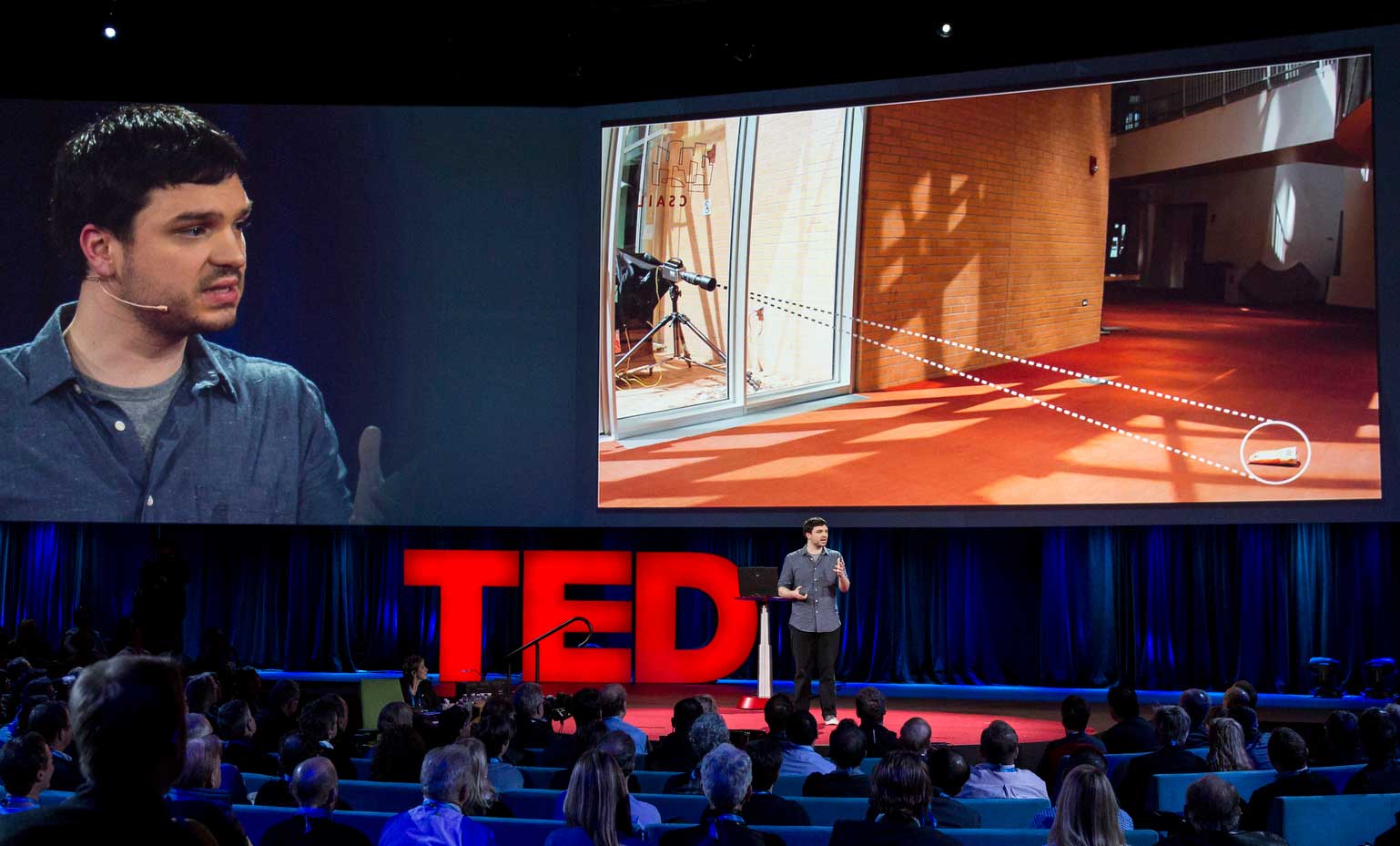
Abe Davis is an Assistant Professor of Computer Science at Cornell University in Ithaca, NY, with a research focus at the intersection of Computer Graphics , Computer Vision , and Human-Computer Interaction (HCI) . He leads a research group that develops innovative computational methods for video analysis, augmented reality (AR), and visual editing. Davis previously held postdoctoral positions at Stanford University and Cornell Tech , following his Ph.D. in Electrical Engineering and Computer Science from MIT (2016) and undergraduate degree in Computer Science at Stanford. Education Ph.D. in Electrical Engineering and Computer Science, MIT M.A. in Electrical Engineering and Computer Science, MIT B.S. in Computer Science, Stanford University Davis' research addresses novel problems in computational video editing, AR applications, and structural health monitoring. His group has made significant contributions to visual vibration analysis , light field reconstruction , and video-based sound recovery . Recent work includes Noise-Coded Illumination for fake video detection and MeCapture for mobile AR body change visualization. His publications span top-tier conferences like SIGGRAPH, CVPR, and CHI. Scientific recognition includes being named to Forbes 30 Under 30 (Science, 2015), 5 TED 2015 Technologists , and recognition as one of The 8 most innovative scientists in tech and engineering (2015). His TED 2015 talk on visual vibration analysis gained international attention. The group's work has been featured in Ars Technica , Engadget , and Cornell Chronicle .
Dr. Benjamin Bonn is a researcher at the Institute of Professional Sport Education and Sport Qualifications within the German Sport University Cologne . His academic focus lies in Training Pedagogy and Martial Research , with extensive contributions to digital education, gamification, and combat sports pedagogy. Current affiliation: German Sport University Cologne Section: Training Pedagogy and Martial Research His research explores the intersection of digital media and physical education , emphasizing gamification , self-defense instruction , and pedagogical quality in sports schools . Recent work includes the 2025 publication Digitale Medien im erziehenden Sportunterricht , which examines technology's role in educational physical education. Publication Trends : Over 33 outputs (2017–2025), focusing on digitalization , martial arts education , and pedagogical methods . Key co-authors include Swen Körner, Tino Symanzik, and Johannes Karsch. Notable Awards: Award from German Sport University Cologne Bonn collaborates with academic staff across institutions, particularly on NRW sports school networks and dual career development projects. His work bridges pedagogy , technology , and combat sports , offering practical guides for educators and theoretical frameworks for digital sports science.
Azelle Courtial is a Researcher at Institut Géographique National (IGN) , specializing in deep learning applications for cartographic generalization within the MEIG research team (Modélisation des Environnements Inhabités et Généralisation). Her work focuses on multi-scale mapping automation and spatial data representations , with recent contributions in GAN-based mountain road generalization and deep learning benchmark development . Education: PhD in Geographic Information Sciences (Université Paris-Est, 2023), Master's in GIS (2019), Licence in Math & Informatics (2017) Projects: ERC Consolidator Grant recipient (2021-2026) Software: Developer of CartAGen4Py and DeepMapGen libraries Her publications demonstrate a research trajectory combining deep learning for map generalization multi-scale cartography principles constraint-based evaluation frameworks spatial relation modeling in GIS Scientific recognition includes: Best short paper award at AGILE Conference 2022 Teaching contributions span spatial databases , webmapping , and GIS programming , with responsibilities in course material development and student project supervision.
William Sethares is a Professor in the Department of Electrical and Computer Engineering at the University of Wisconsin-Madison College of Engineering. His research combines system identification, adaptive algorithms, and signal processing with unique applications in musical acoustics and perception-based audio systems. Primary Affiliation: Electrical and Computer Engineering Research Interests: Adaptive learning systems, acoustical signal processing, musical scale modeling, rhythmic structure analysis, and computational music composition His recent publications focus on multimodal data analysis, medical imaging applications, and cultural music studies. Scientific contributions include innovative approaches to speech emotion recognition, historical paper analysis, and inharmonic musical instrument modeling. Teaching responsibilities include courses like ECE401: Electroacoustic Engineering and ECE415: System Modeling and Identification. As a musician, he explores algorithmic composition and alternative tuning systems, authoring books like "Tuning Timbre Spectrum Scale" and "Rhythm and Transforms". Additional creative endeavors encompass inventing the Fibonacci Checkers board game, developing interactive Fourier Transform educational materials, and pioneering computational tools for art authentication through watermark analysis in Leonardo da Vinci's manuscripts.
Dr. Bess Frost is a Professor of Molecular Biology, Cell Biology and Biochemistry and Professor of Brain Science at Brown University, where she also serves as the Salame-Feraud Director of the Center for Alzheimer's Disease Research. She leads research focused on the fundamental neurobiological processes underlying brain aging and neurodegeneration, with particular emphasis on Alzheimer's disease and related tauopathies. Dr. Frost earned her B.S. in Molecular Biology and Biochemistry from the University of Texas, Austin, where she investigated the effects of chronic alcohol exposure on the brain. She completed her Ph.D. at the University of California San Francisco working with Dr. Marc Diamond, and conducted postdoctoral training with Dr. Mel Feany at Harvard Medical School. She began her independent laboratory at the University of Texas Health San Antonio in 2015 before moving to Brown University. Dr. Frost's research program employs a multi-system approach to investigate neurodegenerative processes. Her laboratory uses Drosophila as a primary model organism for early discovery due to its suitability for investigating causal relationships in disease processes. These findings are then validated using induced pluripotent stem cell (iPSC)-based modeling, as well as neuropathological and computational analyses of mouse and postmortem human brain tissue. A major focus of her work centers on how pathogenic tau protein affects transposable elements, nuclear and genomic architecture, and RNA biology in the context of brain aging and neurodegeneration. Analysis of Dr. Frost's recent publications reveals a strong emphasis on the role of tau pathology in disrupting fundamental cellular processes. Her work demonstrates how pathogenic tau spreads between cells similarly to prion proteins and negatively affects DNA packaging and nuclear architecture. A significant theme across her recent work is the connection between tau-induced transposable element activation and neuroinflammation, suggesting novel mechanisms underlying neurodegeneration in Alzheimer's disease and related disorders. Her research has progressed from basic mechanisms to clinical applications, including the completion of a Phase IIa clinical trial (ART-AD) in patients with early Alzheimer's disease. Dr. Frost's contributions to the field have been recognized with prestigious awards: Oskar Fischer Prize (2022) - Gold Recipient CurePSP Standout Achievement Award (2021) O'Donnell Award in Medicine from The Academy of Medicine, Engineering & Science of Texas (2020) Dr. Frost has made significant contributions to our understanding of Alzheimer's disease mechanisms. Her laboratory discovered that pathogenic forms of tau can spread between cells in a prion-like manner and that toxic tau drives neurodegeneration by disrupting DNA packaging and nuclear architecture. She has led a Phase IIa clinical trial based on her team's discoveries. Her work bridges basic science and clinical applications, with major efforts focused on transposable elements, nuclear architecture, and RNA biology in tauopathies. She maintains active collaborations across multiple institutions, as evidenced by her extensive publication record with numerous co-authors in the field of neurodegeneration research. The Frost Laboratory employs a multi-system approach to rapidly identify, test, and validate hypotheses relevant to human aging and disease. The laboratory combines Drosophila research with comparative analyses in mouse brain tissue, iPSC-derived neurons, microglia, astrocytes, and postmortem human brain tissue to ensure translational relevance of their findings.
Associate Professor Yakovleva Inna Dmitrievna serves in the Department of Computer Systems and Networks at Chernivtsi National University's Faculty of Physics. With over two decades of academic experience, she has established herself as a prominent researcher in computer architecture and parallel computing. Her career progression from Assistant Professor (2003-2011) to her current Associate Professor position demonstrates her commitment to the institution and field. Her educational background includes a degree from Chernivtsi State University named after Yu. Fedkovych (Faculty of Physics, Department of Computer Science, 1993) followed by candidate studies at Lviv Polytechnic National University (2004-2007). She earned her Candidate of Technical Sciences degree in 2010 with a thesis on "Methods and tools for designing algorithmic operating devices with graphical representation of executed algorithms". Professor Yakovleva's research spans specialized computer systems, theoretical foundations of computer construction, data stream processing, algorithm development, parallelization techniques, and specialized processor design. Her work demonstrates a consistent focus on bridging theoretical computer science with practical hardware implementation, particularly through graphical representations of algorithms. She has made significant contributions to structural matrix representations of algorithm flow graphs and parallel computing architectures. Her publication record shows a strong trajectory in algorithm representation methods, evolving from foundational work on structural matrices to applications in smart home technology, voice control systems, and image processing. Recent publications indicate expanding interests in AI applications while maintaining core expertise in parallel computing and hardware design. Certificate of Appreciation from Ministry of Education (2023) 5 Years of Service Instructor Certificate (2021) Honorary Certificate from Regional Authorities (2019) Multiple EarthRover competition awards (2011-2018) Professional certifications in Linux, Cisco, and ChatGPT technologies Professor Yakovleva teaches System Software, VHDL Design Technology, Linux System Administration, and Cisco NDG Linux Essentials. Her professional development includes numerous certifications reflecting current industry trends. While the text doesn't detail specific mentoring activities, her extensive publication record with multiple co-authors suggests active collaboration with students and colleagues. Her work with research teams is evident through numerous joint publications, particularly with colleagues like Melnyk A.O. and Lisovenko I.D.