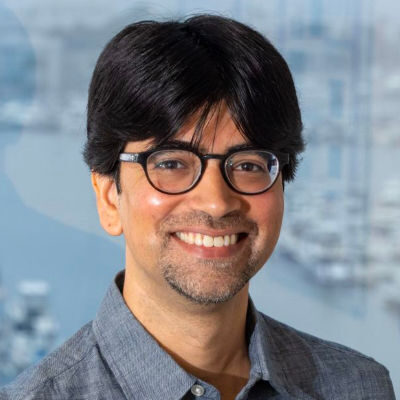
Andrea Carminati is a Full Professor at the Department of Environmental Systems Science, ETH Zurich. His research focuses on soil-plant hydraulics , rhizosphere dynamics , and drought adaptation mechanisms in crops and forest species. He investigates how root traits , soil texture , and biogenic substances like mucilage influence water uptake , gas exchange , and soil microbial activity . Key Research Areas: Soil-Plant Water Relations Rhizosphere Hydrology Drought Resistance in Maize and Trees Microplastics in Agricultural Soils Hydraulic Redistribution and Isohydricity Contact: Email: andrea.carminati@usys.ethz.ch Phone: +41 44 633 61 60 Recent studies highlight his work on soil texture-specific transpiration responses , rhizosheath properties under drought , and microplastic impacts on soil hydrology . He employs advanced techniques like X-ray computed tomography and neutron radiography to visualize root-soil interactions.
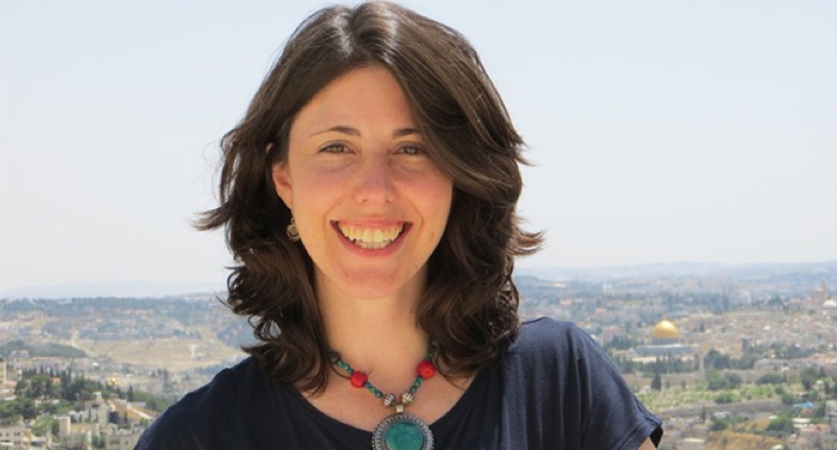
Naomi Rogers, Ph.D. (She/Her) is Professor of the History of Medicine in the Section of the History of Medicine and the Program in the History of Science and Medicine at Yale University. She holds courtesy appointments in the History Department and the Women's, Gender and Sexuality Studies Program, and serves on Yale's Dean's Advisory Council for LGBTQI Affairs. Professor Rogers teaches undergraduate, graduate, and medical students, regularly lecturing on the history of AIDS, reproduction, health economics, eugenics, nutrition, disability, and health activism. Professor Rogers' educational background includes: PhD in History from University of Pennsylvania (1986) MA from University of Pennsylvania (1986) BA in Music from Melbourne University (1980) BA with Honors from Melbourne University (1979) Her research focuses on 20th and 21st century history of medicine with emphasis on health inequities and social justice. Professor Rogers' historical interests span gender and health, disease and public health, disability studies, feminism, alternative medicine, health policy, and health activism. Her work critically examines the intersection of medical practices with social movements, particularly how marginalized communities have challenged medical orthodoxy throughout American history. She has published extensively in journals such as American Journal of Public Health, Bulletin of the History of Medicine, Journal of Medical Humanities, Radical History Review, Social History of Medicine, and Women and Health. Professor Rogers' recent scholarship demonstrates a consistent focus on the historical dimensions of contemporary health issues, particularly vaccine politics, abortion history, and community health activism. Her publications reveal patterns of resistance to medical authority, the role of race and gender in shaping health outcomes, and the historical roots of current health justice movements. Her work bridges academic history with public engagement, as evidenced by her frequent media commentary on COVID-19 and other health issues in outlets including BBC Radio, CNN, Huffington Post, National Public Radio, New York Times, Wall Street Journal, and Washington Post. Among her notable recognitions: AAHN's Lavinia L. Dock Award for Exemplary Historical Research for 'Polio Wars: Sister Kenny and the Golden Age of American Medicine' (2014) Presenter of the AAHM's Garrison Lecture: 'Radical Visions of American Medicine: Politics and Activism in the History of Medicine' (2017) Professor Rogers has been actively involved in academic leadership and mentoring. She has served as Director of Graduate Studies for the 2022-23 academic year, Chair of the Women's Faculty Forum, and Liaison to the Committee on Status of Women in Medicine. Her service extends to editorial boards including the Journal of the History of Medicine and Allied Sciences since 2018. She has also contributed to public understanding of medicine through consultations for documentaries including 'The Polio Crusade' (PBS), 'On the Basis of Sex' (Focus Features), and 'War on Science' (in process). Currently, Professor Rogers serves on the Medical School's OBGYN 'Dobbs' Sessions Planning Committee, which has organized webinars for the Yale community, and was co-organizer of the history-themed session 'Rooted in History: Abortion, Law and American Health Care.' She is working on her book project 'Health Radicalism and the Humanization of American Medicine' (under contract with Oxford), examining critics of medical orthodoxy since 1945 including civil rights, consumer, and feminist activists. She also conducts ongoing research on antisemitism in American medicine in the decades before and after World War II.
Istvan Albert is a Research Professor of Bioinformatics at Pennsylvania State University , affiliated with the Department of Biochemistry and Molecular Biology . He leads the Bioinformatics Consulting Center and teaches BMMB 852: Applied Bioinformatics . Research Interests: Specializing in bioinformatics, large-scale biological data analysis, microarray and sequence analysis, scientific programming, algorithm development, and database-driven web development. His work spans gene ontology visualization , RNA-Seq analysis , and coronavirus research . Software Development: Created GeneScape for gene function visualization and bio for bioinformatics workflows. Maintains the Biostar Handbook series and the Biostars Q&A Forum , a leading bioinformatics resource.
Mohamed F. Mokbel is a Distinguished McKnight University Professor in the Department of Computer Science and Engineering at the University of Minnesota - Twin Cities , where he also serves as the Director of Graduate Studies. He is recognized as an IEEE Fellow and ACM Distinguished Member for his contributions to spatially- and privacy-aware systems. His research focuses on database systems , spatial data management , and GIS (Geographic Information Systems) , with significant work in spatiotemporal data, location-based services, and machine learning for spatial applications. His most recent publications address scalable BERT-based trajectory imputation , spatial logistic regression frameworks , and spatiotemporal big data decay techniques . Key Awards: Distinguished McKnight University Professor (2023) ACM SIGSPATIAL 10-Year Impact Award (2022) IEEE Fellow (2020) ACM Distinguished Member (2017) NSF CAREER Award (2010) Selected Conference Papers: Recathon (2015, IEEE MDM Best Paper) ST-Hadoop (2017, SSTD Best Paper) KAMEL (2023, ACM SIGMOD Demo) Academic Service: Editor-in-Chief, ACM Transactions on Spatial Algorithms and Systems (2024–) General Co-Chair, ACM SIGSPATIAL 2025 Past Chair, ACM SIGSPATIAL (2014–2017)
Ruohan Gao is an Assistant Professor in the Department of Computer Science at the University of Maryland, College Park , with affiliate appointments at the University of Maryland Institute for Advanced Computer Studies (UMIACS) , Maryland Robotics Center (MRC) , and Artificial Intelligence Interdisciplinary Institute at Maryland (AIM) . His research focuses on Computer Vision and Machine Learning , emphasizing Multisensory Machine Intelligence that integrates sight, sound, and touch . He aims to enable machines to perceive, understand, and interact with the world as humans do, with applications in robotic manipulation , audio-visual localization , and differentiable rendering . Article Trends : Span 2018–2025 , centering on audio-visual perception , multisensory datasets , and robotics . Recurring themes include object-centric learning , sound synthesis , and cross-modal consistency . Scientific Awards : Michael H. Granof Award (UT Austin’s Top 1 Doctoral Dissertation, 2021) Best Paper Award Runner-Up (BMVC 2021) Best Paper Award Finalist (CVPR 2019) Highlight Paper (CVPR 2023) He leads the UMD Multisensory Machine Intelligence Lab and collaborates with institutions like Stanford and The University of Texas at Austin . Contact: rhgao@umd.edu .
Ravid Shwartz-Ziv is an Assistant Professor and Faculty Fellow at NYU's Center for Data Science, with a dual role as Senior Research Scientist at Wand AI. His research bridges theoretical foundations and practical applications in artificial intelligence, focusing on Large Language Models (LLMs), information theory, and neural network interpretability. Ph.D. in Computational Neuroscience, Hebrew University of Jerusalem (2021) B.Sc. in Computer Science and Computational Biology, Hebrew University of Jerusalem (2014) His research spans: Developing min-p sampling for LLM text generation Preventing representation collapse in Transformers Creating contamination-free LLM benchmarks like LiveBench Advancing information-theoretic frameworks for neural networks Exploring representation learning and model adaptation Recent publications demonstrate expertise in LLM efficiency, self-supervised learning, and multi-agent systems. Notable awards include the Google PhD Fellowship, Moore-Sloan Fellowship, and multiple best paper recognitions. He has led research initiatives at Intel and Google AI, focusing on neural network compression, XGBoost comparisons for tabular data, and innovative benchmarking frameworks.
Dr. Jay Pujara is a Research Associate Professor of Computer Science at the University of Southern California (USC) and Director of the Center on Knowledge Graphs. He is also a Principal Scientist at the Information Sciences Institute (ISI) and leads research teams in data science and AI. Ph.D., University of Maryland, College Park (2016) M.S. and B.S. in Computer Science, Carnegie Mellon University Research Interests include artificial intelligence, probabilistic models, knowledge graph construction, statistical relational learning, NLP, and streaming inference. His work focuses on scalable algorithms for big data and uncertainty modeling in dynamic environments. Recent Publications highlight advancements in knowledge graphs, LLM reasoning, and table understanding. Notable topics include non-verbal abstract reasoning , faithful conversational datasets , and KGQA re-ranking . Scientific Awards : SWSA Ten-Year Award (2023), Outstanding Paper (IUI 2019), Top Reviewer (NeurIPS 2018), Best Paper (SRL Workshop 2016) Advising & Grants : Mentored 12+ graduate students, including Ph.D. advisees on topics like causal modeling and neuro-symbolic tasks. Secured NSF funding for table understanding in paleoclimate studies.
Claire Robins serves as Professor of Museology and Art at University College London's Institute of Education, leading the Art, Design & Museology Academic Group and acting as Department Graduate Tutor for the Department of Culture, Communication and Media. Her work critically bridges art practice, museum studies, and educational theory to advance democratic engagement in cultural institutions. Education: PhD in Museum Education, University of London (2009) Master's degree in Gallery/Museum Education, University of London Bachelor's degree in Fine Art, St Martins School of Art (now University of the Arts London) Research Focus: Robins investigates the intersection of artists' practices with critical pedagogy, emphasizing progressive education and avant-gardist strategies in twentieth-century knowledge production. Her scholarship examines how contextual forces shape learning definitions in museums, with particular attention to materialities, pedagogic forms, and democratic potential within institutional frameworks. This work consistently challenges conventional museum narratives through artist-led interventions. Publication Trends: Her 15 most recent publications (2012-2025) reveal sustained exploration of museology-art education synergies, highlighting pedagogic innovation through artists' interventions, critical assessment frameworks, and democratic museum practices. Key thematic threads include narrative disruption in galleries, sustainability in art education assessment, and the transformative role of fiction in reimagining museum epistemologies. Advising & Leadership: Robins has supervised PhD/EdD students since 2010 and directed the MA Art Education, Culture and Practice program (2011-2023). She currently teaches MA modules in Museums and Galleries in Education and leads the Education and Curation component, while mentoring MA dissertations. Her leadership extends to developing gallery-based short courses with Engage. Professional Engagement: As editorial board member for Arts & Communication and Engage , and active participant in ICOM and NSEAD, Robins shapes global discourse through international keynotes (e.g., Korean Society for Education in the Arts, 2019) and curated seminars like Soft Subjects: Material Practice in Gallery Education (2024). Her review work for Routledge and Intellect Books further demonstrates scholarly stewardship.
Irene Albers is a full Professor at Free University of Berlin's Department of Philosophy and Humanities, holding dual appointments at the Peter Szondi Institute for General and Comparative Literature and Institute for Romance Philology since 2004. She chairs both the Examination Board and Doctoral Committee for General and Comparative Literature, serves as Trustee of Studienstiftung des deutschen Volkes since 2004/05, and has been Principal Investigator for the Friedrich-Schlegel Graduate School for Literary Studies and Cluster Languages of Emotion since 2007. Her research bridges comparative literature, anthropology, and visual culture with institutional leadership spanning editorial projects and international conferences. Her educational background includes: Born in Bremen (1967) Romance Studies, Philosophy, and German Studies at Universities of Tübingen, Tours, and Konstanz M.A. from University of Konstanz (1993) Ph.D. from University of Konstanz (1999) on literature and photography in Émile Zola, Proust, and Claude Simon Albers' core research examines literary anthropology through colonial/postcolonial lenses, focusing on French literary engagement with Africa, surrealism, and literature-photography intersections. She pioneered studies on Michel Leiris' ethnological poetics and Claude Simon's photographic techniques, extending to historical emotion research (anatomy of affects, body language) and romance novella traditions. Her work consistently challenges Eurocentric literary canons through primitivism critique and heteronomy aesthetics, emphasizing textual restitution and cultural reclamation. Recent publications (2018-2025) reveal a sharp turn toward colonial restitution ethics, particularly in oral literature provenance. Articles increasingly analyze literature as colonial loot, connecting French modernism with African/Caribbean contexts through collaborative projects with anthropologists like Eléonore Devevey. This trajectory builds from earlier surrealist studies to concrete frameworks for decolonizing literary scholarship, spotlighting institutional complicity in cultural appropriation while advancing symmetrized modernity revisions. Scientific awards include: Senior Fellow and Prize Winner of the Zukunftskolleg, University of Konstanz (2009) Albers supervises master's and doctoral students through dedicated AVL colloquia while securing major research funding as Principal Investigator for Friedrich-Schlegel Graduate School (2007-present) and Cluster Languages of Emotion (2007-2012). Her current DFG-funded project 'Literature as Colonial Loot?' with Andreas Schmid pioneers philological provenance research. Earlier, she contributed to Collaborative Research Center 511 'Literature and Anthropology' (Konstanz, 1999-2002) and DFG-funded conferences on Claude Simon. She leads the DramaNet research project and co-edits the 'machina' series at transcript Verlag since 2010. As board member (2007-2009) and deputy (2008-2012) of Cluster Languages of Emotion, she coordinates Area D 'Cultural Codings of Emotions'. Her Zukunftskolleg fellowship (2012-2013) and Marcel Proust Society collaborations underscore sustained engagement with literary anthropology networks.
Dr. Valerie Hebert is a Professor of History and Interdisciplinary Studies at Lakehead University, specializing in Holocaust photography, genocide studies, transitional justice, and human rights. She joined Lakehead in 2010 and previously held a SSHRC Post-Doctoral Fellowship at York University. Ph.D., University of Toronto (2006) M.A., McGill University (1999) H.B.A., McGill University (1997) Her research intersects 20th-century European history , legal historiography , and visual analysis , with a focus on post-atrocity justice (Nuremberg, Rwanda) and the role of photography in documenting human rights violations. She has presented internationally at conferences in Canada, the U.S., U.K., and Europe. Dr. Hebert has received multiple fellowships, including from the German Historical Institute , US Holocaust Memorial Museum , and Martin Buber Society . Her SSHRC Insight Grant -funded monograph project Five Shots from Sdolbunow examines Holocaust photography.
Anindita Banerjee is an Associate Professor in the Department of Comparative Literature at Cornell University's College of Arts and Sciences, with cross-appointments in the Environment & Sustainability Program, History of Art and Visual Studies, Literatures in English, and Romance Studies. She serves as SAP Core Faculty for the South Asia Program and has been instrumental in establishing Cornell's Environmental and Sustainability Program, where she built and chaired the environmental humanities concentration for four years. Her research explores the relationship between imagining and making futures across diverse contexts, focusing on the evolving interfaces between science, technology, and culture; natural and built environments; media and information systems; and the migration of people, things, ideas, and images. Spanning Eastern Europe, Central Asia, the Indian subcontinent, and Latin and African Americas, her work examines networks of exchange, innovation, production, and consumption that emerge outside conventional coordinates of the modern world. Her scholarship has been featured in BBC Culture, Radio Free Europe, Medium, and Meduza. She has authored multiple books including the award-winning We Modern People: Science Fiction and the Making of Russian Modernity (2013), which won the Science Fiction and Technoculture Studies book prize, and is currently working on Reactionary Worldbuilding (MIT Press, 2026) and Border Environments (Cornell, 2026). Her research demonstrates consistent engagement with science fiction as a critical lens for examining global environmental, technological, and social transformations. Science Fiction and Technoculture Studies book prize Ivy+ Mellon Leadership Fellow (2024-25) Academic Venture Fund grant from Cornell Atkinson Center for Sustainability Social Sciences and Humanities Research Fellowship Banerjee serves as a faculty fellow of the Cornell Atkinson Center for Sustainability and is a participating member of cross-college programs in Biology and Society, Media Studies, and Visual Studies. She co-led a workshop series and engaged-learning course on border spaces and environmental justice supported by a grant from the Mario Einaudi Center for International Studies. As an Ivy+ Mellon Leadership Fellow, she serves as Special Assistant to the Dean of the Cornell School of Continuing Education, focusing on academic leadership and governance with an emphasis on diversity and inclusion.
Priyank Chandra is an Assistant Professor at the University of Toronto's Faculty of Information and Director of the STREET Lab (SocioTechnical Resistance and Ethical Technologies Lab). His interdisciplinary research focuses on sociotechnical practices of marginalized communities, leveraging HCI, CSCW, STS, and development studies to design inclusive technologies. He holds a PhD in Information from the University of Michigan, along with MS in Economics and BE in Electronics Engineering. Chandra has received awards at ACM CHI and CSCW for his work on labor movements, digital resistance, and accessibility. Education: PhD in Information, University of Michigan (2019) MS in Economics BE in Electronics Engineering Research Interests: Chandra explores how marginalized communities reconfigure technologies to foster self-organization and resistance. His work bridges HCI/CSCW with theories from development studies and institutional analysis, emphasizing ethical, socially just systems. Recent projects include studying farmer movements in India, gig economy platforms, and weather risk communication for visually impaired Ontarians. Grants & Awards: SSHRC Grant: Repertoires of Contention in Digital Labour Platforms (2023-2024) NSERC Grant: Designing Inclusive Platforms for the Gig Economy (2022-2027) Connaught New Researcher Award (2023) ACM CHI/CSCW Awards for contributions to labor studies and accessibility Advising & Labs: Supervises students in ICTs, design, and marginality. Directs the STREET Lab at KMDI, focusing on ethical tech for vulnerable communities. Teaches courses on inclusive design and marginalized communities' ICT practices.
Steven Meikle is a Professor of Medical Imaging Physics and Head of the Imaging Physics Laboratory at the Brain and Mind Centre, University of Sydney. He also serves as Deputy Director (Preclinical) of Sydney Imaging and Deputy Director of the National Imaging Facility's Sydney node. His expertise spans advanced imaging technologies, with a focus on PET/SPECT instrumentation and molecular imaging. He holds a B.App.Sc.(Hons) from the University of Technology Sydney and a PhD from the University of New South Wales. Research focuses include developing novel PET systems like Open-field PET (for freely moving rodents) and Total Body PET, which enhance imaging sensitivity and enable real-time behavioral studies alongside brain function analysis. Collaborations include Tsinghua University (China) and UC Davis (USA). He leads projects on motion correction, quantitative imaging, and AI-driven analysis. Key achievements include over 180 peer-reviewed publications, editorial roles in Physics in Medicine and Biology , and leadership in professional societies. Awards include IEEE Senior Membership and Australian Institute of Physics Fellowship. Current student projects explore Total Body PET applications, motion correction, and radiopharmaceutical evaluation. Teaching roles include medical physics courses in diagnostic radiography and medical physics programs. He advises on imaging ethics, facility implementation, and translational research bridging basic science and clinical applications.
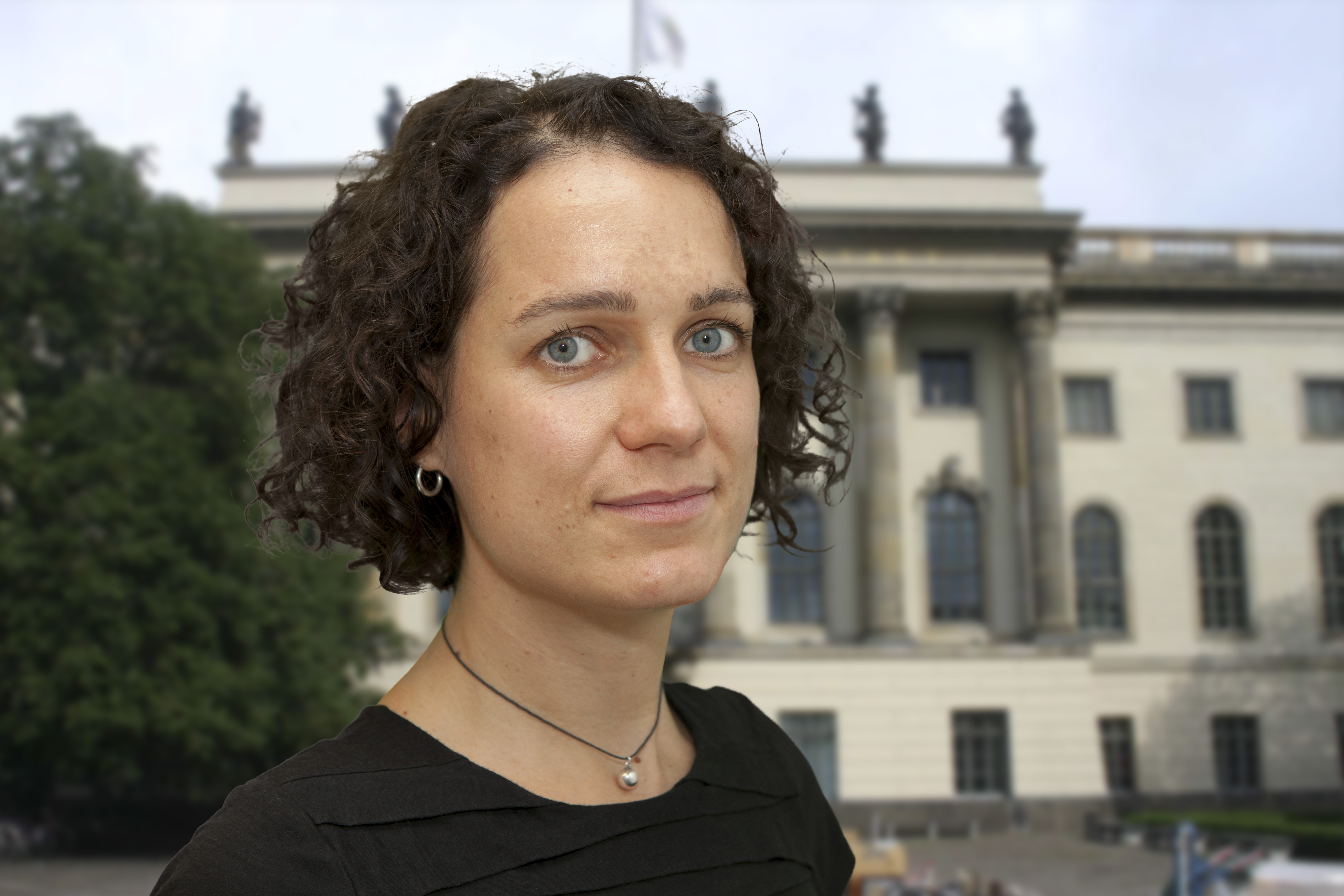
Dr. Kerrin v. Engelhardt is an Associate Scientist at the Humboldt University Berlin's Department of History of Education within the Faculty of Humanities and Social Sciences. She also holds roles as Project Leader in the BMBF-funded collaborative project 'MythErz' and as a lecturer in science history at the Technical University of Berlin. Her research focuses on Cold War educational practices, historical pedagogical technologies, and the Abitur examination system in Germany. She has held positions including Research Assistant at the Humboldt University’s Institute of Education Studies and the Friedrich-Schiller University Jena, and led projects on educational film analysis and university collection utilization. Education: PhD in History of Natural Science from Friedrich-Schiller University Jena (2013), M.A. in Cultural History/Folklore Studies (2011), and Diploma in Fine Art from Bauhaus University Weimar (2003). Her work integrates interdisciplinary approaches to explore the intersection of education, science, and cultural history. Research Interests: Cold War pedagogical media, history of educational assessment practices, cultural history of science education, and institutional practices in historical education systems. She emphasizes praxeological methods to analyze historical educational materials and rituals. Key Projects: Leadership in the 'MythErz' project examining GDR educational myths through films; co-coordination of the 'Abitur examination practices' project; development of interdisciplinary teaching strategies using university collections. Publications: Over 20 peer-reviewed articles and book chapters on topics such as East German educational spaces, historical examination rituals, and Weimar-era art education. Notable works include analyses of GDR science education films and the socio-cultural dimensions of Abitur practices.
Jacob Krüger is an Assistant Professor at Eindhoven University of Technology , specializing in the development and evolution of variant-rich software systems. He holds a PhD from Otto-von-Guericke University Magdeburg (2021) and has held academic and research positions at institutions including Ruhr-University Bochum, Chalmers University of Technology, and the University of Toronto. His research focuses on the interplay between human cognition and software quality, particularly in complex systems requiring frequent adaptation. Education: PhD in Computer Science, Otto-von-Guericke University Magdeburg (2021) MSc Business Informatics, Otto-von-Guericke University Magdeburg (2016) Research Interests: Variant-Rich Systems Program Comprehension Software Product Lines Human Factors in Software Engineering Architecture Smells and Quality Assurance Articles Trends: Recent work emphasizes fork ecosystem visualization (VisFork tool), the impact of AI on scientific practices, and crisis-driven software development (e.g., Corona-Warn-App). Key themes include empirical studies, tool development, and industry collaboration. Awards: Best Dissertation Award (2022) Frank Anger Memorial Award (2019) Multiple conference best-paper and review awards Advising & Grants: Supervises 12+ PhD students across multiple institutions. Active in funding projects like INKleSS (German Research Foundation) and FOSD Meeting 2024 (NWO). Leads collaborations with ASML, Danfoss, and Axis AB. Labs/Teams: Member of the Software Engineering and Technology (SET) group at TU Eindhoven, focusing on industrial-strength software systems and cognitive aspects of development.