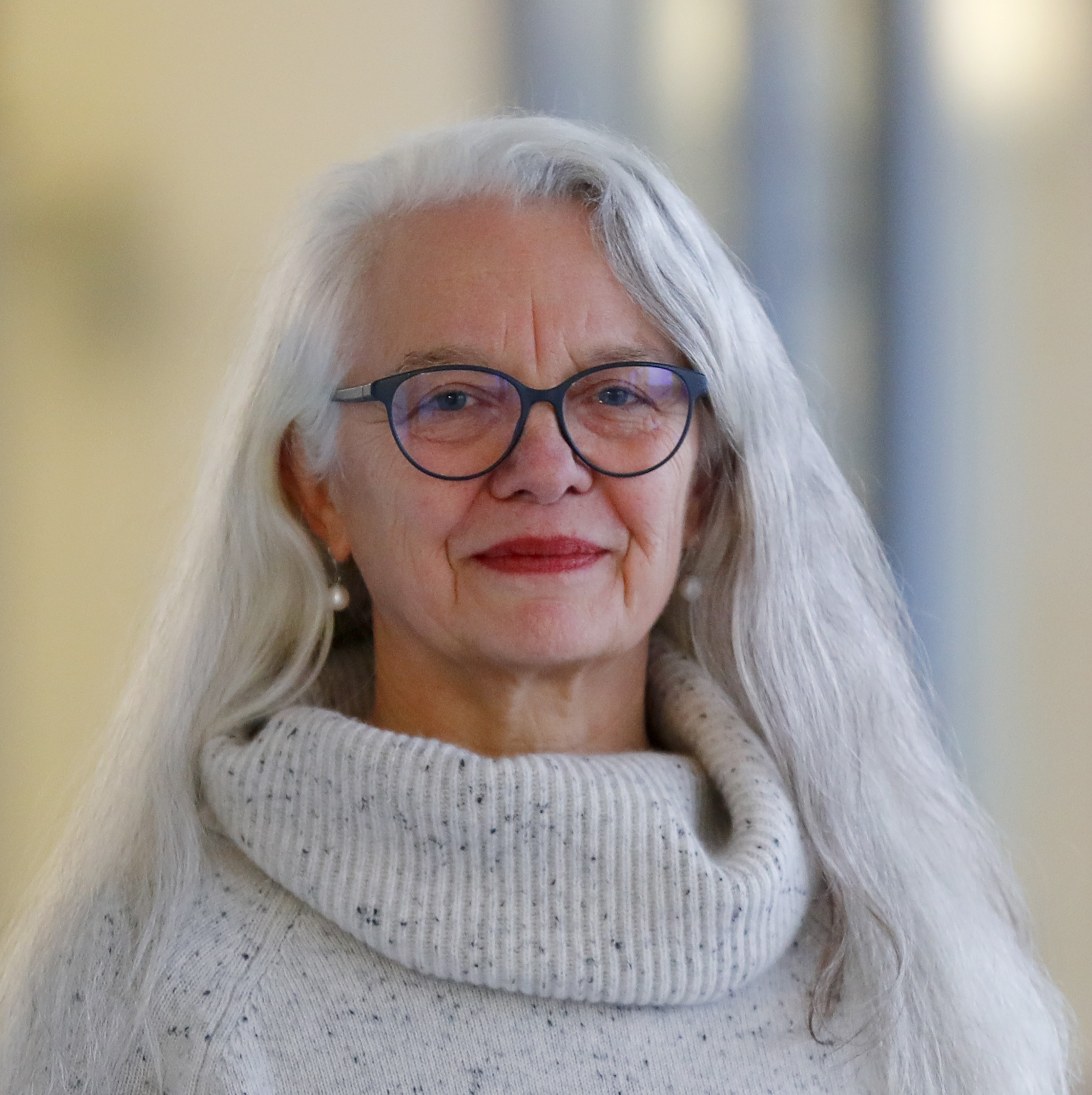
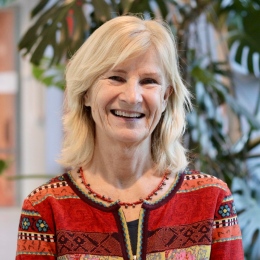
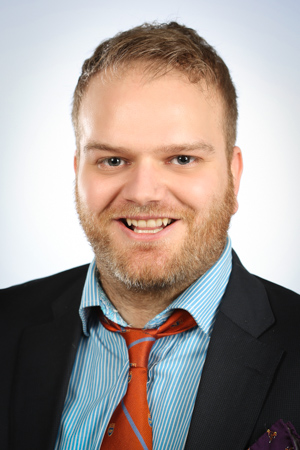
Wayne Modest is a Professor of Material Culture and Critical Heritage Studies at the Vrije Universiteit Amsterdam's Faculty of Social Sciences and Humanities. His work focuses on material and visual culture, ethnographic museums, heritage, and postcolonial histories. He leads projects like 'Taking Care' and collaborates with institutions across Europe and the Caribbean. PhD from University of the West Indies (Cultural Studies) Research interests include colonialism, migration, race, and care in cultural institutions Recent projects address Dutch colonial heritage, decolonizing museum practices, and transnational memory. He contributes to journals like Small Axe and co-edits volumes on colonial pasts. Advises PhD candidates in heritage studies and colonial entanglements. Teaches courses on public history, decolonization, and curating. Serves on editorial boards and museum ethics committees, advocating for inclusive cultural narratives.
Heehyun Choi is an Assistant Professor in the Photography & Filmmaking Department at Kansas City Art Institute, where she has served as both Visiting Assistant Professor (2023-2025) and current Assistant Professor since 2025. Born in 1994 in Seoul, South Korea, she maintains active artistic practice between South Korea and the United States. Her educational background includes an MFA in Film & Video from California Institute of the Arts (2021) and a BA in Art & Technology from Sogang University in Seoul (2017). Choi's research explores the physicality and virtuality of projected images, unseen elements beyond the camera frame, and the subjectivity of visual perception through experimental moving image practices. Choi's filmography reveals a consistent focus on deconstructing visual perception and historical narratives, particularly examining Korean identity through postcolonial and feminist lenses. Her works frequently employ material film techniques while interrogating the relationship between reality and representation, with recurring themes of archival reinterpretation and cross-species visual perception. 2025 KAFA (Korea Arts Foundation of America) Award recipient Mariam Ghani Juror Award winner at Ann Arbor Film Festival (2022) Recipient of The Lightning Fund by LACE and Andy Warhol Foundation AHL Foundation Artist Fellowship recipient Alison Doerner Fund for Women Pioneers in Filmmaking awardee As an educator, Choi has held teaching positions at Kansas City Art Institute and California Institute of the Arts, where she served as Post Graduate Teaching Fellow and Teaching Assistant for courses including History of Video Art and Seminar in Black Experimental Film & Video. She currently holds a Charlotte Street Foundation Studio Residency in Kansas City while maintaining an active exhibition schedule with recent screenings at Edinburgh International Film Festival, Ann Arbor Film Festival, and Seoul International Experimental Film Festival.
Lisa Thorn is a researcher at the University of Westminster, affiliated with the Psychophysiology and Stress Research Group (PSRG). Her work focuses on the physiological pathways linking stress, well-being, and health, particularly through the lens of cortisol secretion patterns. Doctorate in Psychology (2007), University of Westminster First degree: University of Westminster Lisa's research explores diurnal cortisol rhythms, the cortisol awakening response (CAR), and their relationships with stress, seasonal affective disorder, and executive function. She has contributed extensively to methodological advancements in cortisol measurement and its psychological correlates. Her publications emphasize psychoneuroendocrinology, analyzing CAR variability, stress reactivity, and biomarker accuracy. She collaborates with colleagues like Angela Clow and Nina Smyth, advancing cortisol research in health psychology contexts. As a supervisor, Lisa guided doctoral research by Natasha Ramachandran, Robin Law, and Nina Smyth on topics including cortisol-melatonin interactions and stress-related postural control. She remains active in the PSRG, investigating how cortisol secretion patterns influence health outcomes.
Kathryn D. R. Drager is an Associate Dean for Research and Graduate Education and Professor of Communication Sciences and Disorders at the Pennsylvania State University. She holds affiliations with the College of Health and Human Development, the Department of Communication Sciences and Disorders, and the Social Science Research Institute. Drager earned her Ph.D. from the University of Minnesota in 1999. Her research focuses on augmentative and alternative communication (AAC) for individuals with severe disabilities, particularly children and adults at early communication stages. Key areas include AAC technology design, global accessibility, and interventions in low- and middle-income countries. She explores visual scene displays, mobile technologies, and just-in-time programming to enhance communication access. Her work emphasizes reducing communication barriers and improving quality of life for individuals with autism, Down syndrome, and other disabilities. Drager collaborates internationally, notably in Sri Lanka and Hungary, addressing systemic challenges in AAC implementation. Her academic leadership includes overseeing graduate education and research administration within the College of Health and Human Development. She advocates for inclusive practices and evidence-based interventions in global health contexts. Her publications span AAC technologies, clinical practices, and cross-cultural applications. Notable contributions include systematic reviews of AAC interventions for adolescents with autism and studies on telehealth applications in LMICs. She emphasizes the importance of family-centered care, teacher training, and interdisciplinary collaboration in advancing AAC services.
Lauren Bates is an Assistant Professor of Psychology at Chatham University's College of Arts & Sciences, joining in August 2022. Her research focuses on human learning and memory, memory improvement, educational applications of memory research, evidence-based memory strategies, feedback mechanisms in learning, elaboration, forgetting, and adaptive memory. Ph.D. in Psychology, Colorado State University (2019) M.S. in Psychology, Colorado State University (2015) B.A. in Psychology, California State University, Long Beach (2012) Dr. Bates's work explores how retrieval practice, spaced testing, and feedback enhance memory retention and student learning. She investigates the interplay between evolutionary-driven memory advantages (e.g., survival processing) and educational interventions like mastery quizzing. Her research also examines self-referential processing, kin selection theory, and sensory modality effects on testing performance. Her recent presentations highlight trends in cognitive psychology, particularly the use of iterative assessments with feedback to combat forgetting. She applies findings to practical educational settings, emphasizing strategies that optimize retention through elaboration, spaced learning, and feedback mechanisms. College of Natural Sciences Graduate Student Excellence in Teaching/Mentoring Award (2017) Marc V. Richard Award for Excellence in Teaching (2016) At Colorado State University, Dr. Bates supervised academic coaching programs and student-led tutoring, demonstrating her commitment to applied learning. Her affiliations include the Society for Applied Research in Memory and Cognition, Psychonomic Society, and Association for Psychological Science.
Mark Gardner is a Principal Lecturer in Psychology at the University of Westminster, Faculty of Science and Technology, Department of Psychology. He has been with the university since 2000 and serves as the course leader for the BPS-accredited MSc Psychology conversion program. He is affiliated with the Centre for Psychological Sciences and is actively engaged in research, teaching, and academic leadership. His educational background includes a PhD from University College London, supervised by Prof Cecilia Heyes, focusing on animal imitation, and postdoctoral research under Prof Lucy Yardley on attention and balance systems in a Wellcome Trust-funded project. His research spans three major areas: visual perspective-taking and its role in social cognition and mental state attribution (Theory of Mind), with implications for autism and schizophrenia; the cognitive effects of hydration , particularly how water consumption influences attention, memory, and academic performance; and higher education research , including interdisciplinary learning, open science, and the impact of lecture capture on student learning. His work integrates experimental psychology and quantitative methods. His recent publications (2018–2025) show a consistent focus on spontaneous perspective-taking, interoception, hydration effects across age groups, and educational innovations. These studies employ diverse methodologies, from behavioral experiments to longitudinal learning analytics, and are published in journals such as Journal of Experimental Psychology , Cognitive Neuropsychiatry , Appetite , and Scholarship of Teaching and Learning in Psychology . He has received the Westminster Teaching Fellowship in recognition of his contributions to pedagogy. His professional memberships include: Advance HE (since 2015) Experimental Psychology Society (since 2013) British Psychological Society (since 2011) Mark Gardner has supervised several doctoral researchers, including Tamara Przelonskowski, Rosa Leino, Jeremy Corcoran, and Maria Flynn. He has secured funding from the Experimental Psychology Society for projects such as 'Arrows or Agents? Re-evaluating evidence for implicit mentalising in the dot perspective task'. His teaching focuses on research methods, quantitative methods, and statistics for both undergraduate and postgraduate psychology students. He is actively involved in research groups and centers, particularly the Centre for Psychological Sciences , and contributes to initiatives promoting open science and interdisciplinary collaboration in education.
Thorsten Erle is an Assistant Professor at the Department of Social Psychology, Tilburg University, affiliated with the Tilburg School of Social and Behavioral Sciences. His research focuses on social cognition, particularly perspective-taking mechanisms and their implications for empathy, decision-making, and mental health. He explores embodied cognition, including visuo-spatial perspective-taking and interoceptive accuracy, and investigates non-verbal communication via emojis in digital interactions. His work contributes to UN Sustainable Development Goals related to well-being and social cohesion. Research interests include ostracism coping strategies, coalition formation dynamics, and mental state attribution. Recent studies analyze how choice availability and incentive structures influence responses to social exclusion, and how perspective-taking enhances coalition success. He also examines facial thermal signatures linked to coping behaviors and integrates interdisciplinary frameworks to unify mental state attribution concepts. Thorsten’s articles span 2015–2025, emphasizing social psychology, behavioral economics, and psychophysiology. His work highlights the role of perspective-taking in collaboration and decision-making, with practical applications in organizational settings. He coordinates the social psychology track in the bachelor’s program and manages the department’s lab facilities, supporting experimental research.
Prof. Dr. Karin Birkner is a full Professor of German Linguistics at the University of Bayreuth, where she holds the Chair of German Linguistics within the Faculty of Linguistics and Literature. Since October 2018, she has served as Deputy University Women's Representative and as Contact Person for Protection against Sexual Harassment and Sexual Violence. Since January 1, 2024, she has been President of the Society for Applied Linguistics (GAL eV), one of the largest linguistic societies in the German-speaking world with over 800 members. Her office is located in Room 0.30, GW I at Universitätsstraße 30, 95440 Bayreuth, with office hours on Tuesdays from 2-3 PM during the 2024/2025 winter semester. Prof. Birkner's research spans multiple areas of linguistics with a particular focus on conversation analysis, medical communication, intercultural communication, grammar of spoken language, and construction grammar. Her work examines linguistic practices in institutional settings, particularly in medical contexts where she investigates doctor-patient interactions, neurological examinations in telemedicine, and the construction of medical knowledge. She has established significant research networks including the Medical Communication Working Group and the Transdisciplinary Research Network "Video Analysis of Religious Practice." Her research on language work with refugees demonstrates her commitment to addressing contemporary social issues through linguistic analysis. Prof. Birkner's publication record shows a consistent trajectory of high-impact research in conversation analysis and medical communication, with increasing focus on telemedicine applications in recent years. Her work bridges theoretical linguistics with practical applications in healthcare settings, demonstrating how linguistic analysis can improve medical communication practices. She has made significant contributions to understanding narrative structures in medical contexts, epistemic markers in therapy conversations, and the grammatical organization of spoken language across different contexts. Prof. Birkner actively supervises doctoral students and habilitation candidates, as indicated by the "Promotions" and "Habilitations" sections on her departmental website. She has secured research funding for multiple projects, most notably the DFG Project "Krankheitstheorien" (Subjective Theories of Illness in Conversation) which ran from October 2006 to March 2008. Her leadership extends to the Research Focus on Refugees (GAL eV), demonstrating her commitment to addressing migration-related linguistic challenges. She leads the Medical Communication Working Group and participates in the Transdisciplinary Research Network "Video Analysis of Religious Practice," creating collaborative spaces for interdisciplinary research that bridges linguistic analysis with medical practice, religious studies, and migration research. Her work with the German-Ukrainian German Studies Network further demonstrates her commitment to international academic collaboration.
Eva Norén is a Professor in Mathematics Education at Stockholm University's Department of Teaching and Learning. She has been working in mathematics teacher education since January 2003 after a long professional career as a teacher in compulsory school. She earned her PhD in 2010 and was subsequently appointed Professor in Mathematics Education. Her research interests include: Mathematics education in multilingual classrooms Language development work in mathematics Digital tools and programming in mathematics education Gender issues in mathematics education Critical mathematics education Teacher education Learning for sustainable development Professor Norén's research examines how multilingual students position themselves within discourses and take space and agency in mathematics classrooms. She combines Foucault's discourse theory with Skovsmose's critical mathematics education in her analyses. Her current projects include the 'Multilingual mathematics classrooms' project, involvement in the HUUR project on Sustainable Development and Education in Ronneby, and research on programming in mathematics education. Her publication record shows a strong evolution from multilingual mathematics education toward computational thinking and programming integration in mathematics education. Recent work has focused on interdisciplinary applications of programming, policy analysis regarding newly arrived students, and international comparisons of mathematics education approaches. Her scientific contributions encompass: Extensive research on multilingual mathematics education Pioneering work on programming integration in K-9 education Studies on gender representations in mathematics textbooks Analysis of policy documents regarding newly arrived students Investigations into assessment practices for second language learners Professor Norén has supervised numerous doctoral students and currently mentors several PhD candidates. She has been involved in international collaborations including the ERASMUS+ project 'Language for Mathematics in Vocational Contexts' (LaMaVoC) and serves as chairperson for NoRME (Nordic Society for Research in Mathematics Education).
Julia Katharina Hofmann is a PartTime Lecturer in Catholic Theology at Humboldt University of Berlin , where she teaches courses like Religiöses Lernen verstehen . She is also a Wissenschaftliche Mitarbeiterin (Research Assistant) at the University of Tübingen since 09/2022, focusing on early childhood religious education and cultural diversity in daycare teams. Her interdisciplinary research bridges empirical pedagogy, interreligious education, and visual studies, particularly analyzing representations of Judaism and Islam in school textbooks. University: Humboldt University of Berlin, University of Tübingen Academic Role: PartTime Lecturer (Berlin), Research Assistant (Tübingen) Her work explores: Religious heterogeneity in confessional education (HET project) Visual narratives in religious textbooks Intercultural competence in early childhood teams Her publications examine how youth perceive religious diversity through images, using mixed-methods approaches. She has presented at international conferences like JURE 2024 and contributes to initiatives like the Doktorandenkonvent der Katholisch-Theologischen Fakultät Tübingen and AGENDA – Forum katholischer Theologinnen e.V.
Dora Kampis serves as a Tenure Track Assistant Professor in the Department of Psychology within the Faculty of Social Sciences at the University of Copenhagen. Her research focuses on the cognitive mechanisms underlying human social nature, spanning from infancy through adulthood. Her primary research interests include Social Cognition , Early Childhood Cognition , Social and Cognitive Development , and Developmental Cognitive Neuroimaging . Using behavioral methods (eye-tracking, looking time studies, interactive paradigms) and neuroimaging (primarily EEG), she investigates how social cognitive abilities emerge and develop, examining their interactions with perception and memory systems. Her work bridges ontogenetic and phylogenetic perspectives to understand the foundations of adult human cognition. Analysis of her recent publications (2021-2024) reveals a strong focus on infant social cognition, particularly perspective-taking abilities, self-other distinction, memory development, and semantic processing in preverbal children. Her research employs rigorous experimental designs with infants aged 14-36 months, often involving collaborative international studies. Key trends include investigating altercentric biases, cognitive flexibility in changing contexts, and the emergence of theory of mind precursors. Dr. Kampis maintains active research collaborations across multiple countries, as evidenced by her international co-authorship patterns. Her work has gained significant attention in the scientific community, with several publications covered by news outlets and discussed on academic social media platforms.
Dr. Christine Cho is a full-time Professor at the Schulich School of Education within the Faculty of Education and Professional Studies at Nipissing University. She holds a BFA (York University), BEd (York University), MEd (York University), and PhD (York University), focusing on language, culture, and teaching. Her research emphasizes microaggressions, lateral violence, anti-oppression education, and culturally responsive teaching. Dr. Cho has been recognized for her work, including the 2012 CATE Dissertation Recognition and the 2015 Ontario Art Education Association’s Post-Secondary Art Educator of the Year award. Dr. Cho’s research interests include preparing critical educators through arts-based and technology-enhanced methods, examining immigrant teacher candidates’ experiences, and addressing socio-economic diversity in education. She has taught at Western, Queen’s, York, and Trent Universities before Nipissing, and supervises M.Ed. and PhD candidates. She also organizes international practicums for B.Ed. students in Italy and France since 2015. Her contributions to the Journal of Teacher Education as an Associate Editor highlight her leadership in academic publishing. Her work challenges educators to critically reflect on their social locations and pedagogical practices. Major trends in her articles focus on combating covert violence in educational spaces, leveraging arts and technology for social justice, and fostering inclusive environments. She collaborates widely, authoring multiple edited volumes and co-editing key texts like Global Perspectives on Microaggressions in Higher Education (2022) and Global Perspectives on Microaggressions in Schools (2021). Key Roles: Professor at Nipissing University, Associate Editor of Journal of Teacher Education Recent Work: International teacher identity development, online learning equity, and teacher agency under neoliberalism International Initiatives: B.Ed. abroad programs, cross-cultural facilitation, and global education collaboration Dr. Cho’s academic advising includes graduate students in M.Ed. and PhD programs, though specific names are not listed. Her awards underscore her contributions to art education and teacher training innovations.
Jason Cowell is a Professor and Chair of Psychology at the University of Wisconsin-Green Bay, specializing in the neural and cognitive development of morality. His research examines moral judgment, empathy, self-control, and prosocial behavior across childhood, adolescence, and adulthood using multimodal methods including EEG, fMRI, eye-tracking, and behavioral paradigms. Education: Ph.D. and M.A. in Psychology from the University of Minnesota; B.A. from the University of St. Thomas. Research Focus: Dr. Cowell investigates neurobiological mechanisms underlying moral development, with emphasis on cross-cultural comparisons of empathic concern, perspective-taking, fairness perceptions, and equity norms. His work bridges developmental psychology, cognitive neuroscience, and cultural anthropology to understand how socioenvironmental factors shape moral cognition. Publications: His recent articles (2018-2022) demonstrate strong focus on cross-cultural neurodevelopmental studies of morality, empathy, and social preferences. Key themes include neural computations of fairness, cultural variability in prosocial behaviors, developmental trajectories of in-group biases, and eye-tracking analyses of sociomoral judgments across diverse populations. Student Engagement: Dr. Cowell actively mentors students through research assistantships and independent studies, though specific advisees are unnamed in available materials.
Gerard Smulevich is a Professor of Architecture at Woodbury School of Architecture, Woodbury University. He has held adjunct faculty roles at the University of Southern California and the Southern California Institute of Architecture, and served as a Visiting Associate Professor at the School of Architecture and Urban Design (FADU) of the University of Buenos Aires, Argentina. His primary affiliation is with Woodbury University's School of Architecture. Education: Master of Architecture, University of California, Los Angeles (UCLA) Diploma of Architect, National University of Buenos Aires, School of Architecture and Urbanism Research & Interests: Gerard Smulevich focuses on architectural education and urban photography, particularly analyzing urban form and its cultural significance. As a photographer, he has exhibited work in solo and collective shows across Atlanta, Rhode Island, Los Angeles, Berlin, and other locations. His collaboration with renowned photographer Julius Shulman has shaped his critical perspective on documenting urban environments and architectural spaces. His practice bridges architectural theory and visual representation, emphasizing the role of photography in understanding urban structures. Publications/Awards: No scientific awards or articles are explicitly listed in the provided text. His professional recognition comes through exhibitions and educational contributions rather than traditional academic publications. Advising & Grants: No formal advisees, grants, or funding details are mentioned. While a WSOA student Ludwig Rodriguez won the ACSA National Steel Design Competition in 2023, there is no direct indication of Gerard's involvement as an advisor in this achievement. Labs & Teams: No specific labs or collaborative teams are described in the text. His work appears to be individual-focused with exhibitions and educational roles taking precedence.
Dr. Ben Robins is a Professor at the University of Hertfordshire's Department of Computer Science, affiliated with the School of Physics, Engineering & Computer Science and the Centre for AI and Robotics Research. His work focuses on developing humanoid robots like Kaspar for autism therapy, emphasizing child-robot interaction, visual perspective taking, and emotion recognition. He leads multiple research projects since 2004, including studies on robot-mediated interventions for children with autism, speech and language therapy, and stress detection through physiological signals. Key projects include: EMBOA: Affective loop in Socially Assistive Robotics (2019-2022) Kaspar Explains: Human-Robot Trust via Educational Platforms (2021-2022) Feasibility Study of Robot-Assisted Speech Therapy (2022) His research combines robotics engineering with cognitive science, aiming to create therapeutic tools for neurodiverse populations. Over 76 peer-reviewed publications since 2004 document innovations in robot design, interaction paradigms, and ASD intervention strategies. Collaborations span fields like biomedical engineering, education, and computer vision. Notable achievements include pioneering the Kaspar humanoid platform, developing tactile interaction frameworks, and advancing understanding of robot-mediated social skill development. Current work explores causal explanations' role in perspective-taking and hybrid mobile-app/robot interventions.