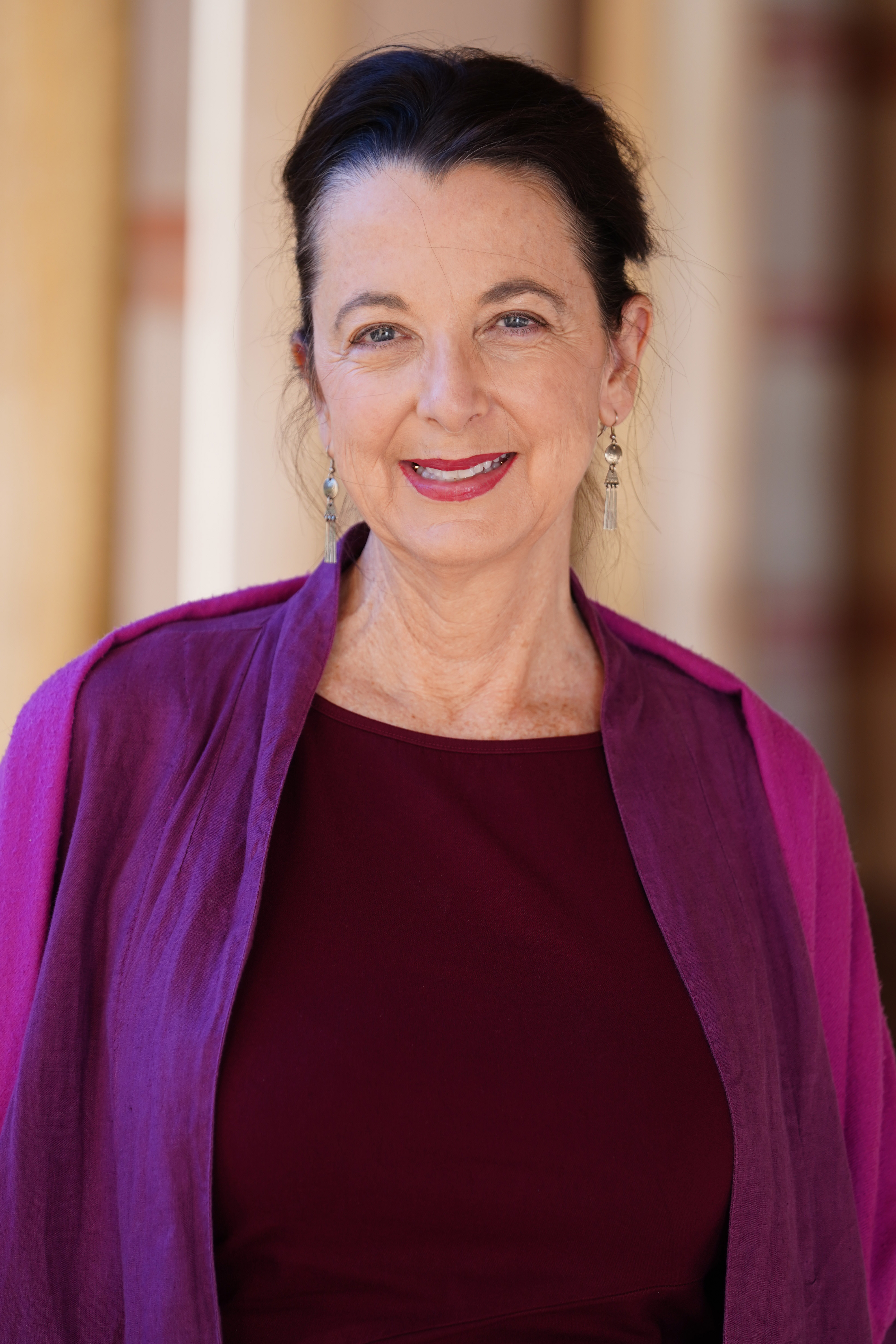
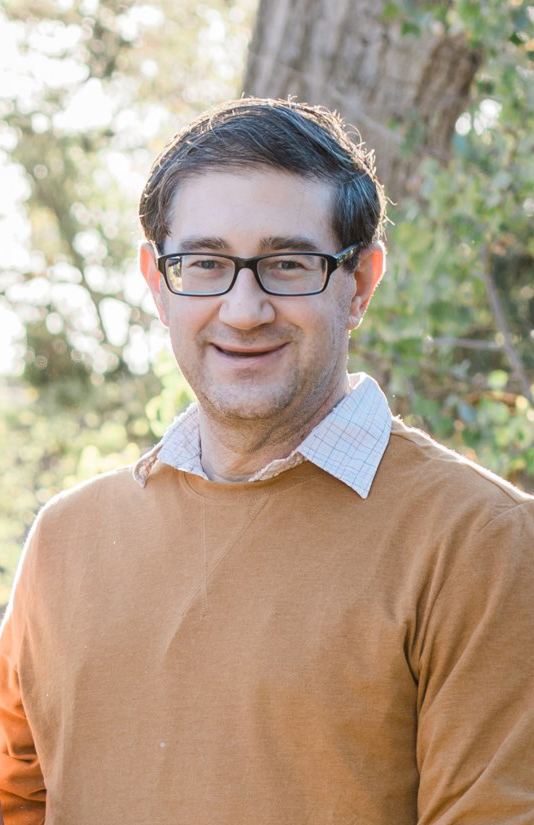
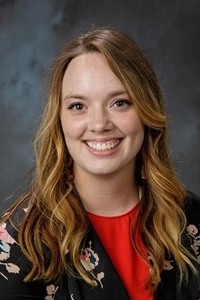
Dr Luke Collins is a Senior Research Associate in the Department of Linguistics and English Language at Lancaster University, affiliated with the ESRC Centre for Corpus Approaches to Social Science (CASS). His research focuses on corpus linguistics applied to health communication and media discourse, particularly analyzing voice-hearing experiences, obesity representation, and pandemic language. He co-authored books like Corpus Linguistics for Health Communication and Language, Discourse and Anxiety . His work bridges clinical psychology and linguistics through corpus-based methods. Recent studies include analyzing Twitter activity during the pandemic, obesity imagery in news media, and the implementation of Anxiety UK’s chatbot service. He collaborates on interdisciplinary projects involving clinical psychology, public health, and digital media. His expertise spans multimodal corpus analysis, discourse representation, and health communication strategies.
Francesca Bottanelli is an Assistant Professor at the Department of Biology, Chemistry, Pharmacy at Freie Universität Berlin. She leads the Bottanelli Group focusing on membrane trafficking mechanisms, combining advanced microscopy techniques with molecular biology approaches. Her research explores cargo transport pathways, organelle dynamics, and the role of ARF GTPases in intracellular trafficking. Education : PhD in Biological Sciences, University of Leeds (2011), Advisor: Dr. Jürgen Denecke MSc in Plant, Food and Environmental Biotechnology, University of Milan (2006) BSc in Plant Biotechnology, University of Milan (2004) Research Focus : Bottanelli’s work integrates STED super-resolution microscopy with CRISPR-based technologies to study membrane organization. Key areas include: Actin-driven plasma membrane compartmentalization ARF GTPase regulation in endosomal recycling Development of biosensors for phosphoinositide signaling Dynamic ER-to-Golgi transport mechanisms Publications Trends : Recent work emphasizes novel imaging tools (e.g., Pitstop inhibitors, TurboID tagging) and functional insights into membrane trafficking pathways. Her 2025 FAB-CRISPR method represents an innovative gene editing approach for mammalian cells. Laboratory : The group maintains state-of-the-art microscopy facilities and collaborates on projects involving viral entry mechanisms and organelle crosstalk. Open positions focus on postdoctoral research and PhD training in structural immunology and molecular cell biology.
Dr. Raôul Oudejans is an Associate Professor at the Department of Human Movement Sciences, Faculty of Behavioural and Movement Sciences, Vrije Universiteit Amsterdam. He also holds a part-time lector position at Amsterdam University of Applied Sciences (2016–present) and serves as an advisor at Defence, TGTF (2023–present) and Director of the Amsterdam Institute of Sport Science (2024–present). PhD in 1996: Optics and actions of catching fly balls in baseball His research focuses on perceptual-motor skills and performance under pressure in sports (basketball, soccer), police work, and performing arts. He emphasizes psychological factors like stress, anxiety, and gaze behavior, integrating virtual reality (VR) and hormonal stress response frameworks (hormesis). Article trends highlight VR training for police operations, stress adaptation in athletes, and interdisciplinary applications across sports, law enforcement, and ergonomics. Scientific awards include the VSPN Frank Bakker Award (2023). His work aligns with UN Sustainable Development Goals (SDGs) related to health, well-being, and innovation.
Audrey Desjardins is an Associate Professor of Interaction Design at the University of Washington’s School of Art + Art History + Design. She also holds adjunct positions in Human Centered Design and Engineering and Digital Arts and Experimental Media. Her research critically examines how technologies are integrated into domestic spaces, focusing on IoT systems and data transparency. She employs speculative design, participatory methods, and first-person research approaches to challenge homogenized visions of smart homes. Her work has been published in top venues like ACM CHI, DIS, and CSCW. Desjardins earned a PhD and MA from Simon Fraser University’s School of Interactive Arts + Technology and a BA in Industrial Design from Université de Montréal. She previously worked as a research assistant at SFU’s Everyday Design Studio and as an industrial designer at Claude Mauffette Design Industriel. Her current projects include Studio Tilt, a design research studio exploring human-object interactions, and the Data Epics initiative materializing home IoT data through literary narratives. She has received grants from NSF and Mozilla, and her work has been exhibited internationally. Key awards include a CHI 2019 honorable mention and a Mellon Faculty Fellowship in the Arts (2019-2020). Key Research Themes : IoT critique, domestic technology, data visualization, speculative artifacts, participatory design Notable Projects : Voices and Voids (voice data performance), (In)Visible Data (home IoT engagement), Data Imaginaries (art exhibition) Service : Technical Program Chair for ACM DIS 2020, Associate Chair for multiple CHI/DIS conferences, Co-Guest Editor for TOCHI’s First-Person Research issue
Deborah Lupton is a Professor at UNSW Sydney, holding positions in the Centre for Social Research in Health and the Social Policy Research Centre. She leads the Vitalities Lab and serves as UNSW Node Leader, Health Focus Area Leader, and People Co-Leader for the Australian Research Council Centre of Excellence for Automated Decision-Making and Society (ADM+S). Her expertise spans medical sociology, digital health, public health, and qualitative methods. She has authored/co-authored 20 books and over 240 articles/chapters, including influential works like Self-Tracking, Health and Medicine and Digital Sociology . Education: BA, LittB, MPH, PhD, FASSA, FAHMS, FRSN. She has received prestigious awards such as the 2024 Fellowship from the Australian Academy of Health and Medical Sciences, a 2023 Honorary Doctorate from University of Skövde, and the 2021 Australasian Council of Deans Award. Her research projects include investigations into digitized school health, automated decision-making, and pandemic-related health practices. Grants and Collaborations: Lupton has led/co-investigated numerous grants, including ARC Discovery Projects (2015–2018, 2019–2020), Swedish Foundation grants (2016–2018, 2019–2021), and the Medical Research Future Fund project 'Cardiac AI'. She collaborates internationally with institutions like RMIT, Monash University, and Aarhus University. Research Supervision: Available to supervise postgraduate students in areas of health, digital culture, and sociocultural theory. She emphasizes creative methods in health education and has been involved in projects like 'Creative Approaches to Health Education' and 'Re-humanising automated decision making'.
Louis Nixon is the Dean of Research and Knowledge Exchange at Norwich University of the Arts, leading strategic initiatives in creative arts and technology research. His practice spans painting, sculpture, installation, and experimental film, with a focus on creativity-technology intersections. Notable projects include the £781k AHRC-funded Volumetric assets and immersive environments lab exploring rising sea levels’ impacts, and the Dropped project visualizing space debris through sculpture/film. Former roles: Director of Hong Kong Academy of Visual Arts (2018–), Co-PI on Hong Kong-based Future Cinema Systems and Symbiotic Creativity projects Exhibitions: Off-Earth (Hong Kong, 2015–2021), Dropped (2021), Island (London, 2012) Research emphasizes immersive technologies, environmental art, and global cultural collaborations. Key grants include AHRC CresCa (2023), UGC Theme Grant (2021), and HKRGC (2019). Awards: Multiple research grants recognized for innovation in art-technology fusion Advises PhD students in Contemporary Art and has held leadership roles since 2001, including Head of Kingston University’s School of Fine Art (2007–2014). Labs/Teams: Leads Norwich’s Immersive Visualization Lab and co-founded Hong Kong’s Augmented Creativity Lab.
Professor Lynn Newton is a leading academic in primary education, currently serving as Head of the School of Education at Durham University. She holds a PhD from Newcastle University and has held roles such as Deputy Head of School and Programme Director for the Primary PGCE. Her career spans over four decades, including advisory roles in science education and leadership in teacher training programs. Newton’s research focuses on creativity in education, STEM pedagogy, and teaching strategies to enhance understanding. She has authored over a dozen books, including Creativity for a New Curriculum: 5-11 , and published extensively on questioning techniques, engagement, and productive thinking. Her work bridges theory and practice, emphasizing innovative teaching methods. Her recent publications explore robotics in education, emotional learning in higher education, and fostering creativity in mathematics. She actively contributes to national initiatives like the Durham Commission on Creativity and Education. Awards include the San Francisco University Best Research Paper Award (2013) and Ofsted Best Practice recognition (2009). Newton supervises doctoral students on topics like inquiry-based learning and teacher education. Her research groups collaborate across disciplines, addressing challenges in curriculum design and educational equity.
Neil Chapman is a Senior Lecturer in Fine Art at Falmouth University, specializing in art writing, interdisciplinary practices, and critical theory. He holds a PhD from the University of Reading (2011) and has extensive experience in both artistic practice and academic research. Education: Neil holds a BA (Hons) in Fine Art from Duncan of Jordanstone College of Art and Design (1986), an MA in Critical Fine Art Practice from Central Saint Martins (1997), and a PhD in Fine Art practice-led research from the University of Reading (2011). Research Interests: His work explores art-writing, art/philosophy intersections, and the evolving role of art-research in education. Key projects include Writing as Occupation and the book Diagrams for Seriality (2014), examining textual practices and collaborative methods. Scientific Awards: Notable recognitions include the University of Reading Post Graduate Scholarship (2006) and the London University of the Art Research Award (2004). Advising & Grants: Supervises six PhD candidates on topics ranging from environmental art to memory engagement strategies. Engages in interdisciplinary collaborations and policy initiatives within Cornwall's arts sector. Labs/Teams: Contributes to academic discourse through conferences (e.g., Multispecies Storytelling) and collaborates on publishing initiatives like Copy Press .
Nancy Marie Mithlo is a Professor in the Department of Gender Studies at the University of California, Los Angeles (UCLA), within the Social Sciences Division. As Core Faculty, her work bridges visual anthropology, Indigenous curation, and critical studies of representation. She is a citizen of the Fort Sill Chiricahua Warm Springs Apache Tribe, and her research critiques colonial institutions like museums and archives while centering Indigenous artists’ perspectives. Education: PhD in Cultural Anthropology from Stanford University (1993). Prior roles include teaching at the University of New Mexico, Institute of American Indian Arts, Smith College, and others. She has curated nine exhibitions at the Venice Biennale, highlighted in her forthcoming book Red Skin Dreams . Research Interests: Mithlo focuses on Indigenous visual arts, museum critique, and gender analysis. Her work employs cognitive science methodologies to study visitor reception and advocates for reciprocal curatorial practices. She challenges colonial frameworks through studies of photographic archives, film, and Indigenous knowledge production. Key Contributions: Co-edited Visualizing Genocide (2022) and authored influential articles on Indigenous cinema, art activism, and decolonial curatorial approaches. Her research emphasizes Indigenous agency in redefining cultural narratives within settler colonial contexts. Grants & Labs: Active in Indigenous archival studies; collaborates with institutions on decolonizing exhibition practices. Mentors emerging Indigenous curators through long-term, community-focused projects.
Amanda Niland is an academic at the Sydney School of Education and Social Work (University of Sydney) since 2016, following over a decade at Macquarie University. With a PhD in Early Childhood Education and multiple graduate qualifications in music, children’s literature, and Montessori education, her work bridges creative arts, literacy, and inclusive pedagogy. Doctor of Philosophy Grad Dip (Music Studies) MA (Hons) MECh Grad Dip (Children’s Literature) Grad Dip (Montessori Education) Her research focuses on music and creative arts education , children’s literature , and inclusive education , examining how these intersect with young children’s identities and socio-cultural contexts. She employs qualitative methodologies like practitioner inquiry, participatory research with children, and narrative analysis. Recent publications highlight trends in embodied learning , arts-informed pedagogy , and multimodal identity formation . Projects include international studies on music’s role in infant-caregiver bonding and a case study on children co-authoring picture books. Co-researcher: Children as authors and illustrators (2023–2024) Lead collaborator: Infant-directed musical activities (2024) She supervises research students exploring topics like self-regulation in preschoolers and disability inclusion , while also creating picture books that address diversity and inclusion. Her work emphasizes children’s agency, rights, and the transformative potential of arts in early education.
Giandomenico Orlandi is a Full Professor at the University of Verona's Department of Computer Science, affiliated with the School of Science and Engineering. He holds leadership roles including Department Director, Faculty Board member for the Interuniversity PhD in Mathematics, and coordinator of Erasmus+ partnerships. His research focuses on Partial Differential Equations, Calculus of Variations, and Geometric Measure Theory, with applications to optimal transport and mathematical modeling in industry and biology. Education: Extensive academic background in mathematics, culminating in his current professorship. Research Interests: Elliptic PDE systems, variational models in physics (superconductivity, Bose-Einstein condensation), geometric networks, and optimal transport theory. His work includes international projects like ECMI Teaching Center certification (2017) and collaborations with institutions like Grenoble INP-UGA. He has led over 20 research initiatives since 2002, focusing on topics from industrial modeling to cultural heritage imaging. His teaching spans functional analysis, mathematical analysis modules, and applied mathematics courses since 2000. Labs & Teams: Involved with Laboratorio INFOMICS, OPDATE (Formal Methods Lab), and STARS (Geographical Systems Lab). Grants: Key roles in PRIN, GNAMPA, and EU-funded projects (e.g., HPRN-CT-2002-00274).
David E. Low is a Professor in the Department of Literacy, Early, Bilingual and Special Education at California State University, Fresno's Kremen School of Education and Human Development. His research examines critical multimodal literacy practices of children and youth in diverse learning spaces, with particular expertise in comics, visual literacy, and critical pedagogy. Dr. Low previously served as Assistant Professor (2015-2020) before advancing to Associate Professor and ultimately Professor. Dr. Low earned his Ph.D. from the University of Pennsylvania, M.A. from New York University, and B.A. from the University of Arizona. His educational background in language, literacy, and culture informs his current research and teaching approaches which center on critical praxis and dismantling educational status quos that harm learners. Dr. Low's research focuses on intersections among multiliteracies, multimodality, racial and cultural identity, antideficit and antiracist pedagogies, popular culture/media, and critical multicultural education. His recent book "Transgressive Humor in Classrooms" (Routledge, 2024) explores humor as a form of social critique in secondary ELA classrooms. He has published extensively in top journals including Journal of Literacy Research, Research in the Teaching of English, Language Arts, and English Education, with over 30 scholarly publications to his name. Dr. Low's scholarly trajectory demonstrates consistent engagement with visual and multimodal literacies, particularly comics and graphic narratives, as tools for critical inquiry, social justice education, and identity exploration. His work spans teacher education, children's literature analysis, and critical examinations of representation across multiple disciplines including mathematics, gender studies, and cultural identity. Dr. Low has received significant recognition for his scholarship: Arthur Applebee Award for Excellence in Research on Literacy (2023) Divergent Publication Award (2023) Keynote speaker at NCTEAR (2025) As an academic leader, Dr. Low chairs the University Personnel Committee at Fresno State (2020-present) and serves on the Executive Committee of ELATE (2023-27). He previously served as the School of Education's Faculty Assembly President (2017-18), co-chaired the Research Committee (2016-19) and Dandoy Committee (2017-23), and convened the César Chávez Education Conference (2017). His teaching focuses on mentoring pre- and in-service teachers to develop frameworks that honor students' cultural and intellectual legacies. He oversees the College's ongoing partnership with the Fresno American Indian Health Project (2015-present). Dr. Low serves on the Editorial Review Boards of Research in the Teaching of English and English Journal. He previously served as Section Editor for Language Arts (vols. 97 and 98, 2019-21) and co-edited a special issue of English Teaching: Practice and Critique. He is past chair and program chair of the AERA Literature SIG (2015-19) and a past member of NCTE's Standing Committee on Research (2018-21).
Dr. William Wightman is a Professor of Art and Art Education at James Madison University (JMU), serving as Art Education Area Coordinator, NASAD Coordinator, and Graduate Director for Art Education. He holds a Ph.D. from The Ohio State University, an M.F.A. from Radford University, and a B.A. from Virginia Wesleyan College. His research focuses on preservice practicum design, intergenerational arts learning, video assessment, qualitative methods, and visual culture theory. He has published on consumer aesthetics and art education, co-authored policy advisories, and produced conceptual photographic works like Careers I’ll Never Have . Wightman has received the Distinguished Service Award (CVPA) and Virginia Higher Education Educator of the Year. He has served as chair for multiple committees, including JMU’s Assessment and Curriculum Committees, and as a higher education representative for NAEA and VA AEA. His public service includes curriculum consulting, NASAD accreditation reviews, and international portfolio evaluations.
Dr. Kali Jo Wacker is an Assistant Professor of English at Northwestern College. She holds a Ph.D. in rhetoric and composition from the University of Kansas, alongside a Museum Studies Graduate Certificate. Her research focuses on intersections of writing, design, digital media, and material/popular culture. She has taught courses in writing, communications, and art, emphasizing multimodal composition and technology integration. Education: Ph.D. in Rhetoric and Composition, University of Kansas Museum Studies Graduate Certificate, University of Kansas B.A. in Journalism and Graphic Design, Northwestern College (2016) Research Interests: Dr. Wacker explores how digital tools and material practices shape communication. Her work spans museum technologies, Disney studies, emoji linguistics, and student autonomy in creative projects. She uses virtual reality, fairy tale adaptations, and social media to innovate teaching methods. Key Publications & Presentations: Recent work includes analyzing Disney's urban narratives, emoji semiotics, and VR-based storytelling. Her 2025 paper on 3D storytelling in virtual reality exemplifies her focus on cutting-edge educational technologies. Awards: 2023 Peter Collins Travel Grant 2022 Argersinger Dissertation Award Finalist Multiple teaching awards from the University of Kansas (2018-2021) Professional Experience: Prior to Northwestern, she served as a Communications & Design Fellow at the University of Kansas' Center for Teaching Excellence (2017–2021). Her grants include the Selden L. Whitcomb Fellowship and Stephen F. Evans Award for course development.
Associate Professor Julia Morris is a Higher Degree by Research Coordinator in the School of Education at Edith Cowan University (ECU) and an Honorary Fellow at the University of Melbourne. Her research focuses on industry engagement in evidence-based educational practices, particularly in learning environments and student engagement. She holds a PhD from ECU (2015) and dual Bachelor’s degrees in Creative Arts and Arts Education (2011). Education: PhD in Education, Edith Cowan University, 2015 Bachelor of Creative Arts (Visual Arts), Edith Cowan University, 2011 Bachelor of Arts Education, Edith Cowan University, 2011 Her research emphasizes innovative learning spaces, teacher retention strategies, and arts integration. Key projects include studies on flexible classroom furniture’s impact on engagement and collaborations with schools like Vasse Primary School and Haeata Community Campus. Morris has secured grants totaling over $400,000 for initiatives like 'Participation and Retention in Senior Secondary Schooling' and 'Innovative Learning Environments + Student Experience.' Morris has been recognized with awards including the 2019 Highly Commended Paper from the British Educational Research Association and the 2017 WA Institute for Educational Research Early Career Award. She supervises doctoral and master’s students in areas such as creative media education, Indigenous arts integration, and global pedagogical practices. Her work spans 90+ publications, focusing on topics like STEM education, teacher efficacy, and qualitative research methods. Collaborations include projects with organizations like the Northern Territory Government and Huntington’s Australia, addressing diverse educational challenges.